Category Archives: Foreign Films

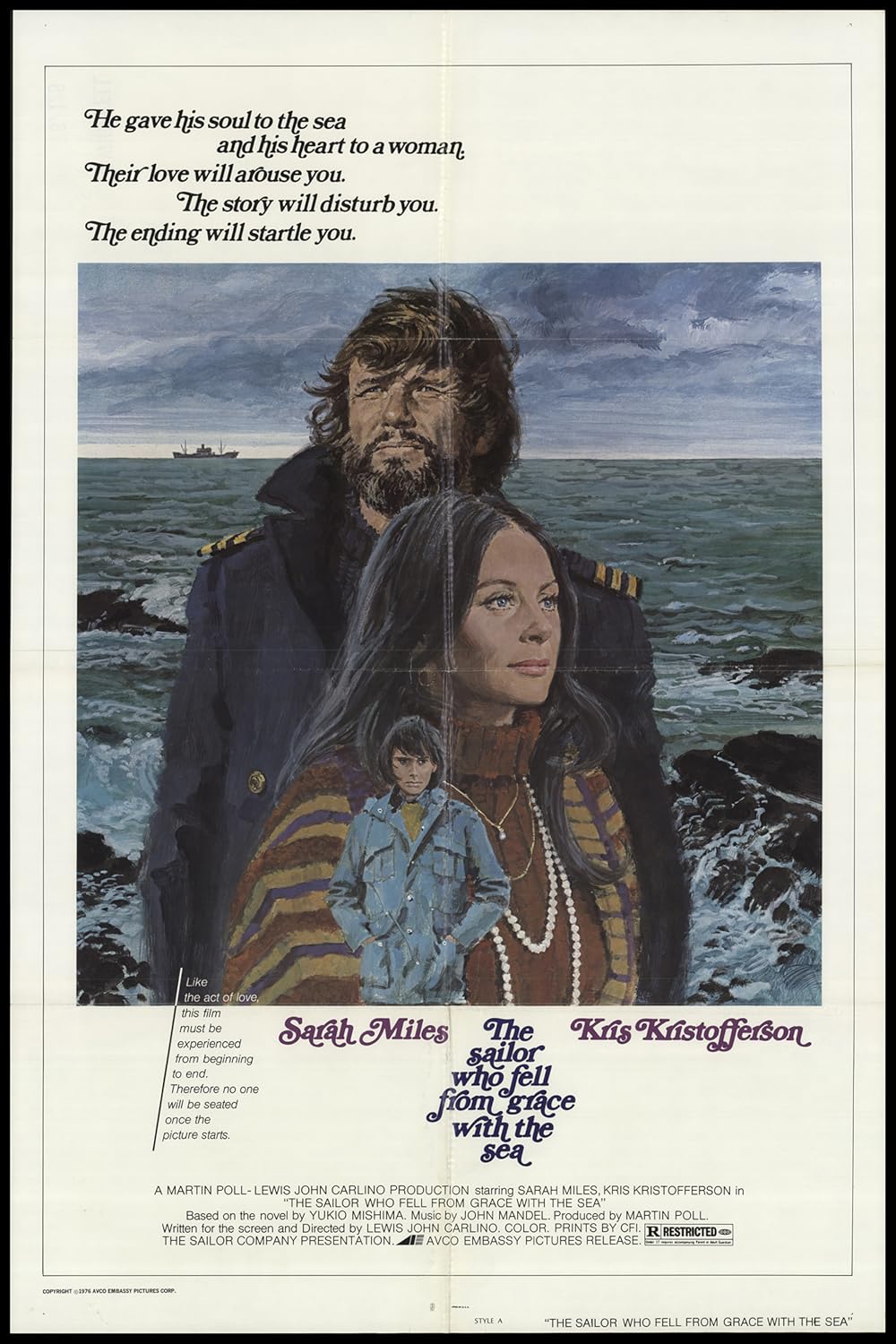
The Sailor Who Fell from Grace with the Sea (1976)

By Richard Winters

My Rating: 4 out of 10

4-Word Review: They dissect a cat.

Jonathan (Jonathan Kahn) is a 14-year-old who lives with his mother (Sarah Miles) and nanny Mrs. Palmer (Margo Cunningham) in a beachfront house along the sea after the death of his father three years earlier. Jonathan enjoys his friendship with a group of boys lead by Chief (Earl Rhodes), but his mother does not approve due to Chief’s anti-social sentiment forcing Jonathan to have to sneak out on the sly to see them. One day Jonathan finds a peep hole in his bedroom wall that allows him to see inside his mother’s bedroom, and he begins to peer in on her when she’s undressed, and this creates an unhealthy arousal. When his mother begins a relationship with a sailor named Jim (Kris Kristofferson) he becomes jealous and conveys as much to Chief who devises a sinister plan to ‘solve the problem’.

Lewis John Carlino had a highly respected career as a screenwriter garnering 4 Academy Award nominations for best screenplay, but his three forays as director weren’t as successful and all started out well but ended up just missing the mark. This one was no exception as many critics at the time felt the problem lay in adapting a novel, that was written by Yukio Mishima, which was set in Japan, and trying to convert it to English society. The cultures differences that make up the complex Japanese society that were so integral to the characters in the book gets completely lost in the translation leaving the viewer feeling cold, detached, and genuinely confused when it’s over.

The on-location shooting filmed in Dartmouth, Devon, England, is excellent and the one thing that helps the movie stand-out particularly the isolated hillside house that gives the atmosphere an almost surreal-like feel. There’s also a really creepy performance by Rhodes who nails it as a highly intellectualized kid who displays no moral compass and effectively comes-off as a very believable young sociopath. However, these moments gets coupled with some very disturbing ones dealing with animal cruelty which includes a very drawn-out scene involving the killing and dissecting of a cat as well as putting a firecracker in a seagull’s mouth and while no animal was actually harmed during the production it still left many audiences at the time upset and will very likely do the same with viewers today.

The film’s biggest flaw though is that it doesn’t interpret the character’s actions in any way that helps makes sense of their motivations and for the most part they’re all quite two-dimensional. Jonathan’s arousal at seeing his naked mother needs much better explaining. Most kids aren’t this way, so what is it about his psyche that causes him to enjoy it without any guilt or shame? The movie gives us no clue, nor does it explain how his father died and when you add in the boy’s weird behavior and you start to wonder if the Jonathan maybe had something to do with it, which would’ve opened an interesting subtext if even brought up subtlety, but the script fails to touch on it.

The book makes the reasons for the son’s actions clearer. For instance in the novel the boy losses respect for the sailor when he sees him jump into a water fountain, which he considers to be undignified and the movie really needed to have some similar moment as the kid, like in the book, is initially in awe of the man, but it’s never totally clear what creates the deadly shift. Also, when the son is caught peeping in at his mom the response by his mother in the book is different as she feels the boy should receive a severe punishment, but the sailor, in hopes of becoming ‘friends’ with the kid whom he’s now helping to raise, resists, but the film flubs this scene too by treating it almost like a forgettable throwaway moment that has no impact versus one that would’ve helped reveal the sailor in a more in depth way.

Spoiler Alert!

The ending, which should’ve been a shocker, falls flat as well. In the novel it’s made clear that the boys plan to drug and dissect the sailor just like they did with the cat and they even bring along the tools to do it, in the movie we only witness him drinking the spiked tea. The camera then zooms way out showing the boys at an extreme distance where it’s not obvious what they’re doing. To really make a memorable impression we should’ve seen the boys stab the sailor several times with their knives, which would’ve been far more startling. I felt too there needed to be a reaction from the mother. Does she find out what they did, or does his violent demise remain a mystery? How does her relationship with her son evolve, or devolve afterwards? These questions remain unanswered making the movie seem less like a story and more as a concept that’s never adequately fleshed out.

My Rating: 4 out of 10

Released: April 5, 1976

Runtime: 1 Hour 45 Minutes

Rated R

Director: Lewis John Carlino

Studio: AVCO Embassy Pictures

Available: DVD, Blu-ray, Amazon Video, Plex, Roku Channel, Tubi, YouTube

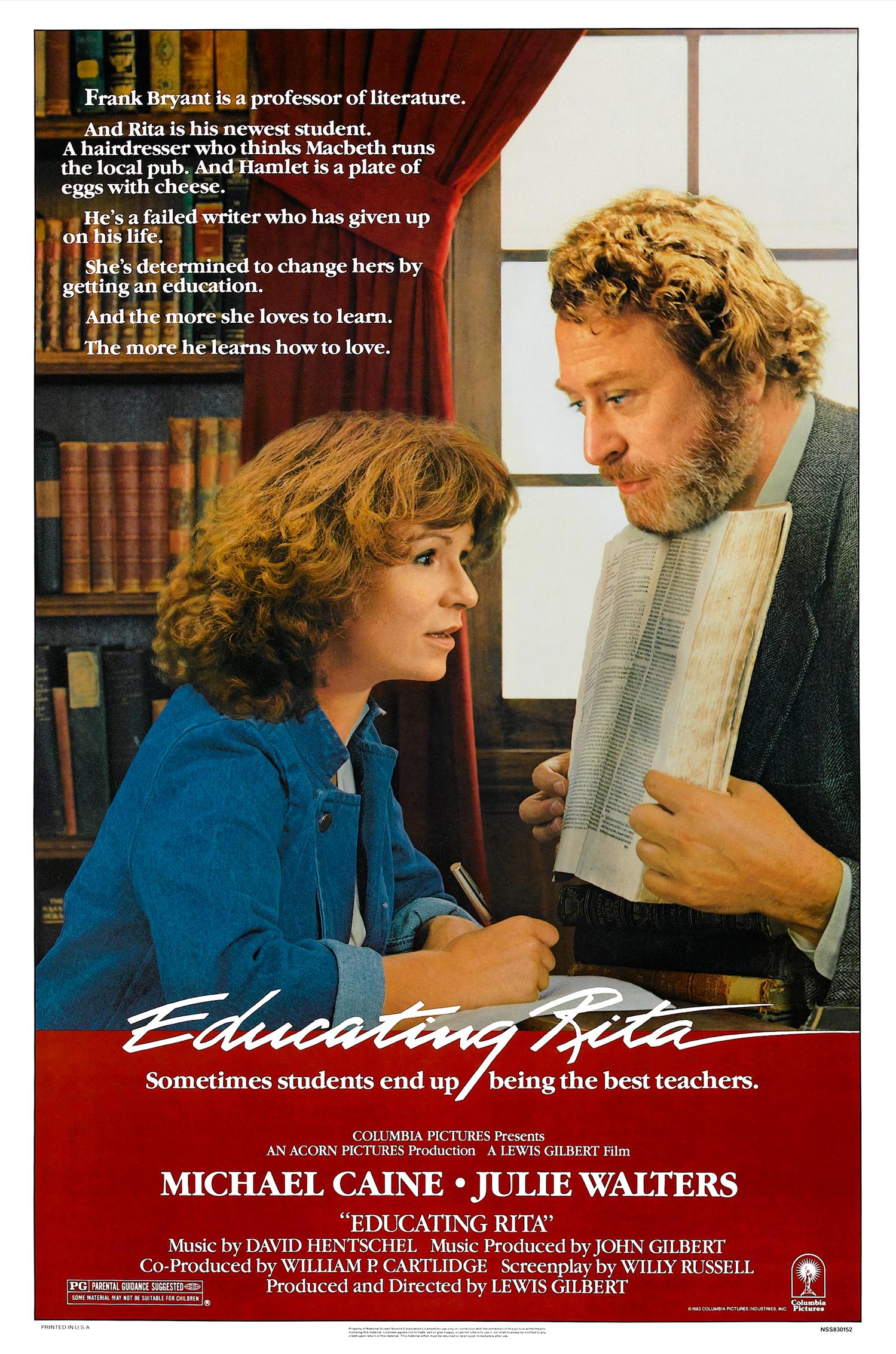
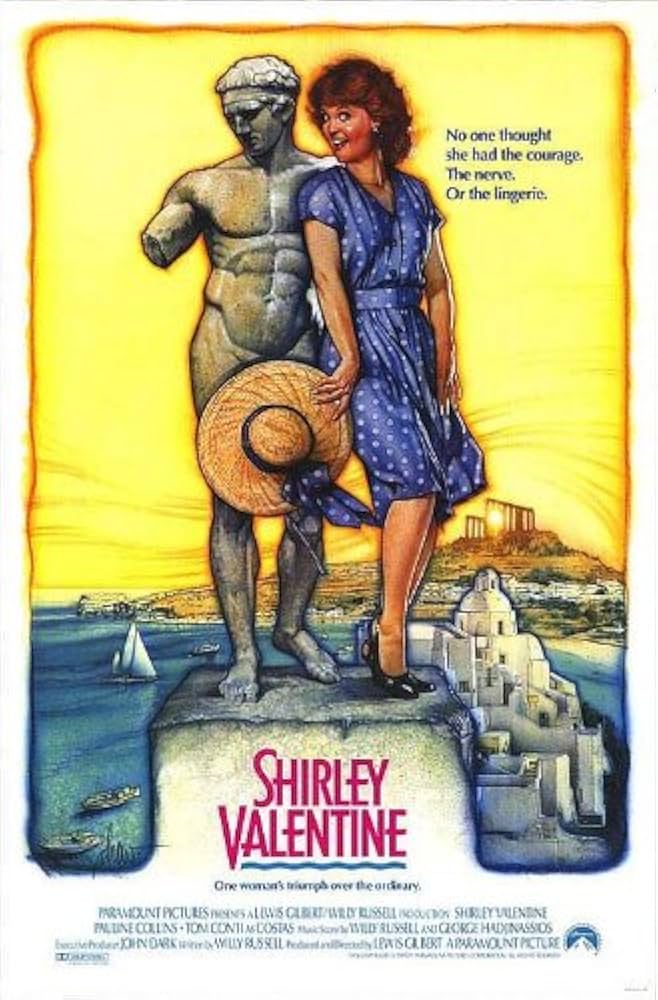
Educating Rita (1983)

By Richard Winters

My Rating: 5 out of 10

4-Word Review: Trying to better herself.

Rita (Julie Walters) is a young working-class woman who finds her job as a hairstylist and marriage to Denny (Malcolm Douglas) to be unrewarding. Denny wants her to have a child, but she fears that will just tie her down more. In an attempt to ‘better herself’ she decides to enroll in Britian’s open university where she takes a course in English literature.  Frank (Michael Caine) is a disillusioned college professor who lost the zeal for his job years earlier and has now taken to the bottle. Rita wants him to be her tutor, but Frank initially resists only to eventually agree. Despite their contrasting personalities the two ultimately form a bond and Frank uses Rita’s passion for learning to reignite his own dormant desires that allows him to breakout of his loveless relationship.  However, Rita too begins to see things differently when her roommate/friend tries to commit suicide and she realizes that things aren’t always greener on the other side of the fence.

The film is based on the play of the same name by Willy Russell that premiered in London in 1980 and also starred Walters in the title role. Unlike the movie the play had only two characters and everything took place inside the tutor’s office.

The story’s theme does have an inspiring quality, which is what galvanized the critics to it, but the main character and her transition is a bit hard to believe. On the surface she’s quite likable and well played by the star, but her ambition seems awfully extreme. It would’ve helped had we seen the moment when she first got the idea to go back to school versus having it just briefly be discussed. Wanting to learn a trade in order to make more money and move out of one’s humble surroundings is both commendable and understandable but becoming well versed on the plays of Henrik Ibsen isn’t really going to do that. To pay the bills she’s still going to be stuck working as a hairdresser, which was supposedly the boring routine she wanted to get out of. Expanding one’s literary knowledge may allow her to have lofty conversations among elites at posh parties, but as a whole she’d still be in her same predicament financially.

The Pygmalion-inspired theme was unnecessary. Without sounding snotty I couldn’t buy into the idea that this working-class woman with a limited education could learn to fully appreciate the great literary works or would even want to. The story acts like all that is needed is a great deal of enthusiasm and you can do accomplish anything, but history is full of people who jump into lofty goals with the best of intentions and still fail. Realistically I think this type of person would’ve eventually gotten overwhelmed and realized she was in over-her-head. To solve this the character should’ve been modified to being someone who was middleclass with a literally background, but who had to drop out because her parents died forcing her to go to work at the factory in order to make ends meet, but still longed to get back into what she really enjoyed and thus hired a tutor to help her, which would’ve been for the discerning viewer easier to swallow.

Rita’s ultimate transition is more off-putting than inspiring. I didn’t like her change in hair color where she goes from blonde to brunette, which makes her seem like a different person instead of someone who’s evolved. There needed to be more challenges and roadblocks. A brief spat with her husband, in which he throws her books into a fire, blows over too quickly and she’s able to grasp the complex material, even able to write in depth term papers with a relative ease that didn’t come off as wholly believable. Having her get a bad grade in a course and using this to reassess her goals would’ve allowed in a broader angle and not have been so fanciful, which the film starts to become.

Caine plays his part wonderfully and he certainly is much more into this role than he was in Blame it on Riowhich he did the same year. However, his character’s motives were difficult to understand. I thought this would’ve been the classic case, which can occur with a lot of academics in higher education, where the students aren’t into learning and are apathetic, which frustrates the professors, and this then turns them to alcohol. Here though that didn’t seem to be the case making him come off more like he was just tuning out on his own accord and thus making him less relatable. I also felt he should’ve been fired much sooner as the young adults attending his classes knew that he was drunk, even verbally said as much, so he likely would’ve been reported, and for him to then on top of this get a second chance when he fell over inebriated during a speech, seemed rather implausible.

I did enjoy the scenes involving Frank’s girlfriend Julia (Jeananne Crowley) and her relationship with a married man named Brian (Michael Williams) and how every time Frank comes into the room, and they are there Brian pretends, as a ‘cover’, that he is speaking to someone on the phone. These scenes, which becomes a running-joke, were amusing, but near the end Frank informs Brian that the phone was disconnected and thus revealing that he was in on their charade. This though doesn’t jive because with the old fashioned rotary phone, such as the ones shown here, there would always be a dial tone when one put the receiver to their ear, except of course if the service had been cut and thus Brian would’ve already known that it had been disconnected when he didn’t hear the tone and no need then for Frank to explain it.

My Rating: 5 out of 10

Released: May 3, 1983

Runtime: 1 Hour 46 Minutes

Rated PG

Director: Lewis Gilbert

Studio: Columbia Pictures

Available: DVD, Blu-ray

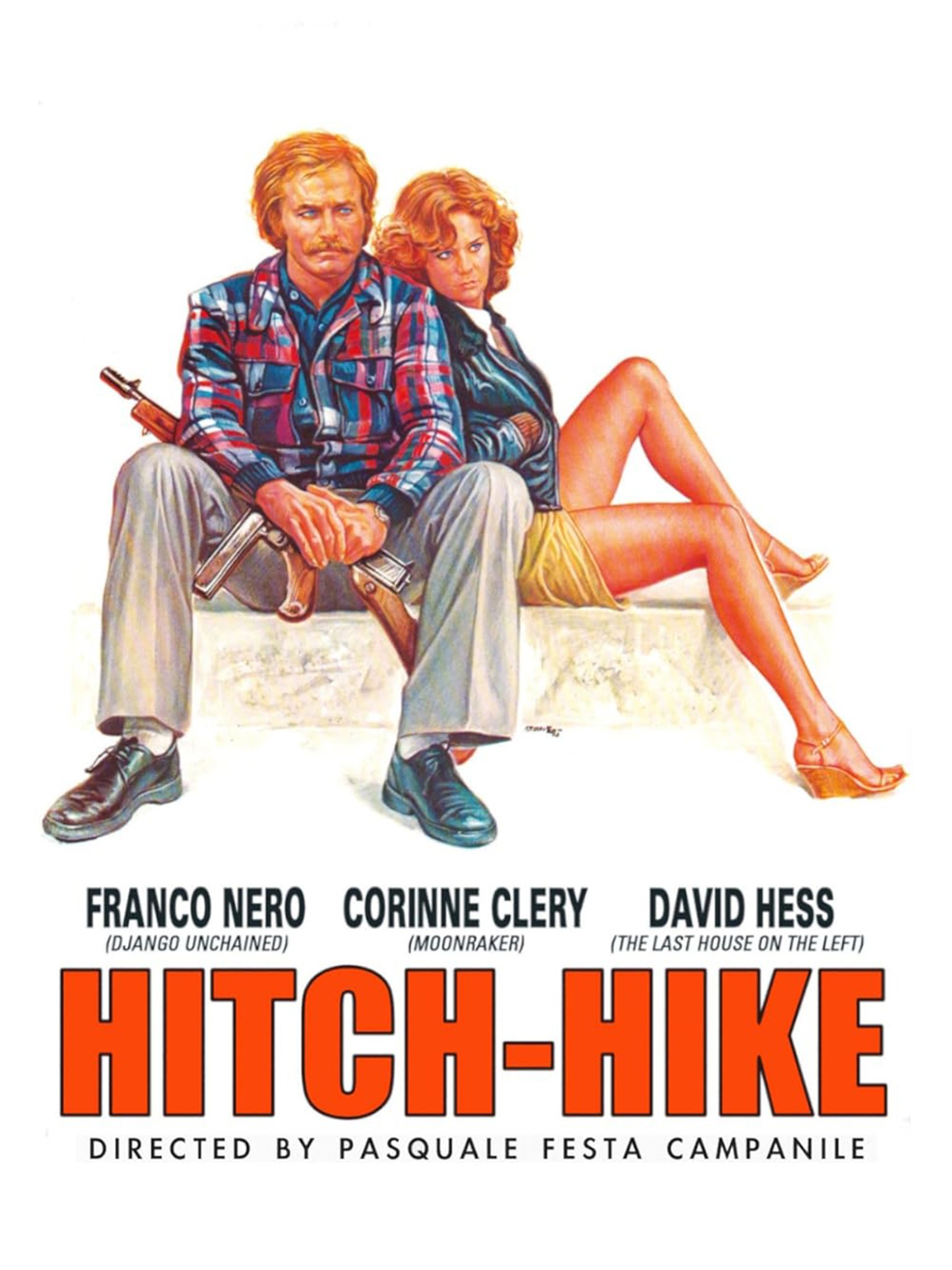
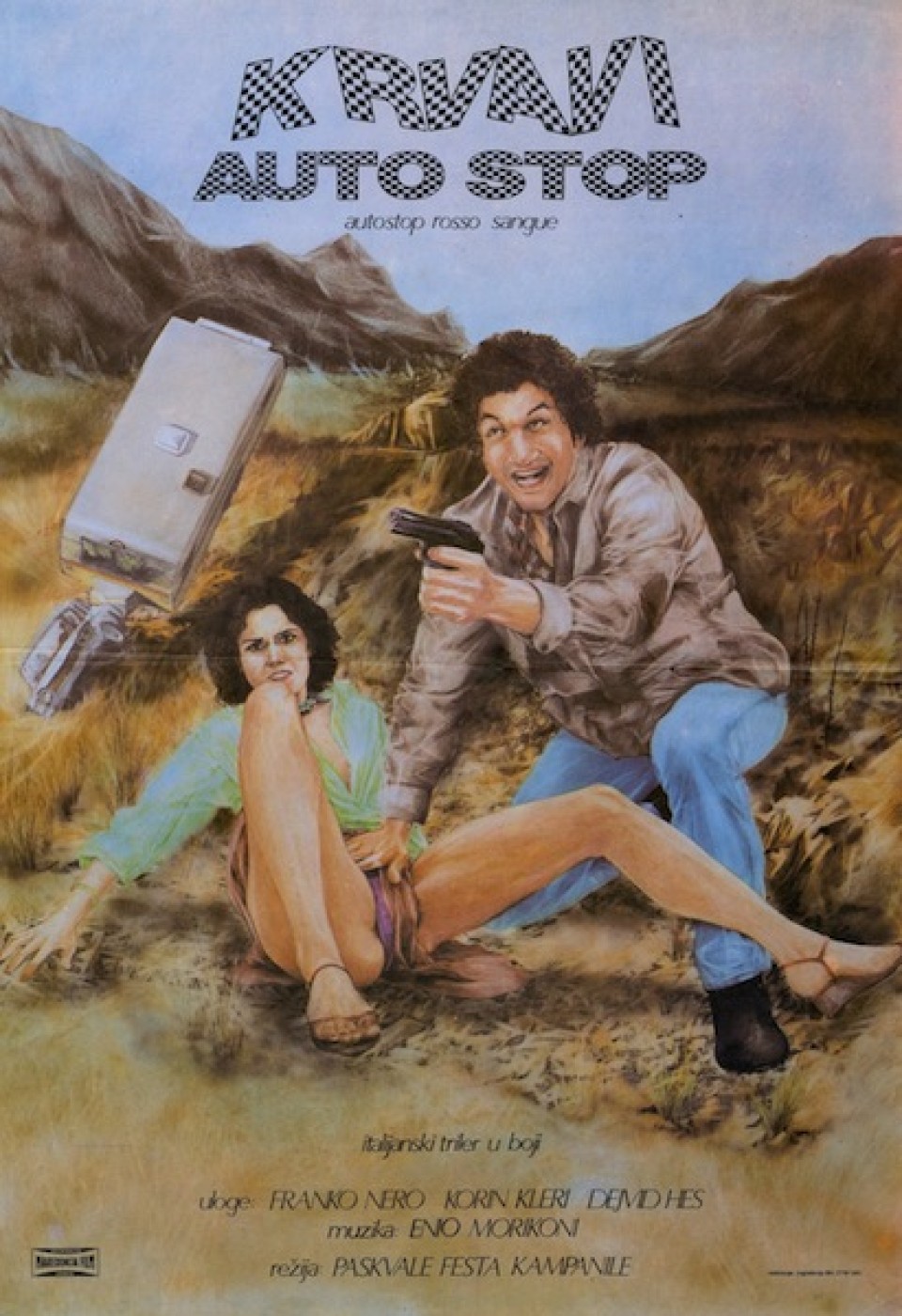
Hitch-Hike (1977)

By Richard Winters

My Rating: 5 out of 10

4-Word Review: Couple picks up killer.

Walter (Franco Nero) and his wife Eve (Corinne Clery) are constantly bickering about Walter’s alcoholism. They go on a trip to Los Angeles and on the way pick-up Adam (David Hess) whose car is stranded on the road. Unbeknownst to them he’s a robber who has doubled-crossed his partners and absconded with a suitcase full of $2 million dollars. It doesn’t take long before Adam has a gun to both of their heads demanding they take him to Mexican border where he plans to escape while also killing them in the process. As the two try desperately to figure a way out they are also being secretly followed by the two young men whom Adam betrayed and who are now intent on extracting a revenge.

One of the biggest problems I had with the movie is that it’s supposed to take place in California but was actually shot in the mountains of Gran Sasso in Italy, which looks nothing like the state. I realize that California has a varied topography but the locales here are screaming southern Europe and the highway signs are done in blue, which anyone living in the U.S. would know is fake as here they’re green, which only accentuates the off-kilter look of the production. Since where they’re driving to makes no real difference to the plot I would’ve just had it be some city in Italy like Rome, which would’ve helped the authenticity.

The other problem I had is that, at least the version I watched, it’s spoken in Italian. Normally I prefer movies that are subtitled versus dubbed, but I could’ve sworn years ago I saw it in English, but what’s available on YouTube, which is the only service currently streaming it, doesn’t offer that, which is a big shame. Not so much because of Nero or Clery, but more Hess as his own voice is not used, which then defeats the whole reason for having him. He’s best known for playing the sadistic killer in The Last House on the Left, and he has an excellent way of being menacing, but because we don’t hear him actually speak in his native tongue all of that gets lost and the creepy energy that was supposed to be there by casting him gets completely wasted.

Spoiler Alert!

The story, which is based on the unpublished novel ‘The Violence and the Fury’ by Peter Kane, doesn’t get off to a good start as it features two people, particularly Nero, who are not likable, and thus the viewer really doesn’t care about their predicament making the tension mediocre at best. There are also elements that are stolen from better known movies like the mysterious truck that keeps chasing them during their drive, with the identity of the driver hidden, that’s taken straight from Duel. Loopholes abound as well as we later learn that Hess is the driver of the truck, but how was he able to avoid being shot by his cohorts earlier with a gun aimed right at him and how was he able to hijack the truck as he had been without any vehicle? Maybe he was able to hitch a ride with a truck driver, just like he did with the couple, and then do away with the driver once inside, but this is stuff that needs to be shown as otherwise it comes-off like the filmmakers are just making up the rules as they go with no concern whether it’s logical.

The twist ending is limp as it features Nero setting the car on fire with his injured wife inside and putting Hess’s dead body next to hers in an attempt to make it look like both he (Nero) and she died in the blaze, but there were such things as dental records back then, so after the coroner examined the charred bodies he/she would determine that it wasn’t really Nero who died and thus the authorities would continue to search for him. Seeing him then become a hitchhiker himself leaves open too many questions and comes off like a cop-out where the filmmakers ran out of ideas and thus decided to just end it there.

End of Spoiler Alert!

The moment where Nero is forced to watch Hess make love to his wife, and witnessing the humiliation and anger in his eyes, is the film’s best moment. Watching Clery, the only person you sympathize with, is entertaining both with her clothes on and off. However, the film lacks any character development, and the plot is quite strained with a lot of moments where the story, much like with the car ride, doesn’t seem to be going anywhere and if anything, just driving itself around in circles.

My Rating: 4 out of 10

Released: March 4, 1977

Runtime: 1 Hour 44 Minutes

Rated R

Director: Pasquale Festa Campanile

Studio: Explorer Film ’58

Available: DVD, Blu-ray, YouTube

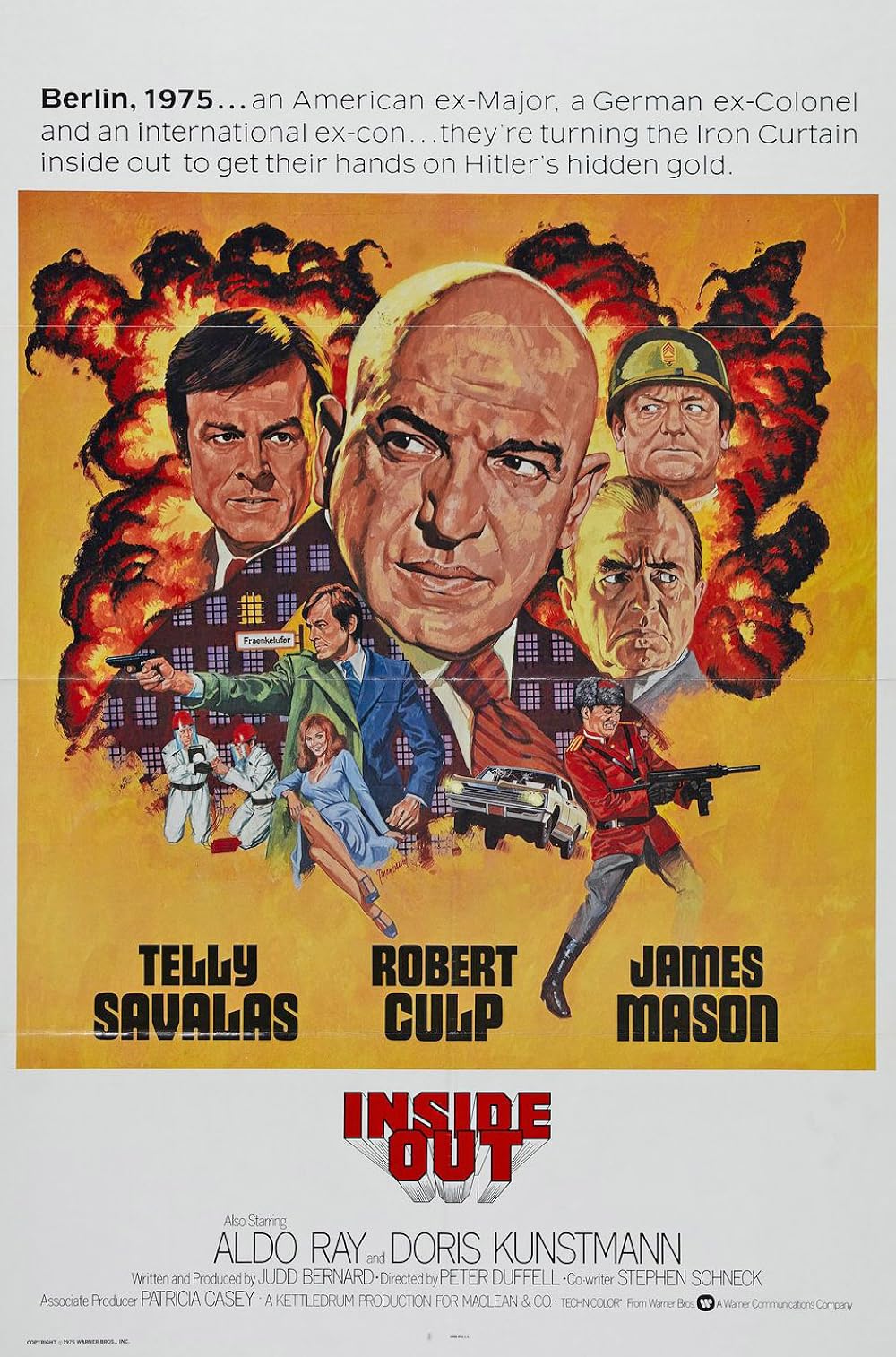
Inside Out (1975)

By Richard Winters

My Rating: 5 out of 10

4-Word Review: Tracking down nazi gold.

Harry (Telly Savalas) is head deep in bills when he comes across a letter from Ernst (James Mason) an old friend inviting him to meet him the next day at a hotel. Since Harry has nothing to lose he shows up at the agree upon location and learns that Ernst has plans to retrieve some gold that had been misplaced during the war. The problem is that the only one that knows the exact location of where it’s hidden is Holtz (Wolfgang Lukschy) who is locked up in a high security prison. Harry must then hire a team of men that can not only find a way to infiltrate the prison, but also trick Holtz into giving away the secret and then dig up the loot despite it being behind enemy lines.

The film, which was surprisingly written directly for the screen and not based on any book even though I think it would’ve made a great novel that could’ve been actually better than the movie, approaches the material in all the wrong ways. I’ll admit it’s a great concept, but director Peter Duffell unwisely decided to enter comedy into the proceedings, which wasn’t necessary. He also implements a goofy sounding music track that would’ve been better suited for a TV-sitcom. The facility that houses Holtz was shot at Plotzensee Prison in Berlin, which looks like an old rundown building that is barely able to stand on its own and like it’s ready to crumble at any minute. To really make it exciting and daring the place should’ve been modern and state-of-the-art and thus making it more of a challenge to break into.

Spoiler Alert!

Everything comes off too easily and thus hurts any potential tension. The kidnapping of Holtz is especially problematic. The group is able to infiltrate the prison by dressing up in guard costumes, but those costumes wouldn’t be an exact replica of the real guard’s uniform and thus should be easily spotted by a prison employee, and yet that doesn’t happen.

They blackmail Holtz’s doctor Maar (Adrian Hoven) to agree to take Hotlz’s place in the prison cell and pretend to be him while disguising Holtz as the doctor in order to sneak him out, but it’s unlikely anyone would agree to stay in a prison for even a day and trust that this group, whom he really didn’t know, would come back and get him out and not just leave him there. Maar, is also much shorter than Holtz, so the real guards would notice the difference in height and realize he was an imposter, but for whatever reason they don’t.

The drug that they inject Holtz with, which is never named, is unusual in that it puts him to sleep, but still allows him to walk. Most of the time drugs that could knock a person out would make their limbs go limp and force the group to have to drag him away as he slept versus here where they are somehow able to get him to sleepwalk.

The sequence where one of them disguises themselves as Hitler, played by Gunter Meisner, in an effort to trick Holtz to divulge the location of the gold since he had sworn only to give it out to the Fuhrer himself is highly improbable as well since the man really doesn’t look all that much like Hitler and you’d think Holtz, even in the drugged state that he is in, would notice the difference and not share the secret, or give out incorrect information.

I’ll give the script some credit as it does come up with a few unexpected wrinkles, but all these do is stymie the group’s efforts slightly and don’t really put a monkey wrench into the whole thing. For instance, they learn that an apartment building has been constructed on the site where the gold is buried, which most likely would’ve ruined their chances of getting at it, but here they’re able to sneak into the building’s basement via an unlocked door (don’t facilities lock their doors in East Germany?) and then create a ruse to get the tenants out of the building so they can plant a bomb that will cause an explosion to crack the cement floor. There’s even a little boy who sneaks in to witness their efforts and risks getting injured but like with everything else it gets quickly resolved when Telly spots him at the last second and whisks him away to safety and then eventually back to his mother’s arms. However, what’s to say he won’t tell his mommy what he saw? Apparently here he doesn’t, but in reality, he probably would’ve and thus another potential loophole that the film glosses over.

I enjoy Telly more when he’s playing bad guys, but he’s still fun as the protagonist and something that helps keep the movie watchable. Overall though the direction should’ve been tighter and the complex mission gets pulled off too seamlessly and thus seeing them walk away with the fortune isn’t all that satisfying as the complication would’ve been too immense for it to have ever succeeded in real life.

My Rating: 5 out of 10

Released: November 27, 1975

Runtime: 1 Hour 37 Minutes

Rated PG

Director: Peter Duffell

Studio: Warner Brothers

Available: DVD-R (Warner Archive)

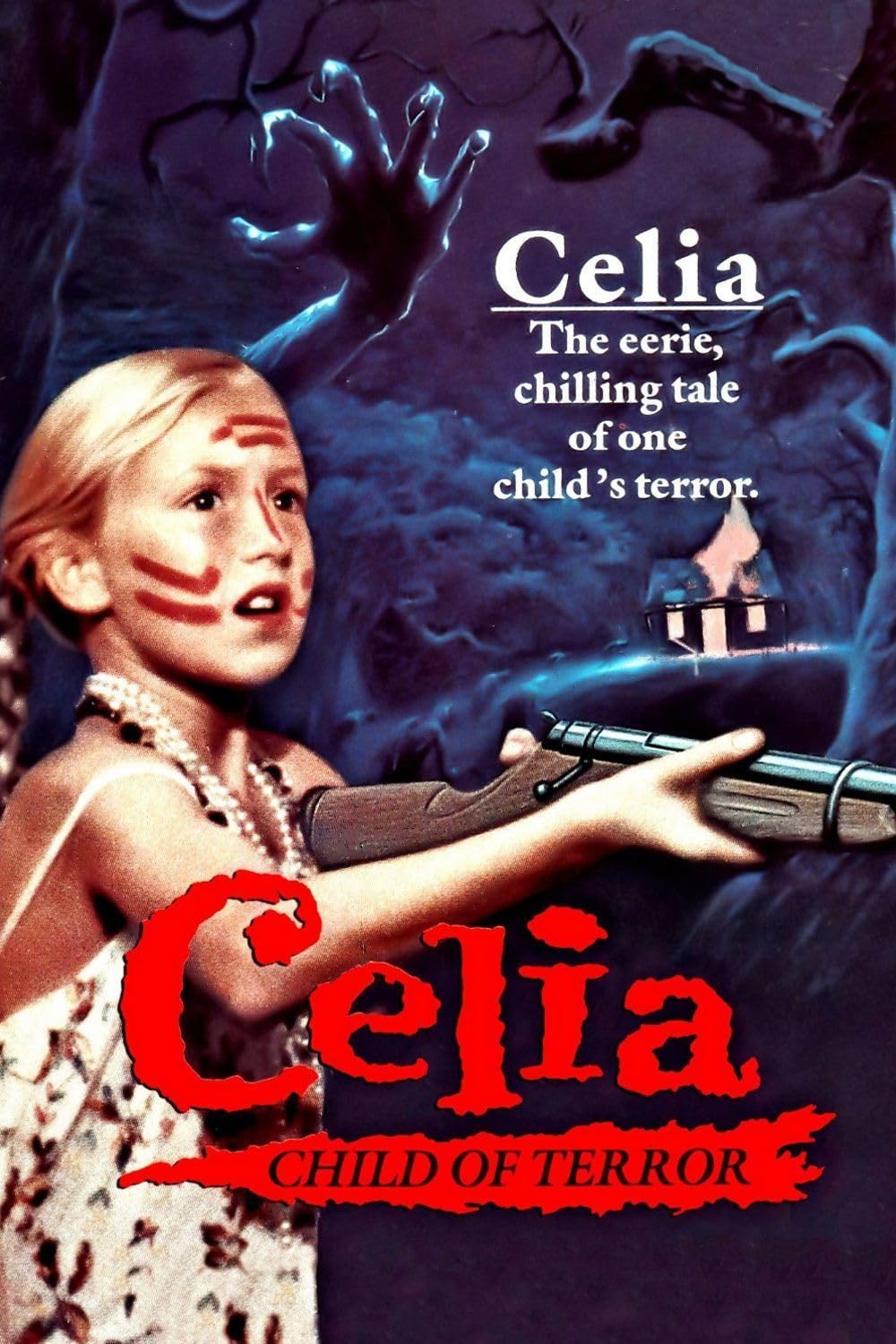
Celia (1989)

By Richard Winters

My Rating: 8 out of 10

4-Word Review: Revenge for her rabbit.

Celia (Rebecca Smart) is a head-strong 8-year-old living in the suburbs of Melbourne, Australia during the end of the 50’s. She is mourning the recent loss of her grandmother while also fearing the hobyahs, which are mythical creatures she read about in school that she has nightmares about breaking into her bedroom late at night. When Alice (Victoria Longley) and her three children move in next door it allows Celia to get her mind off of things as she becomes fast friends with the kids and even Alice herself, but their relationship is soon hampered when Celia’s father, Ray (Nicholas Eadie), finds out that Alice and her husband are supporters of the Communist Party. Ray forbids Celia from seeing them and offers her a pet rabbit, something she’s wanted for a long time, as a bribe insisting that she can keep the pet as long she no longer socializes with the neighbors. However, this brings up more problems as the Australian government has deemed rabbits to be an invasive species and has outlawed anyone from having one. Burke (William Zappa), the local police Sargent, confiscates the rabbit in the middle of the night and then it’s later found dead while being housed at the local zoo causing Celia to come up with a devious plan in order to exact her revenge.

The film, which was inspired by a news article writer/director Ann Turner read when she was 24 involving the rabbit invasion that plagued Australia during the 50’s, is labeled a horror movie, though in a compromised form as IMDb calls it a ‘folk horror’ while other movie sources call it a ‘horror drama’. In any case fans of the conventional horror film may not take to this or find it off-putting as the typical scares and tension are not present. There are some creepy moments particularly the dream sequences involving the hobyhahs, which I wished had been in it more, and a segment dealing with Celia’s dead grandmother tapping on her bedroom window late one night, but overall, that’s about it. Most of the rest of the film comes-off more like a coming-of-age drama, which is excellent, but the real disturbing part doesn’t come until the very end. It’s effective and well earned, but whether all viewers will be patient enough to wait for it I’m not sure.

With that said it’s still a great movie with characters that are three dimensional, something that Australian cinema does very well, and the viewer gets wrapped up into the drama quite quickly. The best element is that the kid characters are genuine. These are like real children that I knew growing up where they could be cute and precocious one minute and mean and bratty the next. The inner rivalries that Celia has with the other kids in the neighborhood are quite real too. Kids don’t just automatically get along, there can be contrasting egos and personalities that can easily get in the way, just like with adults, that can quickly turn playmates into enemies. It’s rare that I can say this, but I really felt while watching this, that I had been transported back into my own childhood as the encounters and exchanges very closely reflected my own in many ways.

The adults are portrayed much better here too. Usually, movies that revolve around young people have the grown-ups stigmatized in one extreme or the other. Either they’re clueless dimwits that are totally out-of-it or overly controlling. Here though they’re well meaning, but so busy with their own lives that just can’t stay attuned with everything their kids are doing and much of the time is spent with them just trying to catch-up with the drama that they didn’t even know was occurring. Celia’s father isn’t mean here either, he simply has a different perspective of things and doing what he thinks is best for his child even as this gets Celia to hate him but like with many households this type of scenario can and does happen even with the best of intentions.

Spoiler Alert!

The ending should leave you with an unsettling feeling when it’s over. This is the rare time when if fully works too. No loose ends, or loopholes. Everything fits perfectly with the characters fleshed out so it all makes sense. This is also a unique film in that there really aren’t any villains. No one is ‘bad’, or ‘evil’. It’s just people, young and old, with different ideas about things and their inability, through no real fault of their own, to effectively communicate it to the other, or for the other to fully listen and understand, which is ultimately what makes it so horrifying as this could easily and believably happen anywhere.

My Rating: 8 out of 10

Released: March 3, 1989

Runtime: 1 Hour 43 Minutes

Not Rated

Director: Ann Turner

Studio: Seon Film Productions

Available: DVD, Blu-ray

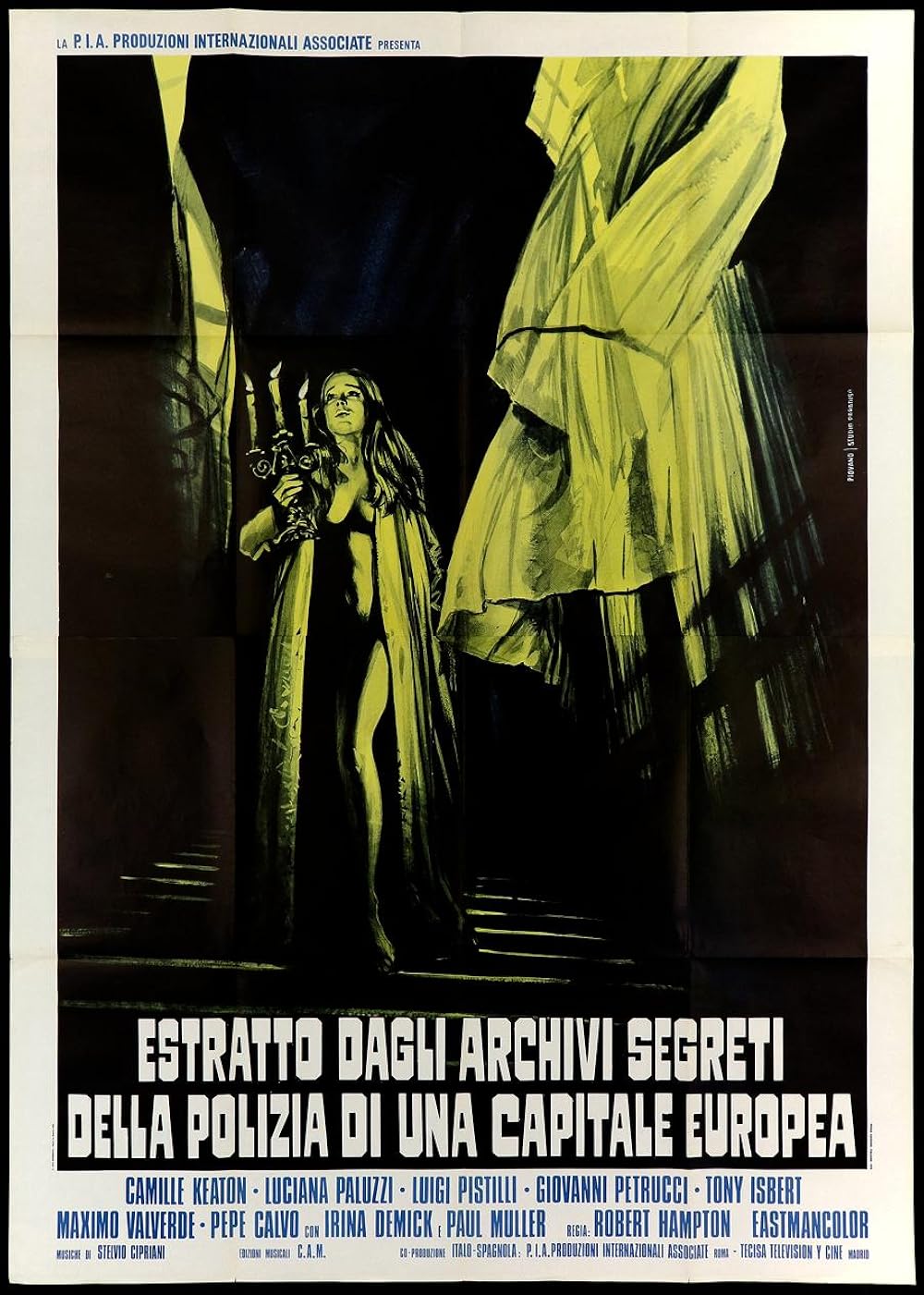
Tragic Ceremony (1972)

By Richard Winters

My Rating: 4 out of 10

4-Word Review: Witnessing a black mass.

Jane (Camille Keaton), Joe (Maximo Valverde), Bill (Tony Isbert), and Fred (Giovanni Petrucci) are four young adult friends traveling the Spanish countryside in their uncovered jeep. When their car runs out of gas they come upon a large estate whose owner, Lord Alexander (Luigi Pistilli) allows them to stay in order to seek shelter from the rain. During the course of the night Jane starts to hear strange music and chanting coming from another room and when she enters it, she finds a group of people performing a satanic ritual. Jane then realizes she’s the one chosen to be sacrificed, but before they can do it her friends come in to save her, but this leads to more violence and the four attempting to flee only to be followed by grisly mayhem wherever they go. 

Unusual horror opus starts out almost like a dreamy romance with the four riding on a sailboat and soft melodic song played over the credits. The scares and tension don’t come quickly, and the first act has a relaxed direction that doesn’t grab the viewer and is too leisurely paced. The ceremony scenes are done with no imagination and seems to bask in every cliche making it more appropriate for parody. Director Riccardo Freda complained that the project was taken out of his hands and scenes added in by the producer to bolster the runtime. It took all the way until 2004 when a full restoration of the director’s cut was finally made available, but when this got shown at the 61st Venice International Film Festival it was met at the end by a chorus of boos.

The main reason to catch it is for the performance of Camille Keaton. This was the last Italian feature that she was in before moving back to the states and starring in I Spit on Your Grave, of which she’s best known for. Even here though her presence is a bit distorted as she looks beautiful and has a really good topless moment in the bathtub, but her voice gets dubbed by an Italian woman who sounds middle-aged and therefore doesn’t reflect something coming from a delicate young lady that she is.

It’s also never explained why she’s traveling with three guys as normally there should be other female friends riding along in order to keep it an even mix. One lady with a bunch of guys doesn’t make much sense unless she was dating one of them, though that’s not the way it gets portrayed. She does at one point sleep with one of them to the envy of the others, but it’s deemed as a ‘one-off’ moment, which proceeds to make the interpersonal dynamics in the group even more murky and confusing. The guys on the other hand show very little distinction in their personalities and it would’ve worked better had it been simply a couple and let the other two guys written out of it completely. 

Once the violence gets going it is rather impressive in a gory sort of way. The ax cutting through someone’s head was startling, but then the same shot gets replayed 5 different times, as part of a reoccurring nightmare sequence, that makes it very redundant. A good director, even if they are going to show a past event, will, or should, do it from a different angle, or in slow motion, or even an alternative color scheme in order to change it up a bit and not make it seem repetitive and in this case amateurish. 

Spoiler Alert!

The twist ending in which the wife of the homeowner and leader of the black mass ritual, Lady Alexander (Luciana Paluzzi) appears to have completely taken over Jane’s identity to the point that Jane becomes her as the car she’s riding in drives away, which I thought was kind of cool. Granted it does leave open many questions, but I felt a level of mystery in this case helped. Unfortunately producer Jose Gutierrez Maesso, didn’t like this approach as he thought it would cause the viewer too much confusion, so he hired actor Paul Muller to play a psychiatrist who would enter at the very end and essentially explain away all of the loose ends, but this treats the audience like they’re too stupid to figure things out on their own. 

My Rating: 4 out of 10

Released: December 20, 1972

Runtime: 1 Hour 22 Minutes

Not Rated

Director: Riccardo Freda

Studio: Variety Distribution

Available: DVD, Blu-ray, Tubi


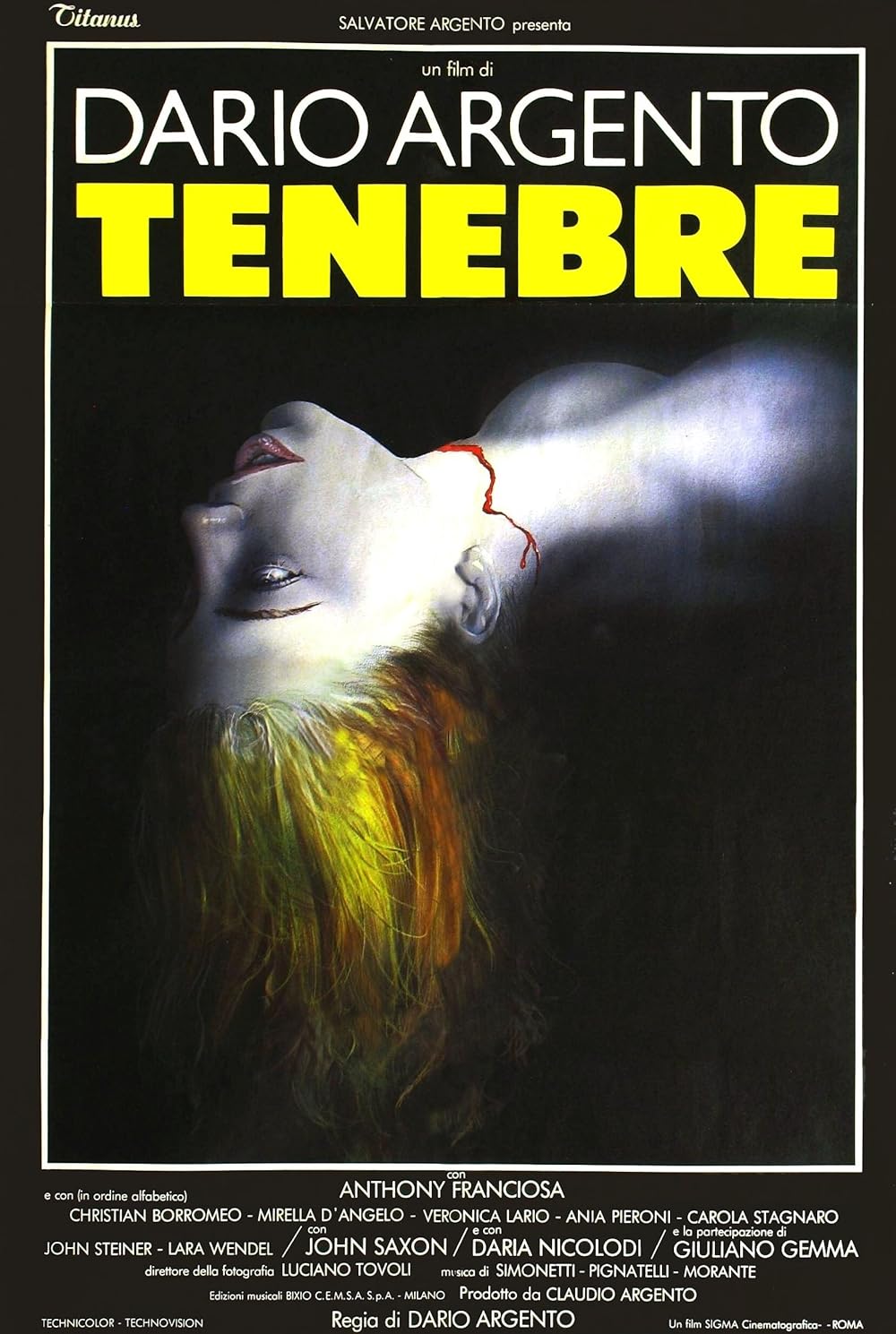
Tenebrae (1982)

By Richard Winters

My Rating: 5 out of 10

4-Word Review: Novelist hounded by stalker.

Peter Neal (Anthony Franciosa) is a successful novelist who travels to Rome, Italy to promote his latest work titled ‘Tenebrae’. Once he arrives, he is soon met by detective Germani (Giuliano Gemma) who advises him that a murder has recently been committed that was done in the style of one that occurred in his book. Neal scoffs that anything he’s written could’ve motivated someone to kill, but soon after he receives an anonymous letter from the murderer detailing how he’s going to commit more killings using methods that Neal described in his book. This then sets Neal off on doing his own investigation convinced that the police have a ‘tunnel vision’ and only he can find the true culprit using his own detective skills that he acquired while doing research on his book.

The film was inspired by writer/director Dario Argento’s own experiences that he had while meeting a fan via the telephone who initially introduced himself as being a great admirer of his work. The calls were friendly in nature at the beginning but became increasingly more menacing as time wore on. Argento eventually was threatened by the fan who claimed that his film Suspiria had affected him mentally and he wanted to harm Argento in the same way his movie had ‘harmed’ him causing Dario to leave the U.S. and return to Italy for his own safety, which is where he began writing the screenplay for this movie.

The sets are atypical for an Argento movie as they lack the garish colors and shadowy interiors most noted in his other films and this was intentional as he wanted to give the film a more ‘futuristic’ look and a one-note color scheme that more closely resembled cop TV-shows, which he felt the story reflected. Visual change is refreshing and helps the action seem more reality based versus in his other movies where everything seemed like it was set in someone’s dark fantasy in some parallel universe though I wasn’t as crazy about the camerawork, which was highly praised by others. Some may find the three-minute tracking shot that goes from one apartment window and across the complex to be captivating, but I found it more dizzying and unnecessary.

The story holds enough adequate suspense to remain moderately riveting and the pounding soundtrack by the rock group Goblin holds the tension. American actor Franciosa is nicely cast though Argento apparently had many behind-the-scenes conflicts with him, but the guy, despite his career decline, looks almost ageless and I was impressed with the opening bit where; despite nearing 60, he’s seen biking down a busy highway amongst tons of traffic with seemingly no worry or sweat. John Saxon though, the only other American in the movie, is badly wasted in a part that doesn’t give him much to do other than make a big deal about his hat that he seems quite fond of. Thankfully though, despite other performers having their voice dubbed, the film was shot in English in order to broaden its American appeal and so both of these actors speak with their actual voices while it’s quite evident with the others that they’re not.

The biggest disappointment for me were the special effects that look cheap and done with no imagination. The blood is bright colored and looks like dye mixed with water. The victims show no actual cuts, or abrasions and the blood appears painted on, or gently poured on via a cup and didn’t look authentic. There are also some ill-advised reaction shots where the film will quickly cutaway and show the victim looking scared with their mouth agape that came off as unintentionally funny. The only real frightening moment comes when a young lady gets chased down a dark street by a large dog who ultimately traps her inside the house of the killer, but other than that I was wanting way more than this film seemed able to give. I did though like one murder scene, which is purportedly one of Quentin Tarrantino’s all-time favorites, that features a woman getting her arm cut off and then proceeding to turn around and paint the walls of her apartment with its spurting blood though even this gets compromised because you can plainly tell it’s a mannequin arm when the ax goes through it.

The story gets a bit convoluted too as it adds in a flashback scene, without telling us it’s a flashback, involving a prostitute, played by Eva Robin’s, who really does spell her name with an apostrophe, and some teen boys that she meets on a beach. Only at the very end does it come into focus what this scene, which gets interspread throughout, means to the story, but until then it’s rather confusing why we’re seeing it and even a bit off-putting. It also features the prostitute as having a perfectly chiseled super model’s body, which I didn’t feel was realistic, and even though it’s supposed to be set decades earlier from the present day no effort was made to make it seem like it was shot in a bygone era.

Spoiler Alert!

The twist ending may be a surprise to some as ultimately, we learn that there wasn’t just one killer, but two of them. One being a TV interviewer named Christiano, played by John Steiner, who kills the first several due to his feelings that the victims were ‘immoral’ and then the last few committed by the protagonist himself. However, I started to suspect Franciosa when he’s found conveniently hit over the head by a rock, which supposedly ‘incapacitated’ him though I thought it was simply a ploy to divert attention away from him, so for me the final reveal was very predictable. Logically it doesn’t completely hold up either as his friend Gianni, played by Christian Borromeo, witness Christiano getting killed by Franciosa, though in disguise, and then runs back to the backyard bushes where Franciosa is supposedly hiding, but it didn’t seem like Franciosa would’ve had enough time to leave the murder scene and get back to the bushes before Gianni got there.

My Rating: 5 out of 10

Released: October 27, 1982

Runtime: 1 Hour 41 Minutes

Rated R

Director: Dario Argento

Studio: Titanus

Available: DVD, Blu-ray, Amazon Video, Plex, Tubi

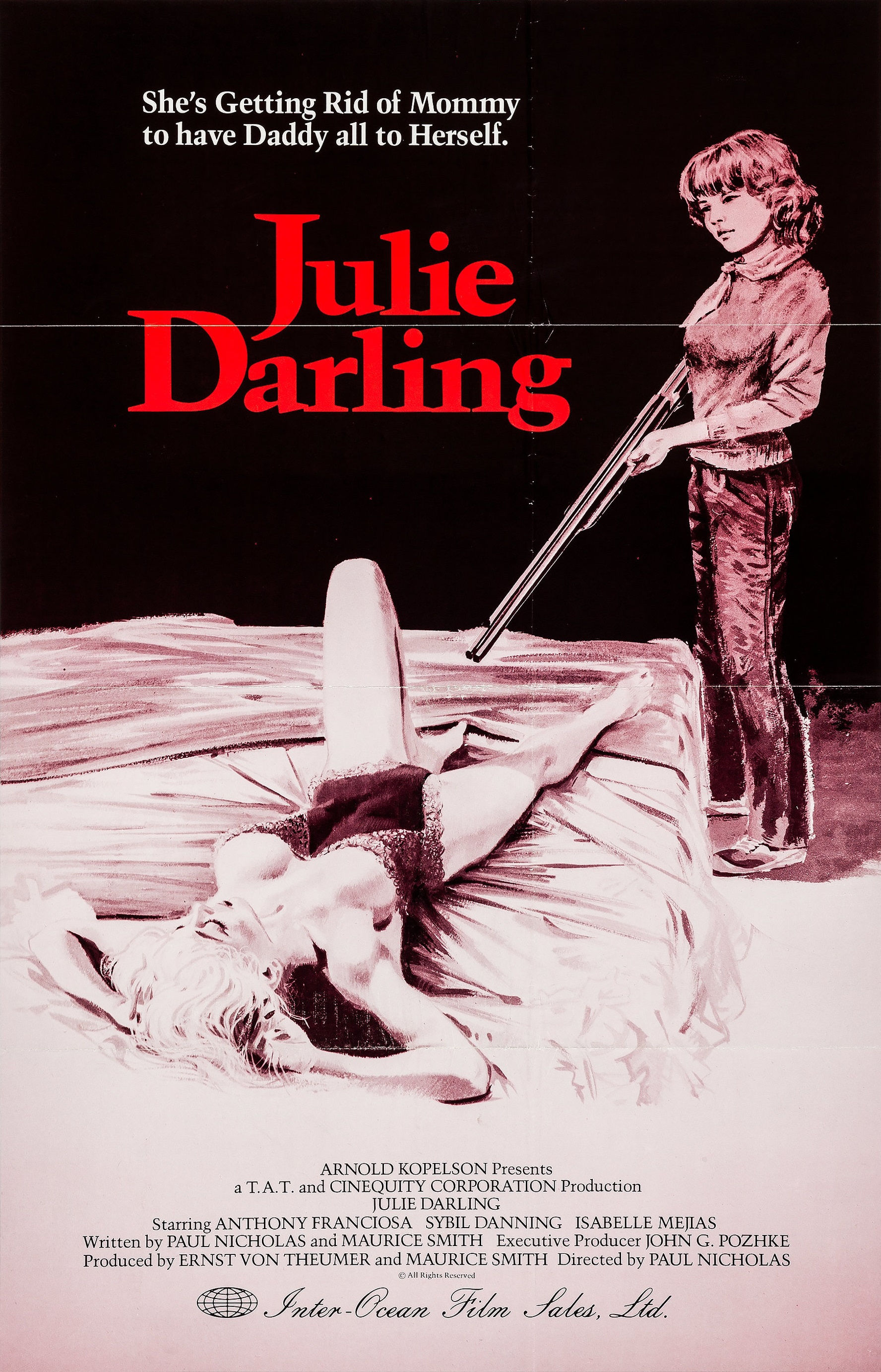
Julie Darling (1982)

By Richard Winters

My Rating: 7 out of 10

4-Word Review: Wanting father to herself.

Julie (Isabelle Mejias) is a possessive daughter with weird interests like having a pet snake in which she enthusiastically feeds it live mice much to the shock of her best friend (Natascha Raybakowski). She also shows an unhealthy affection for her father (Anthony Franciosa) even going as far as fantasizing about making love to him. Because of this she hates her mother (Cindy Girling), so when her mom is attacked one day by the delivery boy (Paul Hubburd) she does not make any attempt to stop it despite having a rifle in her hand. Instead, she watches him crush her mother’s head onto the cement floor, which instantly kills her and then later when he is a part of a line-up at a police station she does not identify him and allows him to go free, but she does this for ulterior reasons. As her father has remarried to Susan (Sybil Danning) causing her jealousy to start all over again and motivating her to ‘hire’ the delivery boy to do what he did to her mother to Susan.

This is a surprisingly inventive story that works for the most part despite the majority of the action taking place in one setting, namely the house, which creates a boring visual. I was a bit taken back why this isn’t better known, or at the very least acquired a small cult following, though the fact that it has very little gore, with the exception of the groin stabbing via a glass bottle, it may have been enough to turn off the horror diehards though if you’re a patient viewer the climax should be rewarding.

Unfortunately, there are some eye-rolling moments as well. The mother’s inability to pick-up on the fact that the delivery guy was coming on to her even after making remarks about her ‘nice figure’, until it was too late didn’t jive with me. I’ve found females are very alert to guys making a pass to them, or ‘flirting’ as it were, so having this woman be completely oblivious, especially when the guy was at the age where you’d expect him to make some moves, proved unrealistic. The father’s relationship with Danning needed better fleshing out. Apparently he was already having a hot-and-heavy- relationship with her without the mother or daughter being aware, which is kind of hard to do, but most of the time the other woman doesn’t want to stay in that position forever and usually pushes the guy to get a divorce, so at the beginning of the movie he shouldn’t have been so conciliatory to the wife’s demands like he is, knowing of course that he already had a ‘spare tire’, and instead used that as an opportunity to request a break-up.

Having Danning move in with the father, and even get married to him, so soon after the wife’s murder should’ve created suspicion with the police chief. Normally the husband is always the initial suspect in these types of investigations especially since the daughter states that she didn’t get a good look at the assailant and could not describe any defining features, which means it could very well have been the husband who did it, or hired someone to do it, in order to get her out of the way and bring his new lover in and the fact that the cops never ever consider this makes them quite inept.

Mejias is badly miscast in the lead. Her moody facial expressions signal right from the start that she’s a psycho nutcase and there’s no character arc, or transition making all of her scenes one-dimensional. What’s worse is that she’s supposedly playing someone who’s 10-to-12, but even with being dressed in clothes for a pre-adolescent she still looks to be at least 16 and in fact was actually 20 at the time of filming. Having an actual age-appropriate child actor in the role with a more angelic face would’ve been far more interesting particularly if she were portrayed as being a ‘good girl’ at first and then had her dark side slowly emerge later. 

Despite all this I still found the twists that occur during the final 30-minutes makes up for the most part the other issues. While it’s remained obscure, I feel it has cult potential. Horror fans tired of the same old formula may enjoy its offbeat nature. 

Alternate Title: Daughter of Death

My Rating: 7 out of 10

Released: May 21, 1982

Runtime: 1 Hour 30 Minutes

Rated R

Director: Paul Nicholas

Studio: Twin Continental

Available: DVD, Blu-ray, Amazon Video, Roku Channel

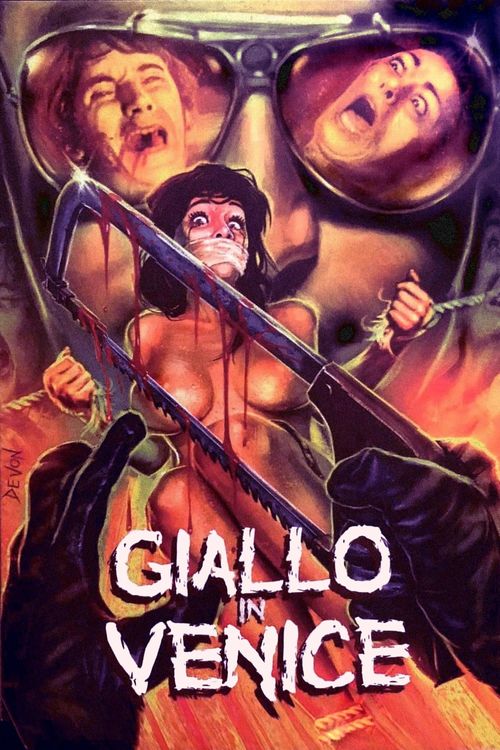
Giallo in Venice (1979)

giallo2

By Richard Winters

My Rating: 5 out of 10

4-Word Review: Investigating a couple’s murder.

Inspector Angelo (Jeff Blynn) heads the investigation of the death of a couple (Gianni Dei, Leonora Fani) who were murdered brutally in broad daylight along the riverside and in full view of the public though only an old man living in a nearby apartment is able to offer any tangible eyewitness testimony. The odd thing is that the killer for some reason saves the woman victim from drowning only to then stab her later once he brings her to shore. To learn more about the couple Angelo speaks with a local prostitute named Marzia (Mariangela Giordana) who confides that Fabio, the male victim, had deep seated sexual perversions that came-out during his marriage to Flavia the female victim. His drive to pursue these dark fantasies, which we see through flashback, and forcing his wife to play into them, she believes in some indirect way is what lead to their deaths.

This film is considered to be the final word in giallo shock cinema that permeated the Italian movie scene all through the 70’s and into the early 80’s. Not only does it contain some remarkably savage deaths, which get captured in explicit detail, but an extraordinary amount of sex, which has made some liken it to a porn film. It was directed by Mario Landi, who got his start in the 60’s making dramas and even spiritual films before moving into the tawdry drive-in fare of the 70’s that featured stories dealing with prostitutes and drugs. It wasn’t until the end of 70’s when he finally ventured his way to horror, but because of his late arrival and because there were so many other bigger names already in the genre he decided in order to draw some attention and have his movie stand-out in a cluttered field by taking things to the most extreme violent and sexual level he could, which in that respect you could say he succeeds valiantly.

Of course this has lead it to be quite controversial even to this day and very hard to find a complete director’s cut. The version currently streaming on Tubi is heavily edited and runs only 1 Hour 15 Minutes, but the full version, which is 1 Hour 39 Minutes, can be obtained through Full Moon Features, which released the DVD with all gore and sex fully intact in 2022 and this review is based on the viewing of that one.

Many commentors on Amazon and IMDb argue whether this is even a horror film as so much is loaded with sex, and a blaring melodic music score that seemed better suited for a blissful romantic flick, that it gets hard to tell. Some will accuse this of being a cheap soft core porn flick, and they have a point while others will insist that because it has a plot to it and mystery that puts it outside of being an adult film as those focus only on the sex and nothing else. Personally I think both sides could be right and this could easily be labeled the first porn horror film.

While the sex is excessive I did find these moments intriguing simply because of Favio, who I suppose could be considered an early example of what we would now call a porn addict who looks at old pictures of perverse sex acts and then forces his wife to play them out, sometimes with him as a participant, or having her do it with strangers. Things become progressively more extreme as that’s the only way he can continue to get-off making these scenes far darker and creepier than the violent ones featuring the killer. In fact this becomes one of those very rare horror films where the killer is quite forgettable and doesn’t stand-out at all while it’s the victims who are memorable.

The film though is most noted for its graphic violence with the highpoint, or low point depending on your point-of-view, being when the killer slices into a naked women’s leg as she’s tied to a kitchen table, which is prolonged and leaves little to the imagination.  While this is certainly gory what I found more disturbing was when the killer burns a man alive and then, once the flames have been stamped out, you see nothing but the victim’s eyes moving back and forth inside his otherwise blackened, charred head.

The story is not as well thought out as the effects. The opening murder happens in the daytime in a public area with the victim’s screaming out loudly as they’re stabbed making it hard to believe it wouldn’t have drawn more attention than just one lonely old man. The police inspector looks like he spent more time on his perfectly blow-dried hair than the case and his constant egg eating and having one always in his hand gets overplayed. The ultimate killer reveal isn’t surprising nor captivating making this one of the weaker giallos case-wise but makes-up for it with the violence if that’s what you’re into.

My Rating: 5 out of 10

Released: December 31, 1979

Runtime: 1 Hour 39 Minutes

Not Rated 

Director: Mario Landi

Studio: Variety Distribution

Available: DVD

Dead Ringers (1988)

By Richard Winters

My Rating: 7 out of 10

4-Word Review: Twin brother’s relationship erodes.

Twins Elliot and Beverly (Jeremy Irons) work at a clinic as gynecologists with Elliot being the more outgoing of the two. Elliot routinely dates women many of them patients at their clinic but will then ‘hand them off’ to Beverly who is the shyer of the two and unable to get women without Elliot’s help. Since Elliot likes variety in his relationships, he’s okay with Beverly getting the women once he’s lost interest in them and the women can never tell the difference. Things though begin to change when Claire (Genevieve Bujold) enters into the picture. She, like the ones before her, was a patient whom Elliot is quickly able to hook-up with and then after a brief fling is given to Beverly, but this time Beverly falls for her in a deep way and not so eager to drop her. Claire also becomes aware that she’s been tricked by the two and has a confrontation with Elliot about it while she continues to see Beverly on the side. Beverly though becomes conflicted with his dual loyalties unable to handle how fractured his relationship with his brother, who he used to be quite close to, has become spiraling him into a depression that ultimately leads to a dangerous drug addiction. 

In 1981 David Cronenberg became interested in doing a movie about twins and producer Carol Baum sent him articles about Steward and Cyril Marcus. These were identical twins who were gynecologists working and living together in New York City. On the morning of July 17, 1975 both were found dead inside Cyril’s cluttered apartment in what had initially been perceived as being a suicide pact, which was later ruled out, but both did die within a few days of the other. While their deaths generated may articles and even a novel the cause to what circumstances lead to them dying together has remained open and thus Cronenberg decided to ‘answer’ that question with this story though he had to go through many years of different producers, screenwriters, and various different drafts before this version was finally given the green light.

If you’re a fan of Cronenberg, particularly his gore, which he’s best known for, then you may be disappointed with this as there really isn’t much. There are still some disturbing moments including the garish genealogical instruments that Beverly pays an artist, played by Stephan Lack, to create which he then plans on using on one of his patients, to the shock of his medical staff, which is a creepy moment. There’s also a dream sequence where Claire bites off a membrane connecting the two brothers, which is cool, but brief. There was also a scene shot that had the head of one of the twins coming out of the stomach of the other one, but this didn’t go over well with the test audiences, so it got cut, but I really wished had been left in. 

It’s really Irons and his incredible performance as the twins that makes this such an engaging movie to watch. Having one actor playing dual roles has certainly been done before, but never quite this effectively. Even though they look exactly alike I really got the sense these were two different people and Irons ability to craft such diverse personalities and postures, this was achieved by putting his weight on the balls of his feet while playing one of them and having his weight put on his heels while playing the other helps to, in a very subtle way, create a strong distinction and a hypnotic presence that sucks you into the story and never lets you go. 

My only quibble is that rarely have I seen twins that you couldn’t tell apart in some way. I noticed that Irons did have some minor moles on his right cheek and then another on the left side of his head near his eye. In the movie both of the brothers have these lesions in the exact same place, but I think in reality they wouldn’t, so they could’ve masked the moles on one of the characters through make-up, so it would only show on one of them and that could’ve been a way to tell them apart physically. There’s also the issue with one of them given a women’s name, which Claire does question at one point. Beverly gets quite defensive when it’s brought up insisting that his name is spelled in the ‘masculine’ way, but on the credits it’s spelled out just like it would had the name been given to a female, so I felt there should’ve been more explanation of why he’d been given an unusual name as it was something that would certainly come off as odd to many and I don’t think I’ve ever heard of a man with that name. 

I also had some problems with Bujold’s character as she seems to be plopped in solely to get the story going and start the process of having the brother’s strong bond dissolve, but for a character to generate such a pivotal thing I think she should’ve stood out more. What was it about this woman that created a division between the boys that the other women hadn’t? I would’ve liked seeing her more involved in the conflict possibly confronting Elliot in an angry way, not the conciliatory one we see here, and forbidding Beverly to see him, which would’ve helped make her more prominent versus just being a story device. 

My Rating: 7 out of 10

Released: September 23, 1988

Runtime: 1 Hour 53 Minutes

Rated R

Director: Michael Cronenberg

Studio: 20th Century Fox

Available: DVD, Blu-ray, Peacock, PlutoTV, Roku,Tubi, Amazon Video, YouTube