Category Archives: Dry Humor

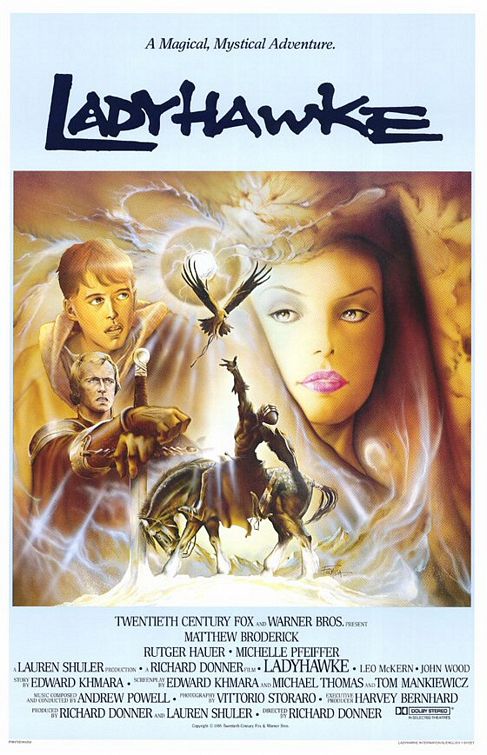
Ladyhawke (1985)

ladyhawke 1

By Richard Winters

My Rating: 5 out of 10

4-Word Review: Trying to reunite lovers.

Philipe (Matthew Broderick) is a thief who manages to escape the confines of the dungeon in Aquila by squeezing through a prison drain and then swimming through the underground sewer. When he finally reaches safety he meets up with Navarre (Rutger Hauer) who is also on the run and straddle with a very strange curse placed on him by the Bishop (John Wood). It seems that the Bishop had a thing for Lady Isabeau (Michelle Pfeiffer) and became enraged when he found that she loved Navarre and not him. As part of his revenge he made it so Navarre and Isabeau will never be able to meet in human form by having Navarre turn into a werewolf by night while Isabeau becomes a hawk by day. Now Navarre wants to use the reluctant Philipe’s knowledge of the city to help him find the Bishop and kill him, which he hopes will then end the curse.

I have to admit that medieval fantasy is my least favorite of all movie genres. The archaic living conditions always comes off as gloomy and depressing and the fact that the action is limited to only swordplay seems to make it less exciting. However, the film has some impressive cinematography and Broderick’s humorous character kept me engaged most of the way.

I also liked the pounding Philharmonic musical score. I realize that it doesn’t fit the sound of the 13th century setting and some fans of the film hate it for just that reason, but it still gives the film distinctiveness and helps boost the energy. I was actually disappointed it wasn’t used more as it seems to taper off too much after booming out strong at the beginning.

I am so used to seeing Hauer playing dark characters that I was initially thrown having him play a good guy, but pleasantly surprised at how well he did it. Leo McKern is a standout as the elderly Imperius.  His castle residence is marvelously captured and I loved all the booby traps he has in store for the invading soldiers. Pfeiffer on the other hand is a bit miscast mainly due to her model-like face that seems too glossy for the time period.

The exciting jousting sequence that takes place during the finale between Hauer and actor Alfred Molina’s character is outstanding, but it takes too damn long to get there. The simple plot could have been wrapped up in a much briefer runtime. The second hour is filled with a lot side dialogue and scenarios that add nothing to the story or characters and should’ve been cut completely. The romance angle is also handled too much from the perspective of a 14-year-old schoolgirl and the scene where the lovers reunite could be deemed as corny by some.

There is also the issue of Navarre looking directly at an eclipse that conveniently occurs through a broken stain glass window in a church. Normally a person would have to shield their eyes with their hand, squint or at the very least turn away from it after only a few seconds. Yet this character stares at it for an extended period without even blinking, which at the very least would’ve burned dark spots into his field of vision and yet strangely that doesn’t occur.

My Rating: 5 out of 10

Released: April 12, 1985

Runtime: 2Hours 4Minutes

Rated PG-13

Director: Richard Donner

Studio: Warner Brothers

Available: VHS, DVD, Blu-ray, Amazon Instant Video
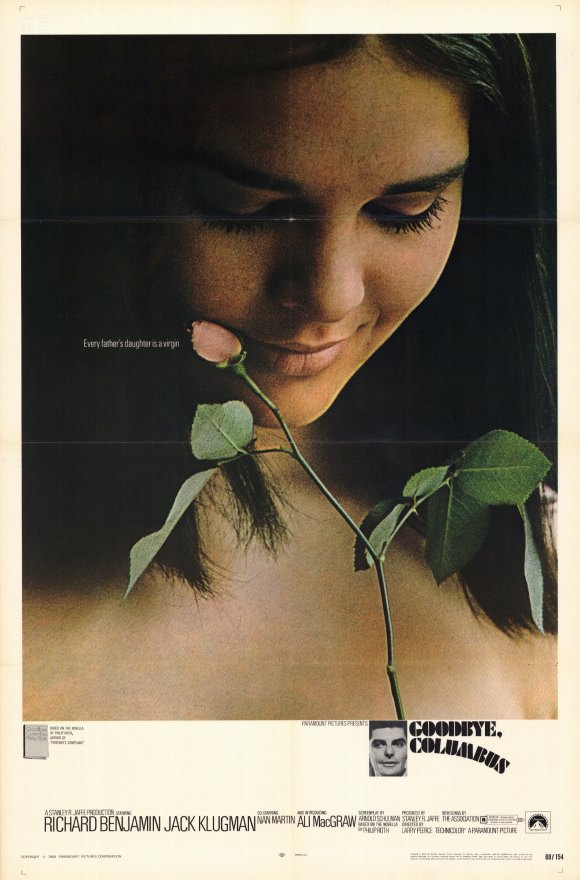
 

Goodbye, Columbus (1969)

goodbye columbus 2

By Richard Winters

My Rating: 8 out of 10

4-Word Review: Dating a rich girl.

One day while at a pool party Neil (Richard Benjamin) becomes infatuated with beautiful Brenda (Ali MacGraw) and proceeds to begin a relationship with her. He has just recently graduated from college and still not quite sure what direction he wants to take in life. He doesn’t want to fully ‘drop-out’, but isn’t so excited about diving in to the corporate business world where making a lot of money is the only focus. Brenda on the other hand is from a rich Jewish family who enjoys her privileged lifestyle, but not always the pretension that comes with it.  She continues to date Neil simply out of spite to her mother (Nan Martin) who doesn’t approve, but as things progress their differences and values become more pronounced and sends the relationship teetering on the brink.

Director Larry Peerce did some high quality films during the sixties and it is unfortunate that by the seventies his output dropped off. I think overall this is his most complete work and a wonderful compliment to the Philip Roth novella from which it is based. The location shooting is outstanding and one of the main things that gives the film a personality. The giant suburban house in which Brenda’s family lives makes one of the biggest impressions not only with its large exterior, but interior as well where every room is wallpapered with its own distinct color and design. The library where Neil works is also visually impressive especially with its large marble columns and painted cathedral ceilings.

The film is filled with a lot of memorable and amusing scenes. Neil’s interactions with Brenda’s ten-year-old younger sister Julie (Lori Shelle) is entertaining not only with a game of hoops that the play, but most especially their ping pong contest that they play later. Neil’s attempted conversation with a deaf man while inside the library is funny as is seeing Neil sneaking into Brenda’s bedroom each night when the parents are asleep. You also got to love Neil’s shocked response when he finds out Brenda has not been taking the pill and the scenes at the wedding reception of Brenda’s brother is filled with a lot of keen observations. If you look closely you will be able to spot Bette Midler, Michael Nouri, Jacklyn Smith and Susan Lucci as wedding guests.

MacGraw has never looked more beautiful and Peerce spends several minutes lovingly photographing her swimming in the pool, which isn’t bad. Her performance as a spoiled rich girl going through fits of rebellion, but not quite ready to completely break from her soft lifestyle is on-target and proves that she is not just a pretty face, but an excellent actress as well. Although already 30 at the time she plays a 20-year-old quite convincingly.

Michael Meyers as Brenda’s older brother Ron is a scene stealer not only with his empty ‘discussions’ with Neil, but also with the way he orders around the other workers as a supervisor at a job he wouldn’t have had, had he not been the owner’s son. This proved to be his one and only movie appearance. He eventually became a physician in real-life and wrote an autobiography entitled ‘Goodbye Columbus, Hello Medicine’.

In some ways I saw a lot of similarities to this film and The Graduate and consider it to be just as much of a classic. I enjoyed the way the film explores the different stages of the relationship and the final argument the two have is quite revealing.

My Rating: 8 out of 10

Released: April 3, 1969

Runtime: 1Hour 41Minutes

Rated R

Director: Larry Peerce

Studio: Paramount

Available: VHS, DVD, Laser disc, Amazon Instant Video, YouTube

Shadey (1985)

shadey

By Richard Winters

My Rating: 6 out of 10

4-Word Review: His thoughts onto film.

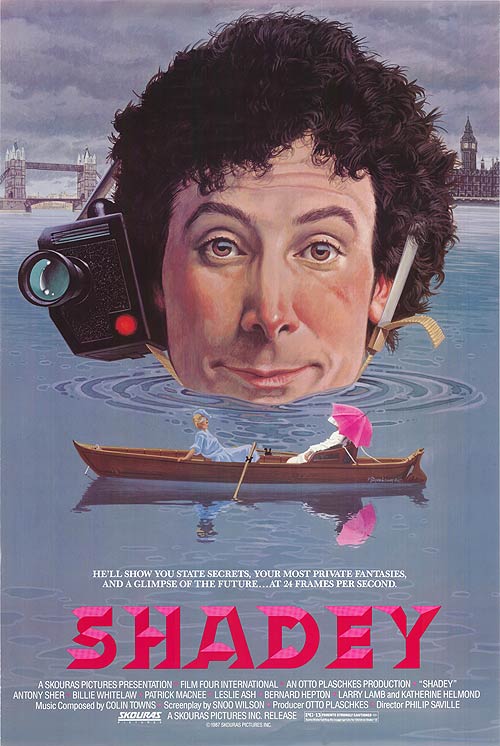
Oliver Sher (Anthony Sher) finds out that he has an amazing ability. Not only can read other people’s minds, but he can also transfer those thoughts onto film. He tells his secret to Cyril (Patrick Macnee) a wealthy businessman hoping he can use his unique ability for some purpose and thus pay him enough money for a sex change operation, which is his ultimate goal. His only condition is that his ability not be used for military purposes. Unfortunately Cyril disregards this and strikes a deal with Doctor Cloud (Billie Whitelaw) who does experiments for the military and sees Oliver as her next guinea pig. Soon Oliver finds himself and his ability being exploited, but gets his revenge by taking advantage of Cyril’s emotionally fragile wife Constance (Katherine Helmond) in a weird and interesting way.

This film is quite original and manages to hold up all the way through. Some of the caricatures are a bit predictable mainly in the way it portrays the older brass businessman and military, but otherwise it defies all genres. It has a nice cerebral quality to it as it moves between being sad and dehumanizing to sharp and satirical sometimes in the very same scene. The humor is laced with drool, dry British wit that makes it engaging and fun.

The old British pros really help here. Macnee with his perpetually stern expression and terse delivery is fantastic. Whitelaw is also good as always as she plays her cold business-like character perfectly.

The best performance though goes to Helmond. She is best known for play Jessica Tate on the 70’s sitcom ‘Soap’ as well as co-starring in the 80’s TV-show ‘Who’s the Boss?’ yet her appearance here may be her career highlight. She has always had a wonderful ability at conveying child-like qualities in adult characters and here that comes to great use. Her facial expressions are both touching, unnerving as well as humorous and the scene where she eats coal from a fireplace while crouching on the ground is unforgettable.

The script could have gone further with its intriguing premise, but manages to be provocative nonetheless. The points it makes are good as it shows how those that are exploited will eventually do the same to others and how you never really know or understand someone no matter how much you think you get inside their head as well as examining how the image can sometimes take on more importance than the reality. The interesting chase that takes place at the end where Shadey continuously rides an elevator from the top of a building to the bottom while the bad guys busily run up and down the stairs to catch him is just one of the many unique scenes in this movie that makes it worth catching for those with an offbeat frame of mind.

My Rating: 6 out of 10

Released: November 18, 1985

Runtime: 1Hour 30Minutes

Rated PG-13

Director: Philip Saville

Studio: Skouras Pictures

Available: VHS

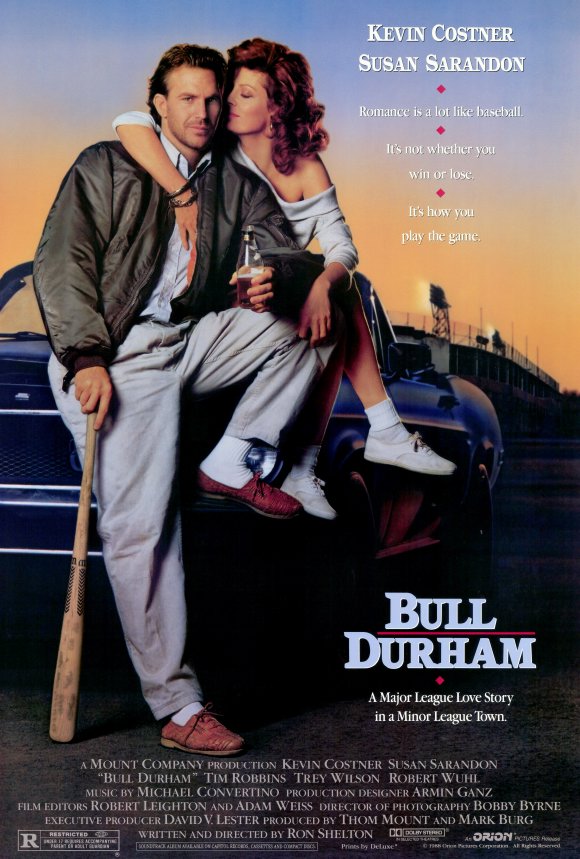
Bull Durham (1988)

bull durham

By Richard Winters

My Rating: 7 out of 10

4-Word Review: Catcher mentors a rookie.

Crash Davis (Kevin Costner) is a veteran of the minor league baseball system and is brought in to the Durham Bulls to help mentor Ebby Calvin ‘Nuke’ LaLoosh (Tim Robbins) a rookie pitcher with a ‘million dollar arm, but a five-cent brain’. Crash teaches Nuke all about the finer points of the game as well as learning to show discipline and control both on and off the field. Annie (Susan Sarandon) is a local fan who each year does some ‘mentoring’ of her own with one of the players by taking them in and having a torrid sexual relationship with them. This year she chooses Nuke much to the consternation of Crash who would like her for his own.

The film is loosely based on the experiences writer/director Ron Shelton had while being a minor league player during the late 60’s.  Keeping the focus solely on the minor league level and never analyzing the majors was to me a big strength. Too many times Hollywood sports movies try to capture that ‘championship season’ or ‘miracle victory’ while forgetting that there are hundreds if not thousands of players who never get to that point, but still have interesting stories to share. The minor league theme puts the game back to its grass roots level where it should be while evoking a wonderful feeling of modern day Americana.

The film makes the viewer feel that they are right down on the field with the players and they gain special insights into the game that they would never have just watching it in the stands on or TV. The thoughts that go through a hitters head as he stands at the plate are interesting as are the interplay between catcher and pitcher. The meeting at the mound scene where the players get together during a game to discuss what wedding gift to get another player who is about to be married is hilarious as is the segment where Crash teaches Nuke all the sports clichés to give when being interviewed by the media.

Robbins is terrific in what I still consider one of the best performances of his career. The character could have been annoying if there weren’t so many young men out there like that. The composite of the young, brash, cocky hot shot who thinks he knows everything, but actually knows very little is so perfectly done that just about anybody will be able to identify with somebody they know or have known who is just like it.

Costner on the other hand is a bit too detached and his performance comes off very much like the restrained way he dances during the closing credits. The character also seems like a flaming alcoholic as he is seen drinking in just about every other scene, but his ongoing exchanges with Robbins are great and the main ingredient that holds the film together.

Throwing in a sex angle was to me a turnoff as personally I never like to mix the two. The Millie (Jenny Robertson) character that is shown and known to sleep with a lot of the players seemed to me to be idiotic especially since this takes place in the 80’s, which was at the height of the AIDS scare.

Sarandon is okay although the part was originally intended for Kay Lenz who I think I would have preferred. The line where her character states that she would never sleep with a player who hit under 250 unless he had a lot of RBI’s and was a great glove man up the middle is classic and the scene near the end where her and Crash make love in a bathtub while surrounded by a throng of lighted candles is on a visual level a highlight.

I loved the bluesy music score as well as the shrine to Thurmon Munson seen at the end. I wouldn’t say this is my favorite sports movie, but the characters are richly textured and the dialogue instantly quotable, which makes it a winner anyways.

My Rating: 7 out of 10

Released: June 15, 1988

Runtime: 1Hour 48Minutes

Rated R

Director: Ron Shelton

Studio: Orion Pictures

Available: VHS, DVD, Blu-ray, Amazon Instant Video
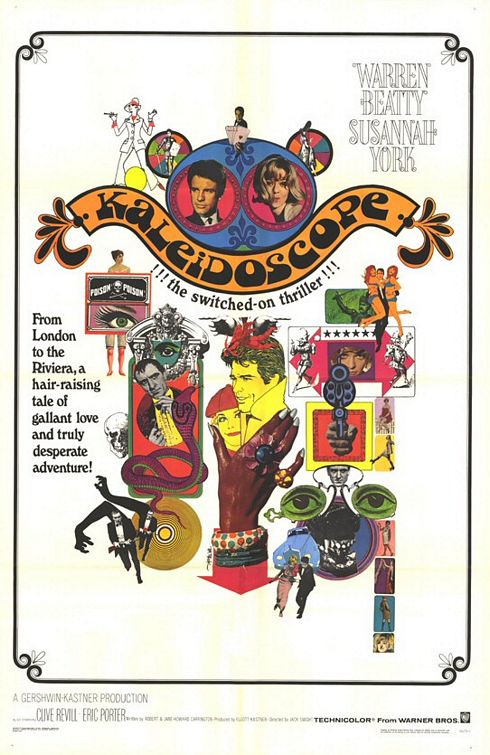
Kaleidoscope (1966)

kaleidoscope

By Richard Winters

My Rating: 7 out of 10

4-Word Review: He breaks the bank.

Barney Lincoln (Warren Beatty) is a well-off playboy who has come up with a clever scheme that will allow him to win at cards at any casino along the Riviera. He does this by breaking into a card printing company called Kaleidoscope and marking the back of the master plates used to print their playing cards so when he attends the casinos later on he will know exactly what the cards are by reading his own small markings on the back of them.  Angel (Susannah York) is a cagy and flirtatious woman who recognizes Barney’s card skills as a crucial link to help her father (Clive Revill) who is a Scotland Yard Inspector and looking to nab the notorious Dominion (Eric Porter) who is a skilled card player himself.

The idea of breaking into a card printing company and marking the plates is a clever one, but highly improbable. After all if it was so easy to do such as it is portrayed in this movie then wouldn’t somebody else have tried it already? Personally as a viewer the markings were so small that I could not spot them and the Scotland Yard inspector needed a magnifying glass to see them making me wonder how Barney using only his naked eye could make them out when the cards were clear across the table. Also, it seems unrealistic that every casino would use the same cards by the same printing company as there has to be more than one card playing printing company out there to choose from.

Beatty is his usual detached and cool self, which to some degree gets annoying. You want to see this guy sweat a little, but he never does and the character borders on being arrogant and too cocky. However, the intense scene at the end where Barney is playing a high stakes poker game with Dominion is where Beatty’s cool demeanor comes in perfectly particularly when he shows absolutely no facial expressions while everyone else nervously awaits to see what is under the one crucial card that has yet to be turned over.

York is quite good, but sadly underused. The way she initially toys with Beatty a notorious ladies man both on and off screen is delightful and I wanted to see more of it. Their first date culminates with her sitting on top of a cow and he on a hay bale, which can’t be topped, but then her character disappears and when she comes back she is much weaker and less interesting expressing her ‘love’ for the Beatty character like she is just another vapid chick and without the fun edge at the beginning. She does look very attractive here and I loved seeing her in the strapless gown.

Revill is amusing as the much put-upon inspector who has a thing for toy steam engines, but he looks much too young to be playing York’s father and in real-life was only 9 years older than her. Porter adds campy panache as the villain while sporting a most groovy comb-over.

The opening title sequence is done in a way that looks similar to an actual kaleidoscope, which was cool and each scene transitions with a kaleidoscope design. The lavish and garish sets used as an interior backdrop for Porter’s mansion are eye-popping and I loved all the tunnels they have to drive through just to get there. On a mindless level this proves to be pleasant fluff, but the shoot-out and chase sequence at the end gets a little too James Bond-like and is out-of-place with the rest of the film.

My Rating: 7 out of 10

Released: September 22, 1966

Runtime: 1Hour 43Minutes

Not Rated

Director: Jack Smight

Studio: Warner Brothers

Available: DVD (Warner Archive)

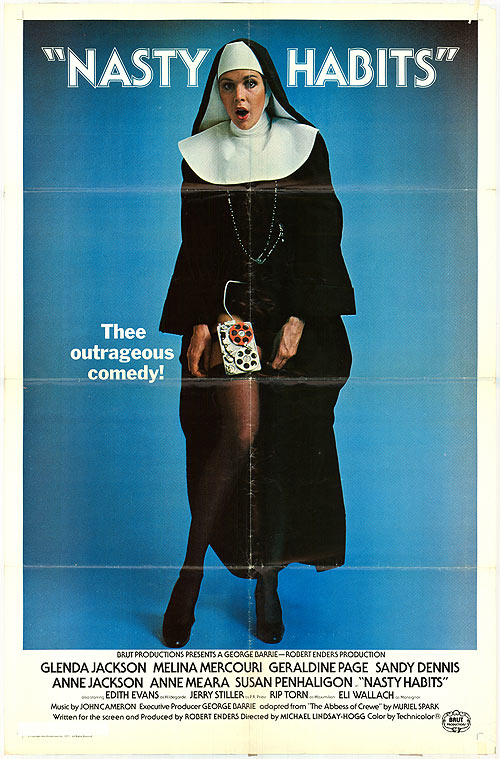
Nasty Habits (1977)

nasty habits 2

By Richard Winters

My Rating: 2 out of 10

4-Word Review: Watergate in a convent.

It’s the Watergate scenario all over again only this time inside a convent with nuns. It’s a unique idea for sure that unfortunately doesn’t work because the screenplay by Robert Enders, which is based on the novel by Muriel Sparks keys in on only one angle and then plays it out until it’s boring. It’s a one-joke movie with nothing standing out as funny. There is also no action to speak of and the dialogue is too dry to elicit even a chuckle.

The once in a lifetime cast is wasted. Dame Edith Evans, in her last film appearance, gets hit the worst as she is given the typical old lady treatment and shown for only a few minutes looking feeble and then promptly dying. Jerry Stiller, Anne Meara, Rip Torn, and Eli Wallach are on so briefly that their appearances seem almost non-existent.

Glenda Jackson comes off best as she manages to give her character an added dimension. The forcefulness of her personality comes through quite clearly for the viewer. However her adversary, which is played by Sue Penhaligon, doesn’t have that same type of strong presence and therefore there is no chemistry or confrontation between the two.

Even the always reliable Sandy Dennis becomes a problem. They have her playing a sort of extended version of her tipsy persona from Who’s Afraid of Virginia Woolf?, but her off- key voice and overall kooky behavior gets overplayed and eventually becomes annoying.

The electronic music score by John Cameron is obtrusive. The pacing is terrible and the lack of momentum will have people turning this off long before it is over, which is good since the climactic sequence falls horribly flat.

There are a few surprise cameos. One is by the late newscaster Jessica Savitch another by former talk show host Mike Douglas, but nothing that helps make this entertaining or memorable.

My Rating: 2 out of 10

Released: March 18, 1977

Runtime: 1Hour 36Minutes

Rated PG

Studio: Brut Productions

Director: Michael Lindsay-Hogg

Studio: Brut Productions

Available: VHS

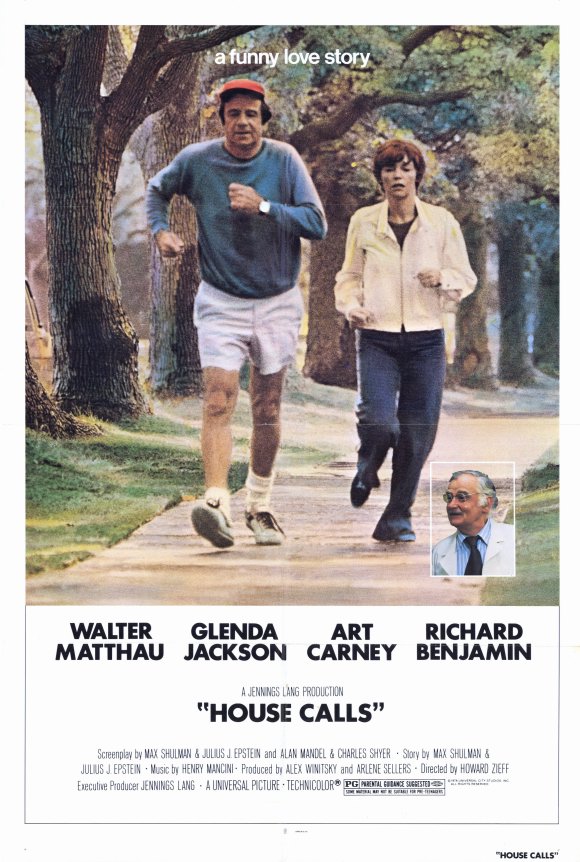
House Calls (1978)

house calls

By Richard Winters

My Rating: 5 out of 10

4-Word Review: Playboy tries mending ways.

Walter Matthau is by all means an incredibly talented performer and a joy to watch. However, in the looks department he rates pretty low and may be one of the ugliest leading men this side of Don Knotts. Yet this film practically shoots itself in the foot from the very beginning by portraying, with a straight face, Matthau as a doctor who has become a super hunk/chick magnet. All the hot young women are chasing after him! His locker is filled with their love letters and he actually beds a different one each night!!! Problems ensue though when he falls for Ann (Glenda Jackson) who is one of his patients. She is a middle- aged woman who is a bit ‘rough around the edges’. She wants him to drop his playboy ways and commit solely to her, yet he is not sure he can.

This is an overly smug, ‘sophisticated’ comedy that is too light and easy going and in desperate need for a fuller story and little more conflict. The comedy should have been broader instead of just being a long precession of glib one-liners. There’s a few comic set ups that are never even followed through on. However, Art Carney’s eulogy to a dead baseball owner and their subsequent burial of him underneath home plate is good.

The casting of Jackson is one of the few inspired things about this film. Her sharp British wit is a perfect foil to Matthau’s laid-back style, but it doesn’t play it up enough. Their one true ‘confrontation’ doesn’t come until the very end and although the spat is definitely contrived it does at least offer the lively fun you expected of this from the very beginning.

Another problem with this film is that it tries to mix the old fashioned romantic comedy with modern day sensibilities. The silly ‘goof ups’ at the hospital really don’t seem so funny when only a few years earlier these same problems were shown in the excellent film The Hospital with much more serious ramifications. It also looks awkward to have such ‘old school’ middle-agers suddenly jumping into the trendy ‘70’s lifestyle of casual sex and one-night-stands.

There is also the stilted habit of referring to sex as ‘humping’. This seems like a very dated, antiquated term even for back then. Let’s face it this is a slow moving comedy made specifically for adults and kids really wouldn’t want to see it anyways, so striving for the ‘PG’ rating was futile. They should’ve sucked it up, accepted the ‘R’ rating and called sex ‘fucking’ like everybody else.

Jackson and Matthau were later reunited in the 1980 film Hopscotch.

My Rating: 5 out of 10

Released: March 15, 1978

Runtime: 1Hour 38Minutes

Rated PG

Director: Howard Zieff

Studio: Universal

Available: VHS, DVD

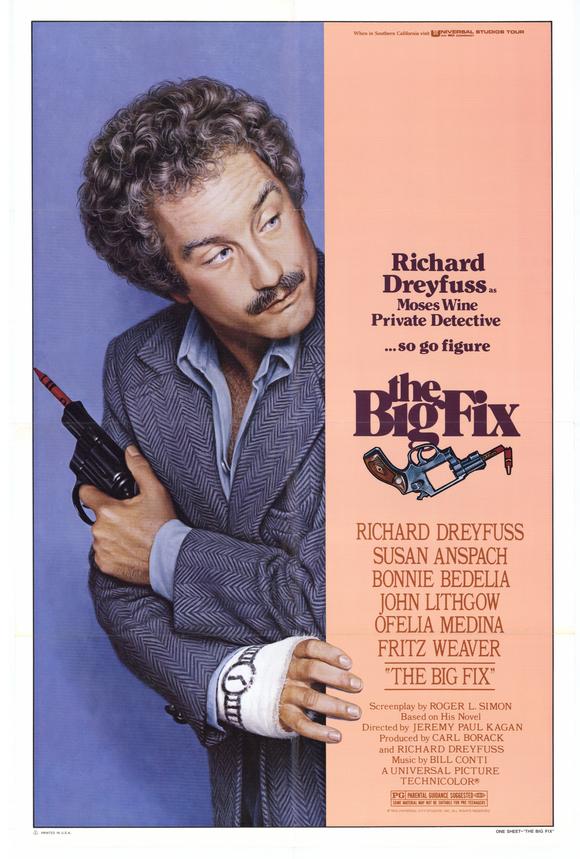
The Big Fix (1978)

the big fix

By Richard Winters

My Rating: 6 out of 10

4-Word Review: 60’s radical turned detective.

Moses Wine (Richard Dreyfuss) was at one time a student radical during the tumultuous 60’s, but now it is 1978 and he is working as a private eye. Most of his cases are unexciting and even mundane, but then Lila Shay (Susan Anspach) a woman he had a fling with during his college days shows up asking for his help. She is now working for a candidate running for governor and she wants Moses to find Eppis (F. Murray Abraham) a former student radical himself who has now gone underground, but seems to be smearing her candidate’s campaign and hurting his ability to be elected. Moses takes the case on a whim, but finds it to be much more complex and dangerous than he bargained for.

The film is based on the novel by Roger L. Simon who also wrote the screenplay and it is almost like a revisionist private eye movie. Everything that we’ve come to accept in this genre gets turned upside down and for the most part with great and amusing success. Moses is not a tough, brawny, stoic figure like most detectives in these films, but instead a little shrimp of a guy that can easily get hyper and frazzled and is certainly never cool under pressure. Many times he will bring his two young sons on the case with him and even use there insight to help him solve the case. He makes mistakes and even has to write certain things down to avoid forgetting them unlike those other detectives that always seem to remember even the smallest tidbits of information. By making the Moses character more human he becomes better relatable and the viewer feels almost like they are in his shoes, which is what makes the story work.

Simon’s script also is a great character study showing how the student protestors from the 60’s have now begrudgingly and awkwardly taken on adult roles and even become a part of the dreaded ‘establishment’. This comes to a head with the Abraham character the one time head of an underground movement that now is seen living in suburbia as a ho-hum family man. His line about why so many of his fellow radicals ‘sold-out’ and became a part of the suburban culture is an excellent and keen observation.

Dreyfuss is perfect in the role as a wise-guy, cynical smart ass. Most of the times characters and actors with these traits are off-putting, but somehow with him it is always engaging. The character is also nicely multi-dimensional. He is acerbic and brash one minute, but then singing lullabies over the phone to his children the next. He acts like his has ‘moved on’ from the 60’s, but then later on tears come to his eyes when he looks at a film of some old student protests. Dreyfuss also broke his wrist just before filming began and so they wrote it into the script and it becomes a funny running gag as different people ask him how he broke it and each time he tells them something that becomes increasingly more outrageous and amusing.

Bill Conti’s musical score is bouncy and distinctive and gives the film an added kick. He also employs several different styles including ragtime, disco, electronic and even a ballad by Leon Redbone.

The mystery is full of twists and close attention must be paid, but it is doubtful anyone will figure the surprise at the end. Baby boomers that lived through the period may be more connected to this than others, but it is still entertaining and a terrific time capsule.

My Rating: 6 out of 10

Released: October 6, 1978

Runtime: 1Hour 48Minutes

Rated PG

Director: Jeremy Kagan

Studio: Universal

Available: VHS, Netflix streaming

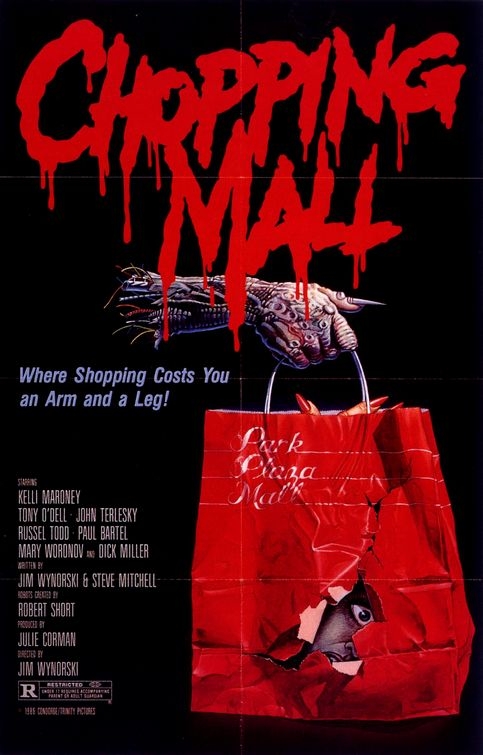
Chopping Mall (1986)

chopping mall

By Richard Winters

My Rating: 3 out of 10

4-Word Review: Killer robots on prowl.

A new high-tech shopping mall installs robots as their night security team. They are programmed to apprehend and subdue any intruders, or anyone not showing them their security badge. A bunch of teenagers who work at the mall during the day decide to hang out and party there at night, but find that the robots have run amuck and are now trying to kill them. Locked into the place for the whole night the teens try fighting them off while desperately looking for a way out.

This was writer/director Jim Wynorski’s second feature and the beginning of an almost assembly line string of direct-to-video/B-movie features that of this writing now equals 94 and many of them done under a pseudonym. Wynorski shows some flair by injecting comedy into the proceedings including an engaging opening sequence done over the credits that includes a lot of sight gags and a good up-tempo synthesized score that fits the mood and action. There are also some fun cameos including Paul Bartel and Mary Woronov who appear at the beginning and recreate their roles from the hilarious cult hit Eating Raoul. You can also spot Mel Welles from Little Shop of Horrors fame as well as perennial B-movie favorites Dick Miller as a janitor and Gerrit Graham as a technician.

It was filmed at an actual mall in Sherman Oaks, California, which makes for an interesting backdrop and good authenticity. I also liked how the teens, both the men and women, are very resourceful and come up with different and elaborate ways to combat the robots. The female cast is attractive with a decent amount of nudity. The special effects aren’t bad either. I was impressed with the exploding head sequence as well as the burning body moment. My only quibble in this area is that they were able to break the glass of the storefront windows, which happens several times during the course of the film, much, much too easily.

The biggest problem with the film is that it just isn’t scary or suspenseful enough. The only time there was any real tension is towards the end when the Kelli Maroney character hides underneath some shelves at a pet store and is forced to keep quiet from the lurking robot while a  snake and spiders crawl all over her. Despite some interesting directorial touches it still comes off as mechanical and formulaic and even though the running time is short I still found myself getting quite bored with it. There is also never any explanation for why the robots go haywire, which I felt was a major oversight.

My Rating: 3 out of 10

Released: March 21, 1986

Runtime: 1Hour 17Minutes

Rated R

Director: Jim Wynorski

Studio: Concorde Pictures

Available: DVD, Amazon Instant Video, YouTube

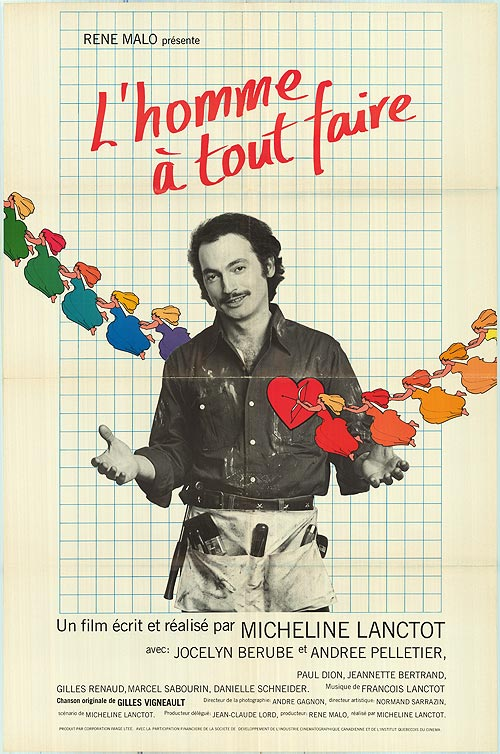
The Handyman (1980)

the handyman

By Richard Winters

My Rating: 6 out of 10

4-Word Review: He’s unlucky in love.

Armand (Jocelyn Berube) is a chump of the first order. Everything he plans or does never seems to work out. He writes a letter to his mother describing how he has finally gotten himself married and how ‘he won’t die a bachelor’ only to have her walk out on him after only a few months. He tells his best friend the secret place where he hides all of his money and then the next day the friend steals the money. He brings in a new roommate only to have that man listen in to his private phone calls and when he does meet an attractive woman who he thinks is interested he gets her a romantic gift only to have her and her friends laugh at him behind his back. “The world is made up of two types of people,” he states “Those that take and those that are taken and I tend to be the latter.”

Things seem to improve for him when he gets a job fixing up the house for bored and attractive housewife Therese (Andree Pelletier). She is unhappy with her marriage to Bernard (Gilles Renaud) who is indifferent to her feelings and more interested in his golf game than her. She considers Armand’s unpretentiousness refreshing and Armand of course becomes immediately smitten. The two make an attempt at an affair, but as usual Armand gets in over-his-head.

One of the things that really stands out in this movie is the way Armand and Therese’s relationship unfolds. In most movies it always seems like love at first sight and both people get animalistic urges that they can’t contain and impulsively jump into the sack, but here it is much different. For one thing their attraction for one another progresses at a much slower and more realistic pace and does not come to a head until after several months. Both parties are shown contemplating their next move and their desire for one another is constantly being balanced by their reluctance at knowing how much trouble and guilt they will have if they do go through with it. How they respond to each other after they have sex is equally revealing and the quirky relationship that Armand later has with Therese’s husband is also quite interesting.

Although I felt that actor Berube’s bushy mustache and 70’s hairstyle seemed a little overdone I still found the character to be highly amiable. You tend to feel for the guy even after he makes one blunder after another. Actress Pelletier is certainly attractive, but her thick Nordic accent was a bit of a turn-off although probably realistic for the region.

My only complaint from this otherwise widely hailed low budget obscurity is the fact that the Armand character doesn’t grow or evolve at all. This is a man that knows he has a weakness for being taken advantage of, but doesn’t do anything about it. Watching him perpetually self-destruct to the point that he finds himself living out of his car and even contemplating jumping off a bridge is frustrating and depressing. Showing him having just one defining uncharacteristic moment where he somehow manages to transcend himself would have been much more satisfying and in some ways more realistic.

My Rating: 6 out of 10

Released: March 14, 1980

Runtime: 1Hour 39Minutes

Rated PG

Director: Micheline Lanctot

Studio: Les Films Reno Malo

Not Available at this Time.