Category Archives: Cult

Pieces (1982)

pieces-1

By Richard Winters

My Rating: 0 out of 10

4-Word Review: Cutting up the coeds.

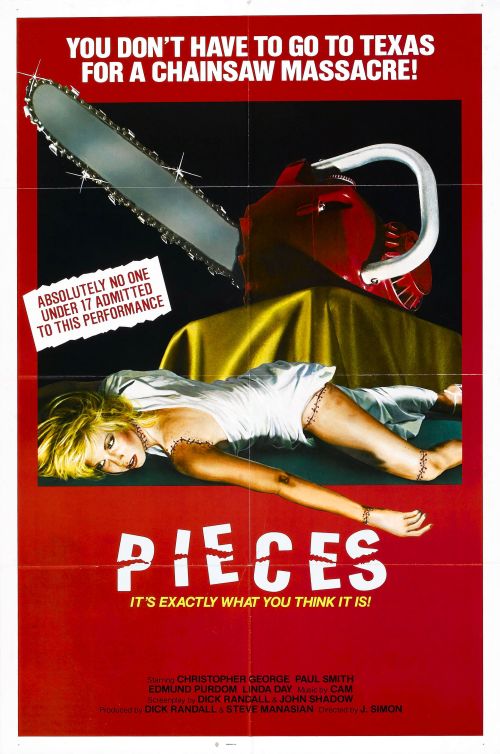
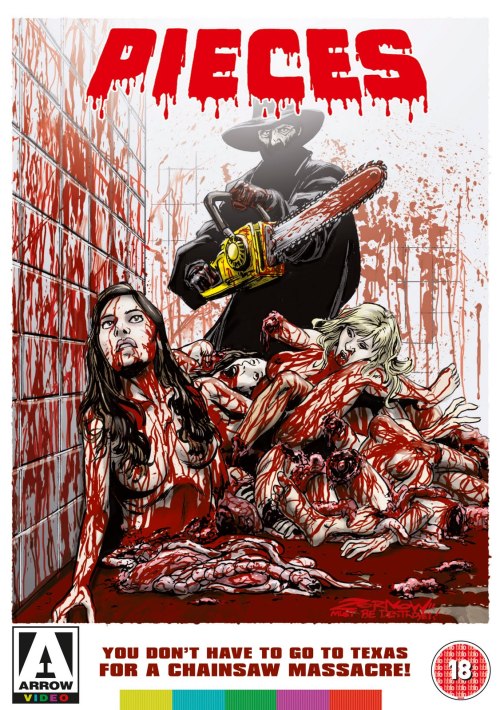
This review will be the first of many in which we celebrate October by reviewing all horror movies for the entire month. The film we look at today has managed to gain a strong cult following and deals with a Boston area college that is under attack by an elusive killer who slashes coeds to bits and then uses their body parts to create his personal human-sized jigsaw puzzle.

Horror director Eli Roth describes this film as being one of the top “horror films of all-time” and “the ultimate slasher film” with “the greatest ending in horror history”. Unfortunately I thoroughly disagree with him and was genuinely beginning to wonder if we had even seen the same movie, or if he was just joking. To me it was just another cheaply made horror flick made by a producers looking to cash in on the ‘80s slasher craze by churning out something that is completely formulaic and offers nothing new or imaginative to the genre. The plot is dull and predictable and the scares nonexistent. Even the killer is boring by appearing as this shadowy figure that has no features or distinction. Also, the film’s setting is Boston, but no one speaks with a New England accent and instead just about everyone has a European one.

The opening bit, which supposedly takes place in 1942, is full of anachronistic errors and the other killings, with the exception of the one that takes place on a water bed, fall equally flat. The one that I found particularly ridiculous features a coed, which is played by actress Cristina Cottrelli, who gets killed while swimming in an indoor pool. The killer stands on the edge of the pool and uses a long handled net to ‘catch’ her as she swims and then drags her back towards him. However, the net would be too flimsy for this and if she had given it any resistance at all it would’ve been enough to make the killer to lose his balance and fall into the pool. She also could’ve easily escaped from it by diving beneath the water. The fact that this same net also manages to knock her out is even more absurd although she does manage to regain consciousness only to see the killer coming at her with a chainsaw, but instead of just rolling back into the water for an easy escape, which is literally just inches from her, she instead passively lies there and screams while he hacks her up.
pieces-4

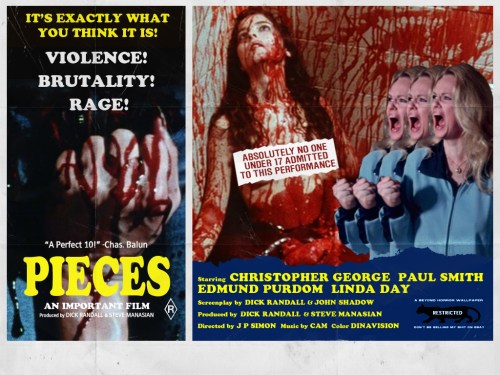
I might’ve given it a few points had the gore been better, but I really wasn’t impressed. There’s lots of quick cutaways before anything much is shown and the body parts were clearly just stuff taken from mannequins and then doused in red paint.

The film got some notoriety at the time for its violence and then was disown by its two stars Christopher George and his wife Lynda Day George who insisted they were unaware that this was going to be a horror film when they agreed to sign on. The truth is they were already doing a lot of horror films before this as their careers were in severe decline and it was the only thing they were being offered. Chances of them thinking this was going to be anything different was slim and they probably were simply reacting to the critical backlash and trying to save what was left of their reputations by ‘disowning’ it even though it made very little difference as George ended up dying from a sudden heart attack just 2 months after its US release.

Edmund Purdom, who was at one time a top European star during the ‘50s should’ve been equally embarrassed and apparently was equally desperate to have signed on. The only other recognizable face is Paul L. Smith who gets stuck with an insignificant role as the maintenance man and uses some over-the-top facial expressions that I found more annoying than funny.

That ‘greatest ending in horror history’ that Roth describes is also really stupid and in fact may be the dumbest part in the film. If you don’t want to read a ‘spoiler’ then look away now although it really doesn’t have anything to do with the rest of the plot anyways, which is the reason why I’m choosing not to give this paragraph my usual ‘spoiler Warning’ alert. Anyways the scene deals with a hand of a dead body suddenly reaching up and grabbing the crotch of the protagonist (Ian Sera), but the corpse was facing away from the character meaning that if it had somehow extended its arm then only the back of the hand would’ve touched the character and no grabbing would’ve occurred. Also, there were no supernatural elements ever introduced into the film, so how then does this body suddenly manage to move anyways?  ‘Surprise endings’ can be fun, but if they make no sense and have nothing to do with what’s occurred before then they become pointless and shouldn’t be added.

Some fans seem to enjoy this for its cheesiness, but for me it was a real chore to sit through and not amusing even on a bad movie level. Even if one makes a party of it by showing it with a group of friends and some beer I don’t see it getting much better.
pieces-5

My Rating: 0 out of 10

Released: August 23, 1982

Runtime: 1Hour 29Minutes

Not Rated

Director: Juan Piquer Simon

Studio: Artists Releasing Corporation

Available: DVD, Amazon Instant Video
The Cars That Ate Paris (1974)

cars-ate-paris-1

By Richard Winters

My Rating: 7 out of 10

4-Word Review: Lots of car accidents.

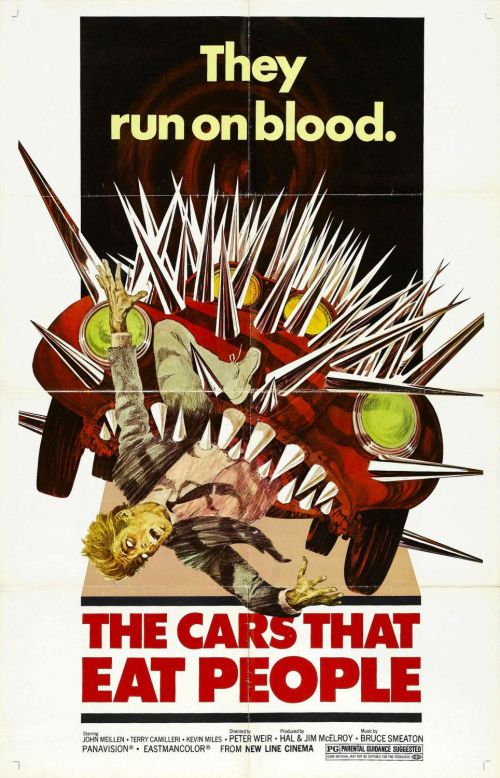
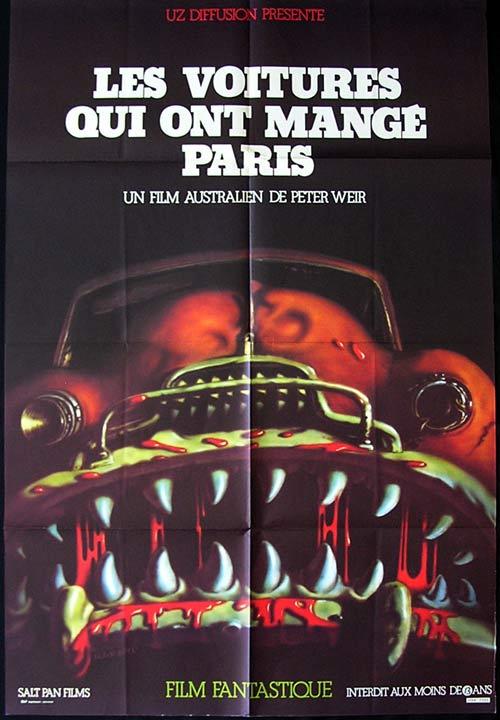
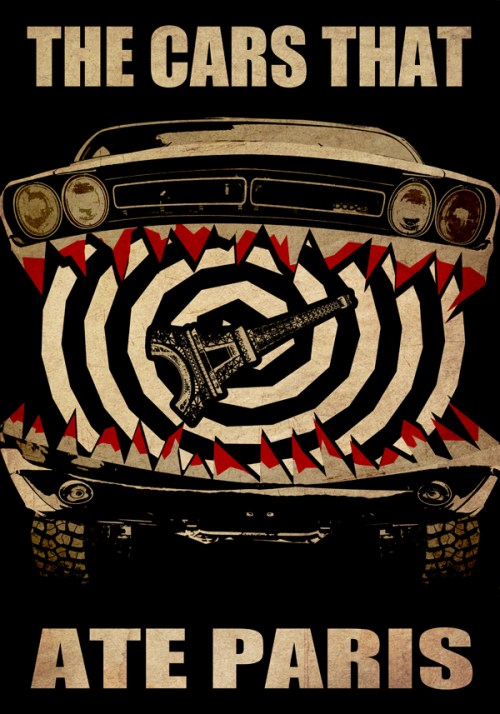
The residents of a poor Australian town known as Paris come up with a scheme to cause car accidents to those traveling through it which will allow them to salvage what’s left of the vehicle and resell it for goods or cash.  Things go smoothly for a while until Arthur (Terry Camilleri) and his brother George (Rick Scully) become victims to one these ‘accidents’. George dies, but Arthur survives and is too traumatized to get back into a car again or leave town. He takes up residence with the town’s mayor (John Meillon) who gets him a job as a parking enforcer, which causes problems when Arthur gives a citation to some rowdy young people who do not take kindly to this and seek a violent revenge.

This decidedly odd story marks director Peter Weir’s feature film debut and it’s hard to know what genre to place it into. Originally it was intended as a wacky comedy, but then dark elements were added in. Eventually it was distributed as a horror film, but it didn’t do well at the box office, so it was reissued as an art film and only fared slightly better. The film has managed to obtain a cult following and the story is original with funny moments, but the unexpectedly gory ending could leave some viewers cold as it did when it was first screened at the Cannes Film Festival back in ‘74.

cars-ate-paris-2

One of the best things about the movie is the casting of Camilleri in the lead. He’s very soft-spoken and has an almost transparent demeanor, which helps heighten the interest because you become intrigued at seeing how this schmuck is going to potentially take down this small town criminal organization, which would’ve been fun, but unfortunately the plot doesn’t get played-out in quite that way.

Meillon is solid as the mayor and I enjoyed seeing how his character puts up this calm façade while simultaneously trying to bottle up all the tension that he has inside. Bruce Spence is effective as the town crazy as well as Chris Haywood playing an average-joe who seems quite benign and good-natured at the beginning only to become increasingly more menacing as the film progresses.

The entire movie was shot on-location in Sofala, New South Wales which has a population of only 208 people and quite possibly the narrowest main street of any town in the world. Weir captures its rundown look well and helps convey how poor and isolated the residents were, which allows the viewer to understand why the people resorted to such desperate measures. However, I didn’t like how these same people immediately flee the town the minute the young adults get out-of-control. People who’ve lived somewhere all their lives become emotionally bonded to it and will not move the moment something goes wrong. They would try to control the threat if they could and only up-and-leave months or years later if they had to. Besides where would these people go as they had no money and limited job skills.

If you’re into offbeat comedy then this one may do for a slow evening although those looking for something in the horror vein will be disappointed.

cars-ate-paris-3

cars-ate-paris-4

My Rating: 7 out of 10

Released: October 10, 1974

Runtime: 1Hour 31Minutes

Rated PG

Director: Peter Weir

Studio: The Australian Film Corporation

Available: DVD

Cannonball! (1976)

cannonball-1

By Richard Winters

My Rating: 5 out of 10

4-Word Review: An illegal car race.

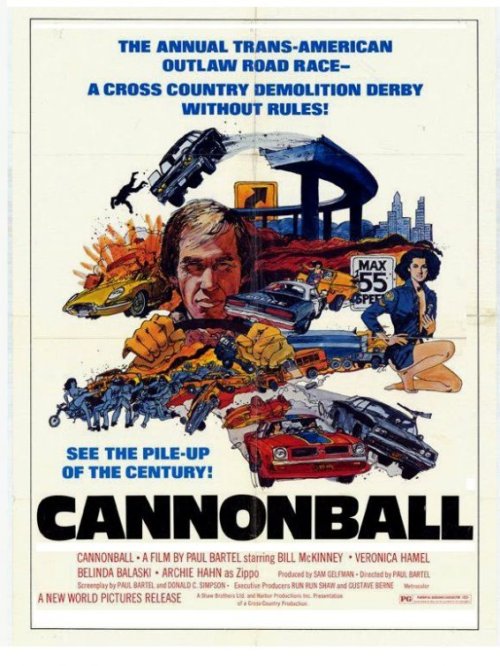
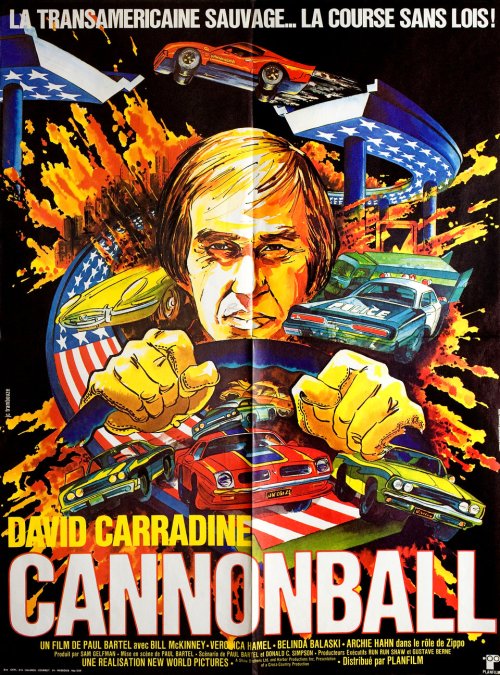
Wacky participants convene in Santa Monica to take part in an unsanctioned cross country car race. All drivers are accountable for any speeding tickets or injuries that they may accrue and the only rule is that the first person to arrive at a designated spot in New York City wins. Yet the race’s top driver Coy ‘Cannonball’ Buckman (David Carradine), who is on parole, risks being sent back to prison if he crosses the state line, but he decides to proceed any ways despite the objections of his lawyer girlfriend (Veronica Hamel) who eventually rides along with him.

This film is based on the same real-life race that inspired The Gumball Rally, but critic Leonard Maltin incorrectly states in older versions of his book that this film plagiarizes that one, which isn’t true as this movie came out first and adds in many different story angles.

Despite the fact that the production is plagued with the typically cheap Roger Corman look and seems more like an extension to Death Race 2000 I still preferred this to Gumball. Both films have characters that are decidedly cartoonish and neither film makes any attempt to recreate what really happened, but this movie has a darker edge and most thankfully a better soundtrack that doesn’t have a kiddie-like melody.

This film also reverses the race’s starting and end points. In both the real-life event and in Gumball the starting point was New York, but here it’s California, which is actually a plus. In Gumball the drivers seemed to go from the Big Apple to the desert southwest in a matter of only a few minutes, which made no sense. Here the film crew is allowed ample time to take advantage of the closed desert roads to do their car stunts, which aren’t bad, and it also sets up an ending in which driver Mary Woronov arrives in New York, but then gets lost in the congested traffic and can’t find the finish line, which is the film’s funniest bit.

The cast is much more eclectic. I really enjoyed Judy Canova in her final film appearance as her facial expressions are a hoot especially as she has her car gets rear-ended by Carradine’s. Dick Miller is entertaining as a man that tries to rig the race and Bill McKinney is very effective as the bad guy. Director Paul Bartel and producer Roger Corman have bit parts as does Carl Gottlieb the man who penned the screenplay for Jaws. Other directors make cameo appearances including Jonathan Kaplan, Allan Arkush, Joe Dante and even Martin Scorsese.

Yet what I really liked is the massive car pile-up that occurs near the end that features car after car crashing into an already existing accident and then exploding one after another into a ball of flames. This was considered quite controversial amongst the crew and star Carradine tried to convince Bartel not to put it in, but he insisted and I’m glad he did. Yes it’s morbid, but it helps put a touch of reality into the whole thing. The ‘70s were filled with a lot of silly car chase movies all with the running theme that people needed their ‘freedom’ and having a speed limit takes away all the ‘fun’, but there is a reason why those rules were put into place as what starts out as a good time can easily turn into something horrific in a matter of seconds. To me this was Bartel’s way of spitting-in-the-face at all those other inane road race movies that always took an innocuous angle while conveniently ignoring the ugly realities that existed just beneath the surface.

cannonball-2

My Rating: 5 out of 10

Released: July 6, 1976

Runtime: 1Hour 34Minutes

Rated R

Director: Paul Bartel

Studio: New World Pictures

Available: DVD, Amazon Instant Video
THX 1138 (1971)

thx-1138

By Richard Winters

My Rating: 9 out of 10

4-Word Review: Sex is not allowed.

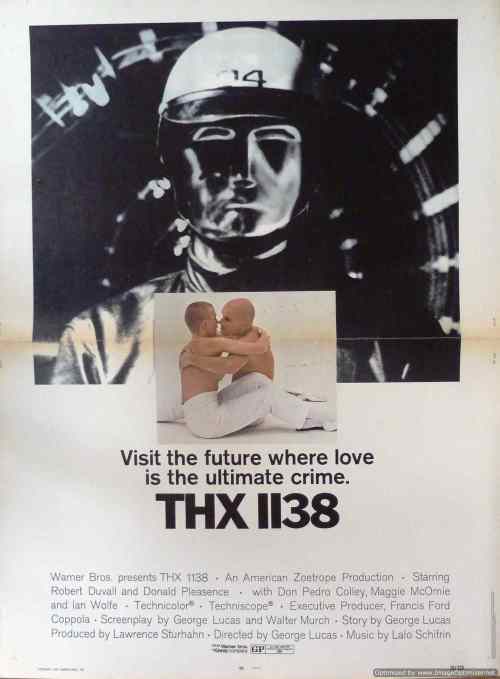
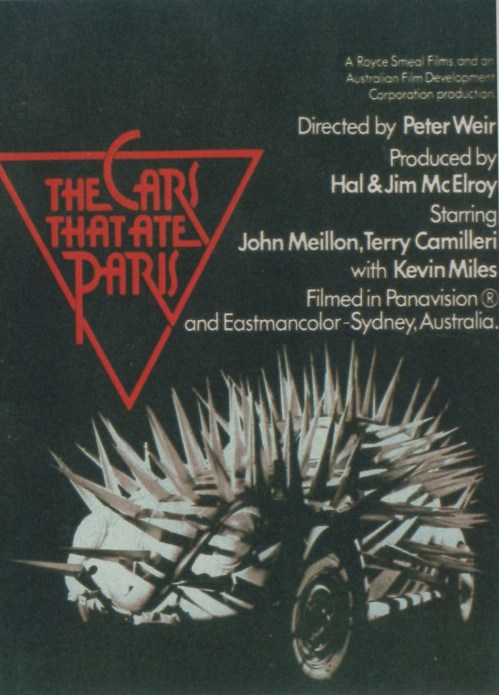
THX 1138 (Robert Duvall) is member of a futuristic, work camp-like society where everyone has shaved heads, forced to take drugs to control their emotions and avoid having sex, which is forbidden. His days are spent on the production line where he helps build police androids and at night he goes home to an apartment where he rooms with LUH 3417 (Maggie McOmie). She is unhappy with her situation and stops taking the required drugs while replacing THX’s with placebos. The two begin a sexual affair and are promptly arrested. THX is thrown into a modernistic prison that has no walls or bars and he eventually decides to attempt a daring escape with the help of SEN 5241 (Donald Pleasence) and a hologram known as SRT 9 (Don Pedro Colley).

This story is an extension to the student film that director George Lucas made while attending the University of California film school. That film was a 15 minute short entitled Electronic Labyrinth: THX 1138 4EB, which dealt with a man trying to escape from a futuristic world while being chased and monitored by government run computers. It won first place in the 1968 National Student Film Festival and was good enough to gain the attention of Francis Ford Coppola who offered to produce a feature film dealing with the same basic premise, but having more of a background to the character and his reason for escaping.

Reportedly Lucas considers this to be his favorite project and despite the fact that it did not do well at the box office I consider it to be his best stuff as well. The visuals are imaginative and striking and make you feel like you are entering a whole new world unlike any that had ever been created before. I especially liked the prison scenes where the characters are surrounded by nothing but an unending white as well as THX’s medical examination done exclusively by robotic arms. Having the characters framed towards the side of the screen instead of the center while action occurs just out of view helps accentuate the off-kilter vibe and was year’s ahead-of-its-time.

Even though there is very little dialogue or music the sound becomes an integral part of the film by relying on comments made by the androids who tell the people in a HAL-like tone to ‘stay calm’ as well as the state sanctioned god known as OHM who routinely advises his followers ‘to be happy’. The best part though comes when two techs have a casual a conversation while viewing through monitors the torture of THX.

The film is visually groundbreaking and one of the greatest directorial debuts of any director living or dead, but it still comes with a few caveats. One is the fact that the plot relies too heavily on the stereotypical Orwellian view of the future where everything is worse than it is today and people no longer have any individual rights. Yet technology has proven to make life increasingly easier for people and with more freedoms and options, so why would everything suddenly revert the other way? Maybe they were survivors of a nuclear holocaust and this society was humankind’s way of ‘starting over’, but that’s never made clear and it would’ve been nice to at least get a glimpse of the person, or people who were behind-the-scenes with the ultimate authority as well as some sort of backstory.

There is also the fact that everyone in this society needs to be working, but jobs today are increasingly being lost to automation every year and that trend will continue. Certain nations like Finland are already experimenting with paying their citizens a basic salary because there are more people than jobs available.  Citizens of future societies are predicted to have more free time than ever before, so why doesn’t the world in this film follow suit? If this society can build android cops why can’t they also build robots to do the all the other jobs too, which would then allow the humans to have more of an idyllic existence than a workaholic one?

I also wasn’t too crazy about the 2004 digital restoration, which added new special effects and footage. I last saw this film in 2001 and could tell right away that this version had been tampered with. I realize that Lucas has been known to do this with his Star Wars films, but to me it’s as bad as colorization. Why mess with something that is already good? The added computer effects does not ‘enhance’ anything, but instead desecrates the original vision and treats it like it were a video game than a movie.

My Rating: 9 out of 10

Released: March 11, 1971

Runtime: 1Hour 28Minutes

Rated R

Director: George Lucas

Studio:  Warner Brothers

Available: DVD, Blu-ray, Amazon Instant Video, YouTube

Picnic at Hanging Rock (1975)

picnic-at-hanging-rock-1

By Richard Winters

My Rating: 6 out of 10

4-Word Review: Where are the schoolgirls?

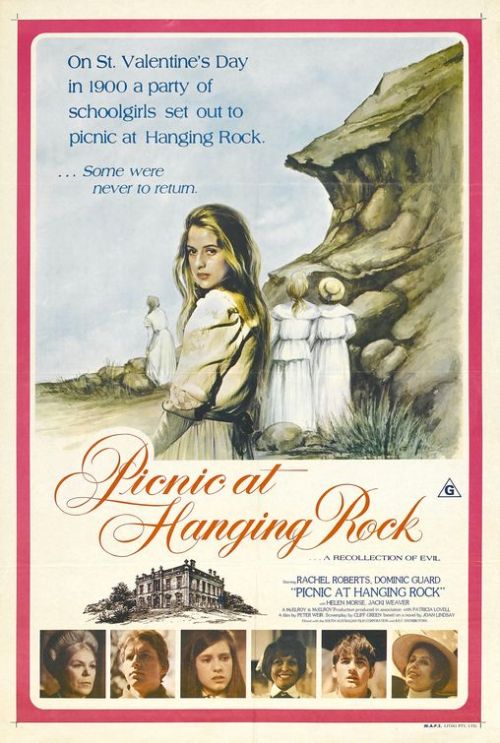
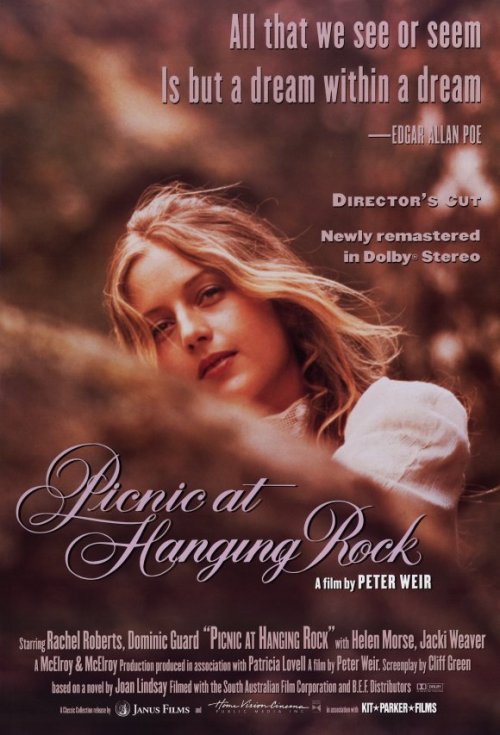
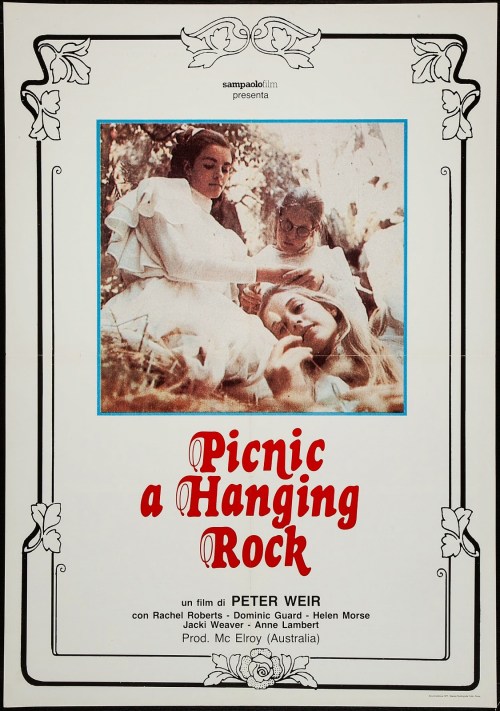
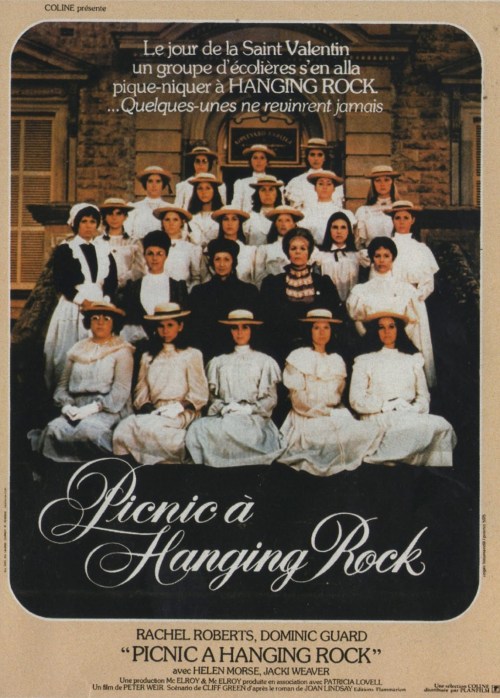
On Valentine’s Day in the year 1900 a group of Australian schoolgirls and two teachers (Vivean Gray, Helen Morse) set out to a rock formation known as Hanging Rock for a picnic. While there one of the girls named Miranda (Anne-Louise Lambert) decides to go exploring and three of the other girls follow. They proceed to climb the rocks, which frightens one of the girls (Christine Schuler) who runs back. By that evening the other three haven’t been located and a search party goes out by the local police to find them, which only leads to more questions than answers.

If one is in to mood pieces then this thing will be the perfect fit. The music and director Peter Weir’s ability to capture the rock formations in a way that makes them seem creepy and menacing is very well done. I found myself being strangely captivated most of the way while also impressed that the whole thing gets captured through a camera lens with a piece of bridal veil hung over it.

The story is based on the 1967 best-selling novel of the same name by Joan Lindsay. Despite many rumors to the effect and a follow-up novel called ‘The Murders at Hanging Rock’ this was not in any way based on a true story. Originally Lindsay wrote a resolution to the mystery that had the girls entering into some sort of time warp, but at the last minute that chapter was excised at the suggestion of her publisher, but then later published in 1987 as ‘The Secret of Hanging Rock’.

picnic-at-hanging-rock-2

The film on the other hand offers no resolution of any kind. Instead like in the book the main emphasis is on how the disappearance affects the people at the school and in the town. Rachel Roberts is a standout in this area playing the strict headmistress Mrs. Appleyard who initially comes off as quite composed and in control, but as the toll of the mystery continues her character unravels in increasingly more shocking ways, which is the film’s highlight.

Despite its cult following and the fact that it is included in the book ‘1001 Movies You Must See Before You Die’ I still came away frustrated and feeling like not enough happened to justify having to sit through two hours of viewing. On the technical end it is excellent and watching the different ways people cope and respond to the mystery is interesting, but this could’ve been played up a lot more.

Sometimes movies with vague endings are good as life doesn’t always give us nice and tidy wrap-ups, but this is one instance where it would’ve been better had there been more of a conclusion even if it had just thrown out some clues and then allowed the viewer to come to their own deductions. To some extent it does this as supernatural elements are introduced as well as the idea that it might’ve been a sexual crime, but even this is off-putting because it’s not connected to anything concrete or tangible and thus makes it all the more evasive.

Had this been based on an actual mystery, which for years is what a lot of people thought, then it would’ve been more acceptable and even fascinating, but the fact that it’s all made up hurts it and tears away the mystique that for a long time it relished under.

picnic-at-hanging-rock-3

picnic-at-hanging-rock-4

My Rating: 6 out of 10

Released: August 8, 1975

Runtime: 1Hour 47Minutes (Director’s Cut)

Rated PG

Director: Peter Weir

Studio: The Australian Film Commission

Available: DVD (Criterion Collection), Blu-ray (Region B/2), Amazon Instant Video, YouTube

picnic-5

This is a 2014 pic of Anne-Louise Lambert, who played Miranda in the film, sitting at the location of where the movie was filmed.

The Plumber (1979)

plumber 1

By Richard Winters

My Rating: 9 out of 10

4-Word Review: He destroys her bathroom.

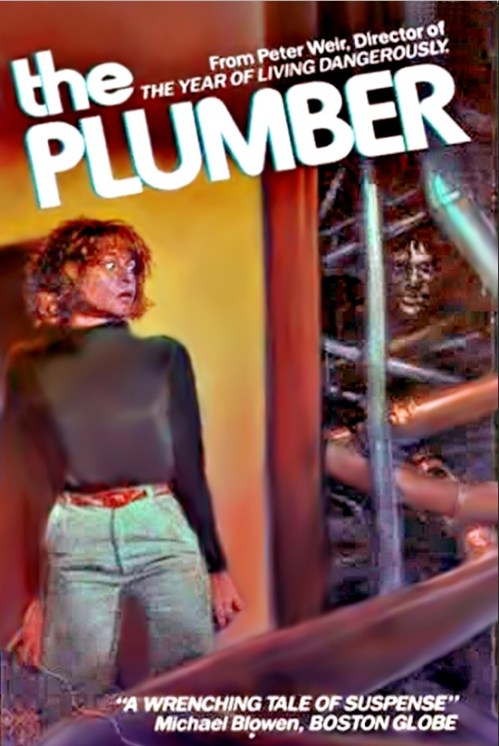
Jill (Judy Morris) works inside her cramped apartment while her husband (Robert Coleby) goes off each day to teach at a local college. She is an educated woman who spends her time writing a thesis for an anthropology paper, but finds herself at a loss when one day a talkative plumber by the name of Max (Ivar Kants) enters her place insisting he needs to check her pipes. Even though there is nothing wrong with her bathroom he proceeds to tear it up anyways while conversing with her on a wide-range of increasingly uncomfortable topics. Her husband and her best friend Meg (Candy Raymond) feel she is making a big deal out of nothing and find the plumber to be nothing more than slightly eccentric, which makes Jill feel even more powerless to Max’s increasingly odd antics.

This film is an excellent testament to what a great director can do with very little.  What appears on the surface to be a low budget, one-joke flick is instead a cleverly disguised observation of the class system and the underlying prejudices and assumptions that exist on both ends. The story playfully jumps back and forth from being a black comedy to a thriller to even a psychological study, which not only helps to make it quite original, but highly unpredictable as well.

To me the most amusing aspect about it is the way we have this super intelligent, well-educated woman who can write long dissertations involving ancient African cultures, but when it comes to people in her own environment she is at a loss and unable to know how to respond or react to a stranger who on the outside should be completely inferior to her intellectually, but routinely gets the upper hand nonetheless. Having everyone around her ambivalent to her situation simply hits home how disconnected an individual can be to their surrounding even when they think that they aren’t.

Kants gives a great performance by creating a character whose ultimate motivation is never clear. Is he intentionally trying to terrorize her or like with her bathroom just trying to tear her down? He seems to do this not so much for who she is, but for what she represents, which is fighting back at a pretentious society that he feels unfairly looks down on him.

If this film, which is based on an actual incident that occurred with a couple of director Peter Weir’s friends, has any faults it is with the location. The apartment, where the majority of the action takes place, is incredibly cramped to the point that I was surprised a film crew could’ve even fit into it. Weir tries to dress up the place with some interesting African artwork, but it still looks drab and helps to make the visual portion of the film quite boring. Having Jill reside in a ritzy home in the suburbs would’ve made more of an interesting contrast and seeing the plumber tear up her posh bathroom would’ve been even funnier.

The fact that Jill immediately opens the door and lets Max inside without asking for any identification is another issue as it comes off as being too reckless and trusting.  Granted it was made in a more innocent era and the character does expound on this later on, but it is something that will make the film seemed dated or even off-putting to today’s viewers. I was also surprised that it took Jill so long to complain to the apartment’s landlord about the plumber’s antics as most people would’ve gone to him after the very first day.

In either case this is still a highly intriguing film that I’ve seen many times and continue to find just as funny and interesting with each viewing.

My Rating: 9 out of 10

Released: June 8, 1979

Runtime: 1Hour 15Minutes

Not Rated

Director: Peter Weir

Studio: The Australian Film Commission

Available: VHS, DVD

Mad Max 2 (1981)

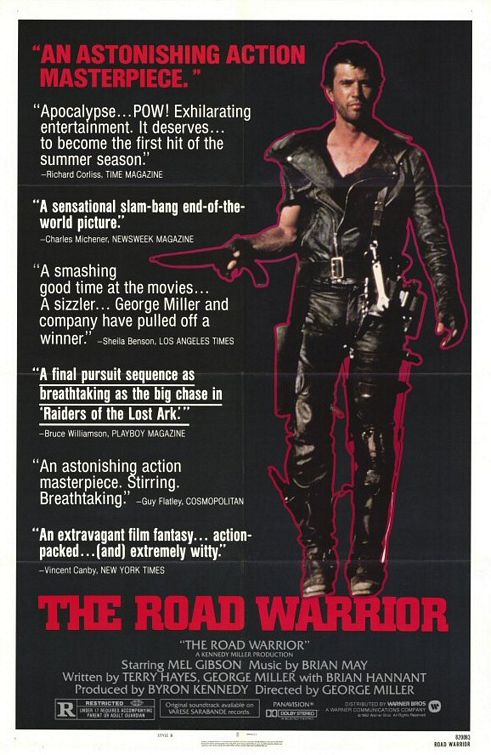
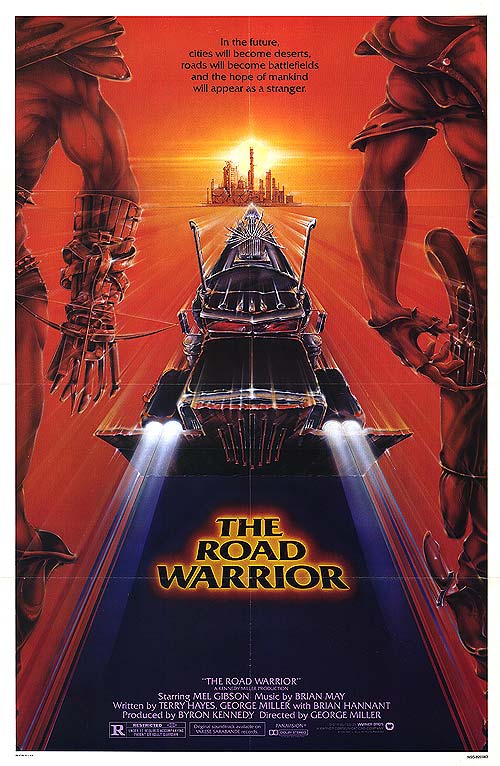
mad max road warrior 1

By Richard Winters

My Rating: 10 out of 10

4-Word Review: A battle for gas.

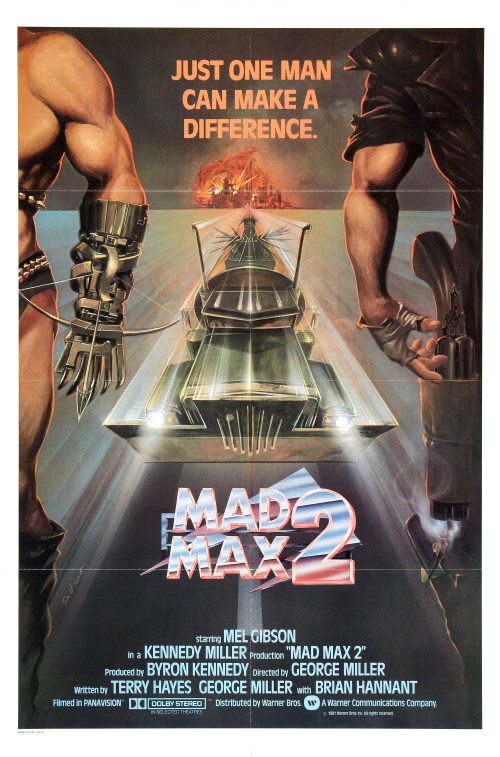
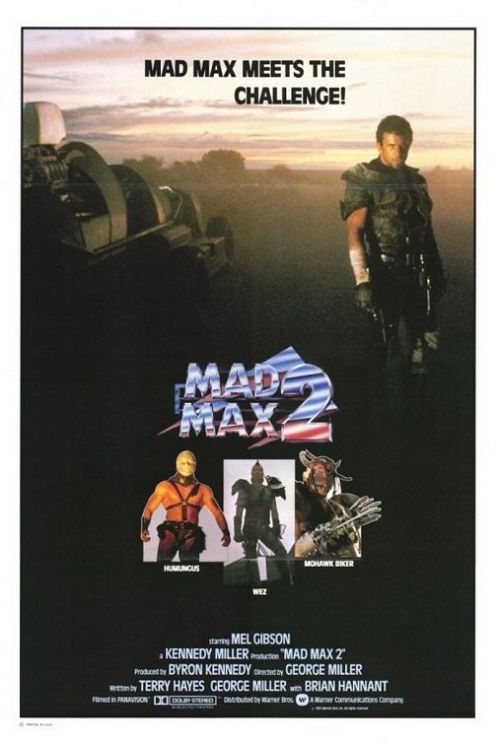
Years after a nuclear holocaust has depleted the planet former rogue cop Max (Mel Gibson) travels the scorched countryside looking for food and fuel. He meets up with a pilot (Bruce Spence) who guides him to an oil refinery that is under attack by a gang of marauders led by Lord Humungus (Kjell Nilsson). Max agrees to help out those trapped inside by driving a tanker truck carrying the fuel out of the refinery and through the makeshift gauntlet, but even he wasn’t prepared for the relentless and violent attack that awaits him.

The film is such a massive improvement over the first installment that viewers could just skip that one and go straight to this as it is far more polished and comes off like an epic while the first seemed more like a rough draft done by amateurs looking to get their feet wet. All the problems that I had with the first one get smoothed out here including a good intro that helps explain how the characters got to where they are. Dean Semler’s widescreen photography of the vast, flat desert landscape is outstanding and the violence is far more graphic, although significant portions of it were trimmed to achieve the R-rating, but it still realistically replicates the savage nature of the desperate characters living in a lawless land and willing to do whatever it takes to get what they want.

The vehicle chase at the end is one of the best ever filmed. The editing is quick with no ill-advised slow motion sequences or annoying cutaway or close-ups. The action happens just like it would in real-life where everything is split-second. The good guys don’t miraculously avoid injury or death either and in fact there’s enough bloodshed from both sides that you begin to wonder if anyone will make it, which creates far more authentic tension than most action pics. Yet what I really liked was that there were no irritating computerized effects. The vehicles used are all real with expert stunt driving and incredible stunt work that rates as some of the most dangerous ever to be tried on film.

mad max road warrior 2

The only minor letdown is the fact that Gibson’s character no longer has that clean-cut, choirboy image and is now more of the moody, clichéd loner dressed in a getup that doesn’t look much different than the bad guys. The first film had more of an interesting contrast, but here he at least gets partnered with a dog, which the producers managed to save from being euthanized, and a feral boy (Emil Minty) who has a nice ability to throw a mean metal boomerang.

Many critics at the time considered this to be the best action flick to have come out of the ‘80s, but I’d consider this to be quite possibly the best action movie ever made! Absolutely everything clicks from the first shot to the last and remains intense, exciting and gripping even after repeated viewings. However, watching it on the small screen will not do it justice and only broadcasting it in the cinema or a very large screen HD TV will do.

mad max road warrior 3

mad max road warrior 4

My Rating: 10 out of 10

Alternate Title: The Road Warrior

Released: December 24, 1981

Runtime: 1Hour 35Minutes

Rated R

Director: George Miller

Studio: Warner Brothers

Available: DVD, Blu-ray, Amazon Instant Video, YouTube

Weird Science (1985)

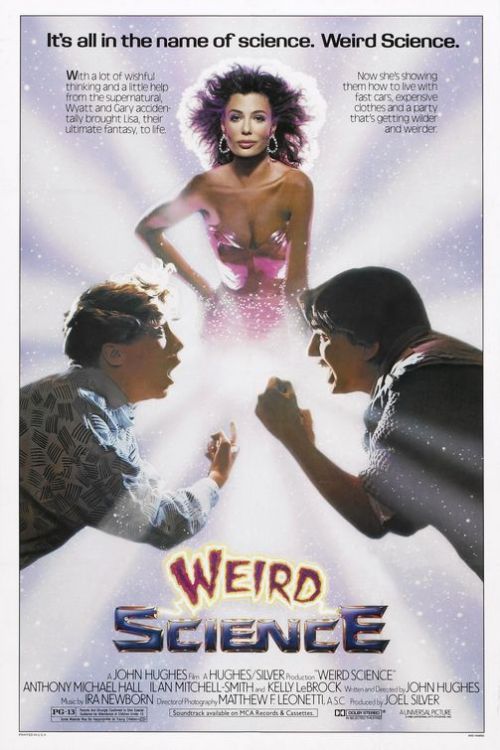
weird science

By Richard Winters

My Rating: 6 out of 10

4-Word Review: Geeks create hot babe.

Gary (Anthony Michael Hall) and Wyatt (Ilan Mitchell-Smith) are two geeky high school buddies who can’t seem to make it with the girls, so they try to concoct one using Wyatt’s computer. The result is the creation of the voluptuous Lisa (Kelly LeBrock) who is not only super smart, but has a really bitchin’ bod as well. Soon the two boys become quite popular and even host a wild part at Wyatt’s house while his parent are away, but things eventually get out of control and the two learn a valuable lesson that being ‘cool’ isn’t everything.

Director John Hughes purportedly wrote the film’s script in a matter of  2 days and it shows as the logic is nonsensical and so poorly thought that it seems almost done on a grade school level. Normally I’d have written the whole thing as a mess, but the more I thought about it the more I realized that to an adolescent this really could make sense as it fits in perfectly with the dreamy, fantasy filled concept most boys at that age have and that is where it succeeds.

The dialogue is sharp and the gags quite clever particularly the send-up to 2001: A Space Odyssey. The barrage of weirdness creates a certain rhythm that hooks you and keeps you captivated almost like a drug trip until you simply turn off your brain and enjoy the ride for what it is.

Hall is especially dynamic particularly the part where he gets drunk and starts speaking in an accent. LeBrock makes for a terrific contrast to the boys and manages to hold-her-own while Bill Paxton scores as Wyatt’s obnoxious older brother.

Smith was the only one that I didn’t care for. His face is certainly photogenic and could be considered a heartthrob to any teen girl, but his voice is quite nasally to the point that I felt it was annoying. He also lacks Hall’s comic panache although some viewers may be impressed at how good he looks in women’s underwear.

There are some really funny scenes here with Hall’s introduction of Lisa to his parents (Britt Leach, Barbara Lang) and the nuclear missile that goes straight through Wyatt’s home being the two best, but the film ends up being straddled with a wrap-up that is too tidy and the need to preach generic ‘life lessons’ that ultimately gives it a formulaic and limited feel.

My Rating: 6 out of 10

Released: August 2, 1985

Runtime: 1Hour 34Minutes

Rated PG-13

Director: John Hughes

Studio: DVD, Blu-ray, Amazon Instant Video, YouTube

National Lampoon’s Vacation (1983)

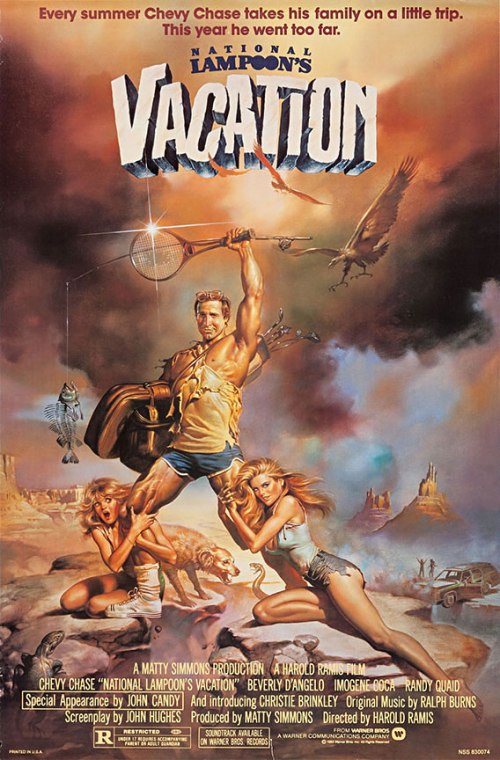
vacation

By Richard Winters

My Rating: 7 out of 10

4-Word Review: Going on a trip.

Clark Griswold (Chevy Chase) decides to drive his family of four from Chicago to California in order to visit the world famous amusement park of Wally World. Sure they could’ve flown, but he feels that getting there is ‘half the fun’, so they pack up their station wagon while losing their luggage along the way, running out of money, getting stranded in the desert and forced to take along the crabby Aunt Edna (Imogene Coca) who makes everyone miserable.

The film is loaded with laugh-out-loud gags particularly at the beginning. I enjoyed the snapshots of touristy places that get shown over the opening credits as they look exactly like homemade pics stripped directly from somebody’s family album. Clark’s attempts to recreate their proposed trip on the computer only to have his animated station wagon eaten up by a Pacman-like monster is hilarious and imaginative. The scene showing him trying to get back into his old car after its been crushed, or falling asleep at the wheel and driving haphazardly off the road only to end up miraculously at a hotel are also quite good.

The screenplay was written by John Hughes and based on a story he wrote for the September 1979 issue of National Lampoon’s magazine. The plot nicely tackles all the problems that can occur on a typical family outing. Everything from having to visit boring in-laws to squabbling kids in the backseat get comically examined and most likely will remind everyone of their own family trips that started out fun, but turned into a nightmare.

I enjoyed seeing comic legends Eddie Bracken and Imogene Coca cast in supporting roles as well as other recognizable stars popping up for brief bits. This is also the best casting of Rusty and Audrey and watching the kids being the sensible ones while the Dad is more child-like is fun. However, their lack of appreciation for the song ‘Mockingbird’, which Chase and Beverly D’Angelo do an admirable rendition of, is outrageous even for teens and should’ve been enough to have them thrown into Lake Michigan immediately!

The script though begins to go off its hinges with the running joke involving supermodel Christie Brinkley. She plays a hot babe who seems for some strange reason to be attracted to middle-age schmuck Clark. The script was originally written to have this as Rusty’s sexual fantasy, which might’ve worked better, but as it is here it makes no sense.  The character drives so fast in her sporty red convertible that she should remain miles ahead of them and yet she is constantly repassing them almost like she’s a stalker and the odds that she would’ve coincidently been staying at the same hotel as them, out of the thousands that are out there, are astronomically slim. It all might’ve been saved, at least for the male viewers, had she gone nude, which was the original intent, but she refused. In either case it’s a boring bit that is not funny, or believable, or for that matter even sexy.

Spoiler Alert!

I also found the ending to be a letdown. The original one had Clark purchasing a BB gun and using it to invade the home owned by Wally (Eddie Bracken) after they find that his amusement park has been temporarily shut down and then forcing him and his associates to sing some songs before the SWAT team closes in. However, this ending rated poorly with test audiences so it was changed to where Clark and the family invade the park itself and force a security guard, amusingly played by John Candy, to take them on the rides while threatening him with the same type of BB gun.

Personally I disliked both endings because they are over-the-top and make little sense. There is no way that an amusement park would completely shut down for 2-weeks to make repairs especially in the middle of summer, which it is at the height of tourist season and risks too much of a loss of revenue. Certain individual rides may get shut down from time-to-time, but not the whole place. There is also never any explanation as to who is running the rides from the ground that the Griswolds and the security guard go on. Some may argue that it might be done by the black security guard, which is played by actor Frank McRae, but this is never explicitly shown or implied, so it therefore cannot be automatically assumed.

It also takes away too much from the film’s overall theme, which was making fun of less than ideal situations that occur on a lot of family vacations. Yes they do get exaggerated for comical purposes, but there was still a grain of truth to it while the ending instead borders on the surreal.

A better version would’ve been to have the family go to the park and have it open for business as expected, but then get caught up in a lot of crowds, long lines, overly priced rides and roller coasters that made them physically sick, which it did to the cast in real-life anyways.

End of Spoiler Alert!

Despite some of the script’s weaknesses this is still the funniest installment to the Griswold adventures and far better than its 4 sequels or the 2015 reboot. I also enjoyed the on-location shooting as well as the music by Lindsey Buckingham. His song ‘Holiday Road’, which gets played during the film’s opening, has become the mainstay to the franchise even though I found ‘Dancing Across the U.S.A’ that gets played over the closing credits to be better.

My Rating: 7 out of 10

Released: July 29, 1983

Runtime: 1Hour 38Minutes

Rated R

Director: Harold Ramis

Studio: Warner Brothers

Available: DVD, Blu-ray, Amazon Instant Video, YouTube

Mad Max (1979)

mad max 1

By Richard Winters

My Rating: 7 out of 10

4-Word Review:  Gang harasses cop’s family.

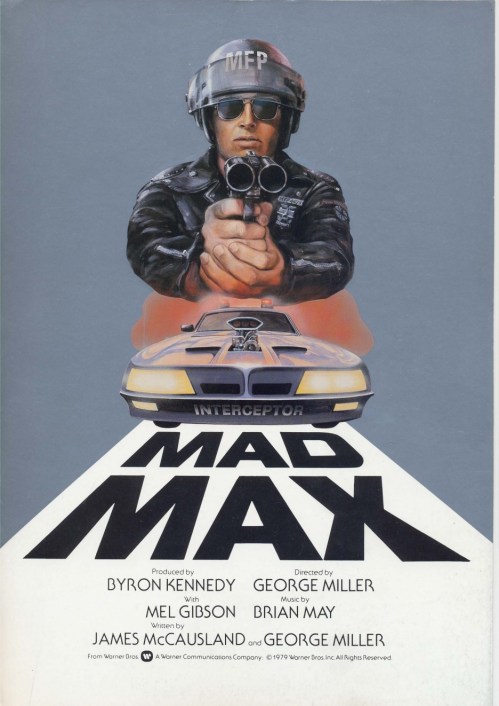
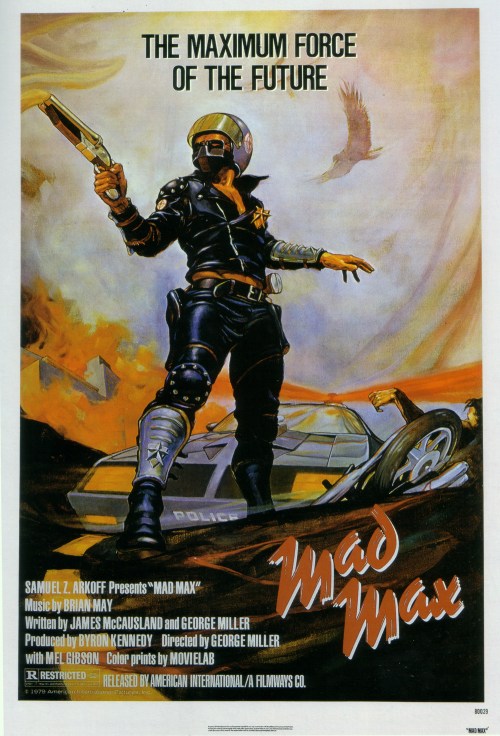
In the not so distant future where lawlessness is the norm motorbike gangs terrorize the Australian countryside and it’s up to highwayman known as the Main Force Patrol (MFP) to keep them under control. When one of the officers known as Max (Mel Gibson) kills a gang member during a high-speed chase the gang’s leader named Toecutter (Hugh Keyes-Byrne) gets his revenge by having his gang member’s destroy a small town and rape a couple. He also has the youngest member of his gang named Johnny (Tim Burns) kill Max’s partner Goose (Steve Bisley) by having his car set on fire with him still inside. After Max witnesses Goose’s charred remains he quits the force, but Toecutter and his men continue their harassment by this time setting their sights on Max’s wife (Joanne Samuel) and young child.

This film, which was produced by a generally novice crew including its director who at one time worked as a doctor inside a hospital emergency room, became a worldwide cult hit that has spawned many sequels and imitations. The intent was to create a “silent movie with sound” with the emphasis more on imagery and action than dialogue or story. For the most part it succeeds quite well in this area with some excellent car chases particularly the one at the beginning and coupled with the dry barren Australian countryside, which truly does give off a strong, desolate future-type look.

The film though lacks any backstory and one spends the greater part of the first hour asking ‘Who are these people and how exactly did they get there?’ The film can still be enjoyed without it, but comes off as poorly realized and lacking any type of depth. The narrative is also just a little too simple and obvious. When the wife decides to go off to get some ice cream when Max is at the car repair place it doesn’t take a genius to figure out that she’ll bump into the marauding gang when she gets there, which of course she does. Later, she goes for a walk in a forest, but Max doesn’t go with her, or give a gun for protection even though the gang is still on the loose, which seemed like really poor judgement.

There are also times when the film pulls away from the violence a little too soon and would have been more effective had it stayed on it for a while longer. One of these moments occurs during the rape sequence and another time is when Max visits Goose in the hospital, but instead of having the camera capture Goose’s burned face, which would’ve been much more graphic and disturbing, it instead looks at Max’s widening eyes, which is cheesy and cartoonish.

The film’s biggest issue though is the music score by Brian May, which is so loud and obnoxious and borders on being a distraction. The booming orchestral sound doesn’t jive at all with the futuristic setting and seems much better suited for a 1940’s serial instead. The images would be enough to set the tone and having the blasting music added in makes it come off as heavy-handed and amateurish.

Byrne as the gang leader is distinct looking and effectively menacing although his evilness could’ve been played up even more. Sheila Florance though is a lot of fun as the elderly, gun-toting Aunt May who single-handedly tries to take down the gang with only her and her rifle. However, it’s Gibson that steals it with his young, baby-face that makes him look like a choirboy and heightens the intrigue by having such a contrasting look to the gang members and making the viewer wonder if he really can take them down or not.

mad max 2

My Rating: 7 out of 10

Released: April 12, 1979

Runtime: 1Hour 28Minutes

Rated R

Director: George Miller

Studio: Roadshow Film Distributors

Available: DVD, Blu-ray, Amazon Instant Video, YouTube