Category Archives: Crude Comedy

The Kentucky Fried Movie (1977)

By Richard Winters

My Rating: 6 out of 10

4-Word Review: Zucker brother’s first movie.

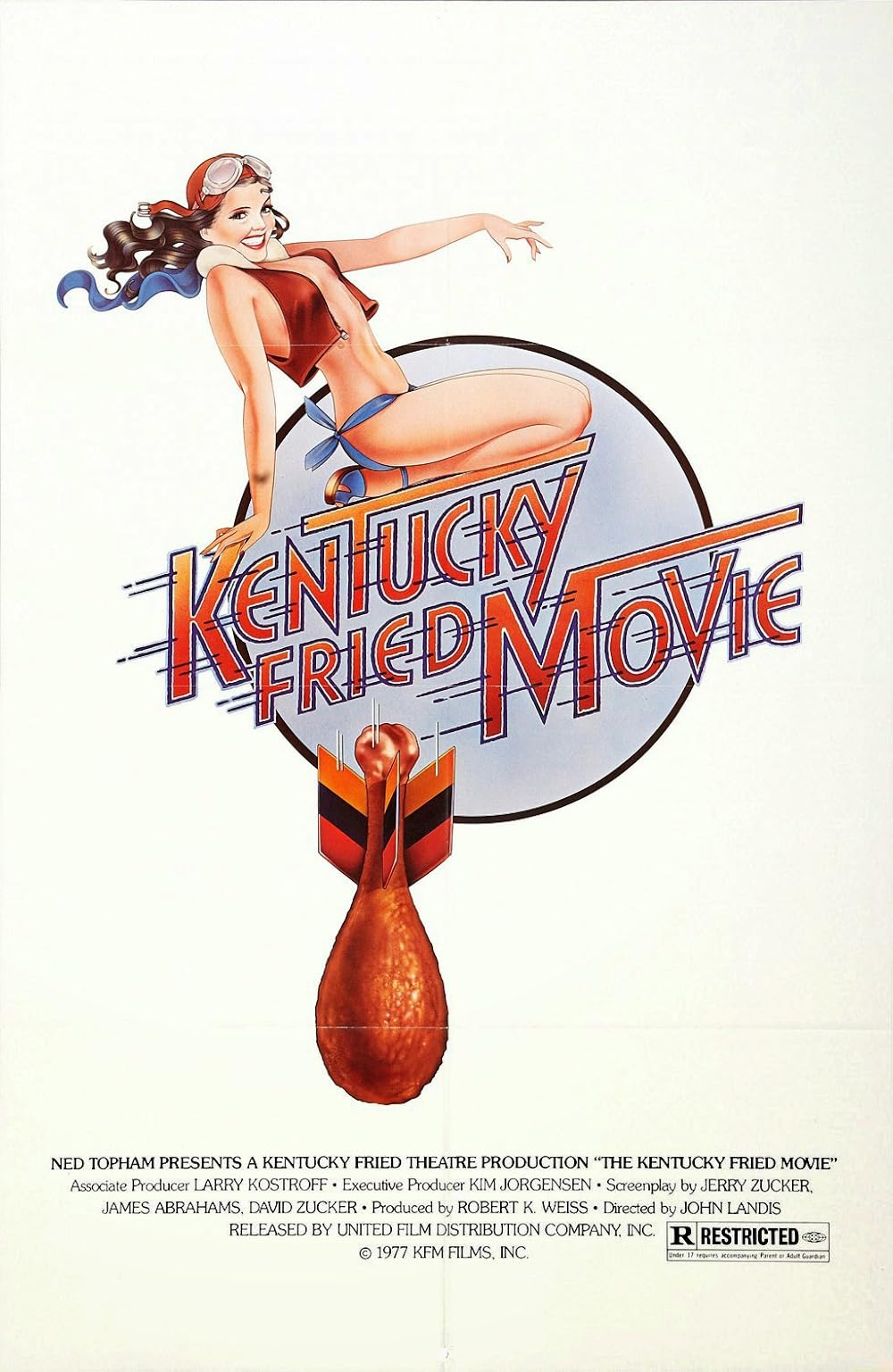
In 1974 there was the release of The Groove Tube which had a format of comical skits, much like a variety show, that managed to be a big hit and thus ushered in several imitators causing a whole new genre to surface. Unfortunately, those copycats didn’t fare as well and many of them were downright lame. By 1977 the trend had died off and yet brothers David and Jerry Zucker along with their friend Jim Abrahams were motivated to make another one revolving around funny sketches that had gotten a good response from audiences during their improvisational shows done on stage. The studios though weren’t impressed citing the decline in box office receipts towards sketch movies and thus refused their request for financing. They were then able to get a verbal deal from a wealthy real estate developer who agreed to fund the project as long as they made a 10-minute short that he could use to shop around to attract other investors, but when he found out how much it would cost just to produce the short he pulled out forcing the Zuckers to put up their own money, which amounted to $35,000, to get the short made.

This though proved to be beneficial as it attracted the attention of a young up-and-coming filmmaker John Landis, who had just gotten done directing Schlock on a minuscule budget and felt he could do the same here. It also got shown to Kim Jorgenson a theater owner who found it so funny he got other owners to play it before the main feature, and this was enough to get them to pool their money into a $650,000 budget that when completed made a whopping $7.1 million at the box office. This then directly lead to them getting studio backing for their most well-known hit Airplane which was a script that they had written before doing this one but had been previously unable to get any backing for.

Like with most films made during the brief period when this genre was ‘hot’ the jokes and skits are hit-or-miss. The opening sequences dealing with a TV news show are the weakest. Watching a reporter pick his nose because he doesn’t realize that he’s on the air isn’t really all that outrageous when today YouTube has actual news bloopers showing essentially the same thing. Having an ape go berserk in the studio during a live broadcast was too obvious and telegraphs the punchline to the viewer right from the beginning and thus making the outcome quite predictable.

The parody of Bruce Lee movies entitled ‘A Fistful of Yen’ definitely has its share of amusing moments though it goes on a bit too long and the special effects look cheap. My favorite segments came after this one and take up most of the final 20-minutes. These include Hare Krishna monks going to the bar after a ‘hard day of work’ harassing people on the street. There’s also ‘The Courtroom’ skit that’s a parody of Perry Mason-style TV-shows from the 50’s. The Zinc Oxide bit involving a housewife, played by Nancy Steen, who’s forced to face the reality of what life would be like if all the items in her house that was made from Zinc Oxide suddenly disappeared.

The film also features well-known actors who volunteered their time with little pay and appear in brief cameos. These include Bill Bixby as a spokesperson for a send-up of aspirin commercials. There’s also Donald Sutherland who plays a klutzy waiter during a parody of disaster flicks, Tony Dow playing his most famous role of Wally from ‘Leave it to Beaver’ as a jury in the Courtroom and Henry Gibson, in what I found to be both the funniest and darkest skit, where he essentially plays himself in a mock add showing how parents (Reberta Kent, Christopher Hanks) can still keep their deceased son as a ‘a part of their family’ by bringing along his increasingly decomposed corpse with them wherever they go.

My Rating: 6 out of 10

Released: August 10, 1977

Runtime: 1 Hour 23 Minutes

Rated R

Director: John Landis

Studio: United Film Distribution Company

Available: DVD, Blu-ray, Amazon Video, Plex, Pluto TV, Roku, Tubi, YouTube

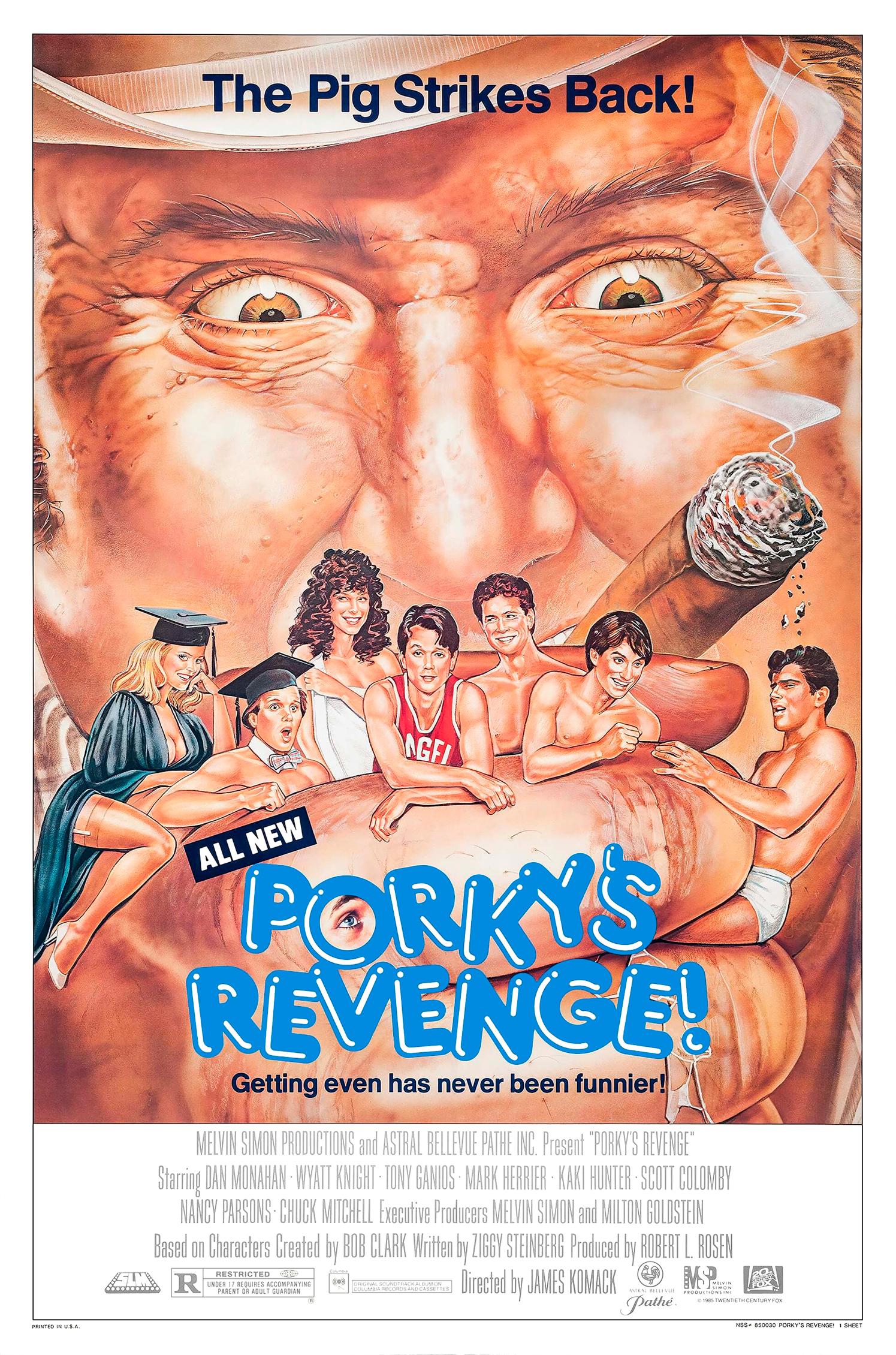
Porky’s Revenge (1985)

By Richard Winters

My Rating: 4 out of 10

4-Word Review: Rescue from shotgun wedding.

Porky (Chuck Mitchell) has rebuilt his casino that was destroyed by the teens in the first film by turning it into a riverboat. To help pay for this he extorts Coach Goodenough (Bill Hindman) for money and other such favors since he owes him on a gambling debt. Pee Wee (Dan Monahan) and his friends try to come to their coach’s rescue by sneaking onto the boat and taking pictures of the illegal gambling activity, which they hope to show to the district attorney. Porky though catches them in the act and threatens revenge, so to get out of their jam they agree to throw their next basketball game, so that Porky can bet against them and win a lot of money. Meanwhile Meat (Tony Ganios) is having problems of his own when he gets ‘forced’ into having sex with Porky’s daughter Blossom (Wendy Feign) causing Porky to insist that the two now must get married.

While fans of the franchise traditionally rate this at the weakest of the three films I found it to be a step up and even, at least at the beginning, to be moderately amusing particularly the pool scene where the cheerleaders concoct a scheme to get the boys to take off their bathing suits and prance around in front of the parents naked. The script was written by Ziggy Steinberg, whose career is the perfect encapsulation of Hollywood, where if you’re considered ‘up and coming’ you can find plenty of work, but the second your material is perceived as getting stale you can quickly become a leper and no offers to be found. This though came at a point where he was still a sought-after commodity, and I felt the script was better structured and seemed much more like a sequel continuing the elements from the first one versus going off on wild tangents like the second one did.

It helps having Chuck Mitchell back as the title character. It’s not like his acting is all that great, but his big presence and gruff, unfiltered delivery keep it fun and he offers a bona fide nemesis for the kids to go after. The casino boat is impressive, and the majority of the film’s $8 million budget was used just to build it. Seeing it get destroyed, which comes near the end, is exciting too and probably more memorable than the destruction of Porky’s original backwoods casino.

The characters though lack growth. Pee Wee for example is still obsessed about getting laid even though he had already lost his virginity in the first film, so his personality needed to evolve into something else. He should, especially being a senior, be the confident one who now takes some insecure freshman under his guidance to show him how it’s done instead of acting as a perpetually immature junior high kid, which by this point is no longer even remotely interesting.

The pranks continue to go overboard and boarder on cruelty. The one that gets played on Beulah Balbricker (Nancy Parsons) is especially stupid. She is set up to believe that she’s going to have a rendezvous with her long-lost boyfriend Snooky (Sandy Meilke), so she goes to a hotel room lying in bed in her nightie waiting for him to enter, so that they can return to their ‘passionate ways’ of the past. In reality though it would never work that way. These two had not seen, or corresponded with each other in many years, so there was no guarantee that both would still have the same feelings for the other. Since so much time had passed they were by this point theoretically strangers, so to avoid embarrassment and possible rejection they would instead get together at a restaurant, or over drinks in order to ‘catch up’ with things and then if they still both felt the same spark they might check into a hotel room, but nobody would just do that right off the bat.

I did though like the way her character changes, she’s the only one that does, by having her behaving like a completely different person once she’s finally able to get together with the real Snooky. However, I feel it would’ve made more sense had she been portrayed as someone who had never had sex versus one that just hadn’t had it in a while. Having her being lifelong frigid would’ve explained better why she was so hyper obsessed with suppressing everyone else’s sexuality. A better payoff would’ve had her really have sex with Tommy (Wyatt Knight) and found much to her surprise to liking it and this would then inspire her evolution.

Spoiler Alert!

The prank involving the bridge operator (Mal Jones) gets botched as well. It hinges on him believing that Wendy (Kaki Hunter) and Tommy are jumping off it to commit suicide, which distracts him enough so that he leaves to bridge operator room and allows Pee Wee to go in and close the bridge and thus destroy Porky’s boat that is trying to go underneath it. However, the bridge isn’t high enough from the water to be that dangerous. In fact, if it was truly that dangerous then both Tommy and Wendy would’ve died when they jumped off of it, but they don’t so the operator would never have been fooled. If anything, he would’ve thought they were just a couple of teens going out for a late-night skinny dip and wouldn’t have panicked at all.

My Rating: 4 out of 10

Released: March 22, 1985

Runtime: 1 Hour 32 Minutes

Rated R

Director: James Komack

Studio: 20th Century Fox

Available: DVD, Blu-ray
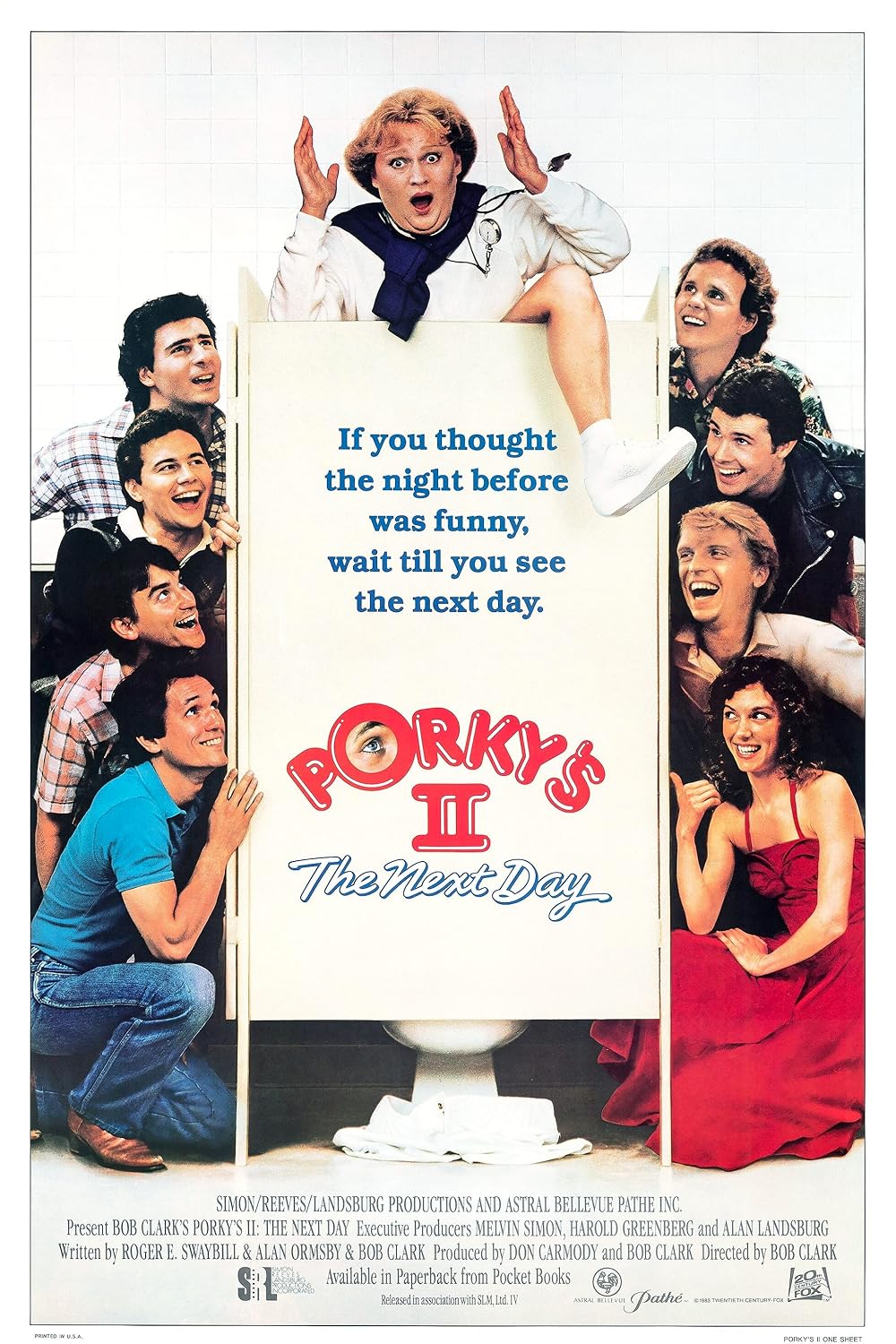
Porky’s II: The Next Day (1983)

By Richard Winters

My Rating: 0 out of 10

4-Word Review: Banning a Shakespeare play.

Now that Pee Wee (Dan Monahan) has lost his virginity to Wendy (Kaki Hunter) they decide that their next project will be putting on a production of ‘Romeo & Juliet’ at their high school, which will be directed by Mrs. Morris (Ilse Earl) Pee Wee’s mother. Problems though ensue when John Henry (Joseph Runningfox), a Seminole Indian, gets cast in the lead where he will then kiss Wendy, a white woman, on stage, which gets the local Klux Klan upset and they proceed to ambush things, so it won’t be able to proceed. There’s also outcry from a local Reverend named Bubba Flavel (Bill Wiley) as he and his religious constituents feel that the play is ‘obscene’ and therefore must be shut down in the name of ‘decency’. The teen cast then visits the office of County Commissioner Bob Gebhardt (Edward Winter) hoping he can use his influence to help keep the play going and while he initially promises them that he will, he eventually renegades. This angers the kids, and they devise an elaborate revenge on not only him, but the Klan and Reverend Flavel.

It’s quite clear that writer/director Bob Clark, who was working on Christmas Story while helming this one, had no idea that the first installment was going to be as big of a success as it was and there had clearly been no plans for a sequel. When the studio came begging for one, he felt obliged and spent 6 months, with the help of two other screenwriters, to come up with something. The result though is a movie in desperate search for a story with a script that’s a mishmash of over-the-top nonsense. What made the first one so good was that as crude as it was it still showed teens as they were with dialogue and situations that rang true, but here all of that gets thrown out with everything played up in an extreme way simply for the sake of a cheap laugh.

The most annoying aspect are the one-dimensional characters particularly the Reverend who is a cartoonish caricature in a silly send-up of a southern preacher. The same goes with the City Commissioner that is well played by Winter, which helps keep it remotely entertaining, but portraying a politician as being sleazy and two-timing is quite cliched and redundant. The return of Beulah Ballbricker, played by Nancy Parsons, is problematic as well. In the first film she was very strict with the rules, but here she’s turned into a religious fanatic, which seems like two different people. The scene where she sits on a toilet and begins singing loudly is dumb. Sure, people may talk on the phone while taking a dump, or read a magazine, or even browse the internet, but bellowing out a loud rendition of ‘That Old Black Magic’ while in a public stall is not one of them making her beyond ‘goofy’ and more into someone who should be institutionalized.

The pranks come off as unnecessarily cruel especially the scene in a graveyard where Pee Wee is made to believe that he accidentally killed a prostitute while having sex with her, which could be quite traumatic for someone and yet his ‘friends’ act like it’s ‘all in fun’. What’s worse is that Pee Wee never brings it up afterwards apparently having no qualms whether a sex worker dies at his hands or not just as long as he’s not blamed, which unintentionally makes him cold and uncaring.

The climactic bit where Wendy dresses up as a big bosomed 17-year-old prostitute who makes a major scene at a posh restaurant in an effort to embarrass the commissioner gets overdone too. For one thing it’s seems awfully extreme to put so much effort to get revenge on what’s nothing more than a tacky high school play with cheap props that isn’t going to make any money and cast members who weren’t all that excited about being in it, so why get so upset if it gets canceled? It also begs the question why these kids are so sure they can get away with their hijinks and not suffer any consequences. The ‘prank’ that gets done inside the restaurant causes a lot of damage and since these teens live in the same community as the adults they would most assuredly get recognized by someone and be either arrested for causing a disturbance and handed a very hefty bill for the repairs, or their parents would, which for them would be just a bad.

The only small funny bit, and I kid you not, comes at the very end during the closing credits, when the head waiter at the now ravaged restaurant tries to save face by convincing the patrons that it had all been an ‘April Fool’s joke’, which got me to chuckle. It’s also kind of amusing how Pee Wee gets so aroused by pics in National Geographic, or sexually stimulated by strippers who aren’t even naked, but just scantily clad enough to excite him anyways, which in this porn saturated era probably wouldn’t be deemed all that titillating, so in that aspect it’s interesting, but everything else is a disaster. It doesn’t even have Porky. How can you have a film titled ‘Porky’s’ if that character never actually shows up though he does reappear in the third installment, which will be reviewed next.

My Rating: 0 out of 10

Released: June 24, 1983

Runtime: 1 Hour 38 Minutes

Rated R

Director: Bob Clark

Studio: 20th Century Fox

Available: DVD, Blu-ray
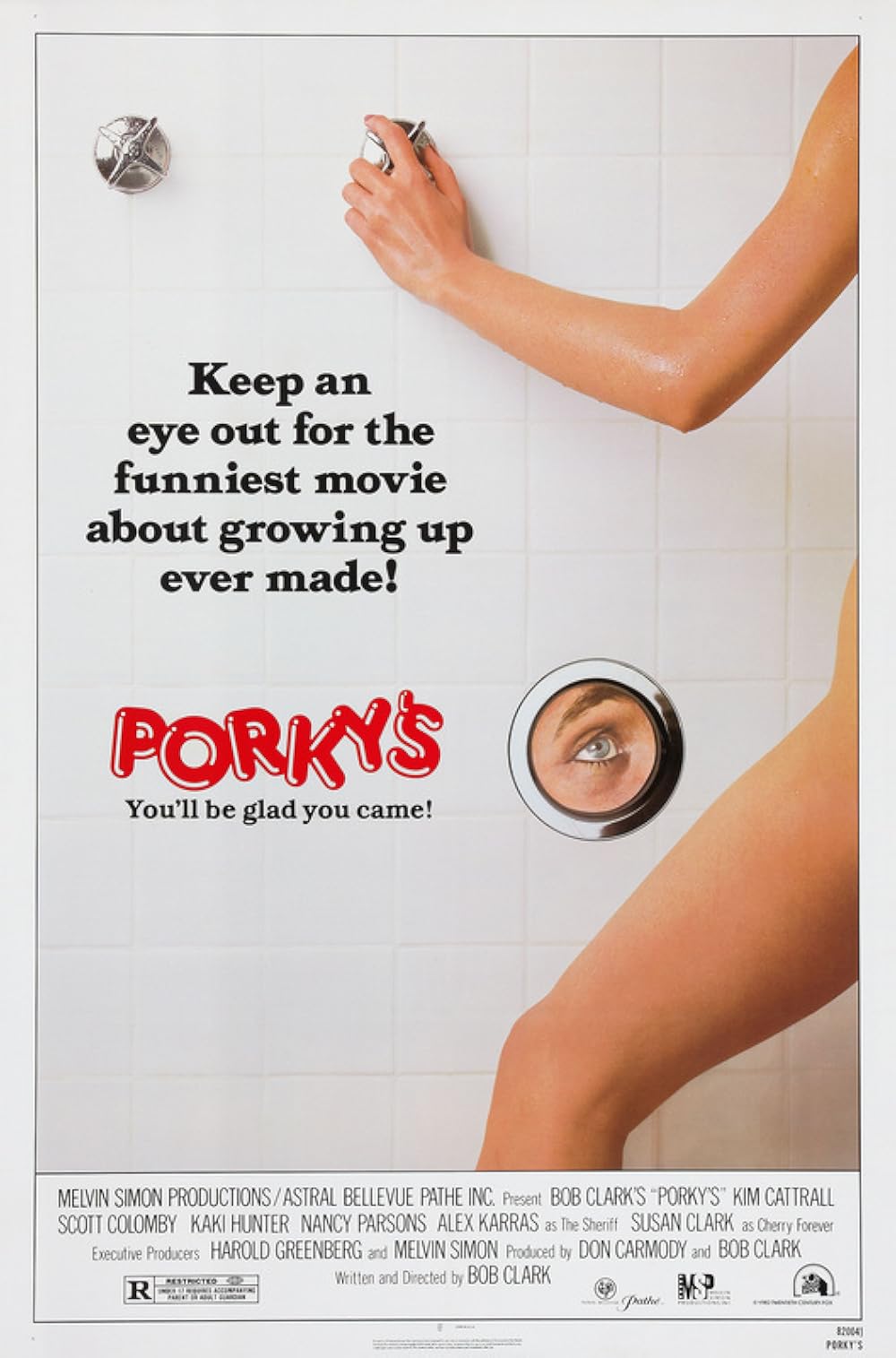
Porky’s (1981)

By Richard Winters

My Rating: 6 out of 10

4-Word Review: Revenge on nightclub owner.

Pee Wee (Dan Monahan) is a teen living in the Florida everglades during the 1950’s who suffers from a small penis size, which has prevented him from losing his virginity. He and his high school pals have hatched a plan of pooling their money together and then hiring a prostitute, which they can then all have sex with. Their first attempt doesn’t work out, so they decide to go to a nightclub that sits in a lagoon on stilts and is called Porky’s, which is the nickname of the owner of the establishment, ‘Porky’ Wallace (Chuck Mitchell) that he attained for being overweight. The boys feel they’ll be able to hire one of the strippers at the club to have sex with and Porky agrees to ‘set it up’ and takes their money only to then have the teens fall through a trap door and into the water below. This enrages Mickey (Roger Wilson) who set-up the deal and he becomes consumed with getting revenge on Porky, but when he goes there to ‘settle things’ he gets badly beaten-up, which sends him to the hospital and convinces his friends that even sterner justice is needed in order to get the proper payback.

I remember when this movie came out and there were TV ads capturing people as they left the theaters and getting their first reaction. At the time this was considered ‘outrageous’ and many of the folks in the ad seemed either shocked or embarrassed. Nowadays though it’s unlikely most will consider it extreme, and some might even call it boring particularly in between the moments when it’s raunchy. The idea for it was conceived in 1972 by writer/director Bob Clark who based the story on his own experiences as a teen going to school in rural Florida during the 50’s. The studios though didn’t like the script, and it got shopped around for years before finally getting modest funding out of Canada where it could be used as a tax write-off and thus even though it was filmed in the U.S. by an American director it still gets labeled as one of the highest grossing films in Canadian movie history.

The critics like with the studio heads, didn’t care for it with both Siskel and Ebert naming it one of the worst movies to come out of the 80’s though when compared to the other teen sex comedies from that decade this one doesn’t seem all that bad. The characters have distinct personalities and much of the dialogue while raunchy seemed realistic for that age group and not all that different from what got talked about during my own high school days. The film also manages to tackle some serious topics like antisemitism, which was also a part of that era, so it has an adequate balance and doesn’t just stay hyper-focused on the sex.

On the negative end Nancy Parsons as the female coach version of Nurse Ratched is one-dimensional and Kim Catrall, playing a cheerleader nicknamed ‘Lassie’, plays too much of the bimbo caricature to be even remotely interesting. Neither is the fault of the actresses, who are okay, but more the writer. On the other hand, I loved the bit part of Susan Clark playing a prostitute. She had been in a few Disney movies just before this and later the TV-show ‘Webster’, so seeing her playing against the family image is fun.

I also loved Kaki Hunter who seems just as dirty minded as the guys and how she’s very average looking as I’ve found those types tended to be a little more ‘easy’, as evidenced by her doing it with Pee Wee, in order to get the guys’ attention and make up for not being as attractive versus in other teen flicks where it’s only the super-hot ones that sleep around. In that vein too I enjoyed the fact that during the shower scene when the boys are peeping at the girls there’s an overweight one impacting Pee Wee’s ability to see the thin ones, which is realistic too as in most high schools there’s a mix of body types and not all skinny like most other teen comedies would make you believe.

I did have some problems though with the nicknames mainly with Pee Wee and ‘Meat’ the name for Tony Ganios’ role. Supposedly this is for their penis size, but how would anyone know what their penises looked like? Normally one gets nicknames for physically attributes that everyone can see for instance if they’re a short height they could be called ‘shorty’. Yes, there is a scene where all the boys strip naked together, but their nicknames had already come about long before then. One could argue that maybe it started while they took showers after gym class, but in my high school if some guy was caught looking at another’s genitals, they’d be accused of being ‘gay’, which during that time period would be considered a stigma.

While the plot is lean and there are a few lulls there are enough comical moments to keep it afloat. The segment dealing with Nancy Parsons character going to the principal to ‘report’ seeing a penis in the girl’s shower and advocating for all the boys to undress so she could spot which one had a dick with a mole on it, is a gem especially with the way the camera zooms in on a hanging portrait of a smiling Dwight Eisenhower like even he too is in on the humor. The demolishing of Porky’s bar, which comes near the end, isn’t bad either and helps to make this thing a minor cult classic.

My Rating: 6 out of 10

Released: November 13, 1981

Runtime: 1 Hour 38 Minutes

Rated R

Director: Bob Clark

Studio: 20th Century Fox

Available: DVD, Blu-ray
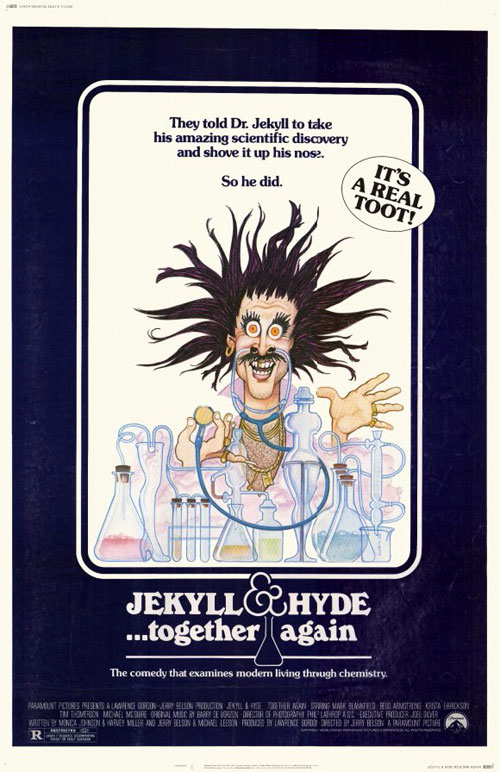
Jekyll and Hyde…Together Again (1982)

By Richard Winters

My Rating: 5 out of 10

4-Word Review: Drug changes surgeon’s personality.

Dr. Daniel Jekyll (Mark Blankfield) is a respected surgeon who’s become tired of the pressures of his job and working for Dr. Carew (Michael McGuire) a hospital administrator whose only concern is the monetary bottom line and who wants Jekyll to perform experimental surgery on ‘the world’s richest man’ (Peter Brocco), which Jekyll resists. In private during his off-hours, he begins experimenting with a white substance while inside his lab, but the demands from his personal and private life cause him to fall asleep where he accidentally inhales the drug, which causes him to have a secondary personality. His new persona is a party animal that is more confident and outgoing to the point of being obnoxious. This split personality causes issues with the two women in his life Mary (Bess Armstrong), a snobby socialite and Ivy (Krista Errickson), a loose living sex worker. 

This marked the directorial debut of Jerry Belson, a very talented comedy writer who wrote for such classic sitcoms as the ‘Dick Van Dyke Show’ before graduating onto movies where he penned scripts for the brilliant satire Smile as well as the dark comedy classic The EndWhile those other films were consistently funny and observational this film panders more on the crude side with a lot of drug references that may have seemed hip at the time but will most likely come off as dated and in bad taste to today’s viewers. It does have a certain Airplane-like element to it where there’s a lot of visually humorous non-sequiturs going on in the background as well as amusing ‘announcements’ that gets said over the hospital’s intercom, which I found to be some of the funniest stuff in the movie. However, there’s just not enough of it to keep it afloat and there’s also a lot of juvenile silly stuff that also gets thrown in, which does nothing but tank the whole thing making it seem like its intent was to be a party movie to be enjoyed by those who are either half-drunk, or high when they viewed it.

The script almost didn’t even see the light of day and stayed stuck in turnaround for several years as most producers and studio execs were not thrilled with it, but in the Spring of 1981 with a director’s strike pending Michael Eisner, the then head of Paramount, choose this script as something that could be shot on the cheap and quickly produced, so that the studio would have something to release should the strike occur. Unfortunately, four different writers were hired on to help doctor it, which only further diluted things making it a comic mishmash that never really gels.

Blankfied, who at the time was best known for his work on the ‘Fridays’ TV-show, which was ABC’s irreverent late-night answer to NBC’s ‘Saturday Night Live’ does not play the main role, at least during his scenes as the strait-laced doctor, all that well, which further hampers things. For one thing he looks creepy when he’s supposed to be normal. As the crazy Hyde character, he’s quite funny, but as a regular guy he’s dull. Tim Thomerson, who plays the narcist plastic surgeon, has the dashing good looks of what you’d expect for a leading man while also being engaging, which is why he should’ve played the Jekyll part and then Blankfield brought in to play Hyde and the whole thing would’ve worked much better. It still could’ve on paper revolved around the split personality of the same person, but just having a different actor play each part. 

Brocco, who’s almost unrecognizable as he sports a long white beard, is good as the elderly, but arrogant rich man and McGuire has one really good scene where he goes on one long, uncontrolled laugh attack. Errickson is cute, which helps things, though it would’ve been great had there been a little nudity on her end, which with the film being so utterly sophomoric and drive-in worthy anyways, you would’ve expected some, but there actually isn’t any. Armstong though plays her part too much like a caricature and thus her moments aren’t interesting and even a bit annoying. 

The scene where Hyde steals a car with the middle-aged lady driver in it and then lodges her head inside the car’s rooftop window, which causes her screams to sound like a siren to others as the vehicle tears down the road, is a gem of a moment. Hyde’s singing performance at an awards ceremony, where he does a striptease to show that he’s got nothing to ‘hyde’, is really inspired too. There’s even a quick scene involving George Wendt as a man with a severed hand who decides he’d rather have his wife ‘sew it back on’ than the doctor. I might even give an extra point to the segment where Blankfield accidentally sniffs up the white stuff in his sleep, but some of the other jokes dealing with the late 70’s drug culture I didn’t particularly care for and hence the movie doesn’t succeed as well, which also most likely helps to explain why it fared poorly at the box office.  

My Rating: 5 out of 10

Released: October 1, 1982

Runtime: 1 Hour 27 Minutes

Rated R

Director: Jerry Belson

Studio: Paramount

Available: DVD, Blu-ray, Amazon Video, YouTube

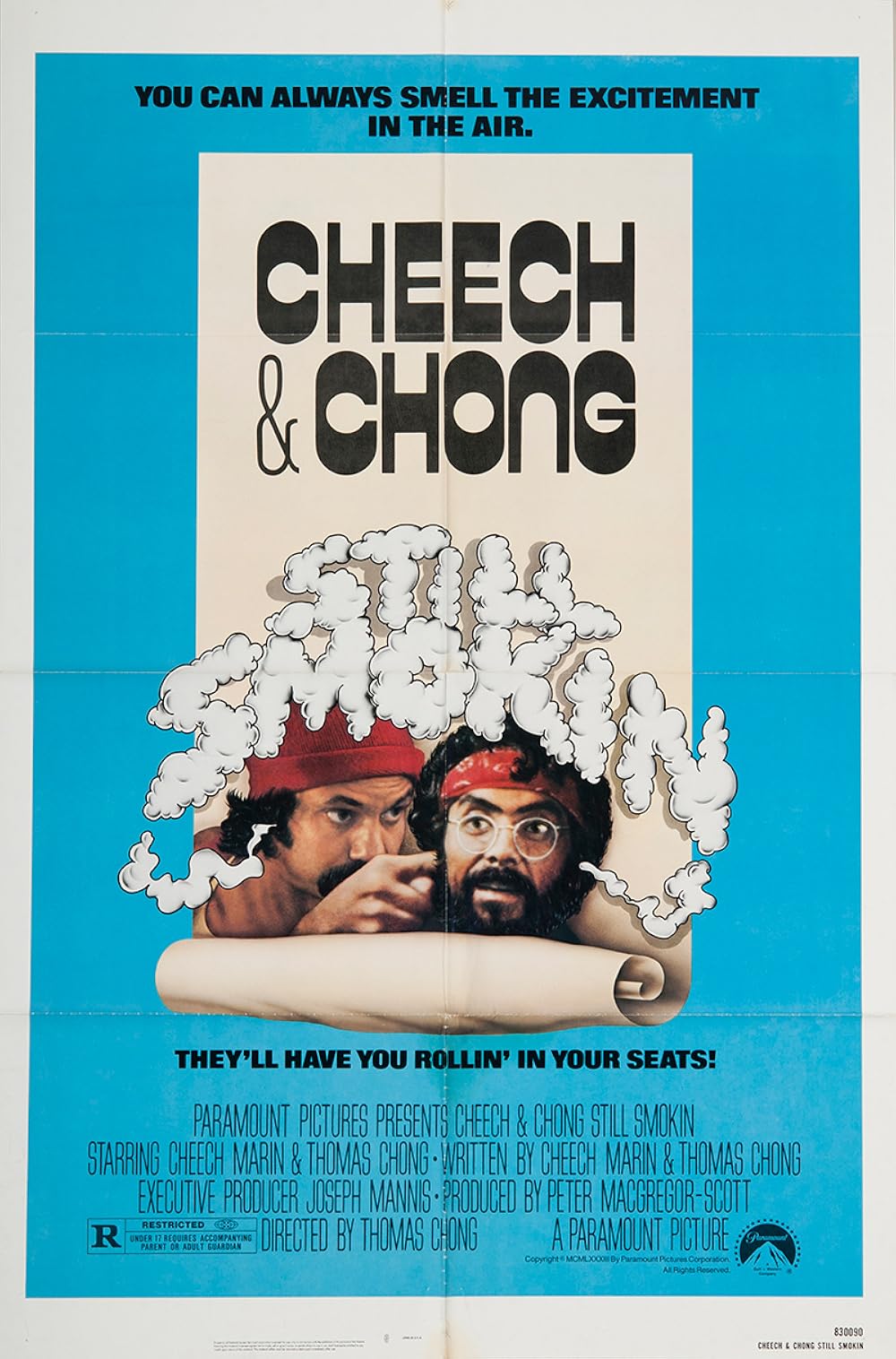
Still Smokin (1983)

By Richard Winters

My Rating: 2 out of 10

4-Word Review: Stoners travel to Amsterdam.

Cheech and Chong (Cheech Marin, Thomas Chong) travel to a film festival in Amsterdam dedicated to Burt Reynolds and Dolly Parton. Along the way Cheech gets mistaken as Reynolds and afforded the luxurious hotel room that should’ve been for him. The two take full advantage of it by ordering expensive dinners and drinks while signing it off on the hotel bill to be paid by the promoters. The promoter (Han Man in’t Veld) learns that the real Burt and Dolly won’t be showing up leaving the entire festival in shambles, but then the two stoners decide to save it by agreeing to do an improv comedy routine live in front of an audience where the Queen Beatrix of the Netherlands will be present. 

While the two may still be ‘smokin’ the film series has by this point completely lost all of its fire. My biggest complaint, which I’ve had with all of the previous installments, is that there isn’t enough story going on and had there been it would’ve been funnier. For instance, instead of the movie starting out with the two already celebrities it should’ve shown how they got into improv and learned the craft. Maybe it could’ve been because their drug dealing was no longer feasible and they were tired of constantly being harassed by the cops, so someone suggested improv as a side hustle. The two might’ve resisted at first, but then with nothing to lose decide to go on stage and try it out. To their surprise they become a hit, and this would then lead to fame and offers. Had it been done this way we would’ve at least had a plot and character development, but instead we’re just informed that they’ve become stars already, which makes it disjointed from the previous installment where they were driving around in the desert, still employed by the Arabs who wanted them to get into the adult film business.

The routines are flat almost shockingly so, as I’ve been involved in improv since moving to Austin 10 years ago and to be honest total amateurs stepping onstage for the first time and just coming up with a bit on the fly are far funnier than anything these supposed pros do here. I’m still impressed with their ability to change characters and speak in different accents, but their interplay doesn’t go anywhere. The skits as they are deals with an undercover cop (Chong) trying to arrest a drug dealer (Cheech), there’s also a gun debate between the two, a wrestling match where the two try to take on an opponent who’s invisible and yet another where they’re gay men trapped in a sci-fi movie, which may be deemed as offensive by today’s viewers as it relies heavily on gay stereotypes and mannerisms.

I remember in our improv group, like with most, somebody would usually yell out ‘scene’ when it was deemed that it had gone on too long and needed to end and I felt somebody should’ve been jumping into this movie and doing the same thing. The set-ups are okay and have potential, but don’t go anywhere that is interesting, or even slightly amusing. There are also certain bits that have no payoff at all but could’ve really used them. The best example of this is when the two continue to ‘sign-off’ on all of their elaborate room service expenses, but by the manager’s own admission, runs out of money, so who ends up paying for all those lavish meals and luxuries? I was fully expecting some moment to come where a massive bill showing of what they owed to come back to haunt them and their eyes getting all big, which could’ve been humorous, but it never happens proving how poorly thought the whole thing is. 

The final 20-minutes relies solely on concert footage of the two reenacting past skits that had been made famous from their record albums. These I found gross as the humor focuses too heavily on body fluids and stuff that would amuse only a seventh grader. I can be game for a dirty joke, if it’s clever, as anyone and have never been accused of being a prude, but when you have two grown men onstage crawling around pretending to be dogs who go through the motions of taking a shit and then smelling it, is when I checkout. Yes, the audience in the movie appears to be enjoying it, but I believe that was more from the shock value as back then some of this stuff was still considered pushing-the-envelope, but by now the edge has worn off and will be passee for many of today’s viewers. 

My Rating: 2 out of 10

Released: May 6, 1983

Runtime: 1 Hour 31 Minutes

Rated R

Director: Thomas Chong

Studio: Paramount

Available: DVD, Blu-ray, Amazon Video, PlutoTV, YouTube

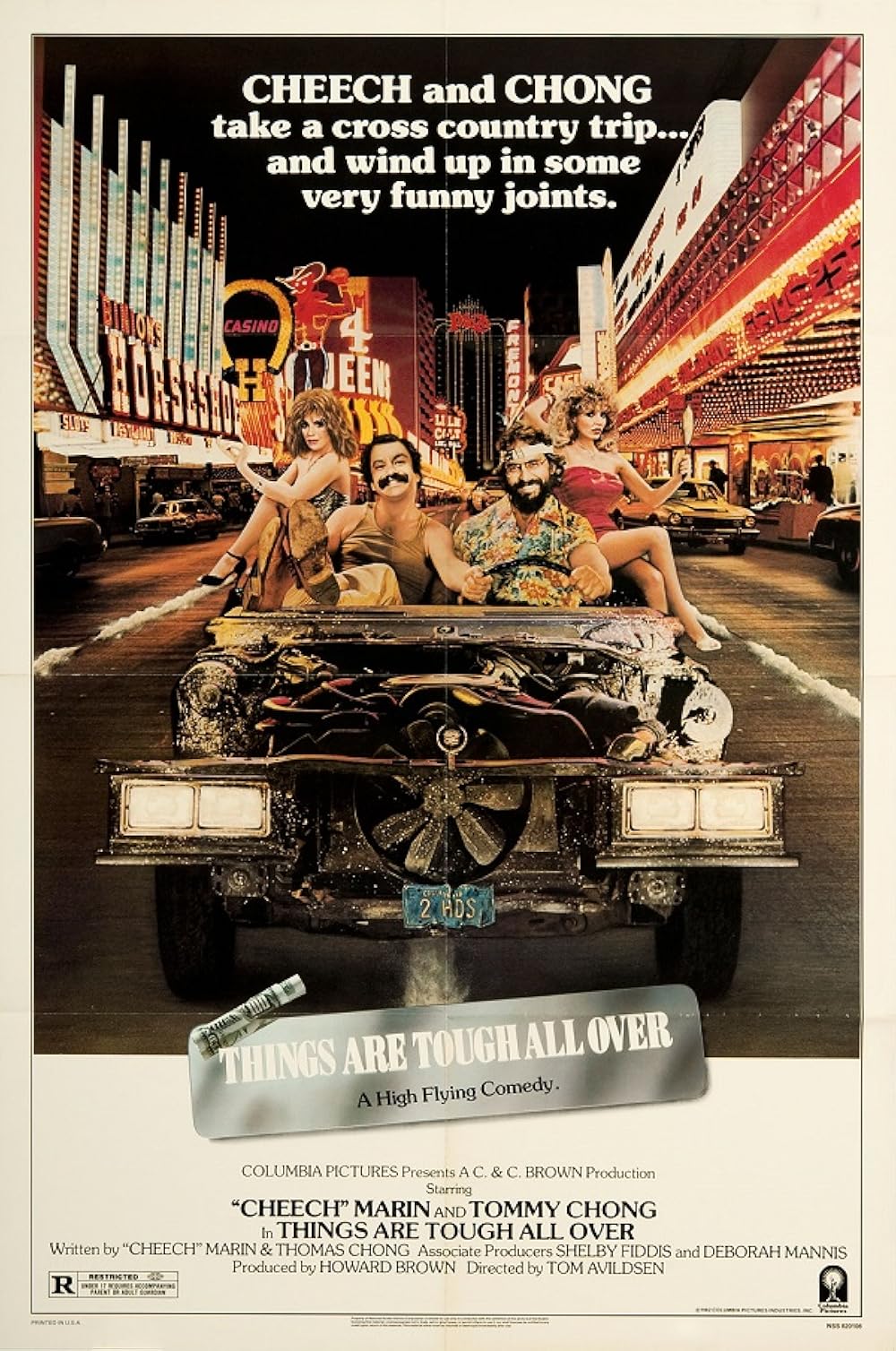
Things Are Tough All Over (1982)

By Richard Winters

My Rating: 5 out of 10

4-Word Review: Stoners on the road.

Cheech (Cheech Marin) and Chong (Tommy Chong) have moved to Chicago and are working at a car wash, but when they accidentally destroy a customer’s car they are fired. The owners of the car wash Mr. Slyman (Cheech Marin) and Prince Habib (Tommy Chong) hire the two for another job, which is driving a limousine across the country to Las Vegas. The two stoners think it will be an easy task but are unaware that the seats of the vehicle are stuffed with illegally collected cash. The boys though are given no money for gas, so each time they have to fill up the tank they’re forced to do away with a part of the car as payment forcing them to eventually have to drive down the road with only the vehicle’s main frame left. However, along the way they give up the seat with the money in it to an old-time gas station owner (John Steadman) and when the Arab owners find out that the money is gone, they set out to kill the two, who have become lost on foot inside the burning hot desert.

Cheech and Chong’s fourth installment is a definite improvement thanks mainly to the fact that it wasn’t directed by Chong, but instead the reins were handed over to Tommy K. Avildsen who had worked as an editor on their previous two movies. The pacing is much better, the gags come about in a more rhythmic order and the scenes don’t seem to go on forever. Avildsen’s editing background clearly helps keep the pace going and it’s nice to have a bona fide plot versus just trying to string together a bunch of comedy bits like in the first three films. Here there’s a better structure and focus. Things are still quite zany and surreal, but at least weird stuff don’t just get thrown in for no reason. 

Of course, there’s still the issue of why these guys are suddenly in Chicago. When we last left them, they were hanging out in East L.A., which served as the duo’s cultural and atmospheric background. If they are to move to a different city then we need to see if occur in the movie and not just between installments and there needs to be a reason why, which is never given. As I’ve explained before in my reviews of their past movies having each new film change the settings and their living circumstances so drastically makes it seem like we’re not really seeing sequels that’s progressing things forward, but more just starting things over from scratch. Same goes with Cheech suddenly having to do voice-over narration, which they had never done before, and in this instance added little and could’ve been skipped. 

However, it’s at least funny. Watching these guys shivering in the snow is a good change of pace from they’re pampered beach surroundings. The way they destroyed the car as it goes through the wash had me laughing as did the dismantling of the limo. Planes, Trains, and Automobileswith Steve Martin and John Candy, is the most well-known movie for having two guys riding down the highway inside a skeleton vehicle, but this movie did it first and in just as hilarious way. A couple of other comic highlights are when the stoners pick-up Donna (Evelyn Guerrero), who’s hitch-hiking, and she brings along a bunch of Mexican illegals who crowd into the limo like they’re stuffing themselves into a bus. The scene where the two sit in a movie theater and watch themselves star in a porno film, that was captured without them knowing it, is another great moment. 

The best thing about the movie though is that it features C&C in dual roles as they also play the rich Arab businessmen and it’s really impressive how these two can get into other characters and speak in completely different accents. They play the stoner parts so well that you start to believe that it’s really them and they’re not acting until you witness how seamlessly they can morph into other roles. Chong had me especially surprised as for a while I didn’t think it was him, he puts on a prosthetic nose that completely changes his appearance when he plays the prince, and it took me awhile before I caught on. Having them play the so-called heavies gives the movie a much-needed bump of energy and the only thing that’s missing is seeing all four in a scene together with some sort of over-the-top confrontation between them in the desert, which could’ve easily been done using trick camera work. 

This is also the first C&C movie where the drug use gets played down. This was apparently Chong’s idea as he felt it had become too much of a prop and they needed to challenge themselves and prove to audiences that they could still be funny without it. I also liked how Chong goes through a bad drug trip while inside a restaurant as the negative side of taking drugs had never been shown in any of their previous movies, but here does at least get lightly touched upon, which helps create a better balance especially for young and impressionable viewers.  

My Rating: 5 out of 10

Released: August 6, 1982

Runtime: 1 Hour 30 Minutes

Rated R

Director: Thomas K. Avildsen

Studio: Columbia Pictures

Available: DVD, Amazon Video, YouTube

Nice Dreams (1981)

By Richard Winters

My Rating: 3 out of 10

4-Word Review: Ice cream side effect.

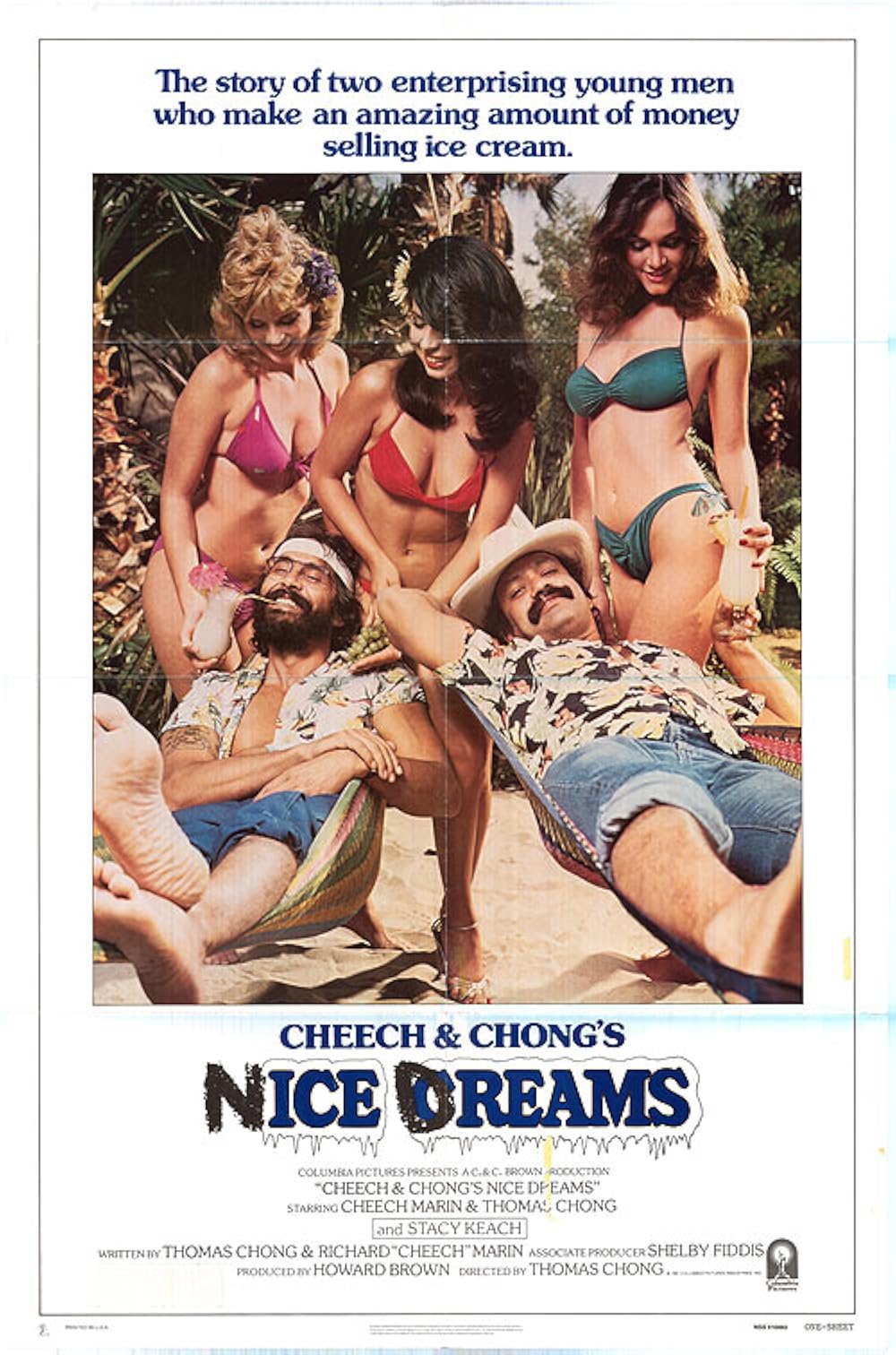
Cheech (Cheech Marin) and Chong (Tommy Chong) have become rich by driving around in an ice cream truck that appears to be selling ice cream, but in reality, it’s marijuana and the side effect of taking too much of it is that it can turn people into lizards. Sargent Sardenko (Stacy Keach) who has been on the two’s trail since the first installment has been smoking the weed for a while in order to get into the mindset of a dope user and thus better able to figure them out, but in the process, it has turned himself into a stoner and no better than the people he’s chasing after. When he takes Cheech and Chong’s stuff the lizard side effects become apparent, and he tries to conceal from his two deputies (Tim Rossovich, Peter Jason) who become increasingly more suspicious of his bizarre behavior. Meanwhile the duo’s fortune takes a bad turn when Chong, under the heavy influence of cocaine, signs away all of his fortune to Howie (Paul Reubans), a mental patient. In an effort to get their money back they track him down to the hospital where he resides, but Cheech gets mistaken as being a fellow patient and is soon strapped into a strait jacket and locked into a cell. 

The third installment of the series made a lot of money, $35 million at the box office, but the majority of that was in the first 2-weeks where loyal fans flocked to it, but it leveled off after that making it apparent that for general audiences it wasn’t received as well. The biggest problem for me is that it’s too disjointed. The surreal effect worked in the first two, but here it gets in the way and a more conventional storyline was needed to make it compelling. Case in point is the fact that it starts out with the two already in the business and making cash while residing in a posh, oceanside pad. I liked the messy, rundown shack that they lived in in the second film and kind of wanted to see them stay there as its extreme cluttered state made it bizarrely eye catching and like a third character. If they had to move that’s fine but show that occur in the movie as well as them attaining their newfound fortune versus them already in the new lifestyle when the film begins, which doesn’t make it seem like a continuation from where the second left off, but instead a completely new story altogether. 

I didn’t like the way the Sardenko character got portrayed here at all. In the first film he was the main source of the energy and his almost insane passion to catch the two and his by-the-book brash manner made him a fun heavy and somebody you liked to see get rattled. He was also the perfect overblown caricature of how the counterculture viewed cops during that era, so his presence had a definite point, but here all of that gets thrown out by having him just laying around smoking pot and behaving like every other stoner out there. The irony of him becoming who he despises is lost, had we seen the transition during the course of the film where he at least starts out the way we remembered him from the previous movie and then became a stoner by the end, it might’ve worked better, but as it is it seems like a whole new character connected by name only and isn’t half as fun to watch. 

There are still some funny moments like when Chong gets mistaken for Jerry Garcia while eating inside a Chinese restaurant and when Cheech runs around a hotel naked while trying to escape the clutches of a jealous boyfriend, but there’s no momentum as the plot doesn’t really seem to be progressing anywhere. Part of the reason for this is that the two relied heavily on storyboarding while keeping the script to a minimum, which in fact was only 3 1/2 pages in length and Cheech stated in interviews it was only this long because it was double-spaced. 

Improv can be wonderful if done right and there are moments here when it hits the mark, but the slow bits in-between hurt it. Had it been tied together inside a more cohesive storyline it would’ve really helped and just coming up with wacky scenarios on the seeming fly starts to wear thin.  The climactic scenes inside the asylum don’t work at all and the cameo by Dr. Timothy Leary, a friend of Cheech’s, is more annoying than funny especially with his incessant laugh and monotone delivery. Yet because this one made money, they continued to make more with their next film, which will be reviewed next, being a definite improvement. 

My Rating: 3 out of 10

Released: June 5, 1981

Runtime: 1 Hour 27 Minutes

Rated R

Director: Tommy Chong

Studio: Columbia Pictures

Available: DVD, Amazon Video, YouTube

Cheech and Chong’s Next Movie (1980)

By Richard Winters

My Rating: 6 out of 10

4-Word Review: Chong meets Cheech’s cousin.

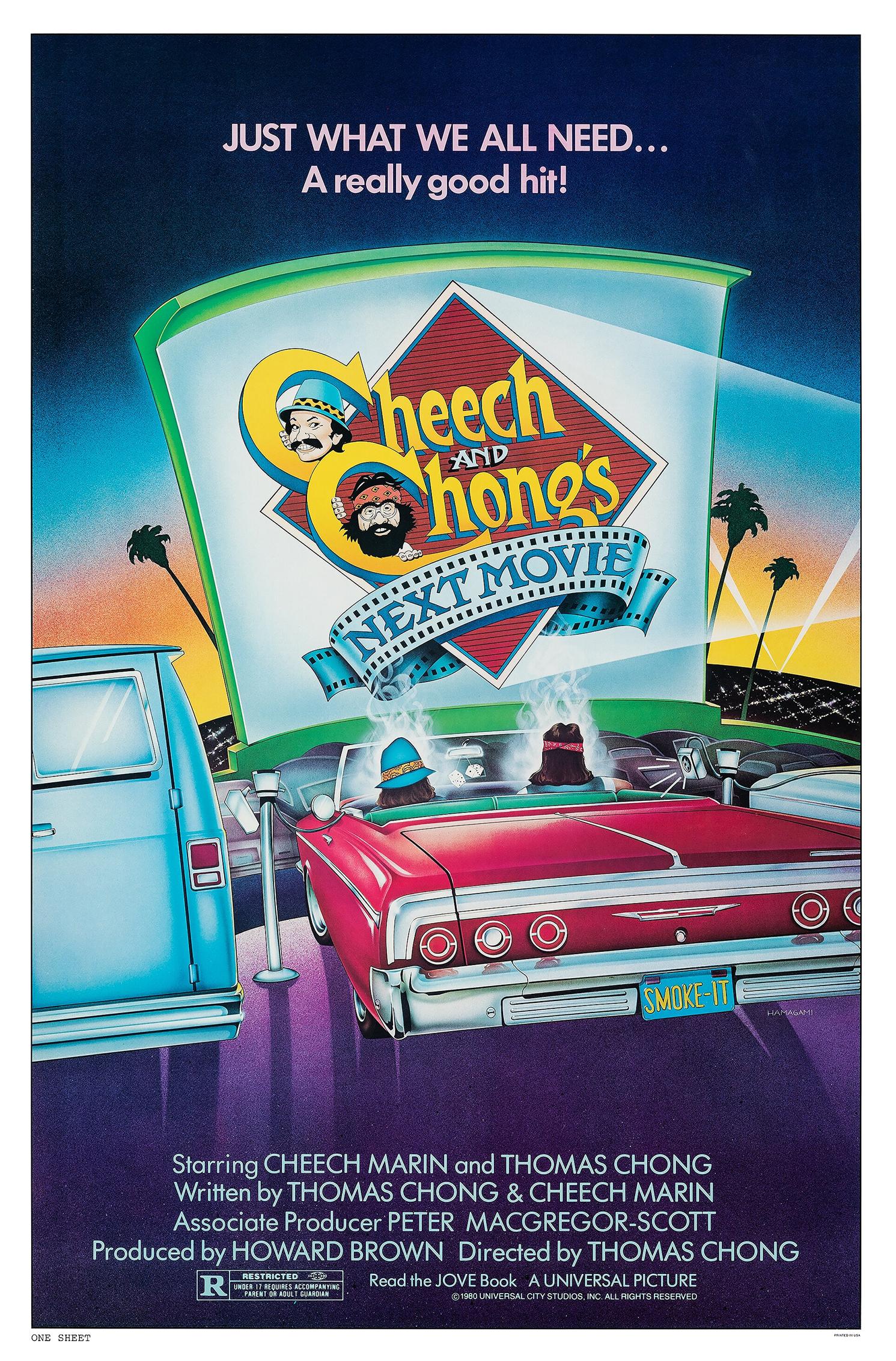
Chong (Tommy Chong) and Cheech (Cheech Marin) have moved in together in a decrepit place that puts new meaning to the word pigsty. Chong doesn’t have any interest in finding a job and spends his days playing his electric guitar at an ear-splitting level that disrupts the rest of the neighborhood. Cheech does work but gets fired forcing the two to go to the unemployment office where Cheech meets-up with his old girlfriend Donna (Evelyn Guerrero). The two get-it-on inside her office, which soon gets her fired. She then calls Cheech later on and the two agree to a date at his house. To get Chong out of the way Cheech has him get together with his cousin Red (Cheech Marin). Red is getting kicked out of his hotel room for nonpayment, so Chong helps him get his stuff out including a 20-pound bag full of marijuana (in the edited TV-version it’s described as a bag full of ‘diamonds’). The two then spend the rest of the night meeting up with different people and attending various nightclubs before ultimately being kidnapped by some outer space aliens while Cheech sits home alone dreaming of his rendezvous with Donna, who to his knowledge, never gets there.

This is, in my opinion, the best installment of the Cheech and Chong film series and an upgrade from their first film. This one has the same cinema vertite approach as that one but is able to tie it in better with a more consistent atmosphere that at times becomes almost surreal. Chong travels with Red late at night and the goofy people they meet along the way becomes very similar in theme to After Hoursor at least the Los Angeles version of that and had it been amped up just a little more it might’ve been just as good and memorable but just misses the mark yet kooky enough to keep it engaging. Thomas Chong’s direction is leisurely paced, which helps add to the offbeat vibe and his character is more engaged. In the first film Chong was strung-out most of the time making him boring and giving all the funny lines to Cheech, but here it’s more equal, making it a true buddy movie. The drug use isn’t emphasized as much either and doesn’t come off like it’s promoting the use of it like in the first one.

Some of the set pieces are impressive especially their messy house, which is so dirty and unsanitary that it’s almost like an art form the way the production team got it to look that way. I’ve seen some cluttered places before in movies, but never in quite the authentic way as here as it seems great care was taken to give it a legit look and making the scenes shot inside the place both fun and jaw-dropping at the same time. There’s no doubt though that had slacker stoners with no cleaning skills moved in together it would end up looking very similar to the place here. I also enjoyed seeing their neighbor’s place, played by Sy Kramer, who’s overly efficient ways are a far cry from theirs and the confrontations between them needed to be played-up more especially after the two steal and destroy his car and while his vehicle does get returned to him it’s in a highly damaged state, but without seeing his reaction shot we miss half the comedy potential.

It’s fun seeing Cheech play dual roles, speaking in a voice that sounds entirely unlike his own and proving he’s a much more talented actor than one might initially suspect. Edie McClurg gets one of her best roles as a rich uppercrust suburbanite who with only a few drinks becomes increasingly ditzy as the night wears on. Paul Reubens is entertaining as a no-nonsense hotel desk clerk and Michael Winslow has some engaging moments doing ‘sound effects’ while inside the unemployment office and old man John Steadman laughing at every single thing Winslow does.

This film also supposedly is the final onscreen appearance of veteran actress Mary Anderson, who is probably best known for her work in Alfred Hitchcock’s classic thriller Lifeboat. Here she has an uncredited bit as an old lady inside a music store, but the woman is seen for less than two seconds and within a group of other people making it hard to fathom why she’d come out of retirement, her first acting work in 15 years, just to give off an annoyed expression for a brief second and then call it a day. The woman doesn’t really look like her either making me think that since Mary Anderson is a very common name, they got the wrong one and it’s a different actress entirely.

I also can’t end this review without mentioning a glaring continuity error in which the car that Chong and Cheech are riding in goes out of control and ends up crashing into somebody’s front yard but the fence surrounding the yard remains intact. However, for the car to have gotten onto the lawn it would’ve had to have crashed through the fence, so showing it with no damage at all makes no sense.

My Rating: 6 out of 10

Released: July 18, 1980

Runtime: 1 Hour 35 Minutes

Rated R

Director: Tommy Chong

Studio: Universal Pictures

Available: DVD, Blu-ray, Amazon Video, YouTube

Up In Smoke (1978)

By Richard Winters

My Rating: 5 out of 10

4-Word Review: Two stoners become friends.

Anthony (Thomas Chong) is told by his father (Strother Martin) that he must find a job, or he’ll be kicked out of the house. Anthony then hitches a ride with Pedro (Cheech Marin) and the two quickly become friends based on their mutual interest of getting high on drugs. Soon they’re involved in many adventures including being shipped off to Tijuanna. In order to get back into the country they agree to drive a van that unbeknownst to them, is made completely of hardened marijuana, which gets them quickly put on the radar of Seargent Stelko (Stacy Keach) who along with his crack team of incompetents chases the two relentlessly in order to haul them into jail and make the country’s streets safe again. 

Cheech Marin was trying to avoid the draft when he went to Canada in 1969, which is where he met Thomas Chong, already a Canadian citizen who was starting up his own improv called ‘City Works’ after seeing Second City improv in Chicago while touring as a musician. The two became a comedy team who would come out to warm up audiences before concerts, but in many cases were more popular than the bands they were introducing. This then caught the attention of producer Lou Adler, who signed them to a contract to create record albums, which were so profitable that they graduated into making a movie, which Adler directed, that recreated many of the same skits they had used during their stage routines.

The movie upon its initial release with its open drug use was considered quite controversial and lead to many critics at the time to condemn it but nonetheless proved to be a big money-maker grossing $104 million on a $2 million budget.  Today the film is seen in a much softer light and in 2024 was elected for preservation by the National Film Registry by the Library of Congress.

I remember watching this when it came out and laughing at much of it particularly the car scene where the two smoke a giant marijuana cigarette and then get pulled over by the police. The film also does a terrific job of showing the East L.A. vibe possibly better than any other movie out there. You feel immersed in the culture and get a vivid feel of the era and setting especially at the end when the two go onstage and take part in the Battle of the Bands at the Roxy Theater. The film also has a leisurely pace, much like a French film, where it doesn’t feel the need to have a highly structured plot like in most American films and putting the emphasis more on atmosphere, which is a refreshing change of pace. Some of the supporting players, including Strother Martin who refers to his son as the ‘anti-Christ’ and Stacy Keach as the hardnosed police detective as well as his loyal, but bumbling deputy, played by Mills Watson, but without his patented mustache, who later went on to play the same type of role in the TV-show ‘The Misadventures of Sheriff Lobo’, are all perfect and help add to the fun.

On the negative end the two leads and their interactions, are poor. Cheech never even bothers to learn his buddies name and just continues to refer to him as ‘man’ for the duration of the pic, which might be the intended comedy, but offers no character development. They never grow or change and instead are paralyzed in a permanent caricature. Marin is funny, and in fact the only source of the humor, but Chong is underdeveloped. He spends most of the time strung out on drugs, or going through a bad trip, to the point that he seems catatonic and allowing all the energy to go to Marin, which is fine as he makes the most of it, but it barely seems like a buddy pic when it’s only one guy getting all the laughs. 

Without sounding like somebody’s old-fashioned parent I must agree with the initial sentiment that found this movie to be glorifying drug use and thus toxic to the day’s youth. The film acts like using drugs is just harmless fun. The scene involving actress June Fairchild, who later became homeless due to her own real-life addictions, where she sniffs some Ajax by mistake thinking it’s cocaine, but has no bad reaction to it and instead gets just as an enjoyable high is a problem. Granted I realize it’s supposed to be ‘funny’, but I could see a parent being concerned that it’s sending the wrong message to impressionable teens. 

My Rating: 5 out of 10

Released: September 15, 1978

Runtime: 1 Hour 26 Minutes

Rated R

Director: Lou Adler

Studio: Paramount Pictures

Available: DVD, Blu-ray, Amazon Video, YouTube