Category Archives: Cold Climate/Wintertime Movies

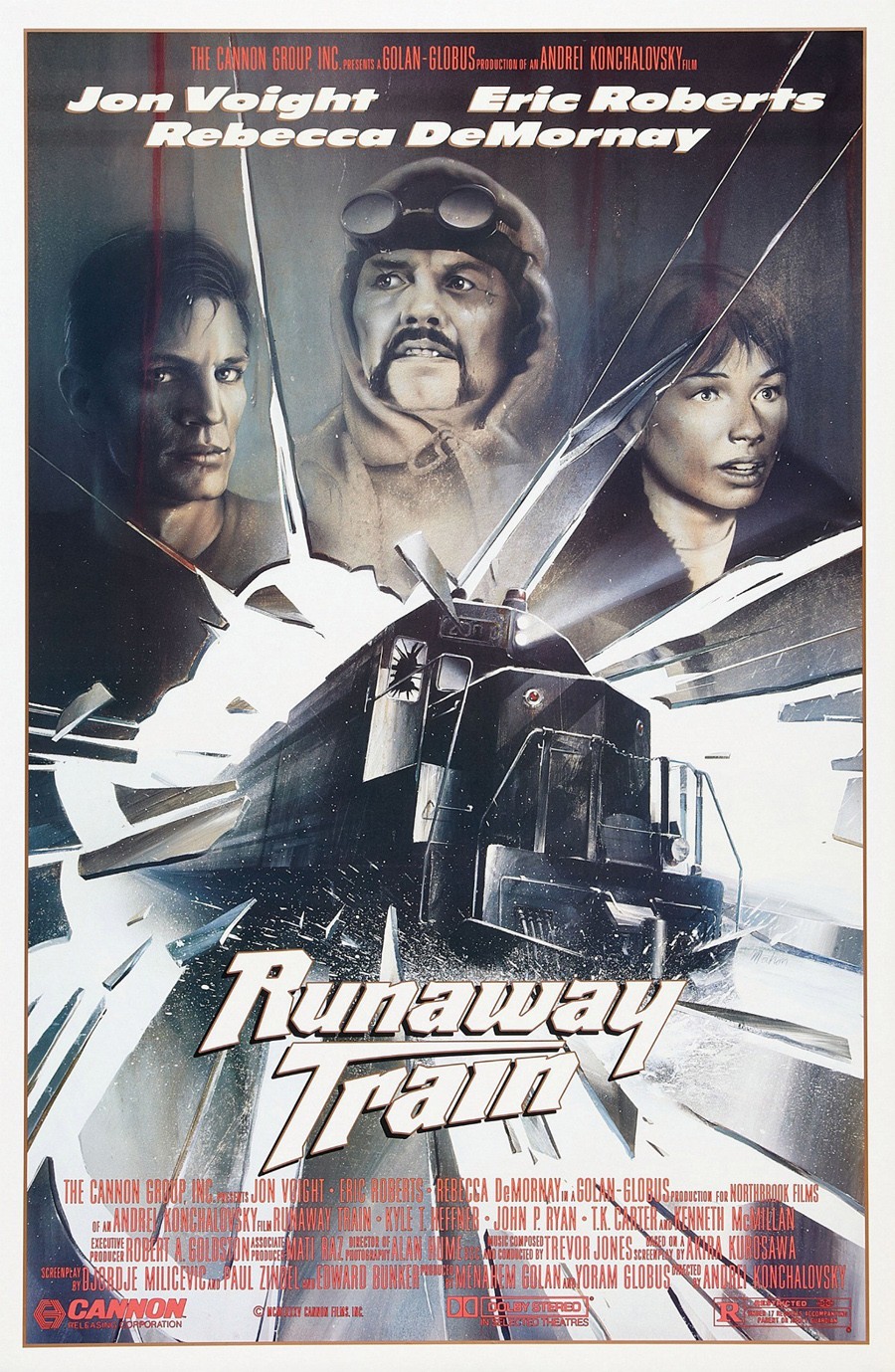
Runaway Train (1985)

runaway

By Richard Winters

My Rating: 8 out of 10

4-Word Review: Trapped on speeding locomotive.

Manny (Jon Voight) is a robber locked away in solitary confinement at a maximum security prison because of his two previous attempts at escape. He plans on making a third try with the help of a younger, more naive prisoner named Buck (Eric Roberts). Their breakout this time proves successful, but they find themselves having to fight the bitter cold and hike along the frozen Alaska landscape. They come upon a rail line and board a train by sneaking onto one of it’s four empty locomotives. However, unbeknownst to them the engineer, (Reid Cruickshanks) suffers a fatal heart attack while starting up the train and causing it to accelerate at high speeds, which is too fast for them to jump off. Later the two meet Sara (Rebecca De Mornay) an employee of the train company and three devise a plan to climb onto the lead engine and press the kill switch, but while this is going on the two fugitives are being pursued by police bounty hunter Rankin (John P. Ryan) who’s determined to board the runaway train via a helicopter and arrest Manny and bring him back to prison.

The story is based on a script by Akira Kurosawa who had read an article written in Life magazine about a runaway train and decided it would make for a good movie and planned to have this be his first American film. The shooting was to take place in the fall/early winter of 1965 with Peter Falk playing Manny and Henry Fonda as Rankin. However, the location, which was upstate New York received some early season snowstorms, which caused many production delays and eventually the financers pulled-out and film ultimately was never made. The project sat dormant for many years until 1982 when the script’s current owner managed to get Russian director Andrei Konchalovsky, at the suggestion of Francis Ford Coppola, interested in reviving it.

The film is for the most part masterfully done and quite suspenseful with kudos going to filming it in Alaska where the snow and ice are real and so vividly captured that you can almost feel the cold permeate through the big screen. Originally it was to be shot in Montana where the prison is, the same one that was also used in Fast Walkingbut the weather conditions proved to be mild and attempts at fake snow weren’t successful, so it was eventually decided to move the production further north.

I did though have some quibbles with the escape sequence, which gets done by having them hide in a cart of laundry, which is awfully predictable and unimaginative and you’d think a maximum prison such as this one would be on the lookout for such a thing making it all seem too easy. Voight having a gadget that could bend bars was equally too convenient. I realize prisoners can be adept at smuggling in many things, but if it’s so simple to get something that can literally bend steel bars then why doesn’t every prisoner use to breakout?

The casting of Voight was in my opinion a mistake, or at least not as effective as another actor in the part. He looks too thin and not threatening at all despite him wearing false teeth, tanning his skin in more of a darker tone, and putting on a fake scar around his eye, but for me this all came-off as highly affected and just didn’t seem gritty enough. While his performance improves as he gets on the train I couldn’t buy-in that this was a real bad ass as the movie wants you to believe and I really wish Voight had listened to his first instinct and not taken the role as he felt it wasn’t he type of character he could play, but eventually changed his mind when Konchalovsky convinced him that great actors play against type. I also didn’t like screenwriter Edward Bunker changing him into a bank robber as in the original script he was a killer, which would’ve made for a far more intriguing character arch as it would then attempt to humanize someone that is perceived as being quite viscous.

The train scenes are quite intense as it takes on a man vs. the elements theme with Roberts, who usually plays sleazy characters, doing quite well as the conscientious person here. De Mornay is fantastic too wearing very little make-up, which makes her look younger and almost teen-like and far more youthful than in Risky Businesswhich is a film she did 2 years before this one. My only complaint is that the character gets introduced in an awkward manner where she just literally ‘pops-in’ without any warning in the middle of it and the film should’ve given the viewer some hint that there was someone else on the train right from the start.

The scenes inside the dispatch office are highly engaging and become almost like comic relief, which for a film that’s as tension filled as this one, is a welcome addition and helps give the viewer a bit of a breather between moments on the train. I loved how oblivious the dispatchers, played by the talented T.K. Carter and Kyle T. Hefner, are initially to the situation and are seen at the start being quite laid-back. Hefner is even in the bathroom when the news hits and the film misses a great opportunity, similar to the one in Catch-22where he would be seen sitting on the toilet as he got updated on the situation. Kenneth McMillan, one of the all-time great character actors, comes-in later to lend advice and he really should’ve been given more screentime and possibly replaced Hefner altogether as he has a way to create amazing energy that his co-stars just didn’t.

Spoiler Alert!

The ending in which Manny goes down with the train, we don’t actually see it crash, but know it’s coming, with Manny raising his arms in the air like he somehow has achieved something I found disappointing. I didn’t care for it back when I first saw it during my college days and had the same response to it this time around. This was in the original script as well and was intentionally done to go against the theme of most American movies were the protagonist must always come out as the perceived winner, but either way it comes-off as all wrong for this time of film. We spend so much time watching him do whatever it takes to survive and going to great risks to accomplish it that to see him ultimately give-in to his inevitable circumstances and simply accept death to come and take him kills all the momentum that had built-up and becomes a letdown for the viewer. I kind of wonder if this is the reason why it didn’t do well at the box office as it only managed to recoup $7 million of its $9 million budget.

My Rating: 8 out of 10

Released: December 6, 1985

Runtime: 1 Hour 51 Minutes

Rated R

Director: Andrei Konchalovsky

Studio: The Cannon Group

Available: DVD, Blu-ray, Pluto TV, Roku, Tubi, YouTube

Bear Island (1979)

bear

By Richard Winters

My Rating: 4 out of 10

4-Word Review: Killer in the artic.

A group of scientists travel to a small island in the artic to study the effects of climate change. They’ve been instructed by Gerran (Richard Widmark), the leader of the expedition, who forbids anyone to go near the U-boat base, which are ships leftover from WWII, but Lansing (Donald Sutherland) whose father was a U-boat captain, decides to sneak off one day with his friend Judith (Barbara Parkins) to check it out. Along the way they get struck by an avalanche that kills Judith, and which Lansing is convinced was started by a mysterious man with a rifle. He goes to the location again the next day and is able to find the cave the ships are in via snorkeling. He comes upon evidence that someone else from the camp had already been there and soon more people from the group begin turning-up dead.

The film is based on the Allistair MacLean novel of the same name, which was published in 1971. Great care was put into the production to make it seem as authentic as possible. Producer Peter Snell wanted it filmed at a cold location because he desired a real looking the snowy landscape and stated that audiences “can tell styrofoam snow”, and since I’m originally from a northerly region I can attest to that myself and one of the things I really hate about movies that take place in cold places, but shot inside a film studio. However, they weren’t able to shoot it at the actual  Bear Island, which is off the Norwegian coast, because they wanted to take advantage of the tax write-off that they would get by filming it in Canada and this in fact became the most expensive movie ever made in Canada up to that time.

While the film didn’t do well with either the critics, or the box office, there are some really cool scenes. I loved the bird’s eye views, especially the opening one of a man skiing all by himself amidst the otherwise barren, white landscape. The sequence between two snow scooters known as ‘The Caterpillar’, which are driven by Sutherland and Vanessa Redgrave, and two hydrocopters, which are maned by the bad guys, makes for a very unique and exciting chase over the frozen tundra. The collapsing of a giant radio tower and Sutherland getting involved in a bare knuckle fist-fight are also quite memorable.

The acting is good especially by Widmark who speaks in a German accent. I also liked Christopher Lee’s performance though for him he gets more captivating after his character gets injured and he lays dying. Vanessa Redgrave though is wasted. She speaks with a Nordic accent, which makes it somewhat interesting, but her character doesn’t have much to do and is just lead around by Sutherland and the forced romance between them is both annoying and ridiculous. You’d think someone who had just won the Academy Award for Best Supporting Actress just a year before would’ve had a better quality of parts to choose from though her outspoken politics may have had something to do with a more limited selection of offers making her feel that she had to take this one simply to stay busy.

The film’s fatal flaw though is that it doesn’t stay faithful to the book and makes many plot changes including having the group be scientists instead of a film crew like it had been done in the novel. This was director Don Sharp’s idea as he felt you couldn’t ‘make films about film units’, which I whole heartedly disagree. People working on movies have a far more eclectic personalities, ‘artsy types’ than scientists who are more matter-of-fact about things and tend to respond in a reserved manner. The characters are quite dull and there’s very little to distinguish them from the others. The viewer has no emotional investment in any of them and thus who gets killed, or even the identity of the killer becomes pointless and outside of the snazzy stunts it has no impact.

Spoiler Alert!

Having the killer turn-out to be Lawrence Dane was another disappointment as he had played villains many times before and his lurking eyes makes him almost a shoe-in for a bad guy and the first person you’d expect.  Some creativity to the killer’s identity was desperately needed possibly even have it turn out to being Redgrave, or even Sutherland might’ve been a big enough surprise to make the rest of it seem worth it, but ultimately this is yet another example where too much attention was put into the effects and not enough in the character development.

My Rating: 4 out of 10

Released: November 1, 1979

Runtime: 1 Hour 58 Minutes

Rated PG

Director: Don Sharp

Studio: Columbia Pictures

Available: VHS, DVD (Region 0), DVD-R

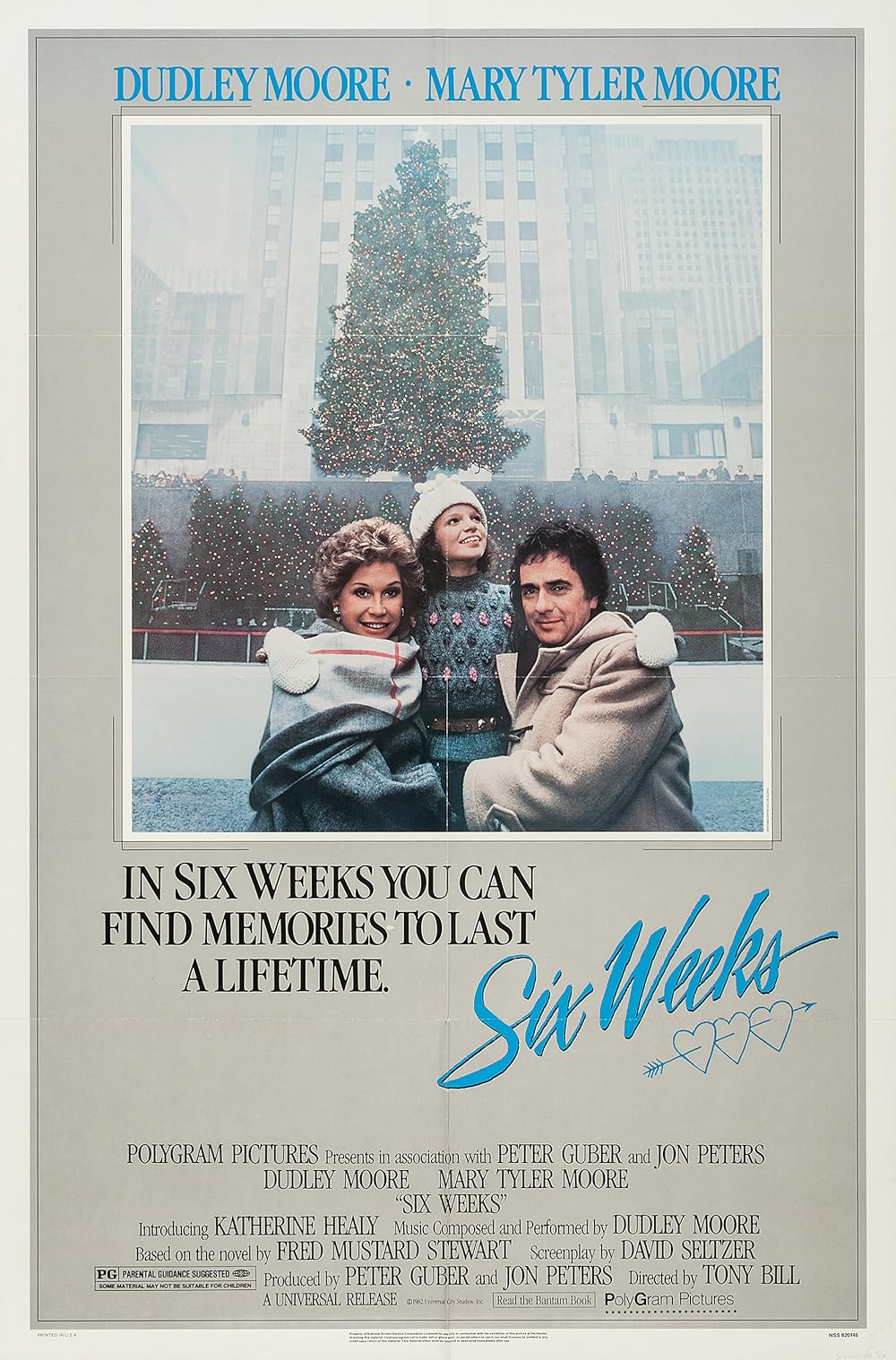
Six Weeks (1982)

sixweeks

By Richard Winters

My Rating: 1 out of 10

4-Word Review: Young girl has leukemia.

Patrick Dalton (Dudley Moore) is running for political office in the state of California when he becomes lost while trying to find his way to a political fundraiser where he is to be the keynote speaker. He stops to ask a young girl, Nicole (Katherine Healy), for directions and the two strike-up a conversation. He invites her to the fundraiser and finds that she’s the daughter of Charlotte (Mary Tyler Moore) who is the wealthy owner of a cosmetic company. Initially Charlotte is frosty towards Patrick convinced he’s just another opportunist politician. Nicole though grows very fond of Patrick and volunteers to work on his campaign. Charlotte, after seeing how much her daughter likes Patrick, even agrees to give him a generous donation, which he initially rejects until he learns that Nicole has been diagnosed with leukemia and has only a short while to live. This causes Patrick to become quite close to Charlotte and Nicole and he begins visiting them frequently much to the concern of his wife Peg (Shannon Wilcox) who thinks he’s having an affair.

Hard to find much to like about this shallow tear-jerker that was based on the novel of the same name by Fred Mustard Steward. I did though like seeing Dudley, who also composed the film’s score, in a rare dramatic turn. He’s best known for his comedy, but even when he was at his goofiness I still detected a serious side to him and this role here brings that out quite well. I did though have issues with the marriage angle as I felt the wife gave up too easily. She does show-up at a party that the three others are at in an attempt to make them uncomfortable, which it does, but I felt she should’ve created more of a scene. This was done in an era where putting up a veneer of civility was expected even when it was with people who shared intense feelings towards each other, but these days there’s jilted women out there that don’t take kindly to those that are out to ‘steal their man’ and could lead to some very public catfights, which could’ve given the film a lively energy as well as making the viewer more sympathetic to Dudley for leaving her as she would be better deemed as a ‘psycho’. Yet the way the film does it here you’re actually sympathetic to the wife and Dudley, as noble as his intentions are, comes off looking a bit like a cad for literally just abandoning her and getting with the other two essentially full-time.

I was confused too why this didn’t hurt him politically. If I’m his opponent and I catch-wind that he’s been seen regularly with another women that’s not his wife I use it to my advantage to crush him in the polls with it, or this is something his wife could’ve done by tipping off to the press that he was seeing someone else in order to ruin his bid and get back at him, yet none of this occurs. What’s the point of having him be in politics if it’s not going to be used to enter in some potentially delicious dramatic conflicts? Might as well have him being a bland accountant since him as a politician doesn’t really add much, or make that much of a difference to what happens.

Healy, who as of this date is the only theatrical film she’s been in and much better known for her ballet work, is fantastic and shows a lot of poise for someone who never acted in a movie before. I enjoyed her worldly-wise character who despite her age shows a keen awareness to many adult topics, which I appreciated. Kids can be far more observant about things than many adults would like to think, so I was glad she wasn’t played-up to being cute, but painfully naive. I did though feel her protruding, poorly spaced teeth should’ve been straightened with braces and was surprised that her mother, being as rich as she was, hadn’t had that done.

Her leukemia that she’s supposedly suffering from is problematic as she goes through the great majority of the film showing absolutely no symptoms of it. She states that she’s refused treatment, so I guess that could explain why her hair doesn’t fall-out, but I’ve known people who’ve suffered from the illness and it takes a toll on one’s energy to the point that they become bedridden as it progresses and yet here she shows nothing but boundless energy and even dances on stage without any signs of exhaustion near the end. It got to the point that I started to wonder if she was faking being sick and I wouldn’t blame anyone for thinking the same thing.

The casting of Mary Tyler Moore, who won the Razzy award for her work here, was a real mistake. Although she was only 45 she looked more like she was 55 and too old to have a daughter that wasn’t yet even in high school. She shows at times quite a cold demeanor making the way she melts away and falls for Dudley seem too quick and forced. Watching the two walk side-by-side where she’s clearly way taller than him makes it resemble a mother walking her son than a couple and thus has the romantic angle visually look even more odd and awkward than it already is.

I was confused too about who this girl’s father was. I have never read the book of which this is based, so maybe it gets talked about there, but here it’s never mentioned. I would think that even if she was a product of a painful divorce her father would still want to see her especially if he knew she was dying. Even if it was just a passing fling that the mother had year’s ago it would be presumed that Dudley would be curious about it and at least ask since he was essentially taking the father’s place with his presence.

Having the Dudley character ‘pull some strings’ in order to get Nicole to perform onstage in the New York Ballet at the last minute was too fanciful to be believed. The other cast members would resent that they would have to rehearse for weeks, even months and years, just to get the opportunity to be on the show and yet this kid gets whisked into the lead, at the sacrifice of someone else, all at the last minute. I admit I liked seeing the Nutrcracker production, but having Nicole already a part of the cast, but afraid due to the onset of the disease she might not be able to do it when it became time for the performance, and having some overly ambitious understudy ready to take over if she couldn’t, would’ve made more sense and been more interesting drama.

Spoiler Alert!

The death scene has got to be one of the lamest I’ve ever seen. Again, she spends virtually the entire movie showing no outward signs of any problem and then while on a subway car she starts feeling ‘weird’ and then a few seconds after that she promptly falls over dead, which was so corny it was almost like the movie makers were begging the viewers to make fun of it.

My Rating: 1 out of 10

Released: December 17, 1982

Runtime: 1 Hour 48 Minutes

Rated PG

Director: Tony Bill

Studio: Universal Pictures

Available: Amazon Video, Tubi, Freevee, YouTube, VHS

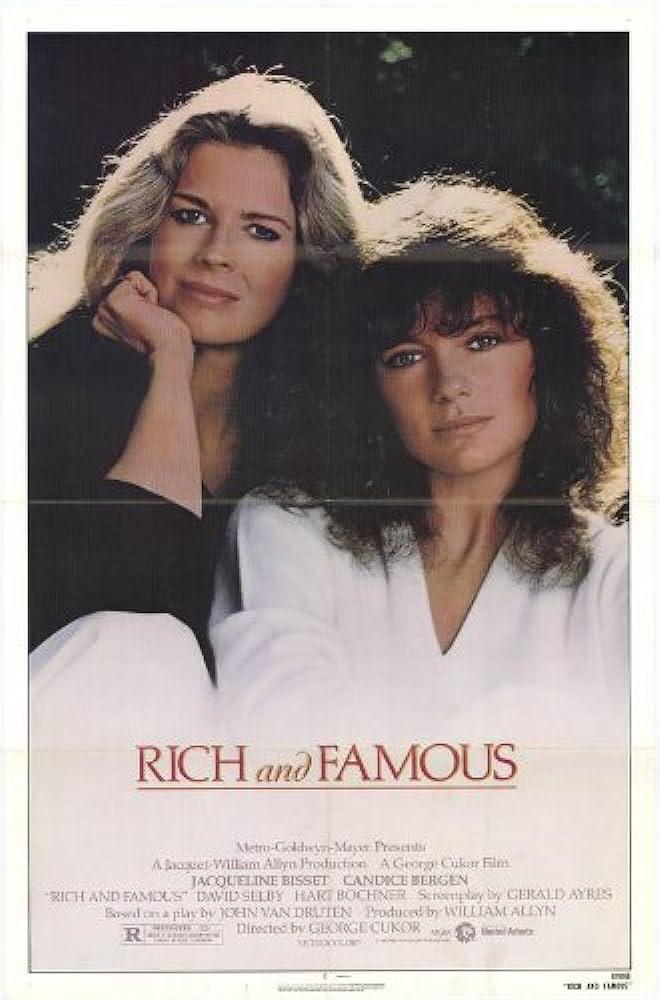
Rich and Famous (1981)

rich2

By Richard Winters

My Rating: 0 out of 10

4-Word Review: College friends become writers.

Liz (Jacqueline Bisset) and Merry (Candice Bergen) meet while attending college and become best friends. After graduation Liz achieves accolades for writing a novel and Merry, despite being married and living in posh Malibu, becomes jealous. She strives to write her own novel based on real-life experiences of her rich southern California acquaintances where only the names are changed. One night while Liz is visiting  Merry digs the first draft of her book out and reads it to her. Liz does not care for it, but promises the pleading Merry she’ll run it by her publisher (Steven Hill) convinced he won’t like it and nothing with come of it. To her surprise it does get published  and becomes a best seller. Now she’s the one seething in jealousy since her writing career has crested from writer’s block. While this is going on Merry’s husband Doug (David Selby) begins to come-on to Liz behind-the-scenes and openly wanting to have an affair with her, which Liz finds tempting since the two had a fling during college.

This is a remake of Old Acquaintances, which came out in 1942 and starred Bette Davis and Miriam Hopkins. Bisset spent 2 years working on the script and getting it funded as she was determined to play a ‘real person’ for once and not just the proverbial beauty. However, the movie, which was the last to be directed by legendary filmmaker George Cukor, bombed badly at the box office and it’s easy to see why. The storyline is out of touch with the decade that it’s in. What gets used as fashionable status symbol like having Merry stay at the Waldorf Astoria hotel might’ve been considered glitzy back in the 40’s, but for the 80’s generation would be looked upon as passe. Nothing is hip or trendy. The characters and their conflicts are of a soap opera variety, which is where this tepid storyline should’ve stayed.

My biggest beef was the whole friendship thing, which didn’t make a lot of sense. The two characters are about as different as you could get with Merry coming-off, particularly with her annoying southern twang, as dim-witted particularly when compared with Liz who’s clearly more sophisticated and articulate. Why these two opposites would bond is a complete mystery. There’s no backstory given, only a brief scene during their college days is shown, but nothing displaying what lead to the friendship blossoming, or what they had in common that they’d enjoy each other’s company. For the relationship to work it needs to be believable and organic, and the viewer able to buy into it, but instead it’s quite shallow and forced. Merry is incredibly annoying painfully insecure, emotionally needy, and grossly self centered. She’s the type of person most people would want to quickly dump as a friend and you wonder why Liz, who could easily find new friends more her intellectual equal, doesn’t do just that.

Merry’s marriage to Doug has the same issue. Why would he marry someone that had such a contrasting personality to his? The film fleetingly intimates that it was Liz he was truly after, he went to their same college, and only married Merry as an attempt to stay close to Liz, though the film relies on the viewer reading into this and should’ve instead fully confirmed it.

Merry’s ascent into the writing world is equally ridiculous. From the opening three paragraphs that she reads out loud to Liz gave more than enough reason that it was poorly written and should never see the light-of-day and yet somehow it becomes an immediate best-seller. In a better movie this might get used as satire showing how bad the American Public’s taste in literature is, but the film here has the audacity to show her winning awards for her writing, which just makes it all the more absurd and laughable. It also makes it seem like writing a book is easy and simply requires someone to sit down and throw some words on a page and walah it gets published when it reality it takes many drafts and polishing before it’s even potentially considered publish ready, but the movie glosses over this part completely.

I enjoyed Bisset who’s clearly the stronger actress, but Bergen makes an utter fool of herself particularly her attempt at a southern accent. Normally she’s good at playing the snarky type, which best reflects her personality. Trying to portray a simpleton isn’t her best suit and the film digresses every time she’s in it to the point her sporadic appearances start to seem almost like unintentional comic relief.

Had the film ended with some bitter, knockout cat fight I might’ve forgiven it and even gave it a few points. Not everyone is meant to get along and in real life these two would be a bad match. It’s one of those friendships that ultimately fizzles because the two just don’t have enough in common to keep it going and in a lot of ways ingrate on each other’s nerves. A nasty bitch session would’ve been just what the doctor ordered, and they do have a little bit of one, but then immediately make-up, which just cements the film’s profound shallowness.

My Rating: 0 out of 10

Released: September 23, 1981

Runtime: 1 Hour 57 Minutes

Rated R

Director: George Cukor

Studio: United Artists

Available: DVD, Amazon Video, YouTube

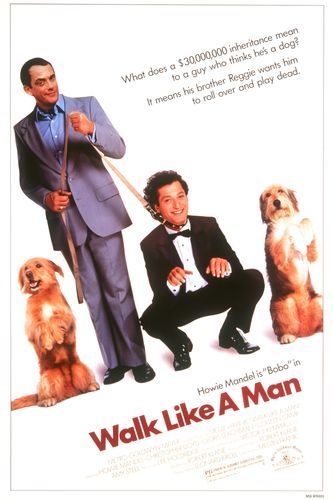
Walk Like a Man (1987)

walk

By Richard Winters

My Rating: 1 out of 10

4-Word Review: Raised as a wolf.

Henry (Christopher Lloyd) travels with his family to Alaska in the search of gold. His oldest son Reggie though doesn’t like the cold and so after finding his fortune Henry tells his family they’re leaving via a dog sled. Reggie is told that he’s now old enough to push the sled, which he doesn’t like, so when his father isn’t looking he hops onto the sled where his mother (Cloris Leachman) and younger 2-year-old brother, nicknamed Bobo, are. Bobo ends up getting pushed off the sled and lost in the icy wilderness where, despite the arduous search by his father who perishes while looking for him, is presumed dead. 28 years later a biologist named Penny (Amy Steel) comes across a man (Howie Mandel) with a pack of wolves. He gets identified through a tattoo as being the lost son and ‘returned’ to a now grown Reggie (Christopher Lloyd), his mother and Reggie’s wife Rhonda (Colleen Camp). Reggie has no interest in caring for his brother, who behaves like he’s a wolf, but because he’s squandered his father’s fortune and because Bobo was given a $30 million inheritance, Reggie agrees to let Penny teach him how to write, so he can ultimately sign over his money to Reggie.

The script was written by Robert Klane who burst onto the scene during the late 60’s with both ‘The Horse is Dead’, a highly irreverent, politically incorrect novel, but still quite funny, and ‘Where’s Poppa’, about a man trying to kill his senile mother. The latter got made into a movie, which was directed by Carl Reiner with the script written by Klane, that’s considered a landmark in dark comedy. So, how someone goes from doing stuff that’s highly inventive to this empty-headed, bare bones ‘comedy’ is hard to fathom, but the results are ‘blah’. The plot is threadbare and hinges on a lot of slapstick scenarios that prove to be predictable and overly-extended. Instead of picking up the pace, as a good comedic scene should, it saps the energy right out making the movie, as a whole, strained and boring.

The problems start out right away during the Alaska scene, which was clearly shot on a soundstage using fake snow, where the young Bobo falls off the sled, which if you think about it is quite horrifying as there is simply no way a toddler could survive in that climate. There’s no chance the wolves would ‘raise him’ either and instead would just eat him. Also, when he gets found by Penny he’s seen running around wearing a loincloth, but if he thinks he’s a wolf he shouldn’t be wearing anything at all just like the other wolves. Where did he find this cloth to wear, or did the wolves make that when they took up parenting him?

The running joke of Reggie’s neighbor, played by George DiCenzo, getting upset because Bobo keeps trampling through his freshly paved cement driveway, is overdone. The first time it happens it’s good for maybe a slight chuckle, but then several months later it goes back to Bobo doing it again, but the neighbor should’ve learned from the past and built a fence, or partition around the cement to prevent Bobo from going on it, or at the very least not be so shocked when the driveway gets ruined again since its already happened several times already.

The only interesting aspect is seeing Lloyd, who has later described this film as an ’embarrassment’, playing the lead. Usually he does likable, but eccentric character roles, so seeing him actually carry a film, which he does well despite the mess, is interesting and in fact he’s the only thing that gives it any energy and when he’s not in it it all falls flat. Mandel on the other hand isn’t dynamic enough to make his scenes work and his wolf routine is more tiresome than funny.

Leachman steals it as the mother with child-like instincts. She does have a few funny lines and her sitting with Bobo as Penny tries to teach him to read and write and her reactions to things being almost as clueless and fanciful is Bobo’s is definitely amusing. Steel, while quite bland, is good simply because she’s the only normal one in the movie, which when doing wacky comedies it’s nice to at least have one sensible person to help ground things.

I’ll give a point to the segment dealing with a trip to mall and the infamous sneezing scene, which did get me to laugh-out-loud, but everything else clunks badly. The final courtroom battle is especially cringey. Showing clips of ‘funny moments’ during the closing credits, which weren’t all that great when we saw them the first time, and acting like it’s some sort of ‘highlight reel’ just extends the pain further. If anything they should’ve shown bloopers and outtakes of the actor’s messing up their lines, which would’ve been funnier than hearing them speak the actual ones.

My Rating: 1 out of 10

Released: April 17, 1987

Runtime: 1 Hour 26 Minutes

Rated PG

Director: Melvin Frank

Studio: MGM

Available: DVD

This Sweet Sickness (1977)

sweet2

By Richard Winters

My Rating: 7 out of 10

4-Word Review: Obsessed over childhood friend.

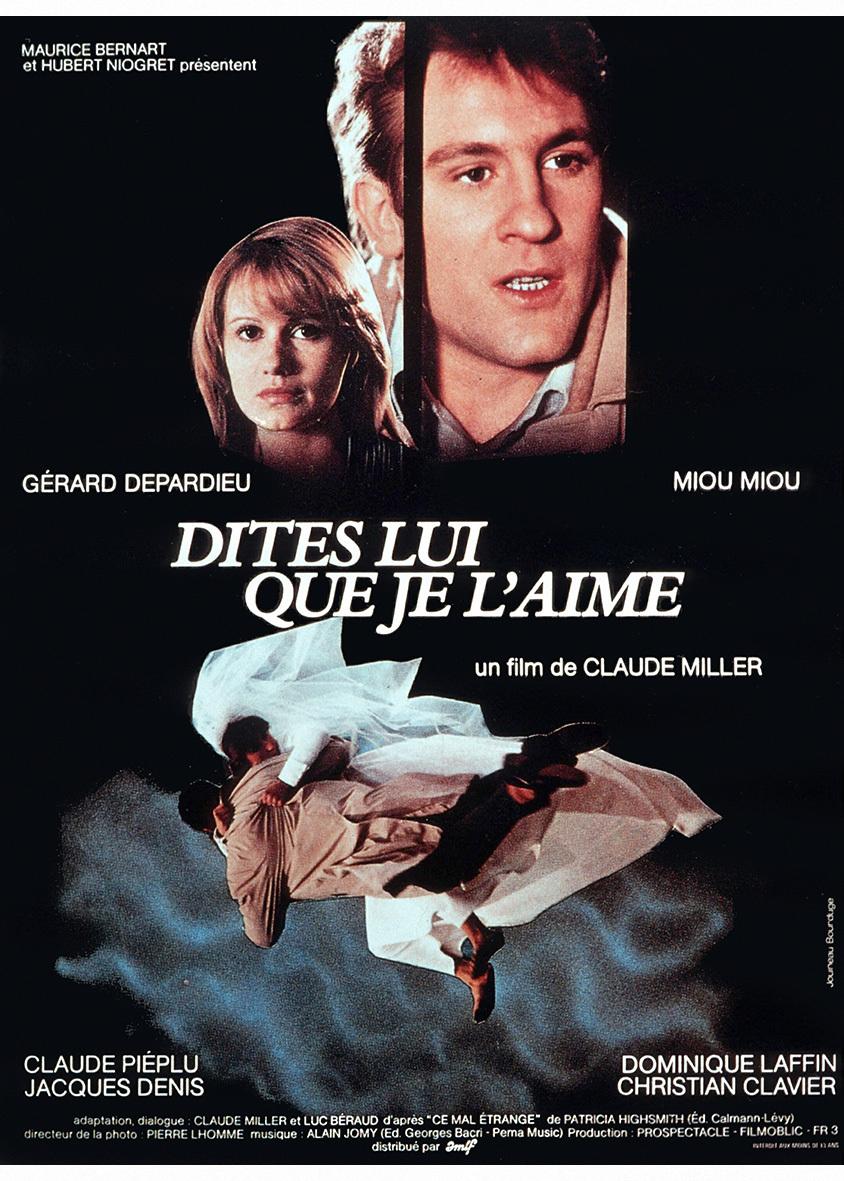
David (Gerard Depardieu) can’t seem to get over Lise (Dominique Laffin) who was a childhood friend of his. Now as adults Lise has married Gerard (Jacques Denis) and even had a child, but David keeps believing that she’s in-love with him and will eventually leave Gerard for him. On weekends he spends his time finishing up with a country house that he has bought, which he plans for he and Lise to live in. He repeatedly calls Lise and meets up with her in public in an effort to beg her to come back to him, but she resists while also advising him that he is mentally unwell and needs to see a psychiatrist. Meanwhile there’s also Juliette (Miou-Miou) who resides in David’s apartment building and has strong feelings for him. David is aware of her presence, but rebuffs her at every turn and yet Juliette persists. She secretly follows David to his country home and when she figures out what he’s doing the two have a confrontation.

While there’s been many movies involving stalkers and jilted ex-lovers that can’t seem to take ‘no’ for an answer this one was done when stalking was still considered an isolated phenomenon and thus there’s a lot of things that work against the modern-day formula, which is what makes it fascinating to watch. For one thing it’s not approached as a thriller, or even a horror, but instead a drama. David is not perceived as threatening, but mentally confused and needing help learning to move-on. Lise does not respond in a frightened way when he approaches, but more just annoyed.

The stalker is three-dimensional as well. One of the most intriguing moments is after Lise’s husband dies in a car accident and David convinces her to come to the country home to check-it-out. Initially she acts impressed with it and gives-off the perception that she might seriously consider moving-in, but David eyes her suspiciously, which is quite revealing. He’s spent the entire time convincing himself and others that she’s truly in-love with him, but now when she actually gives him what he wants he’s not sure he can believe her. This shows subconsciously that he’s aware she doesn’t have the feelings for him like he consciously wants to believe and he actually does know the reality of the situation, but the emotional side of him just doesn’t won’t accept it.

The addition of Miou-Miou  adds another fascinating element. It brings out how stalkers aren’t the way they are simply because they may be lonely and unable to find anyone else, which then supposedly forces them to become so fixated on one person since Miou-Miou is openly interested in him and just as attractive and yet David consistently rejects her. Her stalking on him becomes just as intrusive as David’s to Lise and in some ways just as creepy. The sex scene between her and Gerard, or at least an attempted sex moment, is quite interesting because just a few years earlier the two starred in another film called Going PlacesThere Gerard played the aggressor who rapes Miou-Miou here though she’s the aggressive while Gerard lays virtually frigid, which shows how brilliant these two actors are that they can play such opposite people so convincingly.

Spoiler Alert!

The story was based on a novel of the same name by Patricia Highsmith though there are a few key differences starting with the fact that the novel has the two in a previous, but brief relationship while in the movie they were just friends from childhood. In the book David works as a scientist and purchases the country home under an assumed identity. The Lise character is named Annabelle in the book and her husband Gerard dies after tracking David to the isolated home and getting into a fight with him where in the movie Gerard is killed when his car slides off an icy roadway. In the movie the house burns down when a drunken David knocks over a TV-set, but in the novel he simply sells it and buys a new one that’s closer to where Annabelle lives. The ending is a lot different too with the one in the movie, which takes place at a health spa, being far better and in fact it’s the most memorable moment as the scene is able to balance both an artistic and horrifying elements all at once.

Alternate Title: Tell Her That I Love Her

My Rating: 7 out of 10

Released: September 28, 1977

Runtime: 1 Hour 47 Minutes

Not Rated

Director: Claude Miller

Studio: Filmoblic

Available: DVD-R (dvdlady.com)

Garde A Vue (1981)

garde1

By Richard Winters

My Rating: 6 out of 10

4-Word Review: Interrogation of a lawyer.

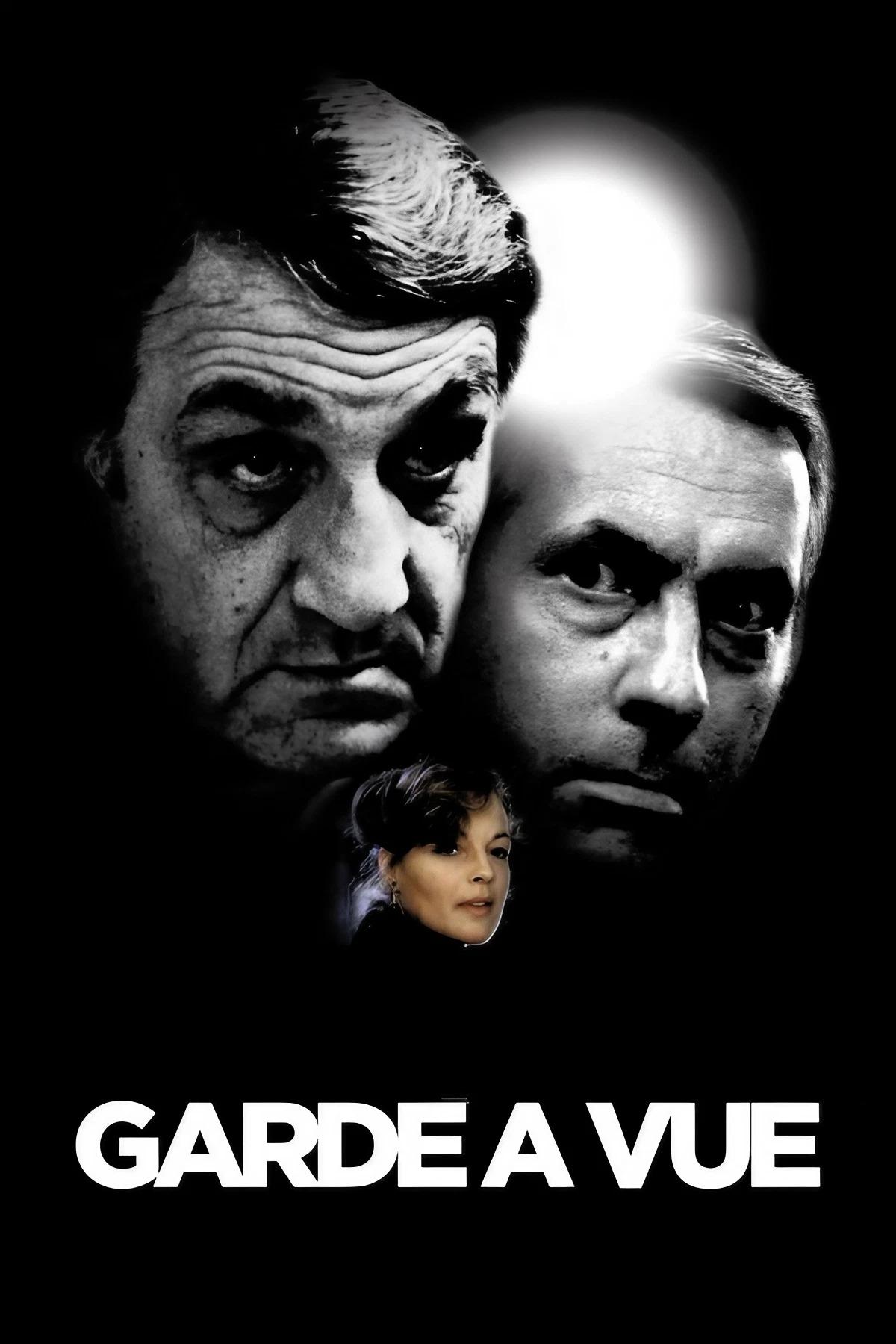
Jerome (Michel Serrault), is a rich and powerful lawyer who is brought into a police station late one night during New Year’s Eve in order to be questioned about the rape and murder of two young girls. Antoine (Lino Ventura) is the lead investigator while Marcel (Guy Marchand) sits in the back and assists him during the interrogation. At first the conversation is light and civil, but as Antoine brings more circumstantial evidence to the forefront Jerome becomes nervous yet insists he’s still innocent. Marcel even implements some physical force against him, but Jerome’s stance never changes. In another room Antoine has a conversation with Jerome’s wife, Chantal (Romy Schneider), who confides to him that she secretly suspected Jerome to be in-love with an 8-year-old girl. Once Jerome gets confronted with this his story soon begins to change.

The film is based on the novel ‘Brainwash’ by John Wainwright and shot entirely in a studio soundstage and in chronological order. Why director Claude Miller would want to film a story that had very little if any cinematic elements to it is a mystery and if anything this might’ve fared better as a stage play. I was initially impressed with the police station room as you’d swear it was an authentic building and not just a prop built for the production. The drenching rain seen pouring down outside the windows is impressive as it gives the viewer a claustrophobic feel and I liked how eventually, when the clock hits midnight, you hear car horns honking outside to represent the New Year. However, every interrogation room I’ve seen, and I watch a lot of confession videos on Youtube from real-life cases, the rooms are very small and with no windows and the film would’ve been better served had it reflected a setting like this as it would’ve brought out better the psychological tension of the suspect and his feelings of the ‘walls closing in on him’, which with here you don’t get.

You can’t help but connect this movie with The Offencewhich starred Sean Connery and was directed by Sidney Lumet. That movie came out 8 years before this one, but had the exact same theme of a suspect being brought in over the murders of some school girls. That movie was well directed but did annoy me for the fact that in that one the suspect, played by Ian Bannen, did nothing, but give off this smirk the whole time.  This one has a much better back-and-forth between the investigator and suspect, which helps keep it compelling as more evidence gets introduced. However, in the Lumet film it had constant shots of this big bright light shining into the camera giving the viewer a point-of-view feeling of what someone in that situation would feel and thus helping hype the sense of urgency of wanting to get out of there, or say anything one needed to in order to stop the pressure, which this film doesn’t do very well. Both films though have cutaways showing the dead girl’s bodies from a distance in a secluded area, which are visually creepy, though again Lumet’s film scores a bit higher in that category too.

Spoiler Alert!

Ultimately the ending is a letdown and rather baffling as it features Jerome caving and admitting to a crime that he really didn’t commit due to the perceived police pressure. For one thing it’s hard to imagine that a seasoned lawyer would be that dumb and wouldn’t just ‘lawyer up’ himself and demand counsel of his own when interrogation got to be too much. I’ve seen a lot of true life interrogations where the pressure put on the suspect was far worse and those people refused to buckle, so seeing the character fall to pieces so relatively quickly especially when he was educated to know better makes the whole thing pathetic.

Didn’t quite get why the wife shoots herself at the end either. Supposedly it’s because she feels guilty about tabbing him for the murder when the real killer eventually gets exposed, but she did it out of honesty as she really felt he had a thing for young girls, so why should she feel tortured about saying something she truly believed? It would’ve been more surprising if she had pulled the gun on Jerome himself as he got into the car and shot him as she would feel, even if he hadn’t been arrested for this crime, that he still had some dark perversions and thus should be killed before he goes and carries out his fantasies on some other girl. Of course if she lied about him having a thing for an 8-year-old in order to get back at him over their contentious marriage then her guilt and suicide would’ve been more plausible, but I didn’t get that from watching it, so if that was ultimately her motivation then the filmmakers should’ve done a better job at intimating it.

This is the rare case where I’d say the Hollywood remake, which came out in 2000 as Under Suspicion and starred Gene Hackman and Morgan Freeman was much better done. It had a better visual balance that didn’t keep the whole thing stuck inside a police room and it better tied-up loose story ends that this one leaves open.

My Rating: 6 out of 10

Released: September 23, 1981

Runtime: 1 Hour 27 Minutes

Not Rated

Director: Claude Miller

Studio: AMLF

Available: DVD, Blu-ray

Eureka (1982)

eureka1

By Richard Winters

My Rating: 6 out of 10

4-Word Review: He discovers some gold.

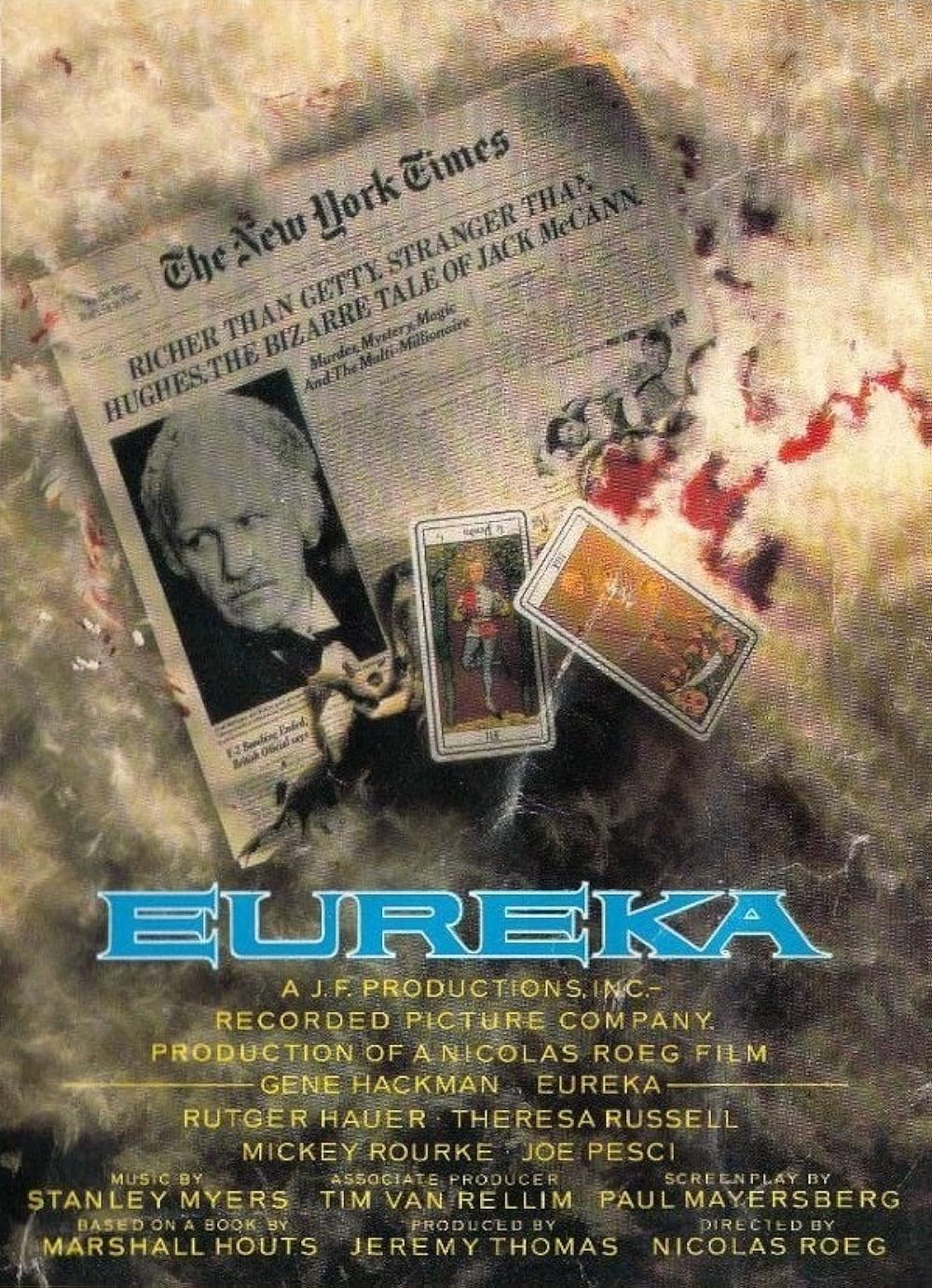
Jack (Gene Hackman) has been searching the Yukon for over 15 years in the hopes of one day coming upon some gold. Then one day he finds it and becomes super rich. 20 years later he’s living on his own island, married, and with a grown daughter named Tracy (Theresa Russell). Jack though has grown ornery through the years and has managed to alienate most of his family including Tracy’s husband Claude (Rutger Hauer) whom Jack can’t get along with and the two regularly argue to the point that it also affects his relationship with his daughter. Jack is also at odds with the local mobsters headed by Mayakofsky (Joe Pesci) who wanted to open a casino on the island and are willing to resort to any violent means necessary in order to get that done.

The film is based loosely on the life of Sir Harry Oakes who, like with the main character here, scoured many countries looking for gold for 15 years before finally laying claim to a fortune. He then retired to the Bahamas and ultimately was found murdered in 1943 in a crime that has remained unsolved. The studio though did not know what type of audience to aim the film to and thus shelved it for a year only to release it to limited theaters where it managed to recoup a paltry $123,572 out of its initial $11 million budget making it one of the biggest box office bombs in history.

As a visual exercise, given its director, its a spellbinding ride. Director Nicholas Roeg approaches it as a fable-like tale and creates the artic in a surreal type of way giving it an almost outer-worldly look and feel. To an extent this works and there’s a few memorable scenes including a barefoot man lying in the cold who blows his head-off, via a loaded gun, in one very unexpected, shocking moment that’s very realistically grisly. The death by blowtorch, which happens a bit later is effectively vivid as well. However, there’s other metaphysical elements like a mysterious stone that gets handed to Jack that alludes a bit too much to a magical quality and takes away that this is actually based on a true story and instead makes it seem like it’s all just a made-up metaphorical fable, which starts to have a pretentious quality.

The plot is too thin and the second act labors badly. Joe Pesci is a dynamic actor, but here his part is boring and he doesn’t come-off as threatening enough to give his scenes the proper tension. There’s also no insight given to why the gangsters choose to pick-on Jack, as this is a man who is quite rich and could hire his own protection and enforcers and not someone you’d think could be easily intimidated. So why bother with him at all and just find another island to build a casino on? In the real-life incident Harry Oakes went out of way to try to ban casinos from the entire island nation as he did not approve of gambling and thus caused the ire of the criminal underworld, but the movie doesn’t bother to explain this and thus makes the motivations of the bad guys confusing.

Acting-wise its a joy to watch especially Hackman. He has played so many heroes in his film career that it’s fun seeing him be a jerk and he does it well particularly when he gets on his alcoholic wife about ‘laying off the sauce’. Ed Lauter, who’s usually a heavy, is entertaining with this constant nervous look on his face as he ends up being the reluctant middle-man who gets played by both sides. Rutger Hauer is brilliant as usual giving each of his moments a creepy finesse as only he can do. Two of his more memorable bits are when he swallows a small piece of gold while in Jack’s presence and when he has a meltdown at a formal dinner party and angerly, even frighteningly, demands they all must go home.

Of course being that she’s the director’s wife you get ample visuals of Theresa Russell with and without clothes on. The two became a couple while filming Bad Timing a few years earlier and despite a nearly 30-year age difference got married. I’ve often think it’s odd though when a husband directs a movie in which she’s in bed naked with another man, in this case Hauer, who’s also sans clothes. Don’t know if many other husbands would like that idea as the erotic scenes weren’t necessarily needed though I kind of wonder if it’s not another case of the trophy wife syndrome where the old guy wants to brag to the world: look at this hot little number I get to go home to and you don’t and thus the nude scenes are just there to make all the other guys jealous.

Spoiler Alert!

The climactic court room scenes, in which Hauer is placed inside a cage during the proceedings, aren’t effective. Mainly because he acts as his own lawyer and questions Russell on the stand who goes on a long, teary-eyed, rant about her father and his perceived psychological motives, that ceases to be the proper question/answer decorum that would be expected in a regular court setting. It’s unlikely that any judge would let this go on the way it does, or that the jury, or other attorneys would be so captivated as they are and not begin rolling their eyes after awhile, or objecting to the histrionics. Having Hackman killed off doesn’t help things as he was the guy the viewer most connected with while Hauer was a creepy guy who behaved erratically and expecting the audience to suddenly emotionally side with him at the end was an overreach.

Released: May 20, 1983

Runtime: 2 Hours 10 Minutes

Rated R

Director: Nicholas Roeg

Studio: United Artists

Available: DVD-R, Blu-ray

First Monday in October (1981)

firstoctober

By Richard Winters

My Rating: 3 out of 10

4-Word Review: The first lady justice.

While Daniel Snow (Walter Matthau), an associate justice on the Supreme Court who leans heavily left on most issues, is on vacation in Alaska, he gets word that the staunch conservative judge has passed away. The President then decides to nominate a woman to the court by the name of Ruth Loomis (Jill Clayburgh). Unfortunately Daniel is not happy about this as she’s as conservative as the man she replaced. Once the nomination is confirmed the two are immediately at odds over such things as pornographic movies and corporations that pollute the environment. While they bicker and debate constantly they do end up becoming friends, which comes in handy when Ruth realizes that her late husband was involved in some unscrupulous matters and she considers resigning from her position though Daniel tries desperately to talk her out of it.

The film is based on the 1978 play of the same name written by Jerome Lawrence and Robert Edwin Lee, who also wrote the screenplay. Initially the play, which first starred Jean Arthur and Melvyn Douglas received such terrible reviews that it soon closed and was revamped with Henry Fonda and Jane Alexander, was considered a novelty as up to that time no woman had ever served on the nation’s highest court. That all changed when Ronald Reagan nominated Sandra Day O’ Connor in July of 1981 forcing this film, in an effort to appear timely, to move up its release date to August, but the timing didn’t work and the movie was overall panned by both the critics and public.

The only interesting aspect is watching it from today’s perspective where the Supreme Court has now become a toxic and divisive issue when back in the early 80’s that was not the case. When the Girl Scouts of America posted on Twitter commemorating Amy Coney Barret getting nominated and approaching it as an achievement for women it got a lot of pushback from those unhappy with her due to her conservative leanings. Yet in this movie the fact that the character is staunchly conservative is not considered a problem and feminists and other women are seen during the senate hearings proudly cheer her on and considering her nomination a landmark.

In some ways having the political drama that the modern day court holds today might’ve made the story more interesting as the thing is so genteel that it’s enough to put most people to sleep. The script would’ve had more intrigue had their been a bad guy, maybe like the producer of the porn movies who gets talked about, but never seen, or even the elusive head of a mysterious corporation whose case the court is set to hear, that should’ve been added in to create genuine conflict, which is otherwise sorely missing.

I did like the scene where the judges get together inside a viewing room to watch the porno flick ‘The Naked Nymphomaniac’, but Matthau’s character should’ve been present during this and it’s less funny without him. Their subsequent arguments about whether X-rated movies should be allowed under the First Amendment seems quite dated as this issue had already been considered settled law and by the 80’s most video stores were offering adult films for rental and cable movie channels were showing porn late at night making the plot here woefully out of touch with the times.

Matthau and Clayburgh are great actors, but their performances here prove to be dull and lifeless. Having some sort of romance enter into the picture, it gets briefly alluded to when Matthau admits to having a certain attraction to Jill, but immediately dropped, might’ve given it a spicy angle, but just portraying them as friends with different viewpoints isn’t enough to keep it captivating. There’s  not too much that’s funny either. There’s a couple of semi-humorous lines here and there, but nothing that will make anyone break out into uproarious laughter. Matthau’s inability to eat his lunch using chopsticks while in a Chinese restaurant might amuse some slightly, but overall it’s a dull, empty ride. Very surprising that this thing received an R-rating. The only objectionable part is when they watch a porn flick, but nothing much in the way of nudity or sex is shown.

My Rating: 3 out of 10

Released: August 21, 1981

Runtime: 1 Hour 39 Minutes

Rated R

Director: Ronald Neame

Studio: Paramount Pictures

Available: DVD, Amazon Video, YouTube

Ghost Story (1981)

ghost1

By Richard Winters

My Rating: 7 out of 10

4-Word Review: Four men carry secret.

Four elderly men, Ricky (Fred Astaire), John (Melvyn Douglas), Edward (Douglas Fairbanks Jr.), and Sears (John Houseman), who all live in the same small Vermont town and are lifelong friends who call themselves the Chowder Society, get together each week to tell each other ghosts stories. Then Edward’s son Don (Craig Wasson) dies after falling out his apartment window. The men begin having reoccurring nightmares focusing on Eva Galli (Alice Krige) a woman they once knew 50 years earlier. Has she come back from the dead to haunt them and their family members? And just exactly what happened to her as she seemed to have left town without a trace? Only the four men seem to know the answer to this and all of them guard this secret quite closely, but once David (Craig Wasson) comes to town, who is Edward’s other son, he becomes determined to break their silence.

The film is based on Peter Straub’s epic novel, which was released in 1978 and was 483 pages long. Many fans of the book complained that the movie overly simplified the plot, but there is just no way you can condense a long book into a two hour screenplay and for what it’s worth I think both director John Irvin and screenwriter Lawrence D. Cohen did the best they could and if anything this might’ve worked better as a TV-miniseries where many of the story’s dramatic angles could’ve been played out more. My main complaint is that in the novel Eve Galli character was portrayed as being a manitou who could change shape being a small child at one point and a wasp at another and the film would’ve been scarier had it taken that approach.

I also didn’t like Wasson, who’s great for giving a deer-in-headlights-look, but not much else, playing both the brothers. I can’t remember if they were twins in the book, or not, but having them be twins here wasn’t integral to the plot and makes it a bit confusing. For instance when the brother falls out the window, where he is naked and full frontal nudity showing, which was bit daring at the time for males, the next shot shows Wasson, as the twin, waking out of deep sleep making it seem incorrectly that it had all just been a dream.

The film’s main selling point is seeing four legendary actors, who were all either in their 80’s, or nearing it, still able to carry a film, which they do quite well and if anything it would’ve been nice seeing them in more of it. Astaire’s presence is especially interesting, he apparently threaten to quit the movie several times during the shooting, as he had mostly done musicals and light fare before this one. The females are strong here too particularly Krige in her film debut, who gets shown nude from both the back and the front, who has a very creepy presence. Jacqueline Brookes as Melvyn Douglas’ wife has a few key moments, but Patricia Neal, as Astaire’s wife, gets barely any speaking parts at all and is entirely wasted.

The recreation of the 1930’s was my favorite part and quite well done with the characters behaving in believable ways and making it seem like they weren’t just caricatures of their era, but real people that could exist today. Finding actors to play the roles of the older men in their younger years and come off closely resembling them is amazing and much credit should go to the casting director Mike Fenton for hiring young men with just the right characteristics of their older counterparts. The only caveat is that it has the incident occurring 50 years earlier, just like in the book, but with all the actors clearly looking like they’re in their 80’s a more accurate time period would’ve been 60 years when these guys would’ve realistically been college aged.

Spoiler Alert!

The effects are good though much of the scares hinges off of sporadic close-ups of ghostly Eva’s decomposed face, which gets a bit redundant. The story leaves open a lot of questions like why does Eva’s ghost wait 50 years to haunt the men; why not begin terrorizing them 10  years later or even 20? Also, why does Eva go after the son’s of one of the culprits who wasn’t even born yet when the incident happened instead of going directly after the old guys who were responsible? Also, how does a ghost take humor form enough so that the Wasson character is able to make love to her, he complains that she’s ‘cold to the touch’, but a spirit should be trapped into being just that, or at best possessing someone else’s body, but here we have Eva literally recreated to modern day and am not sure in ghostly logic terms how that gets done though despite these issues it’s still a fun ride.

My Rating: 7 out of 10

Released: December 15, 1981

Runtime: 1 Hour 51 Minutes

Rated R

Director: John Irvin

Studio: Universal

Available: DVD, Amazon Video, YouTube