Category Archives: Cold Climate/Wintertime Movies

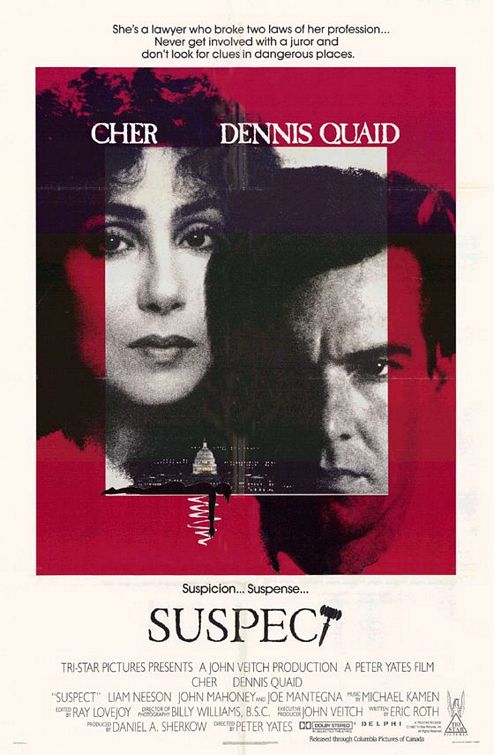
Suspect (1987)

suspect 3

By Richard Winters

My Rating: 4 out of 10

4-Word Review: Juror helps solve case.

Kathleen Riley (Cher) is a public defender who suddenly finds herself embroiled in what initially seems like an open-and-shut case. She’s been hired to defend Carl (Liam Neeson) a Vietnam Veteran who through illness is now both deaf and mute and living on the city streets as a homeless vagrant. He was caught near the body of a former file clerk to the justice department whose corpse was found floating near the Potomac River. As the case progresses Kathleen finds an unusual ally in Eddie (Dennis Quaid) who is one of the jurors on the case and who does some investigating of his own only to dig up evidence that points to the murder being connected to a top ranking political figure (Phillip Bosco).

The film starts out well and has all the ingredients of being a crafty court battle wrapped around an intricate mystery, but unlike most other courtroom dramas this one is not based on a novel written by an author with a legal background. Instead the story was penned directly for the screen by Eric Roth, who’s had plenty of success in his own right, but no expertise in legal proceedings, which would explain why this would-be drama ultimately becomes implausible and over-the-top.

The biggest problem I had was trying to understand why a juror would go so out of his way to investigate a case on his own. Nothing about the character’s background revealed a personality trait that would make him want to do this and if anything working as a lobbyist seemed to make him more of an opportunist than a truth seeker. The character was initially reluctant to even fulfill his jury duty requirement, so why does he suddenly make a 180 degree turn and spend his free time going into dangerous areas of the city simply to help solve a case that he has no emotional attachment to whatsoever? The concept makes no sense and is also illegal. The story would’ve been more believable had the character been a young member of Riley’s legal team and in an effort to prove himself went out of his way to find clues that would help solve the case.

The fact that the victim’s car remains impounded in the lot where she last parked it and never towed away even well after she had been murdered seems equally implausible as does the fact that Riley nor the police don’t think to search it until the case is almost over. There is also another scene where Eddie, in an effort to get out of the hotel room after the jury has been sequestered, puts a flame to a fire alarm to make it go off and thus create enough diversion to allow him to leave the building undetected, which he does, but it never shows how he is able to get back into his room undetected, which most likely could prove just as dicey.

Yet despite all these other issues, it is actually the theatrical, Hollywood-like court room showdown at the end that is the most absurd and relies too much on extreme circumstance and coincidence for it to be even remotely believable. Katherine’s foot chase through the darkened corridors of the court building by a shadowy figure is equally out-of-place and better suited for a thriller.

Cher is okay in a role that seemed to be stretching her acting range, but the fact that a juror feeds her all the clues and does almost all the investigative legwork that either her or her legal team should’ve done initially makes her character look lazy, sloppy and incompetent.

John Mahoney is effective as the stern, grim-faced judge and Liam Neeson does well cast in role that has no speaking lines, but his character doesn’t get shown enough and there are long stretches where he isn’t seen and the viewer almost forgets all about him. The segment though where Riley asks him if he committed the murder as he is sitting on the stand and his face goes from pale white to beet red in a matter of seconds is probably the film’s best moment.

My Rating: 4 out of 10

Released: October 23, 1987

Runtime: 2Hours 1Minute

Rated R

Director: Peter Yates

Studio: TriStar Pictures

Available: VHS, DVD, Amazon Instant Video, YouTube

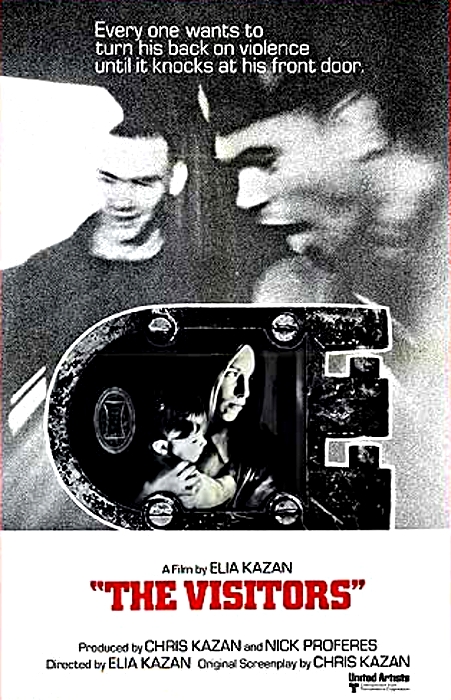
The Visitors (1972)

visitors 1

By Richard Winters

My Rating: 3 out of 10

4-Word Review: His past comes back.

Vietnam veteran Bill (James Woods) has moved back into civilian life while enjoying the quietness of the country with his girlfriend Martha (Patricia Joyce) and her infant son. One day in the dead of winter while Bill is away shopping two of his former war buddies Tony and Mike (Chico Martinez, Steve Railsback) come by for an unexpected visit. When Bill returns he is not happy to see them and when Martha asks him why he tells her of how while in Vietnam he had witnessed the two raping a woman and later he decided to report it, which got the two men sent to prison. Now that they are out he is afraid they may be looking for revenge. Tony insists that he’s forgiven Bill for what he did, but Mike’s intentions are much more ominous especially with the way he eyes Martha. As the night wears on the tensions mount until festering over into anger and mayhem.

The story is loosely based on an actual crime that occurred in Vietnam on November 19, 1966 when five American soldiers kidnapped and gang raped a 21-year-old Vietnamese woman who they later killed. One of the soldiers, who did not take part in the crime, but did witness it, reported the incident to his superiors, which eventually got the other men convicted and imprisoned.

The incident was first made into a movie in 1970 in Michael Verhoeven’s o.k. and then 19 years later Brian De Palma did another version of it called Casualties of War, which starred Michael J. Fox. This version differs from the other two in that it only alludes to the crime, but never shows it. Instead it hypothesis on what might’ve happened had those who were convicted came back to revisit the one that had turned them in.

Story wise the film works to a degree as it reveals things in layers, which helps hold the mystery and filming the majority of it inside one lonely, isolated house gives it an effectively claustrophobic feeling, but the production values are extremely low and resembles more someone’s lost home movie than a feature film directed by a one-time Hollywood legend. The background sound is mainly made up of a howling wind noise, which helps heighten the creepiness, but then during the second half director Elia Kazan inserts music, which becomes a distraction.

The ending leaves open a wide array of unanswered questions along with a lot of murky character motivations that makes the whole thing seem pointless and ill-conceived. The only interesting element to get out of it is seeing Woods and Railsback in their respective film debuts. Railsback is especially good in a part he seems born to play and one he honed to even greater success years later in The Stunt Man.

My Rating: 3 out of 10

Released: February 2, 1972

Runtime: 1Hour 28Minutes

Rated R

Director: Elia Kazan

Studio: United Artists

Available: Amazon Instant Video

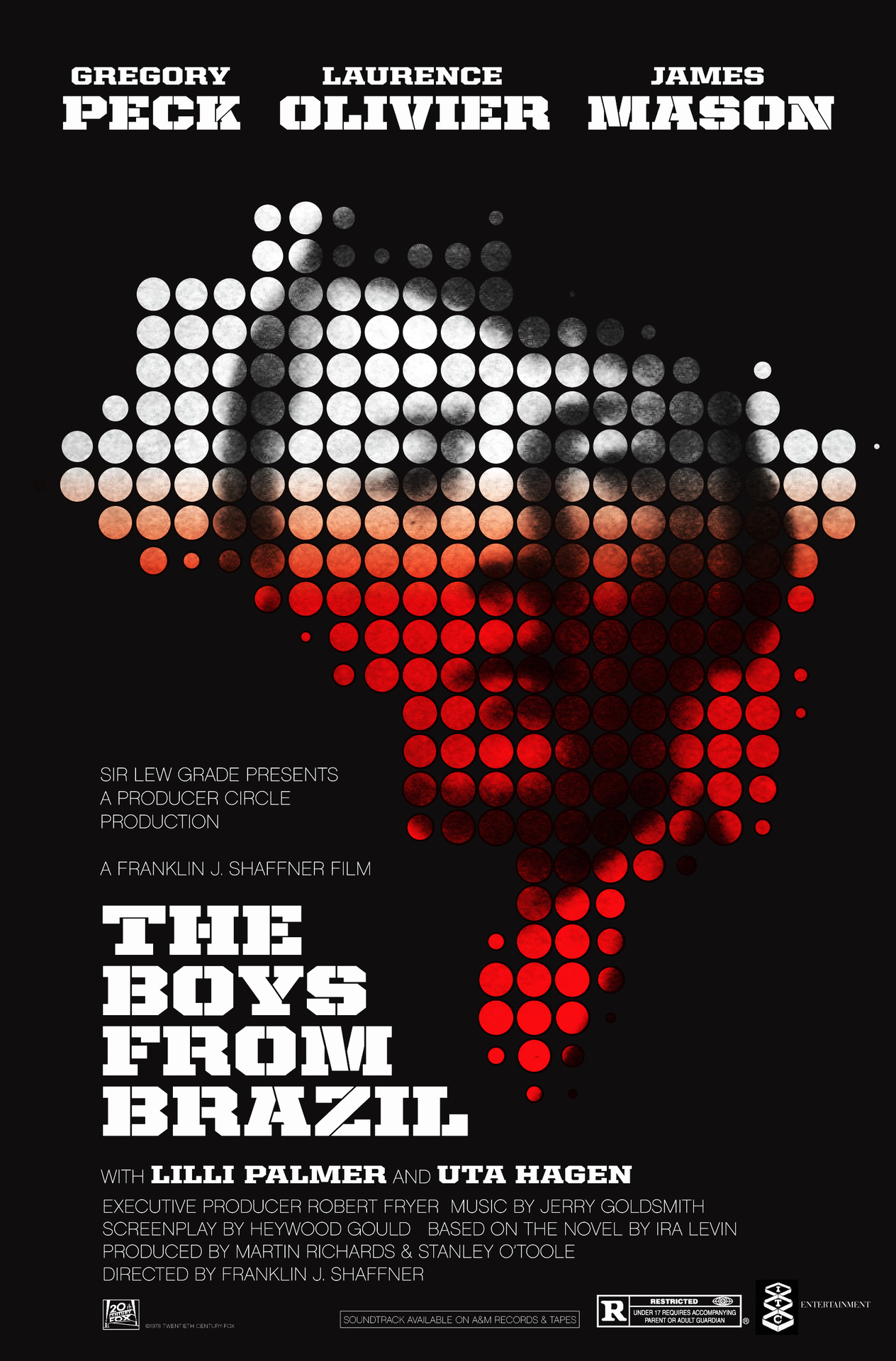
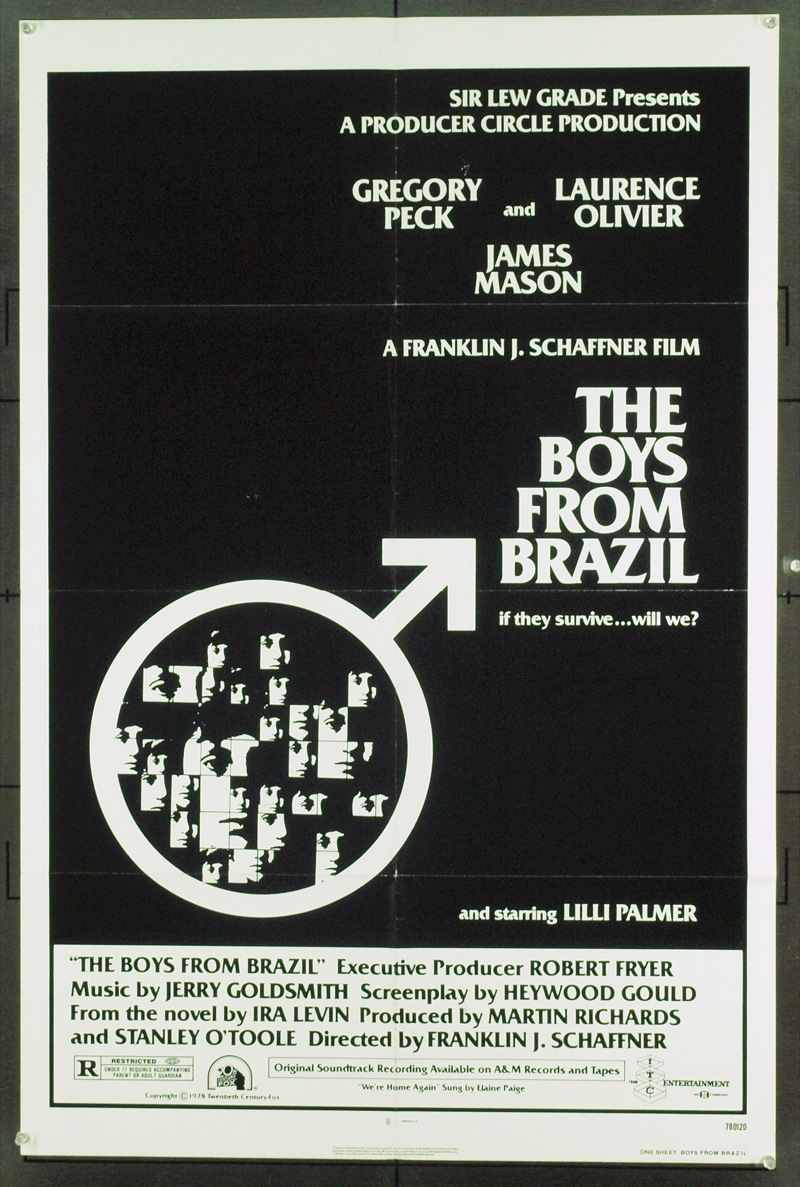
The Boys from Brazil (1978)

exorcist

By Richard Winters

My Rating: 4 out of 10

4-Word Review: Mad doctor clones Hitler.

Based on the best-selling novel by Ira Levin the story details an elaborate plan devised by the elusive Josef Mengele (Gregory Peck) who has been hiding out in the jungles of Paraguay and has a secret meeting with several Third Reich war criminals that is overheard by novice Nazi Hunter Barry Kohler (Steven Guttenberg) and relayed to Ezra Lieberman (Laurence Olivier). The plan calls for these war criminals to go out and murder 94 65-year-old men who are living in various parts of the world as Mengele has saved a sample of Hitler’s DNA and impregnated 94 women with it at a Brazilian clinic. These Hitler clones have now grown to adolescence and need to be put in the exact same environment as the real Hitler had been in order to bring out the same personality traits, so it’s important that their fathers die at the same time as Hitler’s real father had. At first Lieberman cannot believe such an outrageous plot, but as the evidence mounts he realizes it is true and he may be unable to stop it.

The film has two great scenes which includes an eye popping death from a steep mountain bridge and a graphic moment where we see in close-up Mengele place the ovum with Hitler’s DNA into the women. Outside of these two moments the film is rather flat and cheesy with certain segments bordering on camp. The plot is intricate enough to keep you involved, but highly implausible and the characters take a long time to realize things that the viewer has already figured out long before.

It is fun seeing Peck playing a bad guy and this was his first villainous role since Duel in the Sun and although he does well in the part the character is so one dimensionally evil that it ultimately makes him boring. Olivier is not effective in the lead and comes off as frail and sickly with certain comical overtones given to the character that don’t work. The final confrontation between he and Peck in which the two roll around on the floor while grappling for a gun looks more pathetic than exciting and apparently the scene had to be reshoot several times because both actors kept breaking out into laughter over the absurdity of it. I did feel though that Guttenberg was perfectly cast as a wide-eyed schmuck that was in way over-his-head.

Spoiler Alert!

My biggest problem with the film though is the ending that turns out to be a big letdown. For one thing it takes place at a remote farmhouse, which seems too similar to a scene in Marathon Man, which came out just two years earlier, had a similar theme and also starred Olivier. It features nine Doberman pinchers with four of them that surround the farm’s owner (played by actor John Dehner) at all times. He uses them for protection as he is convinced someone is out to get him, which could’ve created quite an interesting scenario when Mengele travels to the home to kill him. However, the owner puts the dogs into another room the second Mengele tells him that they make him uncomfortable, which then allows Mengele to shoot the man without any problems, but why have the dogs for protection if you’re just going to put them away the minute some stranger doesn’t like them and if the character is so paranoid why even allow a stranger into your home without at least demanding some form of identification first?

End of Spoiler Alert!

The conclusion is unsatisfying as it leaves open a ton of unanswered questions. Not only is the plot full of loopholes, but it seems like only a springboard to a much more fascinating story, which is trying to hunt down all these Hitler clones that the film fails to realize.

the boys from brazil 1

My Rating: 4 out of 10

Released: October 5, 1978

Runtime: 2Hours 3Minutes

Rated R

Director: Franklin J. Schaffner

Studio: 20th Century Fox

Available: VHS, DVD, Blu-ray, Amazon Instant Video, Netflix Streaming

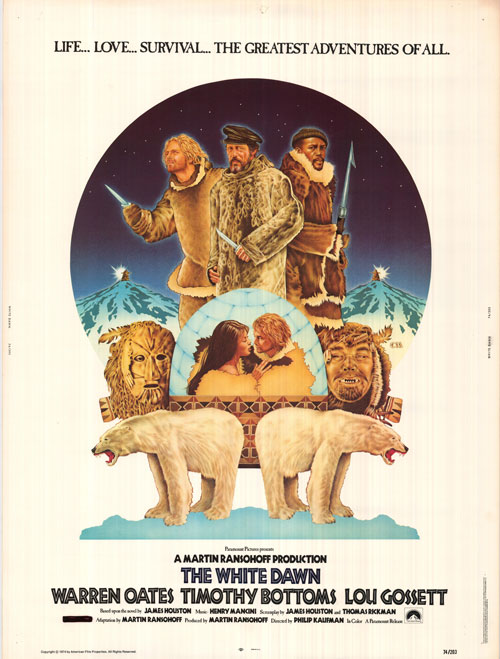
The White Dawn (1974)

white dawn 2

By Richard Winters

My Rating: 5 out of 10

4-Word Review: Trapped in the artic.

In 1896 three whalers inadvertently become lost from the rest of their crew and stranded all alone on an artic island. There is Billy (Warren Oates) who is the impulsive and belligerent one of the bunch and Daggett (Timothy Bottoms) who is more quiet and introspective as well as Portagee (Louis Gossett Jr.). After wandering in the snow and cold for many days they finally come upon an Eskimo tribe who takes them in with food and shelter. The men though never seem to fully appreciate what the Eskimos have done for them while at times even exploiting their kindness, which eventually leads to tensions from both sides.

Filmed on-location on Baffin Island in northern Canada it is based on the novel ‘The White Dawn: An Eskimo Saga’ by James Houston who also wrote the screenplay. He lived with the Inuit people during the 50’s and 60 and helped spread their art and culture to the rest of the world. The film though doesn’t seem all that revealing. Much of what happens is rather predictable and with scenes that tend to ramble. There are also other moments that are a bit bizarre like the scene during a celebration where two girls take off their shirts and then lock lips and proceed to blow air into each other’s mouths at an accelerated rate that might’ve been more interesting had it been explained what exactly they were doing and why.

The characters are dull and transparent in Oates’ case genuinely unlikable. The Eskimos lack any individual distinction and most viewers will fail to find themselves emotionally attached to anyone onscreen. The film probably would’ve worked better had it been a smaller tribe and just one person that they had rescued.

There are also a lot of scenes featuring animal deaths and cruelty that may upset some viewers. On the one hand I liked that it kept things real and hunting is certainly a part of their culture especially at that time, but some of it does get graphic. One scene has the group grabbing a goose from different ends and then literally pulling it apart while later on they slaughter some walruses that are peacefully bathing in the sun.

The film’s dark ending is interesting and the time the three attempt to escape from the tribe by stealing one of their boats is also intriguing, but otherwise I was aloof with it most of the way. I admire the attempt of bringing the Eskimo culture to a wider audience and the film really isn’t a bad movie, but it’s not a particularly gripping either.

My Rating: 5 out of 10

Released: July 21, 1974

Runtime: 1Hour 50Minutes

Rated PG

Director: Phillip Kaufman

Studio: Paramount

Available: DVD, Amazon Instant Video
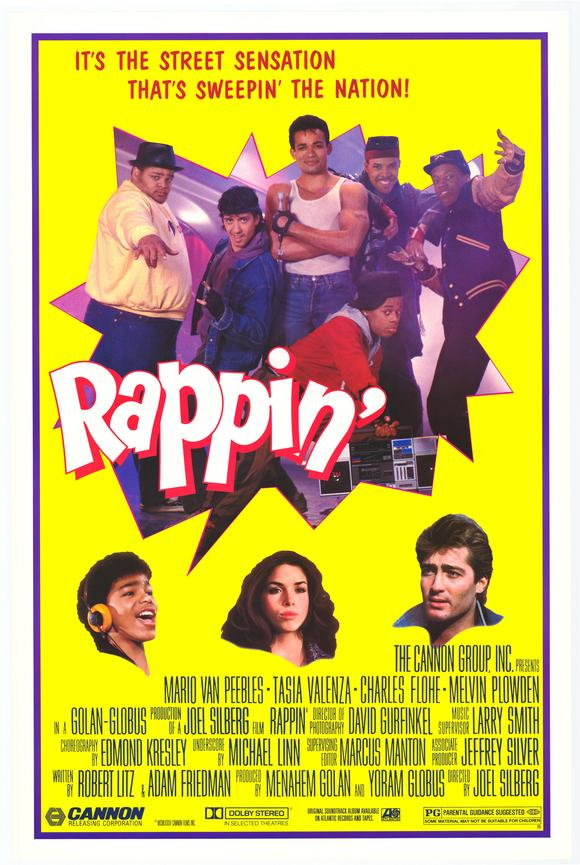
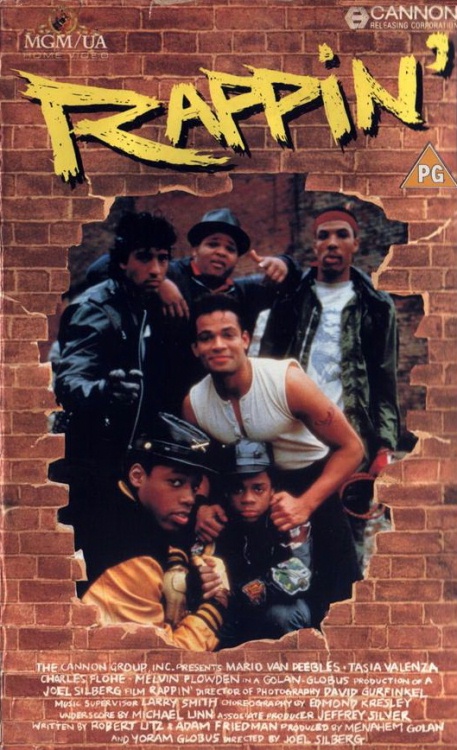
Rappin’ (1985)

rappin 2

By Richard Winters

My Rating: 1 out of 10

4-Word Review: Rapper saves the neighborhood.

John (Mario Van Peebles) has just been released from jail and looking to stay out of trouble while living with his grandmother (Eyde Byrde) and finding a job. He reluctantly gets involved in trying to save his poor neighborhood from a greedy developer (Harry Goz) who wants to turn it into a shopping mall while also dealing with his former girlfriend Dixie (Tasia Valenza) who works for a record label and wants to sign him to a rap record deal.

This film was released at the height of the rap craze with the idea that any movie dealing with the subject would be a sure fire hit no matter how pathetic. Overall it’s as bad as it sounds and maybe even worse. The characters and scenarios are simplistic and contrived while having a family friendly tone to it that turns the rap art form into just another watered-down marketing ploy to get people into the seats.

Van Peebles, who is the son of renown independent filmmaker Melvin Van Peebles, is extremely weak in the lead as he has too much of a clean-cut persona and unable to even do his own rapping as it was all dubbed by Master Gee. Valenza is quite cute as the love interest and I liked that they had an interracial relationship without it having to be a source of controversy or attention.  Ice-T can also be seen briefly during a rap audition and looking like he hasn’t aged at all.

The film does have the novelty of showing a ‘dance-off’ between two members of a street gang that is amusingly goofy. The climatic sequence has all the city council members joining in on a group rap and the credits, which is probably my favorite part of the movie, features the majority of the cast, which includes some of the older, white folks, doing their own rapping as their names get scrolled over the screen.

rappin 1

My Rating: 1 out of 10

Released: May 11, 1985

Runtime: 1Hour 32Minutes

Rated PG

Director: Joel Silberg

Studio: Cannon Pictures

Available: DVD

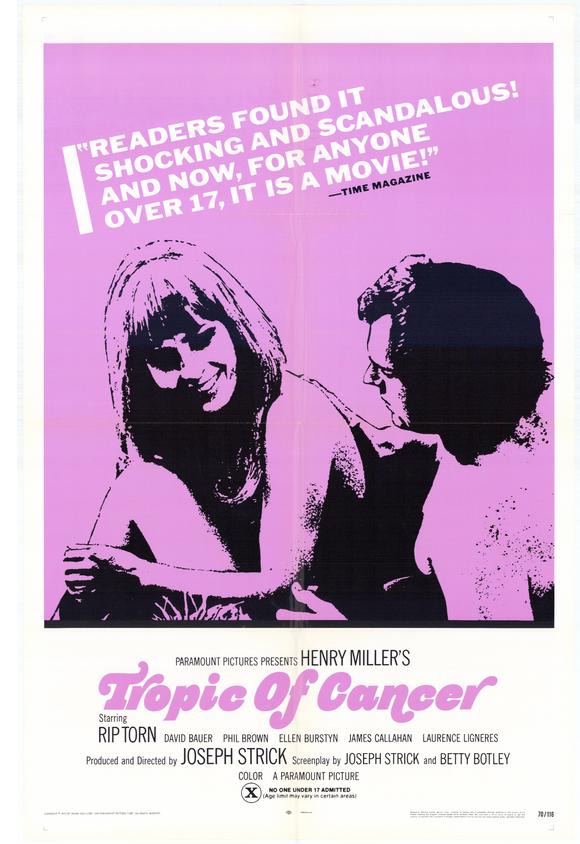
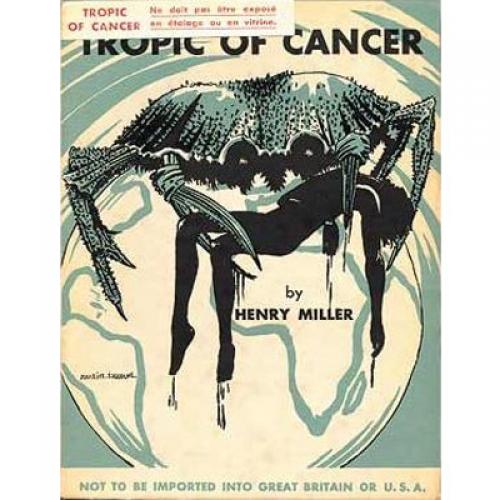
Tropic of Cancer (1970)

tropic of cancer

By Richard Winters

My Rating: 4 out of 10

4-Word Review: Writer living in Paris.

Rip Torn plays author Henry Miller living in Paris during the 1930’s and struggling to find work, shelter and money. He spends his time shoplifting items from food stands while also having sexual conquests with prostitutes and even the wives of his friends.

The film is based on Miller’s landmark novel that was published in France in 1934, but banned in the US until 1961 and even then went through several obscenity  lawsuits, which were finally all dropped in 1964 when the US Supreme Court deemed the book to have artistic merit. The novel, which is considered highly influential and won wide critical acclaim, has an odd mixture of stream-of-consciousness elements as well as autobiographical ones that works well in book form due to Miller’s first person narrative, but fails on the big screen. It was never meant to be made into a movie and director Joseph Strick’s ambitious attempt to make it into one, who just three years earlier tried to do the same thing with James Joyce’s equally unfilmable novel Ulysses seems futile and ridiculous.

The production looks cheap and lacks any type of atmosphere or visual flair. The setting is supposed to be the late 20’s, but it hardly seems like it. The acting is weak particularly by the supporting actresses playing the prostitutes who almost come off like people pulled off the street with no acting training of any kind.

The film’s most notorious claim to fame like with the book was its explicit sexual content that by today’s standards seems quite tepid. There are some nude scenes here and there including seeing actress Ellen Burstyn fully naked from the front, but it adds little. The best stuff is Torn’s voice over-narration describing his character’s sexual fantasies much of which was lifted directly from the novel. This was the first film to ever use the word ‘cunt’ and it gets said frequently. In fact it’s the character’s sexual conversations and the caustic way women get described in them that are the most amusing thing about the movie.

A few other funny moments include Miller having sex with a prostitute while she is also taking care of her sick mother and who would sometimes leave the bed to look in on her and although Miller initially pays the woman for her ‘services’ he eventually steals it back when she is away during one of her trips to her mother’s room. Miller’s roommate Carl (David Baur) has a great scene where he writes love letters to a woman he wants to have sex with and the two finally meet only to have the actual encounter not live up to the fantasy.

This was filmed at the same time as Quiet Days in Clichy, which was also based on the same novel. Both films were made in Paris and Henry Miller would routinely sit-in on the productions, which were done not far from the other. However, despite an admiral attempt the movie comes off as flat and boring and the viewer would be far better off skipping this and reading the source material instead as the only time it ever gels is when it uses text taken directly from the book.

tropic of cancer 2

My Rating: 4 out of 10

Released: February 27, 1970

Runtime: 1Hour 27Minutes

Rated X (Reissued as NC-17)

Director: Joseph Strick

Studio: Paramount

Available: DVD, Amazon Instant Video, YouTube

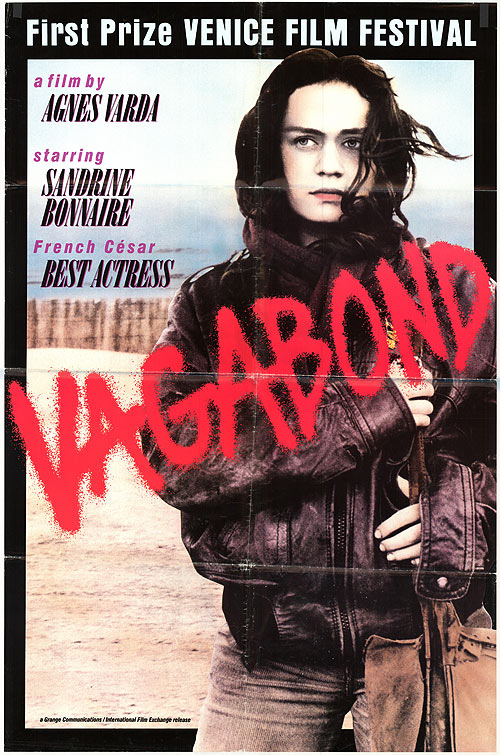
Vagabond (1985)

vagabond 1

By Richard Winters

My Rating: 6 out of 10

4-Word Review: She has no home.

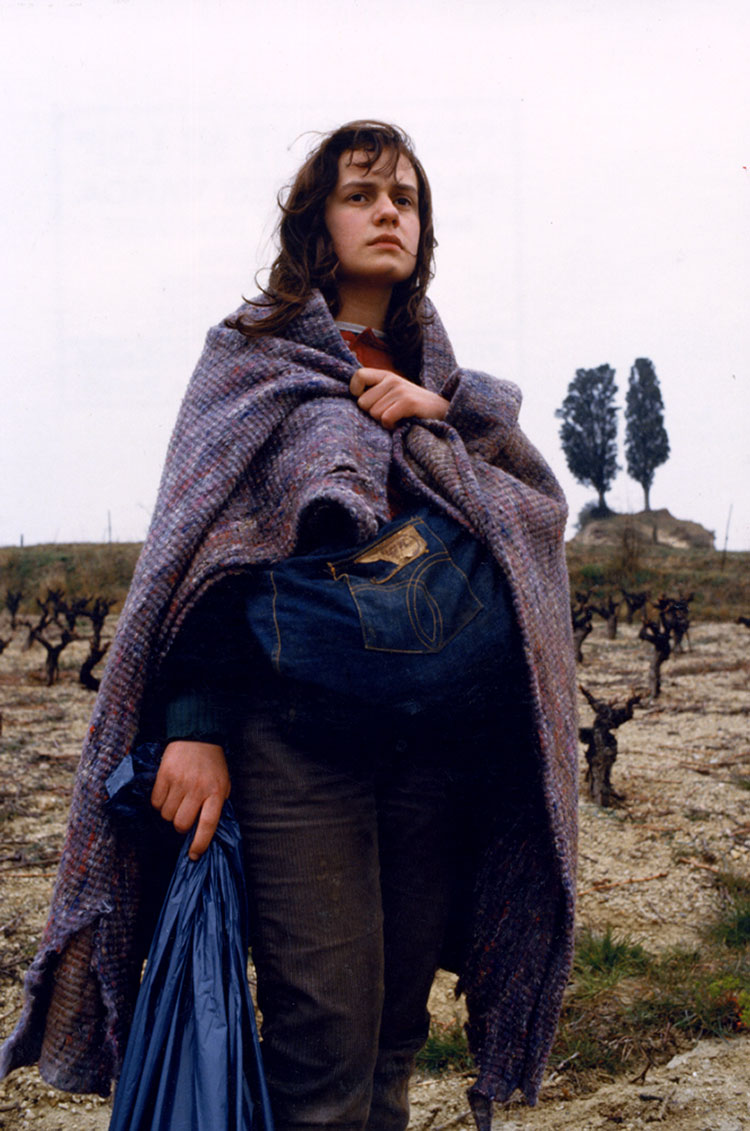
Mona (Sandrine Bonnaire) is a young woman of about 20 who wanders the South French countryside in the dead of winter searching for food and money. She camps out in a small tent wherever there is space including at one point even a cemetery. She is offered a few odd jobs here and there, but she never lasts long in them and resents being ‘bossed around’. She makes a few acquaintances along the way and even a couple of male lovers, but like with her jobs she doesn’t get settled with anyone for too long.

The best aspect of this critically acclaimed French film that is directed by the legendary Agnes Varda is that it avoids the political correctness. Most films especially Hollywood ones tend to portray the poor and homeless as humble and contrite, but the main character here is anything but. She is arrogant and aloof to those around here even the ones that offer her help. She acts strangely entitled in even in the direst of situations and in many ways almost oblivious to how truly desperate she is. Varda creates a richly textured character that while not likable and sometimes even confounding still manages to be always fascinating.

The narrative works in vignette style starting with some farmhands finding her dead, frozen body in a field and then progressing backwards showing the last few weeks of her life and the people that she met. To some degree this is interesting as it reveals how others see her some of whom are even jealous of her ‘freedom’ and ‘independence’ while also exploring how everyone can make a lasting impression on others even if they seem insignificant and the encounter brief. However, the segments where these characters speak directly to the camera comes off as jarring, clumsy and heavy-handed and it would’ve been nice had these same reactions been worked into the story in more of a subtle and sophisticated way.

My biggest issue with the film and in many ways it’s most disappointing aspect is that we learn nothing of this woman’s background. What exactly brought her to do this? Was it by choice or circumstances? Where’s her family and what about her upbringing? None of this is shown or talked about making this character study not only frustrating, but incomplete.

The character also gets sexually assaulted at one point, which to a degree brings added realism, but she is shown not to suffer any post-traumatic stress from the incident, which was not believable. Also, having the film begin with her death hurts the tension and it would’ve been more compelling had we not known her ultimate fate until the very end.

vagabond 2

My Rating: 6 out of 10

Released: December 4, 1985

Runtime: 1Hour 45Minutes

Not Rated

Director: Agnes Varda

Studio: MK2 Diffusion

Available: DVD (Criterion Collection)

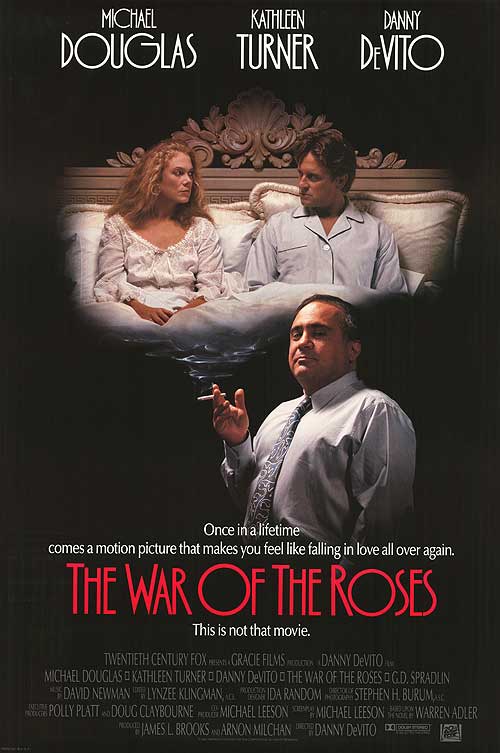
The War of the Roses (1989)

war of the roses

By Richard Winters

My Rating: 7 out of 10

4-Word Review: Yuppie couple destroys home.

Oliver and Barbara Rose (Michael Douglas, Kathleen Turner) are a married couple with contrasting personalities who find that they no longer get along and in fact can’t even stand each other. They agree to a divorce and all of the assets except for the house. Both of them want to keep it and Oliver’s attorney Gavin (Danny DeVito) has found a loophole in the law that allows Oliver to remain there even after the separation is final. The problem is that they continue to get on each other’s nerves, which culminates with them locking themselves into the home one dark, harrowing night and using whatever prop available to vent their anger onto the other while inadvertently destroying the house in the process.

Some consider this to be one of the darkest comedies to ever be financed by a major Hollywood studio and when you think about it, it really is amazing. Most major studios shy away from edgy material and water it down until it becomes benign, but this film, which is based on the 1981 Warren Adler novel of the same title, stays quite true to its source material. The humor is on-target while making a great trenchant statement towards capitalism and yuppies in general. DeVito’s direction is visual and imaginative and there are some truly funny moments including the one where Turner destroys Douglas’s British Morgan Roadster with her 4-wheel drive truck.

The reuniting of Douglas and Turner from the Romancing the Stone films was perfecting casting. The two seem to have genuinely distinctive personas and it’s fun to imagine this as simply an extension of their earlier characters of Jack Colton and Joan Wilder and what happens when their rosy romance turns into the realities of marriage. The scene where Douglas’s character saws off the heels of Turner’s shoes is a great connection to their earlier film as his character did the exact same thing there, but it was unfortunate that we never get to see Turner’s reaction to it.

The production is slick, but having DeVito act as the film’s narrator seemed a bit distracting at times and the film might’ve worked better without him although he does have a few verbal gems during the second hour that almost makes up for it. I also didn’t like that the character who he tells this story to never says a single word, which to me seemed unnatural and weird as did his green painted office. Having the two kids of the couple turn out to be pudgy and fat was amusing and helped in a metaphorical way to symbolize the parent’s gluttony for materialism, but then the filmmakers end up ruining their own joke by having the kids later on become thin and attractive for no reason.

Spoiler Alert!!

The knock-down ending inside the home is great and DeVito’s use of Hitchcock overtones is inspired. Seeing the couple trapped on a ceiling chandelier while the camera travels up the wires of the light and into the attic where we see how the added weight bursts the bolts that anchors it is quite clever and even ingenious, but I was disappointed that the two end up crashing to the floor and dying. For one thing I didn’t think it was a big enough fall to have killed both of them. Maybe one, but most likely they both would’ve survived, but with injuries. Either way it would’ve been more interesting to see how they responded to each other after the incident and whether it helped to change them or their love/hate relationship, which to some degree is the film’s most unsatisfying aspect

End of Spoiler Alert!!

Adler wrote a sequel to his novel in 2004 that dealt with a messy divorce of the Rose’s grown son Josh to his wife. That book has now been put into production as a movie entitled The War of the Roses: The Children although no release date or cast has been announced as of yet.

My Rating: 7 out of 10

Released: December 8, 1989

Runtime: 1Hour 56Minutes

Rated R

Director: Danny DeVito

Studio: 20th Century Fox

Available: VHS, DVD, Blu-ray, Amazon Instant Video, YouTube

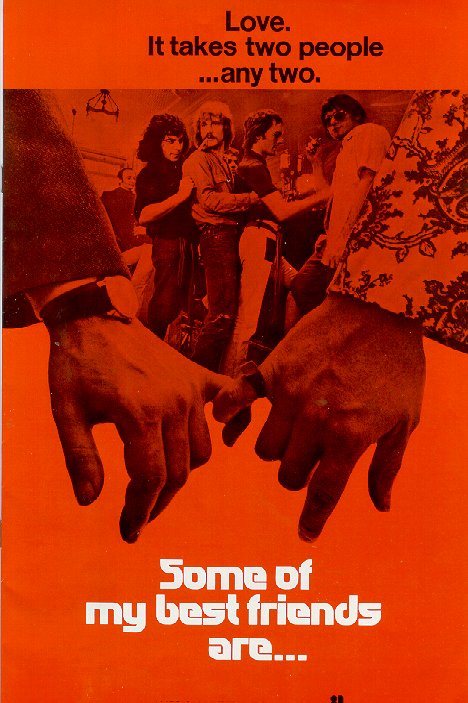
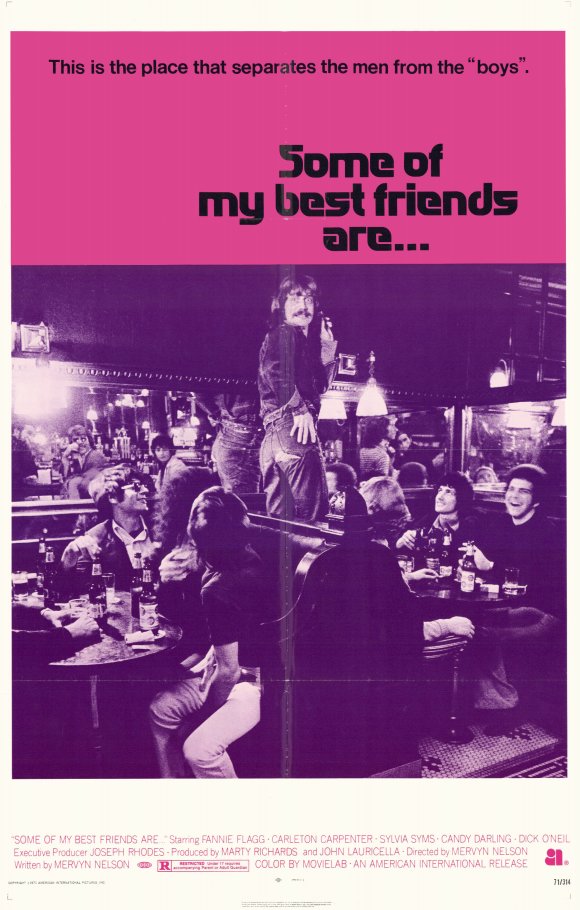
Some of My Best Friends Are… (1971)

some of my best friends are 2

By Richard Winters

My Rating: 3 out of 10

4-Word Review: Patronizing a gay bar.

It’s Christmas Eve 1970 and a year and a half after the Stonewall Riots that first brought gay rights issues into the national spotlight. However, the patrons of the local Blue Jay Bar are still feeling like second class citizens where dancing between two men is prohibited and those who have come out about their homosexuality are being rejected by their family and friends.

The film certainly does bring up some great issues, but unfortunately pales badly when compared to The Boys in the Band that came out just a year earlier. The direction lacks style and the dialogue is too generic to be riveting. The film also has no momentum as the camera simply cuts from one group of conversing people to another. The on-location shooting done at the Zodiac Bar gives the production a static, claustrophobic feeling since almost the entire thing takes place in one building. The lighting is also dark and shadowy and at certain points even out-of-focus making it all seem quite amateurish.

The action is minimal in what is otherwise a very talky 110 minute runtime. The best moment is when Gary Sandy, who’s excellent in his film debut, and playing a man in denial about his homosexuality becomes enraged when he finds that the woman he has been dancing with (played by Candy Darling who is also excellent) is actually a man, which causes him to drag her into the bathroom and beat her that in turn creates a huge riot that is genuinely tense and startling. The scene where a mother enters the bar and openly disavows her son after finding out that he is gay is also quite good, but should’ve been extended.

Fannie Flagg gets kudos for her highly engaging performance as a snarky lady who never seems at a loss for words or verbal comeback. The way she dances by giggling her large breasts up and done like they are rubber balls is a crazy sight. Rue McClanahan is also good as a bitchy, aging blonde and so is Dick O’Neill as a conservative old-timer who shows great disdain for the ‘pansy pad’ once he finds out that it is a gay bar, but then strangely is still reluctant to leave it. This also marks the film debut of Gil Gerard who appears briefly in a small role.

The film’s few good moments and overall impactful message are badly outweighed by Mervyn Nelson’s dull direction as well as its rambling narrative that lacks a central character and makes for a flat and tedious viewing experience.

some of my best friends are 1

My Rating: 3 out of 10

Released: October 27, 1971

Runtime: 1Hour 50Minutes

Rated R

Director: Mervyn Nelson

Studio: American International Pictures

Available: Amazon Instant Video

Wise Guys (1986)

wise guys

By Richard Winters

My Rating: 3 out of 10

4-Word Review: Hiding from the mob.

This review contains some Spoilers!

Harry and Moe (Danny DeVito, Joe Piscopo) work as errand boys for a Newark, New Jersey mob run by Castelo (Dan Hedaya). They are tired of doing all the odd, dangerous jobs that no one else wants to and long to one day break away and open up their own restaurant, but lack the required capital. Then one day they are assigned to go to the track to bet on a certain horse, but Harry is convinced that another one will win, so they place all $250,000 dollars on that one only to lose. Now they must go on the run searching for Harry’s Uncle Mike who they hope can replenish them with the lost money before the mob’s henchman The Fixer (Captain Lou Albano) catches up with them to dispense their punishment.

Director Brian De Palma returns to his comical roots of Hi Mom! and Greetings, but unfortunately this film lacks the creativity and originality of those and instead comes off as just another tired, generic 80’s comedy. The attempted twists are not interesting or surprising. Having them lose on a ‘sure thing’ after they initially start gloating when it looks like their horse would win is comedy writing 101. The Sting-like ending is equally contrived and something I figured out long before it gets revealed. Again, you simply have to know the rules of a Hollywood comedy, which states every ending must be a ‘feel good’ one, so if a main character suddenly dies you automatically know there’s got to be some sort of catch to it such as is the case here.

The motivations of the characters are loopy. For one thing going back to their boss while putting up only a mild resistance after they’ve lost the money for what will most definitely be punishment and torture seems dumber than dumb even for these dimwits. The idea that they would both stay loyal to one another even during torture is not believable. Yes it may sound noble, but realistically especially when their families were being threatened it would have to be expected that at least one of them would crack and betray the other. Then the boss has them assigned to kill the other one and for a while they both secretly consider it, but this doesn’t make sense either because if they are going to remain so loyal to the other during torture then shouldn’t it be expected that they would immediately tell each other that they’ve been pegged to kill the other and then come up with some alternative plan to get out of it?

The destruction of Fixer’s convertible becomes another logical blunder. Yes, they both despise him and the chance at destroying his prized possession would seem tempting to anyone in their shoes, but they also need his car to get away and go places, so destroying it until it is literally inoperable becomes really stupid.

DeVito is great at playing arrogant, sarcastic jerks, but as a sympathetic good guy he is benign and out-of-place. I also didn’t care for wrestler-turned-actor Albano’s presence as his character is too one-dimensionally crude and obnoxious and the part where he is shown lying on his back with his big fat belly exposed is just plain gross to look at.

There have been some great gangster movies throughout cinema history, but they all tend to be ones that take the genre seriously and when they try to give it a comical spin it comes off as lame like this one. The part where Harry’s grandmother (Mimi Cecchini) reveals a million dollar bills that she has ‘stuffed under her mattress’ and the way all of Castelo’s henchmen eagerly light up his cigarette every time he puts one in his mouth, which happens twice with the second time being the gem, are the only two mildly amusing moments in this otherwise flat comedy.

My Rating: 3 out of 10

Released: April 18, 1986

Runtime: 1Hour 40Minutes

Rated R

Director: Brian De Palma

Studio: MGM

Available: VHS, DVD, Amazon Instant Video