Category Archives: Black Comedy

Gremlins (1984)

gremlins-2

By Richard Winters

My Rating: 6 out of 10

4-Word Review: Don’t get them wet.

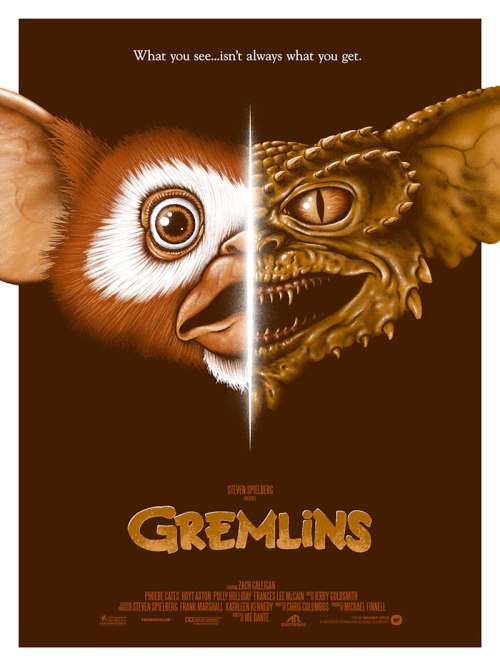
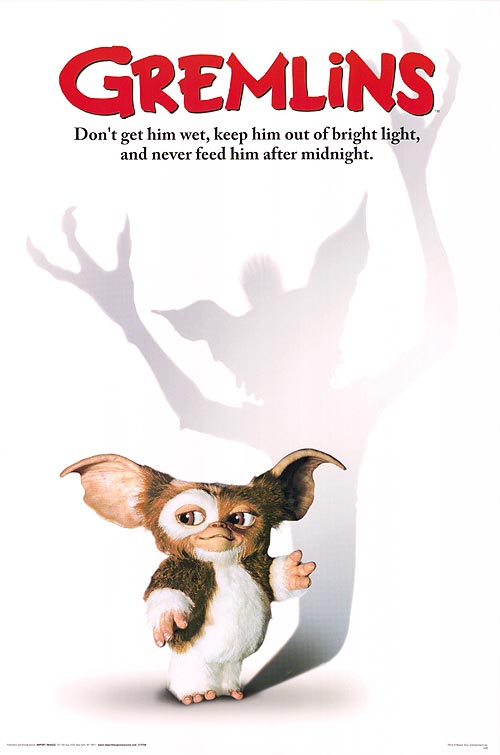
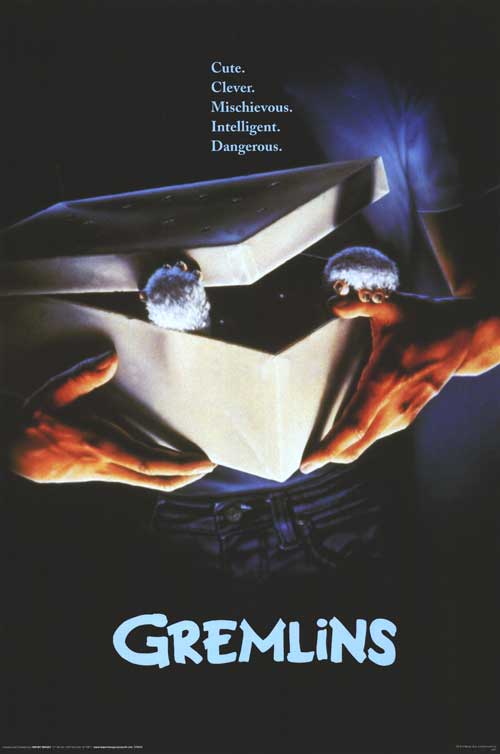
During his travels through China gadget salesmen Randall (Hoyt Axton) spots a furry little creature called a mogwai at a Chinese antique shop run by Mr. Wing (Keye Luke) and decides to purchase it as a Christmas present for his teenage son Billy (Zach Galligan). The mogwai, which they name Gizmo, comes with three simple rules that must never be broken. The first is that the creature must never be exposed to sunlight or bright lights of any kind, he must never get wet or be given water and most importantly he should never be fed after midnight. Unfortunately all three of these rules end up getting broken and the result is the creation of ugly little monsters called gremlins that create havoc and destruction on a peaceful town during Christmas Eve.

The concept is great with a nice mix of horror and dark comedy and I loved the idea of having this Norman Rockwell small town besieged with an ugly underbelly. The creatures look amazingly real and Gizmo is especially cute with special effects that are both creative and effective.

However, in the filmmaker’s effort to be humorous and ‘clever’ the film goes off-the-beam a bit by adding in stuff that isn’t logical and hurts the plot’s overall integrity. I didn’t get where these monstrous gremlins were finding all these hats and clothes that they are seen wearing nor how they were able to read signs, or know how to drive vehicles. Their tiny arms would be too small to be able to hold a chainsaw let alone run it and if you look closely during the bar scene you can see that the beer mugs that they are holding have been miniaturized in order to conform to the dimensions of the puppet. Also, the part where Gizmo gets into a remote controlled toy car and ‘drives’ it makes no sense since they are solely powered by a remote run by someone else that is not present.

Since water is the basic fluid for the survival of most living organisms it was peculiar that this one couldn’t be given any. What liquid was he supposed to drink instead? If he can’t eat after midnight then when exactly can he eat  since theoretically any time is after midnight whether its 3 AM or 3 PM. To me though the dumbest part is when Gizmo’s original owner Mr. Wing reappears at Billy’s and Randall’s home looking to take the creature back, but how would he know where to locate Randall as he left him no address and the film makes it seem that somehow he walked all the way from orient to get there, which is really dumb.

The film was also in its day considered quite controversial since it features a scene where Billy’s mother (Frances Lee McCain) traps one of the gremlins in a microwave and then heats it up until it explodes, which many people considered ‘too violent’ for a PG film and it helped to usher in the PG-13 rating. To me I felt this scene was actually the best moment in the movie as it’s the one part where it actually becomes like a horror film and has some genuine tension.

Dick Miller is fun as a maintenance man who despises foreign made products and Polly Holliday is equally amusing as a scrooge-like landlord whose over-the-top death is a highlight. I also liked Hoyt Axton as the father, but the running joke dealing with all of his inventions and gadgets that constantly breakdown gets old real fast and I was confused how he was able to afford such a nice big house when he made such a menial living trying to sell things that nobody wanted and didn’t work.

This also marks the last acting appearance of two great character actors, which include Scott Brady who is amusing as the alcoholic sheriff who refuses to believe that a bunch of gremlins are on the loose until it’s too late. Many consider this to be Edward Andrews, whose role here as the bank manager was greatly reduced when the runtime was trimmed by over 50 minutes for the final cut, last onscreen appearance as well even though Sixteen Candles, where he had a much more prominent role, was filmed later, but released to theaters earlier.
gremlins-3

gremlins-1

My Rating: 6 out of 10

Released: June 8, 1984

Runtime: 1Hour 46Minutes

Rated PG

Director: Joe Dante

Studio: Warner Brothers

Available: DVD, Blu-ray, Amazon Video, YouTube
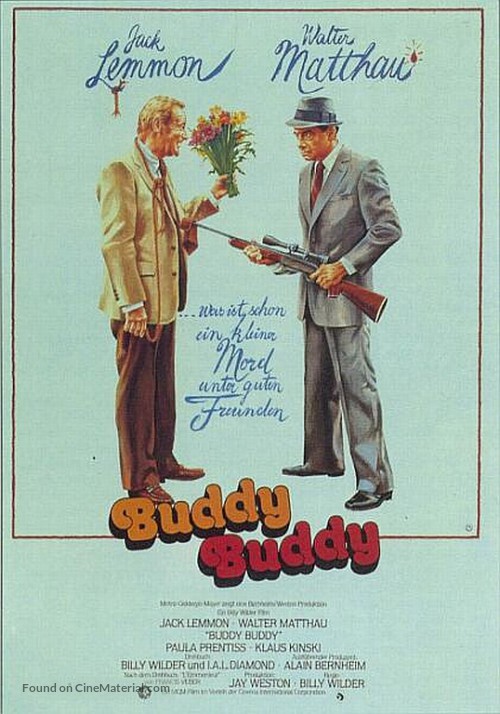
Buddy Buddy (1981)

buddy-buddy-2

By Richard Winters

My Rating: 7 out of 10

4-Word Review: Suicidal man hampers hit.

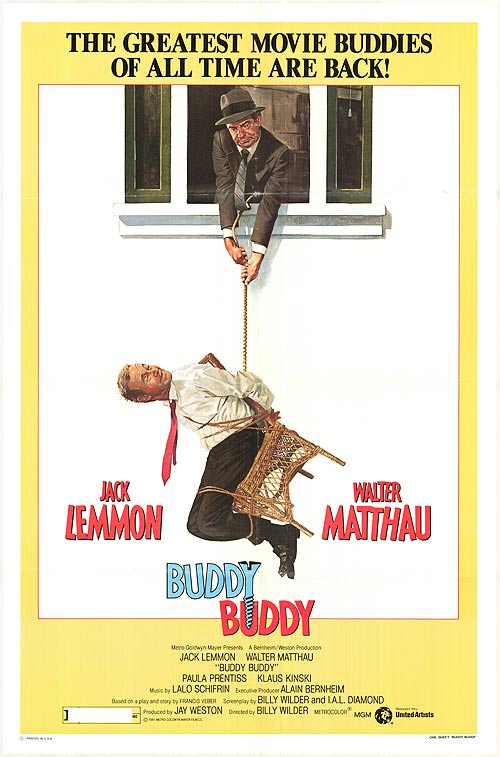
Trabucco (Walter Matthau) checks into a hotel intent on completing a hit by shooting a mob informant before he can testify at trial. He’s already killed the two other informants with relative ease, but now finds this one to be much more complicated due to having to deal with Victor (Jack Lemmon) who resides in the adjoining room. Victor is upset that his wife Celia (Paula Prentiss) has left him for a sex therapist (Klaus Kinski) and proceeds to try to hang himself by tying the noose around the water pipes in the bathroom, but all he succeeds at doing is busting the pipes and creating a flood. Trabucco decides to ‘befriend’ the man in order to keep an eye on him and prevent him from trying to kill himself again, which he feels will only lead to unwanted attention from the authorities. However, Jack causes more problems for him than the police ever could.

This was the last film directed by Billy Wilder who stated in more than a few interviews that he considers this movie to be his poorest effort and his least favorite. Matthau and Lemmon have pretty much said the same thing as well. The film was a critical flop and lost 3.5 million at the box office, which helped to prevent Wilder from ever helming another movie again.

However, I was delightfully surprised at how funny I found this movie to be. It’s not exactly laugh-out-loud hilarity, but on a low-key level it works. The part where Lemmon gets tied to a chair and his mouth gagged while he screams at an ambivalent housekeeper (Bette Raya) to free him is quite good and the part where the two men going gliding down a clothes chute is fun too.

The whole thing is a remake of the French film A Pain in the A__, but it implements changes to the plot that improves it from the original. For one thing the dialogue is funnier, the two men have more genuine conversations and they even develop a bit of a bonding. The film adds more characters too like the beleaguered Captain Hubris played by Dana Elcar who tries in vain to protect the witnesses from Trubacco, but with little success. The distinctive musical score by Lalo Shifrin is also big improvement.

Lemmon is quite funny as he plays a sort-of hyped-up version of his Felix Unger character. Matthau seems a bit stymied in a role that allows for very little expression, but he still manages to make the most of it. My favorite performance though was that of Kinski who takes a rare comic turn and utters the movies best line: “Pre-ejaculation means always having to say you’re sorry.”

Having the two actually work together to complete the hit and then make an escape from the cops is good and something that did not occur in the original. The resolution, which takes place on a tropical island, is a bit of an improvement over the first one though it’s still not perfect. In either event it’s a relatively solid comedy that offers a few good laughs and deserves more attention especially for fans of Lemmon/Matthau.

buddy-buddy-1

buddy-buddy-3

My Rating: 7 out of 10

Released: December 11, 1981

Runtime: 1Hour 36Minutes

Rated R

Director: Billy Wilder

Studio: MGM

Available: VHS

Wild in the Streets (1968)

wild-in-the-streets-2

By Richard Winters

My Rating: 8 out of 10

4-Word Review: Rock star becomes President.

I was going to post this review the day after the election, but decided given the results that I might postpone it a few days as I didn’t want some readers who might feel a bit on edge with the outcome getting any more nervous. The film’s subject matter consists of what at the time was considered simply wild satire, but now in these crazy political times may actually hit frighteningly close to home.

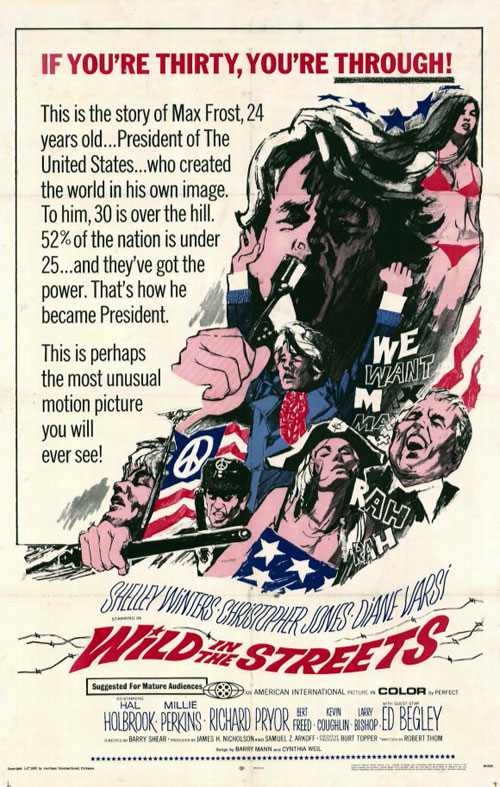
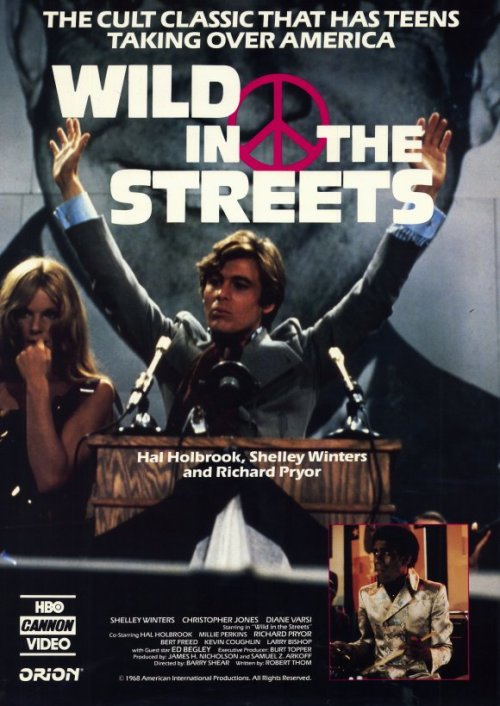
The story centers around Max Frost (Christopher Jones) a rock star who has become a major teen idol to the nation’s young people. Senator Johnny Fergus (Hal Holbrook) is running for office and wants to campaign to lower the voting age to 18 in an attempt to garner support from young Americans, which in turn he hopes will get him into the Presidency. He asks for the assistance of Max to help him in his pursuit. Max agrees, but then promotes the idea to his fan base of lowering the voting age not to 18, but to 14. Fergus is ill-prepared for the onslaught of enthusiasm this idea has with the teens. He reluctantly agrees to compromise and pass a bill that allows this, but to his shock it gets Max elected President and not him. With Max in office things spiral recklessly out-of-control. Hippies take over the senate and pass extreme laws that send anyone over 30 into concentration camps where they are forced fed LSD.

The script by Robert Thom is unabashedly cynical, which is what I liked most about it. It takes no sides. The younger generation is exposed with just as much foibles as the older one. The film never compromises on its dark tone and the bleak scenarios get pushed to the ultimate extreme, but horrifyingly never fall all that far from the truth.

The film’s acerbic humor is refreshingly on-target. Director Barry Shear camouflages the low budget with a quick pace that emphasizes the frailties and reactions of its characters. Holbrook is superb as the idealist who gets a harsh dose of ugly reality that sends him more and more on edge. Shelley Winters is hilarious as Max’s narcissist mother who uses her son’s rise to fame as an opening for her own entrance into the spotlight. She appears sporadically throughout, but manages to own every scene that she is in when she does.

Jones is excellent in the lead and I considered him very much like James Dean both in is looks and acting method. He’s perfect for the role except in close-ups he looks middle-aged as he was already 30, which hurts the theme since anyone over 25 was considered the enemy. Diane Varsi is quite sexy as a flower child and I loved the scene of her first day in congress where she and her radical young followers send the elders in the room into a shocked free-for-all. The film also gives you a glimpse of famous child TV stars in early roles including Barry Williams, famous from playing Greg in ‘The Brady Bunch’ and Kellie Flanagan who went on the play Candice in ‘The Ghost and Mrs. Muir’.

While I was impressed with the bird’s-eye-view of the mob scenes and how many people they were able to get to be a part of the teen protesters I still felt that there should’ve been violence and raw emotion in these sequences in order to have been more effective. The ending makes its point and then gets very heavy-handed and goes on too long repeating the same statement that the audience already got the first time, but overall I really liked this film and felt that now more than ever it’s quite timely.

wild-in-the-streets-1

My Rating: 8 out of 10

Released: May 29, 1968

Runtime: 1Hour 37Minutes

Rated R

Director: Barry Shear

Studio: American Pictures International

Available: DVD, Amazon Instant Video

Offerings (1989)

offerings

By Richard Winters

My Rating: 2 out of 10

4-Word Review: Mute killer sends gifts.

As a child John Radley (Richard A. Busewell), who is mute, gets bullied by the neighborhood kids and the only one that befriends him is Gretchen (Loretta Leigh Bowman). Years later after he escapes from the mental institution, where he resides for killing his emotionally abusive mother (Rayette Potts), he returns to the same town while taking revenge on those kids who are now teens by hacking up their bodies and then packaging their body parts into little ‘gifts’ that he sends to Gretchen as a token of the ‘love’ that he feels for her.

Making a successful low budget horror movie requires one to pretty much follow the same formula as Sam Raimi did with The Evil Dead, which is to emphasize the gore, special effects and atmosphere while keeping the pace fast and cerebral. This movie unfortunately proceeds in the exact opposite direction with scenes that go on too long and dialogue that is extraneous. If you cut out all the needless footage and just kept the moments that actually helped propel the story you’d be left with literally only 8 minutes of its otherwise 94 minute runtime.

The murders are few and far between and its cheesy soundtrack is a complete rip-off of Halloween’s. Watching a guy getting his head squeezed inside a vice is the only killing worth catching and even this one isn’t all that great and as it’s seen via a shadow on the wall with apparently a watermelon used in place of an actual head. The film’s humor is equally sporadic and not enough to save what comes off as just another mechanical slasher retread.

There are problems with the killer a well as he’s barely seen and never says anything, which ultimately makes him quite transparent. How he is able to climb an electric fence without being electrocuted or get shot at and still keep walking is never explained. The fact that he has a severely deformed face and moves like a zombie would easily attract other people’s attention and they would report his whereabouts to the police who most likely would have the guy apprehended before he was even a few minutes outside of the mental hospital’s grounds.

There is also a scene where Gretchen and her friend Kacy (Elizabeth Greene) watch a horror movie on TV and they make fun of how ‘dumb’ the victims are in their attempts to escape from their killer even though these women end up doing many of the same stupid things. If you’re going to mock other movies then you better make sure your film is an improvement, which this isn’t.

My Rating: 2 out of 10

Released: October 12, 1989

Runtime: 1Hour 34Minutes

Rated R

Director: Christopher Reynolds

Studio: Arista Films

Available: DVD

The Cars That Ate Paris (1974)

cars-ate-paris-1

By Richard Winters

My Rating: 7 out of 10

4-Word Review: Lots of car accidents.

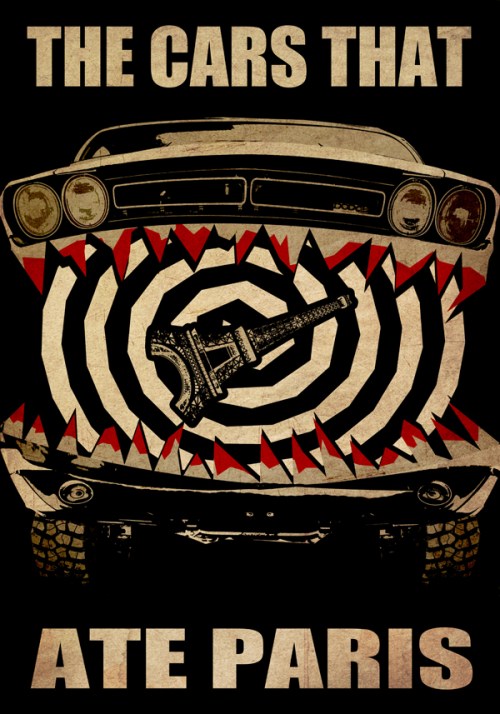
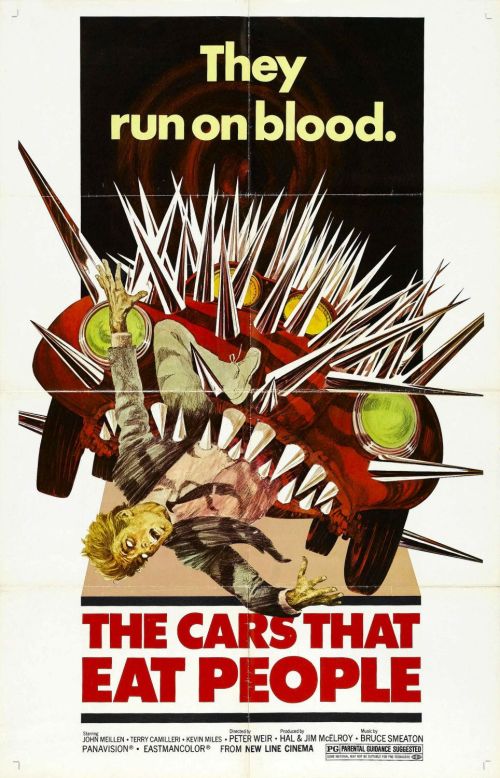
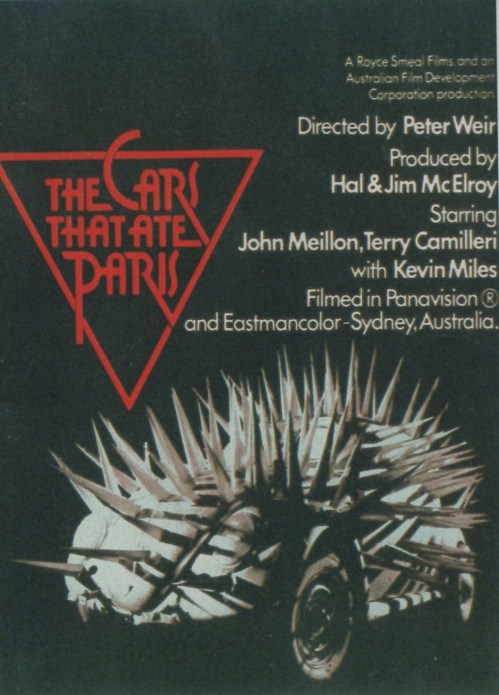
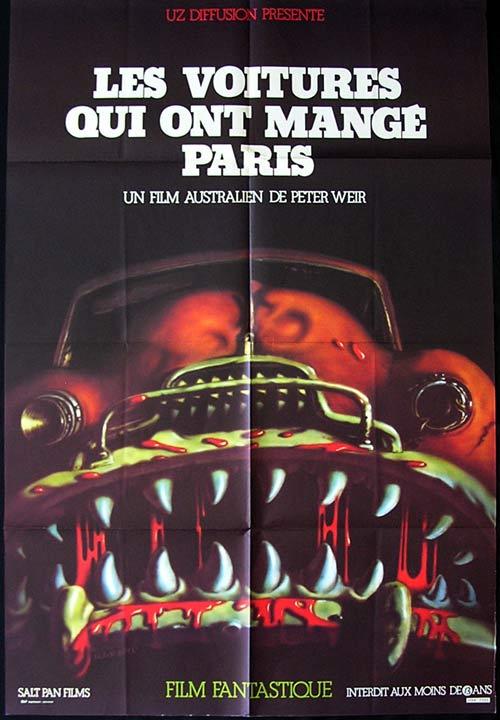
The residents of a poor Australian town known as Paris come up with a scheme to cause car accidents to those traveling through it which will allow them to salvage what’s left of the vehicle and resell it for goods or cash.  Things go smoothly for a while until Arthur (Terry Camilleri) and his brother George (Rick Scully) become victims to one these ‘accidents’. George dies, but Arthur survives and is too traumatized to get back into a car again or leave town. He takes up residence with the town’s mayor (John Meillon) who gets him a job as a parking enforcer, which causes problems when Arthur gives a citation to some rowdy young people who do not take kindly to this and seek a violent revenge.

This decidedly odd story marks director Peter Weir’s feature film debut and it’s hard to know what genre to place it into. Originally it was intended as a wacky comedy, but then dark elements were added in. Eventually it was distributed as a horror film, but it didn’t do well at the box office, so it was reissued as an art film and only fared slightly better. The film has managed to obtain a cult following and the story is original with funny moments, but the unexpectedly gory ending could leave some viewers cold as it did when it was first screened at the Cannes Film Festival back in ‘74.

cars-ate-paris-2

One of the best things about the movie is the casting of Camilleri in the lead. He’s very soft-spoken and has an almost transparent demeanor, which helps heighten the interest because you become intrigued at seeing how this schmuck is going to potentially take down this small town criminal organization, which would’ve been fun, but unfortunately the plot doesn’t get played-out in quite that way.

Meillon is solid as the mayor and I enjoyed seeing how his character puts up this calm façade while simultaneously trying to bottle up all the tension that he has inside. Bruce Spence is effective as the town crazy as well as Chris Haywood playing an average-joe who seems quite benign and good-natured at the beginning only to become increasingly more menacing as the film progresses.

The entire movie was shot on-location in Sofala, New South Wales which has a population of only 208 people and quite possibly the narrowest main street of any town in the world. Weir captures its rundown look well and helps convey how poor and isolated the residents were, which allows the viewer to understand why the people resorted to such desperate measures. However, I didn’t like how these same people immediately flee the town the minute the young adults get out-of-control. People who’ve lived somewhere all their lives become emotionally bonded to it and will not move the moment something goes wrong. They would try to control the threat if they could and only up-and-leave months or years later if they had to. Besides where would these people go as they had no money and limited job skills.

If you’re into offbeat comedy then this one may do for a slow evening although those looking for something in the horror vein will be disappointed.

cars-ate-paris-3

cars-ate-paris-4

My Rating: 7 out of 10

Released: October 10, 1974

Runtime: 1Hour 31Minutes

Rated PG

Director: Peter Weir

Studio: The Australian Film Corporation

Available: DVD

Cannonball! (1976)

cannonball-1

By Richard Winters

My Rating: 5 out of 10

4-Word Review: An illegal car race.

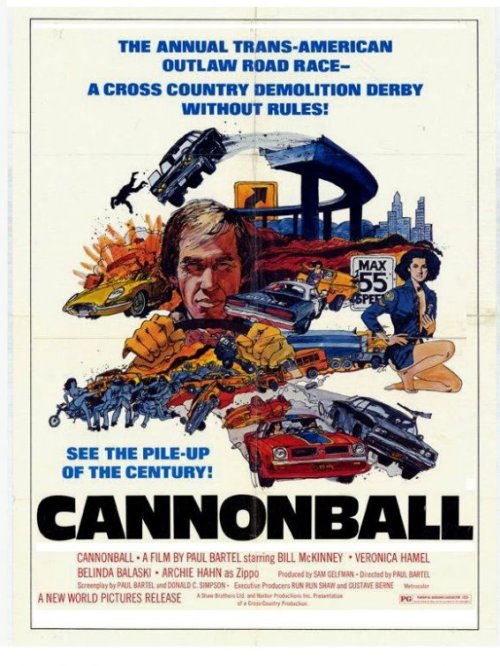
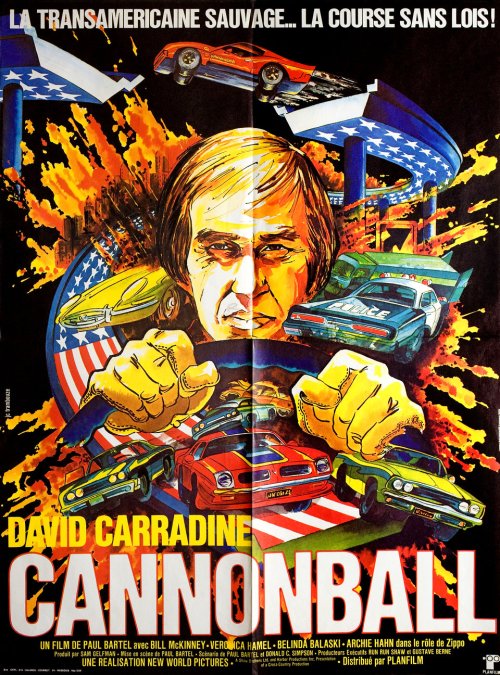
Wacky participants convene in Santa Monica to take part in an unsanctioned cross country car race. All drivers are accountable for any speeding tickets or injuries that they may accrue and the only rule is that the first person to arrive at a designated spot in New York City wins. Yet the race’s top driver Coy ‘Cannonball’ Buckman (David Carradine), who is on parole, risks being sent back to prison if he crosses the state line, but he decides to proceed any ways despite the objections of his lawyer girlfriend (Veronica Hamel) who eventually rides along with him.

This film is based on the same real-life race that inspired The Gumball Rally, but critic Leonard Maltin incorrectly states in older versions of his book that this film plagiarizes that one, which isn’t true as this movie came out first and adds in many different story angles.

Despite the fact that the production is plagued with the typically cheap Roger Corman look and seems more like an extension to Death Race 2000 I still preferred this to Gumball. Both films have characters that are decidedly cartoonish and neither film makes any attempt to recreate what really happened, but this movie has a darker edge and most thankfully a better soundtrack that doesn’t have a kiddie-like melody.

This film also reverses the race’s starting and end points. In both the real-life event and in Gumball the starting point was New York, but here it’s California, which is actually a plus. In Gumball the drivers seemed to go from the Big Apple to the desert southwest in a matter of only a few minutes, which made no sense. Here the film crew is allowed ample time to take advantage of the closed desert roads to do their car stunts, which aren’t bad, and it also sets up an ending in which driver Mary Woronov arrives in New York, but then gets lost in the congested traffic and can’t find the finish line, which is the film’s funniest bit.

The cast is much more eclectic. I really enjoyed Judy Canova in her final film appearance as her facial expressions are a hoot especially as she has her car gets rear-ended by Carradine’s. Dick Miller is entertaining as a man that tries to rig the race and Bill McKinney is very effective as the bad guy. Director Paul Bartel and producer Roger Corman have bit parts as does Carl Gottlieb the man who penned the screenplay for Jaws. Other directors make cameo appearances including Jonathan Kaplan, Allan Arkush, Joe Dante and even Martin Scorsese.

Yet what I really liked is the massive car pile-up that occurs near the end that features car after car crashing into an already existing accident and then exploding one after another into a ball of flames. This was considered quite controversial amongst the crew and star Carradine tried to convince Bartel not to put it in, but he insisted and I’m glad he did. Yes it’s morbid, but it helps put a touch of reality into the whole thing. The ‘70s were filled with a lot of silly car chase movies all with the running theme that people needed their ‘freedom’ and having a speed limit takes away all the ‘fun’, but there is a reason why those rules were put into place as what starts out as a good time can easily turn into something horrific in a matter of seconds. To me this was Bartel’s way of spitting-in-the-face at all those other inane road race movies that always took an innocuous angle while conveniently ignoring the ugly realities that existed just beneath the surface.

cannonball-2

My Rating: 5 out of 10

Released: July 6, 1976

Runtime: 1Hour 34Minutes

Rated R

Director: Paul Bartel

Studio: New World Pictures

Available: DVD, Amazon Instant Video

THX 1138 (1971)

thx-1138

By Richard Winters

My Rating: 9 out of 10

4-Word Review: Sex is not allowed.

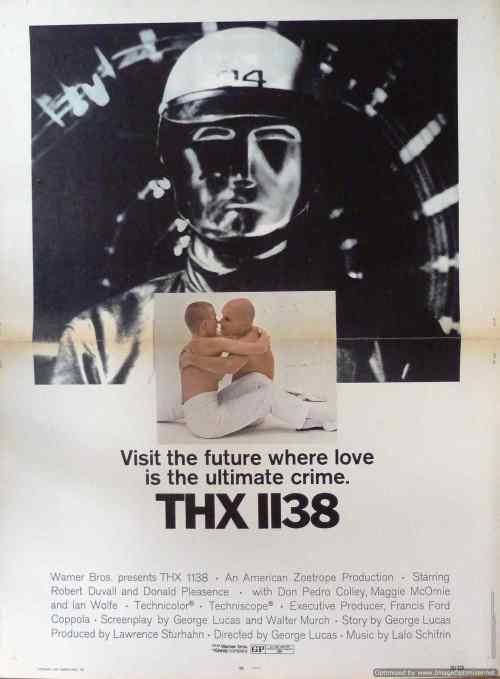
THX 1138 (Robert Duvall) is member of a futuristic, work camp-like society where everyone has shaved heads, forced to take drugs to control their emotions and avoid having sex, which is forbidden. His days are spent on the production line where he helps build police androids and at night he goes home to an apartment where he rooms with LUH 3417 (Maggie McOmie). She is unhappy with her situation and stops taking the required drugs while replacing THX’s with placebos. The two begin a sexual affair and are promptly arrested. THX is thrown into a modernistic prison that has no walls or bars and he eventually decides to attempt a daring escape with the help of SEN 5241 (Donald Pleasence) and a hologram known as SRT 9 (Don Pedro Colley).

This story is an extension to the student film that director George Lucas made while attending the University of California film school. That film was a 15 minute short entitled Electronic Labyrinth: THX 1138 4EB, which dealt with a man trying to escape from a futuristic world while being chased and monitored by government run computers. It won first place in the 1968 National Student Film Festival and was good enough to gain the attention of Francis Ford Coppola who offered to produce a feature film dealing with the same basic premise, but having more of a background to the character and his reason for escaping.

Reportedly Lucas considers this to be his favorite project and despite the fact that it did not do well at the box office I consider it to be his best stuff as well. The visuals are imaginative and striking and make you feel like you are entering a whole new world unlike any that had ever been created before. I especially liked the prison scenes where the characters are surrounded by nothing but an unending white as well as THX’s medical examination done exclusively by robotic arms. Having the characters framed towards the side of the screen instead of the center while action occurs just out of view helps accentuate the off-kilter vibe and was year’s ahead-of-its-time.

Even though there is very little dialogue or music the sound becomes an integral part of the film by relying on comments made by the androids who tell the people in a HAL-like tone to ‘stay calm’ as well as the state sanctioned god known as OHM who routinely advises his followers ‘to be happy’. The best part though comes when two techs have a casual a conversation while viewing through monitors the torture of THX.

The film is visually groundbreaking and one of the greatest directorial debuts of any director living or dead, but it still comes with a few caveats. One is the fact that the plot relies too heavily on the stereotypical Orwellian view of the future where everything is worse than it is today and people no longer have any individual rights. Yet technology has proven to make life increasingly easier for people and with more freedoms and options, so why would everything suddenly revert the other way? Maybe they were survivors of a nuclear holocaust and this society was humankind’s way of ‘starting over’, but that’s never made clear and it would’ve been nice to at least get a glimpse of the person, or people who were behind-the-scenes with the ultimate authority as well as some sort of backstory.

There is also the fact that everyone in this society needs to be working, but jobs today are increasingly being lost to automation every year and that trend will continue. Certain nations like Finland are already experimenting with paying their citizens a basic salary because there are more people than jobs available.  Citizens of future societies are predicted to have more free time than ever before, so why doesn’t the world in this film follow suit? If this society can build android cops why can’t they also build robots to do the all the other jobs too, which would then allow the humans to have more of an idyllic existence than a workaholic one?

I also wasn’t too crazy about the 2004 digital restoration, which added new special effects and footage. I last saw this film in 2001 and could tell right away that this version had been tampered with. I realize that Lucas has been known to do this with his Star Wars films, but to me it’s as bad as colorization. Why mess with something that is already good? The added computer effects does not ‘enhance’ anything, but instead desecrates the original vision and treats it like it were a video game than a movie.

My Rating: 9 out of 10

Released: March 11, 1971

Runtime: 1Hour 28Minutes

Rated R

Director: George Lucas

Studio:  Warner Brothers

Available: DVD, Blu-ray, Amazon Instant Video, YouTube

The Plumber (1979)

plumber 1

By Richard Winters

My Rating: 9 out of 10

4-Word Review: He destroys her bathroom.

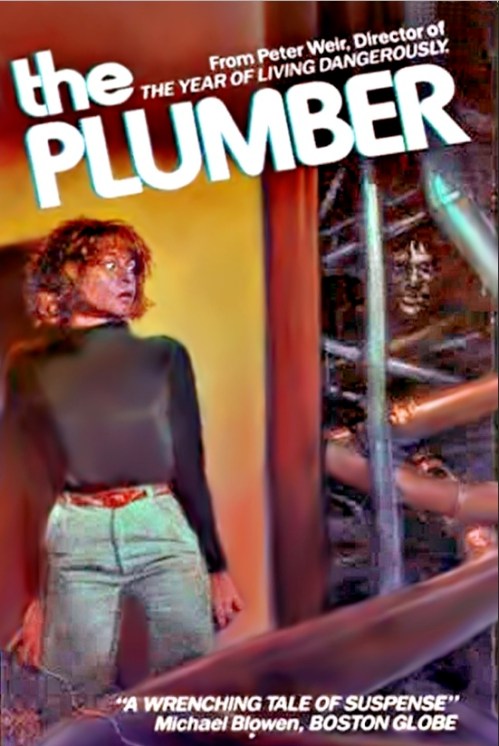
Jill (Judy Morris) works inside her cramped apartment while her husband (Robert Coleby) goes off each day to teach at a local college. She is an educated woman who spends her time writing a thesis for an anthropology paper, but finds herself at a loss when one day a talkative plumber by the name of Max (Ivar Kants) enters her place insisting he needs to check her pipes. Even though there is nothing wrong with her bathroom he proceeds to tear it up anyways while conversing with her on a wide-range of increasingly uncomfortable topics. Her husband and her best friend Meg (Candy Raymond) feel she is making a big deal out of nothing and find the plumber to be nothing more than slightly eccentric, which makes Jill feel even more powerless to Max’s increasingly odd antics.

This film is an excellent testament to what a great director can do with very little.  What appears on the surface to be a low budget, one-joke flick is instead a cleverly disguised observation of the class system and the underlying prejudices and assumptions that exist on both ends. The story playfully jumps back and forth from being a black comedy to a thriller to even a psychological study, which not only helps to make it quite original, but highly unpredictable as well.

To me the most amusing aspect about it is the way we have this super intelligent, well-educated woman who can write long dissertations involving ancient African cultures, but when it comes to people in her own environment she is at a loss and unable to know how to respond or react to a stranger who on the outside should be completely inferior to her intellectually, but routinely gets the upper hand nonetheless. Having everyone around her ambivalent to her situation simply hits home how disconnected an individual can be to their surrounding even when they think that they aren’t.

Kants gives a great performance by creating a character whose ultimate motivation is never clear. Is he intentionally trying to terrorize her or like with her bathroom just trying to tear her down? He seems to do this not so much for who she is, but for what she represents, which is fighting back at a pretentious society that he feels unfairly looks down on him.

If this film, which is based on an actual incident that occurred with a couple of director Peter Weir’s friends, has any faults it is with the location. The apartment, where the majority of the action takes place, is incredibly cramped to the point that I was surprised a film crew could’ve even fit into it. Weir tries to dress up the place with some interesting African artwork, but it still looks drab and helps to make the visual portion of the film quite boring. Having Jill reside in a ritzy home in the suburbs would’ve made more of an interesting contrast and seeing the plumber tear up her posh bathroom would’ve been even funnier.

The fact that Jill immediately opens the door and lets Max inside without asking for any identification is another issue as it comes off as being too reckless and trusting.  Granted it was made in a more innocent era and the character does expound on this later on, but it is something that will make the film seemed dated or even off-putting to today’s viewers. I was also surprised that it took Jill so long to complain to the apartment’s landlord about the plumber’s antics as most people would’ve gone to him after the very first day.

In either case this is still a highly intriguing film that I’ve seen many times and continue to find just as funny and interesting with each viewing.

My Rating: 9 out of 10

Released: June 8, 1979

Runtime: 1Hour 15Minutes

Not Rated

Director: Peter Weir

Studio: The Australian Film Commission

Available: VHS, DVD

Don’s Party (1976)

dons party 1

By Richard Winters

My Rating: 8 out of 10        

4-Word Review: This party gets wild.

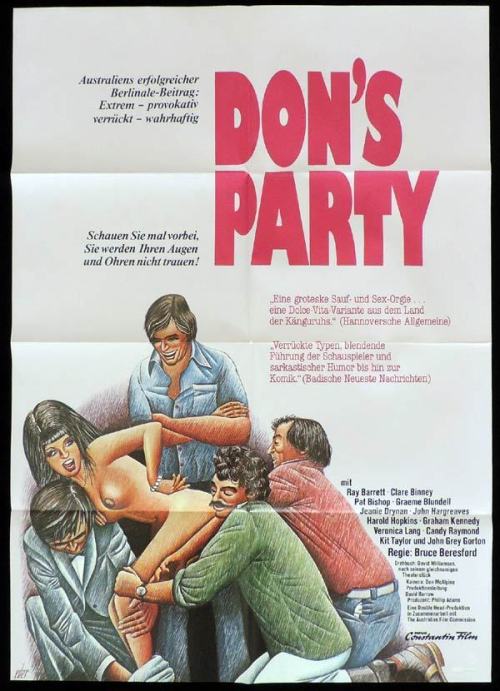
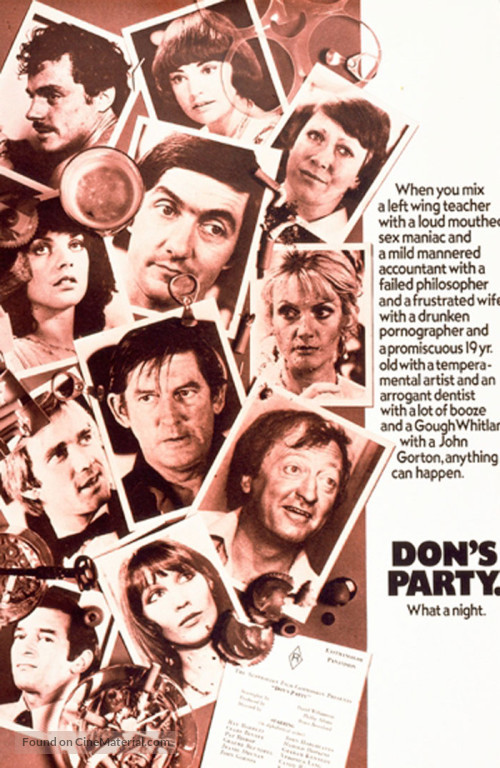
It’s October 25, 1969 and the election for Australian Prime Minister is being broadcast all over the nation. Don Henderson (John Hargreaves) is a Sydney suburbanite hoping that the Labor Party will unseat the incumbent Liberal one and invites his friends over to his home to watch the results. Things start out cordial at first, but as the night wears on and the alcohol takes its toll it heats up. Sexual escapades, arguments and fistfights breakout as the veil of civility comes off and their true selves come out.

This is playwright David Williamson’s most famous work and one that was not only a giant hit in his homeland, but has achieved worldwide acclaim. What I loved about the movie and what makes it so funny is that it cuts out the pretense and shows people as they really are while becoming a scathing indictment on suburbia. Most movies tend to pullback and sanitize things, but this one takes the opposite approach with a crude, in-your-face style that pokes holes at every level of suburban lifestyle that is refreshingly honest and totally accurate. The characters are excessively crass and there’s an abundance of sex and nudity, but sprinkled with a definite grain of truth that makes it more revealing about human nature than shocking.

An actual house was used for the setting, which helps avoid the static feeling and director Bruce Beresford does a good job of taking advantage of all the different rooms in the place and uses a variety of camera angles and shots to give it a nice visual flow. The performances are unilaterally superb and the actors appear genuinely intoxicated making the viewer feel drunk with them as they watch them down one beer after another.

The film’s drawback is that the characters lose their inhibitions too quickly and behave in an unnaturally aggressive way right from the start. It would’ve been more fun had they been overtly civil at the beginning only to watch it slowly deteriorate as the film progresses. There are also a few scenes where the background music is too loud and it’s impossible to hear what the characters are saying, which makes this otherwise slick production come off as a bit amateurish.

I first saw this movie back when I was in college and at the time I just didn’t get it. It seemed excessively profane without any redeeming qualities and filled with characters who were hateful and crude, but then I saw it years later after I’d lived in suburbia and become middle-aged it all suddenly made sense. In fact it made a little too much sense as the message it conveys and portrait it creates is not a pleasant one, but I admire the filmmakers for having the tenacity to bring it to light without compromise or hesitation.

dons party 3

My Rating: 8 out of 10

Released: November 10, 1976

Runtime: 1Hour 30Minutes

Not Rated

Director: Bruce Beresford

Studio: 20th Century Fox

Available: DVD

Ghostbusters (1984)

ghostbusters 2

By Richard Winters

My Rating: 9 out of 10

4-Word Review: Who ya gonna call?

Due to this film’s recent reboot set for official release tomorrow I thought it would be great to look back at the one that started it all. I haven’t seen the remake and have no plans to, so this review will concentrate solely on the original. However, if you have seen both feel free to leave a comment comparing the two and telling us which one you liked better.

The story here centers on Peter (Bill Murray), Ray (Dan Aykroyd) and Egon (Harold Ramis) who are three parapsychologists who lose their jobs at Columbia University and decide to open up their own paranormal extermination service out of an old, abandoned firehouse. At first business is slow, but it quickly picks up once they capture a particularly pesky ghost known as slimmer from a ritzy Manhattan hotel. Soon they find themselves the center of demand and media attention. Dana (Sigourney Weaver) is a cellist who finds her apartment to be haunted and the womanizing Peter becomes smitten with her and is quick to come to her aid only for her to end up becoming possessed by the demon. The three then must use all of their abilities and weapons to try and stop it as well as the plethora of other ghouls who were mistakenly released into New York’s atmosphere when an aggressive EPA agent (William Atherton) forced them to shut down their ghost containment system.

I saw this film when it was first released and found it to be hilarious, but was worried that after all these years it might not come off as well, but to my surprise it hasn’t aged at all and is still quite fresh and inventive. Usually even in the best of comedies there will be jokes that fall flat, but here every one of them hits-the-bullseye and I enjoyed how the creative script see-saws the humor from the subtle to the over-the-top. The plot is imaginative, but manages to create and stick to its own logic that is consistently clever and amusing, but never silly.

The special effects are also impressive. Usually in comical films the ghosts or monsters are made to be benign and goofy, but here they are frightening, which again helps keep the story from ever getting one-dimensional.

Murray’s glib and detached persona is at a peak level and his throwaway lines, which were almost all improvised, are gems. Aykroyd and Ramis, who wrote the script, wisely step back and give Murray full control to steal the spotlight, which he does effortlessly.

The supporting cast is equally great. I never considered Weaver particularly suited for a role as a love interest, but her sharp, caustic manner works as a nice contrast to Murray’s smart-ass presence. She also becomes quite sexy during the scenes when she turns into a demon. Rick Moranis as her nerdy neighbor is hilarious and has some of the funniest moments in the film particularly the scene he has at a party he throws in his apartment and the way he introduces each guest as they arrive.

Ray Parker Jr.’s theme song is the icing-on-the-cake in a film where amazingly everything clicks perfectly. Why the studio heads felt there was a need to revamp this franchise is a mystery. I realize they are running out of ideas and feel the urge to retool what has been successfully done before in order to appeal to the ‘new generation’ of filmgoers, but this is one classic that should’ve been left alone.

ghostbusters 1

My Rating: 9 out of 10

Released: June 8, 1984

Runtime: 1Hour 45Minutes

Rated PG

Director: Ivan Reitman

Studio: Columbia Pictures

Available: DVD, Blu-ray, 4K Ultra HD DVD, Amazon Instant Video, YouTube