Category Archives: Black Comedy

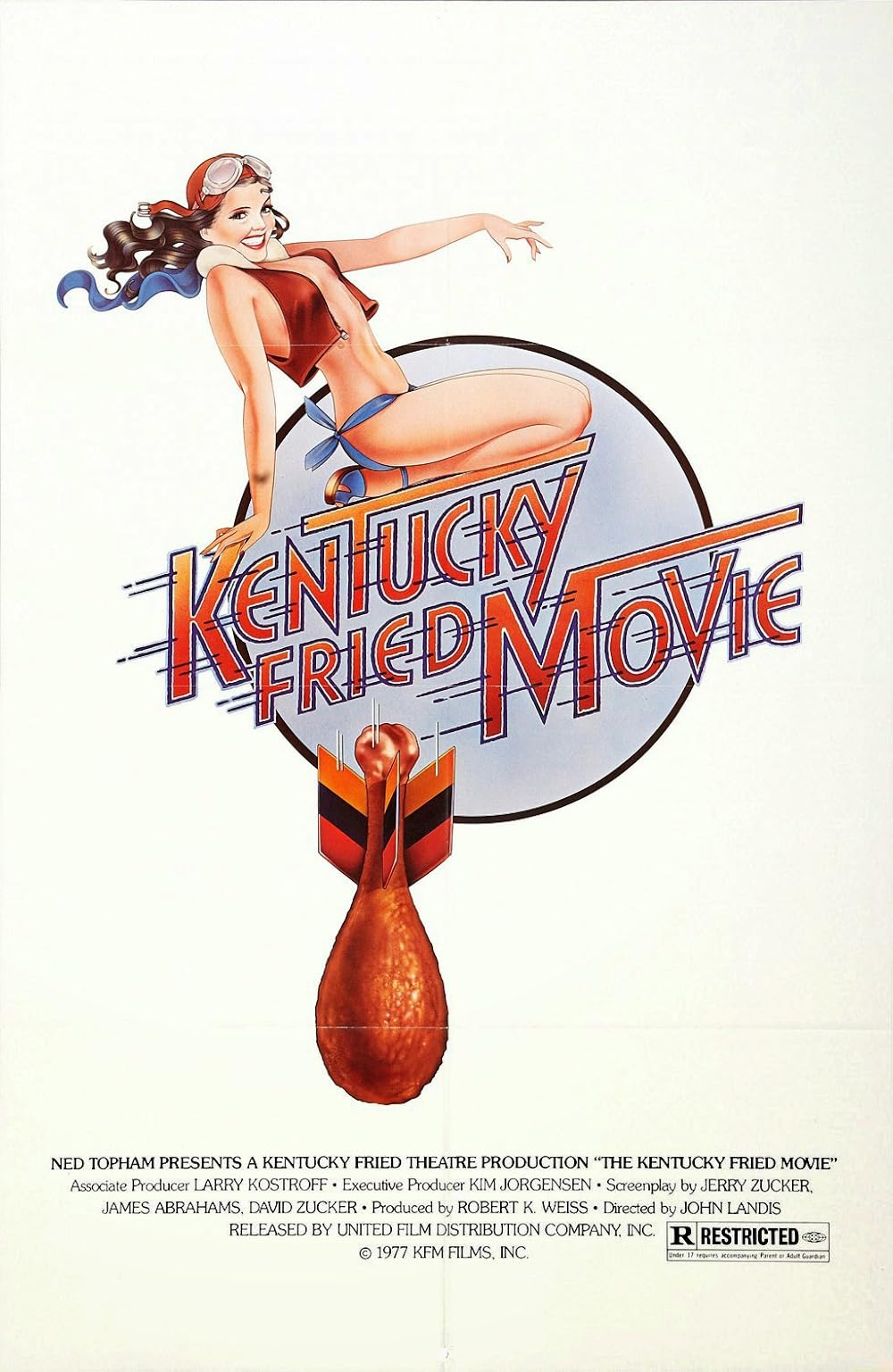
The Kentucky Fried Movie (1977)

By Richard Winters

My Rating: 6 out of 10

4-Word Review: Zucker brother’s first movie.

In 1974 there was the release of The Groove Tube which had a format of comical skits, much like a variety show, that managed to be a big hit and thus ushered in several imitators causing a whole new genre to surface. Unfortunately, those copycats didn’t fare as well and many of them were downright lame. By 1977 the trend had died off and yet brothers David and Jerry Zucker along with their friend Jim Abrahams were motivated to make another one revolving around funny sketches that had gotten a good response from audiences during their improvisational shows done on stage. The studios though weren’t impressed citing the decline in box office receipts towards sketch movies and thus refused their request for financing. They were then able to get a verbal deal from a wealthy real estate developer who agreed to fund the project as long as they made a 10-minute short that he could use to shop around to attract other investors, but when he found out how much it would cost just to produce the short he pulled out forcing the Zuckers to put up their own money, which amounted to $35,000, to get the short made.

This though proved to be beneficial as it attracted the attention of a young up-and-coming filmmaker John Landis, who had just gotten done directing Schlock on a minuscule budget and felt he could do the same here. It also got shown to Kim Jorgenson a theater owner who found it so funny he got other owners to play it before the main feature, and this was enough to get them to pool their money into a $650,000 budget that when completed made a whopping $7.1 million at the box office. This then directly lead to them getting studio backing for their most well-known hit Airplane which was a script that they had written before doing this one but had been previously unable to get any backing for.

Like with most films made during the brief period when this genre was ‘hot’ the jokes and skits are hit-or-miss. The opening sequences dealing with a TV news show are the weakest. Watching a reporter pick his nose because he doesn’t realize that he’s on the air isn’t really all that outrageous when today YouTube has actual news bloopers showing essentially the same thing. Having an ape go berserk in the studio during a live broadcast was too obvious and telegraphs the punchline to the viewer right from the beginning and thus making the outcome quite predictable.

The parody of Bruce Lee movies entitled ‘A Fistful of Yen’ definitely has its share of amusing moments though it goes on a bit too long and the special effects look cheap. My favorite segments came after this one and take up most of the final 20-minutes. These include Hare Krishna monks going to the bar after a ‘hard day of work’ harassing people on the street. There’s also ‘The Courtroom’ skit that’s a parody of Perry Mason-style TV-shows from the 50’s. The Zinc Oxide bit involving a housewife, played by Nancy Steen, who’s forced to face the reality of what life would be like if all the items in her house that was made from Zinc Oxide suddenly disappeared.

The film also features well-known actors who volunteered their time with little pay and appear in brief cameos. These include Bill Bixby as a spokesperson for a send-up of aspirin commercials. There’s also Donald Sutherland who plays a klutzy waiter during a parody of disaster flicks, Tony Dow playing his most famous role of Wally from ‘Leave it to Beaver’ as a jury in the Courtroom and Henry Gibson, in what I found to be both the funniest and darkest skit, where he essentially plays himself in a mock add showing how parents (Reberta Kent, Christopher Hanks) can still keep their deceased son as a ‘a part of their family’ by bringing along his increasingly decomposed corpse with them wherever they go.

My Rating: 6 out of 10

Released: August 10, 1977

Runtime: 1 Hour 23 Minutes

Rated R

Director: John Landis

Studio: United Film Distribution Company

Available: DVD, Blu-ray, Amazon Video, Plex, Pluto TV, Roku, Tubi, YouTube

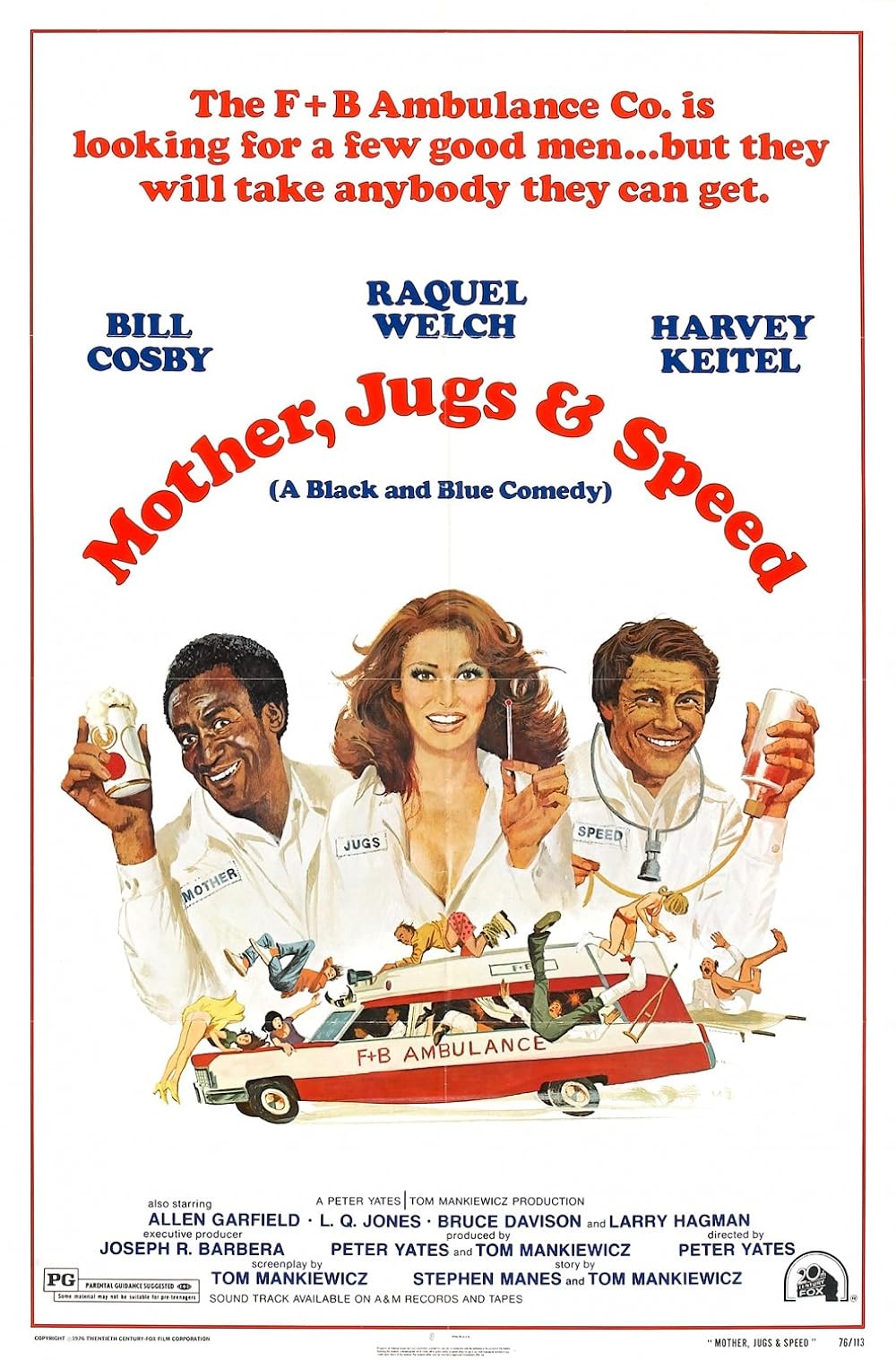
Mother, Jugs & Speed (1976)

By Richard Winters

My Rating: 8 out of 10

4-Word Review: A corrupt ambulance company.

Mother (Bill Cosby) is a part of a team of ambulance drivers working for Harry Fishbine (Allen Garfield) who runs the F & B Ambulance company that is competing with Unity ambulance to get a contract with the city of Los Angeles. Harry is willing to do any underhanded deal that he needs to in order to keep the company competitive, which many times is at the patient’s expense. Tony (Harvey Keitel) is a former cop whose been suspended due to allegations of him dealing cocaine and thus gets hired to partner with Murdoch (Larry Hagman), a man whose compulsion for sex seems to know no bounds. Jennifer (Raquel Welch), nicknamed ‘Jugs’ due to her ample breast size, mans the switchboard, but longs to be a driver and is excited to finally get her certification, only for Harry to refuse to hire her due to sexist reasons.

The disco song ‘Dance’ by Paul Jabara, which gets played over the opening credits, may get some viewers to think it’s a silly 70’s flick, which it definitely isn’t. The concept was inspired by cartoonist Joseph Barbera, who after taking an ambulance ride, became intrigued with the idea of doing a movie about an ambulance company and hired noted screenwriter Tom Mankiewicz to write the first draft. Mankiewicz had plenty of success writing James Bond movies but was at a loss at how to approach this one and only after tagging along on some ambulance rides over a span of three nights was able to come up with the plot. He then bumped into Peter Yates at a party. Yates, best known for having directed Bullit, was interested in a change of pace by doing a comedy, but one that he hoped had ‘some bite’. Mankiewicz then immediately ran out to his car and dug the script out of his trunk and handed it to him and by the next day, after having read it during his flight back, Yates was solidly onboard.

As dark comedies go this one has to be one of the darkest and is compelled to look at every grim aspect of the human experience from drug addiction to poverty and the basic apathy people feel about their jobs and the little things they have to do and tell themselves in order to get through it. What surprised me though was that it was only given a PG-rating. Granted they never say the word ‘fuck’, nor is there any nudity, but it’s still very adult, nonetheless. Because it stars Cosby, who at the time was known for his family-oriented comedy it could’ve given parents the mistaken impression that this would be safe for kids, but it’s definitely not. There’s a lot of caustic humor including Hagman making jokes about having sex with 13-year-old twins and one moment where he attempts to get-it-on with a comatose patient. There’s even a shocking scene where somebody gets shot and killed, so what Jack Valenti and his MPAA board where thinking when they viewed it, I don’t know, but this is certainly not material for young eyes.

Mankiewicz’s acerbic script hits all the right targets, but the acting scores as well. Cosby is terrific as a sort of anti-hero who drinks while he’s driving and harasses nuns but also shows the required proportionate jaded sensibilities to handle the grim challenges. Hagman is outrageously crass but countered nicely by Bruce Davidson and Keitel, who manage to bring some likable qualities into the cast. The funniest person though, despite everything, is Garfield, who’s the perfect caricature of a shyster owner more than willing to do whatever it takes to stay afloat and his motivational rants, particularly the one that starts things out, are hilarious.

The only one that seems miscast is Welch, who despite being easy on the eyes, has never really shown to have much of an acting range. I did like her character’s arch where she’s finally given the chance to go on an ambulance run and learns the hard way that not every life can be saved, as well as a scene where she takes an ambulance on a joyride and gets pulled over by the cops, but sympathetic wise she’s kind of cold. She just doesn’t seem to have the ability to show vulnerability, which is what her character required it’s just a shame the part wasn’t played by Valerie Perrie, who would’ve been perfect, but she declined due to her unwillingness to accept a deferred payment.

Spoiler Alert!

My one caveat is the ending, which has Hagman taking some narcotics that causes him to have a psychotic reaction where he holds the owner’s wife Peaches, played by Valerie Curtin, hostage at the station, but this came off as too jarring. While Hagman’s character certainly had a creepy factor it was still done in a humorous way making him benign and just ‘one of the gang’, so having him go nutso without any type of forewarning didn’t make a lot of sense. Would’ve been better had some addicts looking for drugs robbed the station and held Hagman and Peaches at gunpoint and thus requiring the rest of the employees to work together to find a way to save them.

My Rating: 8 out of 10

Released: May 26, 1976

Runtime: 1 Hour 38 Minutes

Rated PG

Director: Peter Yates

Studio: Twentieth Century Fox

Available: DVD

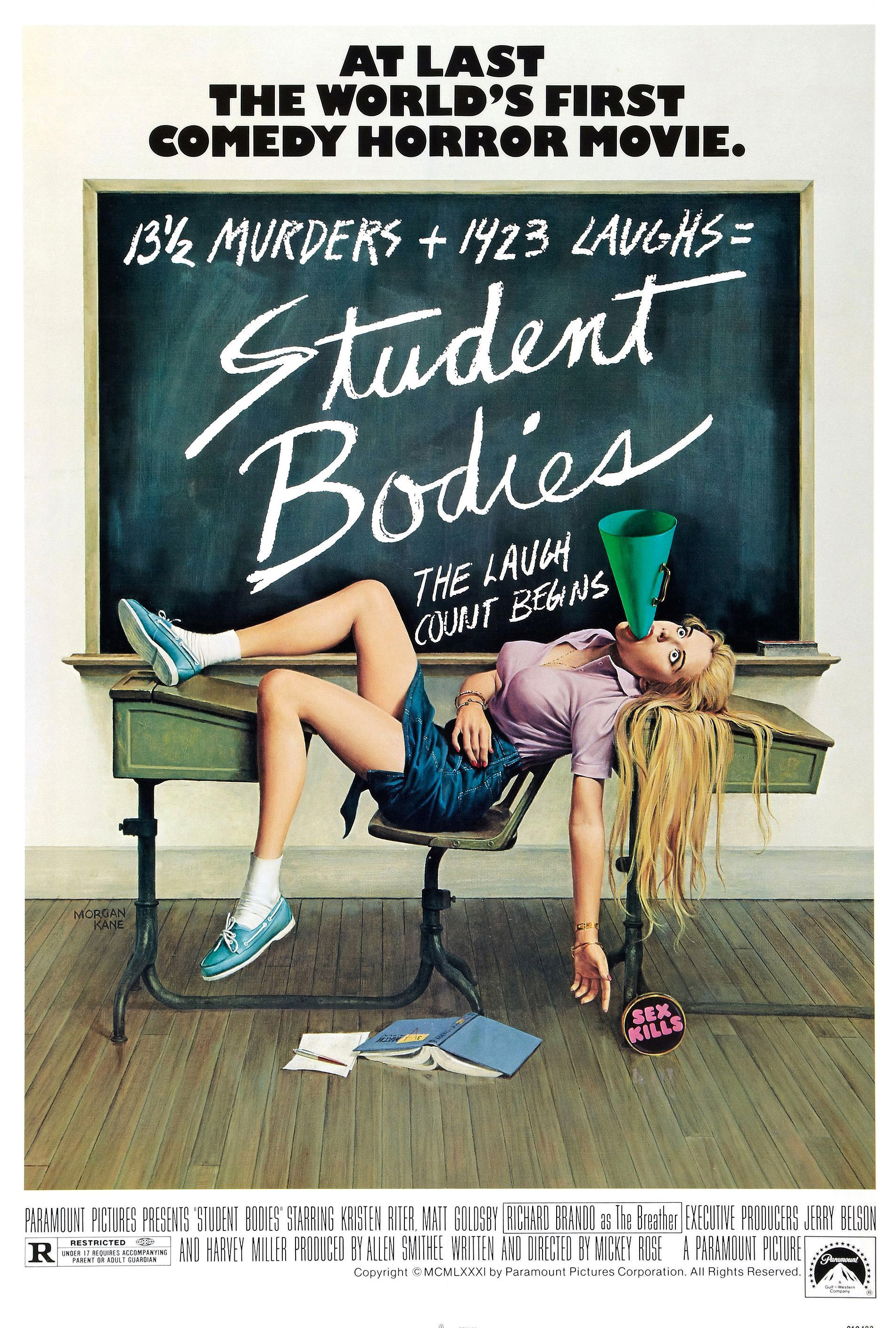
Student Bodies (1981)

By Richard Winters

My Rating: 6 out of 10

4-Word Review: Who is ‘the breather’?

A killer, simply known as ‘the breather’, is stalking students of Lamab High School. His first victims are Julie (Angela Bressler) and her boyfriend Charlie (Keith Singleton). He then proceeds to hack away more students with the police seemingly unable to do anything about it. Fellow student Toby (Kristen Riter) decides to take matters into her own hands by investigating things on her own only to end up getting incriminated as the killer, which forces her to try and convince others that she’s not the one.

This film, like Jekyll and Hyde…Together Again, is the product of the 1980 writer’s strike where Paramount was looking for scripts that could be produced on a modest budget with a nonunion crew in an effort to have some movies released to the theaters while the strike wore on. This was deemed at the time to be a perfect fit as studio heads were impressed with the box office smash Airplane that had come out a year earlier and been a parody of disaster flicks and they were hoping this film would not only cash in on audiences that had liked that one, but also for those who were into slasher films, which at the time were proving to be quite popular. The end result was a modest success with the movie making a $5.2 million profit off of a $510,000 budget. Though it really didn’t obtain its cult following until it began airing on late night cable TV during the 90’s.

While there had been horror movie parodies before those made fun of the standard haunted house theme while this was the first to satirize slasher movies, which up to that point had only been around for a few years. I was though leery as this was written and directed by Mickey Rose, best known as a script collaborator on many of Woody Allen’s movies, but who had ventured on his own to write and direct I Wonder Who’s Killer Her Now? 5 years earlier, which I considered incredibly lame and feared more of the same here. However, to my surprise, this one wasn’t bad, with probably the best moments coming right at the start, which is a perfect send-up of When a Stranger Calls. What makes this one work is that those behind the scenes, including the talented writer Jerry Belson and producer Michael Ritchie, is that they had clearly watched a lot of horror movies and therefore the humor, at least at the beginning, is laser sharp, versus other horror parodies, including Pandemonium, which came out a year later, that seemed to be made by people who really hadn’t watch horror and were just throwing in any dumb gag that they could.  The film also has an engaging protagonist, played by Riter who gives a splendid performance and it’s a shame this was her only movie.

Of course there are some detractions. The onscreen titles that flash on every once in a while, get annoying. I didn’t mind it alerting us to the body count, including when Riter kills a fly, which gets considered as a ‘1/2’ a death, but flashing on every time someone leaves a door unlocked, became a bit overdone and heavy-handed. There’s also a few ‘ program interruptions’ like when a spokesman comes on to advise that he must say the work ‘fuck’ in order to get an R-rating as those movies tend to make more money, which while somewhat funny, gives the film too much of a skit-like feel.

The film also lacks any gore or violence even though that was the whole mainstay of slasher movies to begin with. There could’ve been several reasons for this, but I think the main one was that the cultural elites at the time, and I know because I was around then, considered slasher films to be ‘lowbrow’ and onscreen blood effects as ‘tasteless’. The chic argument was that horror movies shouldn’t need gore to be scary and slasher flicks were simply a ‘passing fad’ that would eventually die off into obscurity though 40 years later the exact opposite has happened. Horror movies are now the fastest growing genre and the ‘distasteful’ slasher films of the 80’s are now considered classics. Films like Shaun of the Dead have proven that you can have a lot of blood and guts and still be funny, so this movie misses out and leads to a very boring middle half in which the humor starts to become strained mainly because they run out of ideas, which some funny gore could’ve helped fill-in. It also makes it seem like only half a parody when the main modern horror ingredient, the violence, gets completely glossed over. 

Spoiler Alert!

I did though really like the wrap-up, despite Leonard Maltin, who called the ending ‘really bad’. I considered it one of the best aspects especially the dream sequence where Riter goes down the school’s hallway and victims seemingly come back to life and pop-out of the classroom doors. The Wizard of Oz spin in which the characters from the dream, which is basically the entire movie, are shown to have the exact opposite personalities in ‘real-life’ when Riter wakes-up, I found to be quite creative. I got kick out of the Carrie take-off too, which I knew had to be coming at some point, that had Riter’s hand bursts out of the ground after she’s dead. My only quibble here is that, since it was her boyfriend who killed her and he’s the one bending over her grave, there should’ve been a knife in her hand when it comes out of the ground and thus stabbing him in revenge. 

My Rating: 6 out of 10

Released: August 7, 1981

Runtime: 1 Hour 25 Minutes

Rated R

Director: Mickey Rose

Studio: Paramount

Available: DVD, Blu-ray, Amazon Video, YouTube
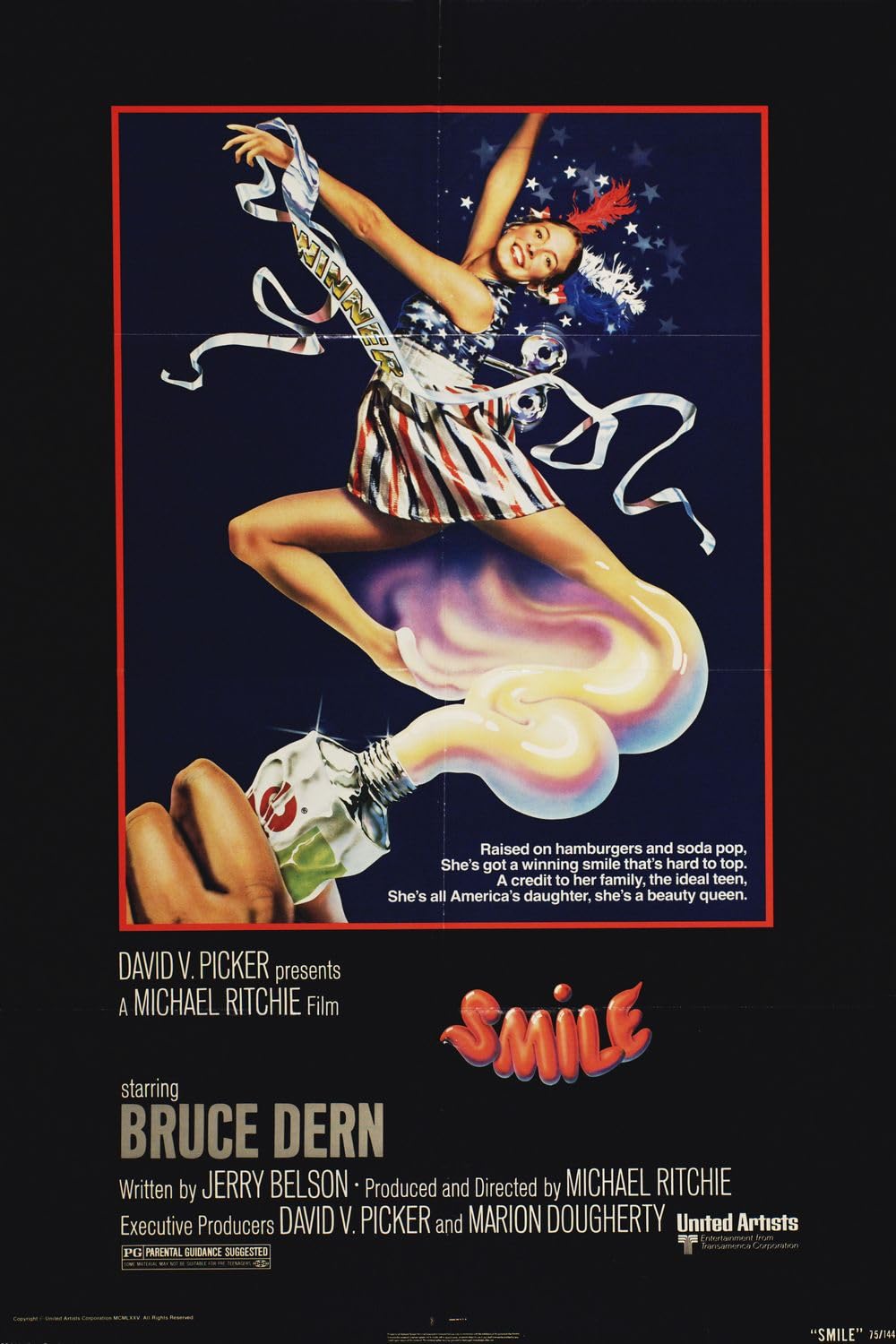
Smile (1975)

By Richard Winters

My Rating: 9 out of 10

4-Word Review: Producing a beauty pageant.

Santa Rosa, California is the site of this year’s Young American Miss Pageant. Each person that’s involved in the pageant approaches it differently. Bob (Bruce Dern), a middle-aged man who works as a car salesman, sees his position as a judge on the panel as a diversion from his otherwise mundane suburban life. Brenda, the pageant’s executive director, considers it a way to display her perfectionist qualities of control and leadership. Her husband Andy (Nicholas Pryor) views the proceedings in a much more cynical fashion and another added element to their already troubled marriage. Tommy (Micheal Kidd), the dance choreographer, approaches it as just another paycheck while Doria (Annette O’Toole), one of the contestants, considers it an opportunity to bolster her name and face even though Robin (Joan Prather), who’s competing against Doria, enjoys the whole thing just for the experience and isn’t concerned with who wins it, at least not initially.

The film marks the third entry in director Michael Ritchie’s American Dream trilogy and one of many he did dealing with competition and how this can change people in both good and bad ways with The Bad News Bears being the most famous of those. The gifted Jerry Belson wrote the script that was based on Ritchie’s own experiences as a pageant judge and many of the situations shown here were ones he went through. Unfortunately, despite the script being absolutely top notch to the extent of being one of the best satires ever written and equal to the more well-known Network that came out a couple years later the movie has not been seen by many, and the title has in recent years been eclipsed by the horror movie franchise. The is because the film’s studio, United Artists, had no confidence in the material and didn’t believe it would generate any profit and thus released it to only 4 theaters nationwide and thus few people ever saw it though in the following decades it has generated a small cult following and even a stage musical.

The finely etched, well-defined characters are what really sets it apart and each of them could be the centerpiece of their own movie if they wanted. Dern, who usually plays psycho roles, is excellent as a father who’s still clinging to his optimism even as everything around him deteriorates. Pryor equally good as his friend and counterpart who finds the suburban dream to be full of letdowns and lies and tries adamantly to break through Dern’s upbeat shield in order to get him to see the truth too. Feldon, best known as Agent 99 in ‘Get Smart’ TV-show, is terrific as well as a complete control freak and her defining moments coming during a scene in her living room, with all the furniture draped in protective plastic, and where she tries to literally goad her husband Andy into killing himself.

Even the minor characters display a unique angle and perspective on things including the janitor (Titos Vandis), who seemingly has a bottle of alcohol hidden everywhere, and makes keen observations on the others as well the music director (William Traylor) whose sarcasm and sexism knows no bounds. Geoffrey Lewis is memorable too as a marketing director who tries to promote the wholesome image of the contest only to in one really funny moment blurt his true cynical feelings about it. Prather and O’Toole though are the ones who drive it as it’s through them we see the inside mindset of those being judged and it’s interesting how at the start it’s O’Toole who’s the more jaded of the two while Prather is the wide-eyed one, but by the end after her experiences here Prather has more than been able to catch up with her.

Spoiler Alert!

The direction is done in a way that makes it seem like a docudrama where everything is captured through an unfiltered lens showing it as it happens with none of the scenes being set-up in a way that makes it feel staged, which is to its benefit. However, this gets ruined, in one of the movie’s few weak points, when Dern’s son Little Bob (Eric Shea) gets caught taking polaroids of the women in their undress. Instead of hearing the dialogue of the people when they catch him, as well as Dern’s when he finds out, which could’ve been quite revealing, music gets played over it, which is jarring as it reminds the viewer they’re watching a movie, even though it had spent the rest of the time trying to convince us we were seeing reality as it unfolded.

The ending is a bit of letdown too. Ritchie and Belson wanted the winner to be a complete surprise both to the cast and crew, which explains why the camera swerves around in a jerky style as even cinematographer Conrad Hall didn’t know who it was and thus had to try to find her when her name is announced. However, having it be a girl (Shawn Christianson) who has no lines of a dialogue, and only seen briefly in a few group shots, was a mistake. The attempt was to show how pointless these contests are and how not much thought or care goes into who’s picked, as evidenced by one of the judges seen flipping a coin before he makes his decision, but it still should’ve been someone we had seen and heard earlier. Maria O’Brien, who plays an obnoxious contestant who annoys the others so much they even sabotage her talent act, would’ve been a better choice and the film would’ve still made the same point and allowed a little more of a lasting emotional effect. With the way it gets done here the viewer leaves feeling miffed and confused.

My Rating: 9 out of 10

Released: March 20, 1975

Runtime: 1 Hour 57 Minutes

Rated PG

Director: Michael Ritchie

Studio: United Artists

Available: DVD, Blu-ray

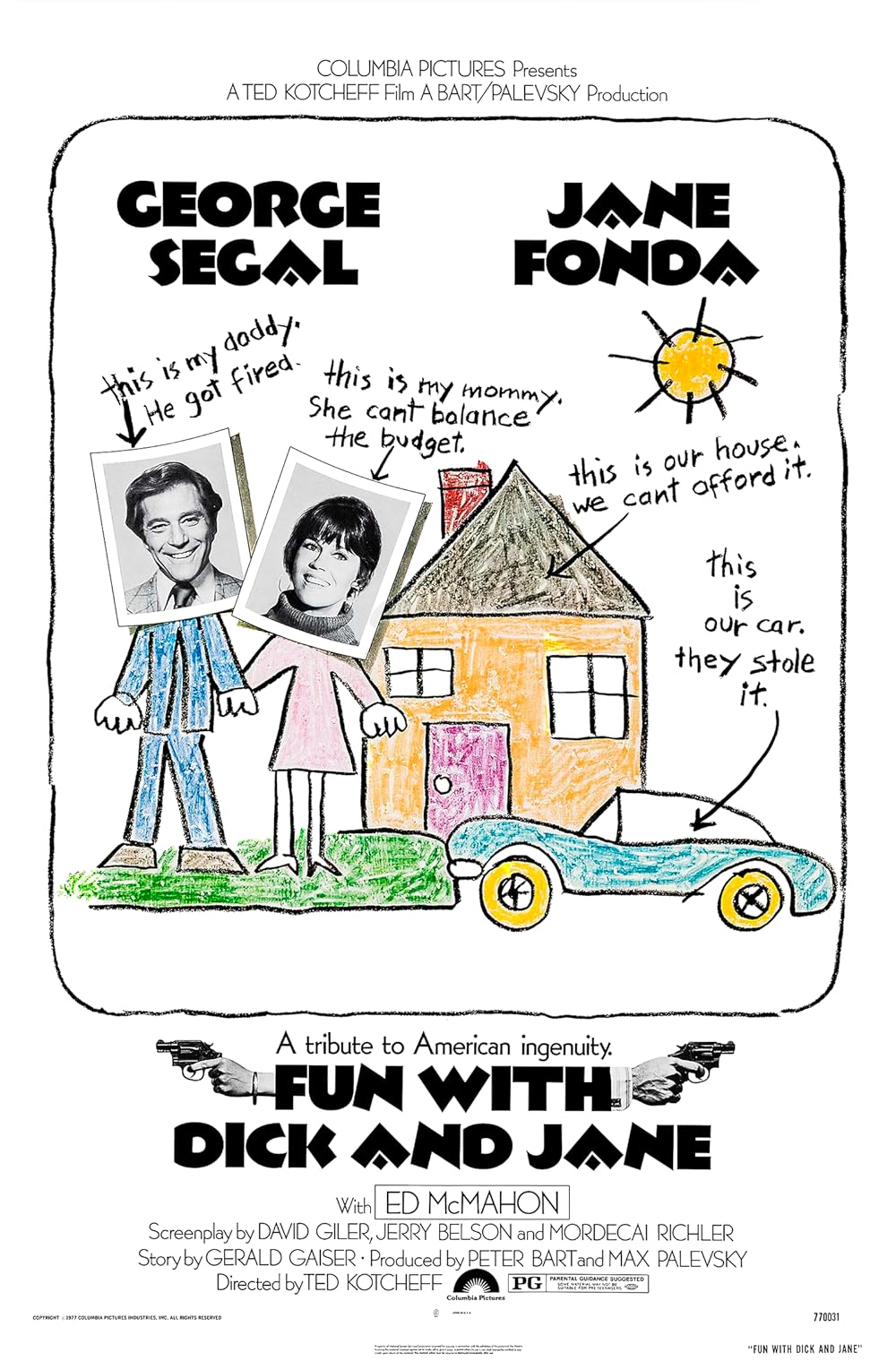
Fun with Dick and Jane (1977)

By Richard Winters

My Rating: 7 out of 10

4-Word Review: Suburban couple become robbers.

Dick (George Segal) suddenly gets laid-off from his job at an aerospace company and finds his financial situation to be dire. His wife Jane (Jane Fonda) tries to get a job modeling dresses but is soon fired. They then attempt to collect unemployment, but Dick is caught taking money on a side hustle, which then causes him to be disqualified. Having run out of all other options they then decide to begin robbing people. They start out small by holding up a drug store, which doesn’t go over well, and then sleazy hotels and even a TV Evangelists (Dick Gautier). Eventually Dick comes-up with the idea of robbing his old boss (Ed McMahon) as Dick knows that his boss has a safe in the closet of his office that is filled with illegal bribe money, so the couple can rob it, and his boss would not go to the police to report it.

The first half is absolutely on-target maybe even more so today as it analyzes just how easy it is to go from being middle-class to destitute in only a matter of weeks and how one’s ascent in society is totally contingent on their jobs and how quickly those places can cut their employees without much thought or concern. The couple’s attempts to rectify things by finding part-time employment that they’re overqualified for is very close to the truth as are the scenes dealing with a ‘friendly’ loan company that advertises they’re easy to work with but really aren’t. Dick’s interview with a potential employer, played by Walter Brooke, that’s interested in hiring him as long as he doesn’t get the vibes that he’s desperate is a keenly observant and a sadly true element in the real world as well. 

The film though veers away from its satirical elements when it gets too into the robbery moments, which takes up the bulk of the second half. The first one, where Dick attempts to rob a pharmacy, but only gets some condoms out of it, is quite funny, but after that it starts to become redundant. Seeing them steal from a sleazy adult hotel where the desk clerk, played by Richard Crystal, begs them not to as it will get him into trouble, but they do it anyways makes them seem callous and less likable to the viewers. The couple commit the robberies without disguises, or just meager attempts at one where they could be easily recognized in a line-up. They also at one point use their real names making it seem that they would be caught and it’s surprising that they aren’t.

Spoiler Alert!

Having them then ‘graduate’ into becoming safe crackers is too much of a stretch. They get only one week to prepare for it, which Jane feels confident they can do since they’re ‘quick learners’, but why even bother to have a safe at all if novice people can simply read up on how to crack one in only a short time and then be able to do it without a single hitch? Would’ve been better had they made partners with someone who was experienced in it and then agreed to give him half, which would’ve been more believable. Better yet would’ve been having Dick and Jane walking away with the loot thinking that they’re now ‘home free’ but then finding themselves surrounded by the police for the other robberies that they committed earlier. 

End of Spoiler Alert!

I also didn’t care for Segal’s performance who I’ve come to feel as an actor is a bit overrated. His character is obnoxious and initially laughs off his dilemma confident he’d land on his feet and remains in that arrogant mode until well into act two and even then, has a brash attitude that makes you want to see him fail versus siding with him in his predicament. Fonda is much more sympathetic giving her a far better presence to the extent it could’ve completely revolved around her, possibly as a single mother, and the movie would’ve worked better. I also really enjoyed McMahon who’s better known for his announcing work but perfectly cast as the corrupt boss and John Dehner is also memorable, particularly with the way he peels an apple, playing Jane’s father, who despite being financially well-off refuses to loan her any money and the goofy logic he comes-up with to justify it. 

This same story got remade in 2005 with Jim Carrey and Tea Leoni playing the leads, but that version doesn’t work as well. Granted I haven’t seen it since its release, but I remember that its theme is much softer and pretty much puts all the blame on Alec Baldwin, who played Carrey’s boss, and acted like he was the sole source of the problem, while this movie’s take is that the system as a whole is screwed up.  

My Rating: 7 out of 10

Released: February 9, 1977

Runtime: 1 Hour 35 Minutes

Rated PG

Director: Ted Kotcheff

Studio: Columbia Pictures

Available: DVD, Blu-ray, Amazon Video, YouTube
Beyond Therapy (1987)

By Richard Winters

My Rating: 3 out of 10

4-Word Review: Therapists nuttier than patients.

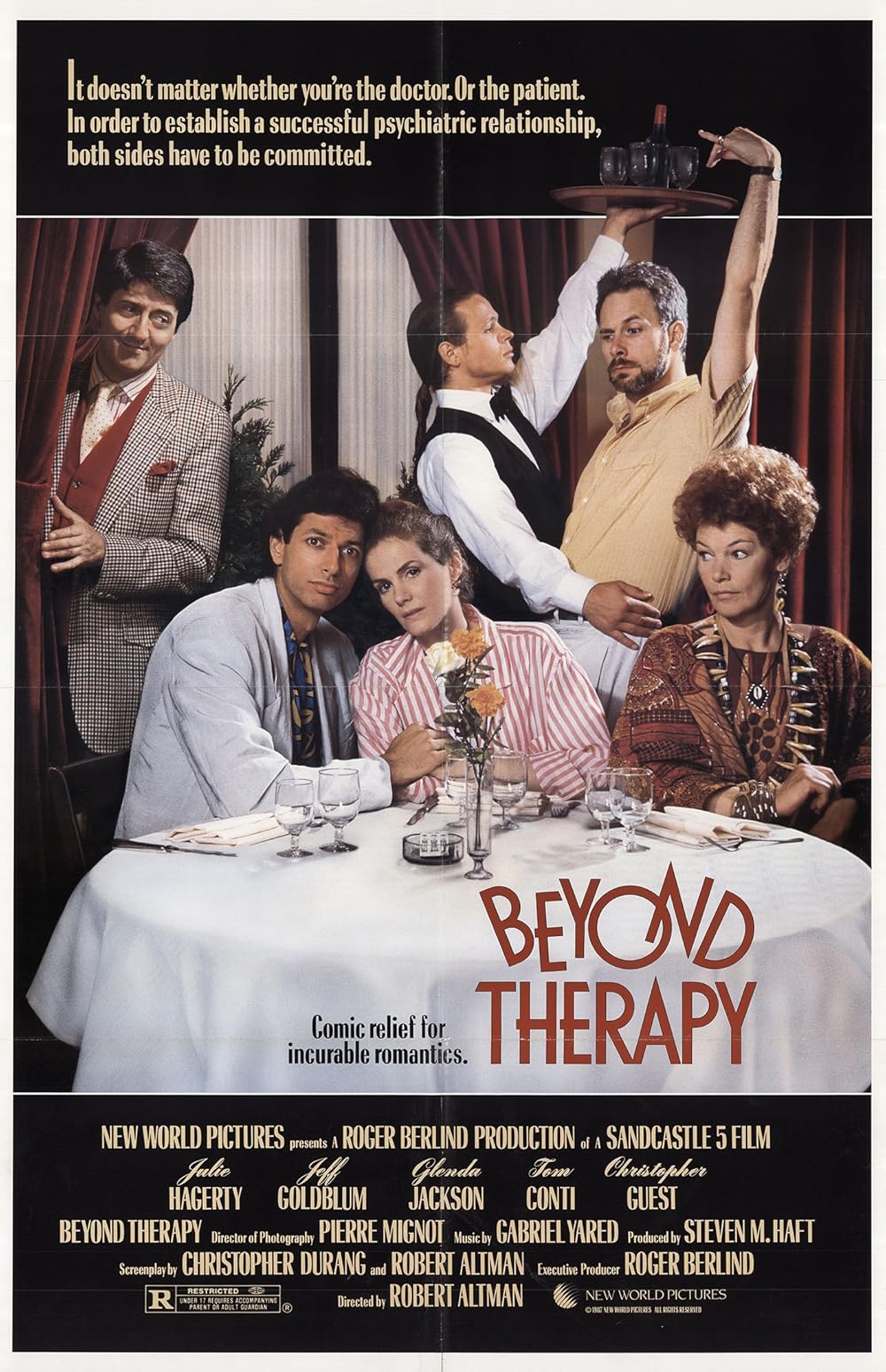
Bruce (Jeff Goldblum) is a bisexual who’s tired of his relationship with Bob (Christopher Guest) and thus decides to place a singles ad looking for a female companion. Prudence (Julie Hagerty) answers and the two meet-up at a restaurant, but they find there’s too many differences between them and fail to hit-it-off. Bruce then goes to Charlotte (Glenda Jackson), his therapist, while Prudence visits Stuart (Tom Conti) who’s her therapist and works in the next room beside Charlotte’s. After some counseling, and at Charlotte’s suggestion, Bob places another ad, but changes some of the personal details, causing Prudence to again answer it thinking it’s a different person. They meet at the same restaurant, but this time things click and they agree to go out again, but Bob and his meddling mother Zizi (Genevieve Page) don’t like the fact that Bruce is seeing somebody else and become determined to ruin the potential relationship as does Stuart, who once had a fling with Prudence, and wants to rekindle the old flame, but only if he can get Bruce out of the way.

The film is based on the hit stage play of the same name by Christopher Durang and while that one got rave reviews this version falls off its hinges right away and a lot of the blame should be pointed at director Robert Altman who rejected the screenplay that Durang had written and instead revised it severely causing Durang to feel that very little of his original work was left and lamenting in later interviews that his experience working on this project was an unhappy one. The story is supposed to be set in New York City, but because Altman was living in Paris at the time he choose to shoot it there, but New York’s ambience, where the single’s scene is quite strong, would’ve helped accentuate the theme and allowed for a more vibrant backdrop versus here where everything takes place in a bland cafe, or in the therapists office, with the exception of a few scenes done in Bruce and Bob’s pad, that hampers the visual flair and makes the production look stagnant and cheap. It also ends with a bird’s eye shot of the Paris skyline, but since everyone was speaking in English and without a French accent it makes it off-kilter, and they should’ve at least pretended it was New York even if it wasn’t.

Goldblum comes off as too detached and thus isn’t effective for this kind of role. Hagerty has her moments and at least gets some laughs, but her open disdain for gay people, along with some of her character’s other quirky hang-ups, may not go over well with viewers. Guest plays the gay lover role in too much of a cliched way making him seem like a walking-talking parody, while Page, as his overprotective mother, is excessively hammy and her exaggerated behavior gets in the way and doesn’t add much.

Jackson is a big disappointment though it’s not all her fault as Altman insists on shooting the majority of her scenes through the window of her office making the viewer feel cut-off from her and like she’s intended to be a caricature. Her confusion over words is more disconcerting than funny. Having a therapist that’s a bit daffy is okay and might even be good enough for a chuckle or two, but here she seems genuinely nuts to the extent that you wonder why Bruce would continue to see her. How she’s able to pick-up words said by Stuart in the other office is never made clear, they also seem to have sporadic sexual rendezvous in the room that’s in-between their offices, but this only gets implied and never actually shown though it should’ve been. Conti’s performance is annoying as he speaks in this fake sounding Italian accent, which he finally drops near the end, but should’ve done way sooner.

There are a few in-jokes in regard to Jackson that I did like. One is a refence where her son, played by Cris Campion, asks her to cry, which she does in a comic sort-of way and I think this was alluding to her performance in A Touch of Classwhere the script asked for her character to cry, but she refused insisting that crying was just something she didn’t do, so here you finally get to hear her do it, which is fun. Later there’s another bit where Bob talks about the movie Sunday Bloody Sundaya film that Jackson was in, though here he describes her as being ‘that English actress’, which is amusing, but would’ve been even funnier had, when he later meets her, he could’ve said ‘you look exactly like the English actress in that movie.’

Spoiler Alert!

While the film does become semi-engaging even with its rough, awkward start it manages to blow it up with a dumb conclusion, which has Bob shooting at Bruce with a toy gun while inside the restaurant. We already know it’s a toy because he tried to use it on Charlotte earlier, so having this extended slow-motion sequence where all the customers duck for cover, doesn’t work and becomes overdrawn instead of funny, or suspenseful. Having the group then remain in the restaurant afterwards and even get served food was equally ridiculous as anyone that would’ve caused that much of a melee would most certainly be asked to leave or arrested by the police for causing a disturbance.

My Rating: 3 out of 10

Released: February 27, 1987

Runtime: 1 Hour 33 Minutes

Rated R

Director: Robert Altman

Studio: New World Pictures

Available: DVD, Blu-ray, Amazon Video, YouTube
Real Genius (1985)

By Richard Winters

My Rating: 6 out of 10

4-Word Review: House full of popcorn.

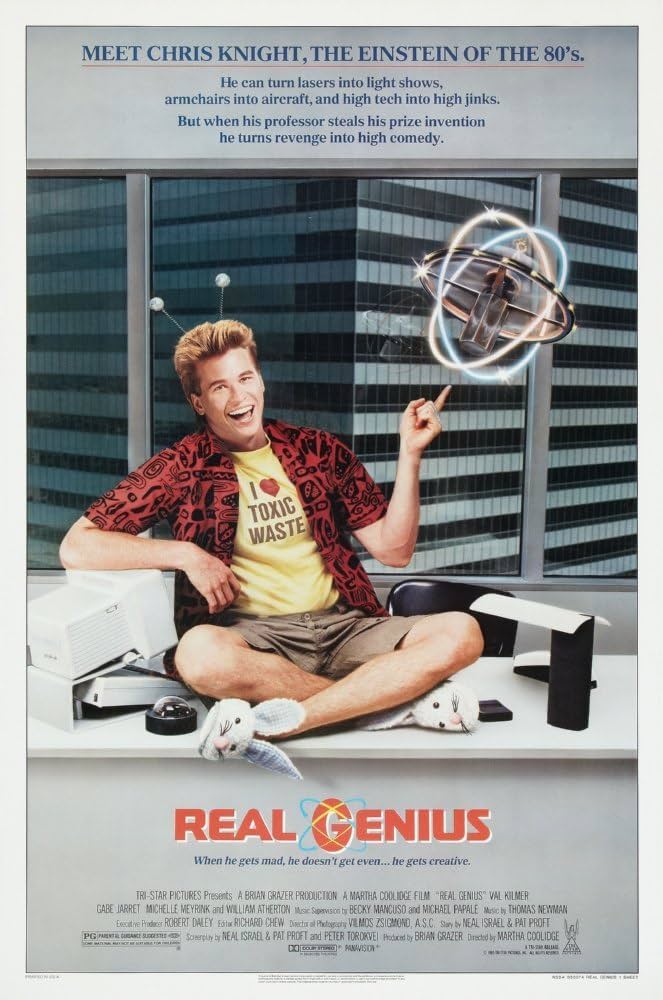
Mitch (Gabriel Jarret) is a 15-year-old prodigy who attends college at a young age and rooms with Chris (Val Kilmer). The two though don’t hit-it-off as Chris is rebellious and irreverent while Mitch takes his studies seriously but doesn’t know how to have any fun. Both are assigned to work on a project called ‘Crossbow’ that is headed by an arrogant Professor Jerry Hathway (William Atherton). Neither student realizes that the laser project has been commissioned by the CIA that will allow them to commit political assassinations from outer space. Once they find this out, they band together to infiltrate the headquarters in order to corrupt the weapon and not allow it to function properly.

The film is best known as being the second starring vehicle for Val Kilmer who plays the type of smart ass that some may find amusing while others could consider it obnoxious. While he does have his moments, I did find it hard to believe that he was ever the studious type, which he insists he was during a ‘heart-to-heart’ conversation with Mitch and only became the goof-off after burnout, but if that really were the case the viewer should’ve seen that versus having it described. Since he plays the party personality so well it’s hard to imagine him being any other way and it would’ve been interesting to have witnessed the transition.

The real star is Mitch, and I’m surprised why he wasn’t given top billing as he’s more three dimensional, relatable, and has a genuine character arch while Kilmer seems brought in mainly just for comic relief and throw some spice into the proceedings. Atheron is a major scene-stealer that almost knocks the other two out playing the snobby jerk of all jerks, in an even more pronounced way than in Ghostbusters, which I didn’t think could be topped and in fact he plays it so well you don’t see the acting and begin to wonder if that’s the way he really is and in his case start to fear being potentially typecast.

While these characters are all engaging in their unique ways the supporting cast doesn’t work as well. Mitch’s parents, played by Paul Tuller and Joanne Baron, are just too dumb to be believed particularly when Atherton asks in snarky fashion if their son is adopted and for them not to catch-on that he’s insulting them was for me not plausible. Jordan, played by Michelle Meyrink, I felt was a bit over-the-top as she’s this super nerdy girl who spends seemingly every waking moment working on her inventions making it almost like it was a compulsion and it would’ve been nice seeing, at least for a few seconds, her doing something else.

The way Mitch, who has a crush on her, and she consummate their fledgling relationship gets completely botched. For one thing it didn’t need to turn sexual as I thought it worked better having things evolve between them slowly and not have it get serious until after school year was over and they could focus less on their studying. Either way the genesis that motivates them into sex is when Sherry, played by Patti D’Arbanville, appears in his dorm room and comes-on to him, but there’s no explanation for why she’s there and just popped-in out-of-the-blue. What’s worse is that you never actually see Mitch and Jordan get-it-on as the film cuts away, but seeing them in bed under the covers struggle to do it, as the first time could be quite awkward for many young people, could’ve been comical exposing how these geniuses were dumb at something to the point they decide it’s not worth it.

The pranks, which the film is best known for, are amusing, but seem a bit exaggerated. Coating the dorm floors with ice would cause massive damage once it melted and the water seeped through the floorboards making me believe the pranksters would’ve been kicked out. Same with Kilmer breaking one of the windows in his dorm room, which in the next scene is fixed, but no explanation with who fixed it, or more importantly paid for it. Getting the car of one of the students inside a dorm room was for me a jump-the-shark moment as there was simply no way that vehicle frame would’ve been able to fit through the doorway. Some may argue that because these pranks were based on real incidents that had occurred in other colleges, I’m being overly picky complaining about them, but I suspect they weren’t carried out in the exact same way as shown here, nor is there anything said about the aftermath because once the jokes are over somebody’s going to be paying for it. Here nobody ever gets into trouble or deals with the consequences, but in real-life they would.

Spoiler Alert!

The ending in which the students are able to infiltrate a military complex was wish fulfillment particularly the way they’re able to get in using ID cards they had made themselves, which I’m pretty sure would not have passed professional scrutiny. Just because these kids are smart doesn’t mean they can’t make mistakes or have oversights.

I did however love the house getting filled up with popcorn. Actual popcorn was used and had to be popped continuously for three months and then treated with a fire retardant so as not to combust. A 2009 episode of Mythbusters tried to recreate it and found that it wouldn’t be possible as the popcorn was not able to break glass or knock the home off of its foundation like in the movie, but it’s still a fun sight regardless and the film’s top moment.

My Rating: 6 out of 10

Released: August 7, 1985

Runtime: 1 Hour 46 Minutes

Rated PG

Director: Martha Coolidge

Studio: Tri-Star Pictures

Available: DVD, Blu-ray, 4K, Amazon Video, YouTube

A Private Function (1984)

privatefunction

By Richard Winters

My Rating: 6 out of 10

4-Word Review: Couple hides a pig.

The year is 1947 and even though the war has been over for 2 years there’s still food rationing going on in this small England town. Gilbert (Michael Palin) works as a podiatrist and travels to residential homes where he cuts the toenails of the women who live there. During some of his visits he comes upon families who are hiding meat in their homes, and they must rush to cover-up any evidence of it when the local food inspector (John Normington) comes around to investigate. One such home has been illegally raising a pig in hopes to use it for a private party to celebrate the upcoming Royal Wedding between Princess Elizabeth and Prince Philip. Gilbert tells his wife Joyce (Maggie Smith) about it, and she convinces him to steal the pig, so that they can sell it off to the bacon black market but trying to hide a pig from both their neighbors as well as Joyce’s noisy elderly mother (Liz Smith) let alone being able to kill it proves quite challenging.

The film is a perfect mix of droll English humor and quirky moments. It starts out with a very original idea and manages to add one amusing moment, or sly comment, after the other becoming one of the better foreign comedies of the year where you can pick-up on funny little things that you might’ve missed on the first viewing, each time you watch it. Palin is especially good as a timid man who finds himself in the middle of chaos that he didn’t want and his unique profession along with the giant plastic foot that he orders to help represent his business are all on-target as are his engagingly consternated facial expressions.

Initially I thought Smith, a two-time Academy Award winner, was wasted here as she isn’t seen much during the first act and pushed mainly to the background making it seem almost like a token role that doesn’t have much pizazz, but she comes on strong by the end by having an interesting arch where she is just a passive, doting wife at first, but proves to be quite controlling, conniving and even demanding by the end. Liz Smith is equally engaging as the sometimes-confused aging mother ‘she’s 74’ whose dialogue is limited, but the few lines that she does say are doozies.

Spoiler Alert!

The pig though becomes the main star even though behind-the-scenes it made things quite difficult to film. This led to one 12-year-old boy getting his ‘big break’ into show business. When he heard that they were going to be making a movie in his area he proudly proclaimed that he’d be ‘willing to do anything’ in order to ‘get into the movies’ so the producer handed him a pail and told him to follow the pig around and collect its droppings every time it defecated and for this he got his name proudly billed during the final credits as ‘the bucket boy’.

As pigs go this one struck me as being quite small. Apparently, this was intentional as the filmmakers were advised by animal experts to choose a 6-month-old female pig as it was deemed, they’d be easier to control and less unpredictable, but visually she looked too scrawny and certainly not the type of pig to be used as the centerpiece for a giant feast such as the one that the townspeople were excitedly planning. It’s also a bit of a downer, even depressing, when the animal is eventually killed and served up on a platter. There’s a lot of close calls where the animal evades death and it makes it seem almost like the human captors were ultimately too afraid to do it, but when it does finally occur it hurts the film’s levity and makes it feel like murder when it does die and thus sucks all of the comedy that came before it right out.

The climactic party isn’t eventful either making the story go out with a whimper. It had been relatively lively up to then with all sorts of subtle twists and goofy turns only to end things on a dry note. There needed to be some sort of ultimate confrontation between the couple and the former owners of the pig, so things could’ve ended with more of a bang as it’s not quite able to hold-up feeling almost like it ran out of ideas with an uninspired conclusion.

My Rating: 6 out of 10

Released: November 9, 1984

Runtime: 1 Hour 32 Minutes

Rated R

Director: Malcolm Mowbray

Studio: HandMade Films

Available: DVD

The Out-Of-Towners (1970)

outoftowners

By Richard Winters

My Rating: 6 out of 10

4-Word Review: Travel plans go awry. 

George (Jack Lemmon) is set to have an interview in New York City for a possible job promotion with his company. He brings along his wife Gwen (Sandy Dennis) for what he hopes will be a fun-filled trip in which they can explore the new city they hope to eventually relocate in, but things don’t go as planned. Their flight is forced to circle JFK Airport for hours before it’s diverted to the Logan Airport in Boston and then requiring them to take a train ride back to the Big Apple causing them to arrive there very late. Once they do make it, they find their hotel reservations expired since they hadn’t thought to call or wire, to tell them to hold it. They’re then mugged, and while being escorted by police to a local armory, where they plan on spending the night, they become involved with two liquor store robbers who hijack the squad car they’re in and force them out into Central Park in the middle of the night. This then leads to several more calamities, but despite everything George manages to somehow make it to his interview on time, but when offered the position he’s now not so sure he wants to accept it. 

Originally writer Neil Simon was planning on using this concept as a segment to his 1968 play Plaza Suite, but since that play was already divided up into three other segments it was deemed too many and thus this one got thrown out. He then tried making it into its own stage play but realized it would require too many different set pieces and ultimately came to the conclusion it would work better as a movie. Unlike his other works this one does not rely on dialogue for its primary humor as instead the intended laughs come from the situations, but it’s more like a dumb comedy in that what occurs isn’t all that clever, or original and relies solely on the exasperated reactions of the characters. 

Some of it goes overboard particularly an underground gas explosion that blows a manhole cover that George is standing on into the air and temporarily causes him to lose his hearing, which I found quite disturbing. What’s worse is that the cover comes crashing down just inches from George’s head, which could’ve been fatal and was apparently a mistake as it was intended to go up only a few feet and thus it could’ve really killed him had it hit him, but being the trooper that Lemmon was he remained in character despite the issue. However, exploding gas lines don’t happen that often giving the film an unintended surreal quality, or a piling-on effect and for that reason I would’ve excised that segment completely from the movie. 

The characters aren’t that lovable especially George who comes-off as what would be called today as a female Karen, or ‘Kevin’ as he complains about everything right from the start making him obnoxious and annoying. Had the character shown a laid-back Midwestern mentality, since that’s where he’s from, and been more congenial about things, only to finally get exasperated at the very end as it built up, would’ve worked better as by that time the audience could’ve forgiven him after what they’ve been through, but having him be so quick tempered already at the beginning doesn’t allow for any character arch and having him constantly threaten to sue everyone who has wronged him quickly becomes redundant. Sandy Dennis is better as she takes things in more of a strident fashion and makes a healthy contrast to George. The small bit parts made-up of a recognizable B-list actors are fun though they should’ve been given more amusing things to say. 

Spoiler Alert!

The overall point of the story is muddled. Supposedly it’s a harsh assessment on New York, but the couple’s problems aren’t exclusive to the city as they have issues when they go to Boston and even on their plane ride back when it gets hijacked to Cuba making it seem more like a cursed trip versus a nightmare place. Taking potshots at NYC isn’t hard either as most people have complaints about it even those that have lived there for their whole lives making the premise too obvious. A much more original idea that could’ve given it a fresher perspective would’ve had the couple already living in New York, but tired of the crime and rundown urban conditions, so they decide to move to a small Midwestern town but find unexpected problems at every turn and thus return to the city where they conclude that despite the less-than-ideal elements they’re still better off. 

My Rating: 6 out of 10

Released: May 28, 1970

Runtime: 1 Hour 37 Minutes

Rated G

Director: Arthur Hiller

Studio: Paramount

Available: DVD, Blu-ray (Reg. B/2), Amazon Video, YouTube

Barfly (1987)

barfly

By Richard Winters

My Rating: 6 out of 10

4-Word Review: Drunks at a bar.

Henry Chinaski (Mickey Rourke) is a bum who has very little money, lives in a small rundown apartment that’s more like a sleeping room, and spends most of his time getting drunk at a bar across the street called The Golden Horn. It’s here where he gets into arguments with Eddie (Frank Stallone) the bartender. During one of their confrontations the two go out back and have a fistfight behind the building, which Henry unceremoniously loses. Feeling embarrassed and dejected he goes on a crusade to ‘win his title’ back by finding food in order to regain his energy, but when he rips a sandwich out of another customer’s hand, since he doesn’t have money he must steal from others, he gets thrown out of the bar by Jim (J.C. Quinn) the bar owner. He then stumbles his way to another waterhole named Kenmore where he meets Wanda (Faye Dunaway) a fellow alcoholic. The two create a makeshift bond and end-up going back to her place, an apartment paid for by a married man who covers for her life necessities, as a kept woman, as long as she’s willing to put-out when he wants it. Just when Henry thinks he might be falling in-love she betrays him by have a tryst with Eddie. Feeling dejected Henry turns back to the bottle only to have Tully (Alice Krige) show-up at the doorstep. She’s a publisher offering him a check of $500 in compensation for some of the poems and short stories that he had submitted, which she found to be both gifted and profound. Henry though isn’t sure he can accept the money as he’s more comfortable being poor and not used to being liked, or a part of the upper class, which for decades he had found snotty. Then Wanda comes back into his life and when she finds out about Tully she makes a personal vendetta to ‘put her out’ as she feels rightly or wrongly that Henry is ‘hers’ and no other woman can have him.

The film is based loosely on the life of Charles Bukowski, who used the character of Henry Chinaski in five of his novels and was considered his alter-ego. It was produced by the notorious Cannon Group a production company that had a portfolio of a hodge-podge of movies some of them of a decent quality and others that were anything but. Although they had made a commitment to finance this one it almost didn’t get made as the studio was going through a period of financial distress and felt this one required too much money to fund, so they threatened to pull-out until director Barbet Shcroeder appeared at their office with a Black and Decker power saw warning that he would cut-off one his fingers to show the world that ‘Cannon was cutting-off a piece of him by pulling out of the project’, which was enough to get the execs to change their mind.

As a film it works mainly because it used authentic Los Angeles locations, many of which Bukowski frequented in real-life, as the setting. The dismal interiors really help create a vivid look making the viewer feel they’re as trapped in the skid row surroundings as the protagonist and with no discernable way to get out. The apartment sequences are especially engaging not only for the scene, that comes near the end, where Henry finally busts in on his noisy neighbors where he has a memorable confrontation, but also at the beginning when he accidentally goes into an apartment that isn’t his, but since it looks just as bleak as his sans for some decorative window curtains, he at first doesn’t even know it.

As a character study it’s revealing though it does hinge on how much tolerance the viewer will have towards someone whose decidedly self-destructive at every turn. Rourke plays the part in an over-the-top way particularly the weird style he walks almost like he’s trying to put a touch of camp to it and I don’t blame Bukowski, who stated in a later interview that Rourke was ‘too exaggerated and a bit of a show-off’ in the part, which Bukowski ultimately felt that he ‘didn’t get right’ though he later warmed-up to it and possibly other viewers may as well.

Dunaway seemed more problematic playing a woman on the skids was definitely not a part of her repertoire and she seems miscast. She almost makes-up for it by appearing topless during the bathroom scene and then getting into a climactic catfight with Krige at the end, but I didn’t understand why the woman would be wearing what appeared to me as female business attire as that was something her character was not and therefore she should’ve had something more ragged to wear even if it was just a simple jeans and T-shirt.

Spoiler Alert!

The film has many quirky moments including the two paramedics that come to visit Henry on a couple of occasions, which almost steals the movie and make this seems more like a surreal, dark comedy than a drama. The leisurely pace I liked and seems more suited for a European audience that isn’t so plot driven, but I would’ve liked seeing Henry working more at his craft. He’s only shown writing a couple of times, which is so brief that I really didn’t think he was that committed to it and almost like a novice writing words on notebook paper making it a complete surprise when a publisher eventually does show-up. You’d think if he hadn’t even bothered to type out what he had written most publishers would’ve thrown it away making the moments with the agent seem almost dream-like and more a fantasy than the intended reality.

I was a bit turned-off by the ending. I remember reading an article back in the 80’s that this movie was an example of a ‘downbeat ending’ that Hollywood studios were shying away from. During the 70’s sad endings had become the standard, but by the 80’s they tended to not register as well with the public and thus making upbeat conclusions became the norm. However, the article had specifically pointed out this movie as having an ending, which ‘wasn’t a happy one’, but I didn’t get that impression. I thought maybe it would have Henry getting knocked out by Eddie during their fight ‘rematch’, but the camera tracks out of the bar, so we never see the results of the confrontation and it’s all left open, so it’s neither sad nor happy. My only conclusion is that the article’s author felt this was a ‘sad’ ending because Henry went back to his old ways of drinking versus becoming a successful writer, but for some people success is a scary thing and falling into their familiar habits, as bleak and destructive as they may seem to others, offers a weird form of security, so I felt it ended on a high note because Henry was doing what was right for him and with the type of people he felt comfortable with. Being rich and famous would never have worked with his personality and therefore he was better off without it.

My Rating: 6 out of 10

Released: October 16, 1987

Runtime: 1 Hour 37 Minutes

Rated R

Director: Barbet Schroeder

Studio: The Cannon Group

Available: DVD, Blu-ray, Amazon Video