Category Archives: 80’s Movies

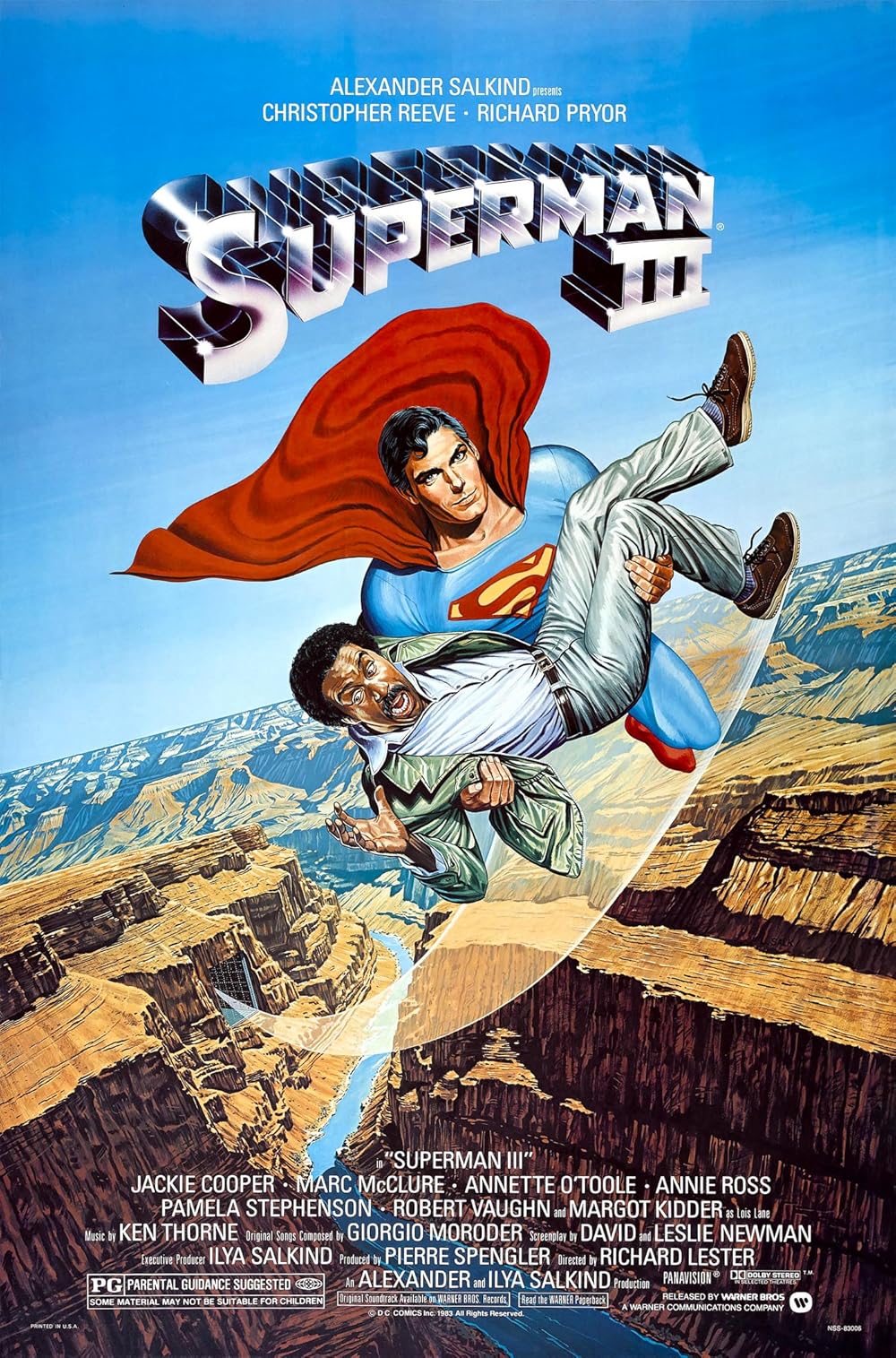
Superman III (1983)

By Richard Winters

My Rating: 2 out of 10

4-Word Review: Computer whiz corrupts Superman.

August ‘Gus’ Gorman (Richard Pryor) is an unemployed man looking for a job and comes upon the idea of training to become a computer tech when he sees it advertised on the back of a book of matches. Much to his surprise he excels as a student and is soon able to use his newfound computer knowledge to hack other programs including the payroll department at his company where he’s able to give himself a large, unearned monetary bonus. Ross Webster (Robert Vaughan), the company’s CEO, becomes aware of what Gus is doing, but is so impressed by his computer skills that instead of firing him he hires him to hack a weather satellite that will cause a rain storm in Columbia that will destroy the coffee crops and allow Webster to corner the market, but Superman intervenes and tempers the storm, so it isn’t as bad. This causes Webster to realize how detrimental to his plans Superman is and orders Gus to come create some synthesized Kryptonite in order to impair Superman’s ability. Gus researches the elements that make up Kryptonite on his computer and finds all of them except for one, so he arbitrarely adds tobacco in it for good measure. Instead of weakening Superman it turns him into an uncaring, sinister person who ‘drops-out’ of the hero saving lifestyle and becomes an anti-social person who shows no concern for others.

When Richard Donner, who had directed the first installment and 75% percent of the second one, got fired, he was replaced with Richard Lester. Lester had a far different vision for the Superman films. He disliked what he considered the ‘dark tone’ that Donner had given the first two and wanted a humorous quality put in. While I don’t mind some campiness Lester clearly goes overboard including the segment done over the opening credits that features unending slapstick that makes a mockery of the Superman franchise and drives the whole thing down to such a silly level that I wouldn’t have blamed anyone if they had walked out of the theater and demanded their money back.

Pryor was a big fan of the first two Superman movies and said as much when he was a guest on the ‘Tonight Show’. The Salkinds, who had proved already to have an unhealthy proclivity to the so-called ‘star power’ by casting Marlon Brando in the first film and paying him an outrageous sum even though his acting was subpar and a lessen known actor could’ve done a better job at half the price. No one ever came to a Superman movie simply to see Brando nor any other big-name actor, but for whatever reason the Salkinds didn’t understand this, so when they heard Pryor was interested in being in one of their films and he was a trop draw at the box office at the time, they admittedly signed him up.

Pryor, for his part, is highly engaging, but his schtick is out of place here. The script centers too much on his character making Superman seem like he’s only a co-star in his own movie. The character he plays makes no sense either as he’s portrayed initially as being a dumb guy who can’t hold down any job and then suddenly becomes a super genius with computers. However, there needed to be something shown in his background that would connect this, like he was really good with math, or coding, but instead it’s never explained. The movie makes it seem like it’s ‘dumb luck’ that he’s such a programming whiz and even he himself doesn’t understand it, which is just plain ridiculous especially as he continues to become more and more sophisticated with it.

While I liked the gaudy set design of Webster’s penthouse, and his rooftop ski slope, as a villain he’s a complete bore and seems too similar to Lex Luthor and his ditzy lady friend Lorelei, played by Pamela Stephenson, coming-off as being simply a younger version of Luthor’s main squeeze Miss Tessmacher. Webster’s evil sister Vera, played by Annie Ross, is equally dull and I have no idea why she was even put into the story as she adds little and doesn’t play-up her domineering persona enough to be even remotely interesting or amusing. Her character shows the same flaw as Pryor’s where she becomes really good at running a complex computer system too easily and too quickly.

The Lois Lane character gets minimized to the extreme where we see her briefly at the start and then quickly at the end. Supposedly this was due to a falling out that Margot Kidder had with the producers, but the Salkinds insisted it was more because they wanted to explore Superman’s romance with someone else, but Lois and Clark Kent’s relationship had gotten quite intense during Part II, so there needed to be some explanation with why now they were in the ‘friend zone’ like maybe perhaps she had found another boyfriend. The film though never bothers to come-up with any answer making it feel like there was no story cohesion between this one and the other two. Annette O’Toole, who plays the new love interest Lana Lang, is benign and the romantic chemistry between her and Kent is nil. 

David and Leslie Newman’s script lacks understanding in regard to technology and extreme naivety with the way Pryor’s character is able to use his computer to hack into other programs. Viewers today, who are much more sophisticated about the topic, will find the stuff here to be quite antiquated. The way the giant supercomputer gets completed is absurd too as it’s never shown who builds it. Was it done by just the four villains single-handedly, or by a large crew? Even if a crew did do it, it would take months if not years to construct and yet here it’s done in seemingly a day, or two. When Gus and Webster create an economic crisis by redirecting oil tankers you’d think the U.S. government would certainly get involved and investigate and would have computer experts on hand to trace back how and where the hacking occurred and at some point the two would eventually, at the very least, come under suspicion and yet here that never happens, nor even gets touched upon.

Spoiler Alert!

Some have complimented Reeve’s performance as the evil Superman, which is good, but the giant showdown that he and Clark Kent have in which they use they’re individual superpowers to try and take the other down, is too reminiscent between Zod’s gang and Superman from part II and thus comes off as redundant instead of exciting. 

I didn’t agree with Pryor’s character getting off-the-hook at the end either. Yes, he did ultimately save Superman’s life, but he also stole money and got involved in nefarious projects that broke many laws, so instead of being transported to a new location where he could get another job and ‘start fresh’ he should’ve been taken to a prison to serve his debt to society. Even if he was at heart ‘a nice guy’ he still did some wrong things and should’ve had to pay some sort of consequence. 

My Rating: 2 out of 10

Released: June 17, 1983

Runtime: 2 Hours 5 Minutes

Rated PG

Director: Richard Lester

Studio: Warner Brothers

Available: DVD, Blu-ray, Amazon Video, YouTube

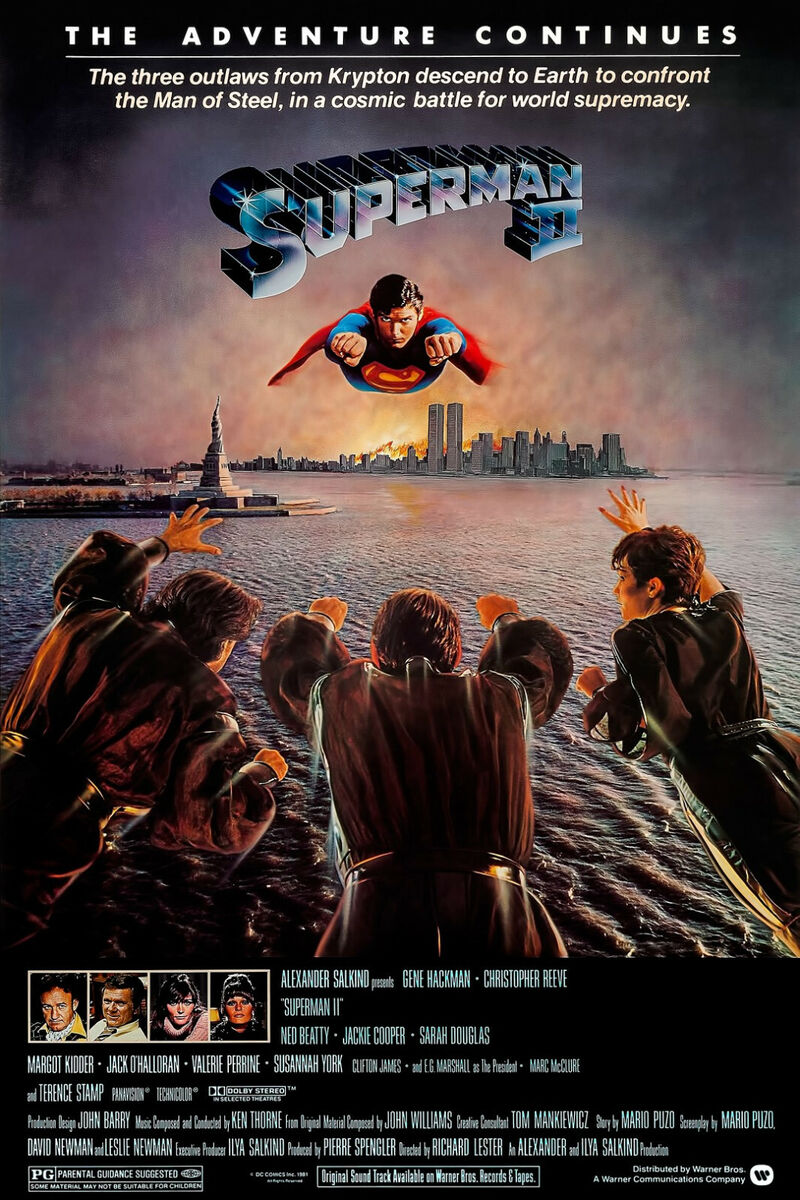
Superman II (1980)

By Richard Winters

My Rating: 8 out of 10

4-Word Review: Superman loses his powers.

Superman (Christopher Reeve) flies to Paris in an attempt to save Lois Lane (Margot Kidder) who was assigned to go there to cover terrorists who’ve taken over the Eiffel Tower and threatening to detonate a hydrogen bomb unless their demands are met. Superman manages to take control of the bomb and lift it into outerspace where it goes off, but unbeknownst to him the explosion also releases Zod (Terrence Stamp), Ursa (Sarah Douglas) and Non (Jack O’Halloran) from their imprisonment inside the phantom zone. The three now fly towards earth planning to take it over with the superpowers they’ve been given from the sunlight. Meanwhile Clark falls in love with Lois and admits to her that he’s Superman. He takes her to the artic to see his Fortress of Solitude and it’s there that he listens to a past recording of his mother Lara (Susannah York) advising him that if he wishes to marry Lois that he will then have to enter a crystal chamber where he’ll then lose his powers, which he does. Now that Zod and his evil associates have taken over the country by invading the White House he becomes powerless to do anything about it as he desperately searches for a way to regain what he gave up.

The production had many behind-the-scenes upheaval including run-ins between director Richard Donner and the producers who insisted that he was going over budget. Initially it was deemed necessary to film both the first segment and the sequel at the same time, but due to money concerns they stopped filming part 2 with 75% of it already completed in order to finish the first part and get it out to theaters. During the pause the producers then fired Donner and replaced him with Richard Lester. Lester was known more for his zany comedies and had a different directorial style than Donner. His approach was to insert campiness into the story and move it away from the dark elements. This caused several scenes to be refilmed some of which without the original cast including Hackman who refused to come back to do reshoots causing a few of his scenes to be dubbed while Brando had sued the producers for his share of the gross profits causing all of his scenes to be taken out completely and replaced mostly with York who ended up speaking the lines that he would’ve and for the most part does a far better job of it.

While the Donner version was released onto DVD in 2006 and is a bit different this review will stick with the one that was shown in the theaters and I felt is quite well done. Unlike with part 1 this one gets right to the action without the stagy back story from the first, which I found boring. The showdown between Superman and the evil three done on the streets of Metropolis as well as the massive destruction that the villains cause the small redneck town of East Houston are very exciting with great special effects that should please anyone. The comedy bits that Lester inserted I didn’t feel went that over-the-top and in some ways were helpful as it released some of the tension as these were some really nasty bad guys, who caused massive destruction, so inserting a campy chuckle here and there I didn’t feel was that out of order.

The script doesn’t have as many plot holes like in the first one. The only major issue to quibble about is when Superman goes into the chamber that sucks away his powers. Why though is it necessary that he should have to give up his powers just because he wants to get married is a whole different discussion that’s worth questioning, but I get that there needed to be a dramatic conflict, so we’ll roll with it. However, it’s never explained how Clark and Lois get themselves out of the artic and back to civilization as they ‘flew’ into the Fortress using his flight powers, but once he was made mortal, they couldn’t rely on that on the way out and without any other mode of transportation I wasn’t sure how they were able to travel and nothing gets shown, but should’ve.

Spoiler Alert!

His long trek back to the Fortress in an attempt to retrieve the powers is equally problematic as he is shown doing it completely on foot, which could take many weeks, or longer to do. He’s also shown wearing nothing more than a light jacket while he does it without any head covering, which now that he’s human, wouldn’t be enough to shield him from the brutal elements and frigid cold and he most likely would’ve died before he got there from either frost bite, or pneumonia. How he’s able to get the powers back aren’t sufficiently explained either. Supposedly it’s because of a green crystal that Lois dropped and is still there when he returns, but if the control module was already destroyed then how would this get it to work again?

End of Spoiler Alert!

The acting is again what really makes it fun. Hackman is once more excellent as Luthor as here he plays it both ways as the ‘middleman’ between Zod and Superman where one minute he’s arrogant and confident and then the next he’s nervous and pleading. It’s a shame though that Perrine and Beatty, his cohorts in crime, aren’t in it as much as I felt the three together had a great chemistry. Gotta love Kidder as a brash Lois who manually squeezes oranges for Vitamin C as she’s become a self-described ‘health nut’ all the while a cigarette dangles from her mouth. Stamp is really good too as the main villain and his intense performance is what keeps the tension going, which again is why the comedy bits aren’t a problem here, though in Part III this does become a major issue, which will be discussed in the next review.

My Rating: 8 out of 10

Released: December 4, 1980

Runtime: 2 Hour 7 Minutes

Rated PG

Directors: Richard Donner, Richard Lester

Studio: Warner Brothers

Available: DVD, Blu-ray, Amazon Video, YouTube

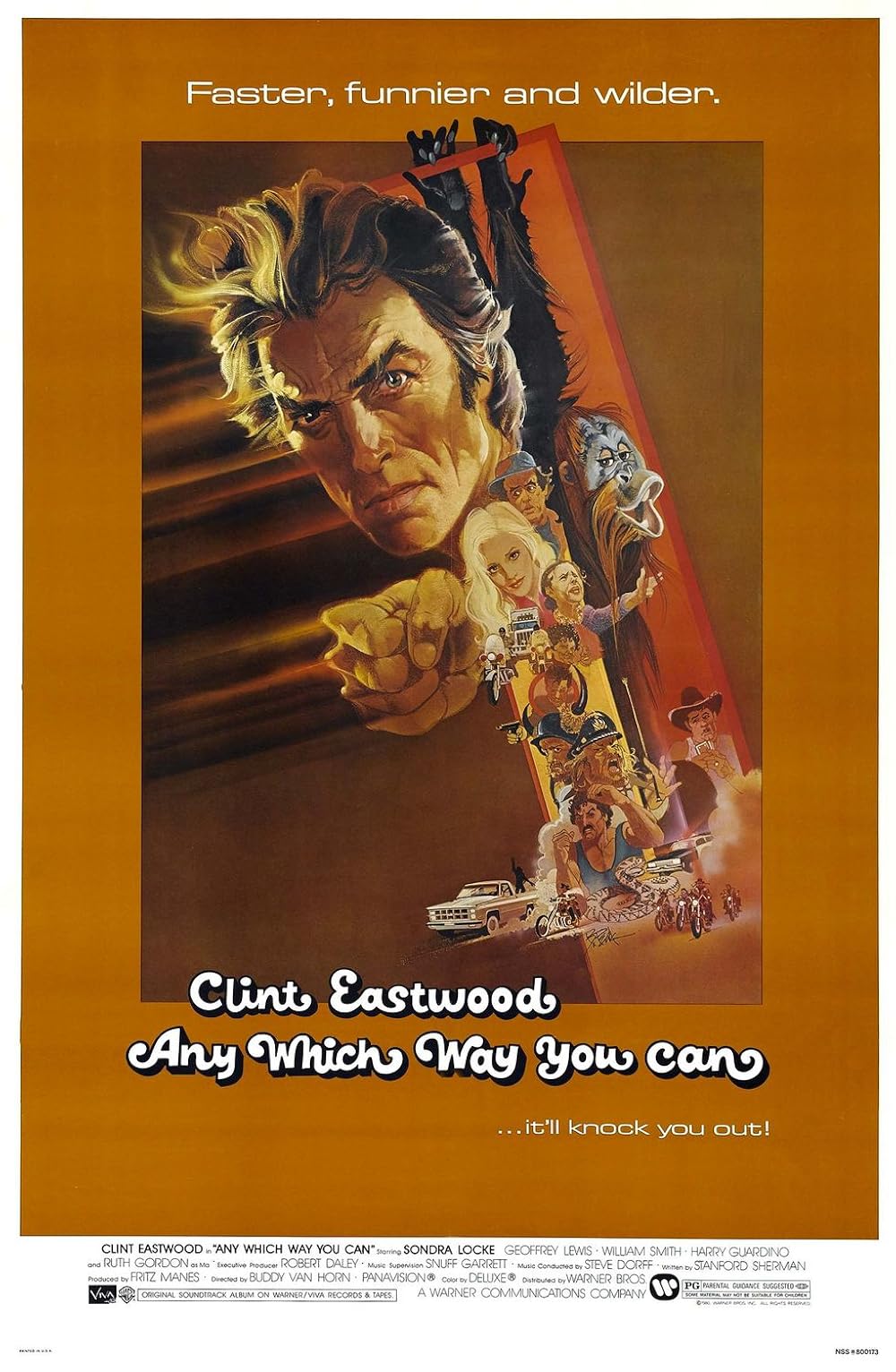
Any Which Way You Can (1980)

By Richard Winters

My Rating: 7 out of 10

4-Word Review: Betting on a fight.

Philo (Clint Eastwood) is still working as a trucker, still travels around with his pet orangutan Clyde, and still lives at home with his mother (Ruth Gordon) while getting involved in some bare-knuckle fights on the side to earn some extra money. He also continues to be harassed by the Black Widow biker gang who constantly hound him to even a past score. Things begin to change a bit when he meets back up with Lynn (Sondra Locke) who apologizes for her behavior from before and wants to rekindle their romance. Philo resists at first, but eventually the two get back together and she even moves-in with him in a spare room, but pressure mounts when fight handicapper Jack Beckman (Harry Guardino) comes-up with the idea of pairing Philo with Jack Wilson (William Smith), whose fighting skills mixes both martial arts and boxing. Jack figures it would be a match that would generate much betting interest and uses his men and money to convince Philo to take part in it. While Philo does initially agree he eventually backs out due to pressure from Lynn as she feels it’s too dangerous, but Jack, who has Mafia money riding on the fight, won’t take no for an answer and kidnaps Lynn in an effort to get Philo to reconsider. 

This is one of those sequels that’s a vast improvement over the first and much of the credit goes to Stanford Sherman, who wrote over 18 episodes for the 60’s ‘Batman’ TV-show and shows a good knack for balancing campy humor with interesting action. He’s also able to tie-in everything that goes on, so it doesn’t come off like a disconnected mess like with the first installment that had characters and situations coming-out of nowhere that wasn’t cohesive. Here each character has a purpose and everything that happens has a reason and connects with the main theme making for a much slicker production even when some of it gets silly.

Much more attention goes to the ape here though it’s not the same one as in the first film. That one was named Manis who was deemed to have grown too big for the part, so he got replaced by Buddha who has some amusing segments with his best moments coming when he tears up some cars, including one being driven by a bad guy, played by Michael Cavanaugh, as he’s trying to get away and another scene where he wears a dress and then ‘flashes’ an amorous hotel owner. However, in a book by Jane Goodall entitled ‘Visions of Caliban’ it was asserted that Buddha was badly beaten by his owner during the production after he stole some doughnuts on the set and was eventually clubbed to death forcing them to bring in a third ape named C.J. to do the publicity tour for the movie after filming had wrapped. 

Like in the first one the movie also features a lot of bare-knuckle brawls though these aren’t quite as interesting since Clint wins every one of them, so there’s never any tension. To keep it realistic, and give it better balance, they should’ve had him lose one, possible in humiliating style, and the rest of the movie could’ve been having him trying to defend his title and the audience would’ve been more emotionally invested in seeing him do it.  Would’ve been nice too had they not implemented that annoying punch sound effect that to me puts the fight at a cartoon level and I wished more movies from the period did it like The Whole Shootin’ Matchwhich didn’t feel the need to have that effect put in and thus actually made the fighting grittier and more intense in the process. 

While the film is way too long, there’s no reason for a runtime of 2-hours with such a slight and goofy plot, which should’ve have not been more than 85-minutes. However, it saves itself with some genuinely inspired moments including when real-life couple Logan and Anne Ramsey, who play a traveling husband and wife who stay in the hotel room next to the two apes whose noisy love making turn them on as does Clint and Sondra in adjacent room while Ruth and the elderly hotel clerk, played by Peter Hobbs, also make it in the motel office, I found to be quite amusing and almost worth the price of admission. The climactic bout between Clint and Smith and the way it galvanizes people from all over to witness it and bet money on it, including the Black Widow biker gang, who survive a ‘taring’ earlier, is good fun making it worth checking out on a slow night. 

My Rating: 7 out of 10

Released: December 17, 1980

Runtime: 1 Hour 56 Minutes

Rated PG

Director: Buddy Van Horn

Studio: Warner Brothers

Available: DVD, Blu-ray, Amazon Video, YouTube

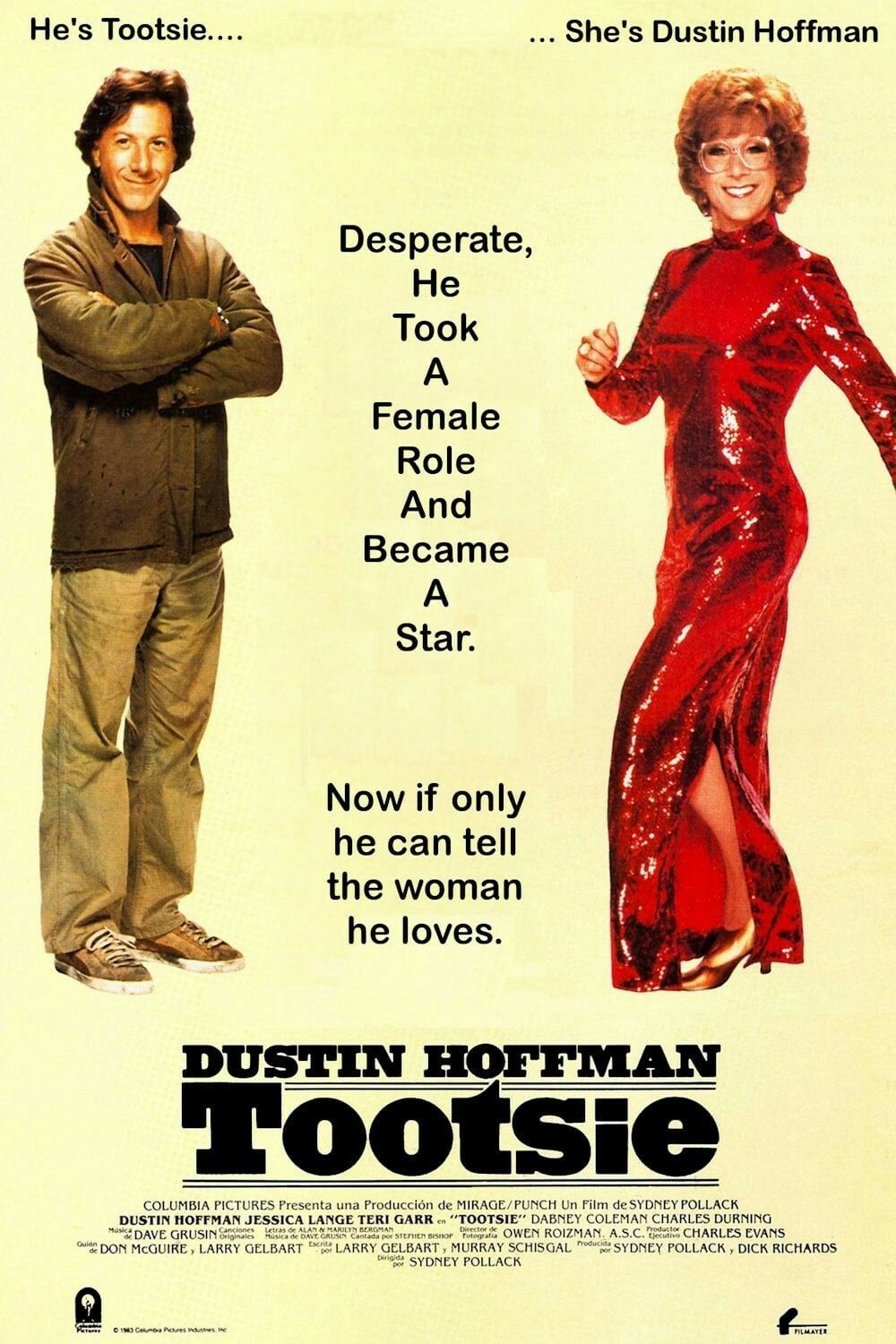
Tootsie (1982)

By Richard Winters

My Rating: 7 out of 10

4-Word Review: Pretending to be female.

Michael (Dustin Hoffman) is a talented actor but having difficulty finding employment due to his demanding nature and inability to get along with directors. His friend Sandy (Teri Garr) is auditioning for a part in a soap opera, and he helps her prepare for the role and even takes her to the audition only to learn that she was rejected before given any chance to do a screentest. It’s at this same time that he learns his agent George (Sydney Pollack) hasn’t gotten him a chance to audition for another role because in his words ‘no one will work with him’. Michael then decides to disguise himself as a woman named Dorothy Michaels in an effort to get the role that Sandy was turned down for so as to raise money to produce a play that will star Sandy. While he does get the part, he also becomes a big star with everyone believing that Dorothy really is a woman, which cause many complications in both his personal and professional life making him feel like he wants to end the charade and go back to his normal identity, but not quite sure how to do it. 

The genesis for the story began all the way back in 1970 and was based on an off-Broadway play by Don McGuire titled ‘Would I Lie to You?’ about an out of work stage actor who dresses as a woman to get a big part. Director Dick Richards adapted the plot into a screenplay, and it got shopped around for many years, but to no avail. Then in 1980 cross-dressing actor Christopher Morley played the role of a woman named Sally Armitage in the soap opera ‘General Hospital’. The part was played straight with the viewers under the impression that it really was a female, and Sally even gained the romantic interest from the character Luke, played by Anthony Geary, only to eventually reveal that she was really a man, which was a ratings hit and thus lead to renewed interest in this script. Eventually Dustin Hoffman got a hold of it and decided he wanted to take it on under the condition that was given full creative control and even hired his own people, Larry Gelbert and Murra Schisgal, to rewrite the story to his liking. 

Personally, my favorite parts of the film come at the beginning where we see Michael’s struggles as an actor as well as all of his thespian friends giving one a glimpse at just how hard the business is and how few people can make an actual living in it. Watching both him and his roommate Jeff, played by Bill Murray, working as waiters, but still talking about their acting ambitions while on that job was on-target. Garr gives a great performance as a struggling would-be actress who is full of insecurities and letdowns and a perfect composite of many young women who find the auditioning process grueling and thankless and for this reason, I felt she should’ve won the Oscar instead of Jessica Lange as her part as the love interest wasn’t as interesting, or honest. 

Murray is terrific as the roommate in an unusual part for him as his over-the-top clownish, snarky, frat boy persona is kept under wraps and instead he plays the part straight, but his sardonic responses to things are great. Director Pollack, who took on the role of Michael’s agent at the request of Hoffman and thus making it his first acting role in almost 20 years, is quite good too particularly with how his exasperated nature feeds off of Hoffman’s hyper one and their conversation inside his office is the movie’s highlight. Charles Durning has a few key moments as well playing Lange’s lovesick father who begins to fall for Dorothy though any man that would give a woman an engagement ring before they’d even been out on a single date has to be a bit loopy.

Hoffman falls into the woman role easily and it would be hard to recognize him had the viewer not known about the disguise beforehand though I felt the way Dorothy walked and moved her hands and arms made her seem like Mrs. Butterworth the animated character from the maple syrup commercials. It’s also hard to imagine he wouldn’t have been found out a lot sooner especially since he collected a weekly paycheck from the company, which would’ve required him to give them his social security number, which in-turn would’ve exposed who he really was. Being on magazine covers where he supposedly does interviews as Dorothy should’ve been equally problematic as the reporters would’ve asked him (her) about her past like what other stuff did she act in, where was she from, and where did she graduate. Stuff that’s very much standard questions in any interview and when he (she) couldn’t come up with anything or made-up stuff that could easily be background checked would’ve then raised red flags and brought the ruse to a very quick halt.

Spoiler Alert!

Soap operas were no longer broadcast as live and hadn’t been since 1963, so that story angle doesn’t fly either. Yes, I realize the idea was that it was taped and only had to done live as an emergency when one of the tapes got destroyed, but in reality, the taping would’ve been done so far ahead (usually by several weeks) that even if a video did somehow get corrupted there still should’ve been plenty of time to refilm it before reaching the actual air date. 

The ending it a bit disappointing as well. Sure, it’s nice seeing Lange putting her arm around him as they walk down the sidewalk showing that the two had made up after his secret identity was exposed, but it doesn’t answer what happened to his career. He did this whole thing to help finance a play for Sandy, so what became of that? Also, were casting agents so impressed with the way he fooled everybody that they now were willing to hire him, or was he still blacklisted? These were all major motivations for why he did the ruse, so there should’ve been clarity to what became of it. 

My Rating: 7 out of 10

Released: December 17, 1982

Runtime: 1 Hour 56 Minutes

Rated PG

Director: Sydney Pollack

Studio: Columbia Pictures

Available: DVD, Blu-ray, Amazon Video, YouTube

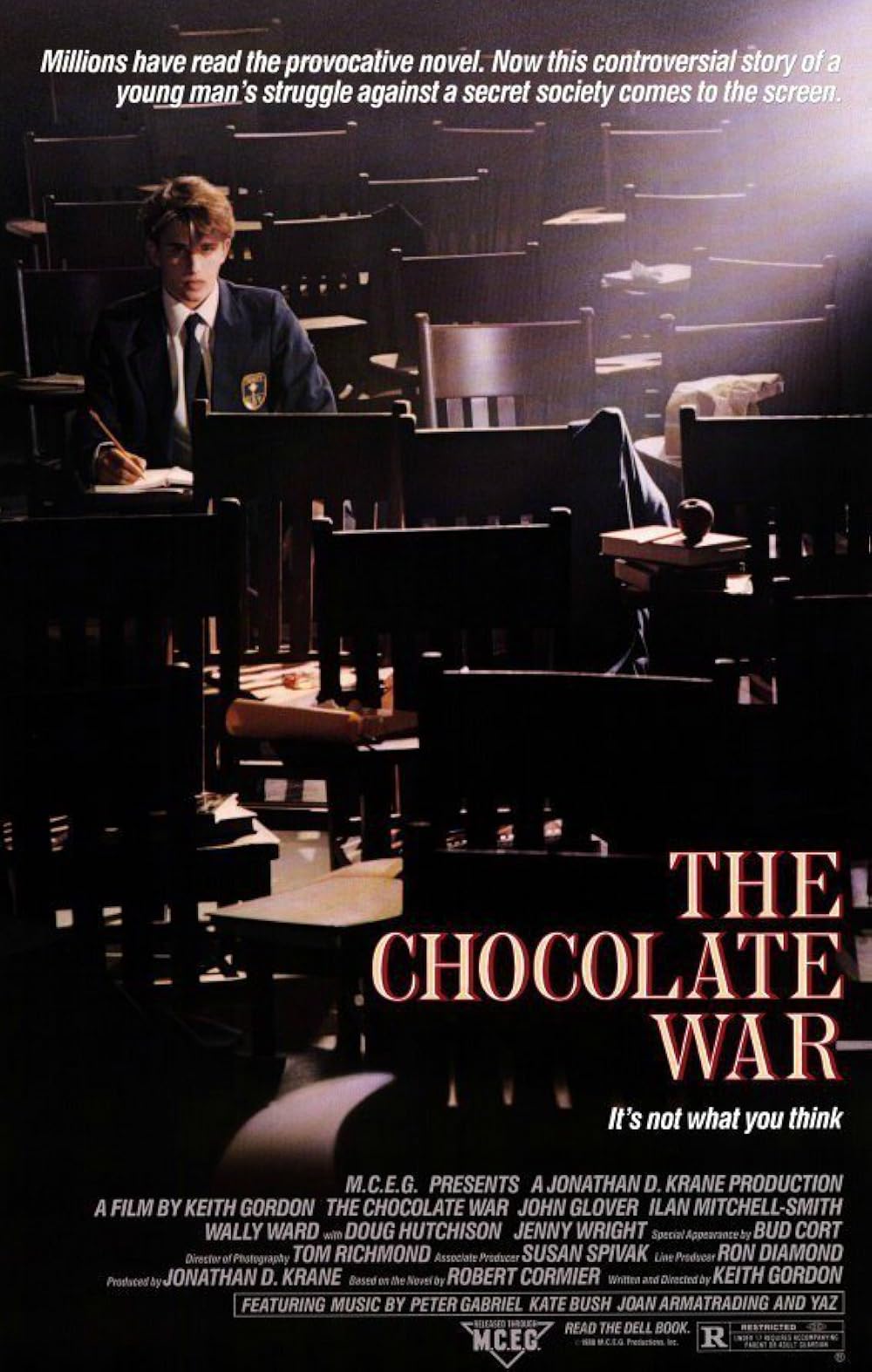
The Chocolate War (1988)

chocolate

By Richard Winters

My Rating: 7 out of 10

4-Word Review: Teen challenges the hierarchy.

Jerry (Ilan Mitchell-Smith) is the new student at an all-boys Catholic School that finds himself insnared into a controversy that wasn’t of his making. Brother Leon (John Glover), the school’s headmaster, promotes a program in which all the students must sell a certain allotment of chocolates in order to bring in much needed revenue for the school. While it’s technically voluntary the students are strongly pressured to take part in it and all of them do except for Jerry who for ten days refuses to get involved. This it turns out was the result of a hazing ritual brought on by a secret fraternity of students known as The Vigils. The idea was for Jerry to prove himself as being mentally strong enough to join the group by standing up to the intimidating Leon. Leon though becomes aware of what’s going on and since he’s in close contact with Archie (Wally Langham), the Vigil’s leader, he forgives the action convinced that once the 10-days are up Jerry will conform like all the others and take part in the sales drive. However, to everyone’s shock this doesn’t happen. Instead, Jerry continues to rebel, and his nonconformity has an infectious quality causing other students to take part, which challenges the strength of the school’s hierarchy to keep everyone in line. 

The film is based on the 1974 novel of the same name by Robert Cormier, which many critics have deemed one of the best young adult novels every written, but also one that routinely shows up as being on the top 10 list of banned or challenged books in high school libraries. It marks the directorial debut of Keith Gordon, who up until this time was better known for his acting particularly his starring role in the horror classic Christine. As a director I think he does a splendid job. I loved the eclectic camera angles, the zooms and hand-held shots. The soundtrack is distinctive featuring songs by artists who allowed their music to be used at a significantly lower price due to the movie’s low budget. The on-location shooting done at an abandoned seminary in Kenmore, Washington is perfect with the gray and dreary Northwest late autumn landscape perfectly reflecting the grim characters and situation. 

The acting is impeccable especially Glover who creates a three-dimensional villain who’s bullying at times, but at other points nervous and insecure. Mitchell-Smith, whose teen heart throb appearance belies is high-pitched voice, which I’ve never cared for and the reason I believe his acting career didn’t last, is quite good mainly because he isn’t forced to say much and instead relies on his reactions to what goes on around him, which in that element he excels. Langham is the perfect composite of the preppie bully particularly with that hairstyle that has ‘attitude’ written all over it, but his best moment is when he picks at a pimple on his arm after he gets off the phone with someone. I had noticed it during his conversation and was almost stunned when he picked at it. So many other teen movies show adolescents with unblemished skin, with maybe only a few geeky kids that have acne, but here one of the ‘cool’ kids was shown with it, which coupled with him actually trying to squeeze, which teens in reality will do, was genuinely groundbreaking and not something I’ve ever seen in any movie before or since. 

While there’s many memorable moments there’s a few loopholes as well. The fact that the students didn’t have any locks on their lockers, and thus allowing the Vigils to put trash into Jerry’s locker, didn’t seem valid as virtually every high school I’ve been in, past or present, does. The running segment dealing with Jerry and his father receiving harassing anonymous calls is quite dated due to now having caller ID, but even then, they could’ve still called the authorities to have their phone line tapped and thus the calls would’ve been traced, which is something you’d think they’d ultimately would do as it continued to occur. It’s also unclear how the students are able to sell the boxes of chocolates and achieve such a high quota. The film intimates they’re using unscrupulous methods, but not explicit enough as to the exact method. 

Spoiler Alert!

The film’s most controversial moment, and one that may have led to it doing poorly at the box office, is the way it changes the original ending. In the book Jerry gets defeated by Archie in the climactic boxing match, but in the movie, Jerry wins, and Archie is subsequently replaced as The Vigil’s leader. Personally, both endings have interesting nuances, so I can’t say I favor one over the other though the movie version does bring out some intriguing elements. However, fans of the novel tend to hate it feeling it was an attempt by Hollywood to give the story a more ‘uplifting’ conclusion. 

My Rating: 7 out of 10

Released: November 18, 1988

Runtime: 1 Hour 40 Minutes

Rated R

Director: Keith Gordon

Studio: MCEG

Available: DVD, Blu-ray, PlutoTV, Tubi

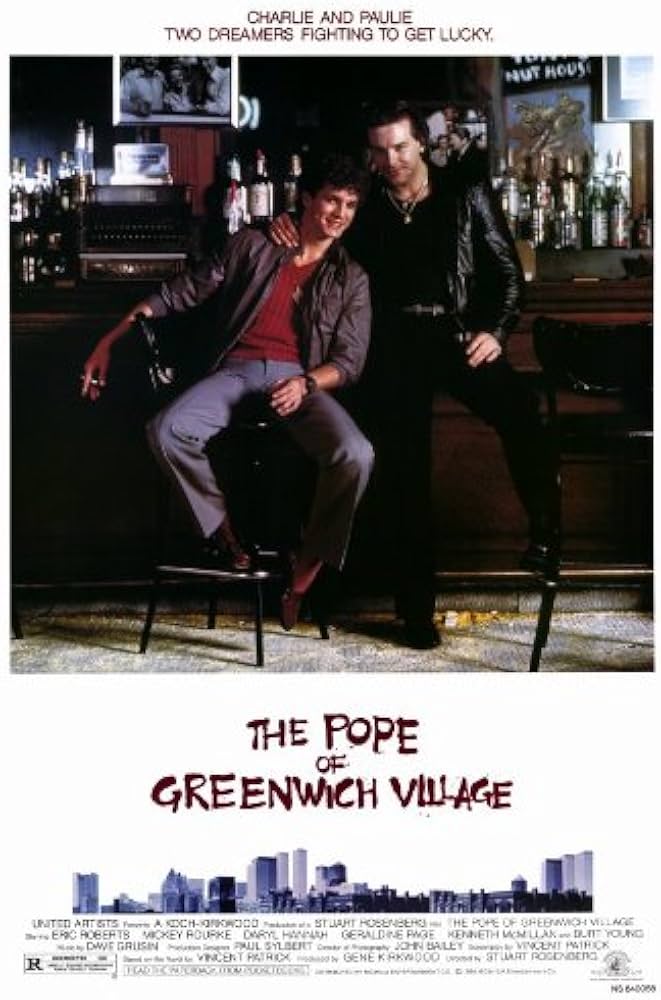
The Pope of Greenwich Village (1984)

pope

By Richard Winters

My Rating: 7 out of 10

4-Word Review: Cousins turn to crime.

Charlie (Mickey Rourke) and Paulie (Eric Roberts) are cousins working at a restaurant who get themselves fired when Paulie is caught skimming checks. Since Charlie’s girlfriend Diane (Daryl Hannah) has a baby on the way he must act fast to bring in some money. Paulie convinces him of a ‘great’ opportunity, which is to hire a former safecracker, now working as a clock repairman, Barney (Kenneth McMillan) to break-open a safe inside the building of a large company that reportedly has a large amount of money inside it. Charlie is cautious as he doesn’t completely trust Paulie whom he finds immature and unseasoned, but he’s so desperate that he reluctantly agrees. Things go smoothly at first, as they’re able to break into the building easily, but the unexpected arrival of undercover cop Walter (Jack Kehoe) soon sends their plans awry. When Walter dies during the melee they’re now on the hook for his death as well as in the bad graces of mob boss Eddie (Burt Young) who’s safe it was that they tried to rob. 

The film is based off of the 1979 novel of the same name by Vincent Patrick who also penned the screenplay. It does an excellent job of creating a vivid feel of Greenwich Village where it was shot on-location and the interactions of the characters seem overall authentic. The only real issue is the way it hinges of extreme Italian American stereotypes where it seems like anyone from that background must be involved in crime and if any other group was portrayed that way it would be deemed problematic if not downright controversial. The cliches are so strong that had it been heightened just a small degree it could’ve been deemed as parody, or even satire and in fact IMDb does list it as being a ‘comedy’ though I really don’t think that’s the case. I believe it’s meant to be a drama, but either way, for the sake of balance, it would’ve helped had there been some Italians even just one who didn’t fall into the tired caricatures. 

The acting is the crowning achievement. Roberts is superb and I really found it hard to believe he didn’t become a star from this. While he’s always been a great character actor I think he should’ve been given more and I do realize he’s still busy in the business and has been consistently, but I don’t think the quality of the parts has always been there and most filmgoers are probably more familiar with his sister Julia, which is a shame. I was completely blow away by him here and genuinely surprised why the Oscar didn’t fall into his lap.

Rourke is excellent too, but more because he wisely underplays his role and allows Roberts to carry all the emotional energy. Had they both been competing for it it would’ve failed, but their different approaches help create a nice contrast and sometimes it’s the best actors who don’t force it and for the most part that’s what Rourke does here. Of course, he too has his moments like when they go to the racetrack, and he bumps into a guy and instead saying ‘excuse me’ like a normal person he instead says, ‘out of my way asshole’. Him beating up on his refrigerator when Diane leaves him has a memorable quality to it though I would’ve thought the fridge would’ve been more damaged and he should’ve at the very least injured his hand, which strangely doesn’t occur despite him punching at it repeatedly.  

On the female end most accolades goes to Geraldine Page who got nominated for the supporting Oscar despite having only 8-minutes of screentime. She gives a powerful performance for her limited presence, but the idea that she could stymie police efforts to search her deceased son’s room by giving veiled threats that she’ll make them look bad in the media I didn’t totally buy. If cops want something bad enough, they’ll get it with the possible exception of money exchanging hands, which in this case didn’t happen. Hannah as the girlfriend has almost the same screentime, maybe a little more, and hits the bullseye as an idealistic young woman who believes she can somehow get her boyfriend to change only to learn the ultimate harsh lesson that it doesn’t work that way. 

Spoiler Alert!

The ending I felt was a letdown. I was actually intrigued with Charlie finding the tape from the deceased cop that implicated Eddie and seeing how he could use that to stay out of trouble for being a part of the robbery. Having Paulie then swoop in by putting lye into Eddie’s drink and poisoning him seemed too easy. Eddie had just gotten done having his men cut-off Paulie’s thumb, so he should expect Paulie would be looking for revenge and not naive enough to have him make his drinks, or if he does at least have one of his henchmen taste it first. You have to wonder how Eddie was able to climb up the crime ladder if he was that stupid and thus the climax really isn’t that clever, or surprising as the camera focuses up-close on the coffee cup making it too evident that something is going to happen. A letdown for a movie that had been relatively smart up until then.  

My Rating: 7 out of 10

Released: June 22, 1984

Runtime: 2 Hours

Rated R

Director: Stuart Rosenberg

Studio: MGM/UA

Available: DVD, Blu-ray, Amazon Video, YouTube, Tubi, PlutoTV

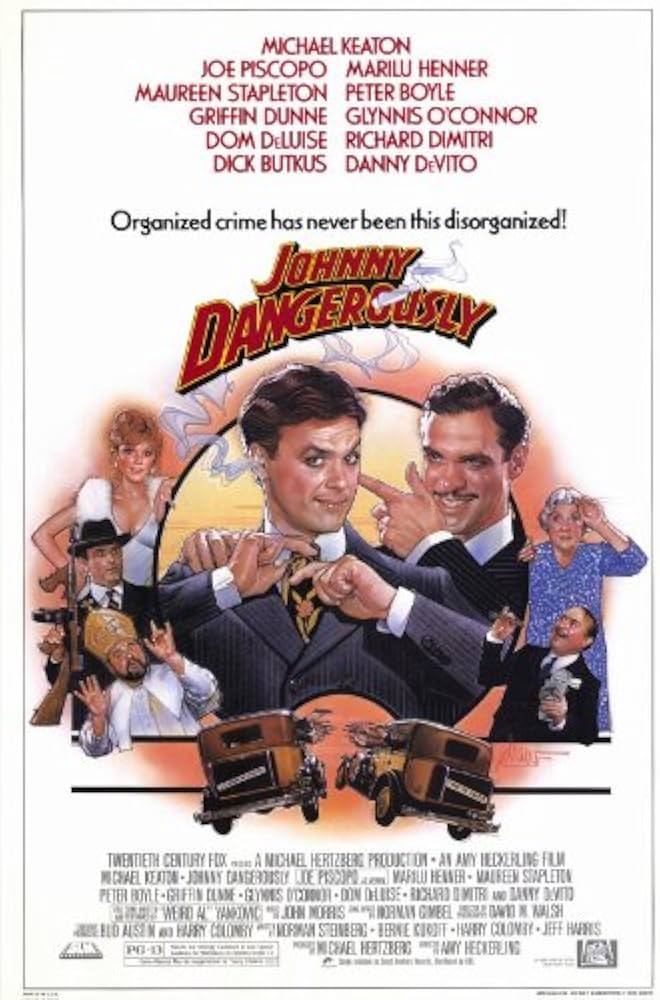
Johnny Dangerously (1984)

johnnydangerously

By Richard Winters

My Rating: 3 out of 10

4-Word Review: From newsboy to gangster.

Young Johnny (Byron Thames) must find some income to help his mother (Maureen Stapleton) with her medical expenses. He catches the eye of Jocko (Peter Boyle) a notorious gangster who offers him odd crime jobs to do part-time and Johnny takes him up on it but feels guilty. The years pass and a grown-up Johnny (Micheal Keaton) finds that his mother’s health hasn’t improved, and the bills continue, so he decides to get into the gangster business full-time and even takes over as head of the gang once run by Jocko. The money is so good that it not only covers everything his mother could need but also helps his younger brother Tommy (Griffin Dunne) get through law school. However, once Tommy graduates, he gets a job at the D.A. office where becomes committed to stamp out corruption and put all criminals behind bars even if it would mean his older brother.

The pace and structure are modeled after the more successful Airplane movies in which the light plot works as a platform for a barrage of rapid-fire jokes and pratfalls mostly satirizing gangster movies from the ’30’s. While Airplane came off as fresh and funny as it poked fun of all the disaster movies from the ’70’s this thing seems old and tired before it’s barely even begun. The biggest issue is that gangsters had already been parodied for many years both in TV and on the big screen. By the time this movie came-out most of the jokes had already been used many times over and the comedy fails to create anything inventive. The characters are nothing more than walking-talking cliches that mouth banal one-liners and not much else. Almost all the jokes fall flat, nothing sticks and has no edge to it. It’s something that could’ve easily been made for TV and it should be no surprise that the writers were two men who helped create the ‘Different Strokes’ TV-show.

What surprised me most is that it wasn’t even dirty, or at least not that much. It’s directed by Amy Heckerling who had just gotten done doing Fast Times at Ridgemont High, which seemed to have bawdiness and sexual innuendoes in almost every frame and yet here there’s surprisingly very little. Yes, there’s an animated segment dealing with victims of enlarge scrotums, which doesn’t have much to do with the story, but is kind of amusing, but that’s about it. Some more sex and even nudity could’ve helped enliven things, or at the very least given something more to laugh it. The malapropisms by the gangster character Moronie, played by Richard Dimitri, where he uses a lot of colorful language that sounds like curse words, but really aren’t I didn’t find to be clever at all. Today words like fuck and fucking are used liberally in social media and even casual daily conversations. I even hear young neighborhood kids saying it, so for a movie to think that it’s ‘pushing the envelope’ by having someone use phrases the sound like the F-word but aren’t makes the movie seem quite dated.

I didn’t care for Keaton. He comes-off like some smart ass who’s phoning in his performance with a pasted-on smile that never leaves his face. It’s like he isn’t even acting or trying to create any type of character. He just casually walks on, makes a semi-amusing remark, and then walks-off. Thames who played the younger version of Johnny was better and the movie could’ve been more engaging had Johnny remained a kid the whole way and then watching an innocent teen take down the gangsters and even ultimately become their leader would’ve had some original spin that’s otherwise lacking.

Joe Piscopo, who plays Johnny’s criminal rival, is quite good and as opposed to Keaton, seems to be making some sort of effort to play a role and I thought he should’ve been in it more, or even just given the reins and taken over completely. The film’s promotional poster makes it seem like the two will have equal screentime, but that’s shockingly not the case and Joe’s presence amounts to a few walk-ons, which is a shame.

The rest of the supporting cast are equally wasted. Marilu Henner sings a nice dance number but otherwise doesn’t do or say anything else that’s interesting. Stapleton looks way too old for the role of a mother and would be more suited as a grandmother. At one point she even refers to herself as being ’29’ despite having gray hair. Don’t know if this was meant to be a ‘funny joke’, but it doesn’t work and is dumb like most everything else. Dunne is miscast as well. He’s supposed to be this young idealist but appears much more like someone already in their 30’s and would’ve been more authentic had they gotten a college aged student with a wide-eyed, clean-cut image versus Dunne who’s always had more of a weary and beaten down impression. Dom Deluise though is the most out-of-place in a part that amounts to being a cameo as the Pope who appears inexplicably on a city sidewalk for some strange reason that misses-the-mark completely in a gag that like everything else gets thrown-in with little thought, or care.

I did do enjoy Danny DeVito who amazes me how even when given small roles still manage to steal the proceedings especially with his impromptu hosting of a game show send-up. I’ll even give a few props to the ‘pass the secret message’ segment done inside a jail where one prisoner whispers something into another prisoner’s ear, who then passes it along to yet another guy and so forth down the line until it gets to the last one where the initial message has now become completely distorted, which got me to laugh, but honestly that was the only time during the whole viewing that I did.

My Rating: 3 out of 10

Released: December 21, 1984

Runtime: 1 Hour 30 Minutes

Rated PG-13

Director: Amy Heckerling

Studio: 20th Century Fox

Available: DVD

A Private Function (1984)

privatefunction

By Richard Winters

My Rating: 6 out of 10

4-Word Review: Couple hides a pig.

The year is 1947 and even though the war has been over for 2 years there’s still food rationing going on in this small England town. Gilbert (Michael Palin) works as a podiatrist and travels to residential homes where he cuts the toenails of the women who live there. During some of his visits he comes upon families who are hiding meat in their homes, and they must rush to cover-up any evidence of it when the local food inspector (John Normington) comes around to investigate. One such home has been illegally raising a pig in hopes to use it for a private party to celebrate the upcoming Royal Wedding between Princess Elizabeth and Prince Philip. Gilbert tells his wife Joyce (Maggie Smith) about it, and she convinces him to steal the pig, so that they can sell it off to the bacon black market but trying to hide a pig from both their neighbors as well as Joyce’s noisy elderly mother (Liz Smith) let alone being able to kill it proves quite challenging.

The film is a perfect mix of droll English humor and quirky moments. It starts out with a very original idea and manages to add one amusing moment, or sly comment, after the other becoming one of the better foreign comedies of the year where you can pick-up on funny little things that you might’ve missed on the first viewing, each time you watch it. Palin is especially good as a timid man who finds himself in the middle of chaos that he didn’t want and his unique profession along with the giant plastic foot that he orders to help represent his business are all on-target as are his engagingly consternated facial expressions.

Initially I thought Smith, a two-time Academy Award winner, was wasted here as she isn’t seen much during the first act and pushed mainly to the background making it seem almost like a token role that doesn’t have much pizazz, but she comes on strong by the end by having an interesting arch where she is just a passive, doting wife at first, but proves to be quite controlling, conniving and even demanding by the end. Liz Smith is equally engaging as the sometimes-confused aging mother ‘she’s 74’ whose dialogue is limited, but the few lines that she does say are doozies.

Spoiler Alert!

The pig though becomes the main star even though behind-the-scenes it made things quite difficult to film. This led to one 12-year-old boy getting his ‘big break’ into show business. When he heard that they were going to be making a movie in his area he proudly proclaimed that he’d be ‘willing to do anything’ in order to ‘get into the movies’ so the producer handed him a pail and told him to follow the pig around and collect its droppings every time it defecated and for this he got his name proudly billed during the final credits as ‘the bucket boy’.

As pigs go this one struck me as being quite small. Apparently, this was intentional as the filmmakers were advised by animal experts to choose a 6-month-old female pig as it was deemed, they’d be easier to control and less unpredictable, but visually she looked too scrawny and certainly not the type of pig to be used as the centerpiece for a giant feast such as the one that the townspeople were excitedly planning. It’s also a bit of a downer, even depressing, when the animal is eventually killed and served up on a platter. There’s a lot of close calls where the animal evades death and it makes it seem almost like the human captors were ultimately too afraid to do it, but when it does finally occur it hurts the film’s levity and makes it feel like murder when it does die and thus sucks all of the comedy that came before it right out.

The climactic party isn’t eventful either making the story go out with a whimper. It had been relatively lively up to then with all sorts of subtle twists and goofy turns only to end things on a dry note. There needed to be some sort of ultimate confrontation between the couple and the former owners of the pig, so things could’ve ended with more of a bang as it’s not quite able to hold-up feeling almost like it ran out of ideas with an uninspired conclusion.

My Rating: 6 out of 10

Released: November 9, 1984

Runtime: 1 Hour 32 Minutes

Rated R

Director: Malcolm Mowbray

Studio: HandMade Films

Available: DVD

Perfect (1985)

perfect3

By Richard Winters

My Rating: 2 out of 10

4-Word Review: Reporter investigates aerobics craze.

Adam (John Travolta) is a reporter working for Rolling Stone magazine who gets sent on assignment to Los Angeles. While there he becomes intrigued with the health fitness craze and believes the workout clubs are becoming like the singles bars of the 80’s. He asks his editor Mark (Jann Wenner) permission to write a secondary story focusing on this new phenomenon and he agrees. Once he begins attending the club he becomes infatuated with Jessie (Jamie Lee Curtis), one of the instructors. He asks her for an interview, but she refuses based on a past experience she had with another journalist, but Adam continues to pressure her. Eventually the two begin dating only for Jessie’s initial fears to ultimately get exposed when she reads the story he’s written about the club, before it gets sent to the press, and realizes it’s a negative take on the people in it, many of whom are her friends, which leads to a serious strain on their relationship. 

The film is loosely based on the real-life experiences of Aaron Latham who worked as a reporter for Rolling Stone during the late 70’s. He had already written the screenplay for Urban Cowboywhich also starred Travolta and was also directed by James Bridges, so this reteaming was expected to be a huge hit, but instead it lost over $8 million at the box office despite initially doing well on its opening weekend. A lot of the problem is that journalists aren’t considered likable people and most of the American public by and large despise them. The fact that this one behaves exactly the way you’d expect, being more than willing to exploit their subject, particularly with the way he treats the Marilu Henner and Laraine Newman characters, in order to get a juicy spin on a story, just makes him all the more despicable. 

His character is quite blah as well. We never learn why he wanted to get into journalism and if some backstory had been given, and not just starting out with him working in the obituary section and trying to move his way up, then he might’ve had more depth. It’s confusing too why such a good-looking, jet-setting guy, wouldn’t have a girlfriend. Maybe if he’d been through a rough break-up and thus wanted to avoid it that might’ve been understandable but should’ve been explained. Even just having some casual dates would’ve made sense but having him just all alone with no reason only adds to make the character even more transparent. 

Curtis as an actress is excellent and the movie is worth sitting through solely because of her and she’s looking really hot here too. However, her character’s responses to things seemed a bit off. She makes it quite clear upfront that she’s not interested in an interview, but Adam doesn’t take no for answer and proceeds to continue to hound her, which should make her hate him even more, but for some reason it doesn’t. Yes, he does help get her car started when her battery dies, so as a thank you she might’ve been willing to do a simple interview, but instead her repayment is to go to bed with him while still refusing to do any interview, even though I felt realistically it should’ve worked the other way. 

The concept itself isn’t intriguing. I lived through the 80’s and really didn’t care why people got into the aerobics thing. Revealing that some of those that did was because they were lonely and looking to meet someone to hook-up, isn’t exactly groundbreaking. The entire supporting cast is incredibly dull including Jann Wenner, the original co-found of Rolling Stone magazine, who essentially plays himself as Adam’s boss, but his performance is lackluster, and a professional actor should’ve been given the role. 

Spoiler Alert!

My biggest gripe came at the end where Curtis keeps going back to Travolta even as he does all the things that irritates her about reporters like secretly recording their conversations while in a car. That alone should’ve gotten her to dump him, which she does for a while, but then she returns. One forgiveness is okay, everybody deserves a second chance, but then he does it again with the negative story. Granted having the article revealing that she had an affair with her coach years ago wasn’t his fault as his editors put that into the story later on, but she had no way of knowing that. From her perspective he betrayed her trust and therefore the relationship should’ve been permanently over. She didn’t care for reporters right from the beginning and all he did was affirm her confirmation bias. It would’ve been more believable had she instead liked journalists and maybe wanted to be one herself and therefore kept given him the benefit of the doubt, but the way it gets done her makes little sense. 

My Rating: 2 out of 10

Released: June 7, 1985

Runtime: 2 Hours

Rated R

Director: James Bridges

Studio: Columbia Pictures

Available: DVD, Amazon Video, YouTube
Barfly (1987)

barfly

By Richard Winters

My Rating: 6 out of 10

4-Word Review: Drunks at a bar.

Henry Chinaski (Mickey Rourke) is a bum who has very little money, lives in a small rundown apartment that’s more like a sleeping room, and spends most of his time getting drunk at a bar across the street called The Golden Horn. It’s here where he gets into arguments with Eddie (Frank Stallone) the bartender. During one of their confrontations the two go out back and have a fistfight behind the building, which Henry unceremoniously loses. Feeling embarrassed and dejected he goes on a crusade to ‘win his title’ back by finding food in order to regain his energy, but when he rips a sandwich out of another customer’s hand, since he doesn’t have money he must steal from others, he gets thrown out of the bar by Jim (J.C. Quinn) the bar owner. He then stumbles his way to another waterhole named Kenmore where he meets Wanda (Faye Dunaway) a fellow alcoholic. The two create a makeshift bond and end-up going back to her place, an apartment paid for by a married man who covers for her life necessities, as a kept woman, as long as she’s willing to put-out when he wants it. Just when Henry thinks he might be falling in-love she betrays him by have a tryst with Eddie. Feeling dejected Henry turns back to the bottle only to have Tully (Alice Krige) show-up at the doorstep. She’s a publisher offering him a check of $500 in compensation for some of the poems and short stories that he had submitted, which she found to be both gifted and profound. Henry though isn’t sure he can accept the money as he’s more comfortable being poor and not used to being liked, or a part of the upper class, which for decades he had found snotty. Then Wanda comes back into his life and when she finds out about Tully she makes a personal vendetta to ‘put her out’ as she feels rightly or wrongly that Henry is ‘hers’ and no other woman can have him.

The film is based loosely on the life of Charles Bukowski, who used the character of Henry Chinaski in five of his novels and was considered his alter-ego. It was produced by the notorious Cannon Group a production company that had a portfolio of a hodge-podge of movies some of them of a decent quality and others that were anything but. Although they had made a commitment to finance this one it almost didn’t get made as the studio was going through a period of financial distress and felt this one required too much money to fund, so they threatened to pull-out until director Barbet Shcroeder appeared at their office with a Black and Decker power saw warning that he would cut-off one his fingers to show the world that ‘Cannon was cutting-off a piece of him by pulling out of the project’, which was enough to get the execs to change their mind.

As a film it works mainly because it used authentic Los Angeles locations, many of which Bukowski frequented in real-life, as the setting. The dismal interiors really help create a vivid look making the viewer feel they’re as trapped in the skid row surroundings as the protagonist and with no discernable way to get out. The apartment sequences are especially engaging not only for the scene, that comes near the end, where Henry finally busts in on his noisy neighbors where he has a memorable confrontation, but also at the beginning when he accidentally goes into an apartment that isn’t his, but since it looks just as bleak as his sans for some decorative window curtains, he at first doesn’t even know it.

As a character study it’s revealing though it does hinge on how much tolerance the viewer will have towards someone whose decidedly self-destructive at every turn. Rourke plays the part in an over-the-top way particularly the weird style he walks almost like he’s trying to put a touch of camp to it and I don’t blame Bukowski, who stated in a later interview that Rourke was ‘too exaggerated and a bit of a show-off’ in the part, which Bukowski ultimately felt that he ‘didn’t get right’ though he later warmed-up to it and possibly other viewers may as well.

Dunaway seemed more problematic playing a woman on the skids was definitely not a part of her repertoire and she seems miscast. She almost makes-up for it by appearing topless during the bathroom scene and then getting into a climactic catfight with Krige at the end, but I didn’t understand why the woman would be wearing what appeared to me as female business attire as that was something her character was not and therefore she should’ve had something more ragged to wear even if it was just a simple jeans and T-shirt.

Spoiler Alert!

The film has many quirky moments including the two paramedics that come to visit Henry on a couple of occasions, which almost steals the movie and make this seems more like a surreal, dark comedy than a drama. The leisurely pace I liked and seems more suited for a European audience that isn’t so plot driven, but I would’ve liked seeing Henry working more at his craft. He’s only shown writing a couple of times, which is so brief that I really didn’t think he was that committed to it and almost like a novice writing words on notebook paper making it a complete surprise when a publisher eventually does show-up. You’d think if he hadn’t even bothered to type out what he had written most publishers would’ve thrown it away making the moments with the agent seem almost dream-like and more a fantasy than the intended reality.

I was a bit turned-off by the ending. I remember reading an article back in the 80’s that this movie was an example of a ‘downbeat ending’ that Hollywood studios were shying away from. During the 70’s sad endings had become the standard, but by the 80’s they tended to not register as well with the public and thus making upbeat conclusions became the norm. However, the article had specifically pointed out this movie as having an ending, which ‘wasn’t a happy one’, but I didn’t get that impression. I thought maybe it would have Henry getting knocked out by Eddie during their fight ‘rematch’, but the camera tracks out of the bar, so we never see the results of the confrontation and it’s all left open, so it’s neither sad nor happy. My only conclusion is that the article’s author felt this was a ‘sad’ ending because Henry went back to his old ways of drinking versus becoming a successful writer, but for some people success is a scary thing and falling into their familiar habits, as bleak and destructive as they may seem to others, offers a weird form of security, so I felt it ended on a high note because Henry was doing what was right for him and with the type of people he felt comfortable with. Being rich and famous would never have worked with his personality and therefore he was better off without it.

My Rating: 6 out of 10

Released: October 16, 1987

Runtime: 1 Hour 37 Minutes

Rated R

Director: Barbet Schroeder

Studio: The Cannon Group

Available: DVD, Blu-ray, Amazon Video