Category Archives: 70’s Movies

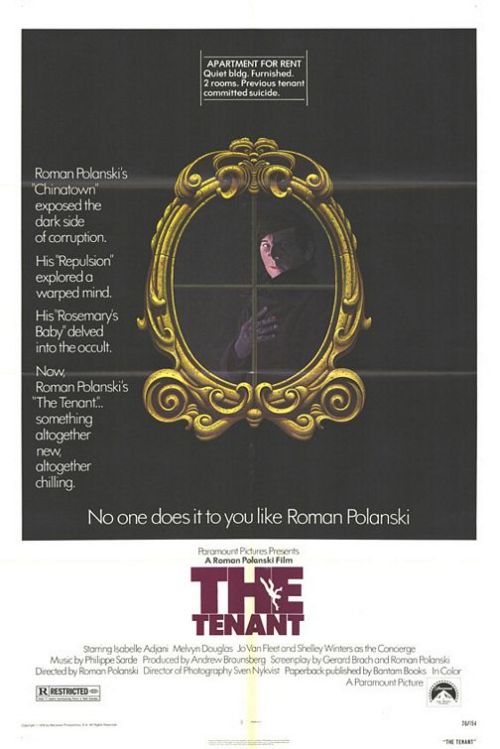
The Tenant (1976)

tenant 1

By Richard Winters

My Rating: 10 out of 10

4-Word Review: He loses his identity.

This intriguingly odd horror film may well be Roman Polanski’s best work and even better than Rosemary’s Baby as it manages to be scary in a unique way while also bringing to light many of the subtle ugliness of everyday life. Here Polanski plays a tenant who moves into an apartment were all the residents, and even the landlord (Melvyn Douglas), act slightly peculiar. The woman who lived in the apartment before him killed herself by jumping out the window and as he continues to live there he starts to feel a connection towards her while also getting the idea that somehow the other residents are in a conspiracy against him.

The film’s brilliance comes from the fact that the horror and tension is not based on any of the usual devices.  No ghosts, monsters, or psychos here. Instead the viewer gets sucked into the harsh realities of the modern urban world. The feelings of isolation, people who are cold and impersonal and apartments that are bleak and small as well as showing how these urban jungles swallow up our identities until we’re just another face-in-the- crowd.

This amazingly deep and penetrating study gets astutely underplayed with no action and little or any true scares. The tension comes through its psychological implications and the paranoia that only the Polanski character feels. Are these people really out to get him, or is it all just in his head? There are no definite answers, but theme and ideas are quite real. It’s a sort of twisted version of Rear Window and extension of Repulsion that may require a second viewing in order to completely appreciate.

Polanski scores on all levels as his performance is interesting and his ability as a director to make you feel the smallness and bleakness of the character’s apartment is also amazing. You are given a very real sense of the room’s dimensions without any inclination that it was done on a stage, or with the presence of a film crew. The eerie segments are subtle but successful with imagery that is both strange and lasting.

My Rating: 10 out of 10

Released: May 26, 1976

Runtime: 2Hours 5Minutes

Rated R

Director: Roman Polanski

Studio: Paramount

Available: DVD, Amazon Instant Video, YouTube
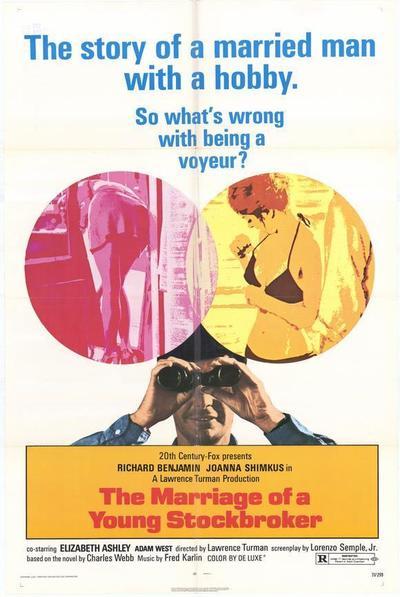
The Marriage of a Young Stockbroker (1971)

marriage of a young stockbroker

By Richard Winters

My Rating: 6 out of 10

4-Word Review: Husband is a voyeur.

William (Richard Benjamin) seems to be living the dream having both a stable job and a beautiful wife named Lisa (Joanna Shimkus), but underneath he’s bored and as a source of escape begins to get involved in voyeuristic activities. He spends hours at an adult theater and uses any opportunity he can to spy on scantily clad women through his binoculars. Eventually Lisa, in a fit of frustration over William’s behavior, walks out on him and moves in with her sister Nan (Elizabeth Ashley) and her husband Chester (Adam West). Nan is very controlling and makes every attempt to keep Lisa away from William even as William tries to reconcile. Although her marriage seems fine on the outside it is actually as troubled as William and Lisa’s, which comes to a head when both couples get involved in a group therapy session.

The film is based on the novel of the same name written by Charles Webb, who was also the author of The Graduate, which became a hit film that was produced by Lawrence Turman who directed this one. Clearly Turman was hoping for the same success and this one begins well. The opening bit showing William bored with his job is funny as is his trip to an adult theater and the many thoughts that go through his head as he watches a nudie flick. The cinematography by Lazlo Kovacs captures the California coastline in a lush style and the overall narrative takes a refreshingly open-minded approach towards sexual fetishes as well as the institution of marriage while also questioning society’s conventional understanding of both.

Benjamin is good playing almost the exact same type of character living the same type of detached existence as the one he did in The Steagle. In fact this film could easily be considered an extension to that one and both movies were released less than a month apart. This one though fares a bit better as Benjamin gives a more well-rounded performance. In fact this may be his best work second only to the one that he did in Diary of a Mad Housewife.

The beautiful Shimkus does equally well and I enjoyed the scenes with the two of them together. Ashley makes a strong impression as the meddling sister and has a few funny moments. West, who campaigned hard for the role in an attempt to shake his Batman image, seems a bit too transparent and there needed to be more of a backstory involving both his character and his marriage to Nan.

Unfortunately all of these good things get crushed by a script that doesn’t know what direction it wishes to take. The scene with Tiffany Bolling is just one issue as she plays this really beautiful woman who for some indiscriminate reason decides to invite William, who is a complete stranger to her, into her house for sex after spotting him walking down the sidewalk. Why such a gorgeous woman would invite a schmuck like Benjamin into her place on a sexual whim makes very little sense and seems too much like a male sexual fantasy that demanded much more of an explanation to be believable. I realize this scene was part of the story arc to show William’s dissatisfaction with having sex with women who were strangers and thus propel him to try and win Lisa back, but the same point could’ve been made in a more realistic way had he done it with a hooker that he met on the street instead.

The ending is the biggest letdown as it employs too much of a feel-good, happy curve that comes out of nowhere. The two main characters suddenly turn into frolicking, youthful lovebirds that do not in any way resemble the same people that we’ve been following for the first 90 minutes. It comes off like a cop-out that is jarring to the overall tone while undermining all of the other issues that the film had previously brought up.

My Rating: 6 out of 10

Released: August 19, 1971

Runtime: 1Hour 35Minutes

Rated R

Director: Lawrence Turman

Studio: 20th Century Fox

Available: http://www.modcinema.com

Coup de tete (1979)

coup de tete

By Richard Winters

My Rating: 6 out of 10

4-Word Review: Soccer player gets revenge.

Francois (Patrick Dewaere) plays soccer (football) for the local amateur team in the French town where he lives. One day, while the rich owner of the team (Jean Bouise) watches, Francois has a physical altercation with the team’s star player Berthier (Patrick Floersheim), which immediately gets the owner and the rest of his teammates to turn on him. Not only does Francois get kicked off the squad, but he loses his factory job too. Francois then gets accused of rape in a crime that was actually committed by Berthier, but the police manipulate the evidence so Francois goes to jail instead. It’s only later when the team bus gets into an accident that Francois is released from prison so he can help them win, which he does, but he also has a very creative plan that he enacts on those who wronged him.

After directing the highly successful Black and White in Color, which won the Academy Award for best foreign film for 1976, director Jean-Jacques Annaud decided to take another stab at social satire. For the most part the film works well and is filled with a lot of intriguing elements. The best part is the way it pokes fun at the fans, who are just regular people that become so obsessed with their team winning that they lose sight of everything else that is important while clinging to the misguided notion that if their team achieves victory then that will somehow make up for all of life’s other transgressions.

Dewaere excels in his usual outsider role and watching him climb up some precarious apartment building walls and at one point even pull his way up a scaffold in his effort to visit his lady friends is entertaining in itself. Dorothee Jemma is attractive as the woman who initially accuses him of rape then retracts it and the side-story dealing with the quirky romance that ensues between them is enjoyable and better than the main one.

However, like with Annaud’s first film, I didn’t find this to be quite as entertaining as all the other critics seemed to. There are certainly some amusing moments and the script by Francis Veber is highly unpredictable, but in the end it doesn’t pack the intended punch. I think the main reason for this is the fact that the townspeople who screw Francois over are just too one-dimensional. They behave like unbridled jerks without ever realizing how hypocritical they really are, which makes their ultimate comeuppance not as satisfying because I could never believe that they were real people and instead just poorly crafted caricatures.

Alternate Title: Hothead (American reissue)

My Rating: 6 out of 10

Released: February 14, 1979

Runtime: 1Hour 29Minutes

Not Rated

Director: Jean-Jacques Annaud

Studio: Gaumont International

Available: VHS (Dubbed), DVD (Region 2), Blu-ray (Multi-region) (Subtitled)

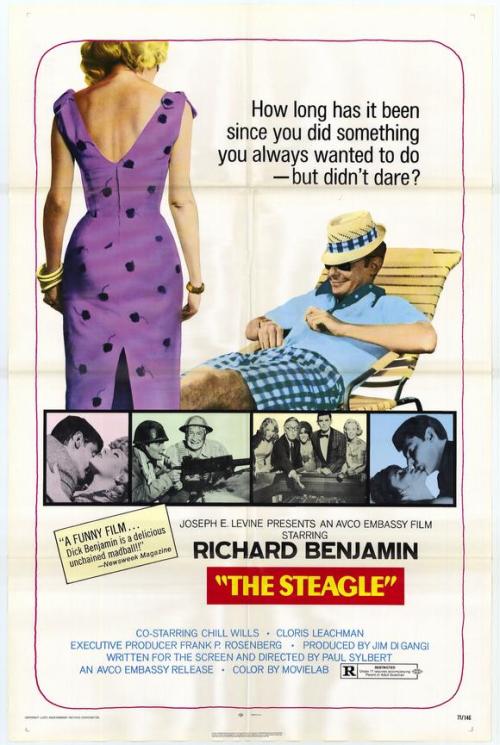
The Steagle (1971)

steagle 2

By Richard Winters

My Rating: 5 out of 10

4-Word Review: Living out his fantasies.

The year is 1962 and the Cuban missile crisis is in full-throttle. The threat of a possible nuclear war has everyone on edge and having to hear about it every night on the news just makes things worse. Harold (Richard Benjamin) decides to use this opportunity to ‘escape’ from his drab existence. Both his marriage to Rita (Cloris Leachman) and his job as a college professor have grown stale. If the end is near then Harold wants to live-it-up to the fullest, so he travels to Vegas, has sex with hot women while also living out other outrageous fantasies.

The film was directed by award-winning set designer Paul Sylbert and for the most part, at least at the beginning, is right on-target. The mood and design looks authentically like the early ‘60s and the story nicely taps into the secret fantasy life that most likely harbor in the back-of-the-minds of just about every middle-age person out there. The viewer effectively feels Harold’s frustration during the first half and then just as effectively feels the rush when he finally decides to break free and go wild.

The story is consistently amusing throughout with the most memorable bit coming when Harold decides to speak in gibberish while giving a lecture to his class. Benjamin is perfect for the part playing a character with a snarky, sarcastic personality that hides just beneath his otherwise formal veneer. Ivor Francis is great in support as a minister who Harold meets on his travels that, like with him, wants to escape from the shackles of his daily existence. Chill Wills is good too playing a loopy ex-actor who thinks he’s Humphrey Bogart and traps a group of men inside a bathroom and won’t let them out until after they hear his rendition of a scene from The Maltese Falcon.

The film’s biggest drawback though comes from the awkward transition between Harold fantasizing about these things and then finally deciding to go through with it. The film never bothers to show how he manages to get away from his wife and kids. Does he sneak out in the middle of the night unannounced, leave a note, or simply tell them that he needs to ‘get away for a while’? Nothing is ever shown even though I felt that this scene was quite crucial and needed to be put in. The ending is equally frustrating as we never find out what happens when Harold finally decides to go back, which makes the film as a whole come off as incomplete and one-dimensional.

My Rating: 5 out of 10

Release: September 15, 1971

Runtime: 1Hour 30Minutes

Rated R

Director: Paul Sylbert

Studio: AVCO Embassy Pictures

Available: VHS, DVD (Mill Creek)

Hearts of the West (1975)

hearts of the west

By Richard Winters

My Rating: 7 out of 10

4-Word Review: Budding writer travels west.

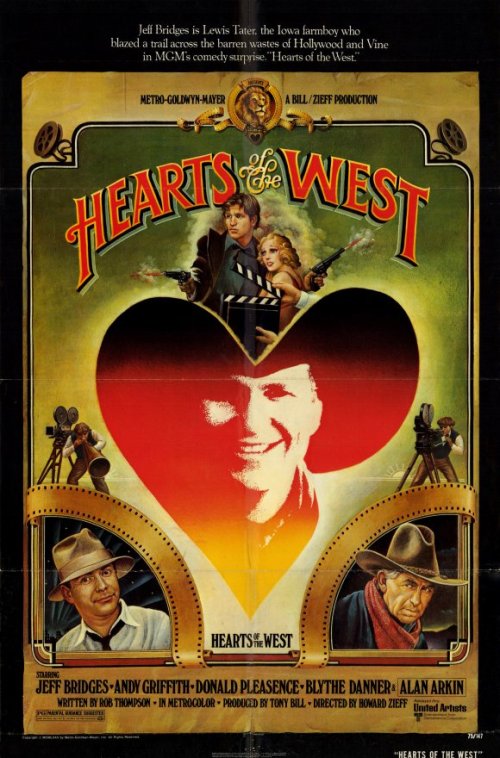
Lewis (Jeff Bridges) is a young man who dreams of becoming a famous western writer. He applies for and is accepted into a college that will supposedly teach him all he needs to know about the western-style novel. Unfortunately when he travels to where the college supposedly is he finds that it doesn’t really exist and is nothing more than a big scam run by two con-men (Richard B. Shull, Anthony James) who fleece thousands of dollars from unsuspecting people just like Lewis. They even try to rob Lewis further when he temporarily stays at a boarding house and is asleep, but he manages to escape from them by jumping into their running car, which has all of the money that they’ve stolen inside of it, and drives off into the desert. There he comes upon a western movie set and soon lands a job as a stunt man before quickly moving up the ladder into a western star while the bad guys continue to tail him and are determined to get back their money.

The film’s charm comes from its ability to mix the harsh realities of the movie business with a terrific sense of quirky comedy. Even better is that it avoids the condescending attitude that some period pieces have. The characters are not portrayed as being overtly naïve, sheltered or uneducated and instead come off as real people who just so happen to have lived in a different time period and although the recreation of the period isn’t exactly authentic it still gives one a good, general sense of the way things most likely were.

Bridges gives one of his best performances in a role perfectly suited to his persona as a naïve, wide-eyed young man full of ideals, but lacking in real-world sensibilities. The part where he is in a bathtub when the bad guys burst in on him reminded me of his similar scene in The Big Lebowski.

Blythe Danner makes for a solid love interest and I was amazed at how in certain shots she does very much look like her more famous daughter Gwyneth. Andy Griffith is great as well and becomes one of the more memorable parts of the film as Lewis’ duplicitous friend Howard.

The supporting cast is filled with recognizable faces that are on top of their game and make the most of their small roles including the always engaging Dub Taylor as a postal employee. There is even Woodrow Parfrey as a film producer, who for some reason appears unbilled.

The comedy is consistently amusing and directed by a man who had a flair for this type of material. The script, by Rob Thompson, remains fresh by introducing different twists along the way in a period piece that wipes away the nostalgic charm just enough to keep it real, but still remains cute.

My Rating: 7 out of 10

Released: October 8, 1975

Runtime: 1Hour 42Minutes

Rated PG

Director: Howard Zieff

Studio: MGM

Available: DVD (Warner Archive), Amazon Instant Video, YouTube

The Burglars (1971)

burglars 1

By Richard Winters

My Rating: 5 out of 10

4-Word Review: Corrupt cop hounds thief.

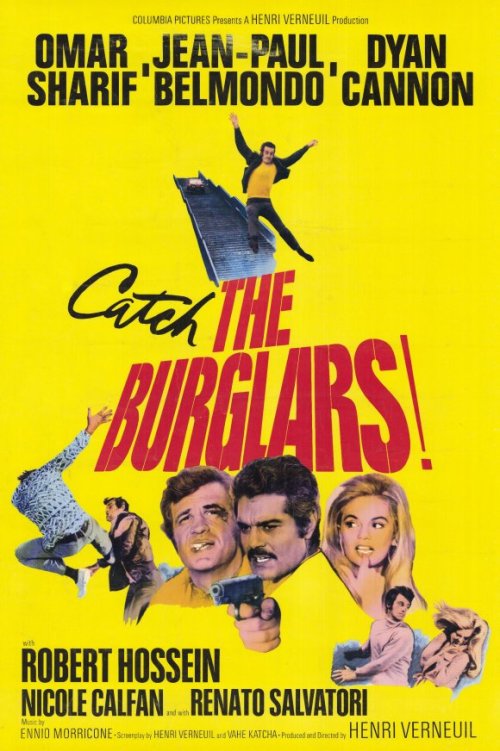
Azad (Jean-Paul Belmondo) and his cohorts pull off a daring heist by robbing a gem collector of his emeralds in his home by using a state-of-the-art machine that is able to create a key to the safe on the spot by simply entering in the safe’s serial number. However, things go awry when Abel (Omar Sharif), a corrupt police captain, becomes suspicious of their activity after seeing the gang’s car parked on the road. Initially he lets them off, but only so he can follow them later and then blackmail them for the jewels, or threaten them with prison otherwise.

The film, which is based on the novel by David Goodis and made 14 years earlier as The Burglar, which starred Jayne Mansfield, has all the trappings for being a classic heist film. I enjoyed watching the intricate way they are finally able to crack open the safe, which takes up much of the first half-hour. I also liked the creative action, stunt work, story twists, luscious Greek scenery and musical score by the legendary Ennio Morricone. Unfortunately none of this is able to overcome a rather plodding pace and a lingering feeling that you’ve seen it all before.

The film’s biggest claim-to-fame is its two chase sequences. The first is similar to the one done in The Italian Job as two small compact cars drive all over Athens, including on sidewalks, stairwells, and through crowds of people, which is exciting to watch. However, the fact that no one gets injured and no other automobiles are damaged even as the cars drive straight into on-coming traffic is hard to imagine. The camera also cuts to a close-up shot of the lead car driving on its rim, but somehow the vehicle is still able to continue to go several more miles on rough surfaces and high speeds, but why have a shot like that inserted if it ultimately doesn’t mean anything?

The second chase works better, which involves Belmondo hanging onto the side of a bus as it travels speedily down a crowded city street while he tries to kick shut the door of a police car that is following, which is quite realistic looking especially since it appears to be Belmondo himself and not a stunt double doing it. This one culminates with Belmondo being tossed from a dump truck and down a steep hill while other large rocks roll with him, which again is impressive, but the fact that he doesn’t even receive a scratch from it is hard to believe.

Sharif is outstanding in a rare turn as a bad guy. He commands every scene that he is in and in the process makes co-star Belmondo seem forgettable and unable to equal the same strong presence. Dyan Cannon, who is the only American in the cast, gets a pointless part as a pin-up magazine model that catches Belmondo’s eye. Her character doesn’t appear until an hour in and is not all that integral to the plot. Her voice is also clearly dubbed in the French version, which makes her acting here limited and probably not worth signing up for to begin with.

The climactic finish that entails a man being drowned inside a grain elevator is novel as is the final moment inside a giant, mobile chicken coop with thousands of loud, clucking chickens, but overall the film fails to illicit much tension and would’ve been better had the runtime been trimmed and the scenes shortened.

burglars 2

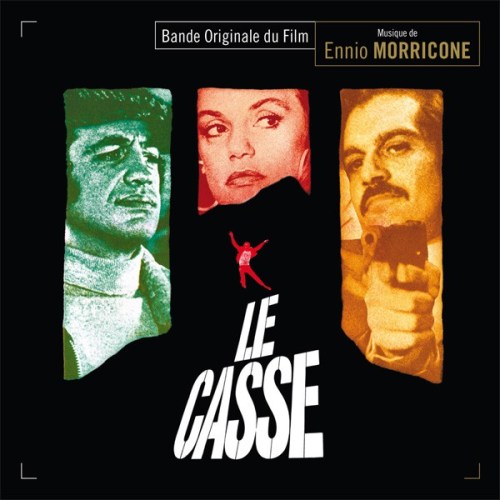
Alternate Title: Le Casse

My Rating: 5 out of 10

Released: October 24, 1971

Runtime: 1Hour 57Minutes

Rated PG

Director: Henri Verneuil

Studio: Columbia Pictures

Available: DVD-R

The Andromeda Strain (1971)

andromeda strain

By Richard Winters

My Rating: 7 out of 10

4-Word Review: Isolating a dangerous virus.

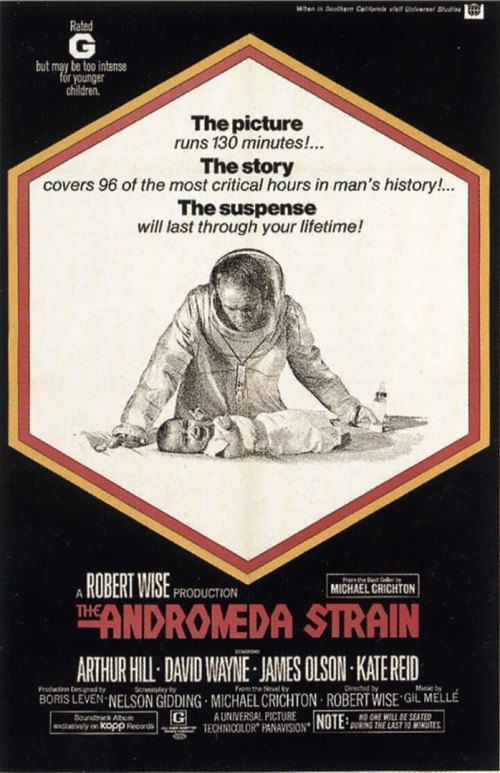
When a satellite returns to earth it brings back a mysterious virus that ends up killing all the residents of a town where it lands. Two scientists Dr. Jeremy Stone (Arthur Hill) and Dr. Dan Hill (James Olson) go to the town to investigate and find that the only survivors are a wino (George Mitchell) and a six-month-old baby. They bring these two people along with the remnants of the satellite back to a secret Nevada lab known as Wildfire that’s buried deep below the ground. It is here after close examination that they are able to observe the virus, which appears as small green dots on the satellite, but they fail to realize that this virus can also mutate and presents an even greater risk to them in the lab.

One of the major selling points of this film is the fact that it keeps everything within the realm of ‘realistic sci-fi’. No bubblegum action, scary monsters, or any other form of over-the-top dramatics get added; instead it’s on a ‘thinking man’s level’ with an extraordinary attention to detail. I enjoyed seeing all of the decontamination procedures that the crew is forced to go through before they are even allowed to begin their investigation. The isolated lab, which is hidden beneath what looks to be just an ordinary farmhouse and shed, is really cool and director Robert Wise’s use of the split-screen during the search of the town is both flashy and slick.

Showing the scientist’s personal lives and how the government agents literally demand that they drop what they are doing and come with them helps humanize the characters to a degree. I also liked how the male character of Dr. Peter Leavitt in the Michael Crichton book from which this is based gets switched to a female character here, which helps add an extra dynamic and is very well played by Kate Reid. In fact the only thing about the character’s that I didn’t like, aside from Arthur Hill’s sterile performance, is when we see the dreams of the doctors as they sleep, which seemed corny and unnecessary.

The mysterious nature of the virus is compelling and I certainly enjoyed the way they were able to detect it by scanning the satellite with cameras that could focus onto the object in minute detail, but the plot itself gets stretched farther than it needs to. There are a few interesting twists, but it starts to feel quite labored around the 2-hour mark and the climatic finish isn’t all that intense and seems rather stagy and predictable.

I was also amazed that this film achieved a G-rating. For one thing there isn’t much action and the narrative is on a more sophisticated level that is clearly aimed at adults and something most children won’t be able to pick up on. Also, one of the victims that the two men come upon is of a woman with no top on. The image is brief, but her breasts are clearly exposed making this one of the few G-rated movies to feature nudity.

My Rating: 7 out of 10

Released: March 12, 1971

Runtime: 2Hours 11Minutes

Rated G

Director: Robert Wise

Studio: Universal

Available: DVD, Amazon Instant Video, YouTube

California Suite (1978)

california suite

By Richard Winters

My Rating: 7 out of 10

4-Word Review: Visitors at a hotel.

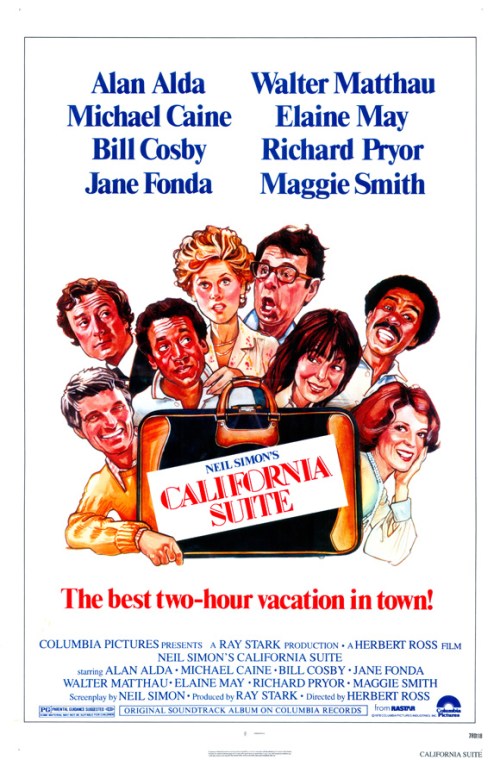
Based on the hit Neil Simon play, who also wrote the screenplay, the film follows five couples all staying at the same posh Beverly Hills hotel. Hannah and Bill (Jane Fonda, Alan Alda) are a divorced couple fighting over the custody of their teenage daughter (Dana Plato). Diana (Maggie Smith) is a famous British actress set to attend the Academy Awards ceremony and being escorted by Sidney (Michael Caine) a man she wants all for herself, but can’t because he is bisexual. Marvin (Walter Matthau) is in town to attend his nephew’s Bar Mitzvah and shocked to find that his brother (Herb Edelman) has sent a prostitute (Denise Galik) to his room to entertain him for the night only for her to promptly pass out drunk the next morning just as his wife (Elaine May) is about to arrive. The final segment deals with two bickering Dr’s (Bill Cosby, Richard Pryor) who can’t get along and seem to get themselves into one over-the-top calamity after another.

Many viewers have commented that they disliked the Fonda character as she came off as too cold and bitchy, but I’ve known many people who are like her who put up a very steely front in order to protect themselves emotionally, so for me her sarcasm worked and the way she delivered her acerbic lines is fun especially as she chews up the already transparent Alda character until it seems like he isn’t even there.

Smith and Caine’s segment seemed a bit trite and generic. The first part of it deals with her nervousness about attending the awards ceremony, which isn’t all that original. The second half examines her frustrations at the fact that Sidney can’t solely commit to her, but I couldn’t completely buy into this because she was playing a rich and famous, globe-trotting actress whom I’m sure could easily find another man if she wanted and didn’t have to cling to someone who didn’t fully want her like she were some lonely, small town housewife with no options.

The third segment dealing with Matthau and the unconscious prostitute is quite funny and had me laughing-out-loud while the scenes involving Cosby and Pryor’s constant arguing is incredibly dumb and even jarring as it features a lot of silly, slapstick humor that does not fit in with the more sophisticated tone of the rest of the film.

I was also not so crazy about the film’s pacing. The first hour deals almost exclusively with the dramatic segments while the second half focuses mainly on the comical ones, which came off as imbalanced. It would’ve worked better had the stories been evenly spread out in a rotating type fashion with a few minutes spent on each one before cutting to the next one. It would also have been cool had it taken a Slacker-like approach where the characters, who never once cross paths in this movie, would have instead passed by each other at certain points and the scene would then shift to the new characters that the other ones just passed.

I was also disappointed that we never get to see much of exterior of the hotel. We do see a bird’s eye view of it during the closing credits, but I thought shots of it should’ve been shown during the beginning. I have nothing against David Hockney’s artwork that does get used, but the hotel is a part of the film’s title and therefore should have taken precedence.

Overall though I felt it was a decent dramedy worth the price of admission. It also features a terrific and distinctive jazz score by Claude Bolling that I wish had been used even more throughout.

My Rating: 7 out of 10

Released: December 15, 1978

Runtime: 1Hour 42Minutes

Rated PG

Director: Herbert Ross

Studio: Columbia Pictures

Available: DVD, Amazon Instant Video, YouTube
Checkered Flag or Crash (1977)

checkered flag 2

By Richard Winters

My Rating: 2 out of 10

4-Word Review: Drivers race off-road.

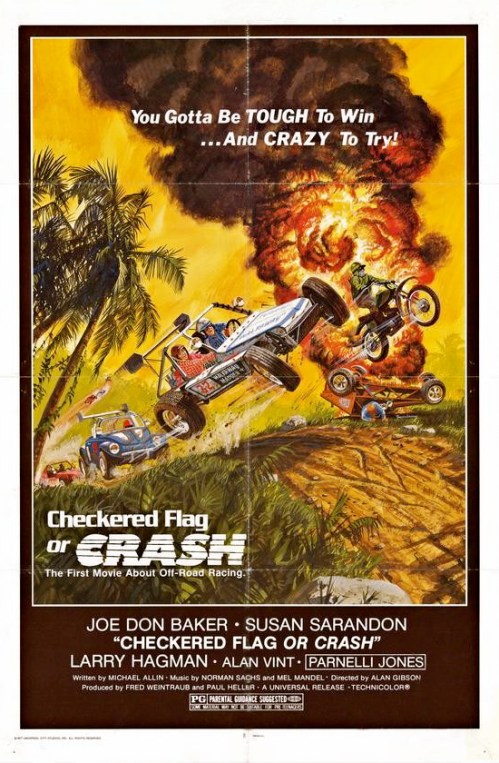
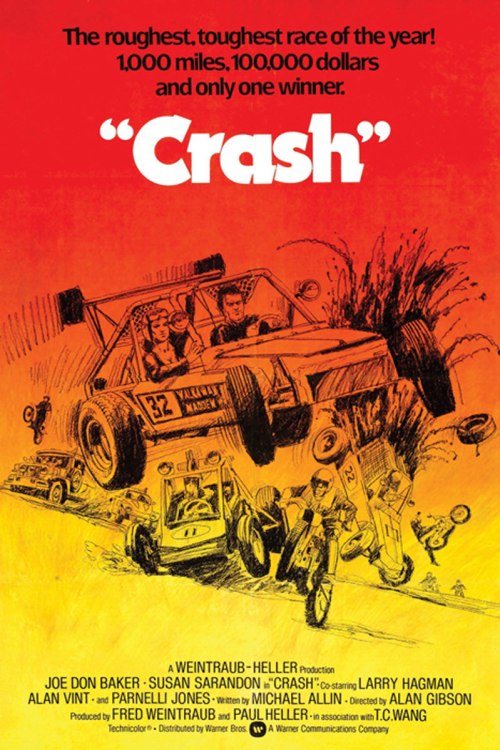
Walkaway Madden (Joe Don Baker) is a lifelong racer who has just broken up with his racing partner of many years and is now going solo, or at least he thinks he is until reporter C.C. Wainwright (Susan Sarandon) arrives and tells him that the company who sponsors his car has hired her to cover the race for their newspaper and thus she’ll be riding along with him. Walkaway isn’t too happy about this as he has very old-fashioned, sexist ideas about a ‘woman’s place’, but begrudgingly accepts it as he has no other choice. Together the two take part in a grueling off-road race that is organized by Bo Cochran (Larry Hagman) and takes them through some of the most treacherous terrain of the Philippines.

The movie might’ve been more exciting had the racing footage been better captured. Instead we get treated to choppy shots of random car wipeouts and flashing, poorly focused images of vehicles buzzing through various locales while shown in a grainy film stock. The editing is so quick that it’s hard to follow what is going on and the only time it is ever impressive is when the camera gets tied to the front of the vehicle and we see firsthand just how bumpy and fast a ride like that must be, but this shot unfortunately is only brief.

There is little or no backstory to any of the racers and therefore no emotionally compelling reason to cheer for any of them. There is also too many of them and all are generic, transparent characters, so when you see someone wipeout it’s hard to remember which one it is, or even care. I did kind of like Daina House as a woman with beautiful model-like features who dresses in all black and just as tough as any of the guys, but her character isn’t shown or played-up enough.

The best thing about the film is the presence of Sarandon who lends a necessary grounded anchor to the silliness that surrounds her. Hagman is terrific as the hyper race promoter and every scene he is in is far more entertaining than any of the racing footage. Baker isn’t bad either. He certainly isn’t any A-list actor, but a very competent B one, who seems at ease in both comedy and action parts.

The film shifts clumsily between being silly and gritty and would’ve done better had it stuck to a more consistent tone. It’s also cheap and amateurish with a terrible, country tinged title tune that gets played throughout. The only reason it gets 2 points is simply for the performances of its three leads.

checkered flag 1

My Rating: 2 out of 10

Released: June 3, 1977

Runtime: 1Hour 31Minutes

Rated PG

Director: Alan Gibson

Studio: Universal

Available: None at this time.

O Lucky Man! (1973)

o lucky man

By Richard Winters

My Rating: 9 out of 10

4-Word Review: A young man’s journey.

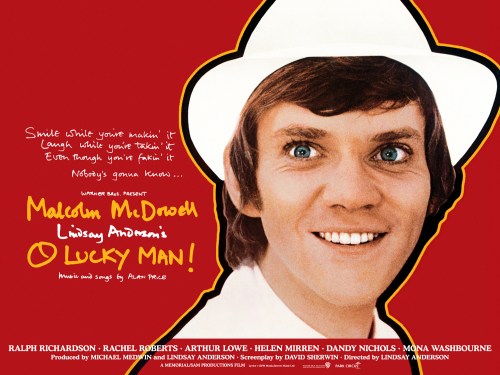
Mick (Malcolm McDowell) is a wide-eyed young man entering into the adult world and full of Horatio Alger-like illusions of working real hard and becoming insanely rich while doing it. His first job is as a coffee salesman where he is told that ‘the-sky’s-the-limit’ in regards to his earning potential, so with the carrot-on-the-string firmly in place he dives into it, but ultimately finds little to show for it. He then meets up with a rich tycoon ( Ralph Richardson) and essentially becomes the man’s lapdog assistant only to learn that this doesn’t work either. After spending time in jail he comes back out into the world as a ‘reformed’ man extoling on the idealistic virtues of humbleness only to again meet with aversion and failure.

The film, which is based on an original idea by McDowell, is essentially a broad look at society’s many socio-economic class levels and how easy it is to fall down it, but hard to move up. Some consider Glengarry Glen Ross to be the bleakest indictment on the sales profession, but having worked in the business when I was like the character here first getting out into the working world I can say that this one is even more searing and accurate.

On a wider scope the film successfully works as a critical statement on capitalism, which due to the purveying political climate of the day most American audiences are just now ready to catch up to. Mick’s journey is more his eventual disillusionment as he slowly realizes that being a ‘go-getter’ and having a ‘good attitude’ isn’t going to be enough as the system is rigged so that the individual is more likely to lose than win and can’t really function otherwise. His efforts then become exploited while helping to make someone else richer as he tolls in the bottom rung doing lateral moves into areas that have potential promise, but only produce the same results.

Although the character’s perpetual delusions of grandeur become a bit annoying McDowell plays the part well. The intent was for him to play against type from the one that he did just previously in A Clockwork Orange by portraying someone who is clean-cut, respectful and obedient, but with all the transitions that the character goes through and at one point even having him strapped to a chair in much the same way that he was in the Kubrick film it eventually comes off more like a continuation of that part than a completely different one.

The fun of watching the film is seeing the supporting cast playing dual roles. Arthur Lowe is great especially in the part where he gets put into heavy black make-up to play the leader of a fictitious foreign nation. Rachel Roberts is good too with the erotic scene where she transfers coffee from her mouth into McDowell’s and then later as a poor woman who commits suicide, which has a foreboding quality to it since Roberts ended up doing the same thing five years later in real-life.

Fans of Helen Mirren will enjoy seeing her when she was much younger and playing the part of a rebellious daughter. I also liked the way Alan Price and his band fits into the film. They do the movie’s soundtrack, which is quite good, but instead of having their music played over the action the movie cuts away and captures them doing their renditions inside a sound studio, which in any other case would be considered distracting, but here helps accentuate the film’s  already cerebral tone. It’s also amusing how the band ends up becoming a part of the story as the McDowell character almost gets hit by their van, which allows the opportunity for Price to say the film’s best line “Are we suing you, or are you suing us?”

The film is full of many surreal and original moments and is so consistently inventive that you hardly notice its three hour runtime. However, to me the best part about it is the way it attacks and criticizes the status quo, which is something that no Hollywood movie ever does.

My Rating: 9 out of 10

Released: March 26, 1973

Runtime: 2Hours 58Minutes

Rated R

Director: Lindsay Anderson

Studio: Warner Brothers

Available: DVD, Amazon Instant Video, YouTube