Category Archives: 70’s Movies

Goldengirl (1979)

goldengirl

By Richard Winters

My Rating: 2 out of 10

4-Word Review: Runner injected with hormones.

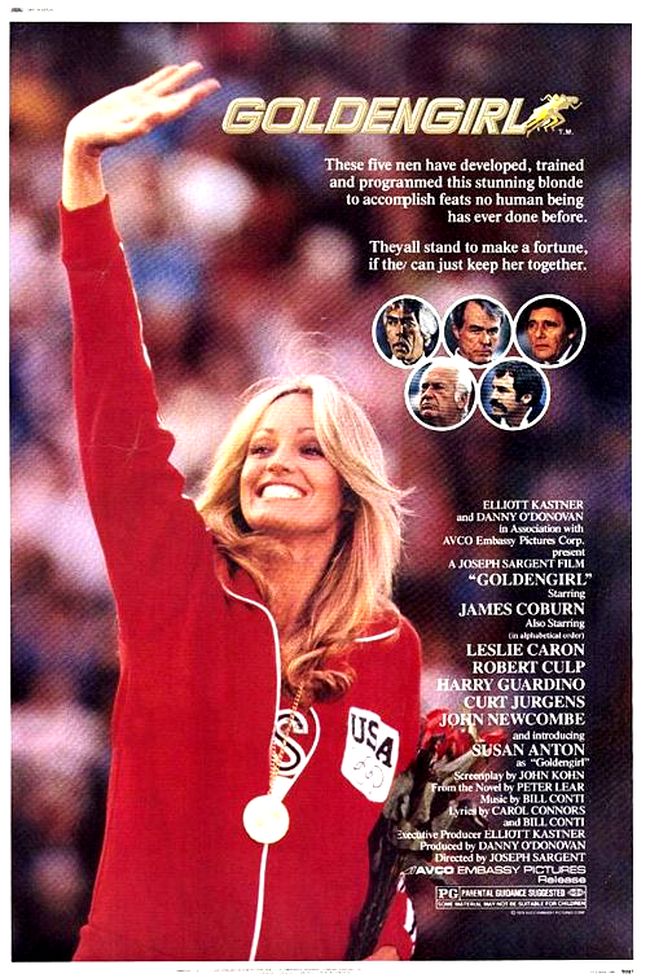
Goldine (Susan Anton) is a tall, 6-foot-2, athlete, who’s also quite beautiful, who shows a lot of talent as a runner and ends-up qualifying for the 1980 Summer Olympics in Moscow. However, behind-the-scenes there’s a sinister plot. Her father Serafin (Curt Jurgens) is a neo-Nazi who has injected her with hormonal drugs and vitamins from an early age in order to get her to be taller and stronger than the other athletes. This regimen has had a adverse effect on her system causing her to get diabetes of which she’s required to take two pills before every race in order to prevent her from going into shock. Dryden (James Coburn), who’s been hired by her father to help market her and make money off of her name and potential celebrity, recognizes these problems and tries to get her to drop-out, but the lust for fame and recognition are too much and Goldine decides to stay-in even as the warning signs mount.

Based on the 1977 novel of the same name by Peter Lovesey and originally intended for a miniseries on NBC-TV, who initially funded the production, but then scraped the telecast when the US pulled out of the Olympics due to the Soviet invasion of Afghanistan. The film was then re-edited from its initial 4-hour cut and paired down to less than 2-hours before being released to theaters where it managed to recoup only $3million from its $7million budget. Alot of the problem is that not enough happens to make sitting through it seem worth it. The sinister neo-Nazi story angle doesn’t get played-up to make it suspenseful, or even mildly diverting. In many ways this could’ve been just an average film about athletes training for the Olympics because for the most part that’s pretty much what it focuses on and even then, the interest level is only marginal.

Coburn is a great actor, but I didn’t know what he was doing in this type of movie as he seemed too old for the part. While he was only 50 when it was shot, he looks much more like 60, or even 70. Having him ultimately get into a sexual relationship with Goldine seemed absurd. I got nothing against May-December romances, but it just didn’t make sense why this beautiful, young woman would have to settle for some old guy, or would even want to, to satisfy her sexual needs. A woman looking like she did should’ve been able to attract a man her age, let alone many, possibly even a fellow runner and the story would’ve been stronger had she been in a relationship with someone else her age who was at odds with the father and fought for her right from the start versus some old guy waltzing-in who only takes a casual concern to her problems and could easily bow-out at any moment, which is what he ultimately kind of does.

The biggest detriment is with Anton. As an actress I thought she did quite well. She was known at the time for being crowned Miss California in 1969, but her work here did lead to a Golden Globe nomination and her own TV-series and given the fact that she didn’t go through the conventional acting training I felt she earned it and was effective. Her character though is bland, and she should’ve been the one uncovering her father’s dastardly plan instead of Coburn. She spends a lot of time reacting to things versus driving the action like a protagonist should. Her personality traits aren’t clear and seem almost robotic most of the way and it prevents the viewer from having any emotional connection to her, or her quandary. Having her start to ‘flip-out’ near the end, supposedly because of her ‘condition’, makes her even more of an enigma and might’ve had a more profound effect had she been better defined and three-dimensional from the beginning.

Spoiler Alert!

Curt Jurgens meltdown while being interviewed live on-the-air by reporter Robert Culp, and then his subsequent running-out onto the racetrack, while in full view of millions of spectators, in an effort to win his daughter’s affections back, is the best moment in the movie. It’s a bit campy and over-the-top for sure, but when a film is as boring as this one even a silly moment can help it and quite frankly there should’ve been more of them.

The warp-up though is terrible. Having her decide at the last second not to take her diabetic pills as directed and then proceed to go into the race anyways is the movie’s one and only suspenseful minute, but then director Joseph Sargent botches it by fading out and not showing her collapsing on the track. We’re told about it later, but it would’ve been more dramatic for the audience to have witnessed it first-hand. To then have her fully recover and not learn from the event and go on afterwards like it was ‘no big deal’ defeats the purpose of the movie. What’s the point of sitting through an almost 2-hour flick where the character doesn’t change, or grow in any way and the events that happen throughout it don’t really lead to anything?

My Rating: 2 out of 10

Released: June 15, 1979

Runtime: 1 Hour 45 Minutes

Rated PG

Director: Joseph Sargent

Studio: AVCO Embassy Pictures

Available: DVD, Blu-ray, Amazon Video, YouTube

The Devils (1971)

devils1

By Richard Winters

My Rating: 9 out of 10

4-Word Review: Burned at the stake.

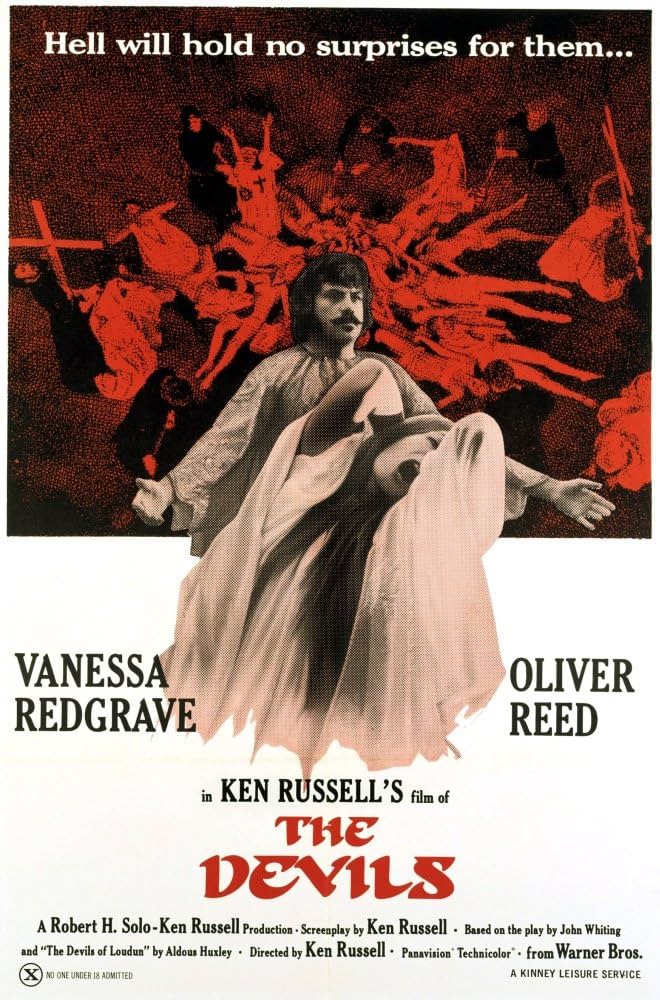
In the year 1634 the governor of Loudon, a small fortified city, dies, making Urbain Grandier (Oliver Reed), a priest with a secretly decadent lifestyle, the one in control. He’s idolized by the townspeople and the head nun at the local convent, Sister Jeanne des Anges (Vanessa Redgrave), secretly has sexual fantasies about him though because she suffers from having a hunch on her back is rarely ever seen outside and Urbain himself doesn’t know she exists. When Urbain secretly marries Madeleine (Gemma Jones) Jeanne becomes jealous causing her to confide to Father Mignon (Murray Melvin) that she’s been possessed by Urbain as well as accusing him of dabbling in witchcraft. This then leads to an inquisition headed by Father Pierre Barre (Michael Gothard) and a public exorcism, which has the nuns in the church strip and perform perverse acts before Urbain and his new wife are arrested and put on trial.

The story is based on the actual event, which was written about in the book ‘The Devils of Loudun’ by Aldous Huxley that was later turned into a stageplay. After the play’s success United Artists became interested in turning it into a movie and signed-on Ken Russell to direct due to his recent success in helming Woman in Love. Russell read the source material and became in his words ‘knocked-out by it’ and ‘wanted others to be knocked-out by it too’. This then compelled him to write an extraordinarily over-the-top script full of sex, violence, and graphic torture that so shocked the studio execs when they read it that they immediately withdrew their initial investment and refused to fund the picture threatening the project from being made even though many of the sets, constructed by set designer Derek Jarman, has already been painstakingly completed, but fortunately for them Warner Brothers swooped-in at the eleventh hour, which allowed the production to proceed.

The film’s release was met with major controversy with many critics of the day, including Roger Ebert who gave the film a very rare 0 star rating, condemning it. Numerous cuts were done in order to edit it down to a version that would allow it to get shown with the original British print running 111 minutes while the American one ran 108. Both were issued with an ‘X’ rating though even these cut out the most controversial scene, known as ‘The Rape of Christ’ segment, in which a group of naked nuns tears down and then performs perverse acts on a giant-sized statue of Jesus. This footage was deemed lost for many years before it was finally restored in a director’s cut version, that runs 117 minutes, that was shown in London in 2002. Yet even today this full version is hard-to-find with Warner Brothers refusing to release it on either DVD, or Blu-ray. They’ve even turned down offers from The Criterion Collection who wanted to buy it. While there was a print Warner released onto VHS back in the 80’s, this same version, got broadcast on Pay-TV, it’s edited in a way that makes the story incomprehensible, and only the director’s cut is fluid enough for the storyline to fully work.

It’s hard to know what genre to put this one into as this isn’t your typical movie and watching it is more like a one-of-a-kind experience that very much lives up to its legend and just as shocking today as it was back then. Yet, outside of all of its outrageousness it is quite effective. Each and every shot is marvelously provocative and the garishly colorful set pieces have a mesmerizing quality. The chief color scheme of white that lines the walls of the inside of the convent seemed to interpret to me the interior of a mental hospital, which helps accentuate the insanity of the frenzied climate. While things are quite over-the-top its ability to capture the mood of the times, the cruel way people treated each other and how they’re all steeped in superstition as well as the dead bodies from the plague that get stacked about, are all on-target and amazingly vivid.

The acting is surreal with both Reed and Redgrave stating in later interviews that they consider their performances here to be the best of their careers. Reed’s work comes-off as especially exhausting as he gets his head shaved and then is ridiculed in a large room full of hundreds of people before burned to death with make-up effects that are so realistic it’s scary. Redgrave, who walks around with her head twisted at a creepy angle, is quite memorable during the scene where she physically punches herself for having sexual fantasies, even puts a crucifix in her mouth at one point and masturbates with a human bone. Dudley Sutton and Murray Melvin with their very unique facial features and Michael Gothard, who initially comes-off with his long wavy hair as an anachronistic hippie flower child, but who becomes aggressively evil as the makeshift exorcism proceeds, all help round-out a most incredible supporting cast.

While the cult following for this remains strong and getting stronger and demand for a proper, director’s cut studio released DVD/Blu-ray is high Warner continues to rebuff the requests. There are though ways to find versions through Bing searches. Streaming services Shudder and Criterion Channel have shown the most complete prints to date, running roughly 111 minutes with most of the controversial scenes, including the Rape of Christ moments though these scenes are of a poorer, grainy and faded color quality since they never went through a professional digital transfer, but overall it’s still one of those movies you should seek-out because not only is it fascinatingly brilliant, but it’s something that could never be  made today and a true testament to the wild, unfiltered cinema of the 70’s that will forever make it the groundbreaking, unforgettable decade that it was.

My Rating: 9 out of 10

Released: July 16, 1971

Runtime: 1 Hour 57 Minutes (Director’s Cut)

Rated R (Originally X)

Director: Ken Russell

Studio: Warner Brothers

Available: DVD-R

The Warriors (1979)

Version 1.0.0

Version 1.0.0

By Richard Winters

My Rating: 7 out of 10

4-Word Review: Back to Coney Island.

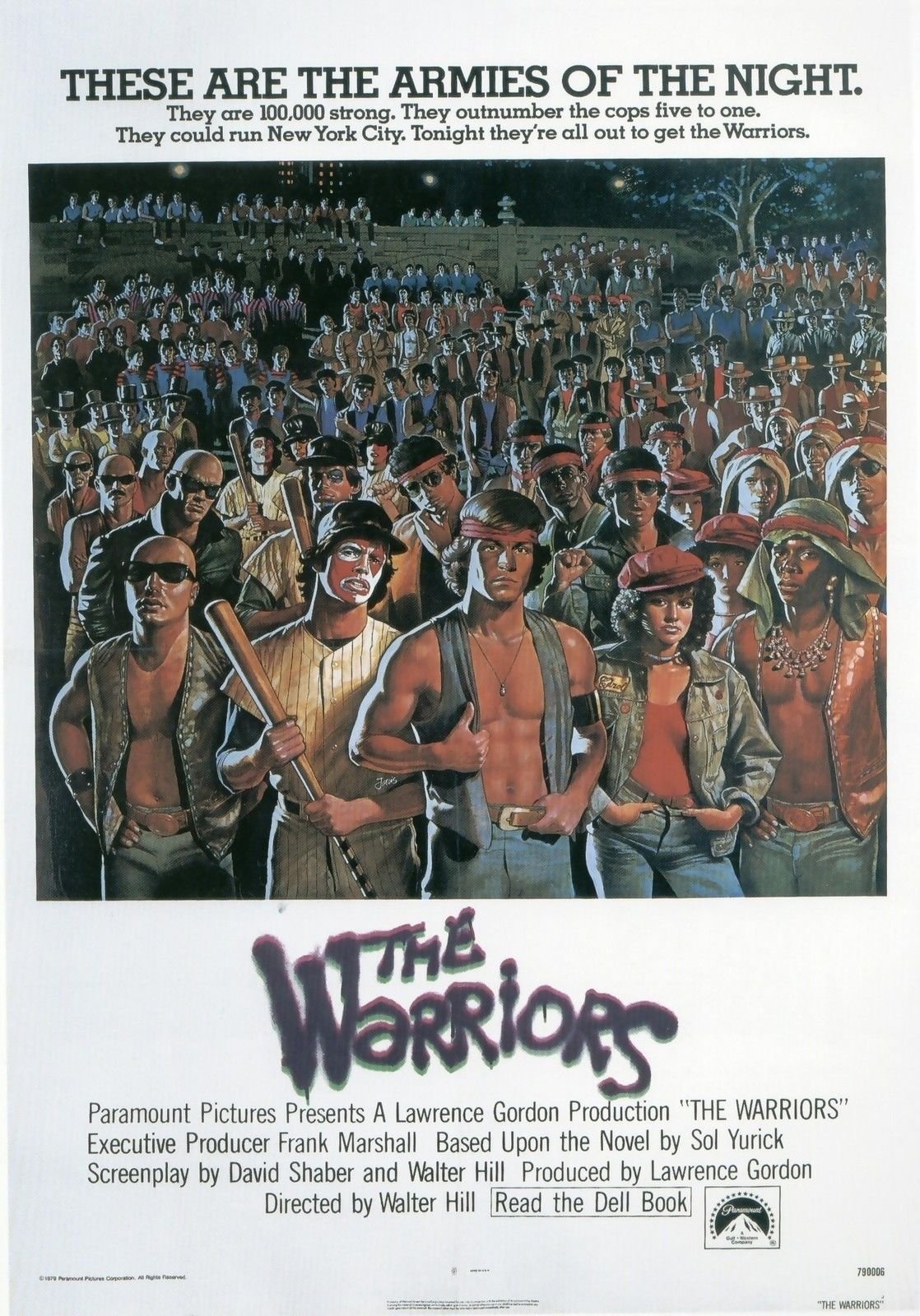
The Warriors lead by Cleon (Dorsey Wright) make their way to from Coney Island to Van Cortland Park in order to attend an outdoor rally lead by Cyrus (Roger Hill) who heads the gang called The Riffs. It’s Cyrus’ idea to bring all the gangs in New York City together as one because if they do so they’ll be able to outnumber the police. However, Luther (David Patrick Kelly), who’s a member of the Rogues gang is not privy to this idea and thus shoots and kills Cyrus, which gets witnessed by Fox (Thomas G. Waites) a member of the Warriors. Once Luther realizes he’s been spotted he quickly accuses the entire Warriors gang of carrying-out the murder, which sends the mob into violent chaos and in-turn causing the death of Cleon. Swan (Michael Beck) becomes the group’s new de-facto leader though it receives a frosty reception from Ajax (James Remar), but since they’re in such an urgent situation he has no time to fight him for it as the gang now must make their way back to the safety of their territory while having to trek through the turfs of other gangs who are all out to kill them.

For a film about gang life this one is quite different. Most of the movies before then that dealt with this topic would typically place the protagonist as being someone outside of the gang culture, but here that outside world doesn’t even exist. Everything is fully from inside the gang world, which is what makes it so fascinating as the viewer gets immersed into a universe that most likely they really wouldn’t experience or understand otherwise. However, as big as their turfs wars are one of the most memorable moments in the film doesn’t deal with the action at all, but instead it’s the scene inside the subway car where some suburbanites come-on after a night at the club and sit across from The Warriors, who are quietly judged, through their glances, at the disheveled nature of the gang members, which they’re distinctly aware of, revealing how even though in the gang’s mind their the ‘top dog’ of their universe, they’re still perceived from the mainstream world as being people to look down upon.

I also really dug the gang attire. Some may argue this gets ‘campy’ and hurts the realism with proposed remakes offering to play down some of it, but for me it’s what makes it more fun. Personally, I found the Baseball Furies and roller-skating gang known as The Punks to be generally frightening. Even if the gang carrying baseball bats wears facial make-up resembling the rock band KISS I still in no way would want to meet them in a dark alley and in a lot of ways The Warriors constantly coming into these weird gang types as they cross through their territories creates a surreal nightmare atmosphere.

I did though find some of the action to be problematic. It starts with The Warriors trying to outrun another car driven by a rival gang, which I found unrealistic. Possibly if it was a short distance then maybe, but to go several blocks wouldn’t be fathomable. I would think at least a couple of the gang members would tire-out and slow down and ultimately be hit by the vehicle. Having The Warriors totally annihilate the Baseball Furies even though it was the Furies with the baseball bats while the Warriors had only their fists didn’t make sense either. Maybe you could argue that The Warriors had such good fighting skills they were able to use that to overpower the other side, but logically I think one or two of them should’ve at least gotten hit by a bat, which the Furies were swinging wildly, and the fact that they’re all able to get out of the fight unscathed is a bit of an eye roll. Having a few of them later trapped in a room with a female gang that shoots directly at them with a gun and none of them get hit by even a stray bullet is equally unrealistic. Also, since they all get involved in punching their opponents, you’d think there would be numerous scratches, abrasions, and dried blood on the broken skin of their knuckles, at the very least, but on the subway ride after the fights there’s a quick close-up of Micheal Beck’s hands, who was involved in the majority of battles, and they’re completely unblemished.

The 1965 novel version, the author, Sol Yurick, was not happy with the film, has many differences including the gang rape of the female, played in the movie by Deborah Van Valkenburg, by the protagonist gang members, that doesn’t occur here. The book also delves more deeply into the gang leaders sad home life, which the movie doesn’t tackle at all, but it would’ve helped create a better understanding of the main character’s motivations. If a remake does get made, and it’s been talked about, I think it would be more interesting if it followed the book’s plotline, which ultimately is grittier.

My Rating: 7 out of 10

Released: February 9, 1979

Runtime: 1 Hour 33 Minutes

Rated R

Director: Walter Hill

Studio: Paramount

Available: DVD, Blu-ray, Amazon Video, YouTube

Steel (1979)

steel

By Richard Winters

My Rating: 4 out of 10

4-Word Review: They build a skyscraper.

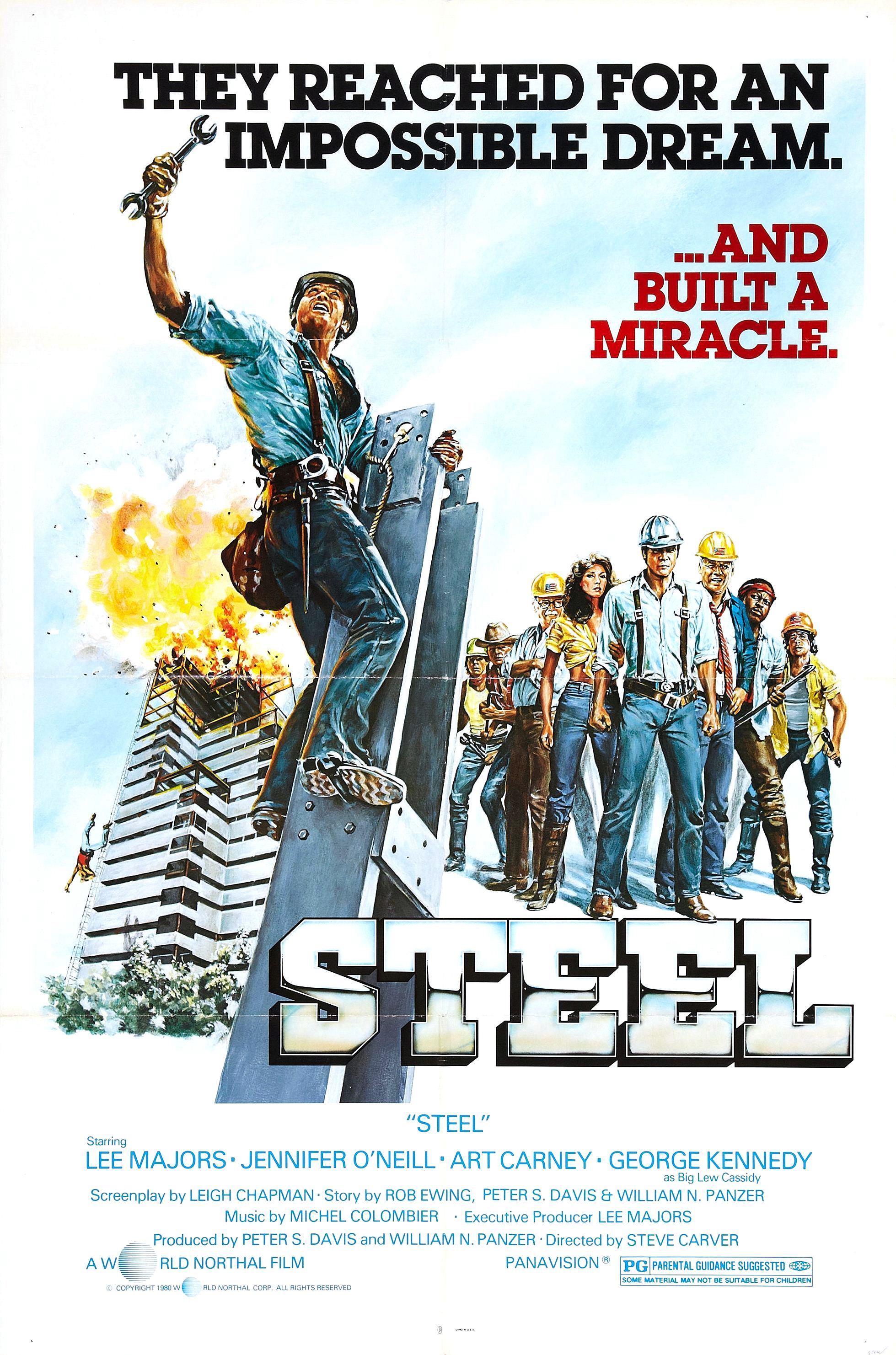
Big Lew (George Kennedy) runs a construction company that builds skyscrapers and is under pressure to get his most recent project, which will be one of the tallest he’s ever been put in charge of making, completed under budget. While climbing onto a metal high beam, one of the other workers with him freezes and refuses to come down. Lew attempts to relax him, but in the process, he loses his balance and falls to his death. Cass (Jennifer O’Neill) is put in temporary charge, but she’s overwhelmed with the demands and thus goes to Mike (Lee Majors) to help take over the project and make sure it gets done in time. Mike used to be a part of the hard-hat team, but an accident caused him to become afraid of heights and forced him to take a job as a truck driver, but when the daughter of an old friend comes calling, he can’t refuse. He assembles a motley crew of misfits who all have eccentric personalities but also know how to build tall buildings and do it right even when put under grueling circumstances. Not all of them know about Mike’s fear and he tries to hide it from them due his concern that they might not respect him anymore if they found it, but while he struggles to keep everyone working at a near impossible pace he must also fight-off the likes of Eddie (Harris Yulin) who’s been tapped by a criminal conglomerate to do whatever he can to hijack the efforts of Mike’s crew and make sure the building is never finished.

The film is for the most part just a TV-movie if not for one brief moment when a prostitute gets into the truck that Lee Majors is driving and takes-off her shirt. It would’ve been best had it been made for that medium because as a theatrical release it didn’t do well and has been largely forgotten without any DVD, Blu-ray, or even a steaming venue to its name. Infact the only thing that stands it out is what occurred behind-the-scenes as stuntman A.J. Bakunas died when attempting the world record by diving off a construction site at 315 feet from the 22nd story where he reached speeds of 115 mph. The jumped looked perfect, but upon landing the air bag split and he died from the injuries the next day.

While his death was certainly regrettable, his father was a part of the 1.000 onlookers who witnessed it, it was not shot in a way that makes it work in the film. While the footage was kept and edited into the movie you only end up seeing a few seconds of it making it seem like it wasn’t even worth attempting if that’s all that was going to be seen. It was also used to kill-off George Kennedy, it was his character’s fall that the jump was created for, but Kennedy’s hard-ass persona is the one thing that gives the story any color and it’s a shame that he hadn’t stayed in all the way through.

The supporting cast if full of familiar B-movie faces and some of them are quite good, but they’re not in it enough. The movie might’ve been more entertaining had the workers themselves carried it, but instead we get introduced to their quirky temperaments, while Majors busily makes the rounds to beg them to come aboard as his crew, but then after that they’re largely forgotten and instead the focus gets put on Majors who is by far the dullest of the bunch and it would’ve worked better had he not been in it at all. O’Neil had great potential, seeing a woman trying her best to head an all-male crew, most of whom weren’t exactly gentile, could’ve made for some high drama and been considered even groundbreaking and the film clearly misses-the-mark by not having taken that avenue.

The building that was used for the film was the Kinkaid Towers in Lexington, Kentucky, which when compared to major skyscrapers in large cities is quite puny and unimpressive. The opening shot capturing it from the ground-up as its half-built doesn’t help to dispel this feeling and if anything seems rather laughable especially when there’s no other tall building around it, so there’s no cosmopolitan vibe at all to it.  However, the shots showing the men walking on the high beams several stories up with seemingly nothing holding them down is nerve-wracking to watch especially for those who fear heights, so in that vein it succeeds, but with everything else it’s rather flat.

My Rating: 4 out of 10

Released: July 25, 1979

Runtime: 1 Hour 42 Minutes

Rated PG

Director: Steve Carver

Studio: Fawcett-Majors Productions

Available: DVD-R

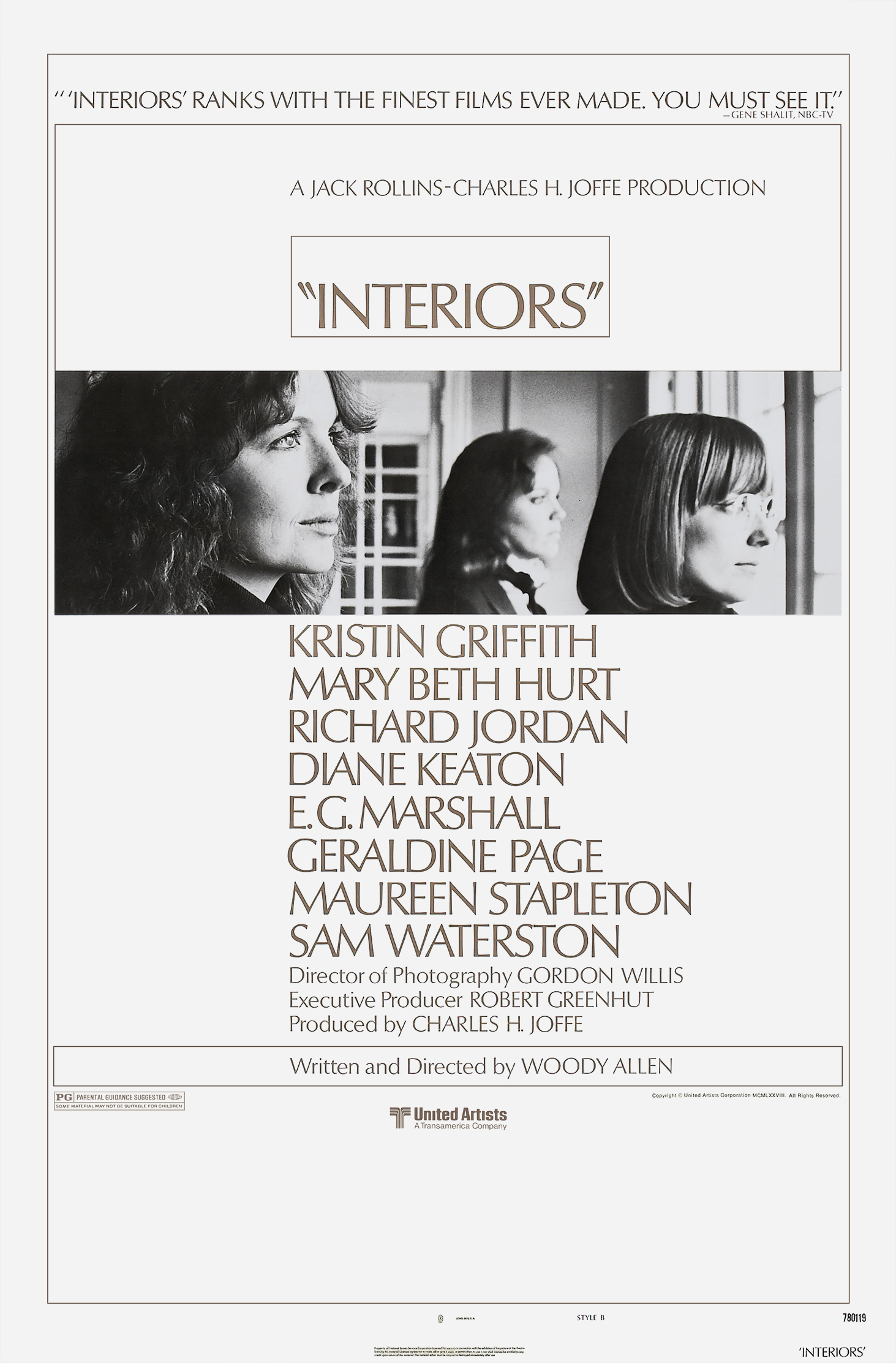
Interiors (1978)

interiors

By Richard Winters

My Rating: 8 out of 10

4-Word Review: Artistic family harbors turmoil.

Eve (Geraldine Page) is an interior decorator whose emotions she keeps bottled-up and who also has a controlling and temperamental nature to not only her husband Arthur (E.G. Marshall), but also her three grown daughters: Renata (Diana Keaton), Flyn (Kristin Griffin), and Joey (Mary Beth Hurt). One morning, while at the breakfast table, Arthur announces to not only Eve, but also the two other daughters present, that he wants a separation though he insists it’s not ‘irrevocable’. Eve becomes upset and refuses to face it. While the two do separate she continues to cling to the delusion that they’ll ultimately reunite. When it finally becomes painfully clear that is not going to happen she then attempts suicide. While she’s in the hospital recovering Arthur goes out and meets Pearl (Maureen Stapleton) whom he quickly falls in love with. When he brings her home to meet the family they’re shocked at how he intends to marry her while his former wife is still in the hospital. This then brings out the hidden hostilities that the daughter’s feel towards their parents as well as each other and in Renata’s case the repressed envy that her own husband Frederick (Richard Jordan) feels for her.

This was Woody Allen’s first dramatic film, which was a big deal when it was first released as he’d only done wacky comedies before this and many were curious and apprehensive about him trying something so completely different from his past work. While he’d been trying to get a drama produced for years his investors constantly nixed the idea fearing that because he attracted audiences through his funny stuff that anything with a serious nature would turn-off would-be theatergoers and be a financial flop, but after the monumental success of Annie Hall they finally decidedly to relent and gave Woody the chance to spread his artistic wings.

The result overall is downright impressive. It’s clearly inspired by the films of Ingmar Bergman, his cinematic idol, but in some ways this is even moodier and more poignant than some of his stuff. While his later dramas fell into becoming a cliche of themselves using many of the same elements taken from this one, namely pretentious artistic characters living in New York who suffer from pretentious problems and relationships, here it’s fresh making the issues that they go through seem illuminating versus rehearsed and contrived like in some of his later works.

That’s not to say I didn’t find some problems here. The fact that we have characters, in this case Keaton, talking directly to the screen, apparently in an attempt to show that she’s speaking with a therapist, is a bit of a cop-put as she’s able to convey her deep seated thoughts and feelings verbally without forcing the director to have to show it through her actions and conversations, which may be more difficult to do, but also more rewarding for the viewer. Arthur’s decision to tell Eve that he wanted to leave while sitting a the meal table with the two daughters present seemed rehearsed. Normally when a couple decides to split they do it privately and have it out through a discussion or argument versus a canned speech that Arthur does, which comes-off like he’s orating in front of a group of people.

Woody’s attempts though to show the struggles and challenges people have who pursue creative endeavors I felt were quite well done. In his later dramas I found it annoying how many characters worked as artists because it reality only a very small portion of the populace can make a living that way, but here I was able to forgive it. I liked how we see close-up the challenges of this by the way Renata writes a poem on paper but is constantly scratching out words that she puts down showing the many drafts an author must go through before it eventually might come-out perfectly. The fact that it’s later revealed that her father helps fund her poetic passions made sense too as a poet able to live-off of their writings is about as rare as it gets.

Richard Jordan’s character is the one I found the most fascinating and I was genuinely surprised that while other cast members were nominated for the Oscar he wasn’t even though to me he’s superb.  The way his character broods incessantly about not getting the critical accolades that he expects and how it turns him into a mopping, alcohol drinking mess who snips at his wife’s perceived shortcomings in an immaturely emotional attempt to bring her down to his level was completely on-target composite of the insecure artist. The scene where he tries to rape Flyn, so he can have the pleasure to ‘fuck someone who’s inferior to me’ fit the personality of someone who harbors frustration that they’re able to mask with a veil of civility most of the time but will allow it to come-out when alone in the presence of someone more vulnerable.

The real star though is the cinematography by Gordon Wills, who ironically went on to make his directorial debut in a movie called Windowswhich was the original title for this one. The gray, cold color schemes and shots showing an ice-covered tree branch effectively reflects the icy emotions of the family and the lack of music with long pauses of silence and empty rooms help symbolize how alienated each member is from the other. The most pronounced moment involving the crashing waves of the ocean and the almost dream-like ‘conversation’ that Joey has with her mother is by far the film’s most memorable element and something that will stay with you long after it’s over.

My Rating: 8 out of 10

Released: August 2, 1978

Runtime: 1 Hour 32 Minutes

Rated R

Director: Woody Allen

Studio: United Artists

Available: DVD, Blu-ray, Freevee, Pluto, Amazon Video, YouTube

Martin (1977)

martin2

By Richard Winters

My Rating: 7 out of 10

4-Word Review: Teenager craves women’s blood.

Martin (John Amplas) is a teenager, who has dreams of living long ago as a vampire, who travels to live with Tateh (Lincoln Maazel) in the outskirts of Pittsburgh. Tateh is an elderly man that is highly superstitious and immediately suspects Martin of being a vampire and puts up certain ‘repellents’ like a crucifix and garlic as a defense against him though these prove to have no effect. Martin gets a job as a grocery delivery boy where he meets Abbie (Elayne Nadeau) a lonely housewife who makes attempts to seduce him. Martin has some attraction towards her, but still craves blood and uses some syringes that he has to attack female victims by injecting them with a serum that will put them to sleep and allow him to cut their arms and drink their blood. He though internally struggles with his actions and feelings and thus calls a radio station to discuss his quandary with the DJ, which goes out over the air and he soon becomes a local celebrity known at ‘The Count’.

By the time this was ready to be made writer/director George A. Romero was deep in debt and struggling to maintain a living as a filmmaker and considering get out of the business altogether. While he had achieved great success with Night of the Living Dead he’s subsequent films failed to generate any profit and where critically panned. Many of the investors of those projects refused to give him any money to make this one fearing it would be a financial dud forcing him to scrape together a meager $100,000 on his own in order to get it produced while leaning on friends and family members, including Romero himself who plays a priest, to fill-in as cast members. However, for the most part the low budget works in the film’s favor. I liked the grainy, faded color that helped accentuate Martin’s fringe, lonely existence and the on-location shooting done in the town of Braddock, Pennsylvania gives it an earthy, rustic appeal.

The best part though is that it works against the vampire stereotypes and gives the age-old folklore a fresh new perspective. The fact that the expected vampire repellents don’t work on him kept it fun by not devolving into the tired cliches. The mystery too as to whether Martin really was a vampire, or just thought he was and no real explanation as to his ‘memories’, which get shot in black-and-white, as being just that, or instead simply fantasies, kept it intriguing. It also forces the viewer to see things from a different point-of-view as in this case it’s not the kid who thinks he’s vampire that’s the real threat, but more the ‘normal’ people around him. This leads to the movie’s best and most memorable moment where he quietly sneaks into the home of a potential female victim that he thinks is alone only to find to his shock that she’s having a secret affair with another man and the chaos that ensues, where both sides misreading the other, is both humorous and exciting while putting a new spin on how we perceive horror.

The only drawbacks are with Martin’s belief that he’s ‘careful’ during his attacks, so that he’ll ‘never get caught’, which is a bit flawed. For one thing he doesn’t wear a mask, so a witness could easily identify him later and there’s no explanation about the injecting sleep potion and how being a kid with little money he’s able to obtain it, or if it’s something he cooked-up himself and if so what did he use to make-it? It is though fun to watch the effects of it as it doesn’t work immediately and his victims will struggle with him quite a bit before they finally go under, which is another element that puts this above most other horror films as the perpetrator is usually always shown as being confident and fully in-control when attacking those he preys on while here it’s the opposite and many times comes close to the victim getting close to overpowering him, which actually heightens the tension.

Having Abie, a middle-aged woman, essentially come-on to Martin right away and even answers her door half-dressed seemed inauthentic. Maybe it’s a product of a bygone era where teens were still considered overall innocent and only the adults with dirty ulterior motives, but she seemed way too unguarded while believing that because he was shy that made him ‘harmless’. While children that are quiet that can sometimes be considered the case, but with teens who don’t say much and being loners can be perceived as anti-social and thus single women would be more defensive around someone like that instead of less.

I also didn’t care for actor Jon Amplas’ teeth as the front tooth appeared capped with a bright white crown while the ones around it where yellowish though I suppose this worked with the character as he was too poor to afford a decent dentist and some could also read into it that the white crown represented possibly a ‘fang’ of some sort. Overall though it’s quite good and helped resurrect Romero’s career. The surprise ending alone makes it worth it. Definitely one vampire movie that deserves more attention and should be listed as one of the best of its genre.

My Rating: 7 out of 10

Released: October 27, 1977

Runtime: 1 Hour 35 Minutes

Rated R

Director: George A. Romero

Studio: Libra Films

Available: DVD, Blu-ray, Tubi

Wedding Trough (1975)

wedding

By Richard Winters

My Rating: 1 out of 10

4-Word Review: Man fucks his pig.

Bizarre, controversial film that was first shown at the Perth International Film Festival in Australia where it was immediately met with outrage and walkouts that quickly got it banned from being shown again by the government, a ban of which still stands today. Since then it’s turned-up sporadically a various film festivals throughout the decades, with the last one being in 2008 in Switzerland, but was never released theatrically and was considered an obscurity before finally getting a DVD issue in 2018. The film has no dialogue and shot in black-and-white at an abandoned farm in the outskirts of Belgium. It was directed by Thierry Zeno who had a noted fascination with all things morbid and followed this one up with a documentary on death and decay called Des Morts. This one deals with taboo subjects of zoophilia and coprophagia, which gets shown graphically. Many label this a horror movie for its grim and unrelenting subject matter, and some have even considered it a forerunner to Eraserhead

The plot description, which will contain SPOILERS, though in this case I feel is a good thing, so you know exactly what you’re getting into if you attempt to watch it, deals with a lonely farmer, played by Dominique Garny, who also co-wrote the screenplay, who begins to have amorous feelings towards his pet pig. One day he gets naked and has sex with it. Later on, the pig gives birth to three piglets. The man tries to bond with his brood by sleeping with them inside a giant basket, but the piglets prefer the comfort of their mother over him. Feeling that he’s now been ‘abandoned by his children’ it sends him into a rage causing him to kill the piglets by hanging them. This causes a great deal of stress for the mother pig who drowns herself in a nearby pond. The farmer now feels guilty about what he’s done, so he ‘punishes himself’ by concocting a drink made of his feces and urine and warms it inside a black pot before then forcing himself to swallow it.

While the sex scenes are simulated, though still graphic enough, the pooping and eating of it isn’t, which many will find gross enough. The hanging of the piglets though is quite unsettling. I’d like to feel that the ones that are hung were stillborn, since they do appear a bit smaller in size from the ones seen running around, but I’m not completely sure. However, the mother pig does become quite stressed in a very real way when she sees the dead piglets and runs around squealing in a high and frantic pitch, which is very disturbing.

Some have for decades sought this movie out as evidenced by the IMDb comments simply their love of shock cinema and this film’s notorious reputation for being at the top of the list. While it is unequivocally gross it’s also boring and disgusting with the abuse of the animals being the worst thing you’ll take from it. Not recommended.

Alternate Titles: Vase de Noces, The Pig Fucking Movie.

Released: April 11, 1975

Runtime: 1 Hour 19 Minutes

Not Rated

Director: Theirry Zeno

Studio: Zeno Films

Available: DVD-R

Don’t Look in the Basement (1973)

dontlook

By Richard Winters

My Rating: 2 out of 10

4-Word Review: Murder inside insane asylum.

Charlotte Beale (Rosie Holotik) gets hired by the director of a rural mental health institute, but when she arrives she finds only one nurse there, Dr. Geraldine Masters (Annabelle Weenick), who reluctantly agrees to take-in Charlotte though warning that the institute’s director was killed earlier by one of the patients, but she is determined to carry-on his work in his absence. The hospital is unusual in that it allows the patients to freely walk around with no perimeters as well as acting-out all of their fantasies versus trying to have them reeled-in back to reality. Charlotte though finds her stay there to be stressful as some of the patients try to attack her and she’s not allowed to leave the premises. She begins to wonder if she’s really there to help treat the insane, or instead slowly turned into becoming like one of them.

The film was shot in the summer of 1972 in the very small town of Tehuacana, Texas, which has a population of only 228 people. While the isolation works to some degree, particularly the exterior shots of the old white building that stands-in as the hospital, the interior action takes place in only 4 of the rooms and a hallway and thus there is no visual variety to the shot selections. You start to see the same shots over and over like a repeating loop that ultimately becomes redundant and boring.

The mentally ill patients are not captured in any type of realistic way as they’re characterized as being simpletons perpetually locked in child-like fantasies. In reality those with mental health issues can still be quite intelligent and simply suffering from dangerous delusions, thoughts, or emotional imbalance versus like here where they’re portrayed as being overgrown children lost in make believe and who never got past age 4. What’s worse is the entire thing gets solely focused on them, their silly antics and inane dialogue, making it seem more like a misguided, unfunny comedy than a horror film.

The staff members, or what little of them there are, are poorly fleshed-out as well. Nurse Charlotte immediately becomes spooked by one of the elderly residents on her first night like she’s had absolutely no training on how to handle mentally ill people. At each and every turn she gets more and more thrown off by them like someone who has no educational background in that field and the part could’ve easily just been some pedestrian thrown in there and you’d never know the difference.

The gore is quite minimal and even pathetic. When the doctor gets axed in the back he immediately falls down to the ground dead. I could understand this happening if the ax got him in the head, but instead it cuts into his shoulder, which shouldn’t have been enough to kill him, at least not instantly, and he instead should’ve been screaming out in pain versus just lying there motionless. The ax killings at the end are equally lame showing only small trickles of blood crawling down the victim’s faces when with a blade that big and that sharp their whole heads, if not entire bodies, should’ve been drowning in red.

Spoiler Alert!

The final 15-minutes are slightly creepy, but it’s not enough to make sitting through the rest of it worth it. The ‘big twist’ in which Nurse Masters is revealed to be a mental patient like the rest of them is no surprise as I had been suspecting it the whole time. There’s also no conclusion to what happens to the main character Charlotte, we see her escape outside into the rain, but not what she does after that. Does she go to the police and report what happens, or does she get committed since it’s intimated earlier that she may be crazy too, or does she just get lost in the wilderness surrounding the place and die? Nothing gets answered on this, but really should’ve.

In 2014 the director’s son, Tony Brownrigg, rebooted the franchise by doing a sequel, which was filmed at the same location as this one with one of the cast members, Camilla Carr, who was the only one still living, returning to play a part, but as a different character from the first one.

My Rating: 2 out of 10

Released: May 16, 1973

Runtime: 1 Hour 29 Minutes

Rated R

Director: S.F. Brownrigg

Studio: Hallmark Releasing Corporation

Available: DVD, Blu-ray (Region B/2), Plex, Pluto, Tubi, Amazon Video, YouTube

What Have You Done to Solange? (1972)

solange

By Richard Winters

My Rating: 7 out of 10

4-Word Review: Bearded priest murders schoolgirls.

Enrico (Fabio Testi) is a high school teacher who’s having an affair with Elizabeth (Cristina Galbo) who’s one of his students. While making-out with her on a boat at a park Elizabeth spots a shadowy figure murdering a young girl in a nearby wooded area. The girl turns-out to be one of her classmates, but Enrico convinces her not to tell anyone for fear that it could jeopardize his job. Once the murder gets discovered and reported on the news Enrico goes back to the scene to check for clues only to be photographed by the police who are there doing the investigation. Inspector Barth (Joachim Fuchsberger) spots Enrico in the photo and brings him in for questioning. Enrico denies any knowledge of the killing, but comes under suspicion especially after Elizabeth is later found murdered in her bath tub. Enrico then reconciles with his frigid wife Herta (Karin Baal) in order to have her help him do their own investigation, so they can unmask who the real killer is before the police are able to close in on him.

The film is a unique partnership between a West German production company and an Italian one that was filmed on-location in London. While there are many German actors in the cast the film as a whole is modeled after an Italian giallo and has many of the mystery, gore, and sleaze elements that you’d expect from those. The direction, by Massimo Dallamano, who was a cinematographer of Spaghetti westerns during the 60’s, approaches the material with a visual elegance. The photography is crisp and detailed with some evocative camera work and angles as well as a few graphic shots including the murderers modus operandi, which is shoving a large knife up his victim’s vaginas, which not only gets revealed on the corpses, but also in x-ray version, but also a drowning death in a bath tub that gets played-out moderately well. In most slasher flicks the victim goes down easily when they’re attacked by surprise by their killer, but here this one struggles quite a bit making the killing more drawn-out and thus more realistic.

The plot though, particularly the second act, gets stretched too thin. We have an intriguing set-up and a zesty conclusion, but in-between it meanders. The biggest reason for this is that the protagonist and his quandary becomes neutered and thus all the potential drama from his situation evaporates. Having the inspector tell him upfront that he doesn’t think he did it hurts the tension and would’ve been intriguing if they thought he did, or he even became their prime suspect. Having Enrico make amends with his wife, at the beginning they’re at extreme odds and even close to fully hating each other, further moderates things as the wife could’ve been an interesting possible suspect too, killing the school girls and trying to make the hubby look like he did it in order to get back at him for cheating on her, but then having the two team-up just fizzles away a potentially dark undercurrent to their relationship. Showing Enrico working with the inspector ultimately makes him seem more like a side character in his own movie and by the end like he’s not really the star at all as the inspector completely takes over.

The one performer that does stand-out is Camille Keaton. She’s better known for her starring role in the cult hit I Spit On Your Grave, but here in one of her first performances in the front of the camera she’s quite impressive and she does so without uttering a single line of dialogue. She comes-in real late too to the extent I was starting to think she’d have some minor part and be spotted for only a few seconds, but her character comes-on strong despite not saying anything and is an integral component to the whole mystery. What I liked most about her was her trance-like demeanor and glazed over look in her eyes that’s both effective, creepy, and disturbing at the same time.

Spoiler Alert!

The film’s wrap-up could’ve been better done as it elaborates about the motives of the killer and the elements of the case too much saying things that the viewer should’ve been able to pick-up on during the course of the movie. For instance it describes the sex parties that these teen girls attended, but snippets of these orgies should’ve been shown and not just discussed. The film had no qualms with the violence, so why not have a little explicit sex as well. Also, Keaton’s character going in to have an abortion like it’s going to be some ‘fun activity’ didn’t seem believable. The attempt was to show that she was naive about how rough the procedure would be and thus became ‘traumatized’ by it afterwards, but she still should’ve shown some trepidation upfront as just about anybody else would.

My Rating: 7 out of 10

Released: March 9, 1972

Runtime: 1 Hour 47 Minutes

Rated R

Director: Massimo Dallamano

Studio: Italian International Films

Available: DVD, Blu-ray, Amazon Video, CONtv

Herbie Rides Again (1974)

herbie1

By Richard Winters

My Rating: 3 out of 10

4-Word Review: Saving home from demolition.

Alonzo Hawk (Keenan Wynn) is a rich man who wants to build the world’s tallest sky scrapper on land that is currently occupied by a little firehouse built in 1892 and owned by an old lady named Mrs. Steinmetz (Helen Hayes). So far she’s refused all offers by Alonzo’s lawyers to sell, so Alonzo decides to have his nephew Willoughby (Ken Berry) go visit her as he has a very clean-cut image and hopes his nice-guy approach may be what it takes to persuade her. However, once he’s there he gets introduced by Mrs. Steinmetz former neighbor Nicole (Stefanie Powers) who’s now living with the old day due her place being demolished by Alonzo. When Nicole realizes Willoughby is related to Alonzo she immediately takes a disliking to him and even punches him in the face. Her feelings towards him though begin to change when she gives him a ride in the Volkswagen beetle that Steinmetz is taking care of for its owner while he’s away in Europe racing. Willoughby at first doesn’t believe that the car, who’s named Herbie, has a mind of its own, but soon realizes it does after his trip in it and this eventually gets him to side with Nicole and Steinmetz on the issue they’re having with his uncle and he begins fighting with the other two and Herbie to stop Alonzo from tearing the place down.

This was a rather odd idea for a sequel to the Love Bug that came-out 6 years earlier and had the VW Beetle involved in racing, but now apparently was ‘retired’ and no longer able to race effectively even though in the third entry to the series, which came-out 3 years later he does go back to racing.  The plot here though doesn’t really need the car involved to help propel it, yes the vehicle does ‘come to the rescue’ a few times, but the story could’ve easily worked with just the humans fighting Alonzo in various ways and would’ve been just as funny. To make-up for this the film does show archived footage, which goes on for several minutes, of the car ‘dreaming’ about it’s racing days though some of his race ‘victories’ could be called into question like when it decides to go off the racing track in one and cut through a forest and then back onto the track where it’s now at the front line of the other cars, which most would deem as cheating and not really an honorable win.

Overall though I really didn’t find any of the scenes with the car to be all that interesting. It’s hard to get emotionally attached to some machine that doesn’t speak, or show any expression and the only sign that it’s ‘alive’ is through its car stunts. The fact that it has seemingly no limits to what it can do, at least driving wise, I felt worked against it. To create even the modicum of suspense, or believability, there needs to be some rules to what it can and cannot do and yet here it defies all probability like driving on the side of cliffs without falling off, or being able to somehow pull vehicles, that are much bigger and weigh more, around like it does during a ‘tug-of-war’ scene with a cop car that’s attempting to tow it. It’s even able to smash through walls without receiving any damage to its front-end. I’m okay with the car having a certain ‘personality’, but when the car is able to get out of any predicament in a seeming magical way then there really isn’t any intrigue at all.

The acting by Hayes, Powers, and Wynn are good and I was especially impressed with Wynn’s ability to essentially shout out all of his lines in a consistently snarly way and yet never get any laryngitis and he certainly adds energy to all of his moments. Berry though is so vanilla that he’s just plain boring. It might’ve worked better had he remained loyal to his uncle longer, but he sides with the two ladies so easily that his character quickly becomes quite benign to the point that it would’ve been more interesting to have just the two women, and the car of course, fighting the bad guys and his presence excised from the script completely.

The nightmare segment where Alonzo dreams of being attacked by not only Herbie, but several clones of Herbie whose front hood opens up to reveal a mouth with giant teeth, which also includes a take-off of King Kong, where Alonzo is on top of the Empire State Building as he fights off the Herbie’s that are flying in a circle around him is genuinely inspired and the best part of the movie. Everything else though falls painfully flat including the cheap special effects where the exterior of the firehouse looks like it’s a painting on a back-drop, which I’m sure it was, or the scene where Herbie goes up the Golden Gate Bridge, which you can plainly tell was a miniature model matted onto a picture because as the car goes back down it starts to lose its pixelation and fade-out and disappear into thin air.

My Rating: 3 out of 10

Released: June 6, 1974

Runtime: 1 Hour 28 Minutes

Rated G

Director: Robert Stevenson

Studio: Buena Vista

Available: DVD, Blu-ray, Amazon Video, YouTube