Category Archives: 70’s Movies

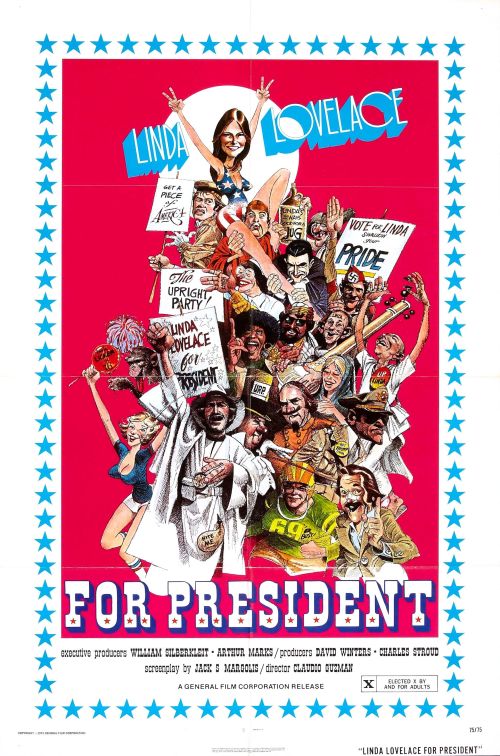
Linda Lovelace for President (1975)

linda-lovelace-1

By Richard Winters

My Rating: 0 out of 10

4-Word Review: Vote for porn star.

The election is only a few months away and there are still no candidates running for President. Then someone suggests adult film star Linda Lovelace famous for her starring role in the porn classic Deep Throat. At first she is reluctant, but then after having a conversation with what she thinks is God she agrees, which then leads to many ‘zany’ and ‘comical’ adventures.

I don’t know where to even begin with this one except to say that it’s crap, pure and unadulterated crap that on any level isn’t worth anyone’s time. The gags are incredibly lame and there’s no real plot to speak. It’s also not very sexy, so if you’re considering checking it out just for that reason you might as well pass.

Lovelace isn’t all that attractive and certainly cannot compare to today’s porn stars. Maybe that sounds cruel and shallow to some, but let’s face it the selling point for this thing isn’t her acting talent. I think my biggest annoyance with her is her blank smile and stare and the way she delivers her lines almost like she is in some sort of hypnotic trance.

Had the film tried to keep things on a more real level and gone through some of the things a person who actually tried to run for President would go through than it might’ve had a chance and maybe even been really funny. Unfortunately we see none of that and there isn’t even any opposing Nixon-like candidate going against her. Instead it’s just a barrage of lame gags one after that other that wouldn’t amuse even a 4-year-old.

Chuck McCann has a few light-hearted moments as a racist senator near the beginning and later as an inept assassin, but otherwise there are no laughs to be had. It’s rare that I would ever suggest a porn flick over a feature film, but in this case I would. It’s been years since I’ve seen it, but Deep Throat even if you take out the sex scenes it’s still far better directed and more creative than this turkey, so if on a slow evening and you’re really desperate I’d pop that one in instead of this thing. In fact I’d rather watch an 8-hour video showing grass growing than this and believe me it would be far more interesting.

My Rating: 0 out of 10

Released: April 1, 1975

Runtime: 1Hour 34Minutes

Rated R

Director: Claudio Guzman

Studio: General Film Corporation

Available: DVD, Amazon Instant Video

Peeper (1976)

peeper-4

By Richard Winters

My Rating: 6 out of 10

4-Word Review: Searching for client’s daughter.

Leslie C. Tucker (Michael Caine) is a British private eye working in L.A. who gets hired on by an eccentric client named Anglich (Michael Constantine) to find his long lost daughter that was born 24 years ago and now resides he believes somewhere in Hollywood. Tucker tries following the skimpy clues and this leads him to a beautiful woman named Ellen (Natalie Wood) who he believes just may be that daughter and not even know it, but the closer he gets to some answers the more questions he has to tackle as well as being chased by a pair of hoods (Timothy Carey, Don Calfa) who are out to stop him.

This film is based on a novel by Keith Laumer with a screenplay written by W.D. Richter and directed by Peter Hyams. With such talented people involved you’d think this would’ve been a winner, but it bombed at the box office and I’m not completely sure why. The ingredients are there, but the oversaturation of private eye parodies during the ‘70s could’ve gotten this one lost in the shuffle.

The film though is filled with snappy dialogue and some highly amusing voice-over narration by the Tucker character. There are also unique scenes including a car chase that takes place amidst a major traffic jam and a cool foot chase sequence down a long, winding spiral staircase. I also loved the scene where Tucker is trapped in a car with an angry dog outside only for him to miraculously turn-the-tables on the animal where he gets outside while the dog ends up stuck in the vehicle. The best moment though is at the beginning when actor Guy Marks does his impersonation of Humphrey Bogart while standing in a dark alley and reciting the opening credits instead of having them shown on screen.

As much as I love Michael Caine I found him to be wrong for this role. If you’re going to do a light parody of old school private eye films then you have to cast someone in the lead that would reflect to some degree Bogart. It certainly doesn’t have to be an impersonator, but someone that is from Brooklyn and has a New York mentality as opposed to a transplanted Englishman with a British accent.

Wood is equally miscast. This was her first theatrical feature in 7 years and she turned down a role in The Towering Inferno to do this one and I’m not sure why. The part is rather small and offers little range in either acting or character development and with everything else that goes on in the story she ends up getting forgotten though it does have a foreboding quality in that the final segment involves her on a boat and near water.

The mystery itself ends up being the worst thing. It’s too intricate and filled with so many rapidly paced twists that it becomes almost impossible to follow. The action is enough to keep it interesting, but as a compelling plot it fails. I also wasn’t too crazy about the title. The working title was ‘Fat Chance’, which I didn’t like either, but peeper is slang for a private eye who takes a lot of photographs, which this detective doesn’t do at all.

My Rating: 6 out of 10

Released: January 6, 1976

Runtime: 1Hour 27Minutes

Rated PG

Director: Peter Hyams

Studio: 20th Century Fox

Available: DVD, Amazon Instant Video
House on Straw Hill (1976)

house-on-straw-hill-1

By Richard Winters

My Rating: 3 out of 10      

4-Word Review: Writer battles his secretary.

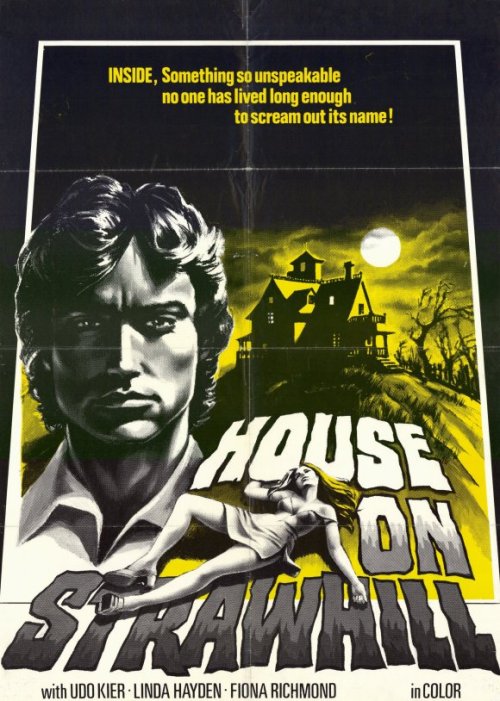
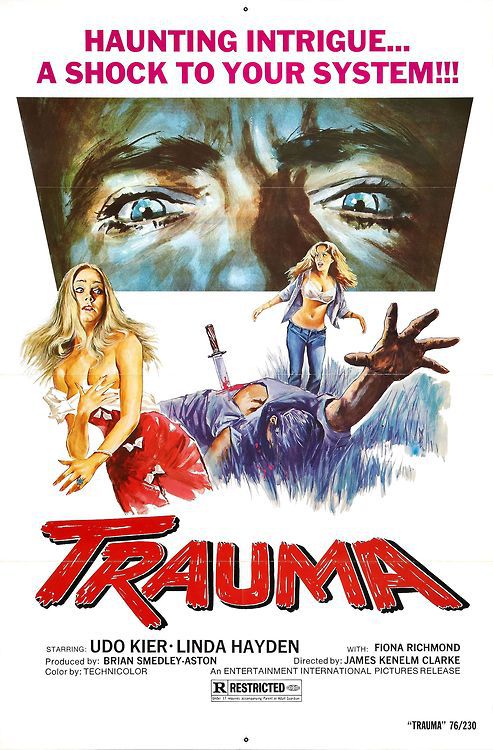
Paul (Udo Kier) is a writer who had success with his first novel and now working on his much anticipated second one. To help him get the manuscript done faster he hires a secretary (Linda Hayden) who comes to his isolated, countryside home to type it up, but the two don’t get along. Soon Paul becomes convinced that she is out to kill him and he just may be right.

This pseudo horror film has an enticing visual style.  I liked the close-up shots of the typewriter keys banging on the paper as well as the giant wheat field surrounding the home, which to a degree helps create an interesting atmosphere, but writer/director James Kenelm Clarke goes back to these things too often eventually making the film one-dimensional and monotonous.

The film is also loaded with a lot of explicit sex. If this were a porno then that would be great, but for an intended horror film it goes off the mark completely. We really don’t need to see Linda constantly masturbating. Having Paul find a dildo in her suitcase as he does would’ve been enough. Linda’s ultimate seduction of Paul’s girlfriend (Fiona Richmond) in a provocative lesbian sequence is completely pointless to the story and clearly just done to grab the crowd that’s into watching mindless sleaze.

The characters come off as weird, half-human caricatures whose motivations and actions are confusing. Both Paul and Linda needed to be better fleshed out for the viewer to have any compelling reason to care what happens to either one of them. The scene where Linda masturbates in the wheat field and is then attacked and raped by some locals only for her to turn-the-tables on them and kill them is particularly stupid because she is somehow able to immediately compose herself afterwards and come back to the house and act like it never happened when with anyone else it would’ve been an emotionally traumatic experience that would’ve taken months maybe even years to get over if even then.

The film’s twist ending is particularly weak and the film should’ve used flashbacks and other subtle clues to help the viewer figure it out for themselves the reasons for Linda’s motivations instead of having it all explained to them by her at the end. I also didn’t like the title as it is too reminiscent to Straw Dogs, which also took place in a remote home in the English countryside and dealt with a rape by some of the local thugs. This might’ve been intentional, but it was a big mistake because it just reminds the viewer of that movie, which was far better.

house-on-straw-hill-2

My Rating: 3 out of 10

Alternate Titles: Trauma, Expose

Released: March 15, 1976

Runtime: 1Hour 24Minutes

Rated X

Director: James Kenelm Clarke

Studio: Norfolk International Pictures

Available: DVD, Blu-ray

The Arousers (1972)

sweet-kill-1

By Richard Winters

My Rating: 5 out of 10       

4-Word Review: He suffers from impotence.

Eddie (Tab Hunter) is a good-looking high school athletic coach who is a magnet to the young southern California women that inhabit the area. Unfortunately Eddie cannot perform in bed and the stress and shame that he feels because of this causes him to murder the women that he attracts.

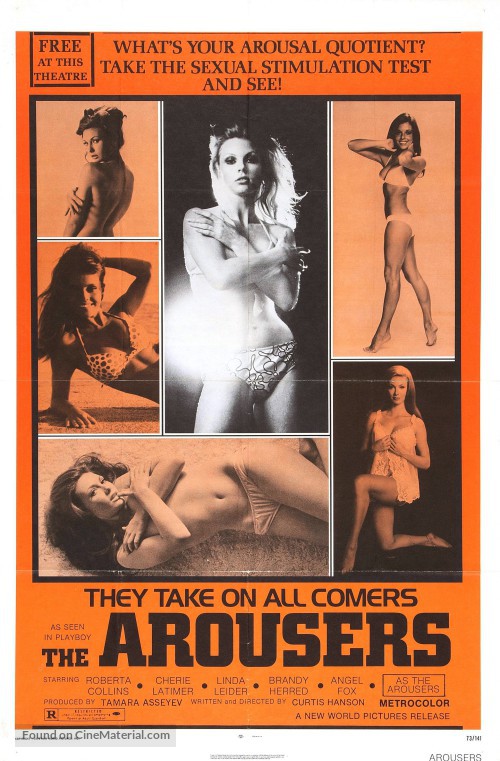
The original title for this film was Sweet Kill, which I liked better, but because it did not make any money at the box office it got reissued as The Arousers, with nude scenes of voluptuous women added in, which doesn’t really improve it. The film is indeed pretty slow, but I still found it strangely captivating. The story has a real-time approach with more emphasis on seeing the characters as real people than on the chills or shocks. Charles Bernstein’s acoustic musical score is excellent and helps build the tension by being soft at the beginning to the point of barely being detected and then becoming increasingly more present as the film progresses.

Hunter’s excellent performance is not only the best of his career, but one of the better psycho’s in horror film history. The way his eyes glare with evil is impressive and the film makes attempts to show the character’s frustration at suffering from inner shame and not just a one-dimensional killer.

It’s great that the film brings out an important social issue, which at the time was still quite taboo and not at all talked about. Unfortunately the story makes no attempt to explain the cause. Impotence can be caused by many different factors, so the character didn’t necessarily need to be pinpointed with one, but more of a background would’ve helped the viewer understand his inner demons better.

The killings themselves aren’t interesting and the story is too one-sided as we see everything from the killer’s perspective where the tension would’ve been heightened had there been a side-story dealing with a police investigator on his trail. The ending offers no payoff outside of seeing Hunter give off a menacing scowl that rivals Jack Nicholson’s from The Shining. The movie also offers a glimpse of Angus Scrimm, who later became famous for playing The Tall Man in Phantasm, in his film debut.

sweet-kill-2

My Rating: 5 out of 10

Alternate Title: Sweet Kill

Released: May 15, 1972

Runtime: 1Hour 23Minutes

Rated R

Director: Curtis Hanson

Studio: New World Pictures

Available: DVD

Till Death (1978)

till-death-1

By Richard Winters

My Rating: 1 out of 10

4-Word Review: His dead wife returns.

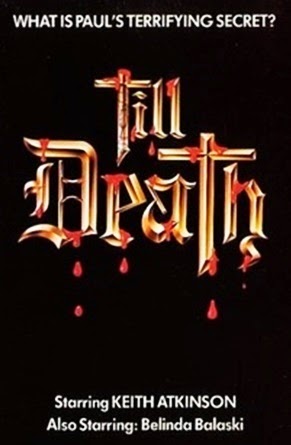
Paul (Keith Atkinson) marries Anne (Belinda Balaski) only to have her perish on their wedding night. When he goes to visit her at her crypt he hears her wails and breaks into her coffin where he finds her to be alive. They spend the rest of the night talking until supernatural events begin to occur, which convinces Paul that things aren’t quite what they seem.

This very low budget film sat on the shelf for 6 years and it was for good reason. It is boring and uneventful and at times down right hokey. The sappy opening title tune is the most horrifying thing about this turkey and has no place in a horror film or any other movie for that matter. The car crash borders on being laughable. There is a shot of Balaski being quite literally swallowed out of the car with an over-the-top panicked expression while Atkinson, with an equally over-the-top panicked expression, tries to save her. The shot is quick and might have passed had it only been shown once, but the director keeps going back to it almost repeatedly until it becomes both corny and annoying.

The second half is about as static as you can get. Atkinson releases Balaski from her crypt and then the two have one long, sterile conversation that goes nowhere.  Since the woman was supposedly thrown from a car one would expect her to be a mangled up mess, but when the coffin gets opened there is not a scratch on her. The payoff for sitting through this thing is nothing as there is no interesting twist of any kind. It’s a dud from start to finish and filled with a lot of clichéd foggy atmosphere that’s supposed to be creepy, but wouldn’t scare a first-grader.

My Rating: 1 out of 10

Released: February 4, 1978

Runtime: 1Hour 20Minutes

Not Rated

Director: Walter Stocker

Studio: Cougar Films

Available: None at this time.

Schoolgirls in Chains (1973)

schoolgirls-1

By Richard Winters

My Rating: 0 out of 10

4-Word Review: Pretty teens held captive.

Frank and John (Gary Kent, John Parker) are two mentally-challenged brothers who’ve spent years being dominated by their aging mother (Great Gaylord) who will not let them date other women, or in any way play out their sexual feelings. If they do bring home a girlfriend their mother scares them away, so instead they kidnap women that they spot at random and then bring them home to their basement where they are forced to partake in all sorts of perverted ‘games’.

This is one of those movies where you know from the very first frame that it’s going to be bad and then it just proceeds to get even worse as it goes along. The production values are abhorrent and the music score is especially annoying. Instead of playing something that sounds creepy or heightens the tension they play and sing melodies from children’s songs like ‘Three Blind Mice’.

The acting is pathetic especially from the women who show no fight or struggle and simply lie there like dead fish and allow their male captors to do what they want with them, which creates no tension.  The men aren’t frightening at all and the John character runs around while waving his arms in the air making both him and the movie look quite campy and silly.

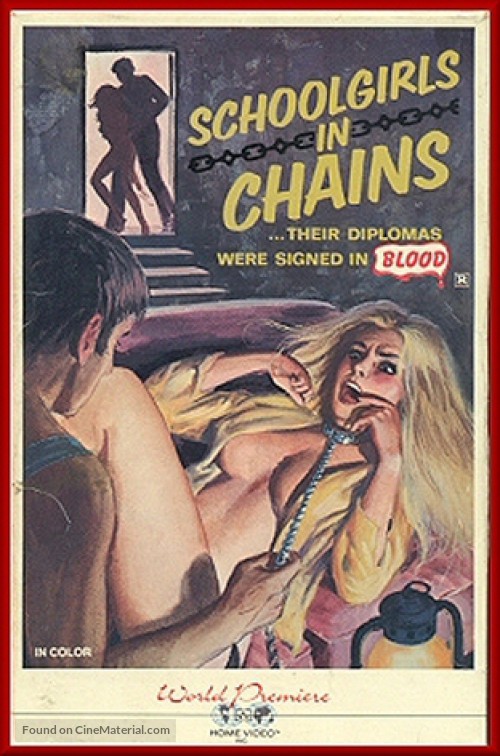
If you’re hoping for something seedy or tawdry you can forget it. The provocative title and film poster may give you that impression, but what you receive instead would barely get an R-rating today. There’s very little nudity or gore and the action, which isn’t much, is poorly staged. The story does have a lurid quality, but it’s nothing that you haven’t seen before and overall quite tame and predictable by today’s standards.

There are similarities to this film and Charles Kaufman’s cult classic Mother’s Day, which came out 7 years later and was much better. Psycho is what this movie most resembles and there is even a scene where one of the victims bursts into the mother’s room only to find her to be a rotting skeleton, but it amazed me to think that the filmmakers behind this waste of time believed this would top that classic. Why simply rehash what has already been done before and better? Why not take things in a more unpredictable area? Maybe the writer, director and producer weren’t creative enough to think up anything else, so this tired, formulaic thing is all that they could offer, but it’s an embarrassment to all involved and should be avoided.

schoolgirls-2

My Rating: 0 out of 10

Alternate Titles: Girls in Chains, Abducted

Released: February 7, 1973

Runtime: 1Hour 25Minutes

Rated R

Director: Don Jones

Studio: Mirror Releasing

Available: DVD

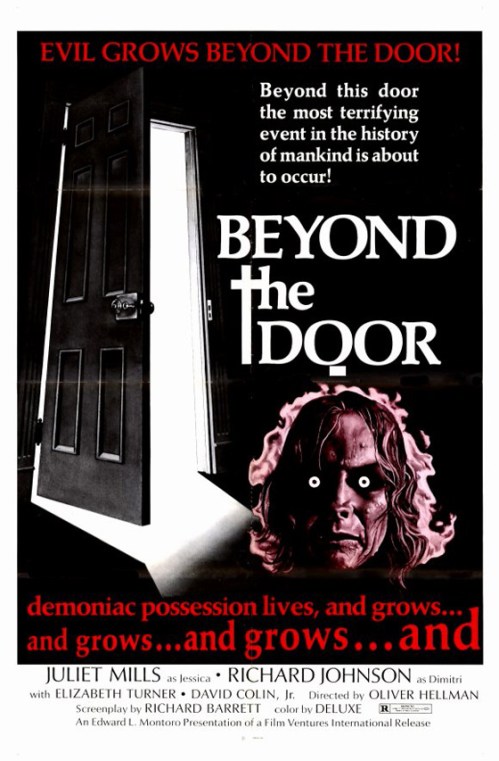
Beyond the Door (1974)

beyond-the-door

By Richard Winters

My Rating: 2 out of 10

4-Word Review: Carrying the devil’s child.

Jessica (Juliet Mills) is already the mother of two children and now finds out that she’s carrying a third. This one though seems different. He’s growing at a faster rate and she suffers from ‘spells’ where she blacks-out, levitates and speaks in different voices that are not her own. Is she possessed? Her husband (Gabriele Lavia) and Dr. (Nino Segurini) begin to believe that she is.

Obviously this is a rip-off of The Exorcist to the point that Warner Brothers took legal action to try to block its release. To some extent I could care less what it rips-off as long as it somehow improves on the original or at least gives us the same type of scares, but this thing fails on all levels. Instead of playing up the special effects it gives us a mechanical replay of the ones we already saw in William Friedkin’s masterpiece, but at a cheaper and cheesier level.

The dumb story doesn’t make sense. The grainy, faded film stock looks like it was shot on a threadbare budget and the voices of the actors were dubbed in during post-production, which gives it an amateurish quality. There are also too many shots showing the characters walking down the streets of San Francisco.  This was mainly due to the fact that the indoor scenes where shot in Rome while the outdoors ones were captured in Frisco, so the producers wanted to get the most ‘bang-for-their-buck’ by implementing as much as they could to their time in The City by the Bay, but it’s not visually interesting.

The music is over-the-top and having Lucifer speak directly to the audience as he does at the beginning borders on high camp. The only reason to catch this is to see Juliet Mills playing against type. She is best known for starring in the ‘70s TV-series ‘Nanny and the Professor’ and has always had a clean-cut image, so seeing here spit out pea soup, use vulgarities and wear make-up that makes her look increasingly more monstrous is fun. She plays the part surprisingly well and gives it her all, which is far more than this cheap production deserved.

My Rating: 2 out of 10

Released: November 21, 1974

Runtime: 1Hour 39Minutes

Rated R

Studio: Film Ventures International

Director: Ovidio G. Assonitis

Available: DVD

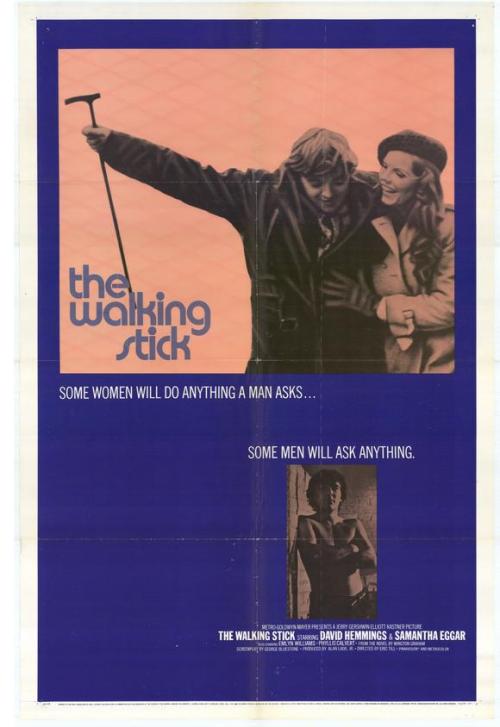
The Walking Stick (1970)

walking-stick

By Richard Winters

My Rating: 4 out of 10

4-Word Review: Polio victim becomes pawn.

Deborah (Samantha Eggar) is a shy, lonely woman who suffered from polio as a young girl and now must rely on the use of a cane to get around. She still lives with her parents while suffering from claustrophobic tendencies due to being locked inside an iron lung as a child. She meets Leigh (David Hemmings) a struggling artist at a party and he asks her out. Initially she resists his advances, but eventually gives in. The two form a tight bound and even move in together, but her fairytale romance is short-lived once she realizes that she’s been pegged as a pawn and simply used by his gang for her inside knowledge of the auction house where she works to pull off a daring robbery.

The film, which is based on the novel by Winston Graham, is quite leisurely paced. To a degree I didn’t find this to be a problem as it still managed to hold my interest, but too much time is spent on the romance making it seem more like a drama.

The robbery and its planning doesn’t come into play until well over an hour in and seems like a whole different movie altogether. Certain hints should’ve been brought in from the beginning to make it clear to the viewer that despite all the romance this was still meant to be a thriller, which is just not obvious at all. The crime scenes do at least provide some action and quick edits, which normally would’ve made it exciting, but because it takes so long to get there it comes off as off-putting instead. The intended tension doesn’t work because we are less concerned if Leigh and his gang are going to get away with it and more upset at seeing Deborah being taken advantage of.

Eggar gives an outstanding performance and seeing this normally effervescent woman wearing a perpetual frown seemed almost startling, but she conveys her characters inner unhappiness quite well and mostly through her facial expressions alone. However, her character is also quite cold and acerbic. To a degree this is understandable as it’s clearly just a defense, but the viewer never sees enough of her softer side and therefore doesn’t emotional bond with her as they should.

Hemming’s more outgoing personality creates a nice contrast to Eggar’s introverted one, but his character is pretty benign. Dudley Sutton who plays his cohort would’ve made a better boyfriend as he is good at showing a dark side and would’ve kept the viewer more on edge.

The ending doesn’t provide any type of clear wrap-up and leaves a lot of loose ends hanging, which is a pity. The production values are decent and I liked the flashback scenes showing Debora being put into an iron lung, which is the film’s best cinematic moments, but the pace needed to be tighter with more emphasis placed on the story’s twists and turns.

My Rating: 4 out of 10

Released: April 15, 1970

Runtime: 1Hour 41Minutes

Rated GP

Director: Eric Till

Studio: MGM

Available: DVD-R (Warner Archive), Amazon Instant Video

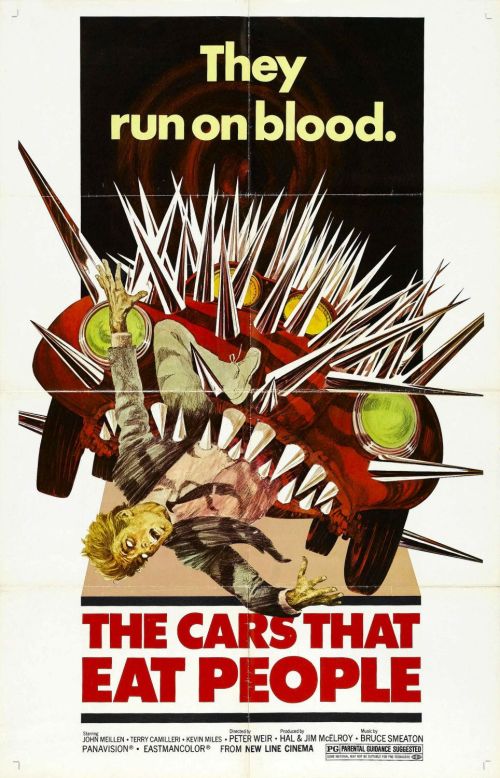
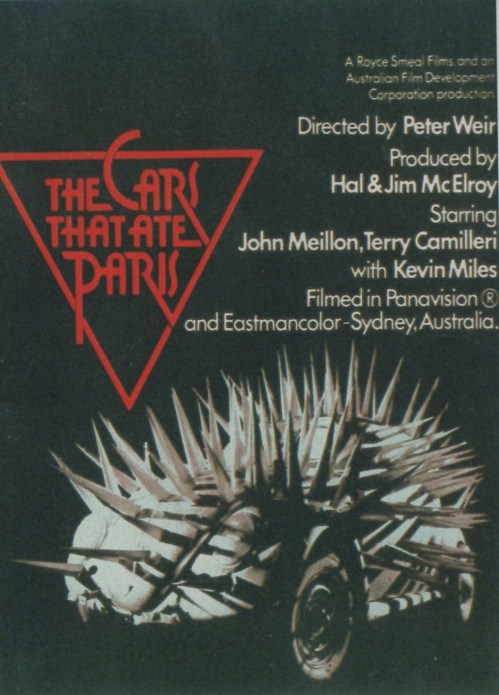
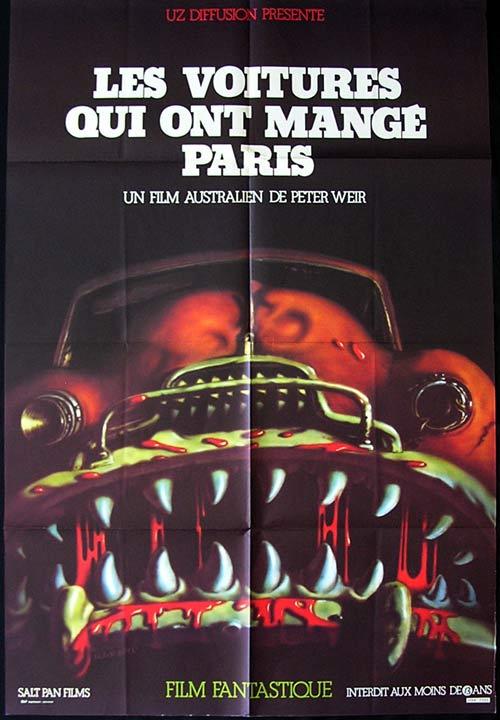
The Cars That Ate Paris (1974)

cars-ate-paris-1

By Richard Winters

My Rating: 7 out of 10

4-Word Review: Lots of car accidents.

The residents of a poor Australian town known as Paris come up with a scheme to cause car accidents to those traveling through it which will allow them to salvage what’s left of the vehicle and resell it for goods or cash.  Things go smoothly for a while until Arthur (Terry Camilleri) and his brother George (Rick Scully) become victims to one these ‘accidents’. George dies, but Arthur survives and is too traumatized to get back into a car again or leave town. He takes up residence with the town’s mayor (John Meillon) who gets him a job as a parking enforcer, which causes problems when Arthur gives a citation to some rowdy young people who do not take kindly to this and seek a violent revenge.

This decidedly odd story marks director Peter Weir’s feature film debut and it’s hard to know what genre to place it into. Originally it was intended as a wacky comedy, but then dark elements were added in. Eventually it was distributed as a horror film, but it didn’t do well at the box office, so it was reissued as an art film and only fared slightly better. The film has managed to obtain a cult following and the story is original with funny moments, but the unexpectedly gory ending could leave some viewers cold as it did when it was first screened at the Cannes Film Festival back in ‘74.

cars-ate-paris-2

One of the best things about the movie is the casting of Camilleri in the lead. He’s very soft-spoken and has an almost transparent demeanor, which helps heighten the interest because you become intrigued at seeing how this schmuck is going to potentially take down this small town criminal organization, which would’ve been fun, but unfortunately the plot doesn’t get played-out in quite that way.

Meillon is solid as the mayor and I enjoyed seeing how his character puts up this calm façade while simultaneously trying to bottle up all the tension that he has inside. Bruce Spence is effective as the town crazy as well as Chris Haywood playing an average-joe who seems quite benign and good-natured at the beginning only to become increasingly more menacing as the film progresses.

The entire movie was shot on-location in Sofala, New South Wales which has a population of only 208 people and quite possibly the narrowest main street of any town in the world. Weir captures its rundown look well and helps convey how poor and isolated the residents were, which allows the viewer to understand why the people resorted to such desperate measures. However, I didn’t like how these same people immediately flee the town the minute the young adults get out-of-control. People who’ve lived somewhere all their lives become emotionally bonded to it and will not move the moment something goes wrong. They would try to control the threat if they could and only up-and-leave months or years later if they had to. Besides where would these people go as they had no money and limited job skills.

If you’re into offbeat comedy then this one may do for a slow evening although those looking for something in the horror vein will be disappointed.

cars-ate-paris-3

cars-ate-paris-4

My Rating: 7 out of 10

Released: October 10, 1974

Runtime: 1Hour 31Minutes

Rated PG

Director: Peter Weir

Studio: The Australian Film Corporation

Available: DVD

Going Home (1971)

going-home

By Richard Winters

My Rating: 6 out of 10

4-Word Review: Father and son reunite.

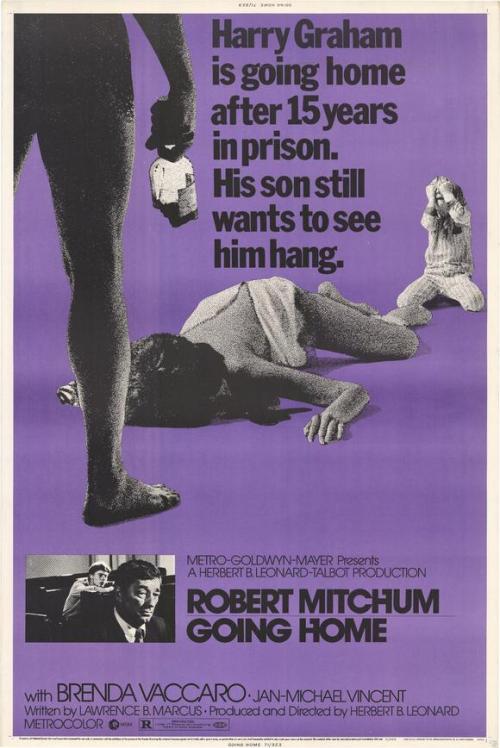
One night during a drunken rage Harry Graham (Robert Mitchum) kills his wife (Sally Kirkland), which gets witnessed by their 7-year-old son Jimmy (Jan-Michael Vincent). 13 years later Harry is paroled and Jimmy uses this opportunity to try and reconcile with his father and find out why he did it, but Harry has moved on. He has a new job and a girlfriend named Jenny (Brenda Vaccaro) and when Jimmy appears it creates an awkward tension that gets progressively worse.

One of the biggest problems with this film is that the characters and their motivations are not fleshed out enough and their actions make little sense. I’ve watched a lot of true-life crime shows and have found that in cases where this situation has occurred in real-life that the adult child will usually cease communication with their father and completely disown them, so it seemed strange why Jimmy would want to restart their relationship. If he was curious to know why Harry did it then he could’ve simply written him a letter with that question, which he never bothered to do while the man was incarcerated.

The film also fails to show what happened to Jimmy during the time Harry was in prison. He is shown arriving at an orphanage, but nothing about what does when he gets there or being put into a foster home and getting adoptive parents, or moving in with relatives, which is what usually occurs. He somehow has no friends or job and if this is because of his childhood trauma then it should get explained or more strongly implied, but it isn’t and it leaves a big void in the story.

Harry’s actions are equally confusing. The murder gets played out at the beginning and we see the stabbed mother crawl down the stairs and beg Jimmy for help and then Harry comes down and looks at the dead body before turning towards the boy with a guilty expression, but if  he feels so bad about what he has just done and the traumatic impact he’s put his son through then he should’ve thought of that beforehand. I would’ve expected to see a completely different set of emotions in the man’s eyes like anger, rage, insanity or even fear because now he knows he’ll will be going to prison, but guilt wouldn’t play into it, at least not that quickly if ever.

Mitchum’s character is straddled with conveying only one emotion throughout, which is guilt. We never tap into the other side of the man that propelled him to commit such a heinous act and his explanation, which is that he ‘just got drunk’ is insufficient. The character also pops up too conveniently at times. One moment is when Jimmy goes back to their former home, which has now been turned into a whorehouse and he hides in the basement. Harry comes looking for him and despite the fact that there are many people there and it’s a large place he immediately goes to the cellar, but how would he have known to look there? Another segment has him magically coming to Jimmy’s rescue when his son is accosted by a group of sailors underneath a boardwalk even though he was bowling in another building and would have no way of knowing what was occurring outside.

The film has solid production values and director Herbert B. Leonard shows flair with the location shooting, which was done in both New Jersey and Pennsylvania. There is also a good scene inside a chicken coop  and actor Josh Mostel (Zero’s son) has an interesting film debut playing Harry’s young, flippant parole officer who delights in demeaning his client as much as possible, but the story leaves open too many unanswered questions and isn’t impactful or relevant.

My Rating: 6 out of 10

Released: December 1, 1971

Runtime: 1Hour 37Minutes

Rated GP

Director: Herbert B. Leonard

Studio: MGM

Available: DVD-R (Warner Archive)