Category Archives: 60’s Movies

The Night of the Generals (1967)

night of the generals

By Richard Winters

My Rating: 5 out of 10

4-Word Review: A general kills prostitutes.

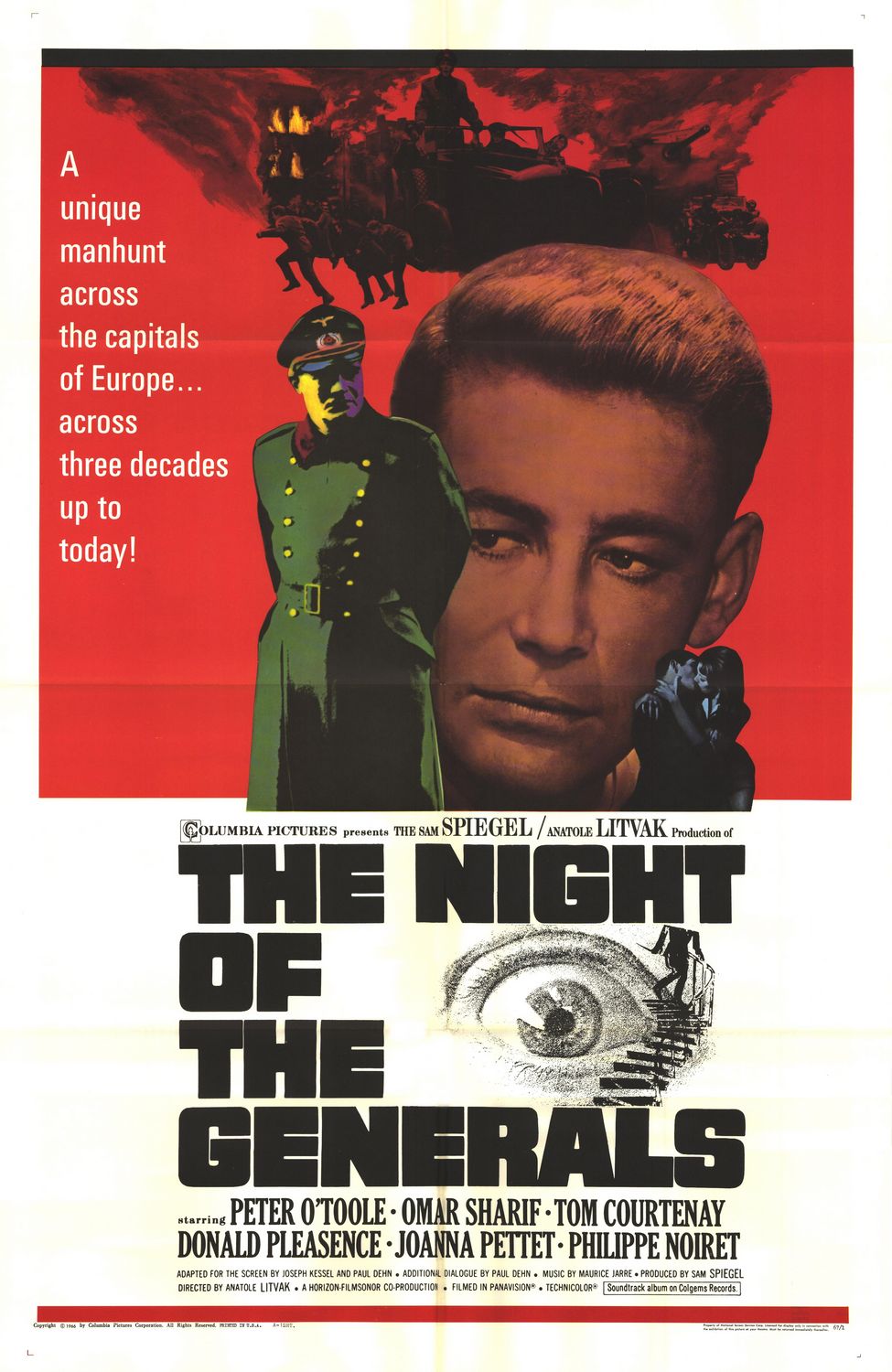
In 1942 during the height of the war a Polish prostitute is found murdered and sexually mutilated. A witness spotted a man leaving her room who was wearing a uniform that had a red stripe running down the side of his pants, which signified that he was a general. Major Grau (Omar Sharif) who is in charge of the investigation decides to interview three generals (Donald Pleasance, Peter O’Toole, Charles Gray) who were in the vicinity and have no alibi, but finds a lot of pressure not to pursue the case and it takes several decades before it finally unravels.

The storyline is compelling enough to keep you intrigued, but the script is talky with not enough action. Certain story threads seemed unnecessary and the film could have been more compact. The actors are mostly all British, but make no effort to speak in German accents despite playing Nazi roles. The music cues that are used whenever an important plot point is revealed or to transition to another scene are too loud and have a generic quality to them that does not appropriately reflect the time period.

O’Toole gives an interesting performance as psychotic ready to fall completely apart. His extreme emphasis on cleanliness especially to those that serve under him and his nervous twitches steal the film as well as a bit where he commands his men to destroy an entire block of a town simply to get at a couple of snipers. His bizarre reaction to a painting of Vincent Van Gogh that he spots in a gallery is intriguing especially when it occurs twice and his blank blue-eyed stare becomes almost piercing.

Sharif does quite well in support and despite being born and raised in Egypt does a convincing job as a Nazi and I think make-up was used to lighten his skin. Tom Courtenay is good as O’Toole’s assistant and the relationship that they form has some interesting subtexts to it.

Joanna Pettet’s appearance however seemed pointless and although the constant sparring she has with her mother (Joan Plowright) was fun it really didn’t add much to an already cluttered narrative. Christopher Plummer also gets stuck in a thankless part where he is seen for less than five minutes before promptly being killed off.

The identity of the killer gets revealed 45 minutes before the end, which hurts the suspense. I also didn’t like that the Sharif character gets killed off and the rest of the investigation is taken over by a Frenchman (Philippe Noiret) which seemed defeating since we had spent so much time siding with the character’s plight to seek justice despite all the obstacles. The film’s very final moment is supposed to be dramatic and poignant, but instead goes over-the-top and becomes weak and strained.

My Rating: 5 out of 10

Released: January 29, 1967

Runtime: 2Hours 25Minutes

Not Rated

Director: Anatole Litvak

Studio: Columbia Pictures

Available: VHS, DVD, Amazon Instant Video
How to Steal a Million (1966)

how to steal a million 2

By Richard Winters

My Rating: 8 out of 10

4-Word Review: They steal a statue.

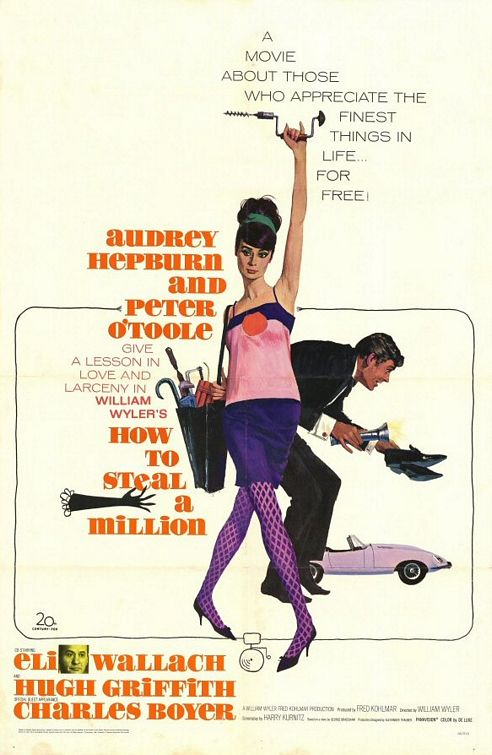
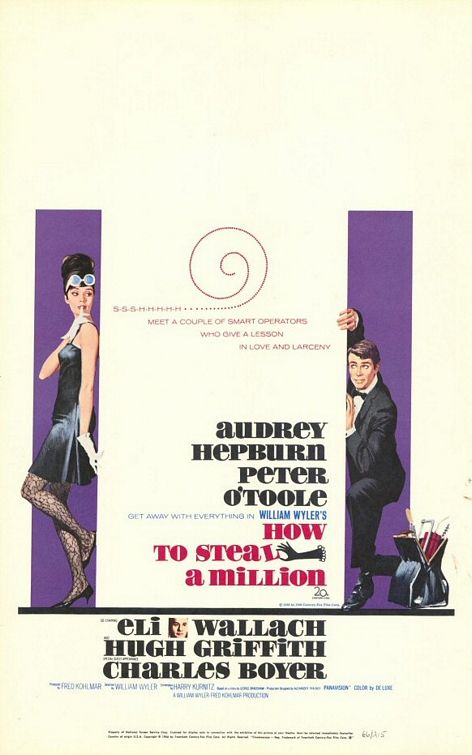
Bonnet (Hugh Griffith) is a successful art forger who lends his Cellini Venus statue to a Paris Museum. He also has it insured, but doesn’t realize that for the coverage to take effect it would have to go through a test by the insurance company to make sure it is authentic, which sends him into a panic. His daughter Nicole (Audrey Hepburn) decides to help him by enlisting the help of Simon (Peter O’Toole) who she thinks is a professional burglar. Simon though is actually an investigator who is on to Bonnet’s racket, but decides to play along and steal the statue back despite the place being under tight security simply because he has fallen for Nicole and she for him.

Directed by William Wyler this film is engaging from beginning to end and perfectly blends the comedy with the caper. The story itself has limited action and a moderately slow pace, but I was never bored and enjoyed the plush sets and wide array of supporting characters making this a perfect tonic for those looking for light forget-your-troubles entertainment.

O’Toole’s detached manner works well with the character who allows Nicole to take charge or at least think she is while still secretly holding all the cards. The chemistry between the two is good, but I felt the romantic angle got played out too quickly. Sometimes it is more interesting not knowing if they are going to fall in love or not until the end and having them get all romantic with each other while trapped in a cramped janitor’s closet at the museum and during the tension of the robbery seemed a bit of a stretch.

Hepburn is elegant as ever and as usual it is her chic outfits that become almost as fun as her performance and the one that she wears to a restaurant when she meets Simon to set-up their plan has to be seen to be believed. The funniest one though is when she dresses in a very frumpy un-Hepburn-like dress and hat and then gets down on her hands and knees to pretend to be a cleaning lady.

Griffith hams it up marvelously as the crazy father and makes the most of every scene he is in. His cross-eyed stare makes him look almost like the twin brother of character actor Jack Elam.

Eli Wallach is underused in a supporting role that really doesn’t offer much and there is never any explanation of why he becomes so infatuated with the statue like he does. However, the way he describes his love for the statue in an aroused type of way is funny.

The robbery itself features some interestingly intricate moments. The best is when the couple is locked in a closet and Simon uses a magnet to take the key, which is hanging on the other side of the wall off of its hook and along the wall and into the lock, which I found to be totally cool.

how to steal a million 1

My Rating: 8 out of 10

Released: July 13, 1966

Runtime: 2Hours 3Minutes

Not Rated

Director: William Wyler

Studio: 20th Century Fox

Available: VHS, DVD, Amazon Instant Video
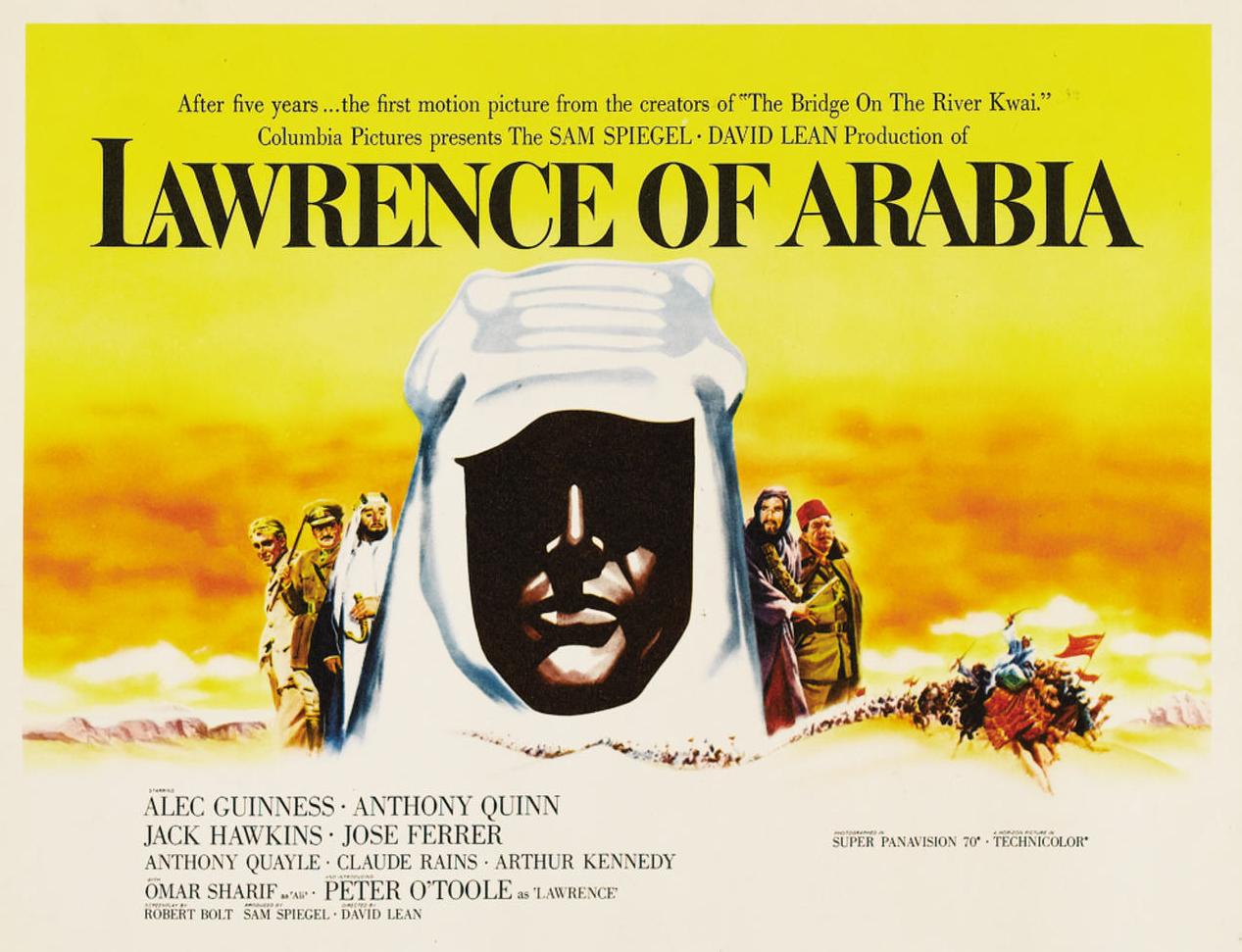
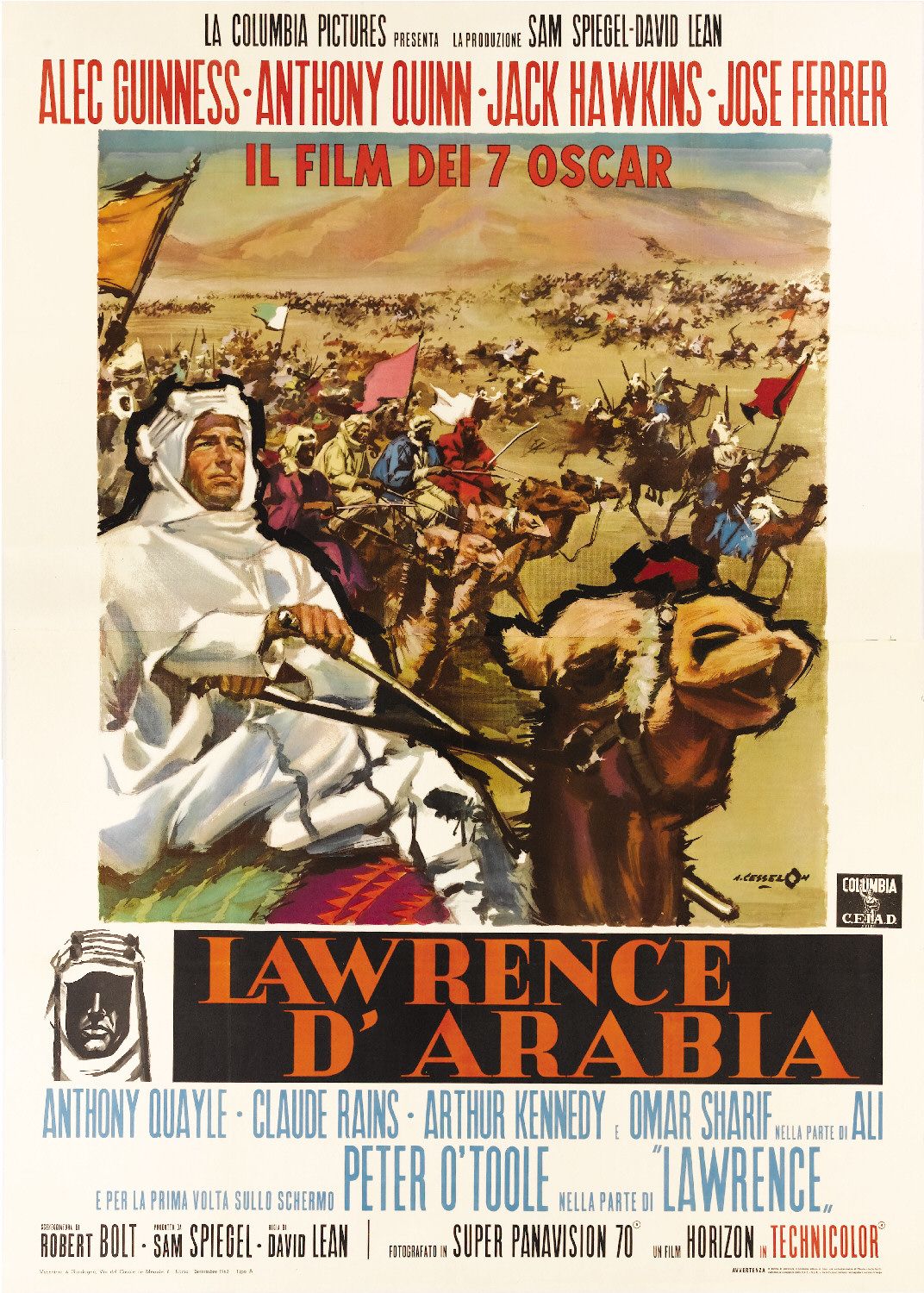
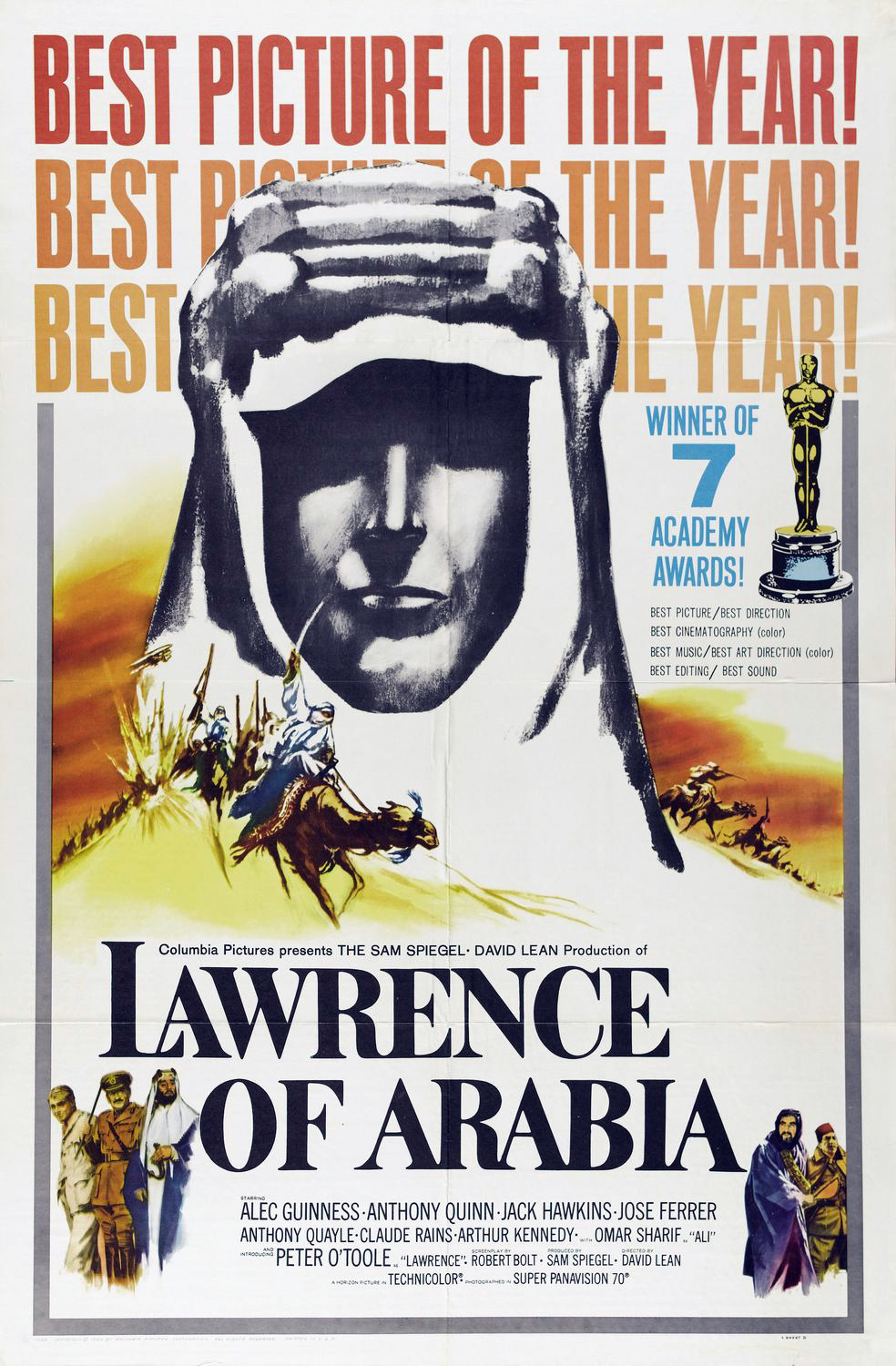
Lawrence of Arabia (1962)

lawrence of arabia 1

By Richard Winters

My Rating: 9 out of 10

4-Word Review: Lawrence unites the Arabs.

Due to the death of actor Peter O’Toole on December 14 we will be reviewing each Sunday of this month 4 films that he did during the 60’s with this one be his most famous role and one that jettisoned his career into stardom.

The film chronicles the life of T.E. Lawrence who helped unite the Arab tribes during World War I and allowed them to fight back and eventually overpower the Turks. The film starts out with his motorcycle death in 1935 at the young age of 46 and then flashes back to his days in the army as a young intelligence officer. It examines his unique personality, determined headstrong ways as well as his ability to unite varying warring Arab tribes and get them to work together to defeat a common enemy.

Director David Lean and cinematographer Freddie Young are the real stars here. Filmed mostly in the countries of Morocco and Jordan Lean manages to capture the barren, hot landscape of the desert better than anyone else as he gives it an almost surreal and exotic quality that takes over the rest of the story and leaves the strongest impression. I loved the sun slowly coming up over the horizon and onto the flat terrain. I also liked the longshots showing characters enveloped by the majestic landscape and looking almost nonexistent when seen against some of the towering rocky formations. Omar Sharif’s characters entrance while on horseback and seen from a distance as he rides up through layers of heat that rises from the ground is also excellent.

The action is well captured although there isn’t as much of it as you might think. Their raid on Aquba is for my money the best. I loved the bird’s-eye shot of seeing all these soldiers looking almost like ants scurrying from the desert and into the fortress through the buildings and property and then eventually into the sea that sits on the other side. The bloody battle that they rage against an already weakened Turk army near the end is also a strong visual as is the Lawrence’s visit to an unsanitary hospital housing the wounded Turks.

lawrence of arabia 2

O’Toole’s portrayal of Lawrence was controversial at the time and to some still is. His bright, clear blue eyes makes him look like he is in a trance and the way he says his lines sounds like he was under some sort of spell and gives the character a certain mystique that isn’t quite human. Still I thought the part fit O’Toole’s personality well. My favorite moment of his is when he first tries on the Arab robes that he is given and he goes running around in them in an almost child-like manner. It is also nice seeing a story about a true-life character that isn’t preachy and more open about their flaws particularly his propensity for violence which becomes increasingly more evident as it goes along.

Sharif is excellent is support and in some ways gives the film’s all around strongest performance. I liked the adversarial relationship that his character has with Lawrence. They start out at odds with each other, but slowly become friends and yet continue to have their differences. Arthur Kennedy is good as a glib and detached photojournalist and Alec Guinness was to me initially unrecognizable as Prince Feisal.

The movie does not stay completely accurate to the real life events. Some of these are minor and while others are more major, but are too many to elaborate here. The truth is there is probably no movie pertaining to a true life event that is completely accurate to what really happened and no one should be naïve enough to expect it to be either. On an entertainment and cinematic level this one scores high. My only real complaint is the scene where a character gets swallowed up in quicksand, which in reality is very unlikely to happen, but a prevalent feature in a lot of 60’s movies and the one point where it got a bit too ‘Hollywood’.

lawrence of arabia 4

My Rating: 9 out of 10

Released: December 10, 1962

Runtime: 3Hours 47Minutes

Not Rated

Director: David Lean

Studio: Columbia Pictures

Available: DVD, Blu-ray, Amazon Instant Video

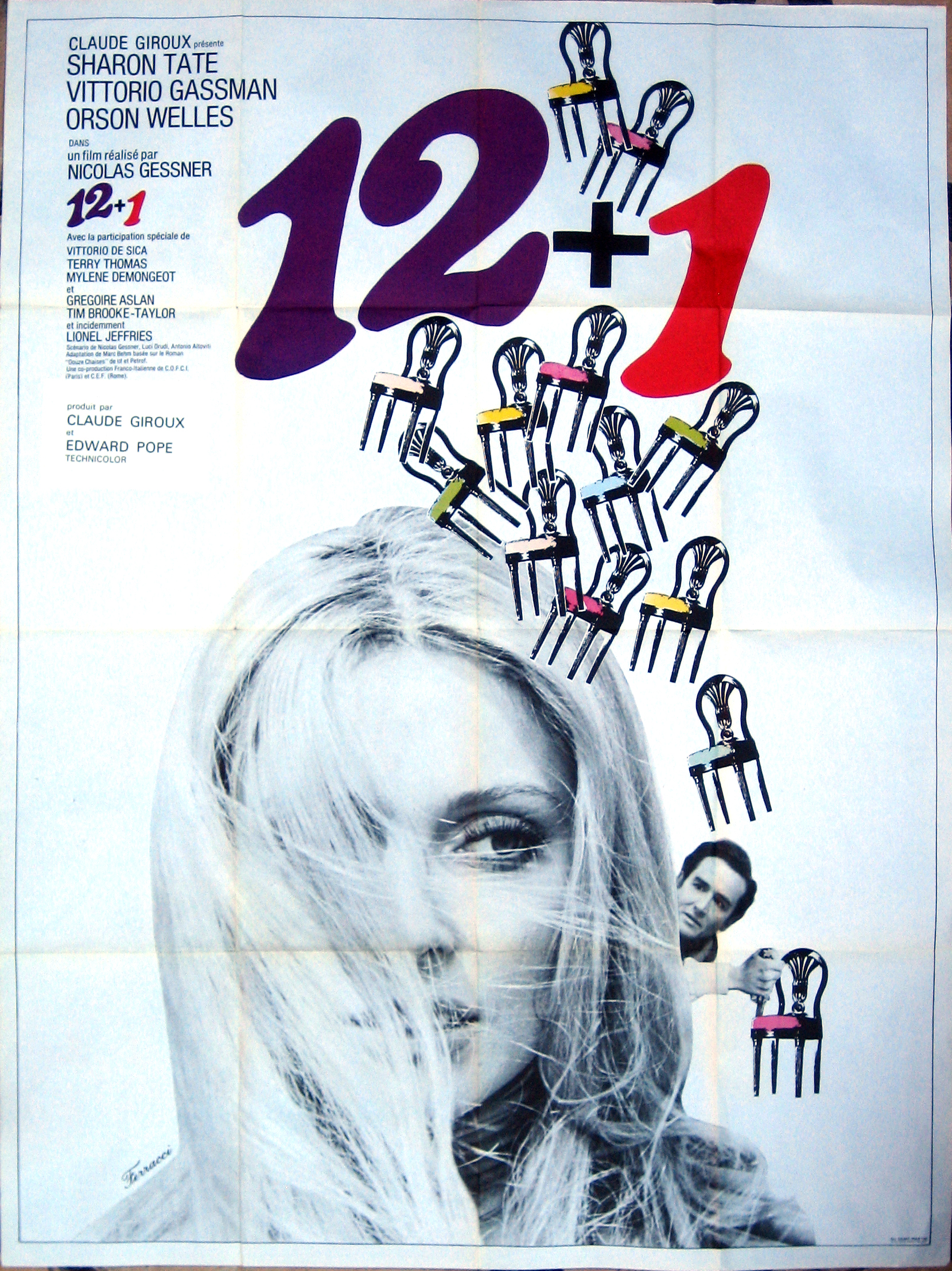
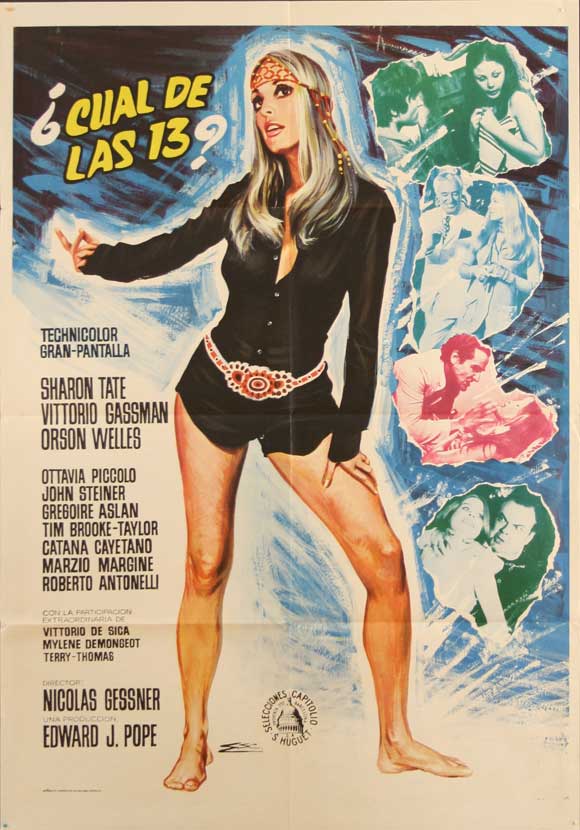
12 + 1 (1969)

twelve plus one 2

By Richard Winters

My Rating: 2 out of 10

4-Word Review: Money in the chair.

Mario (Vittorio Gassman) is a struggling barber who gets word that his rich aunt has left him a large inheritance. When he gets to her estate he finds the place nearly empty except for some old chairs piled up into a corner. Angered he decides to sell the chairs to a local antique dealer so he can at least make some money off of them. After he sells them he finds a note from his deceased aunt stating that there was a large amount of money sewn up inside one of them. In a panic he goes running back to the shop, but finds that they have already been sold off to various customers, so he along with Pat (Sharon Tate) who worked at the shop and wants to help him as long as she gets a part of the take go on a mad dash to seek out the chairs and retrieve them one-by-one until they can find the money.

The film is based on the classic 1928 Russian novel that has been made into several film versions including one by Mel Brooks that came out a couple of years after this one. I’ve never read the novel, but this film clearly does not do it any justice. The humor is lame and cartoonish and barely able to equal a weak Tom and Jerry cartoon or uninspired Disney flick. The budget is low and the scenes all have a perpetually cheesy, schlocky feel. The Herb Alpert-like music sounds like it was edited in off of an audio cassette recording. The whole thing is quite derivative and dull despite the wide variety of characters and locales.

The film’s biggest claim to fame is being Tate’s only starring vehicle and this didn’t get released until well after her death. She is very beautiful and surprisingly engaging and comical and her presence is the best thing about the movie. She even does a nude scene along with the equally tantalizing Ottavia Piccolo when they both go topless and then get into bed on either side of Gassman, which is the film’s one and only provocative moment.

The supporting cast is full of some old pros that get badly wasted. Terry-Thomas is one of the funniest character actors of all-time, but here he is shockingly boring and forgettable. Orson Welles hams it up in make-up as a pretentious stage actor whose play he is performing in becomes a catastrophe in the film’s only slightly amusing moment.

The color is faded and shot with no imagination or flair. Although there is some nudity the filmmaker’s would have been better served had they cut it out and aimed it solely for the kids as the humor is so broad and silly that only a three-year-old could possibly find it entertaining and even that is no guarantee.

twelve plus one 1

My Rating: 2 out of 10

Released: October 7, 1969

Runtime: 1Hour 34Minutes

Rated R

Director: Nicholas Gessmer

Studio: AVCO Embassy Pictures

Available: VHS

Don’t Make Waves (1967)

dont make waves 1

By Richard Winters

My Rating: 5 out of 10

4-Word Review: House slides down cliff.

Carlo (Tony Curtis) is a single 40-something man traveling through coastal California when he decides to pull his Volkswagen beetle over to the side of the road and get out to enjoy the gorgeous view. Problem is that Laura (Claudia Cardinale) is pulling out and her car’s bumper hooks onto his and his car goes speeding down the hill and crashes. All of his money was in the car, so Laura agrees to allow him to stay at her place for a while, but then her boyfriend Rod (Robert Webber) shows up who throws Carlo out onto the beach where he becomes acclimated with the beach bums including beautiful Malibu (Sharon Tate). He wants to date her, but she has a muscular boyfriend named Harry (David Draper). Carlo though has a plan to steal her away as well as getting a cushy job as a pool salesman and a beachfront home that ultimately goes crashing down the cliff just like his car did.

Curtis is engaging in the lead and shows great flair for frantic comedy, but his character has no backstory, which makes him generic and undistinguished. His constant conniving including tricking Harry into no longer having sex with Malibu so he can get his hands on her isn’t all that appealing since Harry is a rather nice guy and I was hoping he would give Curtis a much deserving punch in the face in the end, which unfortunately doesn’t happen.

Cardinale is sexy. Her tan, sleek figure, Italian accent and feisty temper make every scene that she is fun and sensuous. The fact that the character is at times quite oblivious to her surroundings and at other points very observant makes her interesting and quite human.

Tate’s performance is weak and her amount of speaking lines quite limited. The part was originally intended for Julie Newmar who might have been a bit better. However, the scene showing her bouncing up and down on a trampoline while wearing a bikini that even gets shown in slow-motion and freeze frame will be more than enough to satisfy most males.

The film features some impressive stunt work. The opening bit where Curtis tries to catch up with his rolling car and even gets his pants leg caught on fire isn’t bad. The part where Curtis falls from a plane and goes free falling into the air without a parachute is quite vivid even though stuntman Bob Buquor ended up getting killed during the sequence. The best part though is at the end when Curtis’s ritzy home and pool go sliding down a steep cliff during a rainstorm and subsequent mudslide. The special effects are outstanding even by today’s standards. The mud flowing through the place and the shots showing five occupants forced to survive in the home in a Poseidon-like scenario when it gets turned upside down before finally sliding down onto the cusp of the ocean is entertaining enough to make sitting through the rest of it almost worth it.

Unfortunately outside of this and the breathtaking scenery the film is quite vapid. The story is too unfocused and doesn’t seem to know what kind of message it wants to make. The scenarios and situations are trite and offer no momentum or plot progression. The theme of a middle-aged man trying to get in with the young mod generation of the time was handled much more effectively in I Love You Alice B. Toklas, which starred Peter Sellers and came out around the same time.

My Rating: 5 out of 10

Released: June 20, 1967

Runtime: 1Hour 37Minutes

Not Rated

Director: Alexander Mackendrick

Studio: MGM

Available: DVD (Warner Archive), Amazon Instant Video

Eye of the Devil (1966)

eye of the devil 2

By Richard Winters

My Rating: 7 out of 10

4-Word Review: Husband is a pagan.

Vineyard owner Philippe (David Niven) is called back to the castle of Bellenac when it is found that they are suffering from another dry season. Philippe’s wife Catherine (Deborah Kerr) and his two young children follow him there a few days later despite his insistence that they not come. Once there Catherine finds everyone’s behavior to be quite odd including a menacing brother and sister (David Hemmings, Sharon Tate) who make Catherine uneasy, but nothing prepares her for the real reason that her husband is there nor its shocking outcome.

Although several directors worked on this project including Michael Anderson the credit is ultimately given to J. Lee Thompson, who is probably best known for his frequent collaborations with Charles Bronson. Despite the different directors the film is very fluid and well produced. In fact it is the directing that makes this film high enjoyable. The lighting, editing, imagery and evocative camera work make this a near brilliant work from a visual level. Turning down the sound and appreciating it for its aesthetic style alone is more than enough and the on-location shooting done at the Chateau de Hautefort is excellent.

Tate is stunningly beautiful and the photography makes the most of it watching her sit out and get drenched by the rain is actually kind of sexy. She had bit parts in two films previous to this, but this is still credited as her official film debut.  Although her voice was dubbed she still is effective with a character that straddles the line between being sensual and creepy. The part where the Niven character viciously whips her while she wriggles around on the floor and then in the end turns around and smiles like she enjoyed it was year’s ahead-of-its-time and definitely pushing-the-envelope for that period.

Kerr came in to replace Kim Novak who was injured during filming and unable to complete the picture. Normally she always gives a superior performance, but her she seemed miscast. The only facial expression she seems able to show here is that of shock and fright and the character and scenario seems to be too much of an extension to the one that she did in The Innocents just a few years earlier. Both she and Niven seemed too old to be parents of such young children. He was already in his mid-fifties and she in her mid-forties and the film would have been better served had a young attractive couple in their 20’s been cast in the part.

Niven has always done so well being cast in likable roles that having him play someone with a dark personality doesn’t quite work and he looks uncomfortable in the part. Both Donald Pleasance and David Hemmings are underused and not given enough lines or screen-time.

The story itself is rather one-dimensional. The final sequence features some great shots and editing of Kerr running through some underground tunnels of the castle, but the outcome is quite predictable. The script lacks that added perspective or twist to make it truly memorable and is the weakest element in this otherwise visually arresting production.

eye of the devil 4

My Rating: 7 out of 10

Released: July 8, 1966

Runtime: 1Hour 32Minutes

Not Rated

Director: J. Lee Thompson

Studio: MGM

Available: DVD (Warner Archive), Amazon Instant Video

Valley of the Dolls (1967)

valley of the dolls 2

By Richard Winters

My Rating: 5 out of 10

4-Word Review: The dolls are pills.

Usually when sites commemorate Sharon Tate it is on the anniversary of her murder, which is in August, but I decided to do things differently and talk about her in January when she was born. Had she lived she would have turned 71 this year and each Sunday this month I will review a 60’s film that she was in.

This one is probably her most well recognized part and it’s based on the bestselling novel by Jacqueline Susann who appears briefly as a reporter. Here Tate plays Jennifer North a woman with ‘no talent’ who must use her body and looks to get where she wants and she is constantly reminded of it by her mother who regularly calls to make sure she is doing her ‘breast exercises’. Eventually she stars in nudie films, which leads to a self-destructive downward slide. Patty Duke is Neely O’Hara a talented young singer who finds climbing to the top can be laced with drugs, alcohol and jealousy. Anne Welles (Barbara Parkins) makes up the third part of the trio as a small town girl who comes to the city looking for excitement, but finds more than she bargained for and eventually leaves.

If there is one thing that saves this otherwise trashy, standard script it is Mark Robson’s direction. Usually most directors come up with a color scheme based on the type of script that they have and mood they want to create, but Robson’s uses every color of the rainbow and more. The plush varied sets and interesting stop action photography that gets implemented from time-to-time keeps things moving at a brisk a visually interesting pace. John William’s score is excellent and Dionne Warwick’s song ‘The theme from Valley of the Dolls’, which charted at number 2 is like most of her work infinitely hummable.

valley of the dolls 1

Duke is lively as the caustic Neeley. She took on the role to get rid of her ‘goody-goody’ image and does so in grand style as her angry tirades and meltdowns are entertaining. While she is attractive Tate’s acting seems limited, but her character is by far the most likable. Parkins may be the least well known of the three, but her performance is solid as the film’s anchor.

Veteran actress Susan Hayward gives the best performance as the aging acerbic singer Helen Lawson who will allow no one to push her from the top. Her confrontation with Duke in the women’s bathroom where Duke pulls off Hayward’s wig and tries flushing it down the toilet and then Hayward’s response to it is by far the most memorable scene of the whole movie.

The story itself is predictable, clichéd and one-note. The characters are cardboard and the dialogue is stale. If it weren’t for Robson’s direction this would have been a ‘bomb’. However, it has attained a high cult following for its campiness, which if you view it from that perspective isn’t bad.

This same story was remade as a 1981 TV-movie starring James Coburn and Jean Simmons.  Also, a young Richard Dreyfuss can be spotted briefly as a stagehand.

valley of the dolls 3

My Rating: 5 out of 10

Released: December 15, 1967

Runtime: 2Hours 3Minutes

Not Rated

Director: Mark Robson

Studio: 20th Century Fox

Available: VHS, DVD, Amazon Instant Video, Netflix streaming

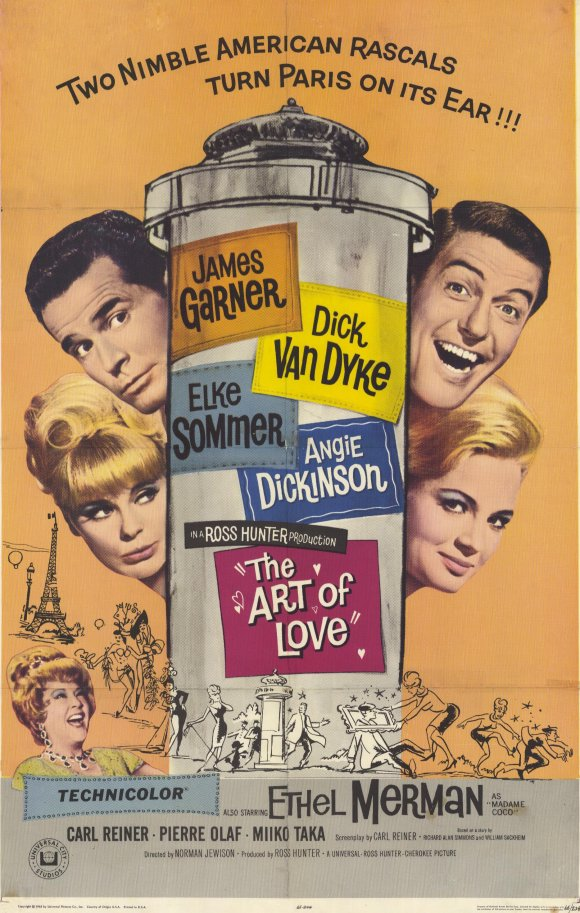
The Art of Love (1965)

art of love

By Richard Winters

My Rating: 3 out of 10

4-Word Review: Artist fakes his death.

Paul (Dick Van Dyke) is a struggling painter living in Paris who has not been able to make any money with his paintings and feels ready to give up and move back to the states. Casey (James Garner) is his roommate and best friend who tries to convince him to stay by coming up with a scheme where Paul fakes his death by jumping off a bridge and committing suicide, which should bolster the value of his paintings based on the concept that an artist’s work becomes more sought after once they are dead. The plan works, but it forces Paul to go into hiding and allows Casey to make a play at Paul’s fiancée Laurie (Angie Dickinson). When Paul finds out about this he confronts Casey and then things get really zany.

Carl Reiner’s script is trite to the extreme and although it moves at a brisk pace it is not very funny, or even passably amusing. The concept of an artist having to die in order to get his work to sell is an interesting idea to explore, but unfortunately like everything else in the film it is handled in a superficial way and used mainly as a springboard to all sorts of other wild scenarios that become increasingly sillier as it goes along.  Norman Jewison’s direction is dull and unimaginative and despite the fact that it has a European setting it was actually filmed on a Universal studios back-lot, which doesn’t help give it any atmosphere or distinction.

Van Dyke’s character is unrealistically ‘goody-goody’ and clean-cut.  He comes into contact with Nikki (Elke Sommer) a beautiful blonde woman who shows a strong interest in Paul, but he immediately and rigidly rebuffs her like he has no sex drive at all. The comic schtick that he does here is the same stuff we’ve seen him do hundreds of times before and he basically becomes Rob Petrie again simply transplanted into a European setting.

Although he has less comic opportunity Garner is clearly the better actor and has much more of a screen presence. It is easy to see why he continued to get choice movie roles for decades to come while Van Dyke became permanently demoted back to television.

Sommer is wasted in a transparent role. Dickinson, who three years later co-starred with Van Dyke in Some Kind of a Nut is equally forgettable and her constant propensity at fainting becomes increasingly more unfunny the more it occurs.

Ethel Merman makes the most of her role despite its limitations, but every time she speaks she seems to be shouting. Reiner is probably the most amusing out of all the characters in a brief bit as Garner’s shyster lawyer.

I wish I could tell you that there was at least one truly funny moment here, but there really isn’t. The humor is flat and dated and no better than a poor TV-sitcom and in many ways even worse.

My Rating: 3 out of 10

Released: June 30, 1965

Runtime: 1Hour 39Minutes

Not Rated

Director: Norman Jewison

Studio: Universal

Available: None at this time.

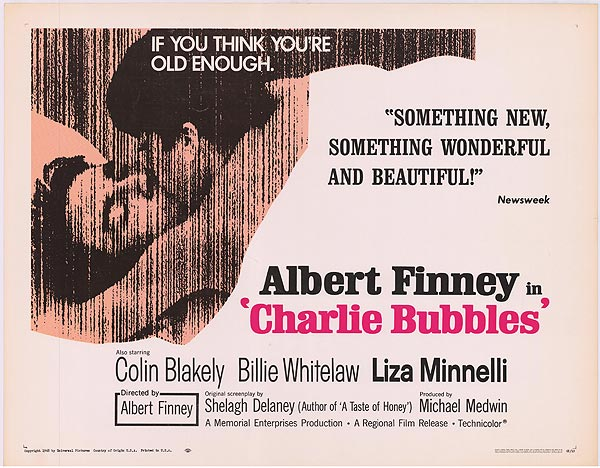
Charlie Bubbles (1968)

charlie bubbles 1

By Richard Winters

My Rating: 4 out of 10

4-Word Review: He’s detached from life.

Charlie Bubbles (Albert Finney) is a successful English writer who finds that he is no longer connected to the world around him. He sits in his office and views life from the television monitors around him. He has an affair with his secretary Eliza (Liza Minnelli in her film debut), but it means little. He travels to the countryside to visit his estranged wife Lottie (Billie Whitelaw) and his son Jack (Timothy Garland), but finds the effects of his detachment have worn off on them. No matter how hard he tries he cannot get his son to emotionally connect with him, which he finds troubling.

This is to date Finney’s only cinematic foray behind the camera and on a visual level it proves interesting. Most actors who turn to directing lack the needed cinematic eye, but Finney is just the opposite. The scene, which gets protracted, showing all the action inside Charlie’s sprawling home from within the television monitors that he has set-up is really cool. It’s like in the film Network where you see several monitors on top of each other and two per row. Each monitor shows a different room in the mansion as well as the garage. As the action moves from each room it also moves to a different monitor, which becomes fascinating to follow. The scene inside a hotel hallway with milk bottles and newspapers lined up at each door has an interesting design to it and the part where Charlie and Eliza come upon a lonely marching band in a desolate rundown part of the city has a unique visceral appeal. The massive food fight between Finney and actor Colin Blakely near the beginning of the film deserves a few points as well.

The downside to the direction is that the film is slow and almost as aloof as the character. The scenes become too extended and the dialogue has little to say. The segment inside a roadside diner has the sound of cars passing by it during the character’s conversation, which becomes distracting and unnecessary.

The Charlie character seems almost like he is sleepwalking and barely responds to anything. I realize this is to show his detachment, but it goes overboard. It’s like viewing a corpse who has no screen presence or energy and absolutely no connection with the viewer nor any ability to wrap them in to his quandary.

Minnelli makes for an odd choice to represent the film’s sexual tensions. She was never considered attractive and her constant and incessant chattering while the two ride in a car would be enough to make most men want to throw her out let alone make love to her. The sex scene itself is about as mechanical as you can get and lacks eroticism. It also becomes like a throwaway scene that doesn’t end up having that much to do with the story as a whole.

The viewer needs more of a background to this character in order to make him real and interesting. Simply showing someone who is detached doesn’t mean much unless we know why and if he was at any time any way else. The ponderous ending leaves a lot to be desired and watching this movie is similar to viewing a program on C-Span as it comes-off like a nonevent.

My Rating: 4 out of 10

Released: February 11, 1968

Runtime: 1Hour 29Minutes

Not Rated

Director: Albert Finney

Studio: Universal

Available: None at this time.

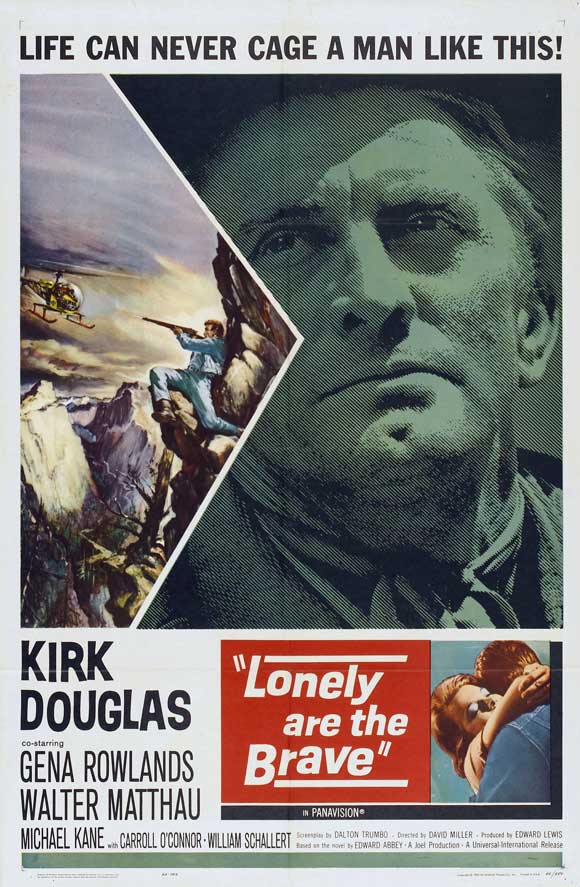
Lonely Are the Brave (1962)

lonely are the brave

By Richard Winters

My Rating: 6 out of 10

4-Word Review: A modern day cowboy.

Jack Burns (Kirk Douglas) is a loner cowboy still trying to live the lifestyle of the old west in the modern day world and who must elude the police and all of their modern technologies when he escapes from jail.

Kirk is excellent. He really connects with the character and allows the viewer to do the same. The cinematography is first rate with spectacular shots of the western landscape. The cowboy’s escape through the rugged terrain as well as the police pursuit is exciting most to the way and there is a terrific well-choreographed barroom brawl between Douglas and actor Bill Raisch who later went on to star as the one-armed man in ‘The Fugitive’ TV-series. This is also a great chance to see some young actors just starting out including Carroll O’Connor and Bill Bixby.

On the negative end I wasn’t too crazy about Walter Matthau and William Schallert as the two policemen who are played too much for laughs. Some of their goofy exchanges are amusing, but it hurts the tension. I also disliked the ending. It does indeed leave an impression and was obviously done to make a statement, but it is not completely effective and is a real downer. It also leaves too many issues open including whether the Douglas character was able to survive.

The high production values help immensely and the story structure keeps things interesting and offbeat as well as exciting. The film though cannot overcome its ending, which isn’t very original and no more profound than hundreds of other stories and movies dealing with the same subject.

My Rating: 6 out of 10

Released: May 24, 1962

Runtime: 1Hour 47Minutes

Not Rated

Director: David Miller

Studio: Universal

Available: VHS, DVD, Blu-ray, Amazon Instant Video