Monthly Archives: March 2026

Slap Shot (1977)

By Richard Winters

My Rating: 8 out of 10

4-Word Review: Winning by playing dirty.

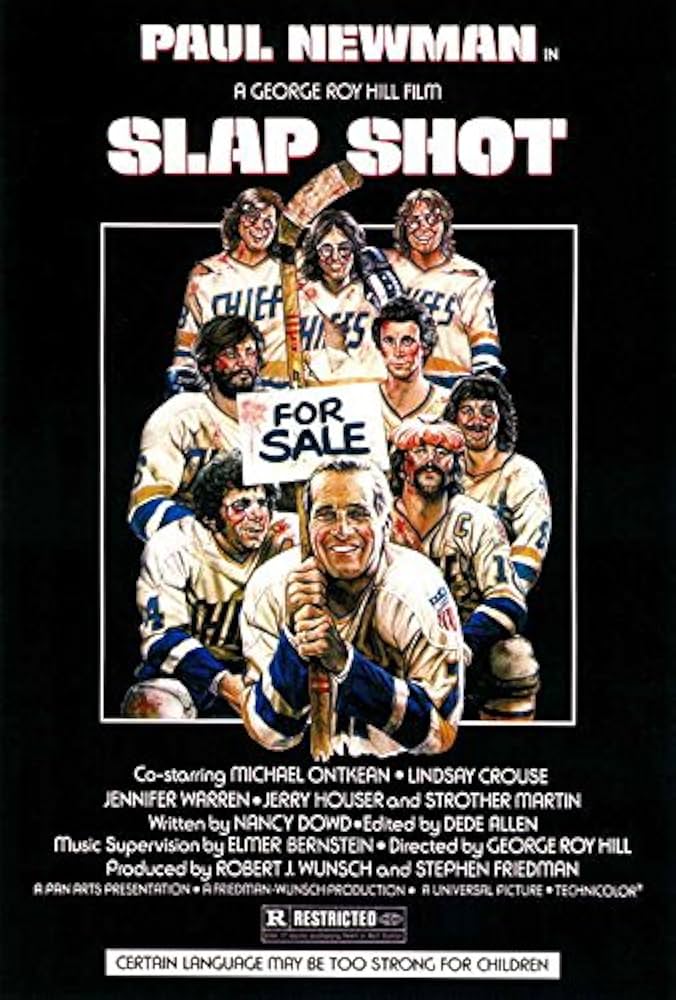
Reggie Dunlop (Paul Newman) is the aging player/coach of the Charlestown Chiefs a minor league hockey team that’s struggling both in the standings and attendance. Things get even worse when the town’s steel mill goes out of business laying off over 10,000 of its workers. With no one able to afford watching games the team is set to go defunct. Then Dunlop comes up with an idea to attract attention by instilling the Hanson Brothers (Jeff Carlson, Steve Carlson, David Hanson). into the game. The Hanson’s come off like harmless bespectacled nerds, but when they get on the ice, they become a terror by physically beating up the competition in any underhanded way they can. This soon brings fans back and Dunlop hopes this might lead to a sale of the team to sunny Florida and in fact he plants this idea into the local newspaper, but when Dunlop finally does meet the team’s actual owner (Kathryn Walker) she tells him of other plans.

The screenplay was based on writer Nancy Dowd’s brother’s experiences playing for a minor league hockey team in Johnstown, Pennsylvania where the film was actually shot. He would call Nancy up on an almost nightly basis telling her of things that happened, which routinely had him getting beaten-up, which she found ‘sort of fascinating’ and lead to her traveling with him during the season. She started taking notes of the different things she witnessed much of which occurs in the movie including players going into the stands to attack obnoxious fans and fights breaking out before the game evens started.

While the film has become a major cult classic it did only moderately well at the box office when first released. Critics at the time derided the violence and ‘foul language’ as well as the ‘one-dimensional characters’. In Gene Siskel’s case he initially described it as a ‘failure’ only to have him years later watch it again and then call it a ‘terrific film’. What I think the critics missed was that it’s really not about the players, but instead the fans. People living bleak lives working humdrum jobs and how sports can help them escape their otherwise boring lives and the violence they watched at the games was a way for them to vent their frustrations and aggressions and thus acted as a way for them to ‘bond’ with their team.

The best aspect about the movie is Paul Newman who took a big risk doing this as many of his loyal fans, who had started watching him in the 50’s, were turned off by his character’s constant swearing  though I felt this was to his benefit as it allowed him to attract younger fans broaden is acting repertoire. It’s also quite realistic as most athletes really do talk that way and this was one of the first sports films to display that in all of its uncensored glory. However, the most amazing part of his performance is how he plays somebody that could very easily be quite unlikable and in a lot of ways it’s downright shocking how many things he can get away with and still come off as the ‘hero’, or in this case the ‘anti-hero’. Most other actors would flunk at this, but Newman’s able to give this guy an engaging flair that keeps you wanting to cheer for him and see him succeed even as he sleeps around with married women, tries desperately to break-up the marriage of his star player, aggressively promote dirty play even when some of his younger players seem hesitant, and tell off his team’s owner in what has to be one of the most vulgar, politically incorrect lines ever put on film.

My only two complaints with the character are that he’s surprised when the town factory closes when the younger player bets it will, but since Newman’s older it should’ve been him that predicted the closure as he would’ve had more life experience to know that nothing lasts forever while the youthful one would’ve had the wide-eyed optimism. He also wears some goofy looking outfits like plaid pants, elevator shoes, and even a fur coat. Granted these were stylish for the times, but a basic blue-collar guy like him wouldn’t be up on all the fads and would most likely be laughed out of the building by his friends when he walked in wearing some of the stuff that he does.

As for the film’s moral message that seems dubious. It’s almost like saying cheating and violence are good as things continually get better for the team and Newman personally the more it’s inserted into their play. I also felt that the Ned character, played by Michael Ontkean, is a very weak protagonist and besides sitting out games in protest of the fighting does very little. There should’ve been more confrontations between he and Reggie and more attempts to persuade the others not to continue the dirty play. He also treats his wife Lily, played by Lindsay Crouse, who’s wonderful, quite shabbily and I don’t feel he deserved to ‘win’ her back and the tacked-on ‘happy ending’ where they get back together doesn’t jive because if he displayed bad behavior once it’s most likely going to come back at a later point because that’s what’s in his nature.

On the comedy end it’s near perfect. Certainly, the Hanson brothers get most of the laughs, but not so much for their ice antics, but more for their compliant behavior off of it where they display the upmost respect for the coach and team protocol and even play with toy cars during their free time. The person I felt was the funniest was the toupee wearing announcer played by Andrew Duncan, who has no problem with the outrageous fights, but sternly draws the line when it comes to stripping. To a later extent Paul Dooley equally good as the opposing team announcer and also M. Emmet Walsh, who gets so involved in the latest news of the team that he ignores his squabbling children.

The only part where it doesn’t fully work is at the end where the other team brings in their ‘goon squad’ to take on Newman’s guys but the supposed ‘brutes’ come off looking severely aged and silly. It kind of hurts any possible tension when you can plainly see that this young squad could take these old guys, who might’ve been threat 20 years ago, but resemble beer belly 50-year-olds now. The film should’ve cast young muscular men in the parts, which could’ve then instilled a legitimate fear from the other side.

My Rating: 8 out of 10

Released: February 25, 1977

Runtime: 2 Hours 3 Minutes

Rated R

Director: George Roy Hill

Studio: Universal

Available: DVD, Blu-ray, Amazon Video, YouTube
Three Fugitives (1989)


By Richard Winters

My Rating: 3 out of 10

4-Word Review: Bank robber becomes hostage.

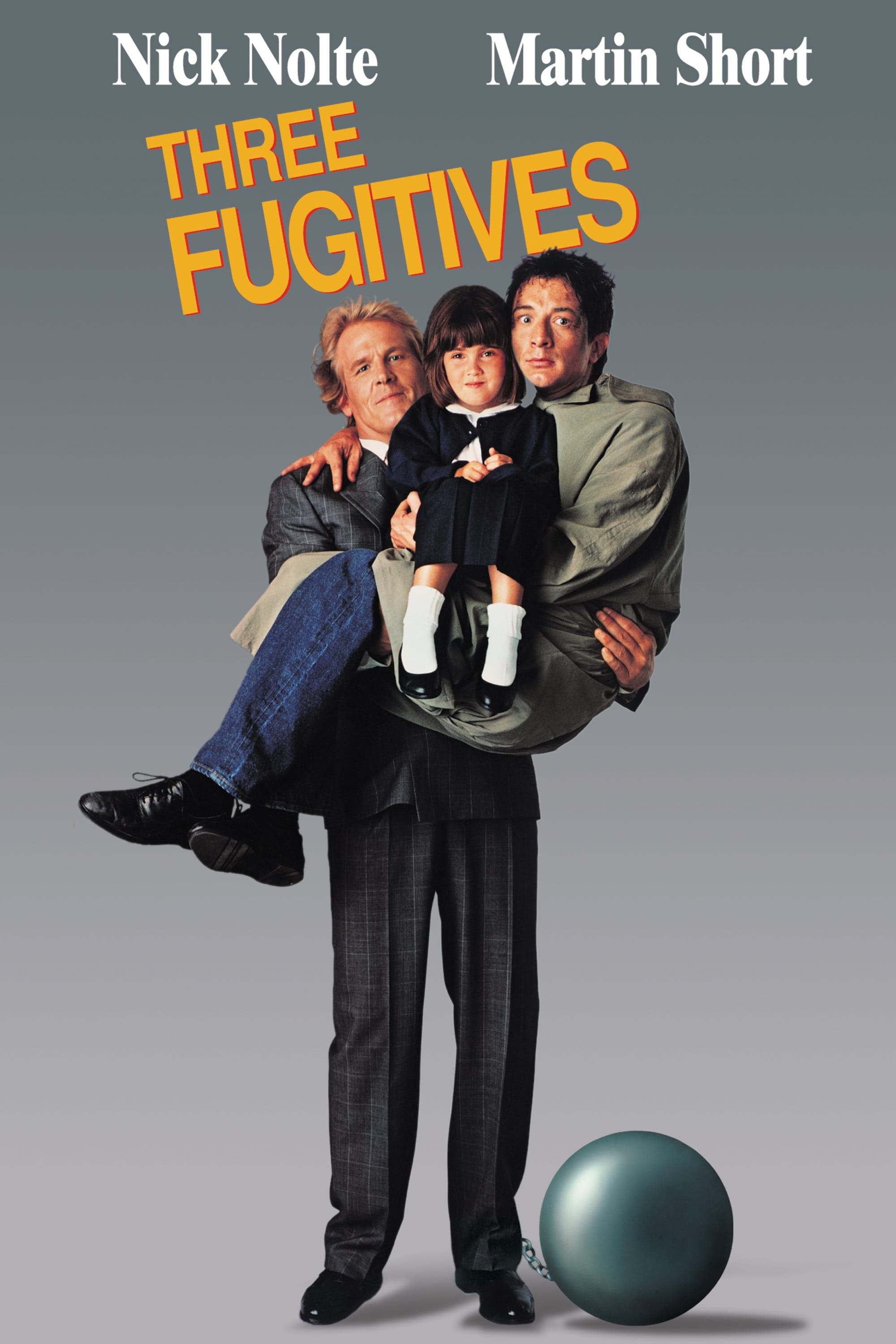
Daniel Lucas (Nick Nolte) gets released from jail after serving 4 years for armed bank robbery. After getting out he goes to a nearby bank to cash his prison check and inexplicably gets caught up in another robbery when Ned (Martin Short) tries robbing the bank that Daniel is in, in order to pay for a special school to take his daughter Meg (Sarah Rowland Doroff) to since she refuses to talk. When the police surround the building Ned decides to take Daniel hostage in order to escape. Inspector Dugan (James Earl Jones), who was the one who had arrested Daniel for his earlier crimes, is convinced that Daniel has orchestrated this one too and tries chasing him down, so that he can arrest him again.

Hard to believe that such a successful screenwriter like Francis Veber could write such a dud like this, but after the first 10-minutes this thing falls precariously flat. In fact the opening robbery is the only thing in it that is funny and had it stayed on that level, with Daniel and Ned trying to avoid the relentless pursuit of Dugan while Daniel tries to clear his innocence, this might’ve worked, but too much other stuff gets thrown in that dilutes the main concept until it’s not fun anymore.

The introduction of the kid backfires. She is certainly adorable especially the way she goes running and does help lend sympathy to Ned and his motivations, but the cute factor gets laid on a bit too thick and eventually becomes forced. While I may not have a PHD in psychology the concept that this girl at the young age of 5 would just decide to not talk didn’t seem realistic. You can say it was caused by the death of her mother 2 years earlier, but other kids deal with their parent’s death and that doesn’t stop them from speaking. Kids have notoriously short attention spans, so to have her keep up this non-talking for literally years and have it not deeply rooted in some neurological issue was just too much of a stretch. No explanation either for why Nolte’s presence would suddenly get her to start talking again and then when she finally does start to speak, she begins to babble incessantly, which gets to be a problem the other way.

The police are too inept here. There are plenty of other films featuring bumbling cops and some of them can be funny, but here it doesn’t get played for laughs and instead just used as a way to get the characters out of a dilemma. Once an APB gets put out of the robbery and the men’s identity it becomes hard to believe that Ned would still be able to walk the streets in full view of the cops, which he inadvertently bumps into while walking on the sidewalk and even interact with, and not immediately be recognized. The car chases are dumb too. One has them two driving off the road and into a ditch while the police cars speed by, but it wouldn’t be long for the police to realize they’ve gone too far after not spotting them and turn around especially when Ned’s car explodes from the grenade that was left inside, which should’ve immediately signaled their whereabouts to the police. Later, during another chase, Ned is able to easily fool the police by turning under a bridge and parking his car behind another one while the cops go speeding by, but if it’s this easy to consistently dupe the police you wonder how they’re ever able to catch anyone.

Nolte’s okay in his gruff kind of way, but Short is too high strung making his character more tense and anxious than funny. Kenneth McMillan, an excellent character actor whose last film this was, gets stuck with a dumb role involving a veterinarian who apparently is so senile he thinks Nolte is a dog, but to ‘see’ a grown, big guy like Nick as a canine means he’s got far more problems with his mind than just dementia and thus his moments come off as protracted and desperate for laughs that never come.

Spoiler Alert!

The jump-the-shark moment comes at the end when Short finds himself taken hostage by yet another bank robber. While I love irony this concept gives it a bad name and like with everything else in the movie seems thrown in as a way to allow the characters to have a quick convenient way out of their predicament with no concern whether it makes sense or beats astronomical odds. The small sporadic chuckles that you may have does not make up for seating through the rest of it.

My Rating: 3 out of 10

Released: January 27, 1989

Runtime: 1 Hour 36 Minutes

Rated PG-13

Director: Francis Veber

Studio: Touchstone Pictures

Available: DVD, Amazon Video, YouTube


Thank God It’s Friday (1978)

By Richard Winters

My Rating: 1 out of 10

4-Word Review: A night at discotheque.

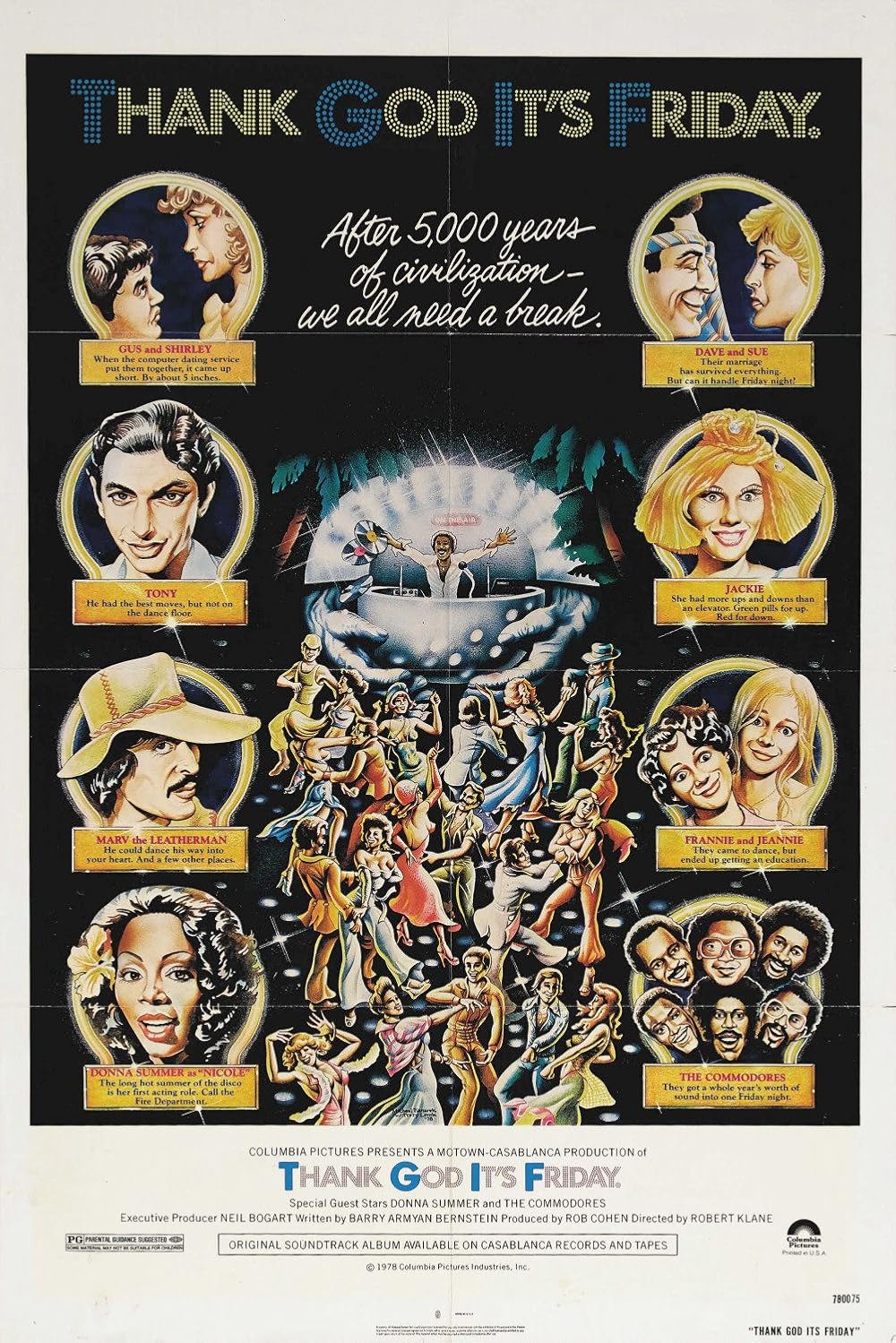
This film was requested for review and was a part of the disco craze that permeated pop culture during the mid to late 70’s. It was released just 6 months after Saturday Night Fever but was nowhere as good and didn’t have the same staying power. The plot revolves around several people who decide to spend their Friday evening at a local L.A. discotheque and the various conversations and ‘adventures’ that they have while inside the place. The main cast is Donna Summer who plays a character named Nicole who tries to ger her ‘big break’ by singing one of her songs while everyone is on the dance floor, but the club DJ (Ray Vitte) goes to great lengths to prevent that. There’s also two underage friends (Valerie Landsburg, Terri Nunn) who sneak into the club in order to win a dance contest, and a married couple (Mark Lonow, Andrea Howard) who go to the club on a lark, but then have their marriage challenged when club owner Tony (Jeff Goldblum) begins aggressively hitting-on the wife while the husband gets side-tracked by a ditzy patron named Jackie (Mayra Small) who gives him drugs that makes him behave erratically.

The biggest shock was that this lame thing was directed by Robert Klane, who burst onto the scene in the early 70’s with the dark comedy classic Where’s Poppa? that was both edgy and inventive and based on his book of the same name, but this has none of that. The dialogue and situations are quite stale, and it was like he was just selling out his career, which did eventually recover when he wrote the script for Weekend at Bernie’sbut this is definitely a black mark.  What’s even more perplexing is that the screenwriter for this, Armyan Bernstein, was able to sell six more screenplays after this one, even though this one displays no writing talent at all and his subsequent scripts that were made in the 80’s all bombed at the box office, but I guess this kind of shows how it’s more who you know in Hollywood that proves who gets the breaks and who doesn’t.

The concept of having an entire movie take place inside one location has a certain appeal, but Klane captures the proceedings in a flat sort of way. It was shot inside an actual club, that has since been torn down and was described by those who went there as a ‘labyrinth’, but I didn’t get that feeling while watching it. Most of it is shot in and around the dance floor, which quickly becomes boring visually. The various ‘dramedies’ of the characters fail to elicit any interest. To some degree you could say this was a realistic look at the club scene as I remember going out to dance clubs in the 90’s in Chicago hoping to pick-up some action, or meet ‘cool new friends’ but coming away disappointed and feeling like it was all overrated and on that level that’s exactly what you get here. The characters come in anticipating way more excitement than they actually receive, but the film still needs to convey this in some sort of compelling way, and it doesn’t.

A good example of this is the married couple, which has some potential, but the characters don’t learn anything, or change. In a good movie/script the main people are supposed to go through a character arch and end up in a different spot, either in an emotional, or intellectual way, or in their situation in life, then they were at the beginning, but the couple leaves the place returning to their ‘happy married’ mindset. However, since the wife was so quick to consider the advances from the club owner and the husband with the young punk girl, that it should’ve rattled them and they should’ve left seriously contemplating whether their marriage was really all that strong.

The same goes for Donna Summer’s character. She spends the entire evening trying to aggressively get her chance to sing. It might’ve worked better had the movie had a parent, or friend being the one that was pushy while Summer stood shyly back and thus made her seem a little less narcissistic. Either way when she finally sing and the crowd loves it, it doesn’t mean much because it wasn’t in front of a record producer, so therefore there was no contract and thus just a fleeting moment in time.

I did like Goldblum and it’s easy to see why out of the entire cast he was the one that had a long a distinguished career though it’s a little confusing why he hits so hard on another man’s wife when he has a plethora of hot women that he has slept with, or willing to sleep with him, so why get so fixated on the one? Debra Winger is an absolute delight too mainly because of her exquisite beauty, which is at the absolute peak here and makes watching the movie more than worth it just for that. In fact, that’s the only reason why I decided to give this one point.

Out of the entire runtime there’s only four mildly diverting moments that stands out. The first is when the lady holding the torch in the Columbia Pictures symbol breaks out into a disco dance. The second, in a scene that the producers strongly considered cutting, is when a guy asks if he can but into a dance that Debra Winger is having with another guy, but instead of continuing the dance with her he goes on with the other guy. The third is a nice dance routine that Marv Gomez has on the rooftops of some parked cars while the fourth consists of Goldblum’s car, a prized possession of his, that falls completely apart.

My Rating: 1 out of 10

Released: May 19, 1978

Runtime: 1 Hour 29 Minutes

Rated PG

Director: Robert Klane

Studio: Columbia Pictures

Available: DVD, Blu-ray, Amazon Video, Tubi, YouTube


Harold and Maude (1971)

By Richard Winters

My Rating: 9 out of 10

4-Word Review: Falling for older woman.

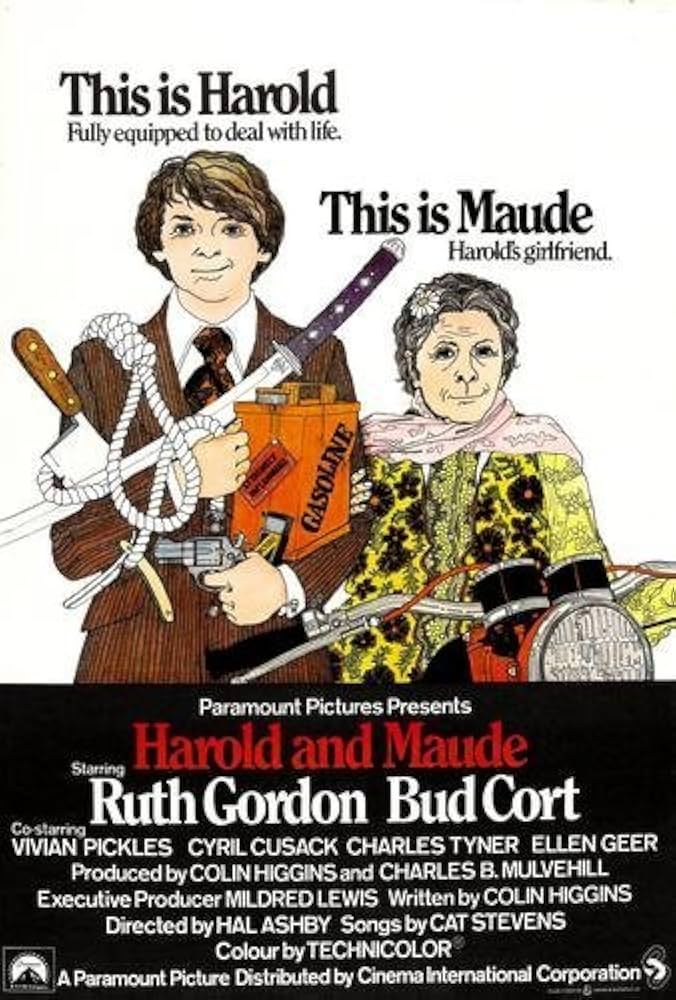
Harold (Bud Cort) is a young man still living at home with his mother (Vivian Pickles) who is an upper-class socialite that dominates Harold at every turn. Harold resents his mother’s control and thus stages fake suicides as a way to rebel. She in turn devises ways to ‘cure’ him of his death obsession by buying him a new car, which he turns into a mini hearse, setting him up on blind dates and even trying to get him recruited into the army. All of these ploys fail, and the real turnaround doesn’t occur until he meets Maude (Ruth Gordon) a kooky old lady with a carefree spirit. The two nonconformists form a strong bond and eventually a romance. When Harold announces that he plans to marry her it causes shock and disgust with all those who know him.

While this film has become a huge cult hit, there’s even a theater in Essen, Germany where it’s been shown, outside of a 10-week period during COVID, continuously since June 6, 1975, it was a box office flop when first released. Many prominent critics at the time panned it including Roger Ebert who gave it only 1 star out of 4. The two main reasons for this were the ultra-dark humor and offbeat storyline, which might’ve been a bit ahead of its time, but also some of it I suspect had to do with the editing. Director Hal Ashby, who was an editor before he ventured into directing, does a lot of long takes here, which is unusual for a comedy. Usually, humorous films consist of quick takes and a fast pace, but here the jokes particularly Harold’s suicide pranks are very drawn out to the point you don’t really see the joke happening until the payoff. While I loved this approach and consider to be the genius of both the movie and Ashby others especially in that time period could consider it off-putting and confusing as audiences are used to having their comedy spelled out for them and not to have to search for it.

The acting is splendid with the two leads nailing their characters perfectly. Cort was warned that if he took this role, he’d be type casted for ever after and it’s true his career flatlined, but with his slim physical build and unique face his choice of leading parts would’ve been limited anyways. Gordon on the other hand was in the midst of a career resurgence and her appearance here helped cement her for old lady roles for the next decade and a half.

While overshadowed it’s important not to forget the supporting cast, who are all fantastic as well. Vivian Pickles is great as Harold’s domineering mother. The argument could be made that she’s too much of a caricature and they would be right, but the scene where she answers Harold’s dating profile for him really had me laughing. Charles Tyner as the one-armed army recruiter who becomes shocked when Harold gets too enthusiastic about killing is good as is Eric Christmas who becomes physically repulsed when describing how sex might go between a young man and an old lady. Tom Skerrit billed as ‘M. Boorman’ in refence to Nazi war criminal Martin Boorman whom he once joked was probably ‘hiding out as a motorcycle cop’ is highly engaging as an exasperated policeman futility trying to write Maude a traffic ticket.

Spoiler Alert!

On the negative end, while minor, I did feel that Harold’s suicide pranks would be very hard if not impossible to pull off. The opening one which has him dangling from the ceiling with his feet clearly off the floor should’ve logically killed him. The scene where we see him through a window presumably setting himself on fire only to then immediately have him appear in the room is something he would not have been able to pull off alone and would’ve at the very least needed the help of someone else, but the film acts like he did it all on his own.

Maude’s car stealing doesn’t make sense either. She seemingly is able to simply hop into someone’s car and drive off with it like everyone just leaves their car doors unlocked and the keys in the ignition, which isn’t likely. If the explanation was that she was hotwiring them then this should’ve been shown, if even just briefly.

Maude’s suicide at the end was a mistake and I agree with critic Vincent Camby who complained that this made the movie seem ‘hypocritical’. She was a character that was so excited about life that it made no sense why she’d suddenly decide to end it. Some may say that she was haunted by memories of when she was in a concentration camp, but if that were the case then why didn’t she do it already at ag 50, 60, or 70? It also makes her seem selfish as she knew how Harold felt about her and killing herself was going to make him extremely upset and yet her response when he becomes horrified at the news that she’s taken some pills is quite detached like she never bothered to take his feelings into account. She was at the age where she could’ve fallen over dead at any moment from natural causes and the film should’ve ended with her dying that way instead.

My Rating: 9 out of 10

Released: December 20, 1971

Runtime: 1 Hour 31 Minutes

Rated PG

Director: Hal Ashby

Studio: Paramount

Available: DVD, Blu-ray, Amazon Video, Pluto TV, YouTube