Monthly Archives: June 2025

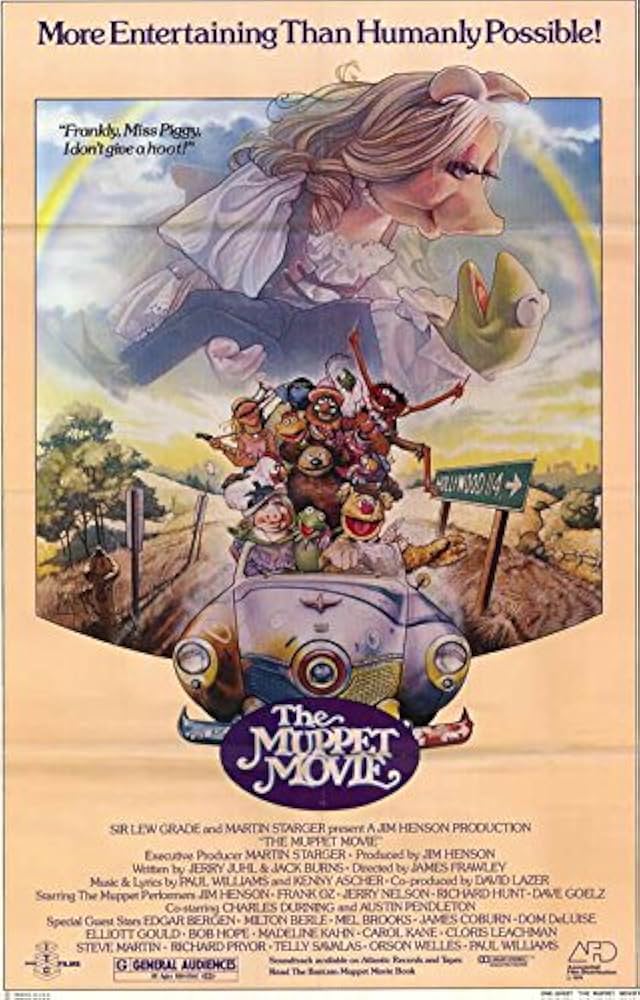
The Muppet Movie (1979)

By Richard Winters

My Rating: 7 out of 10

4-Word Review: How they became famous.

Kermit (Jim Henson) is a lonely frog living in a Florida swamp who dreams of one day making it to Hollywood and becoming famous. He then meets talent agent Bernie (Dom Deluise) who hears Kermit singing a song with a banjo and becomes convinced that the frog has what it takes to become a star. He hands him his card and tells him to give him a visit when it makes it to California. Kermit then sets-off on a cross-country trip and along the way meets several other characters all looking for their big-break including Fozzie Bear, a struggling comedian, and Miss Piggy (Frank Oz) who wants to become a fashion model. They tag along on the trip with Kermit while pilling into Fozzie’s Studebaker as he drives them to the west coast, but then they meet up with Doc Hopper (Charles Durning), an owner of restaurants who specializes in frog legs, who wants Kermit to be his new spokesmen in some commercials that he’s producing, but Kermit declines. However, Doc refuses to take no for answer and chases after the gang and using increasingly more sinister methods in order to get the frog to change his mind. 

Due to the success of ‘The Muppet Show’ creator Jim Henson was given financing to produce his own movie featuring the same puppet characters audiences had grown to love from the program. Since this would be a large-scale production great effort had to be put into making the muppets appear real and able to blend into an actual outdoor setting versus having everything done on a sound stage like it was in the TV-show. Henson refused to compromise on anything and insisted that money would not be a limitation, and this included the segment where Animal, one of the muppet characters, grows to giant proportions. Initially the idea was to keep the puppet the same size and place him on a miniaturized set, which would’ve cut down on costs, but Henson felt this didn’t look convincing enough, so instead they constructed Animal’s head to gigantic proportions that measured over sixty feet, which called for way more money and was very time consuming, but ultimately worth the effort. 

The story itself is pedestrian and relies, similar to the TV-show, with rapid fire quips and comebacks much like in old vaudeville. On the surface the humor is corny, and some could find the whole thing silly, but enjoyment comes with the puppet characters that are made to be like caricatures of humans, and their amusing responses and reactions. It’s also filled with a lot of great songs all written by the talented Paul Williams, who appears briefly. Normally in movie musicals the songs end up sounding the same and it starts to feel like we’re just listening to the same loop done over and over, but here each music bit has a distinct beat and a good toe-tapping quality, which not only adds to the fun, but actually helps move the story along versus holding it up. 

The only drawback is the massive amount of guest star appearances. There are many familiar faces, but most of them are only in it for a half-minute, or so and few of them have anything that’s actually funny to say, or even moderately clever. Performers like Bob Hope, Richard Pryor, Madeline Kahn, and Edgar Bergen, in his last screen appearance before dying just a couple weeks later, are essentially wasted in bits that add nothing and could easily have been excised and not missed. However, there’s a few cameos that do work including Steve Martin as an annoyed waiter, Cloris Leachman as a receptionist allergic to animal hair and Orson Welles who comes on near the end and has the film’s best line. Mel Brooks also quite memorable in an over-the-top send-up of a German mad scientist. 

Durning though is the one exception as he is more like a main cast member and in it quite a bit. Of course, he’s an outstanding character actor and a personal favorite and he shines here as well particularly with his attempt at a Cajun accent, but it seemed a bit ridiculous for a guy to go to such extreme measures just to get Kermit to be in his commercials. A better storyline would’ve had Kermit witness Durning turning one of his family members, perhaps one of his distant frog cousins, into a frog legs meal and thus threaten to turn Durning into the authorities and this would cause him to chase after him in order to try and keep him from squealing.  It also would’ve been nice had he shown a change-of-heart at the end and come around to being a friend to the muppets versus remaining an adversary. It comes close at one point when Durning realizes he doesn’t have any real friends like Kermit does, but I would’ve liked to have seen him come to grips with his aggressive personality and make amends to do better moving forward. 

My Rating: 7 out of 10

Released: June 22, 1979

Runtime: 1 Hour 35 Minutes

Rated G

Director: James Frawley

Studio: Associated Film Distribution

Available: DVD, Blu-ray, Amazon Video, YouTube
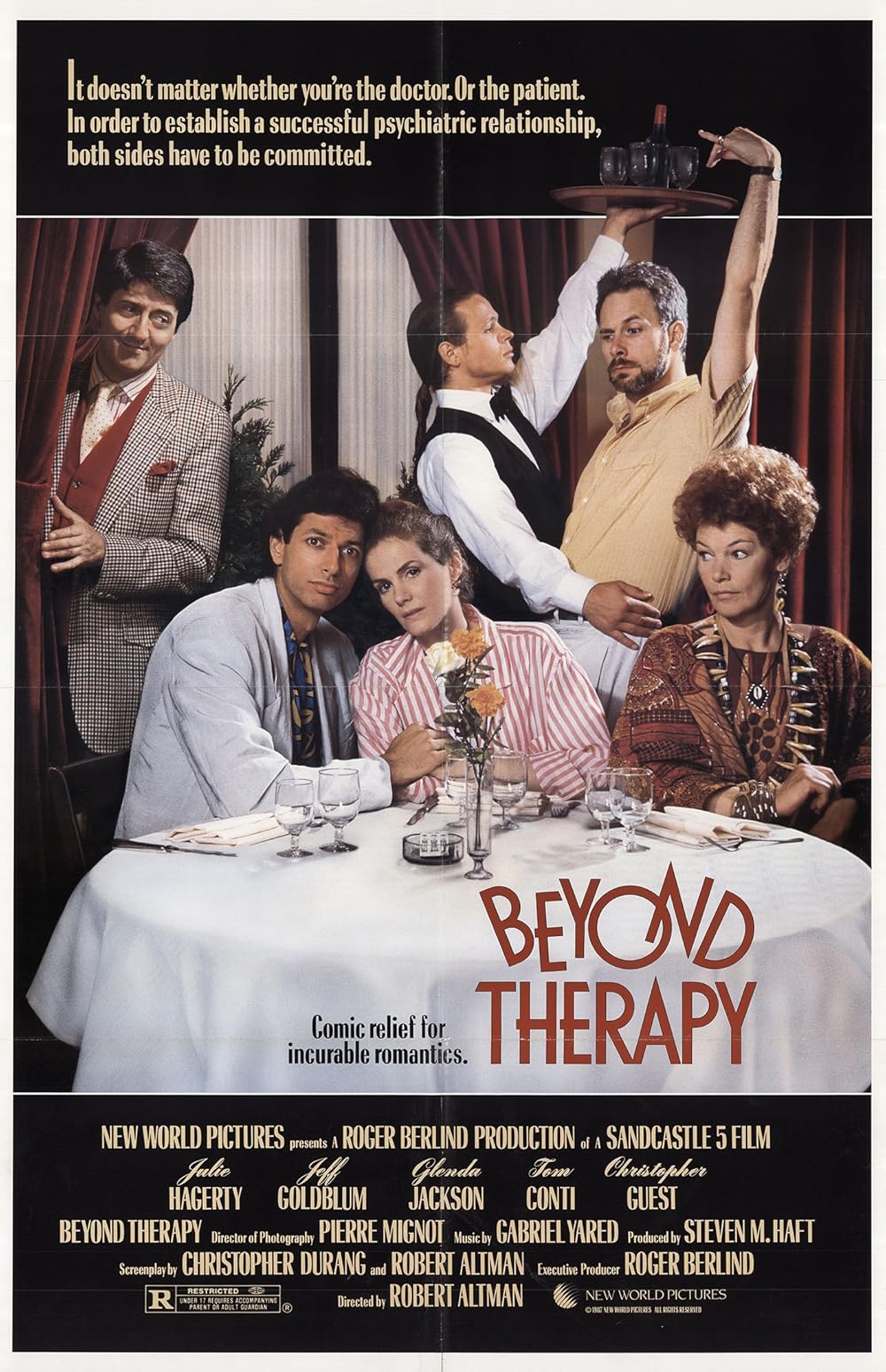
Beyond Therapy (1987)

By Richard Winters

My Rating: 3 out of 10

4-Word Review: Therapists nuttier than patients.

Bruce (Jeff Goldblum) is a bisexual who’s tired of his relationship with Bob (Christopher Guest) and thus decides to place a singles ad looking for a female companion. Prudence (Julie Hagerty) answers and the two meet-up at a restaurant, but they find there’s too many differences between them and fail to hit-it-off. Bruce then goes to Charlotte (Glenda Jackson), his therapist, while Prudence visits Stuart (Tom Conti) who’s her therapist and works in the next room beside Charlotte’s. After some counseling, and at Charlotte’s suggestion, Bob places another ad, but changes some of the personal details, causing Prudence to again answer it thinking it’s a different person. They meet at the same restaurant, but this time things click and they agree to go out again, but Bob and his meddling mother Zizi (Genevieve Page) don’t like the fact that Bruce is seeing somebody else and become determined to ruin the potential relationship as does Stuart, who once had a fling with Prudence, and wants to rekindle the old flame, but only if he can get Bruce out of the way.

The film is based on the hit stage play of the same name by Christopher Durang and while that one got rave reviews this version falls off its hinges right away and a lot of the blame should be pointed at director Robert Altman who rejected the screenplay that Durang had written and instead revised it severely causing Durang to feel that very little of his original work was left and lamenting in later interviews that his experience working on this project was an unhappy one. The story is supposed to be set in New York City, but because Altman was living in Paris at the time he choose to shoot it there, but New York’s ambience, where the single’s scene is quite strong, would’ve helped accentuate the theme and allowed for a more vibrant backdrop versus here where everything takes place in a bland cafe, or in the therapists office, with the exception of a few scenes done in Bruce and Bob’s pad, that hampers the visual flair and makes the production look stagnant and cheap. It also ends with a bird’s eye shot of the Paris skyline, but since everyone was speaking in English and without a French accent it makes it off-kilter, and they should’ve at least pretended it was New York even if it wasn’t.

Goldblum comes off as too detached and thus isn’t effective for this kind of role. Hagerty has her moments and at least gets some laughs, but her open disdain for gay people, along with some of her character’s other quirky hang-ups, may not go over well with viewers. Guest plays the gay lover role in too much of a cliched way making him seem like a walking-talking parody, while Page, as his overprotective mother, is excessively hammy and her exaggerated behavior gets in the way and doesn’t add much.

Jackson is a big disappointment though it’s not all her fault as Altman insists on shooting the majority of her scenes through the window of her office making the viewer feel cut-off from her and like she’s intended to be a caricature. Her confusion over words is more disconcerting than funny. Having a therapist that’s a bit daffy is okay and might even be good enough for a chuckle or two, but here she seems genuinely nuts to the extent that you wonder why Bruce would continue to see her. How she’s able to pick-up words said by Stuart in the other office is never made clear, they also seem to have sporadic sexual rendezvous in the room that’s in-between their offices, but this only gets implied and never actually shown though it should’ve been. Conti’s performance is annoying as he speaks in this fake sounding Italian accent, which he finally drops near the end, but should’ve done way sooner.

There are a few in-jokes in regard to Jackson that I did like. One is a refence where her son, played by Cris Campion, asks her to cry, which she does in a comic sort-of way and I think this was alluding to her performance in A Touch of Classwhere the script asked for her character to cry, but she refused insisting that crying was just something she didn’t do, so here you finally get to hear her do it, which is fun. Later there’s another bit where Bob talks about the movie Sunday Bloody Sundaya film that Jackson was in, though here he describes her as being ‘that English actress’, which is amusing, but would’ve been even funnier had, when he later meets her, he could’ve said ‘you look exactly like the English actress in that movie.’

Spoiler Alert!

While the film does become semi-engaging even with its rough, awkward start it manages to blow it up with a dumb conclusion, which has Bob shooting at Bruce with a toy gun while inside the restaurant. We already know it’s a toy because he tried to use it on Charlotte earlier, so having this extended slow-motion sequence where all the customers duck for cover, doesn’t work and becomes overdrawn instead of funny, or suspenseful. Having the group then remain in the restaurant afterwards and even get served food was equally ridiculous as anyone that would’ve caused that much of a melee would most certainly be asked to leave or arrested by the police for causing a disturbance.

My Rating: 3 out of 10

Released: February 27, 1987

Runtime: 1 Hour 33 Minutes

Rated R

Director: Robert Altman

Studio: New World Pictures

Available: DVD, Blu-ray, Amazon Video, YouTube
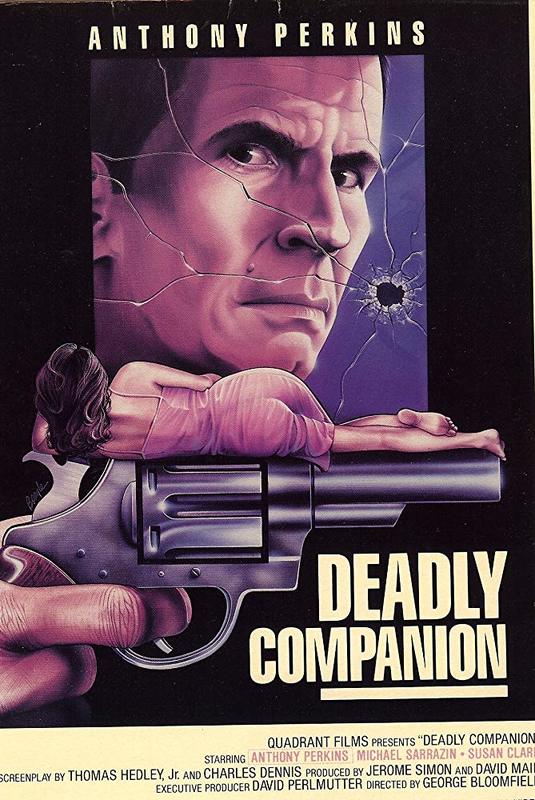
Double Negative (1980)

By Richard Winters

My Rating: 4 out of 10

4-Word Review: Who killed his wife?

Michael (Michael Sarrazin) is a photojournalist tormented by fragmented memories of his wife’s murder. Paula (Susan Clark) is his girlfriend who’s trying to help him sort through these flashbacks, so he can find some answers. However, she too has things to hide as she’s busily paying off a man named Lawrence Miles (Anthony Perkins) who threatens to go to the police about what he knows about the killing. There’s also Lester (Howard Duff) a private investigator who sticks his nose too deeply into the case and finds himself at deadly odds with both Lawrence and Paula.

The film is based on the 1948 novel ‘The Three Roads’ written by Ross Macdonald under his real name Kenneth Millar. Macdonald later went on to have a stellar career writing novels about private investigator character Lew Archer and this story has plenty of potential but gets mishandled and ultimately becomes a misfire. A lot of the problem stems from the production employing three different writers who all had different perspectives on where they wanted the story to go and then relying on director George Bloomfield to cram it all together, which he doesn’t succeed at. The result is a fragmented mishmash that takes a long while to become intriguing and even then, remains interesting only sporadically. Lots of extended scenes particularly at the beginning that should’ve been trimmed and a poor pacing that barely manages to create any momentum.

It doesn’t help that the main characters are wholly unlikable and uninteresting. Clark especially comes off as arrogant right from the beginning when we see her drive by what appears to be Amish people in a horse and buggy fighting through the snow and cold while she enjoys things in her warm ritzy car, which makes her seem detached and uncaring. The scene where she’s trying to procure an important real estate deal and then gets hampered by Michael playing loud music in the other room, so she then excuses herself and promises to be right back. I was fully expecting her to yell at Michael for his misbehavior, but instead she strips off her clothes and the two make love, but it seemed like sex should be the last thing on her mind during such an serious business meeting and what would happen if the clients, who were just a door away and waiting for her return, would walk in on them? 

Sarrazin doesn’t cut it either. I know he’s been lambasted by critics in his other film appearances for being too transparent and forgettable and yet I’ve usually defended him as I feel he can sometimes be effective even given the right material. Here though he falls precariously flat. Some of it is the fault of the writing which doesn’t lend him to create a character with any nuance, or likability, but in either case he’s a complete bore and the viewer isn’t emotionally invested in his predicament. His flashback moments where he sees himself in some sort of prisoner of war camp doesn’t make a lot of sense, or have much to do with the main plot, and seems like something for a whole different movie. 

On the other hand, Perkins is fantastic and the only thing that livens it up to the extent that he should’ve been given much more screen time as the film sinks whenever he’s not on. It’s great too at seeing SCTV alums like John Candy, Eugene Levy, Joe Flaherty, Dave Thomas, and Catherine O’Hara in small parts where with the exception of Candy they’re not comical but instead make a rare turn at being dramatic. Duff is kind of fun and has one great moment, really the only good one in the movie, where he gets trapped in an elevator and must escape being shot by Perkins, who has his arm lodged in the otherwise closed doors, by desperately running back and forth in the closed space that he’s given. Michael Ironside has a memorable bit too as a bar patron who becomes incensed at Sarrazin when he refuses to allow him to buy him a drink. 

Spoiler Alert!

The denouement just leaves more questions and fails to tie up the loose ends as intended. For one thing it shows Sarrazin as being the one who strangled his wife, which I had started to suspect a long while earlier, so it’s not a ‘shocking surprise’ like I think the filmmakers thought it would. It also has Perkins leaving the scene, as he was having an affair with the woman, and even briefly speaking to Clark who witnesses him going, so why he’d insist Clark needs to pay him hush money didn’t make much sense. Sure, he could still go to the police and say that it was Sarrazin that did it, but Perkins fingerprints were at the scene of the crime, so I’d think either way he’d get implicated, and Clark could come forward saying she was a witness who saw him leaving. If anything, Clark should’ve been pushing him to go to the cops versus bribing him to stay away.  

Also, the way it gets shown, Clark comes into the bedroom after Sarrazin has already strangled his wife, so all she sees is him weeping over his wife’s dead body. For all she knew, from that perspective, is that Perkins really did kill the woman and Sarrazin was simply the first to come upon her dead body and thus for it to be crystal clear Clark should’ve entered while he was still in the middle of the act versus when he was already done.

Beyond that is that question of why would Clark want to stay with someone she knew had such violent tendencies? Wouldn’t she be afraid he could get upset at some point and do that to her? Sarrazin even asks her at the very end if she is afraid and her only response is: ‘aren’t you’? This though only muddles things further cementing it as a botched effort. 

Alternate Title: Deadly Companion

My Rating: 4 out of 10

Released: May 12, 1980

Runtime: 1 Hour 36 Minutes

Director: George Bloomfield

Studio: Quadrant Films

Available: Amazon Video