Monthly Archives: July 2024

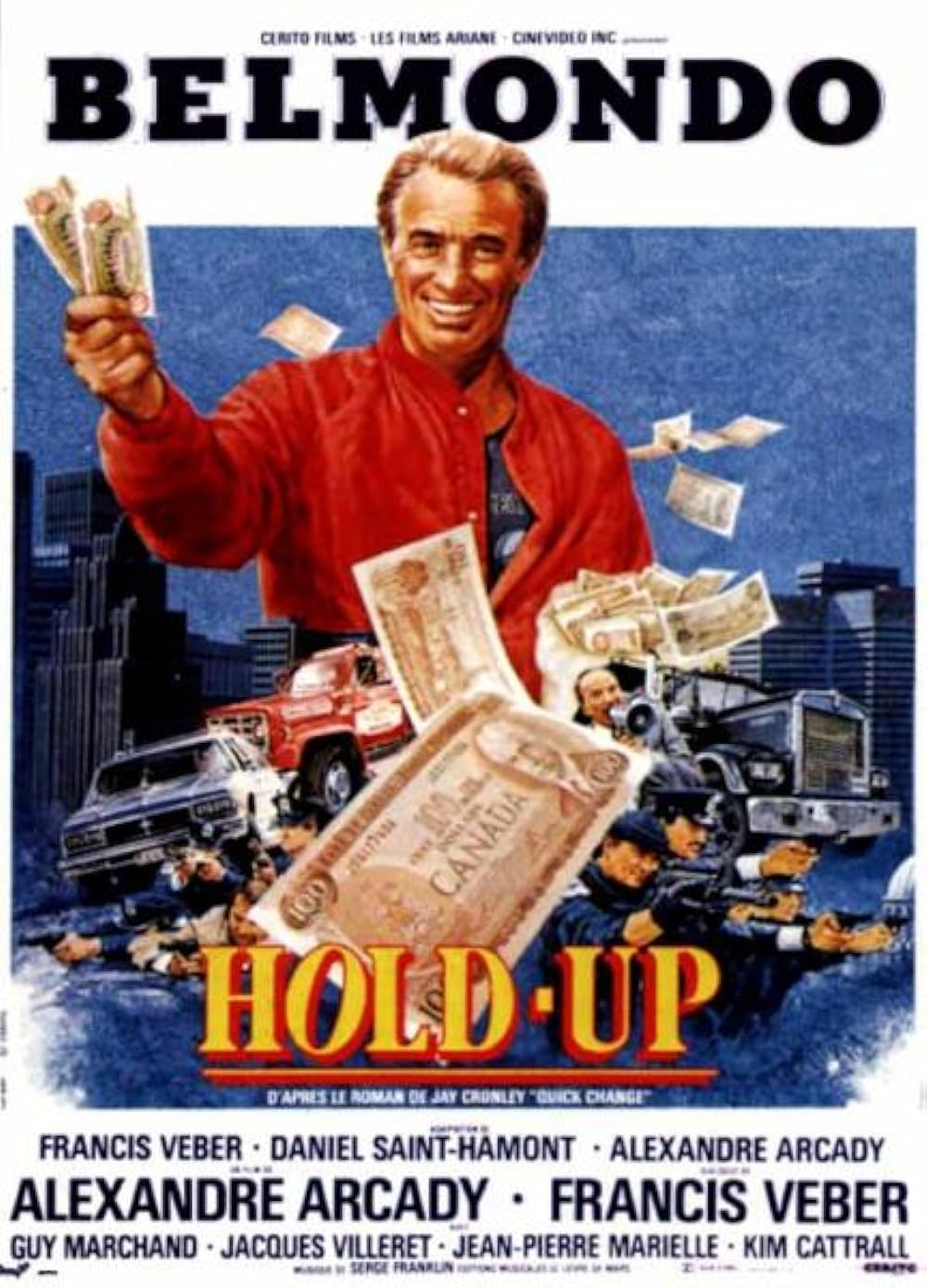
Hold-Up (1985)

holdup

By Richard Winters

My Rating: 5 out of 10

4-Word Review: Robber disguised as clown.

Grimm (Jean-Paul Belmondo) has come-up with what he considers to be an ingenious plan. He will rob a bank disguised as clown with two of his friends, Georges (Guy Marchand) and Lise (Kim Cattrall). While he’ll be a clown the other two will pretend to be bank customers and then when he agrees with the Police Commander Simon (Jean-Pierre Marielle), whom he is negotiating with via phone, to release some hostages he’ll let Georges and Lise ‘go’ and no one will know the difference. Meanwhile Grimm will take-off his clown disguise and put on a new one as an old man while pretending that the clown is still inside holding the rest of the bank employees and customers at gunpoint. By the time the police catch-on that there’s no longer any clown the three hope to have escaped on a plane and be far away. While the robbery works without a flaw the getting on the plane part becomes a major, if not impossible, challenge.

The story is based on the novel ‘Quick Change’ by Jay Cronley, which 5 years later was made into another, better known movie that starred Bill Murray. This was a French production that was filmed on-location in Montreal, Canada and one of the few movies that starred Belmondo that didn’t do well financially back in his home country and in-fact it was the first staring vehicle of his that didn’t crack the top 10 of highest grossing movies of that year, which was the first for him since 1976 when L’Alpagueur achieved only 19th place.

Belmondo is certainly a legendary actor whose long and storied career deserves to be admired, but I didn’t care for him here and felt his presence actually brought down the whole movie. He was apparently quite admired behind-the-scenes amongst the cast and crew and he did all of his own stunts including a scene where he climbs out of a moving car and manages to slither his way, while the vehicle is still going at high speeds, onto a tow truck and he did this while already being in his mid-50’s. However, his character is overly cocky and his glib conversational interplay between he and the police chief does not come-off as funny and more like you side with the chief and want to see this arrogant man caught. You’d think someone who had never pulled-off a robbery before would be much more nervous, or at least display some signs of anxiety, so his unbridled confidence seems completely out-of-place with the situation he’s in.

If anything I enjoyed Marchand and Cattrall far better as these two seemed much more human and displayed the insecurity you’d expect. They were like regular people full of foibles and someone you’d actually want to root for and thus I felt the movie would’ve been greatly improved had it just focused on the couple doing the robbing and cut-out Belmondo’s part completely. I also didn’t think the clown disguise worked as unlike in the American version his whole face isn’t covered with white paint and instead simply uses a red wig, a red clown nose, and some eyebrows, which I didn’t feel would be enough to hide his true identity and witnesses could’ve easily recognized who he was outside of the clown get-up and thus the whole disguise thing ends-up defeating its own purpose.

The first act works pretty well with shades of Dog Day Afternoon and some offbeat moments to the bank robbery theme by having one scene where the hostages are forced to get in a circle and sing a rendition of ‘London Bridges Falling Down’. The second and third acts though become protracted and seem to be the start of a whole different movie altogether. The bank segment has a crafty, sophisticated tone where the humor has a satirical bent and the main characters seem smart, savvy, and cool. In the second half the movie suddenly becomes like a live action cartoon with an abundance of car chases and the three leads, who had seemed so clever at the beginning, quickly become inept at seemingly every turn.

The biggest problem is the Lasky character played by Tex Konig. Konig is a big bearded guy that resembles Bluto from the old Popeye cartoons who’s also a tow truck driver who wants to get his hands on the stolen money and chases the three all around the city, which leads to many car stunts and crashes. Some may enjoy the smash-ups, but it comes across as unimaginative filler by filmmakers that didn’t know how to end the story cleverly, so they came-up with a lot of mindless action in order to keep it going.

The infighting between Cattrall and Marchand seems unnecessarily added in as well. This animosity needed to be introduced right at the start in order to make it consistent with the plot and not just thrown-in later to add some conflict for the sake of conflict. You’d think too that if she really resented the guy she would’ve refused to go ahead with the robbery unless someone else took his place.

Having the story then end with the three going to France and then Italy just furthers dilutes the plot, which no longer resembles a robbery flick at all, but more of a jet setting one. While not perfect the remake, which came-out in 1990, fares better in just about all phases.

My Rating: 5 out of 10

Released: October 23, 1985

Runtime: 1 Hour 54 Minutes

Not Rated

Director: Alexandre Arcady

Studio: Cinevideo

Available: DVD-R (dvdlady.com)
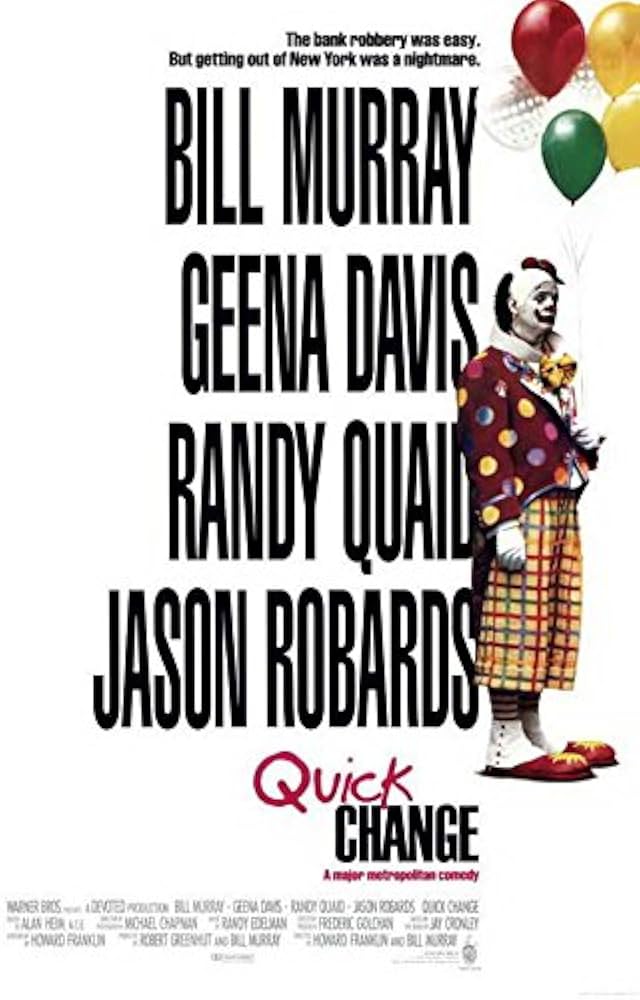
Quick Change (1990)

quick1

By Richard Winters

My Rating: 7 out of 10

4-Word Review: Clown robs a bank.

Grimm (Bill Murray) has had it with New York City. He wants to get out of there and move somewhere tropical as soon as possible and conspires to rob a bank in order to get the money to do it. He dresses as a clown and then has his girlfriend Phyllis (Geena Davis) and friend Loomis (Randy Quaid) pretend to be customers at the bank, so that when he releases the ‘hostages’ they can be two of them. The robbery goes smoothly as they’re able to get $1 million out of the bank, but trying to get out of the city itself proves trying as they get lost on their way to the airport and then their getaway car gets demolished. Police Chief Walt Rotzinger (Jason Robards) is hot-on-their-tale and relentless in his quest to haul them in as he proves to be just one slight step behind them where ever they go and moving in closer with every waking second.

This is the second version of the story that was adapted from a 1981 novel of the same name written by Jay Cronley, a humorist who resided in Tulsa, Oklahoma, who two other novels, Funny Farm and Let It Ride that were also made into movies as well as Hold-Up that was a French film shot in Canada that was the first rendition of this plot. This adaptation proves to be the better one as it takes place, like in the novel, in New York City and takes full advantage of the city’s ambience making it feel almost like it’s a third character.

This is the perfect role for Murray and some critics felt this was his best acting performance of his career he also doubles not only as the producer, but also the co-director as he took over the reins in order to save the project when the originally directing choice Jonathan Demme decided to bow-out at the last minute. The snarky, glib personality of the character is played to the hilt by Bill who has the magical ability to be the world’s biggest smart ass and still have a unique charm about it. Great supporting work by Davis, though the two apparently didn’t get along behind-the-scenes and years later she accused him of sexually harassing her during the production. Good work too by Robards who doesn’t fall into the cliche of a stupid egotistical cop and instead proves to be pretty savvy, which helps accentuate the tension as he’s constantly on their heels and only a beat behind them no matter where they go.

The three acts are better tied together by placing the main nemesis as the city itself and creating a surreal After Hours vibe. Some of the potshots are subtle like watching all the hot dog vendors race over to where the robbery is taking place so that they can take advantage of the situation by selling food to all the onlookers. It also illuminates the ethnic, cultural mix of the Big Apple by featuring a jousting match between two Latinos on bicycles as well as the headaches of trying to find your way around the city and the confusing road signs and constant construction though some of this humor may not resonate with today’s viewers since with the advent of GPS many of these ‘asking for directions’ situations have now become a thing of the past.  The music score by Randy Edelman with its pounding, hard edge quality perfectly matches the city’s gritty, urban attitude.

While the robbery is slick I did find a few loopholes. The first is where does Murray get his other clothes when he changes out of his clown costume and disguises himself as one of the hostages to get away? He is not seen carrying a bag of any kind nor is Davis or Quaid, so not sure where the other suit came from. Some may argue that he was wearing it underneath his clown costume, but this doesn’t work since it was a shirt that came up to his neck that he’s seen coming out of the bank with and when he’s the clown he’s shown with a V-neck T-shirt that exposes the top of his chest. It also doesn’t explain where he gets the glasses, other wig, and shoes that he also has on when he walks out as the fake hostage.

The characterizations are a bit off too as both Davis and Quaid become easily rattled during the second half when they’re trying to get to the airport and become increasingly shaken that they’re going to be caught, but if they have a propensity to being that worried you wonder what gave them the nerve to go through with the robbery in the first place? During that segment they’re very cool and calm and even a bit ballsy, so why the sudden shift to overly panic the moment they get out? A way to have solved this would’ve had the Davis character with a penchant for risks, or enjoy living on the edge and taking chances, so every time they would get into a jam during their escape she’d see it as a certain thrill and not allow it to overtly alarm her.

Spoiler Alert!

The biggest beef though is with the ending in which Robards suddenly realizes, as he’s standing on the ground watching the jet fly overhead that has the three robbers onboard. The film acts like it’s now ‘too late’ and there’s nothing he can do about it, but there really is. All he has to do is go back to the airport and ask where the destination is of the plane that just took off, as I remember it was Paris, France. Since both the U.S. and France are members of Interpol he could easily contact the authorities there asking them to detain the three once the plane had landed. They could then be brought in for interrogation where a simply body search would expose all the money that they had taped to their bodies underneath their clothes, and in Quaid’s case in his duffel bag. This would be more than enough evidence to prove that they were the robbers and thus extradited back to the U.S. for prosecution.

My Rating: 7 out of 10

Released: July 13, 1990

Runtime: 1 Hour 29 Minutes

Rated R

Director: Howard Franklin, Bill Murray

Studio: Warner Brothers

Available: DVD, Blu-ray, Amazon Video, Tubi

Rich Kids (1979)

richkids

By Richard Winters

My Rating: 5 out of 10

4-Word Review: Dealing with divorcing parents.

Franny (Trini Alvarado) is a 12-year-old who’s learning that her two parents (Jon Lithgow, Kathryn Walker) are getting a divorce. She is unhappy about this and thus turns to her friend Jamie (Jeremy Levy) whose parents also went through a divorce a couple of years earlier. He gives her guidance and tips on how to deal with it. She turns to him as a confidant and begins spending time with him at his place even overnights. Her parents are under the impression that Jamie’s father (Terry Kiser) is keeping a watchful eye on them, but in reality he’s over at his new girlfriend’s pad and not paying the least bit of attention to what the kids are doing who then get into all sorts of mischief including alcohol. Once Franny’s parents do catch-on and head over there along with Jamie’s mother and her new husband (Roberta Maxwell, Paul Dooley) they fear it may be too late especially after Franny’s mother finds the book ‘The Joy of Sex’ that her daughter had hidden away and been reading.

On the surface this film, which was produced by Robert Altman, should’ve been a winner and on the technical end it does everything right.  The color schemes and docu-drama approach gives it a vivid day-in-the-life vibe and captures growing up on the Upper West Side neighborhood quite well to the extent that you feel like you’ve visited the area yourself once the film is over. The acting, particularly Alvarado in her film debut, is terrific though kudos must also go to Lithgow and Walker whose portrayal of fraught parents trying to shield their child from life’s ugly realities while also still attempting to be upfront and honest with her is well done. Director Robert M. Young shows a good eye for detail and keeps things visually interesting particularly when they go to Jamie’s dad’s place and interact with the exotic pets he has and make goofy faces with his bedroom full of wall mirrors on every side, which I felt was the movie’s highlight.

Story-wise there are a few profound moments and everything that occurs rings true, but in the process it’s not particularly riveting either. I sat through the whole thing expecting at some point to be grabbed in and it just never occurred. Part of the issue is that it takes too much of a minimalistic approach. So much effort is put in to keeping it realistic that nothing every stands-out. It’s like one of those 70’s after school specials that gets stretched out to 2-hours length, but could’ve easily said what it wanted to in only half that time. It’s all pleasantly done, but ultimately rather meh.

I didn’t like the sex difference of the two kids as it made me cringe all the way through fearing that even at age 12 things might start to get a little kinky like they’d play a game of ‘doctor’, or get drunk, which they kind of do, and dare each other to take their clothes off. It seemed at that age children still like playing with members of their own sex and are quite clicky about it and don’t really begin to reach out to the other side until maybe 14 or 15, so it would’ve been more believable if Jaimie had been a girl instead of a boy.

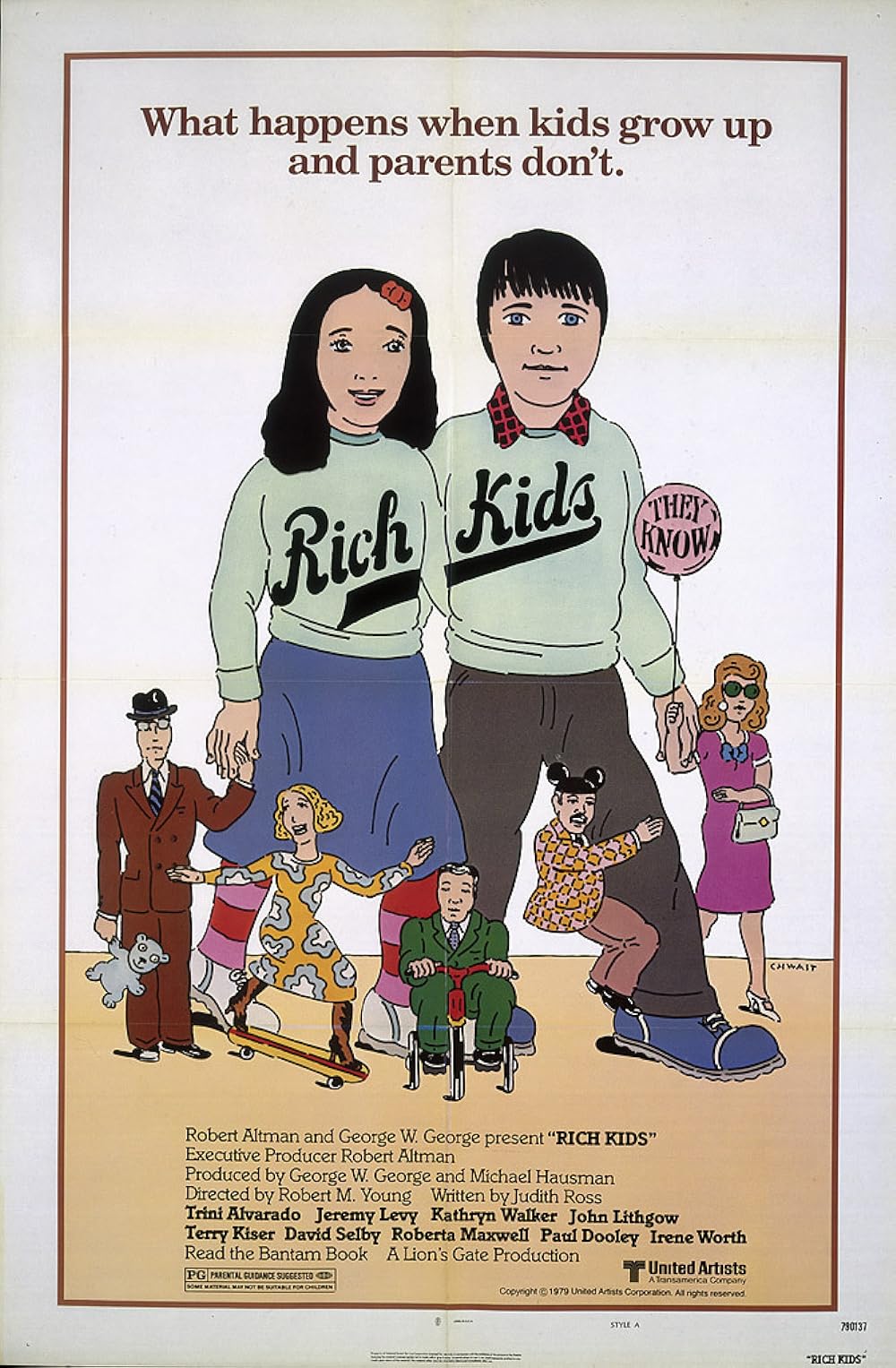
The title is a bit confusing as these really aren’t wealthy families sure they aren’t poor, but there’s nothing about their lifestyles or home life that isn’t of the middle-class variety making it misleading to have the word ‘rich’ in there. The promotional poster is awful too as the drawings don’t look anything like the real stars and depicts the two leads like they’re dorky looking, which they really aren’t. It also gives one the impression this might be an animated feature, which it certainly isn’t. Actual picks of the two stars would’ve been better especially since Alvarado has such expressive blue eyes, photogenic face, and wonderfully natural smile that one shouldn’t pass-up the opportunity to have her sweat face plastered on the promotional materials whenever possible.

My Rating: 5 out of 10

Released: August 17, 1979

Runtime: 1 Hour 41 Minutes

Rated PG

Director: Robert M. Young

Studio: United Artists

Available: DVD

Jinxed! (1982)

Version 1.0.0

Version 1.0.0

By Richard Winters

My Rating: 3 out of 10

4-Word Review: Blackjack dealer is cursed.

Harold (Rip Torn) is a gambler who can never seem to lose whenever he goes up against one Vegas blackjack dealer in particular, Willie (Ken Wahl). In fact Harold’s winning streak versus Willie becomes so extended that it gets him fired and he’s forced to find a similar job in Reno. Harold follows him up there and Willie’s losing ways start all over again. His supervisor (Val Avery) doesn’t think Harold is doing anything unethical and instead becomes convinced that he’s put some sort of jinx on Willie and for Willie to end it he needs to get something of Harold’s. He drives out to Harold’s isolated trailer where he resides and realizes he has a wife named Bonita (Bette Midler) who also happens to be a lounge singer. She’s sick of dealing with Harold’s abusive ways and makes a deal with Willie that they kill him and then spend the proceeds of his life insurance payout afterwards.

The movie is appropriately titled not so much for what occurs onscreen, but more with what happened behind it. The story was based on the Frank D. Gilroy novel ‘The Edge’, which was published in 1980 and then had the screen rights sold for $300,000. While Gilroy wrote the first draft it was then handed over to David Newman who did a second rewrite and from there passed onto Jeremy Blatt who did a third version before director Don Siegal and Bette Midler began doing further revisions until Gilroy finally asked for his name to be taken off the credits as the plot no longer resembled anything from the book.

The real issue though started with Siegel who was at odds with the leading lady and then eventually became stricken with a heart attack where he ceded directing reins to Sam Peckinpah who completed many of the remaining scenes uncredited. Star Wahl also found getting along with Midler to be difficult and the two feuded throughout making no secret of their disdain for each other even after the shooting was long completed.

From my standpoint the biggest problem was the casting. Midler can be a funny lady, but not in this type of role. She’s known for her snarky, brash, and outgoing personality, but here plays someone who’s shy and pensive something that just doesn’t connect with who she is at all. Maybe she wanted to step out of her comfort zone and that’s why she took the role, but she doesn’t play it convincingly and thus it’s hard to get into. Wahl isn’t up to the demands of being a leading man and it’s no wonder he retired from the business in 1996. His delivery is flat and nothing that he says, or does is engaging. He has a few amusing lines here and there, but overall seems to be phoning it in and the romantic moments between him and Midler come-off as clearly awkward and out-of-place.

There were a few elements that I did like. It captures the rustic side of Nevada quite nicely and not just Vegas, but also Reno and the rural portion of the state. You also get to see an actual, in fact there’s two of them, $10,000 bill, which the fed no longer prints making it the coolest moment in the whole movie. Torn also gives a energetic performance and could’ve put on a clinic for the other two if they had paid attention. Though during his character’s death scene he does blink his eyes and make some brief facial gestures when Midler kneels beside him and slaps him making it seem like he really wasn’t dead even though technically he was. There’s also a few too many shots of his hairy butt crack, which I didn’t particularly care for. A funny scene done inside an adult bookstore, where director Siegel gives himself a cameo as the porn shop clerk, which I found to be a highlight.

Spoiler Alert!

Unfortunately the third act veers off in a weird way where Midler goes on a scavenger hunt using cryptic letters that her deceased husband wrote her before he died, which as critic Roger Ebert describes in his review of the film, ‘paralyzes’ the movie. If anything Wahl should’ve gone along with her as they follow the clues, which might’ve strengthened their chemistry and made them seem more like real couple who could work together to solve things instead of these two individuals doing things mostly on their own.

There’s also no explanation for what exactly was causing the whole jinx thing. Supposedly the luck as it were was coming from the cigars that Torn was smoking, and which Midler later does as well, but why would these cigars bring good luck? Normally smoking cigars can’t help one win at blackjack, so what secret cosmic power did they possess, so that it made a difference in this case? There’s no answer either as to who Torn was calling on his pay phone outside of the trailer he lived in after he lost to Wahl and was now broke. It made it seem like he was conspiring, or in connection with someone else, or maybe some sort of behind-the-scenes organization, criminal or otherwise, and the film should’ve made it clear what this was about, but ultimately doesn’t.

My Rating: 3 out of 10

Released: October 22, 1982

Runtime: 1 Hour 43 Minutes

Rated R

Director: Don Siegel

Studio: United Artists

Available: DVD, Blu-ray, Amazon Video

Thieves Like Us (1974)

thieves

By Richard Winters

My Rating: 6 out of 10

4-Word Review: Convicts escape from jail.

Bowie (Keith Carradine) is a young man stuck in jail due to a murder conviction from when he was a teenager. He teams up with Chicamaw (John Schuck) a middle-aged man to escape from prison and meet-up with T-Dub (Bert Remsen) an older man who has them hide-out at a local auto garage where Bowie meets the owner’s daughter Keechie (Shelley Duvall) and the two start-up a relationship. The three men return to their criminal ways by robbing banks, which goes well for awhile until the quick-triggered Chicamaw shoots and kills a bank clerk, which gets him recaptured and returned to prison. Bowie, who has now gotten Keechie pregnant, feels a loyalty to help get Chicamaw out, but Keechie wants him to settle down and get a conventional job while learning to become a family man. Bowie though resists the urge and after leaving Keechie at a motel cabin owned by Mattie (Louise Fletcher) sets out to help Chicamaw break-out for a second time, but this ultimately leads to tragedy.

The film was based on the novel of the same name written by Edward Anderson and published in 1937. The book had been adapted before in 1949 as They Live By Night, which Robert Altman was not aware of before taking on the project. Joan Tewksbury, his longtime screenwriter, adapted the book in a matter of 4-days, but getting it financied proved challenging and it was only after Altman and two of his other producers offered to mortgage their homes to help bring in needed capital that it eventually got green-lit. Unfortunately once it was completed the studio didn’t know how to promote it and ultimately released it without any advertising budget or fanfare. After a brief 3-week stay in the theaters it fell into obscurity before being resurrected by critical acclaim, which made it do well on cable television and has since gained a small cult following.

The atmosphere is probably the best thing as Altman achieves an authentic 1930’s setting. Other films that try to recreate the era always come-off a bit affected and cliched, but because Altman actually grew up during the period he’s able to give it the needed grittiness and I felt right from the start I was being transported to a different time versus feeling like I’m looking back at a bygone era through a modern day lens. The film has two very memorable moments. One of them is when Bowie goes to the prison to help Chicamaw breakout and meets up with the prison warden who’s residing in this country-style house and feasting on a large dinner. The contrast of this home cooked meal prepared by his wife like they were peacefully living out on a rural farm versus stationed right in the middle of a prison with dangerous criminals is something I really loved. The bank robbery game that the three men play with Mattie’s children where they turn their living room into a make believe bank with the children playing bank clerks and then the men proceed to ‘rob it’ is quite cute as well.

The acting is excellent by Carradine who starts to come into his own during his moments with Duvall, who is also good and does her very first fully nude scene. Lousie Fletcher, who’s first movie this was after she took a 10-year hiatus to help raise her kids, is supreme and helps give the proceedings a very definite, no-nonsense attitude and it’s just a shame she wasn’t in it more though the segments she does have she makes the most of. Tom Skeritt turns out to be a delightful surprise here. Normally I’ve found his work to be rather forgettable and under the radar, but here he stands-out as an alcoholic father who’s a pathetic character with darkly amusing lines.

The film though does suffer from Schmuck’s and Remsen’s characters seeming too much alike and I found the rapport between them to be quite unenlightening. Altman also takes a page out of Hitchcock’s directing book where like with what Hitch did in Frenzy he has the camera pull back away from the action going on inside the building and focusing instead on what’s going on outside. He especially does this during the robberies, which is initially kind of interesting, but he does it too much and then when he finally does show a robbery in progress he does solely from a bird’s-eye view with the camera nailed to the ceiling, which causes the viewer to feel too emotionally detached from what’s happening. He also completely skips over the part where T-Dub gets shot and killed and Chicamaw recaptured, the viewer only learns of this by hearing it reported on the radio, but these are pivotal moments to the story and the film is slow enough the way it is, so this is the type of action that should’ve been played-out.

Spoiler Alert!

The climactic sequence where the cabin that Bowie is in gets surrounded by Rangers and shot-up doesn’t work at all. This is mainly because it’s too reminiscent of the same type of shoot-up done in Bonnie and Clyde that was more famous and riveting. Here it comes-off like a second-rate imitation of that one and does nothing but make you want to go back and see that one while completely forgetting about this one in the process.

My Rating: 6 out of 10

Released: February 11, 1974

Runtime: 2 Hours 3 Minutes

Rated R

Director: Robert Altman

Studio: United Artists

Available: DVD, Blu-ray

Eye of the Needle (1981)

eye

By Richard Winters

My Rating: 7 out of 10

4-Word Review: Spy infiltrates isolated family.

Henry (Donald Sutherland) is a German spy stationed in England during WWII, who comes upon an airplane site that he thinks is the Allied commandment post for the eventual invasion of Normandy, but upon closer inspection he finds out that the planes are all made of wood and the place is simply a decoy. With this information he tries to charter a U-boat to get back to his homeland, so he can hand his findings directly to Hitler and thus potentially change the course of the war. Instead his boat gets hit by a storm and crashes on the beach of Storm Island. Only four people reside there including Tom (Alex McCrindle), a lighthouse keeper and owner of a 2-way radio, which Henry needs to communicate back to Germany, as well as a young family made up of Lucy (Kate Nelligan), her husband David (Christopher Cazenove) and their 5-year-old son Jo. The family allows Henry to stay in their home while he recovers from his accident.  Lucy is sexually frustrated because on their wedding the couple got into a terrible car accident, which has left David paralyzed and unable to perform in bed. Henry catches onto to Lucy’s despondent situation and soon becomes her lover, but David suspects Henry of being a spy and the two have an ugly confrontation, which sends the situation for all those on the island to go spiraling out-of-control.

The film is based on the 1978 novel ‘Storm Island’ by Ken Follet, with the script staying pretty faithful to its source material. The story though kind of acts like two movies in one. The first half almost fully focuses on Henry’s spy exploits with lots of action and thrills while the second-half settles into being more of a subdued romance. Watching Sutherland playing this cold-blooded killer willing to callously off anyone that even slightly gets in his way without any remorse when for most of his career he played peace-loving hippie types, or at least that’s what he’s best known for, makes for an interesting contrast. It also shows as opposed to James Bond movies how being a spy can be a very lonely and unglamorous endeavor where a person is forced to constantly be on the run and can rely on no one, but themselves.

Spoiler Alert!

The shift during the second act where the tone becomes more of a drama doesn’t work as well. I couldn’t understand why Henry, this spy on-the-run and under extreme stress, would suddenly pick this time to get into a romance with a perfect stranger that he’s known for less than a day. If he wants to try and exploit the situation to feign romance so she will let down her guard and possibly defend him when and if the authorities arrive then fine, or maybe he’s just looking for some cheap sex to unwind him, which I could understand also. However, being in extreme survival mode where the welfare of himself and his top secret film are of the uppermost importance and then suddenly to pick this time to get sidetracked, and put himself in a an evermore and needlessly vulnerable position by trying to start-up and an affair while also simultaneously hiding-out made absolutely no sense.

I couldn’t buy into Lucie openly admitting her painful marriage to a perfect stranger either, which she candidly divulges to Henry less than 24-hours after first meeting him. Most people have pride and ego and thus won’t want to admit the harsh truth about their lives when somebody, in this case Henry, exposes it to them. They instead would want to ‘keep up appearances’ and maybe even become defensive, or resentful of someone they don’t know bursting into their home and openly telling them unflattering things about themselves and yet here Lucie melts completely when Henry confronts her about her flawed union and gushes out all the personal details like he’s her own personal therapist, which happens too quickly to being even remotely believable.

Spoiler Alert!

The affair angle didn’t seem necessary anyways since during the third act when she finds out he’s a spy she goes after him violently without any pause. You’d think if she had been intimate with him she might want to ‘hear his side of things’ or consider escaping with him from her dreary life instead of her immediate response being that he’s the mortal enemy.

With all this said I did like the climactic foot chase where Lucie goes after Henry with a gun alongside this rocky cliff ( in the book she throws a stone at him, but the shooting gun makes it more dramatic). Yet even this and some of the other twists that come about during the third act aren’t as effective as they could’ve been because all of the secrets are given away right from the start and instead having it start out in the cottage, where the relationship between Lucie and Henry could’ve taken more time to be realistic, and where Henry’s true identity wasn’t known upfront would’ve made what happens at the end more riveting, shocking and even profound, which with the way it gets done here doesn’t fully gel.

There’s also some problems on the technical end. The music is way too loud and at times obnoxious to the point it becomes heavy-handed and could’ve easily been left out altogether. The scene showing Henry chasing after Lucie who’s driving away in a car gets badly botched. The faraway shots of him running are okay, but the close-up, showing him from the waist up, looks like he’s jogging on a treadmill. The scene too inside the lighthouse where Lucie unscrews a lightbulb in order to insert a key into the socket and cause the fuse to blow looks phoney because if she were handleling a live bulb bare handed, as she does, she would’ve flinched and even let out a bit of a yelp from the scorching heat, but instead she doesn’t.

My Rating: 7 out of 10

Released: July 24, 1981

Runtime: 1 Hour 52 Minutes

Rated R

Director: Richard Marquand

Studio: United Artists

Available: DVD, Blu-ray, Freevee, Roku, Tubi, Amazon Video

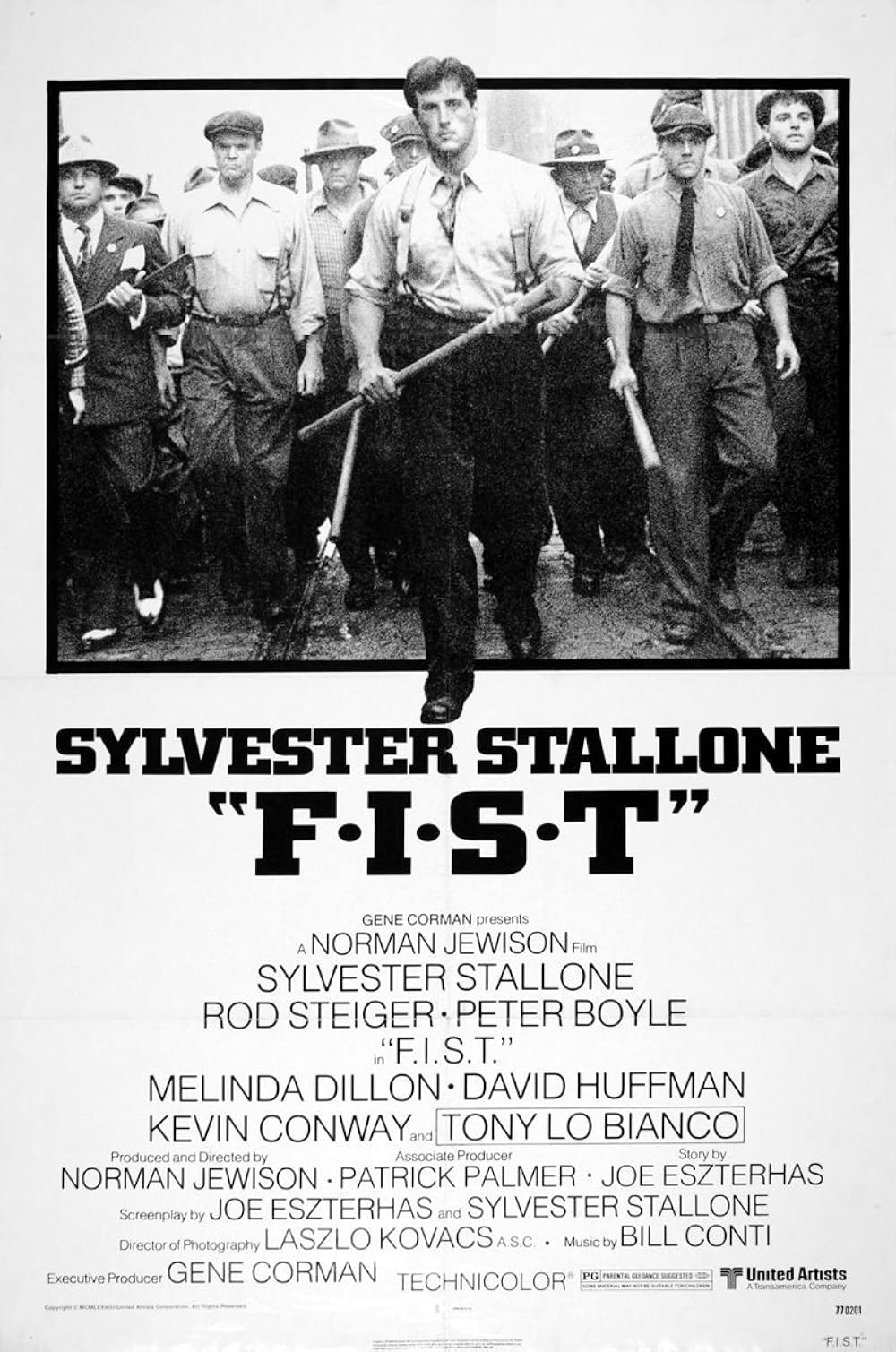
F.I.S.T. (1978)

fist

By Richard Winters

My Rating: 7 out of 10

4-Word Review: Laborer becomes union leader.

Set in the 1930’s in Cleveland the story centers on dock worker Johnny Kovac (Sylvester Stallone) who becomes so upset at the poor treatment of the employees that he leads a revolt that soon gets squashed by a management when Kovac goes to the office of Mr. Andrews (James Karen) who promises to bring his demands to ownership only for the next day to have Kovac and his friend Belkin (David Huffman) fired from their jobs. Impressed though by their tenacity truck driver Mike (Richard Herd) recruits them into his union telling them they would have a job of going out and recruiter others. Kovac initially refuses the offer until he finds out that a free car would come along with it. Kovac eventually rises up the union ladder until he becomes their national leader, but with the power and prestige also comes corruption and enemies.

This was Stallone’s first film after doing Rocky, which was a bit of a gamble by director Norman Jewison. He had wanted to cast Jack Nicholson in the role, Nicholson would later star in a similar film Hoffa, which came out 14 years later, but was so impressed at Stallone’s performance in the boxing film that he offered the role to him before he was even a household name. Jewison felt Sly was a star in the making just from what he saw in the preview of the film not knowing whether that movie was ultimately going to be a runaway success, or not. Had it not it might’ve put him in an awkward position as the studio wasn’t likely to finance a project that didn’t have guaranteed star power. As it was it became a blockbuster making the tables-turned a bit because Stallone could’ve easily backed out of the deal since it had only been a verbal agreement and he had since then been offered higher paying roles, but he kept to his word and took on this project, which surprised Jewison as many big names in Hollywood don’t always stick to their promises, but then later when the film didn’t do as well as expected Jewison’s blamed Stallone’s casting as part of the problem.

From my perspective I thought Stallone was terrific. His delivery does come-off as a bit monotone, but I felt that’s what added to the authenticity as this was a character with a limited education, so he probably wouldn’t sound real smart to begin with. Seeing Sly fight the system correlated with his real-life struggles as an actor trying to make it big in a competitive business, which helped to make it seem all the more genuine like this was a guy who had really lived the same type of life as the man he was playing.

In support I was highly impressed with David Huffman. This was an actor, whose career and life were sadly cut short in 1985 when he got stabbed to death, who I had always found quite bland. He had an attractive looking face, which I figured is what got him his foot-in-the-door, but his acting always came off as blah, but here he puts a lot of emotion into his role and it’s interesting to see the way his character grows and morphs throughout. James Karen and Tony Lo Bianco both have small parts, but there sinister facial expressions and ability to mug to the camera without it seeming obvious is what helps them stand-out. I was surprised though with Rod Steiger who gets second billing, but doesn’t appear until 1 Hour and 33 minutes in. His part, as a powerful senator, does ultimately become integral to the proceedings, but the fact that he underplays instead of his usual over-acting is what got me.

I thought the way Jewison captured the setting was great. It was actually shot in Dubuque, Iowa because by that time Cleveland no longer looked the way it once did, but the flavor and vibes from that period come-out strong and you feel right from the start that you’re being swept away to a bygone time. Stallone’s ascension into the ranks of union head prove riveting, but his corruption and downfall get glossed over and seemed rushed. I did though appreciated the way it examines worker’s unions from all angles both the good and bad making it seem less like a propaganda movie than Norma Rae, which came-out at around the same time, but only focused on the positive aspects of unions.

Spoiler Alert!

The ending, in which Kovac gets shot and killed while in his home came-off like a cop-out. It was intended to reflect at the time the recent disappearance of union head Jimmy Hoffa, but seeing the main character get assassinated without telling who was behind it proves unsatisfying. Sure we could probably surmise who the culprits were, but having to sit through a long movie only to be left with more questions than answers makes the viewer feel like watching it had been a big waste of time.

My Rating: 7 out of 10

Released: April 13, 1978

Runtime: 2 Hours 25 Minutes

Rated PG

Director: Norman Jewison

Studio: United Artists

Available: DVD, Blu-ray

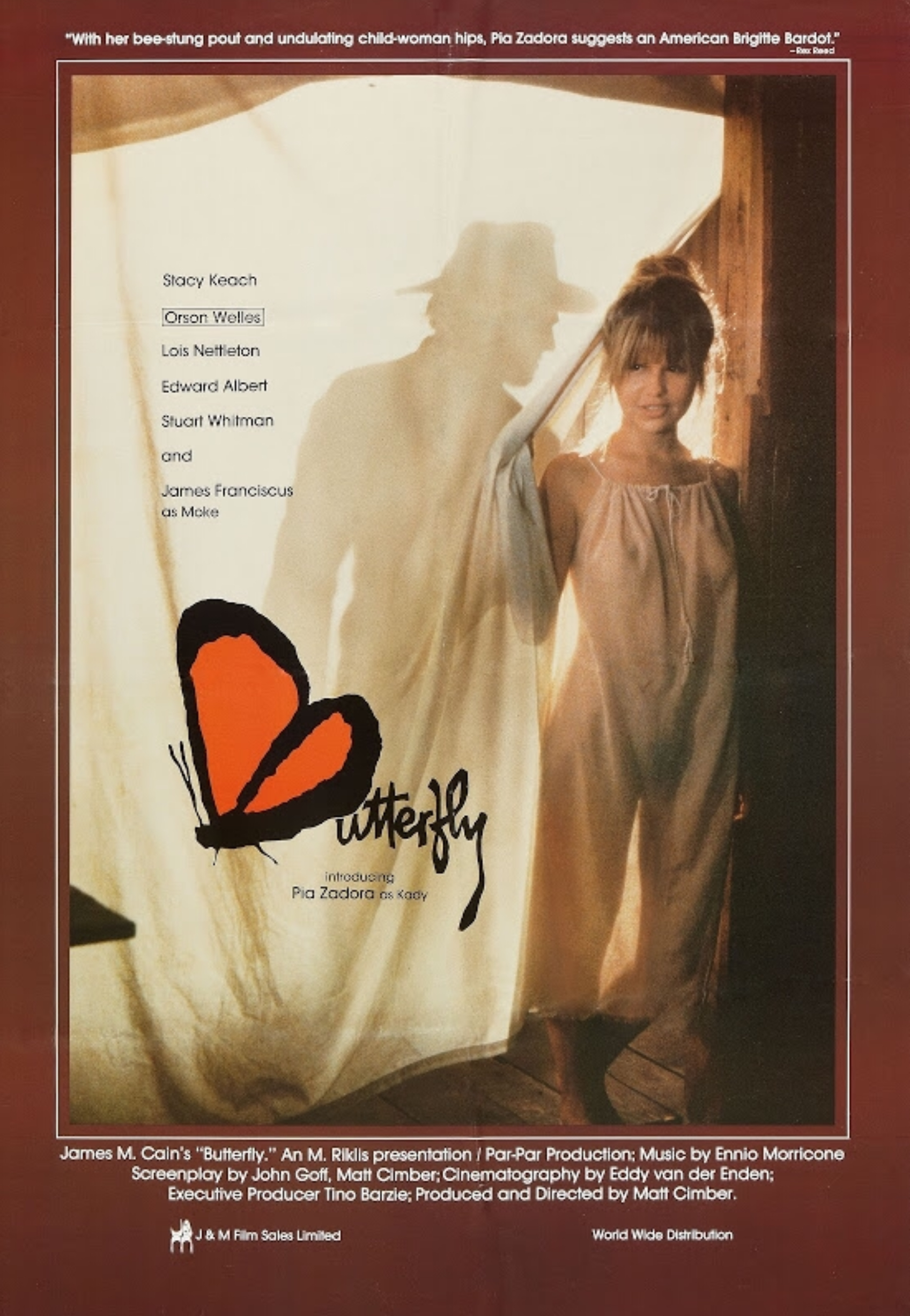
Butterfly (1982)

butterfly

By Richard Winters

My Rating: 0 out of 10

4-Word Review: Family has genetic birthmark.

Jess (Stacy Keach) takes care of an unused mine outside of a small Arizona desert town. One day Kady (Pia Zadora) shows up at his doorstep. Jess doesn’t recognize her at first, but then realizes she’s his 17 year-old daughter the product of his marriage to Belle (Lois Nettleton) who abandoned him 10 years earlier for another man named Moke (James Franciscus). She is pregnant by a man who refuses to marry her, so she  wants to steal silver from the mine that Jess protects in order to help her financially with the child who’s on the way. At first Jess disapproves, but Kady uses her provocative body and looks to essentially seduce him and get him to relent. However, a local man named Ed (George Buck Flower) witnesses their stealing from the mine as well as their lovemaking later on, which gets them arrested for incest.

The story is based on the 1947 novel ‘The Butterfly’ by James M. Cain, who at the time was an immensely popular author, who had many of his books made into movies, but due to the controversial nature of this one it had to wait 35 years until it finally went to the big screen. He was inspired to write the story when years earlier, in 1922, he got a flat tire while driving through a mountainous area in California and a farm family that had moved there from West Virginia helped him fix it, but at the time he speculated that the young daughter they had with them was a product of incest.  The movie makes several deviations from the book. In the book Jess was the overseer of a coal mine and the plot took place in West Virginia while the Kady character was 19 instead of 17.

While the plot has some tantalizing elements, and on the production end it’s well financed, the whole thing comes crashing down due to the really bad performance of its lead actress. Zadora at the time had done only one other film before this one, Santa Claus Conquers the Martians, which was universally lambasted. It probably should’ve killed anyone’s career who had been in that, but she continued to struggle on in the business. Then in 1972 while performing in a small role in a traveling musical show, she caught the eye of a rich businessman named Meshulam Riklis, who was 29 years her senior. The two began dating and eventually married in 1977. Her new husband was determined to make her a star even if it meant buying her way in. He put up the entire $3.5 million budget for the film while demanding that she be placed as the star forcing director Matt Cimber to cast all the other parts around her. Riklis even put up big money to help get her promoted to winning the Golden Globes Newcommer of the Year Award, but all of this didn’t get past the critics, or audiences who rightly saw her as undeserving of all the attention and while she did a few other movies after this, which were equally panned, and even a few music videos and singing ventures, she is overall largely forgotten today and hasn’t been in a movie in 30 years.

To some extent her performance isn’t completely her fault as her character is poorly fleshed-out, which is my main gripe. I just couldn’t buy in that this chick on the verge of adulthood would be so extraordinarily naive that she’d come-on to her own father and not see anything wrong with it. First of all why is she sexually into her dad anyways as majority of girls tend to want to go for guys their own age and if not there has to be a reason for it, which this doesn’t give. In either case she should have some understanding that the rest of society doesn’t condone this behavior nor having her aggressively flirt with literally any guy she meets. The fact that she’s so blissfully ignorant to the effects of her behavior made her not only horribly one-dimensional, but downright mentally ill. Sure there’s people walking this planet that harbor some sick, perverse desires, but virtually all of them know they’re taboo and not dumb enough to be so open about, or if they do they learn real fast. Having her unable to understand this, or never able to pick-up on even the slightest of social cues is by far the most annoying/dumbest thing about it.

Keach, who gives a good performance and the only thing that holds this flimsy thing together, has the same issue with his character though not quite as bad. The fact that he doesn’t even recognize his daughter at first is a bit hard to believe. Sure he left the family 10 years earlier, but that would’ve made her 7 at the time and although she has clearly grown I think she’d still have the same face. He gives into his temptations too quickly as at one point he massages her breasts while she’s in the tub. Now if he weren’t religious then you could say he didn’t care about the taboos and had been living so long alone that he’d be happy to jump at any action he could irregardless if they were related, but the fact that he goes to church regularly should make him feel guilty and reluctant to follow through. In the book he’s portrayed as fighting these internal feelings by turning to alcohol, which is the way it should’ve been done here as well.

The eclectic supporting cast does make it more interesting than it should. Orson Welles caught my attention not so much for his role as a judge, but more because of his wacky combover. James Franciscus, who usually played sterile good guys is surprisingly snarly as the heavy and Stuart Whitman has a few good moments as a fiery preacher though even here there’s some logic loopholes that aren’t explained like how did he know Kady was Jess’ daughter, which he mentions while at the pulpit much to the surprise of Jess as he hadn’t introduced her to anybody.

My Rating: 0 out of 10

Released: February 5, 1982

Runtime: 1 Hour 48 Minutes

Rated R

Director: Matt Cimber

Studio: Analysis Film Releasing Corporation

Available: DVD-R