Tag Archives: Walter Matthau

Movers & Shakers (1985)

movers2

By Richard Winters

My Rating: 1 out of 10

4-Word Review: No ideas for script.

Joe (Walter Matthau) is a head of a large movie studio who makes a promise to a dying friend (Vincent Gardenia) that he’ll make every effort to get his concept, which is to make a movie around the title ‘Love and Sex’, made. Joe then hires struggling actor Herb (Charles Grodin) to write the script, but Herb has no idea of where to begin and seems more concerned with mending his troubled marriage with his wife (Tyne Daly). Joe then hires wacky director Sid (Bill Macy) to helm the project, but he too is devoid of any ideas and more preoccupied with his getting his young wife (Gild Radner) to go back to him.

The behind-the-scenes history of how this movie even came about is far funnier than anything you’ll actually see on the screen. It all started when Paramount Studios paid a large of sum of money for the right’s to the sex manual ‘The Joy of Sex’ because they felt the title would have a large commercial appeal. They then hired Grodin to write the script telling him it could be about anything just as long as the title of it was ‘Joy of Sex’. Grodin, like the character he plays in the movie, was at a loss of ideas, so he finally decided to base the script around his real life situation about an actor hired to write a screenplay based solely around a sexy title. When he submitted the completed script to the studio they decided to pass on it and gave the duties of writing the script around the Joy of Sex title to someone else, which later got made into a movie directed by Martha Coolidge. Meanwhile Grodin became determined to get his script made even though he could no longer used the same title since Paramount retained the rights to that. He spent 7 long years peddling the script around to all the major Hollywood studios and even a few independent ones until he finally decided to use his own money to fund it and get his actor friends to agree to be in it for as small of a pay scale as they could with Grodin himself accepting only $5,000 for his work despite being both the star and producer.

While the concept sounds funny and even novel the final product isn’t. A lot of the problem is that outside of the inciting incident nothing much happens. Everyone just sits around complaining about a lack of ideas, which soon gets quite boring and redundant. The marital spats that occur in-between, both with Grodin and his wife, but also with Macy and Radner, and even Steve Martin and Penny Marshall, who appear briefly in a cameo, is neither lively, or clever and just helps to make any already dull movie even duller. Satirizing the Hollywood studio heads isn’t exactly ground-breaking either.

I also had a hard time understanding why a big studio mogul like Matthau would want to put up a giant statue of a dinosaur in the middle of the studio backlot since it was from a movie that didn’t do well at the box office. Supposedly it was due to his friendship with the director, but to me that just didn’t jive. If the movie had done well then yes a statue was in order, but to be reminded of a flop that cost the studio money seemed very hard to imagine and too stupid to be comical. If the character’s motivations don’t make sense then it’s hard to get into the story, which is where this thing really falters.

For his part Grodin himself is quite amusing. Nobody does deadpan comedy the way he does, so his scenes still work, and there are a few humorous comments made here and there, especially by the character played by Earl Boen, but everything else just dies. The voice-over narration by Grodin, which got added later in an effort to make the movie ‘funnier’ after the responses by the initial test audiences were quite negative, doesn’t help things at all. A good movie should not have to rely on narration as everything should be conveyed by either dialogue, or action, or through other forms of visuals. Once you need narration to ‘improve it’ you already know it’s a mess.

Turning the thing into an ill-advised romance at the very end, which even includes a sappy love song, between Grodin getting back together with his wife just sinks it even further. Their fights weren’t too interesting to begin with and neither person was well-defined enough for the viewer to care what happened to them.

Grodin would later write in his autobiography of how bitter he was that the studio didn’t market the film better and the poor treatment Hollywood elites gave it, but it really is a bad movie and I think his ego got the better of him with this one. I’m a fan of his comic style and even the offbeat talk show he had during the late 90’s, which didn’t go over well with everyone and didn’t last long, but I draw the line with this. It just doesn’t work at all and can’t blame anyone for disliking it in fact I’d be very surprised if there was anyone other there, outside of Grodin of course, that did like it.

My Rating: 1 out of 10

Released: May 3, 1985

Runtime: 1 Hour 20 Minutes

Rated PG

Director: William Asher

Studio: MGM/UA

Available: DVD-R

First Monday in October (1981)

firstoctober

By Richard Winters

My Rating: 3 out of 10

4-Word Review: The first lady justice.

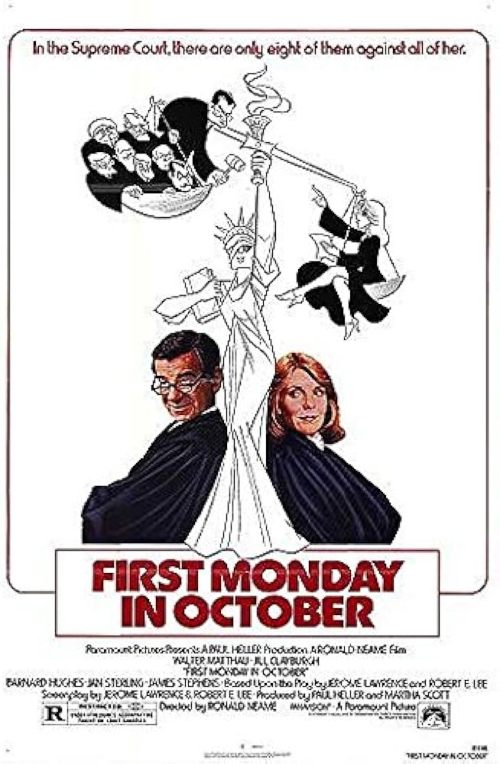
While Daniel Snow (Walter Matthau), an associate justice on the Supreme Court who leans heavily left on most issues, is on vacation in Alaska, he gets word that the staunch conservative judge has passed away. The President then decides to nominate a woman to the court by the name of Ruth Loomis (Jill Clayburgh). Unfortunately Daniel is not happy about this as she’s as conservative as the man she replaced. Once the nomination is confirmed the two are immediately at odds over such things as pornographic movies and corporations that pollute the environment. While they bicker and debate constantly they do end up becoming friends, which comes in handy when Ruth realizes that her late husband was involved in some unscrupulous matters and she considers resigning from her position though Daniel tries desperately to talk her out of it.

The film is based on the 1978 play of the same name written by Jerome Lawrence and Robert Edwin Lee, who also wrote the screenplay. Initially the play, which first starred Jean Arthur and Melvyn Douglas received such terrible reviews that it soon closed and was revamped with Henry Fonda and Jane Alexander, was considered a novelty as up to that time no woman had ever served on the nation’s highest court. That all changed when Ronald Reagan nominated Sandra Day O’ Connor in July of 1981 forcing this film, in an effort to appear timely, to move up its release date to August, but the timing didn’t work and the movie was overall panned by both the critics and public.

The only interesting aspect is watching it from today’s perspective where the Supreme Court has now become a toxic and divisive issue when back in the early 80’s that was not the case. When the Girl Scouts of America posted on Twitter commemorating Amy Coney Barret getting nominated and approaching it as an achievement for women it got a lot of pushback from those unhappy with her due to her conservative leanings. Yet in this movie the fact that the character is staunchly conservative is not considered a problem and feminists and other women are seen during the senate hearings proudly cheer her on and considering her nomination a landmark.

In some ways having the political drama that the modern day court holds today might’ve made the story more interesting as the thing is so genteel that it’s enough to put most people to sleep. The script would’ve had more intrigue had their been a bad guy, maybe like the producer of the porn movies who gets talked about, but never seen, or even the elusive head of a mysterious corporation whose case the court is set to hear, that should’ve been added in to create genuine conflict, which is otherwise sorely missing.

I did like the scene where the judges get together inside a viewing room to watch the porno flick ‘The Naked Nymphomaniac’, but Matthau’s character should’ve been present during this and it’s less funny without him. Their subsequent arguments about whether X-rated movies should be allowed under the First Amendment seems quite dated as this issue had already been considered settled law and by the 80’s most video stores were offering adult films for rental and cable movie channels were showing porn late at night making the plot here woefully out of touch with the times.

Matthau and Clayburgh are great actors, but their performances here prove to be dull and lifeless. Having some sort of romance enter into the picture, it gets briefly alluded to when Matthau admits to having a certain attraction to Jill, but immediately dropped, might’ve given it a spicy angle, but just portraying them as friends with different viewpoints isn’t enough to keep it captivating. There’s  not too much that’s funny either. There’s a couple of semi-humorous lines here and there, but nothing that will make anyone break out into uproarious laughter. Matthau’s inability to eat his lunch using chopsticks while in a Chinese restaurant might amuse some slightly, but overall it’s a dull, empty ride. Very surprising that this thing received an R-rating. The only objectionable part is when they watch a porn flick, but nothing much in the way of nudity or sex is shown.

My Rating: 3 out of 10

Released: August 21, 1981

Runtime: 1 Hour 39 Minutes

Rated R

Director: Ronald Neame

Studio: Paramount Pictures

Available: DVD, Amazon Video, YouTube
The Taking of Pelham One Two Three (1974)

taking

By Richard Winters

My Rating: 8 out of 10

4-Word Review: Subway passengers held hostage.

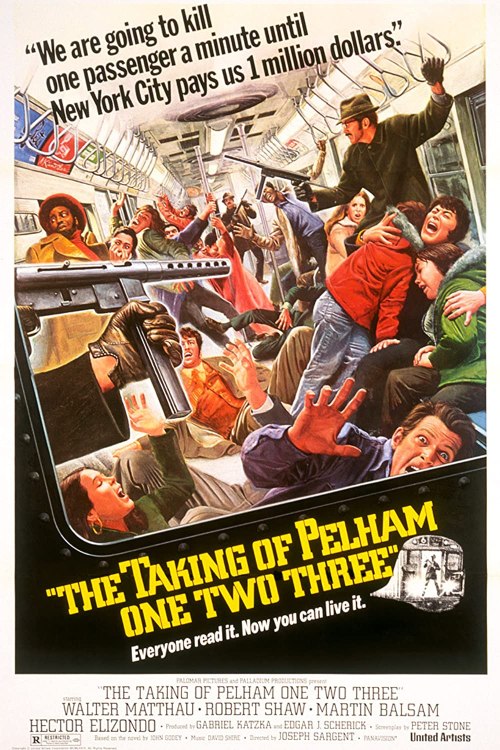
Four men wearing disguises and going by code names: Mr. Blue (Robert Shaw), Mr. Green (Martin Balsam), Mr. Grey (Hector Elizondo), and Mr. Brown (Earl Hindman) board the same subway car, this one being the Pelham 1-2-3, at different locations. Once all four are onboard they take out their guns and take over the subway car by holding both passengers and conductor hostage. For their release they demand $1 million in ransom to be paid in 1-hour and for every minute that it is late one passenger will be killed. They communicate these demands to Lt. Zack Garber (Walter Matthau) who is a part of the New York City Transit police. As Mr. Blue and Garber communicate with each other over the radio and the city races to meet the crooks demands Garber begins to try and surmise who these men are and how they’ll be able to get away with it since they’re trapped in an underground subway. Garber is convinced that it will not work and the men will eventually be caught unaware that Mr. Green, who used to work for the subway system until he was, in his mind, unfairly terminated, has come up with an ingenious contraption that can override the dead-man’s switch and allow the train to keep running even with no one at the controls.

The film is based on the best-selling novel of the same name by John Godey, who was a subway enthusiast and came-up with the plot after spending many years using the subway system. While the movie rights for the paperback were sold for $450,000, in anticipation that it’d make a great movie, the film almost didn’t get made due to the reluctance of the Metropolitan Transit Authority to allow the production to be filmed on-location.  Much of the reason stemmed from their fear that it might give ‘kooks’ the idea to pull-off a real-life heist, but eventually they caved once screenwriter Peter Stone added in the fictional contraption that could override the dead-man’s switch.

As a caper/action flick it is quite exciting from literally the first-frame to the last, but it’s some of the other added elements that make it a standout. I really enjoyed how the city of New York becomes like a third character and the unique, brash attitude of the people. Every character, no matter how small the part, has a distinct personality and memorable. My favorites were Mari Gorman as the feisty hooker, Michael Gorrin, as the elderly passenger convinced that the subway car must eventually come to a stop even as it careens out-of-control and everyone else panics. I also enjoyed Louie Larebee as an alcoholic woman, who is so drunk that she passes out when the crime begins and sleeps through the whole thing as well as Carolyn Nelson, the real-life wife of the film’s director Joseph Sargent, playing a college coed who believes she can stop the train through sheer mind control and meditation.

On the ground there’s some great character bits too including Tom Pedi as an aging, misogynist who doesn’t like the idea of having to work alongside women, nor that he should stop cursing because of it, who walks right into the line-of-fire when he stubbornly refuses to listen to the kidnappers warnings. Kenneth McMillan, is very funny as an exasperated street cop trying to direct traffic, and Dick O’Neill lends moments of drama as an outspoken transit employee who doesn’t like the idea of giving into the kidnappers demands and isn’t shy about voicing his disapproval, which leads to a tense confrontation with Matthau.

Matthau’s anti-hero take where he seems initially like nothing more than a aloof, laid-back guy, who doesn’t seem to have the cunning, or initiative to defeat the bad guys. At one point even openly insults a group of Japanese reporters who he thinks can’t speak English only to learn to his regret that they can, is excellent and in patented Matthau style seems to be able to do it without much visible effort.

Shaw is solid, but I felt there needed to be an explanation for how he got bought into the scheme, which never comes and ultimately is the film’s only real weak point. His personality is so different from the other men in the group that I couldn’t understand why he’d want to pull-off a robbery with them, nor why, being such a careful planner that his character is shown to be, he’d only realize as the crime is happening that the Mr. Gray was too much of a hot-head and not right for the job, as I’d think he would’ve observed this much earlier during the planning stage and had Gray removed before the actual crime had ever been carried out. Having scenes of the backstory spliced in would’ve helped made it more complete.

This was remade as a TV-movie in 1998 and then as another feature film in 2009 that starred Denzel Washington in the Matthau role and John Travolta playing Shaw’s part. I never saw the TV version and it’s been many years since I viewed the theatrical remake, but I remember finding it a letdown mainly because it centered too much around Travolta, who would go on long rants that bogged down both the pace and plot making it not nearly as exciting as this one.

My Rating: 8 out of 10

Released: October 2, 1974

Runtime: 1 Hour 44 Minutes

Rated R

Director: Joseph Sargent

Studio: United Artists

Available: DVD, Blu-ray, Amazon Video, YouTube

I Ought to Be in Pictures (1982)

i1

By Richard Winters

My Rating: 4 out of 10

4-Word Review: Daughter reunited with father.

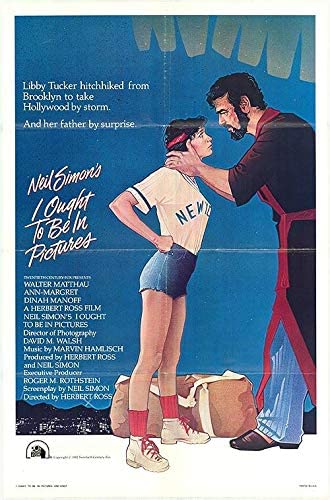
Libby Tucker (Dinah Manoff) is a 19-year-old who decides one day she wants to go off to Hollywood to be an actress. While still living in New York she manages to take a bus to Denver and then hitch-hikes the rest of the way. Libby’s father, Herb (Walter Matthau) is a successful screenwriter living in Hollywood and she hopes to use his connections to get her big break, but unbeknownst to her Herb is at a low point in his career. He hasn’t been able to churn out any scripts lately and avoids making pitches to producers altogether. He lives in a ramshackle place with his on-again-off-again girlfriend Steffy (Annn-Margaret), but overall he’s lost his confidence and can’t seem to find it. He also hasn’t seen Libby in 16 years after he left her mother when she was only 3 years old. Libby realizes their first meeting will be awkward especially since he doesn’t even know she’s coming, but she hopes to make a bond with him as she feels it’s the one thing emotionally that’s missing in her life.

The film is based on the Broadway play of the same name written by Neil Simon that first premiered in Los Angeles at the Ahmanson Theater with Tony Curtis playing Herb, Joyce Van Patten as Steffy and Manhoff in the role of Libby. While the play received so-so reviews the feedback for the film was overall negative with Siskel and Ebert even selecting it as one of the worst movies of 1982.

One of the biggest problems is Libby who seems too naive for her age. Being a 6-year-old with wide-eyed dreams of becoming a movie star is one thing, but Libby is 19, a legal adult, with absolutely no experience in acting, a thick Brooklyn accent, and less than stellar looks and yet somehow expects to make it big almost overnight. Dreamers are okay, but they still have to have at least one foot in reality and this gal acts like she’s from a different planet. She also uses a flash camera and tries to take pictures into the dark night through the window of her bus, which any halfwit will tell you won’t turn out, and yet she’s gleefully unaware of this making it seem like she just popped out of the womb yesterday and lacking not even a smidgen of common sense.

Herb is another problem. He literally abandoned the family over a decade ago and has made no attempt to communicate with the kids since then. Most adult children who’ve been through that have no interest in meeting the absentee parent who was never around. If they do it’s only to learn a little about them, but not necessarily expecting them to be a part of their lives, or to have an emotional bonding and yet Libby does expect this, which again just makes her too goofy to be believable.

I was confused why Herb would even want Libby back in his life. This was a man who presumably could’ve cared less what she was doing for the past 16 years and yet now after she moves-in he becomes a nervous parent worrying when she stays out too late, but if he didn’t worry about her staying out late before when she was in New York then why now? I’d think if a father hasn’t seen his children in that long a time then they just don’t care and don’t want to be bothered. In reality this ‘reunion’, where only one member wants it to happen, should’ve been a far colder experience. Having the dad then turn his bachelor life upside down to accommodate her seemed forced and didn’t help to explain why Herb behaved the way he did for the past decade and a half, if at heart, he really was just a caring, swell guy.

Ann-Margaret is good playing the one character that seemed half-way relatable and helps balance things, but she’s not in it enough. The script has Simon’s sharp dialogue, which helps, but the plot is built on such a superficial foundation, and written by someone who clearly never experienced child abandonment himself nor cared to do any research on it and was simply using it as an excuse to create cheap, sentimental drama, that it’s hard to take seriously, or find compelling in any meaningful way.

My Rating: 4 out of 10

Released: March 26 1982

Runtime: 1 Hour 48 Minutes

Rated PG

Director: Herbert Ross

Studio: 20th Century Fox

Available: DVD

Little Miss Marker (1980)

little1

By Richard Winters

My Rating: 3 out of 10

4-Word Review: Kid used for collateral.

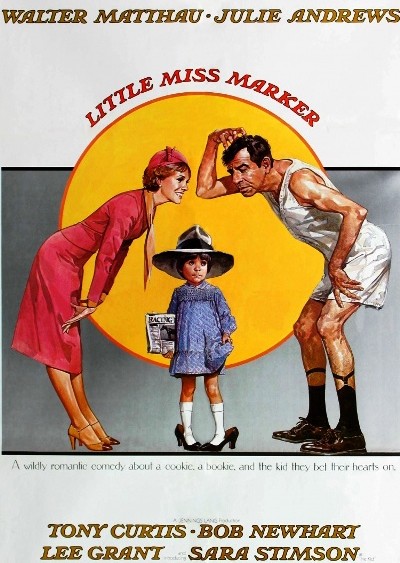
Sorrowful Jones (Walter Matthau) is a no-nonsense bookie running a gambling operation during the 30’s. When one of his clients named Carter (Andrew Rubin) cannot pay back his $10 debt he puts up his 6-year-old daughter (Sara Stimson), who is simply known as ‘the Kid’, as collateral. Sorrowful tells his assistant named Regret (Bob Newhart) to look after her, but Regret does not like kids, so he drops the young girl off at Sorrowful’s doorstep one night and then promptly leaves forcing Sorrowful to begrudgingly become her surrogate father figure. Eventually the two grow fond of each other and become inseparable, as does Amanda (Julie Andrews) who’s the girlfriend to a crime boss named Blackie (Tony Curtis). Blackie does not like that Sorrowful is showing an interest in Amanda, or her in him and  proceeds to try and throw a monkey-wrench into their potential affair while also coercing Sorrowful to partner with him in a fixed horse race.

This film was the fourth remake of the story that originally came out in 1934 and starred Adolphe Menjou as Sorrowful and Shirley Temple as the Kid. In 1949 it got remade with Bob Hope playing Sorrowful and Mary Jane Saunders as the child. Then is 1962 a variation of the story was was done called 40 Pounds of Trouble that was shot on-location in Disneyland and starred Tony Curtis in the Sorrowful role, though the character name was changed to Steve, and Claire Wilcox portraying the child, whose name in the film was Penny. While I have not seen any of those versions I still came away feeling this one had to be the weakest. A lot of the problem is that the script relies too heavily on the cuteness factor of the child, who is certainly adorable, but has no discernable personality. It’s also hard to imagine that a child who has just been abandoned by her father, and had also gone through the trauma of the death of her mother, would be so well-behaved and in reality would probably be showing some serious adjustment issues.

I’m not sure why Matthau, who also produced, thought this project would be a good idea, but appearing in it did not bolster his career. Didn’t he ever hear of the old adage never share the screen with animals or cute kids as they’ll just steal away all the attention? It’s not like Stimson, whose only movie role this was and who now works as a pediatrician in Arizona,  didn’t have to do anything special for that to happen as her big blue eyes are enough to capture the heartstrings of just about any viewer. I also had a hard time understanding his character particularly the fact that he was this brash, tough talking bookie yet doesn’t carry a gun nor have any fighting skills as proven by the fistfight he attempts to have with Curtis where even though Curtis was shorter Matthau he’s is still frightened of him and constantly backing away whenever Curtis got in his face. You’d think a streetwise person would have some ability to defend himself if needed and not just slink away the second someone else, particularly one who was smaller, suddenly got aggressive.

Bob Newhart gets completely wasted in a role that’s so small and insignificant I’m surprised why he even took it. I also didn’t think this was the right movie for Julie Andrews either. Sure, she has an engaging quality, but for a woman dating a crime boss she seemed way too pure and innocent almost like she was completely oblivious to his underhanded nature. In reality the people one hangs out with will inevitably rub off on that person and a more realistic portrayal would’ve had her being a bit corrupt, which would’ve actually been more interesting as it would’ve created a two-dimensional character who was cold and conniving most of the time, but then when the kid comes along a softer side gets exposed.

In contrast both Curtis and Brian Dennehy, who plays his henchmen, are a delight and needed more screen time. It’s interesting too seeing Lee Grant appear near the end playing a judge and almost unrecognizable in a gray wig, but the story as a whole flounders chiefly because, outside of the scenes showing a fixed horserace, there’s no action at all, which makes it absurd to call this a ‘family movie’. If I, as an adult, was bored I can only imagine a kid being even more so. In fact I’d say this movie really wasn’t made for kids at all, but instead little old ladies who enjoy cutesy kids the way they like cutesy puppy dogs and want children only shown as being adorable even though kids, like with everyone else, can have their bad side, which conveniently gets left out here.

My Rating: 3 out of 10

Released: March 21, 1980

Runtime: 1 Hour 43 Minutes

Rated PG

Director: Walter Bernstein

Studio: Universal

Available: DVD, Blu-ray

Earthquake (1974)

By Richard Winters

My Rating: 4 out of 10

4-Word Review: Los Angeles really rocks.

A jolt from a massive earthquake shakes the Los Angeles metro area one morning, but researchers at the nearby seismological institute fear that there may be another one that will be far stronger and yet they hesitate about warning the public fearing that it may create ‘too much panic’. They agree instead to alert the National Guard about it, so they can prepare for the fallout when it happens, but in the meantime many innocent people go about their day including those working in skyscrapers ill-prepared for the tragedy that is about to befall them.

Due to the success of disaster flicks during the 70’s many studios clamored to get on board and while this concept may have sounded good in theory, it really leaves on lot to be desired. For one thing most earthquakes last on average for only 10 to 25 seconds, so the majority of the film deals with boring, soap-opera-like drama of a bunch of cardboard characters both before and after the quake while there’s probably less than 5-minutes of actual quake effects.

The special effects are, despite winning a Special Achievement Award at the Oscars, not very convincing and come off looking like shots of miniatures homes and buildings made of paper that could easily fall apart without much effort. The shot showing workers falling down while on the Mulholland Dam  appears more like they’re all dancing some sort of gig and then intentionally dropping themselves to the ground as part of the dance routine.

The film is also notorious for its elevator scene in which people get stuck inside an elevator as the quake occurs and then it goes plummeting down the shaft before eventually crashing and killing everyone inside. However, due to an inability to effectively spray stage blood onto the stunt people, director Mark Robson decided to have animated blood added in during post production, which looks as cartoonish as it sounds and puts an embarrassing, amateurish mark on the entire production.

The casting is out-of-whack as well and features Charlton Heston in the lead as a sort of hunk even though he was 50 and too old for that type of thing, but is still seen sweaty and shirtless in a couple of scenes nonetheless. Ava Gardner livens things up a bit as Heston’s clingy, bitchy wife, but having her portrayed as being Lorne Greene’s daughter, who in real-life was only 8 years older than her, was ridiculous.

I did enjoy Marjoe Gortner as the psycho grocery store manager, who after the quake occurs, puts on a wig and takes part as a member of the National Guard to control the looters only to become more of a nemesis than a help. Walter Matthau, who appears in a bit part wearing an Afro wig, is funny as a patron at a bar who’s so drunk he’s oblivious to the chaos.

Spoiler Alert!

The only part of the movie that I really liked was the end where Heston is helping people out of an underground tunnel that is filling up with water and instead of climbing up out of the hole to his lover, played by Genevieve Bujold, who is waiting for him with open arms, he jumps back down to save his bitchy wife only for them to both end up drowning, which I found interesting. Too many movies especially the ones made these days, always have the hero come out of these things unscathed, or making a full recovery after being temporarily injured, but in reality saving others in treacherous circumstances has its share of risks where not everyone will come out of it alive, so it’s nice to have a film share a realistic balance.

My Rating: 4 out of 10

Released: November 15, 1974

Runtime: 2 Hours 2 Minutes

Rated PG

Director: Mark Robson

Studio: Universal

Available: DVD, Blu-ray, Amazon Video, YouTube

Pete ‘n’ Tillie (1972)

By Richard Winters

My Rating: 6 out of 10

4-Word Review: Marriage and then tragedy.

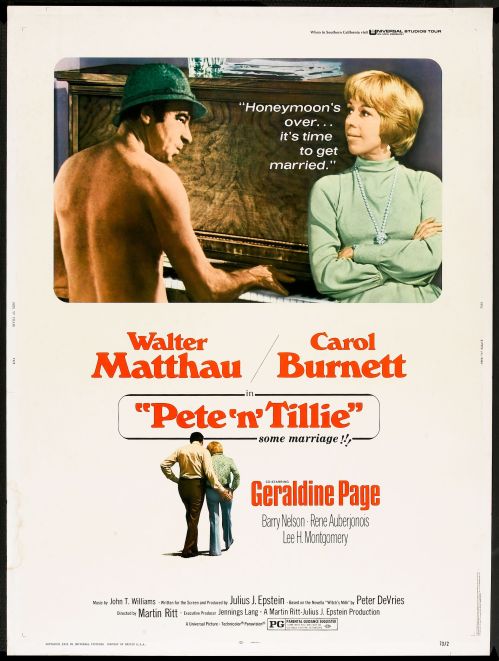
Tillie (Carol Burnett) is a 33-year-old secretary still looking for ‘Mr. Right’. Her friend Gertrude (Geraldine Page) sets her up with Pete (Walter Matthau) a lifelong bachelor. The two don’t hit-it-off initially, but the other prospects are so dim they decide to make a go of it, so they get married and have a kid (Lee H. Montgomery) only to then be faced with terrible news.

On the onset this may seem like a misfire. The viewer expects, especially with these two stars, a very broad comedy of which this is not. Instead the script, which is based on the novel ‘Witches’ Milk’ by Pete De Vries, relies heavily on dry wit particularly through the dialogue, which on a low key level is quite funny. The attempt to create a sort-of unromantic romance that goes completely against what we’ve come to expect in most other romantic films is commendable and for the first hour or so it kind of works.

Matthau again shines by managing to make an unlikable character likable and even downright engaging while Montgomery is fun as the kid by playing a child that seems far more mature and sensible than his two parents. Burnett’s performance though doesn’t work as well. She’s known for her hammy performances from her TV-show and yet here plays a more serious part that barely has much comedy to it at all. The scene where she  screams up to the sky in a fit of rage over her son’s death is her best moment, but overall her appearance here is largely forgettable.

Her character’s motivations are confusing as well particularly with the way she jumps into marriage with a man she really doesn’t like and who would repel most other women and then she decides to stay with him even as it becomes painfully clear that he’s cheating on her. It just seemed that a reasonably attractive woman such as herself should have other male suitors to choose from, so why she sells-out for this one and sticks with him when others would run is not clear and the movie should’ve done a better job at answering this.

Geraldine Page’s character seems completely out-of-sync with the proceedings. She’s personally one of my favorite actresses and even though she was nominated for an Academy Award for her performance here I didn’t see what her presence added to the story. Having her pass out at a courthouse simply because she doesn’t want to reveal her age gets rather exaggerated. The physical altercation that she has with Burnett afterwards does not fit the tone of the rest of the film, which tried to be low-key while this bit becomes over-the-top slapstick and completely out of place.

Had the film focused entirely on the courtship phase this thing could’ve been a winner as it has a nice dry offbeat touch. Even the melodrama of the second act I could handle, but the crazy antics of the third act don’t work at all and the ending leaves no impact at all making this an interesting experiment that ultimately fails.

My Rating: 6 out of 10

Released: December 17, 1972

Runtime: 1 Hour 40 Minutes

Rated PG

Director: Martin Ritt

Studio: Universal

Available: DVD-R (Universal Vault Series)

A New Leaf (1971)

By Richard Winters

My Rating: 7 out of 10

4-Word Review: Marrying for her money.

Henry Graham (Walter Matthau) has been living off of his vast inheritance for years only to find that his overspending and has now made him broke. Since he has no work history and no interest in getting a job he decides the only other alternative is to marry a rich woman. He finds his target in the form of Henrietta (Elaine May) who is an heiress to a massive family fortune. She is also quite homely, socially inept, and very into botany. Henry decides to ask for her hand in marriage and then once they are hitched kill her off and acquire her fortune for himself, but nothing goes as planned.

The plot is based on a short story ‘The Green Heart’ by Jack Ritchie and is full of many ingenious twists that helps propel the dark comedy along at a very even tone. Director May’s use of dry, subtle humor comes in perfectly for this type of material. So many other Hollywood comedies feel the need to bombard the viewer with broad, in-your-face gags so it’s genuinely refreshing to have a film take a more restrained approach by allowing the humor to peculate more. Instead of a rapid fire, gag-a-minute pace the film stretches the comical bits out for several minutes allowing the actors to play up the scene to a full crescendo with Henrietta’s inability to wear her evening nightgown properly on their honeymoon being quite possibly the funniest.

The characters are made up of extreme caricatures and in less talented hands could’ve been a detriment, but Matthau manages to play his part so astutely that the viewer ends up liking him anyways and his arc, where he reluctantly and quite unexpectedly ends up helping Henrietta out of several jams that she wasn’t aware of, is quite satisfying. George Rose, who sadly and ironically ended up having the same fate that almost befell the May character here when in 1988 in an attempt to get his hands on Rose’s fortune the teenage son that he adopted killed him while trying to make it look like a car accident, lends great support as Matthau’s wise and loyal butler.

Like with May’s other projects including the notorious Ishtar this film suffered many cost overruns and production delays most notably the 10 months it took to edit the film, which initially ended up having a 180 minute runtime and featured a secondary story dealing with Matthau poisoning a blackmailer played by William Hickey. The then head of Paramount Robert Evans decided, much to May’s objections, to cut this part out, which shortened it to 102 minutes, which I personally feel was a good idea. While I usually like director’s cuts the story here is too thin for a 3-hour length and in many ways goes on a bit too long the way it is although it would still be cool to see the extra footage, which is rumored to have been either lost or destroyed, as a bonus feature on a future DVD/Blu-ray release.

As a simple black comedy it comes off pretty well and even has a cute twist ending. Although a box office flop at the time it has garnered strong acclaim and since become a cult classic. The two stars also reunited 8 years later playing another couple in the Neil Simon farce California Suite

My Rating: 7 out of 10

Released: March 11, 1971

Runtime: 1 Hour 42 Minutes

Rated G

Director: Elaine May

Studio: Paramount

Available: DVD, Blu-ray, Amazon Video, YouTube

The Bad News Bears (1976)

By Richard Winters

My Rating: 8 out of 10

4-Word Review: From losers to winners.

Ex-minor league baseball player and now full-time pool cleaner Morris Buttermaker (Walter Matthau) gets hired to coach a bunch of unskilled, untalented kids in a competitive baseball Little League. At first Buttermaker is only interested in collecting a paycheck and has no drive in teaching the kids the fundamentals or even in winning, but things change after the season opener when his team gets drubbed by the far superior Yankees. Buttermaker takes offence at their arrogant manager (Vic Morrow) and feels compelled to ‘show-him-up’. To do this he brings in the talented Amanda (Tatum O’Neal) to be the team’s new pitcher as well as Kelly Leak (Jackie Earle Haley) who is an excellent fielder and hitter, but as his competitive juices flow, so does his surly side making the game no longer fun to play for the kids.

Don’t be fooled because this is anything but a simple kid’s flick. Sure the kids can watch it and enjoy it, but the multi-layered story brings out many issues that the adults will be more than able to relate to. Director Michael Ritchie deftly picks-up on the many nuances of Little League culture and if one played in it or was involved in any capacity then this movie will tap into those memories and bring back a flood of nostalgia.

My only complaint is a missing side-story dealing with the parents attending the games. It is mentioned in passing how the adults are able to be friendly with each other as the season begins, but by the end they are usually no longer on speaking terms, but it would’ve been much more revealing had this been shown instead of just discussed.

The script was written by Bill Lancaster who was the son of legendary actor Burt Lancaster. He based the story of his own experiences of playing Little League ball and the Buttermaker character is supposedly a composite of his famous dad.

This also marks the fifth film that Ritchie directed dealing with the theme of competition. His first was Downhill Racer, which dealt with the sport of skiing, The Candidate dealing with a senatorial race, Prime Cut, which was about rival crime syndicates, and Smile about the ugly side of beauty pageants and while all those flicks were good this one is his best.

Spoiler Alert!

The film’s climactic game, which has the Bears taking on the mighty Yankees for the championship features many of baseball’s intricate tactics that will appeal to the seasoned fan, but still be straight forward enough for the novice to grasp. It also has the film’s most famous scene where the Yankees’ manager smacks his own son (Brandon Cruz), who was the team’s pitcher, when he doesn’t obey his father’s instructions. Then on the very next play, and in order to get back at his dad, the kid fields a grounder, but refuses to throw it to first base, which allows the opposing team to score an easy run.

It is intended that the viewer should side with kid, but I didn’t. For one thing the dad’s advice was good, since this hitter had already gotten some runs off of him earlier it made sense to pitch low and outside. Just because he kid wants to ‘strike him out’ doesn’t mean that he will or that it’s a good idea. Strategy is a part of the game and that’s what a manger is there for. What happens if this kid grows up and plays in the big leagues and then decides he doesn’t want to do what the manager tells him. How’s that going to go over?

The kid also seemed like an incredibly self-centered little brat. Supposedly he lives with his dad 24/7, so couldn’t he have picked some other time to get back at his old man instead of jeopardizing the game for the rest of his teammates who are counting on him to help win?

This also brings up the issue of who’s really the ‘mean manager’.  It’s supposed to be Morrow, but Matthau in a lot of ways gets just as bad if not worse especially with the way he ends up treating Amanda making me almost surprised that she showed up the next day to play. To me it would’ve been more satisfying having one of the Bears players do to Matthau what the son did to his father and in my opinion Matthau would’ve deserved it more.

This then brings up the third issue which is the fact that Matthau has this extraordinary epiphany in the middle of the big game where he realizes in his zest to win he might’ve pushed things too far and decides to pull back. I realize this is the film’s central theme, which is that becoming overly competitive is not good and can turn otherwise nice people into assholes if they aren’t careful, but the shift comes off like a Jekyll and Hyde. Most of these types of games last for only an hour, so having a guy at the start of the hour come off as this relentless warrior willing to do whatever it takes to win only to end the game being this high minded idealist lecturing the other parents on how it’s important that all the children get a chance to play even if it means blowing the game seems too severe for such a short period of time.

I wasn’t completely happy about the Bears losing the big final game either. Normally I’d consider this a good thing because it works against the formula. It’s also beneficial for kids to realize that not everyone ends up with the big trophy or that ‘the good guys always win’, but more important to hold your head high and be proud of your accomplishments, yet I still remained a bit frustrated. You become so emotionally invested in them winning that it’s deflating when it doesn’t happen, but it’s still one of the best sports movies ever made either way!

End of Spoiler Alert!

My Rating: 8 out of 10

Released: April 7, 1976

Runtime: 1Hour 42Minutes

Rated PG

Director: Michael Ritchie

Studio: Paramount

Available: DVD, Amazon Video, YouTube
Cactus Flower (1969)

By Richard Winters

My Rating: 3 out of 10

4-Word Review: Pretending to be married.

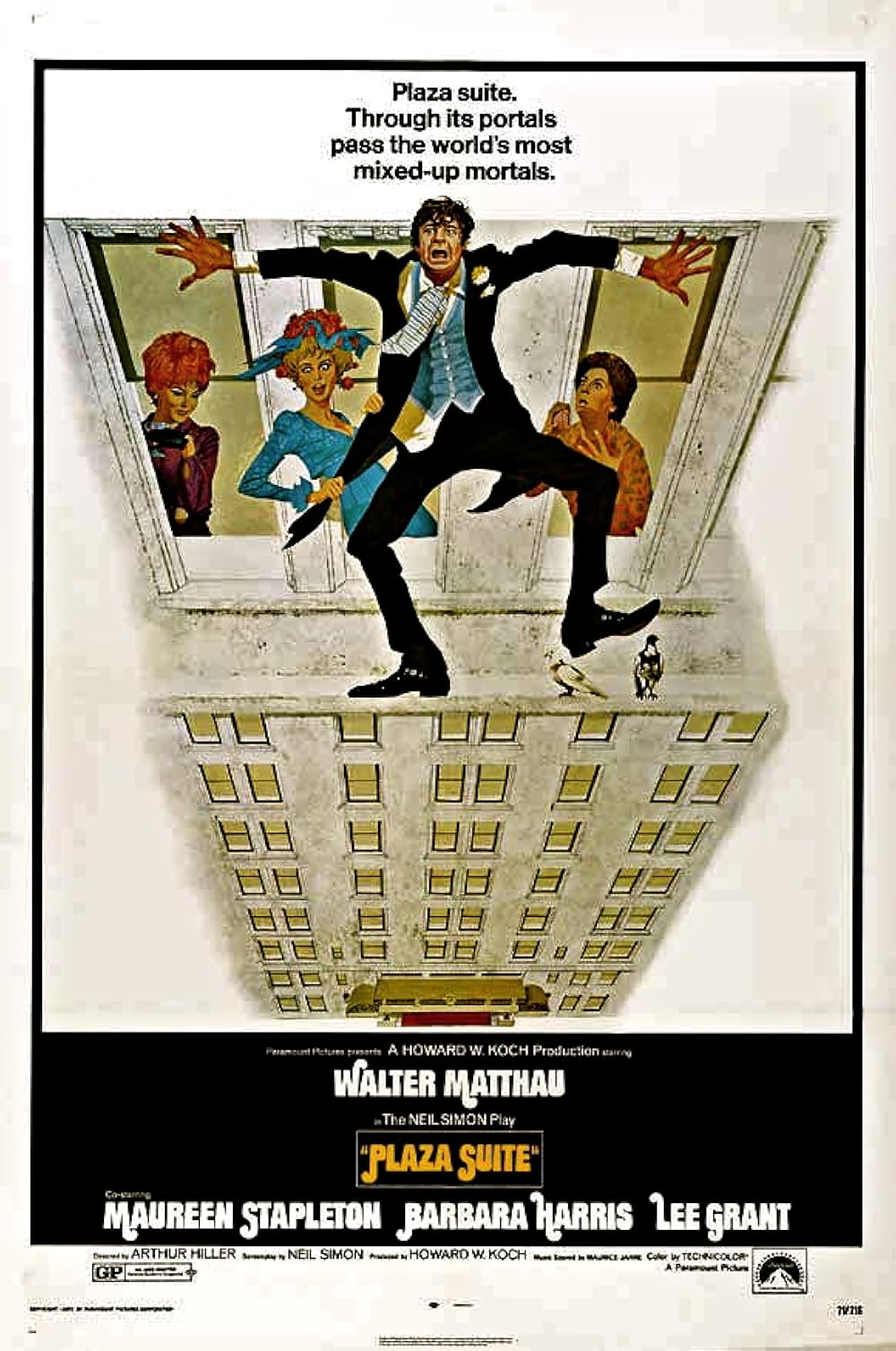
Julian (Walter Matthau) is a dentist who enjoys duping the women he sees into believing that he is married, so he can have the benefit of fooling around with them without the commitment (a sort of ‘friends-with-benefits’ scenario before it became in vogue). Problem is that his most recent girlfriend Toni (Goldie Hawn) wants to get married and threatens to kill herself unless he divorces his wife. Julian readily agrees, but Toni wants to meet his wife first, so he gets Stephanie (Ingrid Bergman) who works as his receptionist to pretend to be his wife. Things though don’t go smoothly as Stephanie has feelings for Julian and Toni realizes this, which makes her reluctant about pursuing her marriage plans with him.

The film is based on the hit Broadway play by Abe Burrows, which in-turn was based on a French play by Pierre Barillet. The plot may sound funny, but it’s actually rather dumb. There’s plenty of men who pretend not to be married when they are in order to have the excuse to fool-around and they’re women who pretend to be married when they really aren’t in an effort to ward off a guy who’s hitting on them, but a guy pretending he’s married to get women to go to bed with him seems pretty strange and I really didn’t get the logic. From his perspective I get it, sex without-the-strings, but what exactly is the woman getting out of it?

Had Toni been using Julian just like he was using her it would’ve made more sense by having her get into the relationship to benefit off of the money he was willing to spend on her, but Toni actually wanted commitment and marriage! Besides that why is she suddenly so concerned about the wife’s feelings now as she’d been having a relationship with Julian for a whole year before and not worried about it then?

There’s also the issue of why this swinging bachelor who’s commitment-phobic already is going to want to get tied-down by a ditzy lady who threatens suicide every time she doesn’t get what she wants. Better for him to dump her now and find some other chick to dupe.

I had problems with Bergman’s character too. For one thing I wanted to see more of a character arc. Having her portrayed as a sexually oppressed, cold, bitchy lady at the start who only softens at the very end once she finally finds ‘true love’ would’ve been more dramatic, but Bergman plays the part too nicely and the bitchy side gets underplayed. Lauren Bacall originated the part on Broadway and I was surprised she was that she wasn’t given the opportunity to reprise the role for the film because if there is one woman who can play a bitch to perfection it’s her.

Gene Saks’ lifeless direction is another detriment. The sets are dreary and unimaginative. The scene at the club is boring because the place has no pizazz. This was the late ‘60s and they should’ve attended some far-out psychedelic place with heavy rock music and people strung-out on acid. Toni could’ve felt comfortable being there while Julian and Stephanie wouldn’t be. This then would’ve given the opportunity to focus on the generational gap between the two as Julian was 25 years older than Toni, but the film really never touches on that.

Hawn’s Academy Award winning performance is excellent especially the close-up shot where her big blue eyes well up and a single tear trickles down her face. The scene at the club where Bergman comes up with ‘the dentist dance’ that everyone else imitates is funny. Otherwise the trite plot is too superficial to be either believable or interesting.

My Rating: 3 out of 10

Released: December 16, 1969

Runtime: 1 Hour 44 Minutes

Rated M

Director: Gene Saks

Studio: Columbia Pictures

Available: DVD, Amazon Video, YouTube