Tag Archives: Sondra Locke

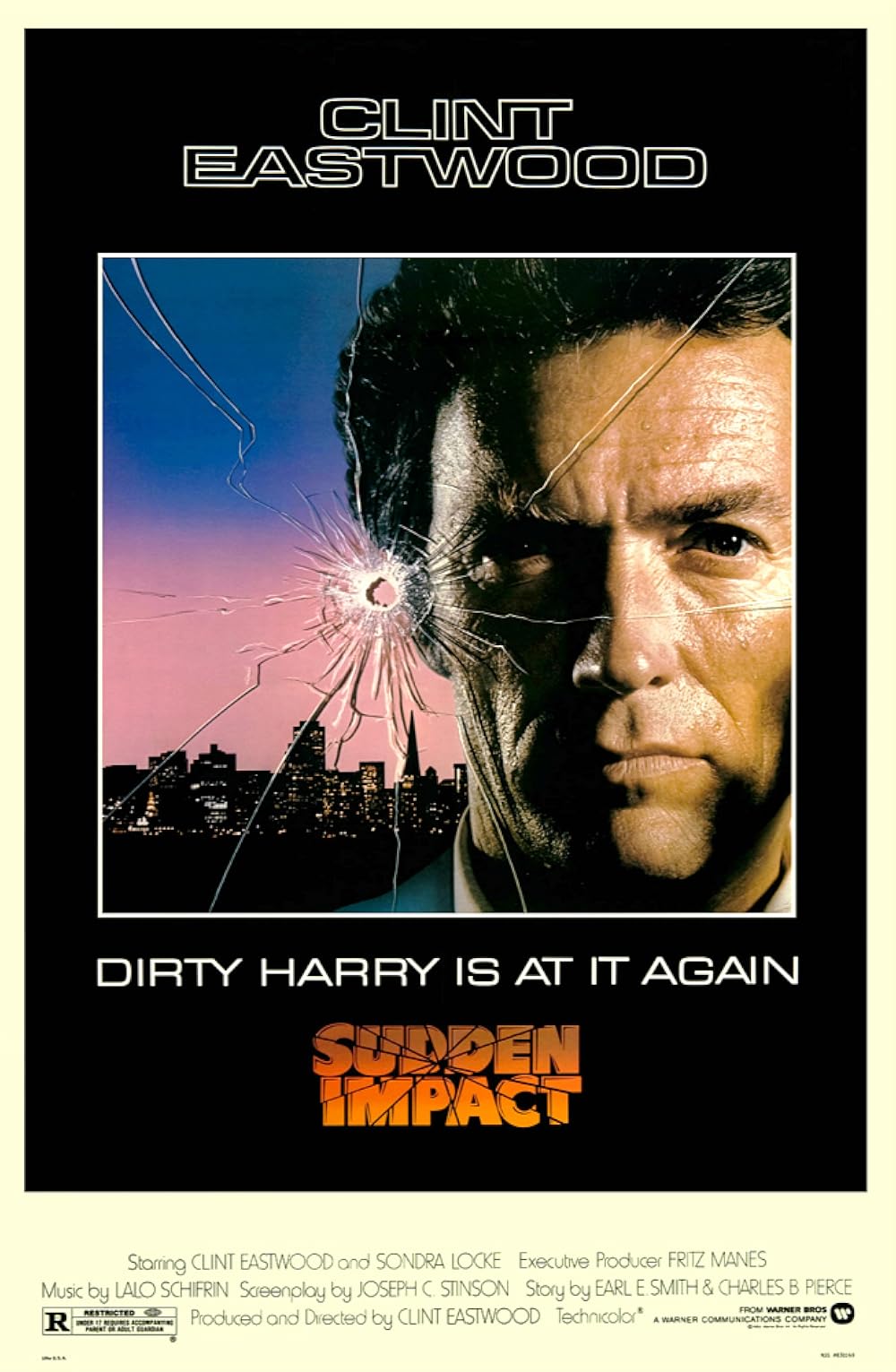
Sudden Impact (1983)

By Richard Winters

My Rating: 6 out of 10

4-Word Review: Harry investigates revenge killings.

Inspector Harry Callahan (Clint Eastwood) continues working in the San Francisco police department despite his perpetual disregard of proper police procedures, which gets many of the crooks that he has arrested freed due to legal technicalities. His superiors are frustrated with him, but since he does get results keeps him on the force though reassigned to the small town of San Paulo where he works with a sheriff Jennings (Pat Hingle) in hopes he’ll be less problematic. It’s there that he comes upon a case of various men being found shot to death in similar ways. This is being done by Jennifer (Sondra Locke) an artist in residence who 10 years earlier was raped along with her younger sister by a group of men and now she’s out to get her revenge by killing them off one-by-one. Harry is starting to piece together the clues but is surprised that Jennings is reluctant to follow-up on them giving him the impression that the sheriff may have something to hide.

The story is based on a script written by Charles B. Pierce better known for his rural horror movies from the 70’s that were shot in Arkansas and loosely based off of real events like The Town that Dreaded Sundown. This was meant to be a starring vehicle for Locke, but when Eastwood decided to renew the franchise after several years of dormancy, he felt the plotline here would be a good fit for the next Dirty Harry movie and thus hired Joseph Stinson to revise it.

The result is a mish-mash that’s never quite as compelling as it should. For the majority of the runtime Eastwood’s heroics and Locke’s crimes are working in a parallel universe and not connected making it seem like two different movies. Harry’s non-stop shootouts with crooks becomes redundant and cartoonish while Locke’s killings and flashbacks make it too reminiscent of other better-known films like I Spit on Your Grave and Death Wish. The bad guys are caricatures to the extreme making their moments boring and predictable. If the violence wasn’t so over-the-top you’d be convinced, like critic Pauline Kael mentioned in her review, that this thing was meant to be a parody.

Locke and Eastwood are both good and this is the last film that they did together as a couple before their break-up. In Locke’s case I liked how her cynical and brash persona mixes with Eastwood’s brooding and quiet one. Eastwood speaks more here than in the previous entries, but the character doesn’t seem to be evolving. The opening scene inside a courtroom where Harry is shocked to learn that the criminals he apprehended will be set free because he didn’t get a search warrant seemed ridiculous as after being on the force for so many years, and going through the exact same predicaments in the earlier films, that you’d think by now he’d learn his lesson and do things that conform within the legal framework, or at the very least not be so surprised when a judge sees it differently. The number of near-death shootouts he goes through is exhausting making me wonder how he maintained his mental state and didn’t take the vacation time when he’s asked even if he’s ‘not up for it’.

My biggest grievance though is with the structure. I really felt it would’ve worked better had it been approached as a mystery. We could’ve still seen the killings being done, but the identity of the killer would’ve been masked. Instead of Locke being an artist she could’ve been on the police force working on investigating the case and Harry could’ve started up a friendship/quasi relationship with her and at the start been impressed with her work only to slowly become aware that she was intentionally mudding the evidence. Sheriff Jennings too could’ve initially been portrayed as a ‘good guy’ with down to earth sensibilities that Harry liked and then as it progressed would his intentions become more dubious. The flashback sequences, which get interspersed throughout, could’ve instead been saved until the very end.

Spoiler Alert!

The film also continues to reveal Harry’s zig-zagging moral logic. In the first film he was all for playing outside the rules, then in the second installment he came to determine that vigilantism wasn’t the answer. Now here, by letting Locke off-the-hook and not arresting here, he’s acting like street justice is okay. It makes you wonder; is he really growing as a person and seeing things differently or simply floating along with whatever way the plotline wants?

My Rating: 6 out of 10

Released: December 9, 1983

Runtime: 1 Hour 57 Minutes

Rated R

Director: Clint Eastwood

Studio: Warner Brothers

Available: DVD, Blu-ray, Amazon Video, YouTube
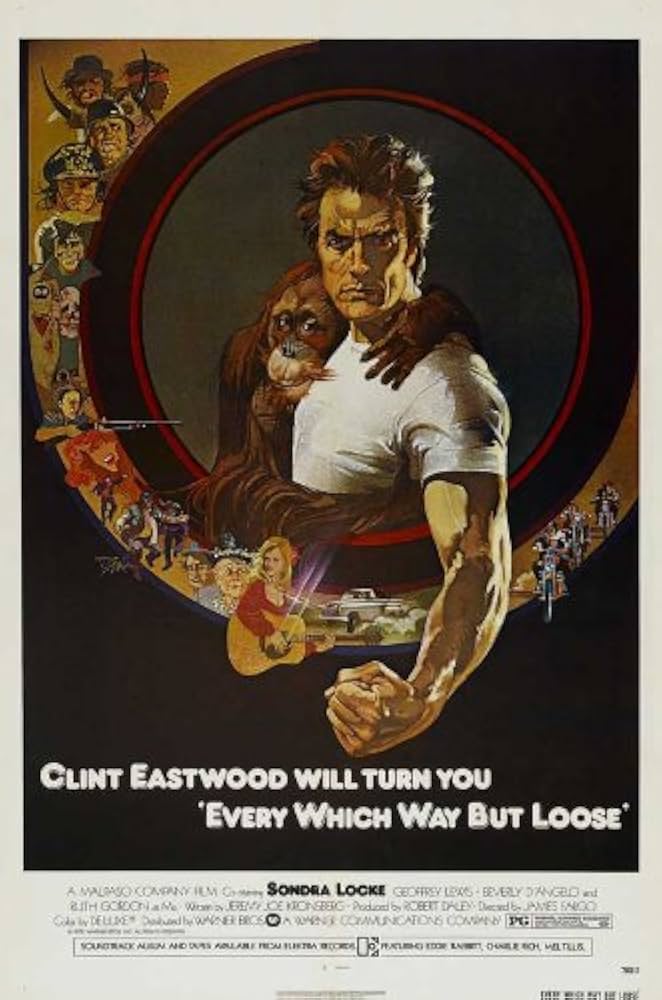
Every Which Way But Loose (1978)

By Richard Winters

My Rating: 4 out of 10

4-Word Review: A bare-knuckle brawler.

Philo (Clint Eastwood) is a truck driver still living with his mother (Ruth Gordon) and who compensates his income with bare-knuckle fights where people can make bets either on, or against him. He also travels around with an orangutan named Clyde whom he won as compensation for one of his fights. One day while waiting in his pick-up at a red light a biker gang known as The Black Widows and led by Cholla (John Quade) pull up beside them and begin harassing the ape. This creates a confrontation, and the bikers seek a vendetta on Philo determined to challenge him to a fight and begin stalking him until he agrees. Philo is also being chased by Putnam (Gregory Walcott), a cop upset at Philo over a misunderstanding that occurred while the two were in a bar. Meanwhile Philo is also trying to find Lynn (Sandra Locke) a singer he fell for who moved away to Colorado with her boyfriend, but Philo travels there in an attempt to find her and win her back, but Putnam and the Black Widows are in hot pursuit. 

The script is the product of Jeremy Joe Kronsberg, who after watching Smokey and the Banditbecame ‘inspired’ to write this one and was convinced it would make the perfect follow-up vehicle for star Burt Reynolds. However, when he shopped it around to the studios, they all rejected it, so he decided to send it off to Clint Eastwood’s secretary in the hopes that Clint, being good friends with Burt, would show him the script and convince him to do it. Instead to everyone’s surprise Clint, who was looking to broaden his appeal, decided to take on the starring duties himself and even cast Kronsberg as one of the biker gang members.

Many of those close to Clint thought it was a bad career move, and the critics savaged the film upon its initial release, but at the box office, which is what really counts, it did very well and became one of the highest grossing films of Eastwood’s career. A major reason for this is its rural appeal where everyone is essentially a redneck and white collar, college educated suburbanites just don’t exist. Instead, one’s social standing hinges on how much they down at the bar and whom they beat-up, which helps create a strong and surreal atmosphere. Initially though with this type of mentality I thought the setting should’ve been Texas and not California as when most people think of Cali they connect it with rich Hollywood stars and Malibu mansions when in reality that’s only a portion of the state and on the east end it’s much more rustic with a far more blue collar attitude and the movie does a good job of exposing this. 

It’s fun to see Eastwood not taking himself so seriously and being laid-back even smiling versus having him constantly look at everybody with his patented squinty-eyed stare. In support I though Ruth Gordon was great. Usually she plays ditzy old dames, but here she’s crusty and ornery and the segment where this ‘vulnerable old woman’ single-handedly shoots-up the biker gang when they invade her property is the movie’s highpoint. Bevery D’Angelo quite good too playing a free-spirited flower child named Echo. While she doesn’t have anything funny to say it’s nice having a character who’s quiet and subdued to help balance all the other wackiness. 

The script though is in desperate search for a story that never really transpires. Too much hinges on random events strung together by the thinnest of threads versus being connected by actual motivations and momentum. Having Eastwood, a tall and intimidating looking guy, constantly getting harassed for no reason, doesn’t make a lot of sense. The biker gang should’ve hounded him because they were hired by someone who lost to him in a fight and was bitter about it and the cop could’ve been hassling him because he lost a bet on one of his fights and thus wanted some compensation. While these may not be deep and profound motives at least they give a reason for what’s happening versus having things strung together by a lot of disconnected events that come out of nowhere. 

Spoiler Alert!

Sondra Locke though almost saves it. Her hyper and sarcastic personality makes for a nice contrast to Eastwood’s, and I liked how he pursues her as a love interest only to ultimately realize that she’s a psycho and he’d be better off without her. Most other movies have the concept that ‘lover conquers all’ and you’re better off with someone, even if they’re seriously flawed, than without, so having this movie take the alternative viewpoint is a refreshing change of pace and thus deserves some credit. 

My Rating: 4 out of 10

Released: December 20, 1978

Runtime: 1 Hour 55 Minutes

Rated PG

Director: James Fargo

Studio: Warner Brothers

Available: DVD, Blu-ray, Amazon Video, YouTube
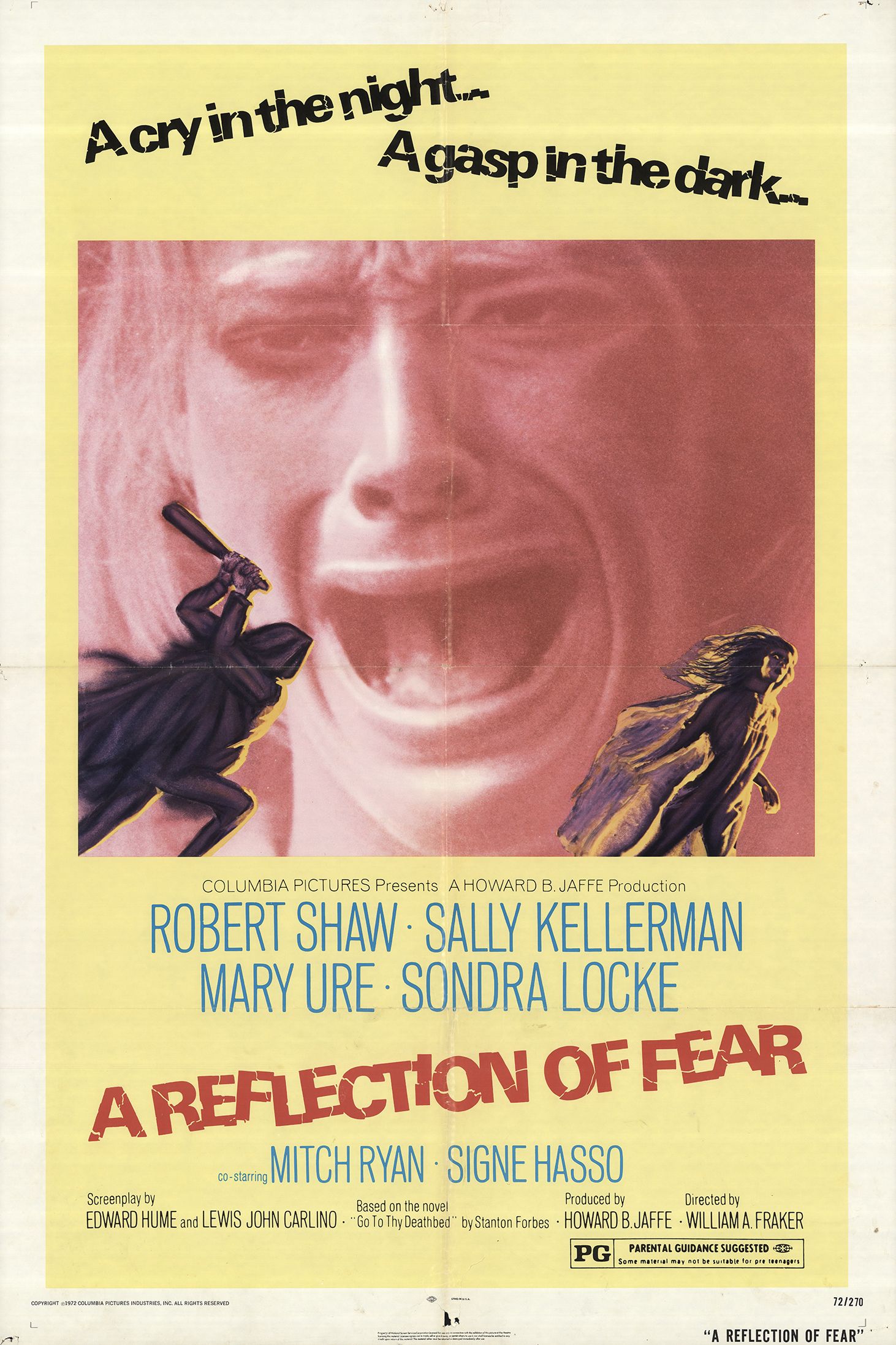
A Reflection of Fear (1972)

reflection

By Richard Winters

My Rating: 4 out of 10

4-Word Review: His daughter is disturbed.

Marguerite (Sondra Locke) is a lonely teen girl living with her mother Katherine (Mary Ure) and grandmother Julia (Signe Hasso). Through her alienation she creates an imaginary world with her dolls including one named Aron who she routinely has conversations with, but who also argues with her from time-to-time. Marguerite’s estranged father (Robert Shaw) comes to visit in order to ask Katherine for a divorce, so that he may marry Ann (Sally Kellerman). He also starts to rekindle things with Marguerite though Ann feels the two are getting much too close and fears they may be forming an incestuous relationship. Soon after both Katherine and Julia turn-up dead having been bludgeoned to death by a mysterious intruder, but who did the dirty deed? Was it an angry Marguerite, or her father, or was it the doll named Aron, who Marguerite insisted spoke to her even though no one else believed her.

The only reason to catch this obscurity is for the performance of Locke who’s absolutely brilliant. Despite being 27 at the time, she still looked like a teen and her attempt at speaking in an English accent is effective and I almost thought it had been dubbed, but it wasn’t. Her presence completely dominates the film making the supporting players seem almost non-existent and it convinced me that her relationship with Clint Eastwood, in which he according to her autobiography wouldn’t allow her to do any other projects that he wasn’t involved in, was a big mistake as she was clearly, as evidenced here, a highly gifted actress that never got her full due.

With that said I was kind of surprised to see Shaw in a film that didn’t allow him to shine and forced him to take a backseat. I can only imagine the reason that he did it was so he could work with his wife Ure, whose alcoholism had relegated her to only supporting parts toward the end of her career and in fact this was her last film before she was discovered dead in her dressing room at the young age of 42 from an accidental drug overdose. The two, for what it’s worth, do work well together. The hateful looks that she gives Shaw here seem authentic and you’d never know the two were a couple in real-life.

The story, with a screenplay co-written by Lewis John Carlino and based on the book ‘Go to Thy Deathbed’ by Stanton Forbes, has potential, but never gels. The scenario seems like it would’ve been better for a half-hour episode of the ‘The Twilight Zone’ and stretching it to a 90-minute length offered in too many slow spots where nothing much seemed to happen. The only time there’s any action is during the murder sequences, which could’ve been played-up more, otherwise it’s a lot of talk that fails to build-up the suspense or mystery in any interesting way.

Spoiler Alert!

The main problem that I had was that it was obvious to me that the doll was just a projection of Marguerite’s repressed anger, so the big reveal where she’s found to be the killer was not a surprise at all and in a lot of ways just a letdown. Had the filmmaker’s made an attempt to show the doll actually speaking instead of only been glimpsed in a shadowy way, which made it clear that he was just a figment of her imagination, then maybe there would’ve been more suspense because the viewer might actually have been made to believe that he was real, but the way it gets done here is not intriguing.

Having Shaw find out at the end that his daughter was actually a boy just made things even more confusing. Some have lauded this has being the first film with a transgender theme and a precursor to Sleepaway Camp, which is great, but what’s it all supposed to mean? Was Marguerite’s transgender issues the reason for her anger and why she lashed out into murder? Was this also the reason why her mother and grandmother kept her locked away and cut-off from potential friends, or was this instead Marguerite’s choice? None of this gets answered, which ultimately makes the film a pointless excursion.

My Rating: 4 out of 10

Released: November 15, 1972

Runtime: 1 Hour 29 Minutes

Rated PG

Director: William A. Fraker

Studio: Columbia Pictures

Available: DVD-R, Blu-ray

Bronco Billy (1980)

By Richard Winters

My Rating: 4 out of 10

4-Word Review: Rich lady and cowboy.

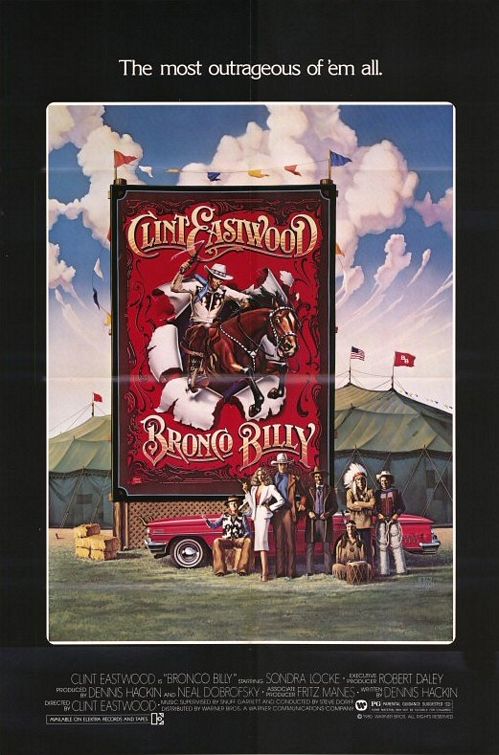
Bronco Billy (Clint Eastwood) is an aging modern-day cowboy who runs a traveling wild west show that is no longer attracting customers and making it hard for him to pay his employees. While at a gas station he meets Antoinette (Sondra Locke) a rich heiress with a haughty attitude who has just gotten dumped by her husband (Geoffrey Lewis) who also absconded with all of her money. Billy decides to hire her onto his show despite the fact that her presence causes animosity amongst the rest of his crew.

After Locke’s recent death, one person on Twitter, I don’t remember who, stated that this was the ‘greatest movie ever made’ and I’m not sure if he was joking or not, but if he wasn’t then I adamantly must disagree.  The film does start out okay and even has a certain charm to it, but the story and situations get too exaggerated until it’s impossible to take any of it seriously while also being too hokey to find funny.

The biggest logic gaps occur during the story thread dealing with Lewis being convinced to lie to the authorities that he killed Locke even though he really didn’t, so that he can get his share of her inheritance once he gets out. He’s told that if he pleads insanity that he will be ‘guaranteed’ to be released in only 3 years, but when in the history of the world has this ever happened and who would ever be dumb enough to believe it?  And that staying at a mental hospital is ‘no big deal’ and almost like a ‘resort’, which describes no mental hospital that I’ve ever head of.  There’s also no attempt by the police, or at least none is ever shown, to investigate the case to make sure Locke really has been murdered and try and retrieve her body.

The proverbial barroom brawl segment (must every western-themed film have this?) that occurs in the middle is as cliched and silly as it sounds and puts the whole rest of the film on a very cartoonish level. What’s even dumber is that during the brawl Locke goes outside to the parking lot where she gets accosted by two men, but just before they’re able to assault her Eastwood and his buddies magically appear to save her, but how could they have no known that she was in trouble when just a minute before they were shown taking part in the wild ruckus inside?

Locke’s rich-bitch personality is too much of a caricature and quickly becomes irritating to the point that when she eventually does soften, which takes awhile, it still doesn’t help. Having her able to shoot a pistol just as well as Billy seems out of character and never sufficiently explained. It would’ve been funnier had her dainty, cushy lifestyle been challenged more by throwing her into a rugged experience that she wasn’t used to, which doesn’t get played-up half as much as it could’ve or should’ve.

Eastwood’s character isn’t likable either. I would hate working for somebody that couldn’t pay me fore several months straight nor not allowing his employees to ad-lib any of their lines that he writes for them during the western skits that they put on even though people work better in their jobs when their allowed to have creativity and leeway in what they do and how they do it.

Why he would immediately fall head-over-heels for this woman is a mystery as Locke is only average in the looks department and her arrogant attitude is such an extreme turn-off that just about any guy would quickly dump her and never look back instead of continually pursuing her like Billy pretty much does here. Having them consummate their relationship should’ve only occurred at the very end while displaying much more of their personality clashes, which gets underplayed.

The scene where Billy and his gang try to hold-up a train is really funny and I enjoyed the inspired casting of having Woodrow Parfrey, who usually plays weirdo types, being cast as the head of the mental hospital, but other than that I felt the film was too predictable. You know where it’s headed right from the start and the theme of the old-fashioned, rugged individualist fighting more modern-day sensibilities has been done in so many other Eastwood films that here it becomes redundant.

My Rating: 4 out of 10

Release: June 11, 1980

Runtime: 1 Hour 56 Minutes

Rated PG

Director: Clint Eastwood

Studio: Warner Brothers

Available: DVD, Amazon Video, YouTube

Cover Me Babe (1970)

cover me babe 3

By Richard Winters

My Rating: 3 out of 10

4-Word Review: Student filmmaker alienates everyone.

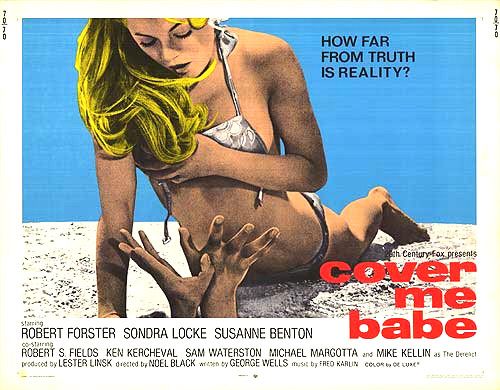
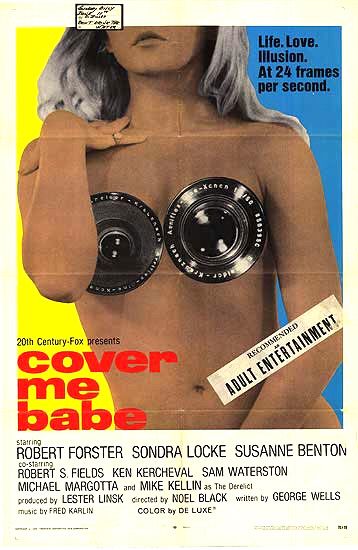
Tony Hall (Robert Forster) is a student filmmaker who feels he is a great director in the making and not afraid to let everyone know it. He becomes obsessed with capturing reality as it is and people’s emotional responses. He goads those around him including his own girlfriend (Sondra Locke) into doing things they are uncomfortable with simply so he can capture that uneasiness and the facial expressions that come with it. Some feel he is going too far, but the more they try to reel him in the more boundaries he pushes.

I’ve attended a film school in Chicago back in the early ‘90s, so for me I found this plot to be intriguing. In a lot of ways, at least at the beginning, I thought they captured the arrogance of these young would-be student directors who are convinced they are the next Kubrick or Scorsese in-the-making quite well. Their elitist attitude and willingness to compromise good taste and common sense simply to attain a shock effect to get attention are all very real.

Unfortunately the film goes overboard especially with the lead character who quickly becomes unlikable. I don’t mind a certain bit of cockiness or a say-it-like-it-is persona, but this guy is downright rude, smug, abrasive and even cruel. You spend the whole time hoping someone will punch him in his face, but it never happens and I believe this is the sole reason why this film failed at the box office as no one wants to sit through an entire movie watching a person whose behavior they can’t stand.

His excessively rude attitude towards a studio head (Jeff Corey) who wants to offer him an opportunity make a feature film is particularly confounding. It’s similar to Troy Duffy the real-life subject of Overnight and the director of The Boondock Saints who became quite arrogant to everyone once he got himself a Hollywood contract, but at least in Duffy’s case he had gotten his proverbial foot-in-the-door and therefore felt it was ‘safe’ to let his obnoxious side out, but the Forster character here doesn’t yet have one and you’re compelled to feel that the guy must be mentally ill to think he ever will by behaving in the outrageous way that he does.

Forster gives a solid performance, but the character seems too similar to one he just got done doing in Medium Cool and bordered almost on type casting. Locke is okay as the girlfriend and can be seen fully nude at the beginning, but why she would want to stick with such a jerk is hard to understand and makes her character annoying because of it. I realize some gals have the ‘bad-boy syndrome’, but it goes overboard with it here.

The film lacks a cinematic touch and its best part comes at the beginning where we watch a student film with a dream-like sequence in a Federico Fellini style that is actually pretty good. Another memorable bit comes near the end where Forster broadcasts to a group of students his own film, which features a scene showing a man jumping off a ledge and then panning over to reveal the shocked expressions of the people on the ground who witnessed it as well as the students watching it on film.

cover me babe 2

My Rating: 3 out of 10

Released: October 1, 1970

Runtime: 1Hour 25Minutes

Rated R

Director: Noel Black

Studio: 20th Century Fox

Available: None at this time.

The Gauntlet (1977)

the gauntlet

By Richard Winters

My Rating: 7 out of 10

4-Word Review: Alcoholic cop escorts hooker.

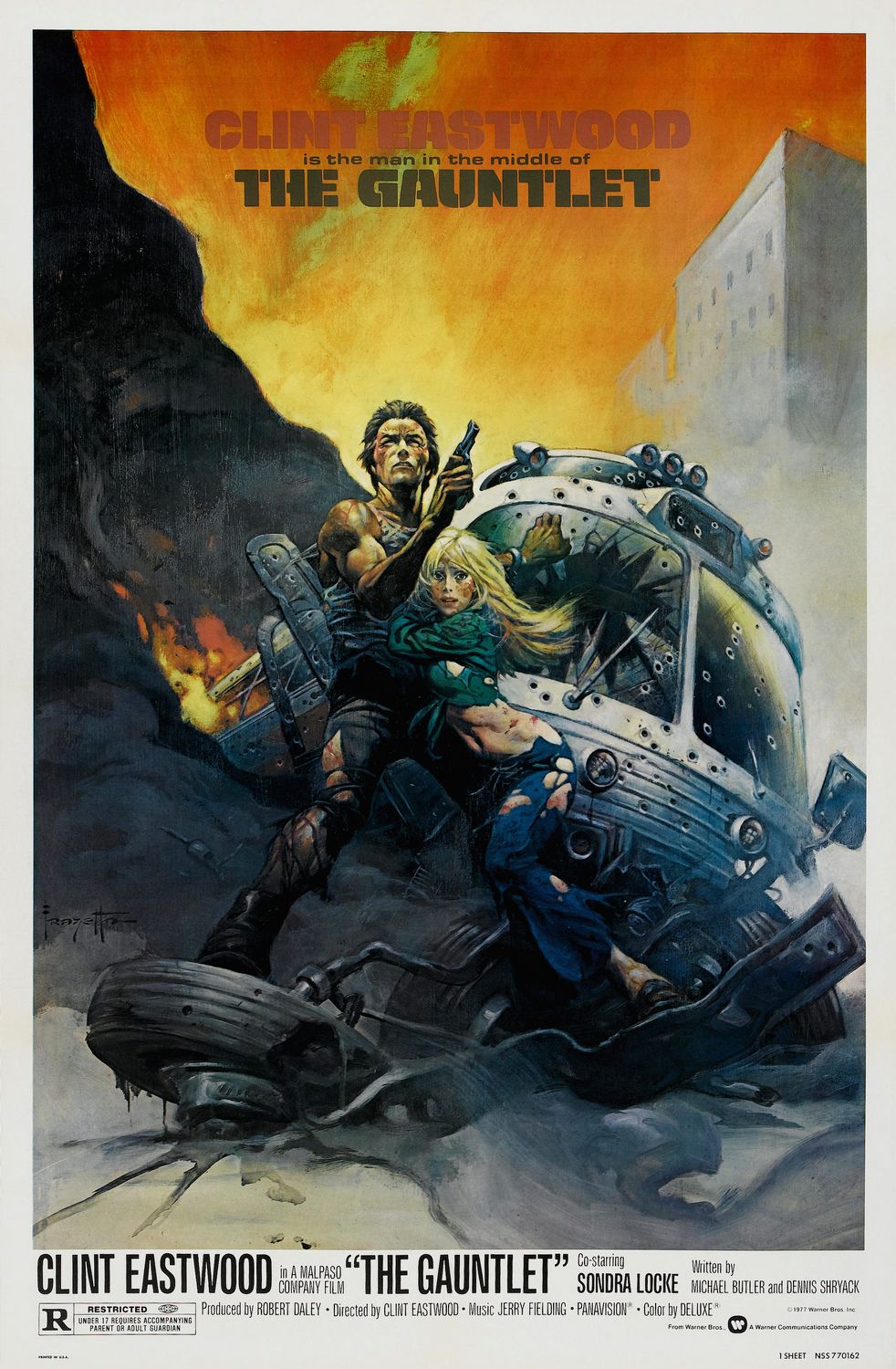
Ben Shockley (Clint Eastwood) is a down-and-out cop and borderline alcoholic who’s given the assignment of escorting a hooker named Gus Mally (Sandra Locke) from a prison in Phoenix to a trial in Las Vegas where she will be a key witness. Ben is initially told that it’s a ‘nothing witness to a nothing trial’, but finds that to be anything but the truth as the two are shot at and chased by both the mob and his fellow policeman convincing him that he’s been set-up and making him determined to ‘even the score’.

This film overall is great fun and has enough well-choreographed action sequences to be entertaining for just about anyone who watches it. The story also manages to have some intrigue and a certain symbolic message. The on-location shooting done in and around Phoenix gives it an added flair particularly the long shots of the dessert landscape.

The film is best known for its climatic sequence involving Eastwood and Locke riding in a bus that travels slowly down the main streets of Phoenix while being shot at by hundreds of cops lining the sidewalk that ultimately puts thousands of holes into the vehicle. As a visual this is exciting and memorable, but I still kept wondering why the cops didn’t simply aim at the bus’s tires, which would’ve disabled the vehicle instantly and they would not have had to bother shooting up the rest of it.

Another action segment in which Eastwood and Locke are riding on a motorcycle while being chased and shot at by men in a helicopter brought up some similar issues. Again the segment itself is exciting and surprisingly prolonged although it would’ve done better without the bouncy jazz score being played over it. Either way the helicopter begins to attack Eastwood while he is standing at an outdoor phone booth. He then runs inside to an indoor food market where the Locke character already is, but instead of staying there where they are shielded he instead leads her out of the building and onto the motorbike where it would be more dangerous because it makes them an open and vulnerable target.

I also wasn’t too crazy about Locke’s performance or her character. For one thing Locke approaches the part in too much of a one-dimensional way. A hardened, snarky prostitute may be realistic, but hardly interesting or appealing and the character would’ve been more fun had their being some sort of unique or funny trait about her instead of leaning so heavily towards the stereotype.

The other supporting characters though are great. Pat Hingle is excellent as Ben’s nervous, hyper friend who finds himself unwittingly in the middle of the fracas. I also enjoyed William Prince playing an extension of the corrupt, jaded corporate-like character that he did in Network. Bill McKinney is also good as a hick cop who has an interesting ‘conversation’ with Locke about her ‘profession’.

If you’re looking for a bubblegum, action-packed escapism then this film should do the trick and still holds up well today even when compared to modern-day action flicks.

My Rating: 7 out of 10

Released: December 21, 1977

Runtime: 1Hour 49Minutes

Rated R

Director: Clint Eastwood

Studio: Warner Brothers

Available: VHS, DVD, Blu-ray, Amazon Instant Video