Tag Archives: Pat Hingle

Sudden Impact (1983)

By Richard Winters

My Rating: 6 out of 10

4-Word Review: Harry investigates revenge killings.

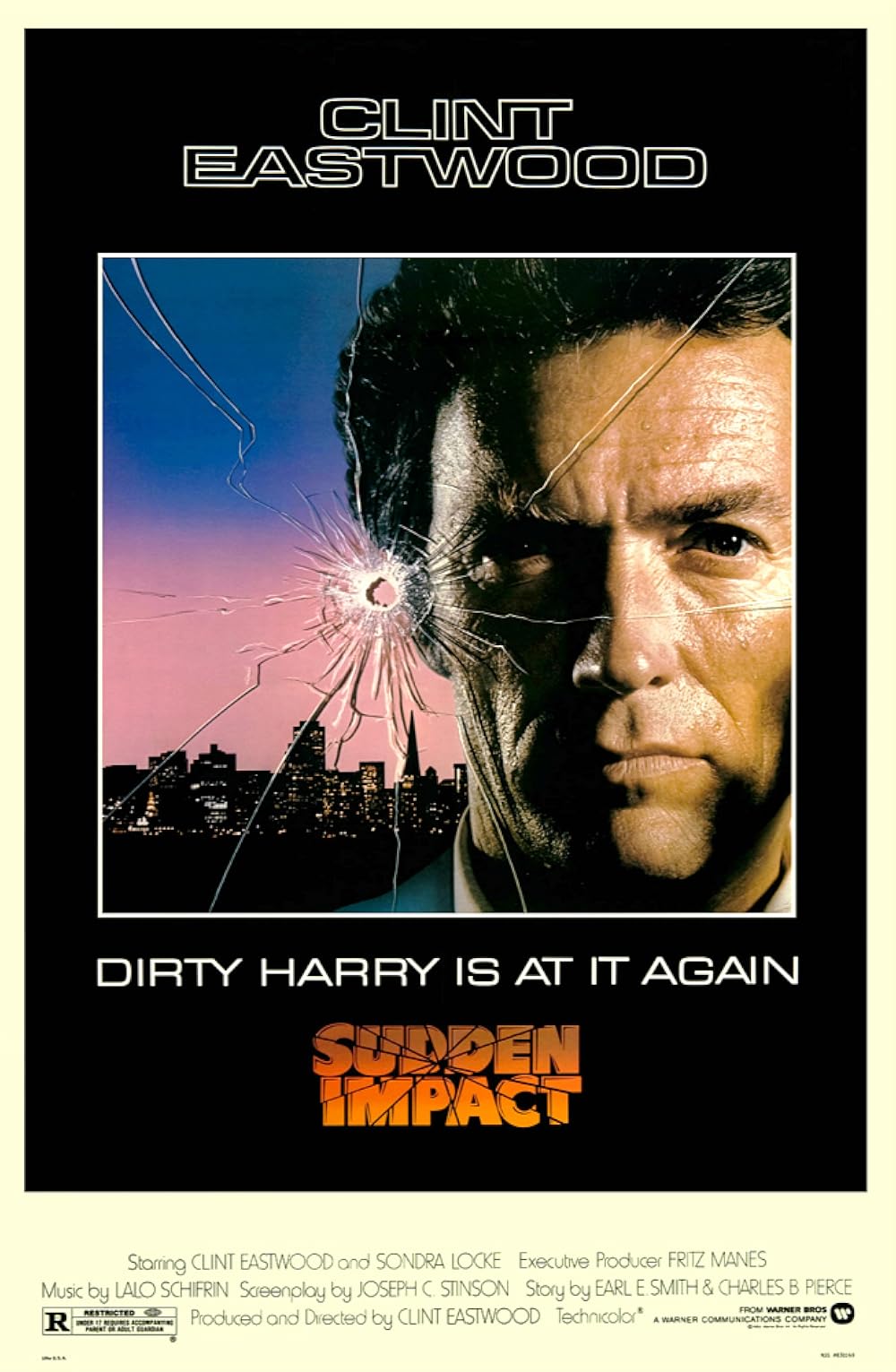
Inspector Harry Callahan (Clint Eastwood) continues working in the San Francisco police department despite his perpetual disregard of proper police procedures, which gets many of the crooks that he has arrested freed due to legal technicalities. His superiors are frustrated with him, but since he does get results keeps him on the force though reassigned to the small town of San Paulo where he works with a sheriff Jennings (Pat Hingle) in hopes he’ll be less problematic. It’s there that he comes upon a case of various men being found shot to death in similar ways. This is being done by Jennifer (Sondra Locke) an artist in residence who 10 years earlier was raped along with her younger sister by a group of men and now she’s out to get her revenge by killing them off one-by-one. Harry is starting to piece together the clues but is surprised that Jennings is reluctant to follow-up on them giving him the impression that the sheriff may have something to hide.

The story is based on a script written by Charles B. Pierce better known for his rural horror movies from the 70’s that were shot in Arkansas and loosely based off of real events like The Town that Dreaded Sundown. This was meant to be a starring vehicle for Locke, but when Eastwood decided to renew the franchise after several years of dormancy, he felt the plotline here would be a good fit for the next Dirty Harry movie and thus hired Joseph Stinson to revise it.

The result is a mish-mash that’s never quite as compelling as it should. For the majority of the runtime Eastwood’s heroics and Locke’s crimes are working in a parallel universe and not connected making it seem like two different movies. Harry’s non-stop shootouts with crooks becomes redundant and cartoonish while Locke’s killings and flashbacks make it too reminiscent of other better-known films like I Spit on Your Grave and Death Wish. The bad guys are caricatures to the extreme making their moments boring and predictable. If the violence wasn’t so over-the-top you’d be convinced, like critic Pauline Kael mentioned in her review, that this thing was meant to be a parody.

Locke and Eastwood are both good and this is the last film that they did together as a couple before their break-up. In Locke’s case I liked how her cynical and brash persona mixes with Eastwood’s brooding and quiet one. Eastwood speaks more here than in the previous entries, but the character doesn’t seem to be evolving. The opening scene inside a courtroom where Harry is shocked to learn that the criminals he apprehended will be set free because he didn’t get a search warrant seemed ridiculous as after being on the force for so many years, and going through the exact same predicaments in the earlier films, that you’d think by now he’d learn his lesson and do things that conform within the legal framework, or at the very least not be so surprised when a judge sees it differently. The number of near-death shootouts he goes through is exhausting making me wonder how he maintained his mental state and didn’t take the vacation time when he’s asked even if he’s ‘not up for it’.

My biggest grievance though is with the structure. I really felt it would’ve worked better had it been approached as a mystery. We could’ve still seen the killings being done, but the identity of the killer would’ve been masked. Instead of Locke being an artist she could’ve been on the police force working on investigating the case and Harry could’ve started up a friendship/quasi relationship with her and at the start been impressed with her work only to slowly become aware that she was intentionally mudding the evidence. Sheriff Jennings too could’ve initially been portrayed as a ‘good guy’ with down to earth sensibilities that Harry liked and then as it progressed would his intentions become more dubious. The flashback sequences, which get interspersed throughout, could’ve instead been saved until the very end.

Spoiler Alert!

The film also continues to reveal Harry’s zig-zagging moral logic. In the first film he was all for playing outside the rules, then in the second installment he came to determine that vigilantism wasn’t the answer. Now here, by letting Locke off-the-hook and not arresting here, he’s acting like street justice is okay. It makes you wonder; is he really growing as a person and seeing things differently or simply floating along with whatever way the plotline wants?

My Rating: 6 out of 10

Released: December 9, 1983

Runtime: 1 Hour 57 Minutes

Rated R

Director: Clint Eastwood

Studio: Warner Brothers

Available: DVD, Blu-ray, Amazon Video, YouTube
The Gauntlet (1977)

the gauntlet

By Richard Winters

My Rating: 7 out of 10

4-Word Review: Alcoholic cop escorts hooker.

Ben Shockley (Clint Eastwood) is a down-and-out cop and borderline alcoholic who’s given the assignment of escorting a hooker named Gus Mally (Sandra Locke) from a prison in Phoenix to a trial in Las Vegas where she will be a key witness. Ben is initially told that it’s a ‘nothing witness to a nothing trial’, but finds that to be anything but the truth as the two are shot at and chased by both the mob and his fellow policeman convincing him that he’s been set-up and making him determined to ‘even the score’.

This film overall is great fun and has enough well-choreographed action sequences to be entertaining for just about anyone who watches it. The story also manages to have some intrigue and a certain symbolic message. The on-location shooting done in and around Phoenix gives it an added flair particularly the long shots of the dessert landscape.

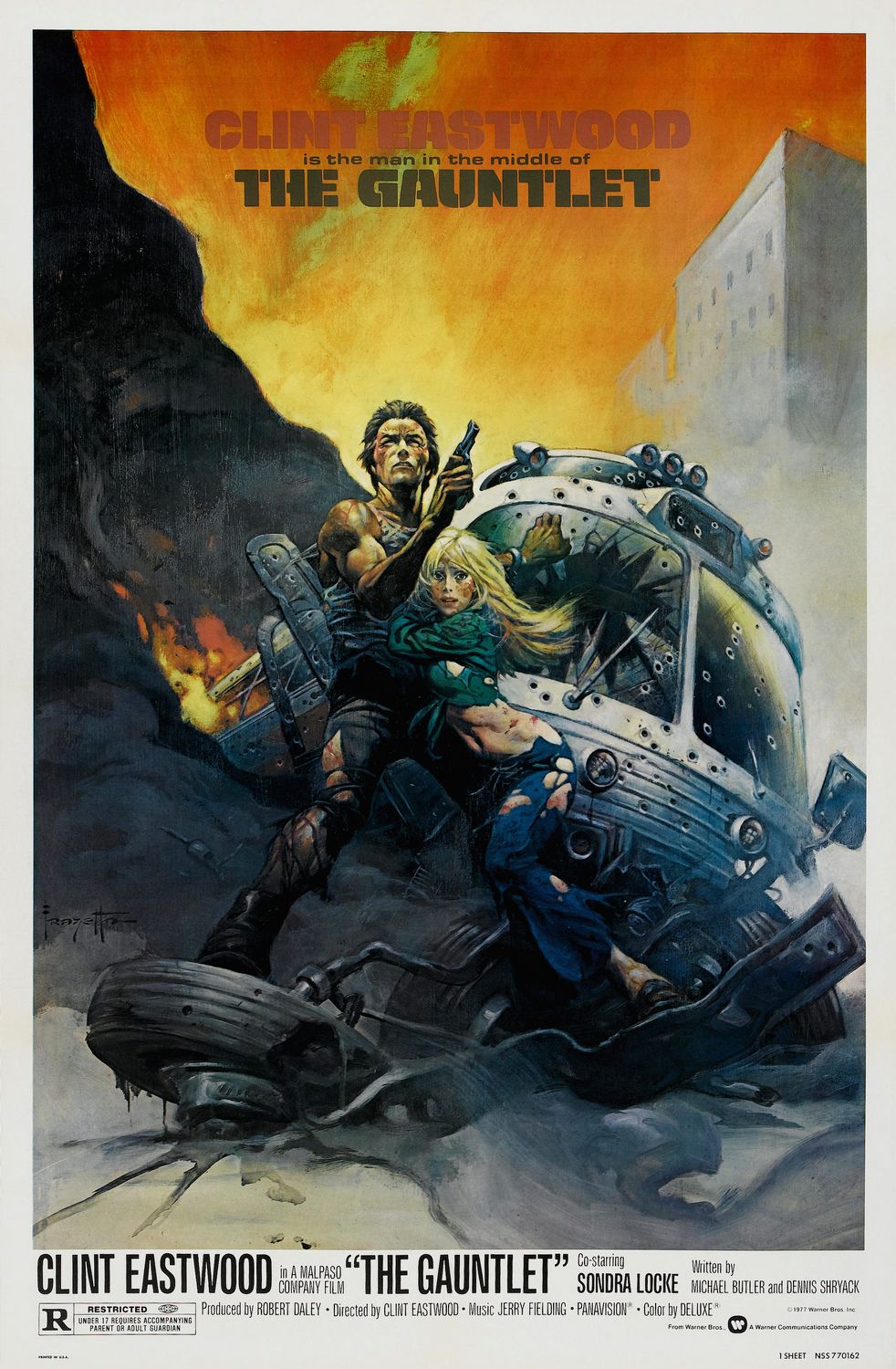
The film is best known for its climatic sequence involving Eastwood and Locke riding in a bus that travels slowly down the main streets of Phoenix while being shot at by hundreds of cops lining the sidewalk that ultimately puts thousands of holes into the vehicle. As a visual this is exciting and memorable, but I still kept wondering why the cops didn’t simply aim at the bus’s tires, which would’ve disabled the vehicle instantly and they would not have had to bother shooting up the rest of it.

Another action segment in which Eastwood and Locke are riding on a motorcycle while being chased and shot at by men in a helicopter brought up some similar issues. Again the segment itself is exciting and surprisingly prolonged although it would’ve done better without the bouncy jazz score being played over it. Either way the helicopter begins to attack Eastwood while he is standing at an outdoor phone booth. He then runs inside to an indoor food market where the Locke character already is, but instead of staying there where they are shielded he instead leads her out of the building and onto the motorbike where it would be more dangerous because it makes them an open and vulnerable target.

I also wasn’t too crazy about Locke’s performance or her character. For one thing Locke approaches the part in too much of a one-dimensional way. A hardened, snarky prostitute may be realistic, but hardly interesting or appealing and the character would’ve been more fun had their being some sort of unique or funny trait about her instead of leaning so heavily towards the stereotype.

The other supporting characters though are great. Pat Hingle is excellent as Ben’s nervous, hyper friend who finds himself unwittingly in the middle of the fracas. I also enjoyed William Prince playing an extension of the corrupt, jaded corporate-like character that he did in Network. Bill McKinney is also good as a hick cop who has an interesting ‘conversation’ with Locke about her ‘profession’.

If you’re looking for a bubblegum, action-packed escapism then this film should do the trick and still holds up well today even when compared to modern-day action flicks.

My Rating: 7 out of 10

Released: December 21, 1977

Runtime: 1Hour 49Minutes

Rated R

Director: Clint Eastwood

Studio: Warner Brothers

Available: VHS, DVD, Blu-ray, Amazon Instant Video

Splendor in the Grass (1961)

splendor in the grass 1

By Richard Winters

My Rating: 7 out of 10

4-Word Review: Learning to move on.

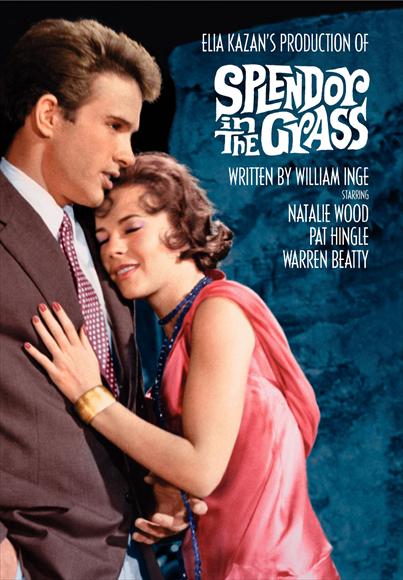
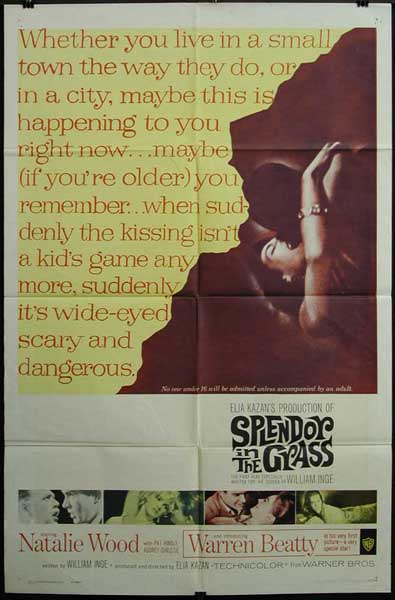
The year is 1928 and Wilma (Natalie Wood) is a high school girl living in a small Kansas town and madly in love with Bud (Warren Beatty). The two share a strong even obsessive relationship and Bud wants to marry her, but his domineering father (Pat Hingle) wants him to wait and go to college for 4 years first. Because Wilma is a ‘nice girl’ he cannot have intimate relations with her before marriage, so in order to alleviate his sexual tensions his father advises that he have sex with a ‘loose woman’ and thus has a fling with Juanita (Jan Norris) who is also one of Wilma’s classmates. When Wilma finds out about this she is devastated and it sends her into a mental breakdown and eventually committed to a psychiatric hospital.

Despite being set in a bygone period the film is hardly dated at all. The characters are real and going through much of the same dilemmas people today have including dealing with parents who push their children to go into fields of study that they aren’t interested in. The film is amazingly frank for its era and director Elia Kazan wisely pulls back by having long takes which allows his eclectic cast to propel the film forward with their performances alone.

Although the setting is Kansas it unfortunately wasn’t filmed there and thus fails to capture the majestic beauty of the plains like Picnic did which was based on another William Inge story. The intention was to shoot it there, but due to a drought it was instead done in northern New York near the Catskills, which has a far different climate and topography. The only exterior shot of the town is that of Wilma’s house, which doesn’t allow the viewer to get any idea of the town’s layout or atmosphere.

All around there are some great performances, but Hingle is a standout in what is quite possibly the best role of his career as he owns every scene that he is in. The only unfortunate thing is that it is never explained what caused the character’s very obvious limp.

Barbara Loden who later went on to marry Kazan in real-life is a scene-stealer as well playing Hingle’s rebellious, flapper daughter Ginny. Her meltdown at a New Year’s Eve party is memorable, but the character then disappears midway through and is never seen again. There is an eventual brief explanation of her whereabouts, but I felt a scene with her at the end was definitely needed.

Wood looks quite possibly at her most beautiful here both with long hair during the first half and then with a short cut during the second part. Beatty makes an outstanding film debut. Usually he is best playing detached characters, but here he plays an emotional one and does it surprisingly well.

The film features a high amount of first time performances from actors who all look very, very young. Phyllis Diller can be seen briefly as a nightclub comedienne. Ivor Francis makes his film debut as Wood’s psychiatrist and Sandy Dennis can be spotted as Wood’s classmate while Martine Bartlett makes her debut as an exasperated English teacher. There is also Zohra Lampert as a waitress explaining to Beatty what pizza is while he tells her about Kansas and you can very briefly spot Eugene Roche and even Godfrey Cambridge.

The film makes some great statements about learning to adjust to life’s twists and turns and living in situations that are not the most fulfilling. Inge, who based many of these characters on people he knew growing up, shows a keen understanding for human nature and his script won a much deserved Oscar.

splendor in the grass 2

My Rating: 7 out of 10

Released: October 10, 1961

Runtime: 2Hours 4Minutes

Not Rated

Director: Elia Kazan

Studio: Warner Brothers

Available: DVD, Amazon Instant Video, YouTube