Tag Archives: Gerard Depardieu

The Dogs (1979)

dogs

By Richard Winters

My Rating: 4 out of 10

4-Word Review: Canines on the attack!

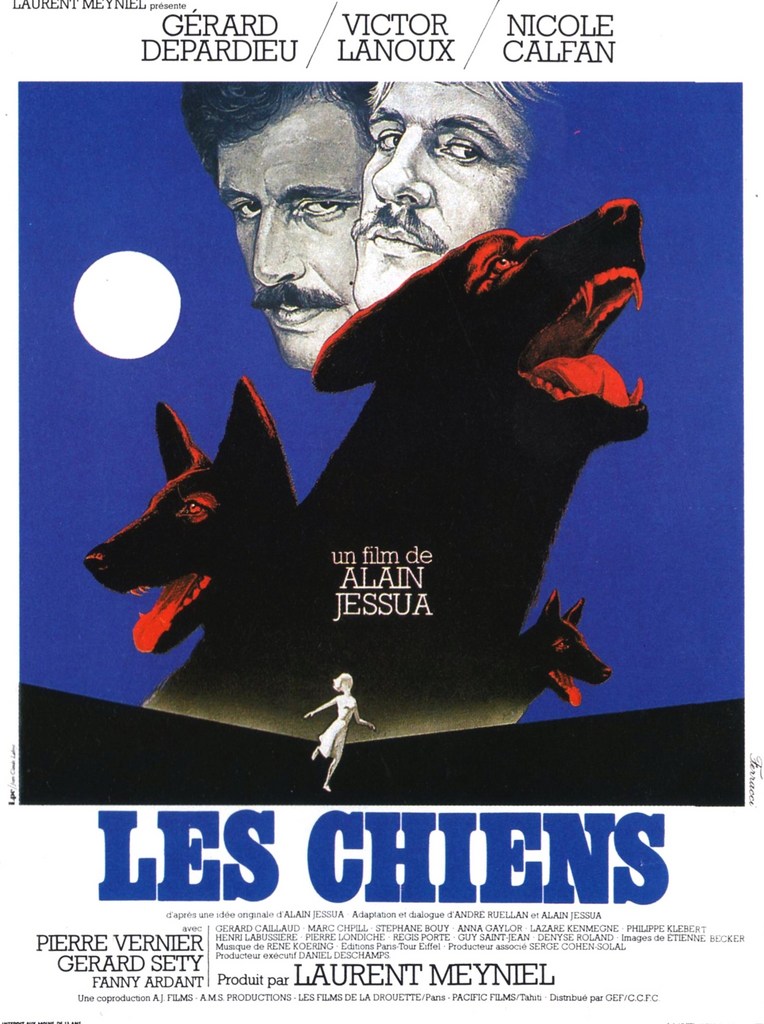
Henri (Victor Lanoux) is a doctor who opens up a clinic in a planned community. He finds to his surprise that many of his patients are coming in complaining about dog bites. He then becomes aware of Morel (Gerard Depardieu) who runs a club were participants learn how to train their dogs to protect them from attacks. However, these same dogs have now become more of a menace that’s putting other citizens in the town in danger including the mayor who becomes a victim. Henri is soon at odds with his girlfriend Elisabeth (Nicole Calfan) who gets a guard dog after she is raped and she is more attached to the dog than him.

The story certainly has some interesting ingredients including the fact that the dogs themselves  aren’t really the threat, but more their owners who train them to be aggressive, which is a nice change of pace from other films from that era that would show animals attacking for seemingly no reason, or that they had become possessed by something evil. Here the set-up is more realistic and plausible and the residents are wealthy living in plush homes helps convey the idea that even ‘nice’ neighborhoods can have evil dwelling underneath and no place is ever completely ‘safe’.

Depardieu goes against type playing the villain and he approaches the part in a fascinating way where he’s not outwardly creepy at the start, but more just an awkward individual who genuinely believes, which is a mindset that he continues to have to the very end, that he’s the ‘good guy’ who’s simply helping vulnerable people find ways to adequately protect themselves. He also has a profound love for his dogs whom he likes more than people, that comes to prominence during a graphic birthing seen where the mother dog isn’t able to come through it. His performance is even more impressive when you factor in that he suffered a dog attack of his own in real-life just a few months before being offered the role and he took the part hoping it would alleviate his pent-up fears and he certainly goes all out here including allowing the dogs to attack and bite him while wearing protective clothing during the training exercises that he conducts.

On the other end, as his adversary, I didn’t find Lanoux to be half as impressive. For one thing he never comes-off seeming like much of a doctor nor ever seen wearing a white physician jacket and works inside a place that resembles a rented out business office than a legitimate clinic. He looks and behaves more like a detached business man walking through his role and never being as emotionally charged as the part demanded.

Calfan, as the girlfriend isn’t convincing either. She leaves her job late at night all alone even though she’s well aware of the crime in the area, which makes it seem like she’s foolishly walking into trouble and the subsequent rape attack gets played-out in a cliched and mechanical way. He recovery is too quick as she’s back to be her normal self again almost instantaneously without showing any of the post traumatic effects that victims of the crime typically do. Her character’s arch offers some intrigue as she at one moment ‘jokingly’ tells her dog to attack Lanoux and then at the last second calls him off, which understandably frightens Lanoux and made me believe she was mentally moving into a dark mindset and she would become the source of danger, but this doesn’t lead to anything. By the end she ‘snaps out of this phase’ and goes back to being her normal self even to the extent turning into the hero, which I didn’t find interesting at all and it would’ve been far more memorable had she slowly became the threat.

The film is too leisurely paced. We know upfront that these dogs, and the people who own them, are something to be feared, but the actual attacks take too long to get going and when they do they’re too quick and ultimately start to play-out in a redundant fashion. The chills and thrills are limited and there’s not enough surprises or twists. There are also some disturbing segments including a dog getting kidnapped and then bound with a muzzle while dangling in the air by a rope as it whimpers, which many viewers including animal lovers will most likely find highly unsettling.

Alternate Title: Les Chiens

My Rating: 4 out of 10

Released: March 7, 1979

Runtime: 1 Hour 40 Minutes

Not Rated

Director: Alain Jessua

Studio: A.J. Films

Available: DVD (French), DVD-R (dvdlady.com)
This Sweet Sickness (1977)

sweet2

By Richard Winters

My Rating: 7 out of 10

4-Word Review: Obsessed over childhood friend.

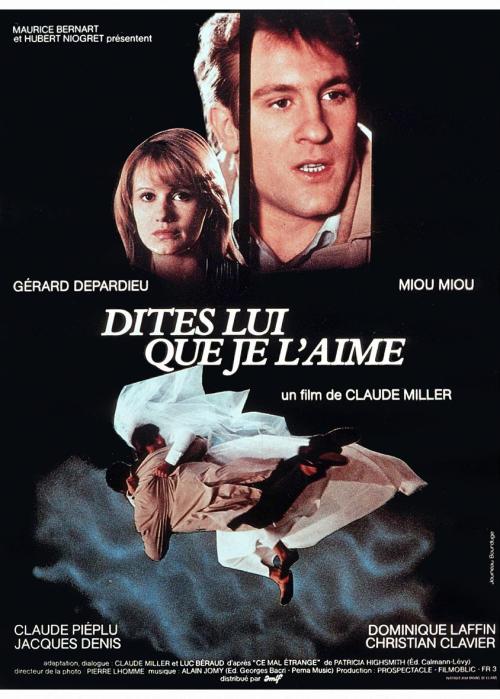
David (Gerard Depardieu) can’t seem to get over Lise (Dominique Laffin) who was a childhood friend of his. Now as adults Lise has married Gerard (Jacques Denis) and even had a child, but David keeps believing that she’s in-love with him and will eventually leave Gerard for him. On weekends he spends his time finishing up with a country house that he has bought, which he plans for he and Lise to live in. He repeatedly calls Lise and meets up with her in public in an effort to beg her to come back to him, but she resists while also advising him that he is mentally unwell and needs to see a psychiatrist. Meanwhile there’s also Juliette (Miou-Miou) who resides in David’s apartment building and has strong feelings for him. David is aware of her presence, but rebuffs her at every turn and yet Juliette persists. She secretly follows David to his country home and when she figures out what he’s doing the two have a confrontation.

While there’s been many movies involving stalkers and jilted ex-lovers that can’t seem to take ‘no’ for an answer this one was done when stalking was still considered an isolated phenomenon and thus there’s a lot of things that work against the modern-day formula, which is what makes it fascinating to watch. For one thing it’s not approached as a thriller, or even a horror, but instead a drama. David is not perceived as threatening, but mentally confused and needing help learning to move-on. Lise does not respond in a frightened way when he approaches, but more just annoyed.

The stalker is three-dimensional as well. One of the most intriguing moments is after Lise’s husband dies in a car accident and David convinces her to come to the country home to check-it-out. Initially she acts impressed with it and gives-off the perception that she might seriously consider moving-in, but David eyes her suspiciously, which is quite revealing. He’s spent the entire time convincing himself and others that she’s truly in-love with him, but now when she actually gives him what he wants he’s not sure he can believe her. This shows subconsciously that he’s aware she doesn’t have the feelings for him like he consciously wants to believe and he actually does know the reality of the situation, but the emotional side of him just doesn’t won’t accept it.

The addition of Miou-Miou  adds another fascinating element. It brings out how stalkers aren’t the way they are simply because they may be lonely and unable to find anyone else, which then supposedly forces them to become so fixated on one person since Miou-Miou is openly interested in him and just as attractive and yet David consistently rejects her. Her stalking on him becomes just as intrusive as David’s to Lise and in some ways just as creepy. The sex scene between her and Gerard, or at least an attempted sex moment, is quite interesting because just a few years earlier the two starred in another film called Going PlacesThere Gerard played the aggressor who rapes Miou-Miou here though she’s the aggressive while Gerard lays virtually frigid, which shows how brilliant these two actors are that they can play such opposite people so convincingly.

Spoiler Alert!

The story was based on a novel of the same name by Patricia Highsmith though there are a few key differences starting with the fact that the novel has the two in a previous, but brief relationship while in the movie they were just friends from childhood. In the book David works as a scientist and purchases the country home under an assumed identity. The Lise character is named Annabelle in the book and her husband Gerard dies after tracking David to the isolated home and getting into a fight with him where in the movie Gerard is killed when his car slides off an icy roadway. In the movie the house burns down when a drunken David knocks over a TV-set, but in the novel he simply sells it and buys a new one that’s closer to where Annabelle lives. The ending is a lot different too with the one in the movie, which takes place at a health spa, being far better and in fact it’s the most memorable moment as the scene is able to balance both an artistic and horrifying elements all at once.

Alternate Title: Tell Her That I Love Her

My Rating: 7 out of 10

Released: September 28, 1977

Runtime: 1 Hour 47 Minutes

Not Rated

Director: Claude Miller

Studio: Filmoblic

Available: DVD-R (dvdlady.com)

The Last Metro (1980)

lastmetro1

By Richard Winters

My Rating: 7 out of 10

4-Word Review: Hiding from the Nazis.

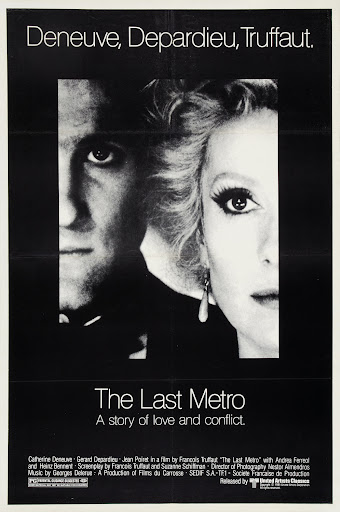
Bernard (Gerard Depardieu) is a young actor, who’s also a member of the French Resistance, living in occupied Paris during World War II. He gets a part as the leading man in a play at a playhouse run by Marion (Catherine Denueve) who has taken over the business since her husband Lucas (Heinz Bennent), who was Jewish, and supposedly fled the country when the Nazis took over, but in reality is hiding-out inside the cellar. Bernard and Marion don’t get along at first, but slowly form a bond when they find a mutual enemy in the form of theater critic Daxiat (Jean-Louis Richard) who is an anti-Semite that writes a nasty review about their play, accusing it of being pro-Jewish, in an effort to close the place down, so that he can take it over.

The film, which was writer/director Francois Truffaut’s most successful movie financially and one of the highest grossing French Films ever, remains sufficiently compelling despite very little that actually happens. One of the elements though that I found intriguing was the behind-the-scenes segments revealing all the work that gets put into a play before its opening night premiere . I especially liked Nadine (Sabine Haudepin) as a young actress who tirelessly goes from one acting gig to another, sometimes multiple ones on the same day, in order to help her career and get established.

Revealing right away, or pretty much by the end of the first act, that the husband has never left the country like everyone presumes, was a mistake that lessened the intrigue. For one thing the place he is hiding in, which is the cellar of the theater, is not too creative and even has a back door leading out to the alley way, which made me feel that anyone could’ve caught on to his whereabouts a lot sooner especially as Marion sometimes leaves her visits with him by going out the back entrance. Any passer-by/snitch could see her doing this and wonder what the door lead to, or called the Nazi authorities to have them investigate. It’s also not clear how, in seemingly a few minutes time, Marion is able to hide Lucas and his bed/personal belongings, from the Gestapo when they eventually insist on checking-out the basement.

Marion’s interactions with her husband is not particularly compelling and yet these scenes take up the majority of the runtime during the second act while Depardieu, who is excellent, barely gets seen at all. Then during the third act Marion and Bernard suddenly get really into each other, but the interactions between the two needed to be shown more for this to be organic to the viewer and in fact should’ve been more the focus of the film than Lucas. Had I been the director I would’ve kept Lucas’ whereabouts a secret until near the end when Bernard finally becomes aware of it and used the mystery of whether Marion knew more about it than she lets on as part of the intrigue.

The ending is a bit of a disappointment. The tone of the film works as a drama, but then suddenly shifts with about 10 minutes to go into a quirky comedy, which doesn’t work. The story threads get wrapped up in too tidy of way leaving the dynamics of Marion’s relationship with Bernard and Lucas’ response to it wide-open. After 2 hours and 10 minutes the character arcs should’ve been better defined and since they aren’t it makes the viewer feel like the movie doesn’t really go anywhere, or lead to anything insightful, which is a shame as it’s a nice looking, period authentic production otherwise.

My Rating: 7 out of 10

Released: September 17, 1980

Runtime: 2 Hours 11 Minutes

Rated PG

Director: Francois Truffaut

Studio: Gaumont

Available: DVD, Amazon Video

The Last Woman (1976)

the last woman 1

By Richard Winters

My Rating: 2 out of 10

4-Word Review: He ends his manhood.

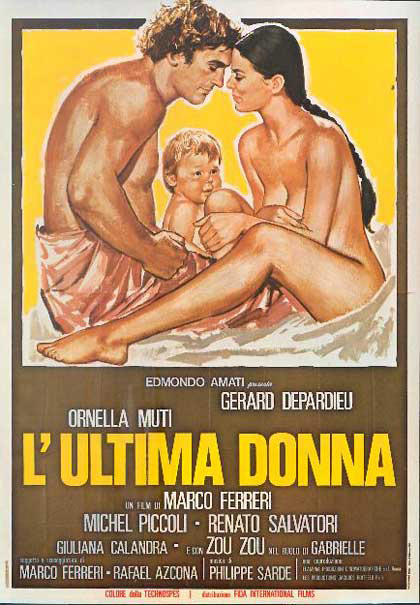
Gerard (Gerard Depardieu) is a single father of an infant son whose wife has left him due to his controlling ways. By chance he meets Valerie (Ornella Muti) who is just getting over a tumultuous relationship with her boyfriend Michel (Michel Piccoli). She loves Gerard’s little boy and it is enough for her to move in with them almost immediately. The two have a passionate affair, but then Gerard becomes as possessive with her as he was with his ex-wife. Valerie tries to stick with it due to her feelings for the child, but Gerard’s abrasive personality and his inability to see her as anything more than a sexual object eventually becomes too much.

The film, which was directed by the notorious Marco Ferreri who was known to push-the-envelope in just about all the movies he made, is laced with a streaming sexuality that makes it almost pornographic. The sex is raw and explicit even showing Depardieu with a full erection. The characters take their clothes off and prance around naked in front of the child and even have sex with him in the room, which many American viewers will most likely find quite shocking and offensive making it easy to see why this film has never been released onto VHS, DVD or Blu-ray. The sex also seems more real and not the simulated kind one finds in most Hollywood films. There is an animalistic quality to it like it is being done unrehearsed and on-the-spot.

Unfortunately Ferreri relies too heavily on the sensual aspect to carry the film while ignoring the storyline, which is too wide-open and badly in need of more structure and editing. The sex becomes redundant and the conversations between the two characters are endless and pointless. The production plays like it has one of those scripts that gives the actors a generalized understanding of their characters and then allows them to improvise their lines, which unfortunately fails to elicit anything interesting. Ferreri’s direction lacks visual appeal by focusing in on an apartment building, which is where most of the story takes place that is too ordinary and dull.

Muti is certainly beautiful, but her acting is too restrained although it is interesting to some extent at seeing her subdued performance playing off of Depardieu’s hyper one.

Depardieu is solid as expected, but having to spend ninety percent of the time looking at his out-of-shape, chubby nude frame gets a bit trying and even gross. His character is also obnoxious and the callous way he treats Valerie eventually becomes a turn-off

Spoiler Warning!

The film’s biggest claim to fame though is the ending where without warning the Depardieu character takes an electrical meat cutter and slices off his own penis, which is done in such a graphic way that it will make any viewer wince and turn away. Having him then hold up the bloody thing and shove it into the faces of both his shocked and crying girlfriend and child is genuinely disturbing. However, the film as a whole is so boring that this horrific moment does not make it worth sitting through and in many ways just makes it even worse.

End of Spoiler Warning!

Released: April 21, 1976

Runtime: 1Hour 52Minutes

Rated X

Director: Marco Ferreri

Studio: Columbia Pictures

Available: None at this time.

Going Places (1974)

going places

By Richard Winters

My Rating: 9 out of 10

4-Word Review: Guys with no morals.

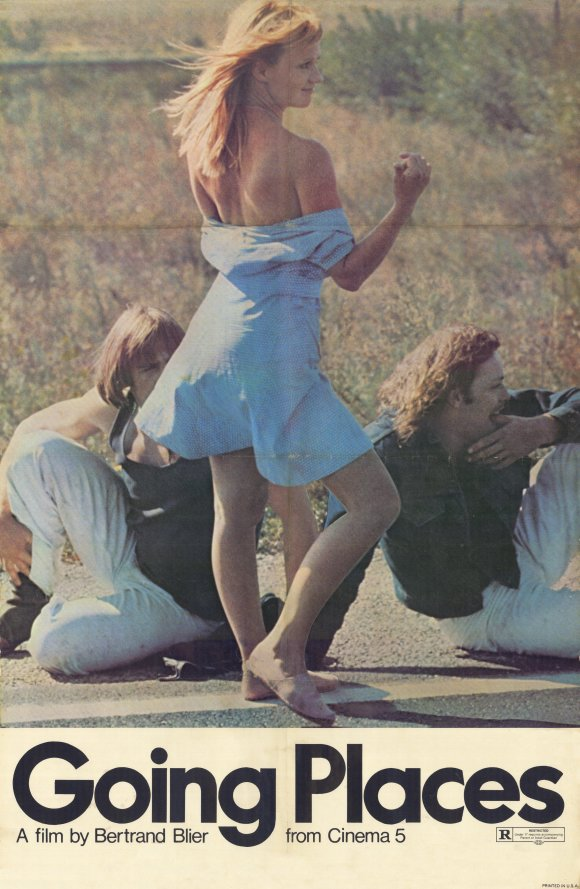
Two small time hoods (Gerard Depardieu, Patrick Dewaere) spend their days roaming the streets, robbing stores, and molesting women. In some ways this is truly an amazing film in what it is able to get away with. The two main characters are immoral, ignorant, insensitive, and brutal and the women are demeaned and degraded. The overall content is vulgar and perverse and yet somehow this thing comes off as a lyrical, offbeat delight that is pure entertainment.

It’s a definite original with every scene being an ingenious comic set-up. The scenario structure and use of locations is perfect. The pacing is fluid and director Bertrand Blier’s eye for detail near brilliant. The two hours move along like a breeze. It never gets boring and I actually almost wished it could have been longer.

The comic threads are hilarious and they get funnier and funnier as they go along. The guys’ constant, futile and very explicit attempts at getting a frigid woman (Miou-Miou) excited are a particular standout.

This is the type of black comedy that should be used as an example for all others. It’s consistently unique and manages to balance the ugly elements with the lighthearted without going overboard on either. It even throws in a surreal angle without a hitch.

Veteran French actress Jeanne Moreau has one of her finest latter career roles playing a lonely lady in desperate need of male attention. Her scene is well played out and even has a shocking conclusion. Depardieus ‘friendly’ conversation with a shopping mall security guard is another standout. The ultimate joke though may be in the film’s title as these guys are truly going nowhere.

My Rating: 9 out of 10

Released: March 20, 1974

Runtime: 1Hour 57Minutes

Rated R

Director: Bertrand Blier

Studio: Universal Pictures France

Available: VHS, DVD (Region 1 & 2), Amazon Instant Video