Tag Archives: Geraldine Page

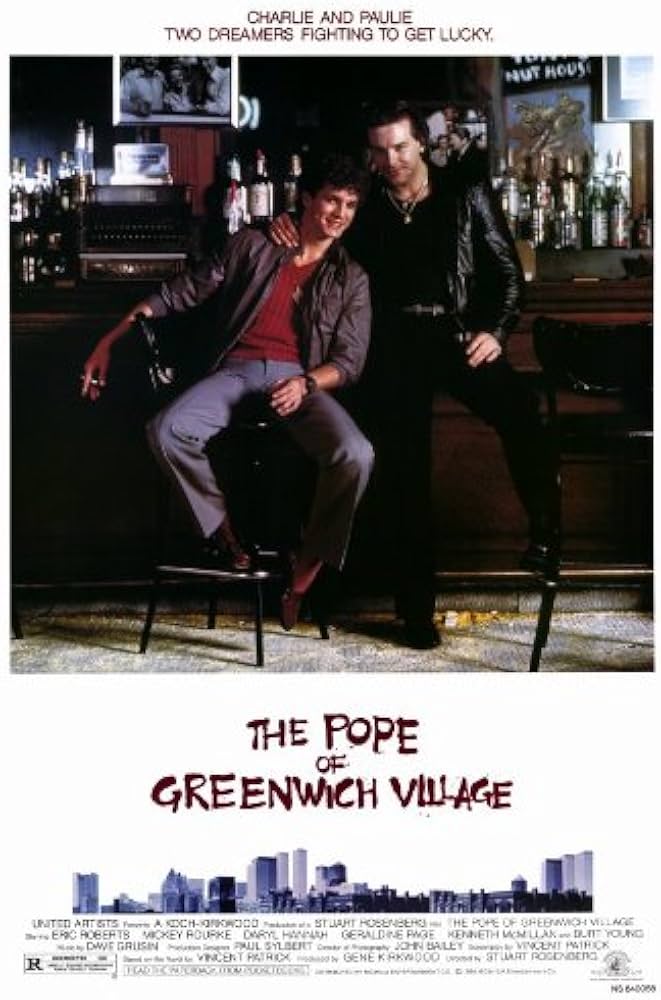
The Pope of Greenwich Village (1984)

pope

By Richard Winters

My Rating: 7 out of 10

4-Word Review: Cousins turn to crime.

Charlie (Mickey Rourke) and Paulie (Eric Roberts) are cousins working at a restaurant who get themselves fired when Paulie is caught skimming checks. Since Charlie’s girlfriend Diane (Daryl Hannah) has a baby on the way he must act fast to bring in some money. Paulie convinces him of a ‘great’ opportunity, which is to hire a former safecracker, now working as a clock repairman, Barney (Kenneth McMillan) to break-open a safe inside the building of a large company that reportedly has a large amount of money inside it. Charlie is cautious as he doesn’t completely trust Paulie whom he finds immature and unseasoned, but he’s so desperate that he reluctantly agrees. Things go smoothly at first, as they’re able to break into the building easily, but the unexpected arrival of undercover cop Walter (Jack Kehoe) soon sends their plans awry. When Walter dies during the melee they’re now on the hook for his death as well as in the bad graces of mob boss Eddie (Burt Young) who’s safe it was that they tried to rob. 

The film is based off of the 1979 novel of the same name by Vincent Patrick who also penned the screenplay. It does an excellent job of creating a vivid feel of Greenwich Village where it was shot on-location and the interactions of the characters seem overall authentic. The only real issue is the way it hinges of extreme Italian American stereotypes where it seems like anyone from that background must be involved in crime and if any other group was portrayed that way it would be deemed problematic if not downright controversial. The cliches are so strong that had it been heightened just a small degree it could’ve been deemed as parody, or even satire and in fact IMDb does list it as being a ‘comedy’ though I really don’t think that’s the case. I believe it’s meant to be a drama, but either way, for the sake of balance, it would’ve helped had there been some Italians even just one who didn’t fall into the tired caricatures. 

The acting is the crowning achievement. Roberts is superb and I really found it hard to believe he didn’t become a star from this. While he’s always been a great character actor I think he should’ve been given more and I do realize he’s still busy in the business and has been consistently, but I don’t think the quality of the parts has always been there and most filmgoers are probably more familiar with his sister Julia, which is a shame. I was completely blow away by him here and genuinely surprised why the Oscar didn’t fall into his lap.

Rourke is excellent too, but more because he wisely underplays his role and allows Roberts to carry all the emotional energy. Had they both been competing for it it would’ve failed, but their different approaches help create a nice contrast and sometimes it’s the best actors who don’t force it and for the most part that’s what Rourke does here. Of course, he too has his moments like when they go to the racetrack, and he bumps into a guy and instead saying ‘excuse me’ like a normal person he instead says, ‘out of my way asshole’. Him beating up on his refrigerator when Diane leaves him has a memorable quality to it though I would’ve thought the fridge would’ve been more damaged and he should’ve at the very least injured his hand, which strangely doesn’t occur despite him punching at it repeatedly.  

On the female end most accolades goes to Geraldine Page who got nominated for the supporting Oscar despite having only 8-minutes of screentime. She gives a powerful performance for her limited presence, but the idea that she could stymie police efforts to search her deceased son’s room by giving veiled threats that she’ll make them look bad in the media I didn’t totally buy. If cops want something bad enough, they’ll get it with the possible exception of money exchanging hands, which in this case didn’t happen. Hannah as the girlfriend has almost the same screentime, maybe a little more, and hits the bullseye as an idealistic young woman who believes she can somehow get her boyfriend to change only to learn the ultimate harsh lesson that it doesn’t work that way. 

Spoiler Alert!

The ending I felt was a letdown. I was actually intrigued with Charlie finding the tape from the deceased cop that implicated Eddie and seeing how he could use that to stay out of trouble for being a part of the robbery. Having Paulie then swoop in by putting lye into Eddie’s drink and poisoning him seemed too easy. Eddie had just gotten done having his men cut-off Paulie’s thumb, so he should expect Paulie would be looking for revenge and not naive enough to have him make his drinks, or if he does at least have one of his henchmen taste it first. You have to wonder how Eddie was able to climb up the crime ladder if he was that stupid and thus the climax really isn’t that clever, or surprising as the camera focuses up-close on the coffee cup making it too evident that something is going to happen. A letdown for a movie that had been relatively smart up until then.  

My Rating: 7 out of 10

Released: June 22, 1984

Runtime: 2 Hours

Rated R

Director: Stuart Rosenberg

Studio: MGM/UA

Available: DVD, Blu-ray, Amazon Video, YouTube, Tubi, PlutoTV
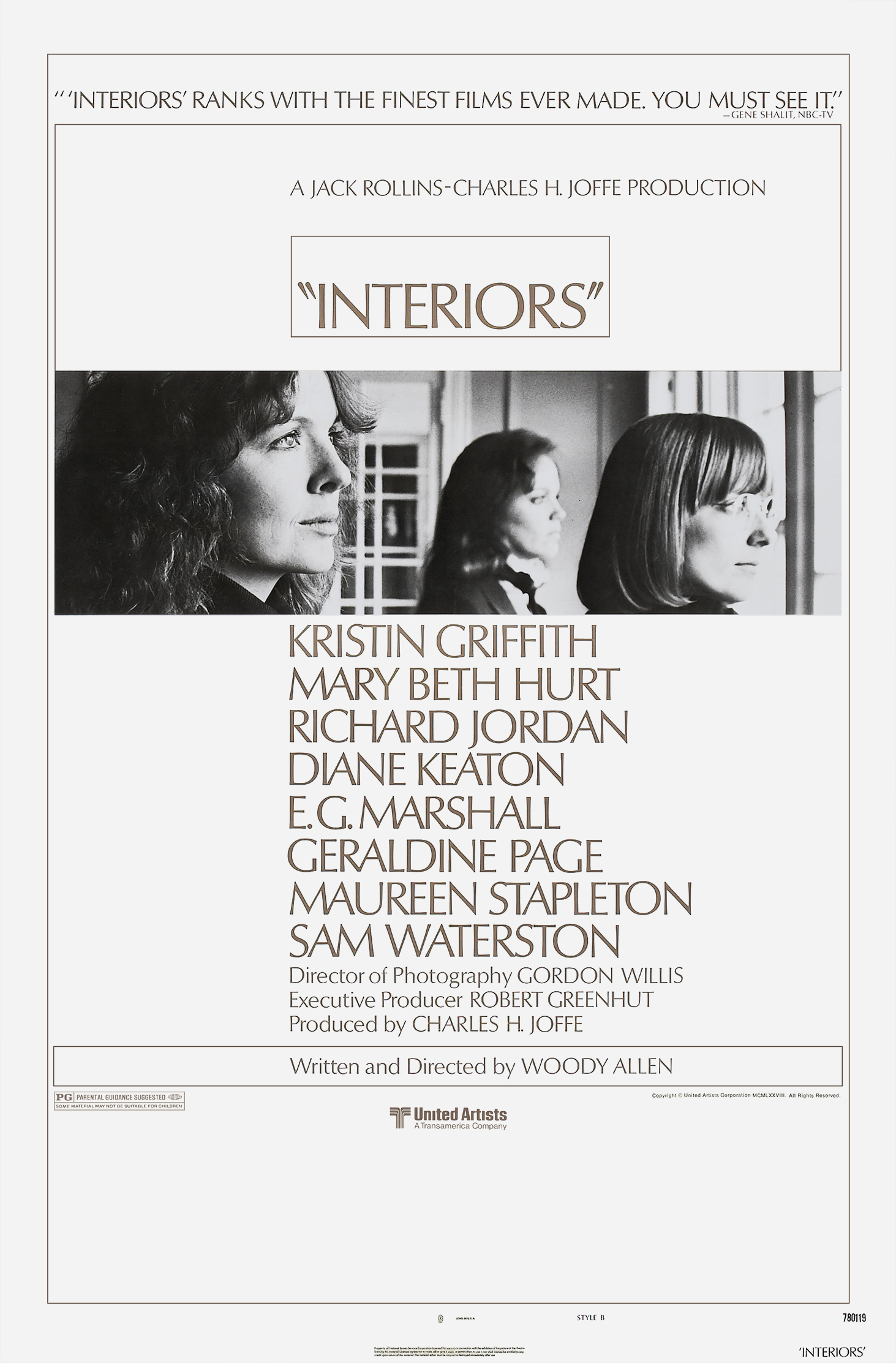
Interiors (1978)

interiors

By Richard Winters

My Rating: 8 out of 10

4-Word Review: Artistic family harbors turmoil.

Eve (Geraldine Page) is an interior decorator whose emotions she keeps bottled-up and who also has a controlling and temperamental nature to not only her husband Arthur (E.G. Marshall), but also her three grown daughters: Renata (Diana Keaton), Flyn (Kristin Griffin), and Joey (Mary Beth Hurt). One morning, while at the breakfast table, Arthur announces to not only Eve, but also the two other daughters present, that he wants a separation though he insists it’s not ‘irrevocable’. Eve becomes upset and refuses to face it. While the two do separate she continues to cling to the delusion that they’ll ultimately reunite. When it finally becomes painfully clear that is not going to happen she then attempts suicide. While she’s in the hospital recovering Arthur goes out and meets Pearl (Maureen Stapleton) whom he quickly falls in love with. When he brings her home to meet the family they’re shocked at how he intends to marry her while his former wife is still in the hospital. This then brings out the hidden hostilities that the daughter’s feel towards their parents as well as each other and in Renata’s case the repressed envy that her own husband Frederick (Richard Jordan) feels for her.

This was Woody Allen’s first dramatic film, which was a big deal when it was first released as he’d only done wacky comedies before this and many were curious and apprehensive about him trying something so completely different from his past work. While he’d been trying to get a drama produced for years his investors constantly nixed the idea fearing that because he attracted audiences through his funny stuff that anything with a serious nature would turn-off would-be theatergoers and be a financial flop, but after the monumental success of Annie Hall they finally decidedly to relent and gave Woody the chance to spread his artistic wings.

The result overall is downright impressive. It’s clearly inspired by the films of Ingmar Bergman, his cinematic idol, but in some ways this is even moodier and more poignant than some of his stuff. While his later dramas fell into becoming a cliche of themselves using many of the same elements taken from this one, namely pretentious artistic characters living in New York who suffer from pretentious problems and relationships, here it’s fresh making the issues that they go through seem illuminating versus rehearsed and contrived like in some of his later works.

That’s not to say I didn’t find some problems here. The fact that we have characters, in this case Keaton, talking directly to the screen, apparently in an attempt to show that she’s speaking with a therapist, is a bit of a cop-put as she’s able to convey her deep seated thoughts and feelings verbally without forcing the director to have to show it through her actions and conversations, which may be more difficult to do, but also more rewarding for the viewer. Arthur’s decision to tell Eve that he wanted to leave while sitting a the meal table with the two daughters present seemed rehearsed. Normally when a couple decides to split they do it privately and have it out through a discussion or argument versus a canned speech that Arthur does, which comes-off like he’s orating in front of a group of people.

Woody’s attempts though to show the struggles and challenges people have who pursue creative endeavors I felt were quite well done. In his later dramas I found it annoying how many characters worked as artists because it reality only a very small portion of the populace can make a living that way, but here I was able to forgive it. I liked how we see close-up the challenges of this by the way Renata writes a poem on paper but is constantly scratching out words that she puts down showing the many drafts an author must go through before it eventually might come-out perfectly. The fact that it’s later revealed that her father helps fund her poetic passions made sense too as a poet able to live-off of their writings is about as rare as it gets.

Richard Jordan’s character is the one I found the most fascinating and I was genuinely surprised that while other cast members were nominated for the Oscar he wasn’t even though to me he’s superb.  The way his character broods incessantly about not getting the critical accolades that he expects and how it turns him into a mopping, alcohol drinking mess who snips at his wife’s perceived shortcomings in an immaturely emotional attempt to bring her down to his level was completely on-target composite of the insecure artist. The scene where he tries to rape Flyn, so he can have the pleasure to ‘fuck someone who’s inferior to me’ fit the personality of someone who harbors frustration that they’re able to mask with a veil of civility most of the time but will allow it to come-out when alone in the presence of someone more vulnerable.

The real star though is the cinematography by Gordon Wills, who ironically went on to make his directorial debut in a movie called Windowswhich was the original title for this one. The gray, cold color schemes and shots showing an ice-covered tree branch effectively reflects the icy emotions of the family and the lack of music with long pauses of silence and empty rooms help symbolize how alienated each member is from the other. The most pronounced moment involving the crashing waves of the ocean and the almost dream-like ‘conversation’ that Joey has with her mother is by far the film’s most memorable element and something that will stay with you long after it’s over.

My Rating: 8 out of 10

Released: August 2, 1978

Runtime: 1 Hour 32 Minutes

Rated R

Director: Woody Allen

Studio: United Artists

Available: DVD, Blu-ray, Freevee, Pluto, Amazon Video, YouTube

What Ever Happened to Aunt Alice? (1969)

By Richard Winters

My Rating: 8 out of 10

4-Word Review: Old lady kills housekeepers.

After the death of her husband, Claire (Geraldine Page) is shocked to learn that there is no money in his will. Fearing a life of destitution she plots to hire old lady housekeepers who she’ll manipulate to give her their life savings in which she’ll invest into stocks through her broker (Peter Brandon). Once these stocks start making money she’ll murder the housekeeper and keep all the profits for herself. After killing off her fourth housekeeper, Miss Tinsley (Mildred Dunnock) and burying her dead body in her backyard, she hires Alice (Ruth Gordon). Alice though has a secret, she was at one time the former employer for Miss Tinsley, who wants to investigate what happened to her and is suspicious that Claire may hold the secret. Claire though becomes aware of Alice’s scheme and decides to try and make Alice her fifth victim.

This marked the third of Robert Altman’s trilogy featuring old lady killers with the first two being What Ever Happened to Baby Jane? and Hush…Hush, Sweet Charlotte. This was the first one to be filmed in color and the harsh dry desert landscape setting works as a great metaphor to Claire’s barren, evil soul. I also enjoyed the winding plot, which is based on the 1961 novel ‘The Forbidden Garden’ by Ursula Curtiss that has many offbeat twists including a memorable scene featuring the two old ladies rolling around on the floor during a furious fight that you’ll most likely never see in any other movie.

Page’s performance is the main reason why the film is so entertaining. Watching all the various characteristics that she gives to her haughty character is fascinating and she helps make Claire, as nasty as she is, quite memorable. I especially liked the part where after she kills one of her victims she displays for a split second a shocked expression like even she can’t believe what she has just done and this helps to make her character multi-dimensional, like there’s still some semblance of a tortured conscious somewhere within her and she isn’t just a robotic, evil person.

Gordon is okay in support, but I felt her character should’ve had some backup plan that she would use in defense when things got ugly. She keeps assuring her nephew (Robert Fuller) that she can handle things, but when Claire turns on her she becomes almost like a deer-in-headlights. I also didn’t like the wig that she wears and have to agree with one critic who said it makes her look like a giant, walking-talking peanut. I realize that the wig does eventually come into play as part of the plot, but I felt in the brief segments where she’s shown not wearing it she could’ve been seen with her real hair and not just in another wig, which looked just as dumb.

Honorable mention should also go to Spike who plays a stray dog named Chloe. Spike was a well trained animal who was in many films and TV-shows between 1956 and 1971 and the parts where he bares his teeth and growls at Claire every time he sees her, as she attempts to harm him, are amusing.

Spoiler Alert!

The script by Theodore Apstein, fortunately avoids a lot of loopholes, but I did feel at the end they should’ve shown or explained how the characters played by Rosemary Forsythe and Micheal Barbera were able to escape from their burning house. I also found it hard to fathom why Robert Fuller’s character, upon learning that his Aunt had been killed in a suspicious car accident didn’t immediately accuse Claire of doing it. He had pretended not to have any connection to Alice during the majority of the story as that was part of their scheme, but once she was dead I didn’t see why he still needed to pretend. I would think he’d be so emotionally distraught at that point that he would let out his true emotions without even thinking and possibly even tried to attack Claire while having to be restrained by the others.

End of Spoiler Alert!

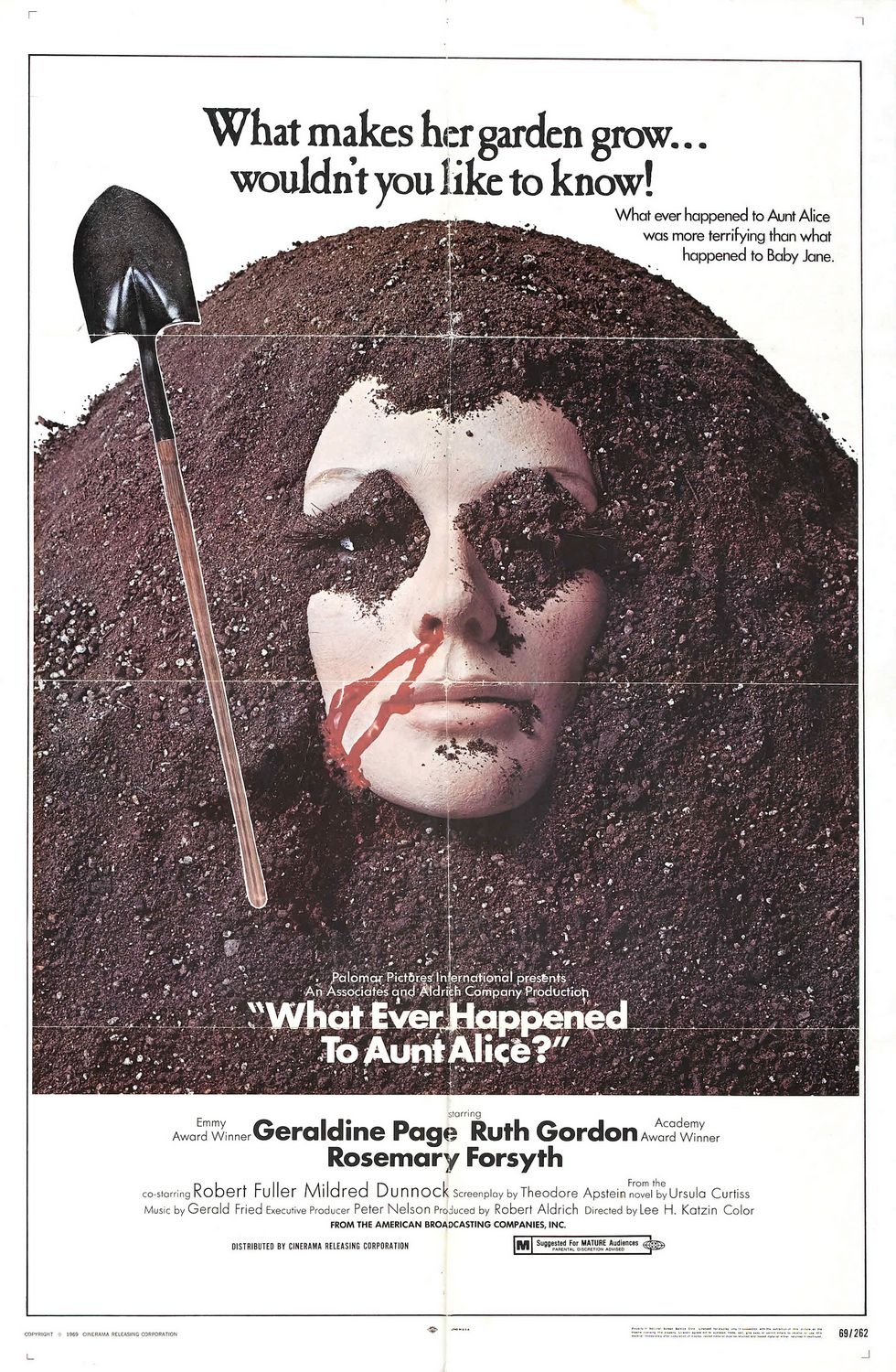
The film’s promotional poster, as seen above, is a bit problematic as it features a young model looking like she’s been buried, but in the movie it was only old ladies that were killed and buried. Showing a beautiful lady may have been more visually appealing, but it’s not authentic to the film that it’s trying to promote.

My Rating: 8 out of 10

Released: July 23, 1969

Runtime: 1 Hour 41 Minutes

Rated M

Director: Lee H. Katzin (Bernard Girard for the first 4-weeks of filming)

Studio: Cinerama Releasing Corporation

Available: DVD, Blu-ray

Pete ‘n’ Tillie (1972)

By Richard Winters

My Rating: 6 out of 10

4-Word Review: Marriage and then tragedy.

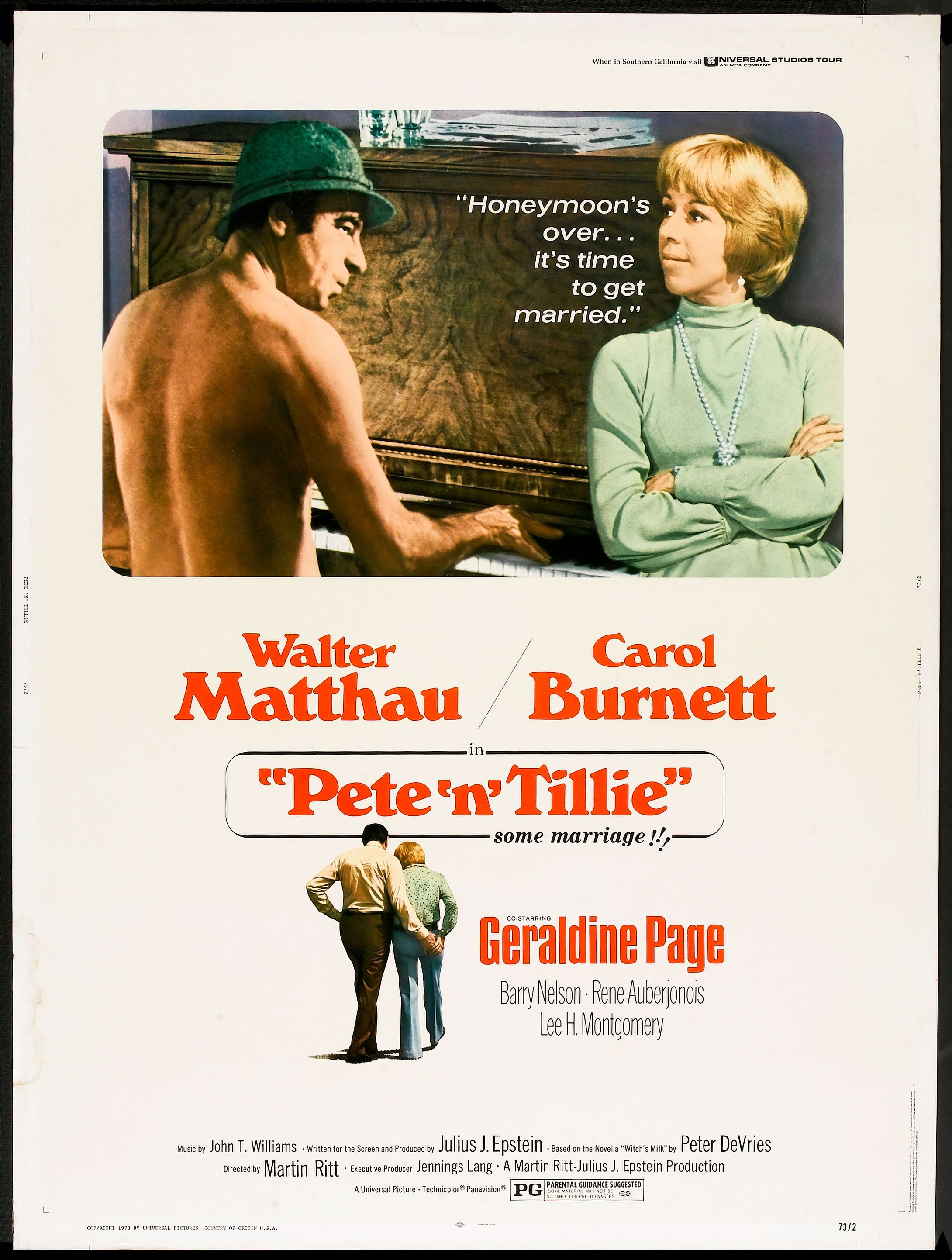
Tillie (Carol Burnett) is a 33-year-old secretary still looking for ‘Mr. Right’. Her friend Gertrude (Geraldine Page) sets her up with Pete (Walter Matthau) a lifelong bachelor. The two don’t hit-it-off initially, but the other prospects are so dim they decide to make a go of it, so they get married and have a kid (Lee H. Montgomery) only to then be faced with terrible news.

On the onset this may seem like a misfire. The viewer expects, especially with these two stars, a very broad comedy of which this is not. Instead the script, which is based on the novel ‘Witches’ Milk’ by Pete De Vries, relies heavily on dry wit particularly through the dialogue, which on a low key level is quite funny. The attempt to create a sort-of unromantic romance that goes completely against what we’ve come to expect in most other romantic films is commendable and for the first hour or so it kind of works.

Matthau again shines by managing to make an unlikable character likable and even downright engaging while Montgomery is fun as the kid by playing a child that seems far more mature and sensible than his two parents. Burnett’s performance though doesn’t work as well. She’s known for her hammy performances from her TV-show and yet here plays a more serious part that barely has much comedy to it at all. The scene where she  screams up to the sky in a fit of rage over her son’s death is her best moment, but overall her appearance here is largely forgettable.

Her character’s motivations are confusing as well particularly with the way she jumps into marriage with a man she really doesn’t like and who would repel most other women and then she decides to stay with him even as it becomes painfully clear that he’s cheating on her. It just seemed that a reasonably attractive woman such as herself should have other male suitors to choose from, so why she sells-out for this one and sticks with him when others would run is not clear and the movie should’ve done a better job at answering this.

Geraldine Page’s character seems completely out-of-sync with the proceedings. She’s personally one of my favorite actresses and even though she was nominated for an Academy Award for her performance here I didn’t see what her presence added to the story. Having her pass out at a courthouse simply because she doesn’t want to reveal her age gets rather exaggerated. The physical altercation that she has with Burnett afterwards does not fit the tone of the rest of the film, which tried to be low-key while this bit becomes over-the-top slapstick and completely out of place.

Had the film focused entirely on the courtship phase this thing could’ve been a winner as it has a nice dry offbeat touch. Even the melodrama of the second act I could handle, but the crazy antics of the third act don’t work at all and the ending leaves no impact at all making this an interesting experiment that ultimately fails.

My Rating: 6 out of 10

Released: December 17, 1972

Runtime: 1 Hour 40 Minutes

Rated PG

Director: Martin Ritt

Studio: Universal

Available: DVD-R (Universal Vault Series)

J. W. Coop (1971)

jw 2

By Richard Winters

My Rating: 8 out of 10

4-Word Review: Rodeo star makes comeback.

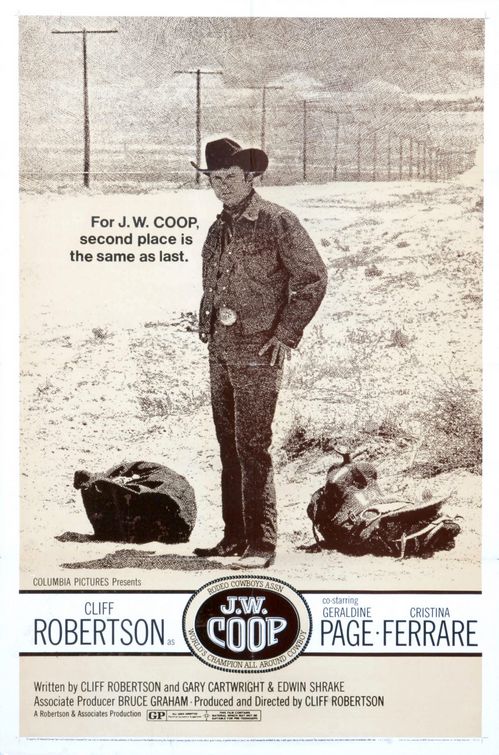
J.W. Coop (Cliff Robertson) has just spent 9 years in prison. After finally being released he finds that the world has changed quite a bit. He’s no longer the big rodeo star that he once was and younger, more educated men have now taken his place. There’s also the new hippie movement that he isn’t quite sure what to make of. With his mother (Geraldine Page) growing senile and no other friends to turn to he decides to take one last stab at the rodeo circuit and determined to beat the odds and become the champion because for him second place is the same last.

The film has a wonderfully gritty quality to it that fully immerses the viewer into the western rodeo landscape and lifestyle. The rugged characters and conversations seem authentic without ever being condescending. The film reveals a lot about the inner toughness needed to survive in that environment as well as the competiveness and eventual loneliness.

Robertson’s stab at directing is flawless and convinced me that he should’ve done more movies behind the camera. He uses several techniques that make the rodeo experience vivid for the viewer including filming a point-of-view shot from on top of the bronco as well as even more impressively showing one taken from underneath a horse as it is running. I also liked the shot where the screen gets split into four squares with each of them showing some of the many hotels that he stays at during his travels on the circuit, which visually hits home how exhausting life on the road can be. There’s also a haunting segment shot late at night at a lonely oil rig that is brief, but quite memorable.

Former model Cristina Ferrare, who is probably best known as being the ex-wife of automaker John DeLorean as well as host of ‘Home and Family’ gets a rare turn at acting playing a hippie who falls in love with Coop.  Her performance is solid even though I found it hard to believe why such a young woman would fall for a man who is so much older, less educated and having not much more money than she does. Their relationship goes on far longer than I realistically would expect, but I still liked the idea of how two people from two very different backgrounds and generations can still manage to connect. Robertson’s performance is equally good and the film also has the novelty of casting Page as his mother even though in real-life she was actually one year younger than he was.

The segment where a throne of teen girls jump out of a trailer and beg for Coop’s autograph as well as the ending in which Coop, with his leg in a cast, attempts to ride a bull are the only two times that it overreaches in a film that is otherwise quite honest and uncompromising and particular good at mixing subtle comedy with stark drama.

My Rating: 8 out of 10

Released: October 3, 1971

Runtime: 1Hour 52Minutes

Rated PG

Director: Cliff Robertson

Studio: Columbia Pictures

Available: DVD, Amazon Instant Video

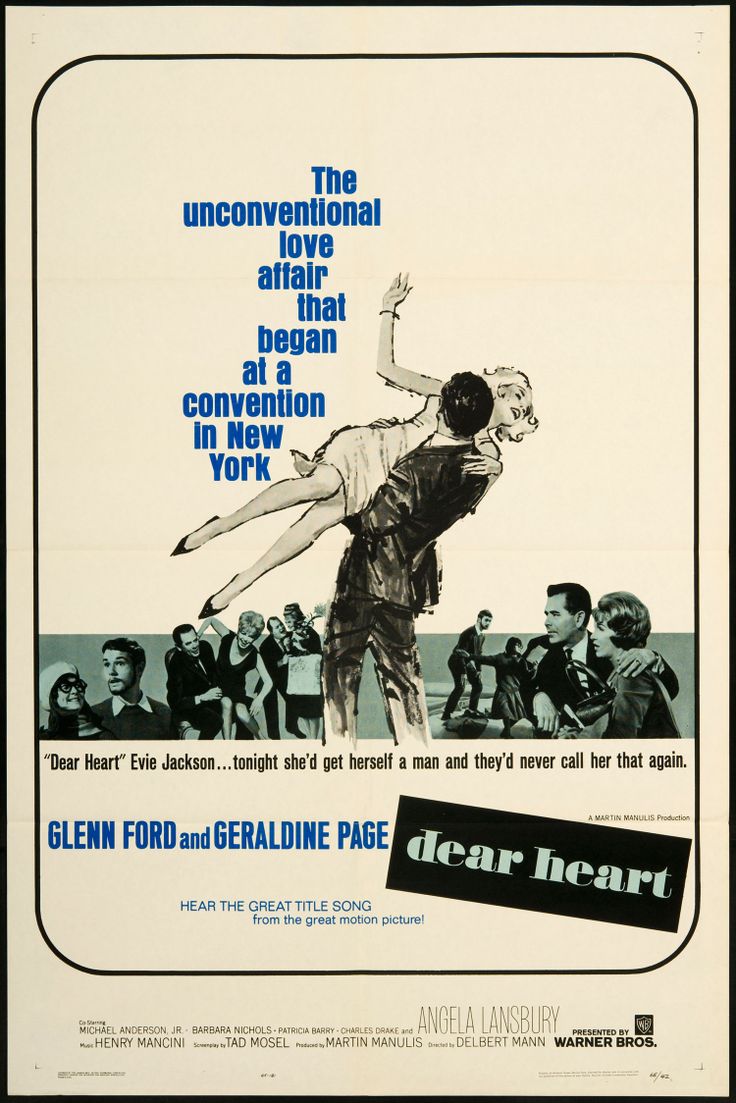
Dear Heart (1964)

dear heart 3

By Richard Winters

My Rating: 7 out of 10

4-Word Review: Love at a convention.

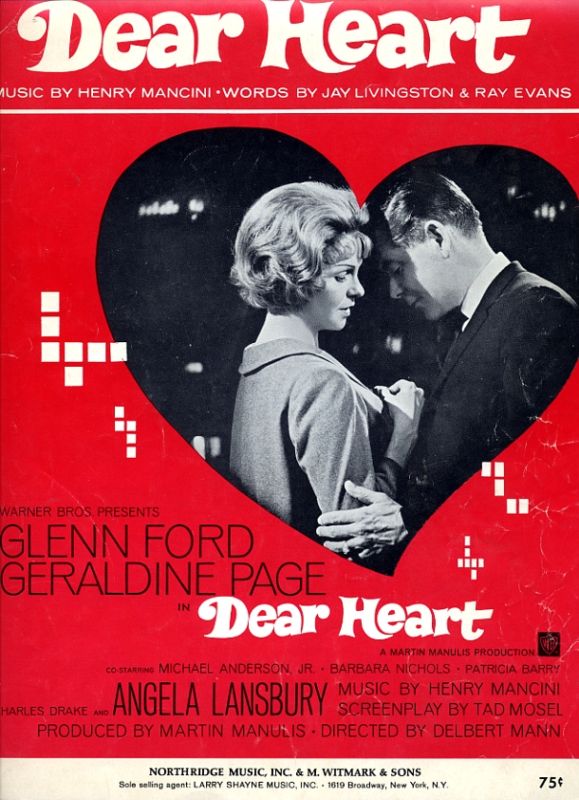
Harry Mork (Glenn Ford) is a greeting card salesman traveling through New York on business when he bumps into the quirky and very lonely Elvie (Geraldine Page) who’s attending a convention there and eyes Harry as a potential catch. Harry though is already engaged to Phyllis (Angela Lansbury) a woman he has only known through correspondence, but is starting to have second thoughts about when he meets her grown son (Michael Anderson Jr.). Elvie tries putting on some moves, but Harry keeps backing away unsure at age 48 if he even wants to settle down at all as he has at times still feels the itch for the occasional fling.

One of this film’s crowning achievements and something that becomes like a third character are the crowd scenes. This may sound inconsequential, but many films have a hard time getting background extras to behave like people amidst large groups of strangers do, but here for whatever reason it gets it right and seeing the dizzying stream of people going back and forth leaves a strong impression and helps accentuate the loneliness and isolation of the main characters particularly Elvie.

I also liked the way the characters hemmed and hawed with each other during the beginning stages. At times Elvie seems more into Harry than he is with her and then other times it gets reversed. Both characters at different points put up an array of defenses and it takes a while for either of them to trust the other and come out of their shells and move into an actual relationship, which is far more realistic than most movies that usually jumps ahead too quickly and never shows the awkward phase that most anyone else goes when testing the waters with someone that they’ve just met.

Page is excellent as always playing the eccentric type of character that she’s proven to be quite adept at, however her myriad of strange quirks got a bit ridiculous and overdone.

Ford is equally good especially with this type of comedy where he plays nervous characters unsure of how to deal with some of the offbeat people around him. I was disappointed though that there was a long drawn out sequence where he tries to get a clerk at the gift card shop (Barbara Nichols) up to his hotel room for a fling, but the film then cuts away and never follows through with what occurred once they got up to the room even though it is later intimated that things didn’t go too well.

The supporting cast of familiar faces lends great comic support, but the most memorable thing about the film is that it features both actresses who went on to play the Mrs. Kravitz character in the ‘Bewitched’ TV-Show. There’s Alice Pearce, who played Mrs. Kravitz for the first two seasons before she died of cancer and then Sandra Gould who replaced her and there’s even a surreal moment where the two have a bit of a confrontation, which I found to be pretty cool.

dear heart 2

My Rating: 7 out of 10

Released: December 2, 1964

Runtime: 1Hour 54Minutes

Not Rated

Director: Delbert Mann

Studio: Warner Brothers

Available: VHS, DVD (Warner Archive), Amazon Instant Video

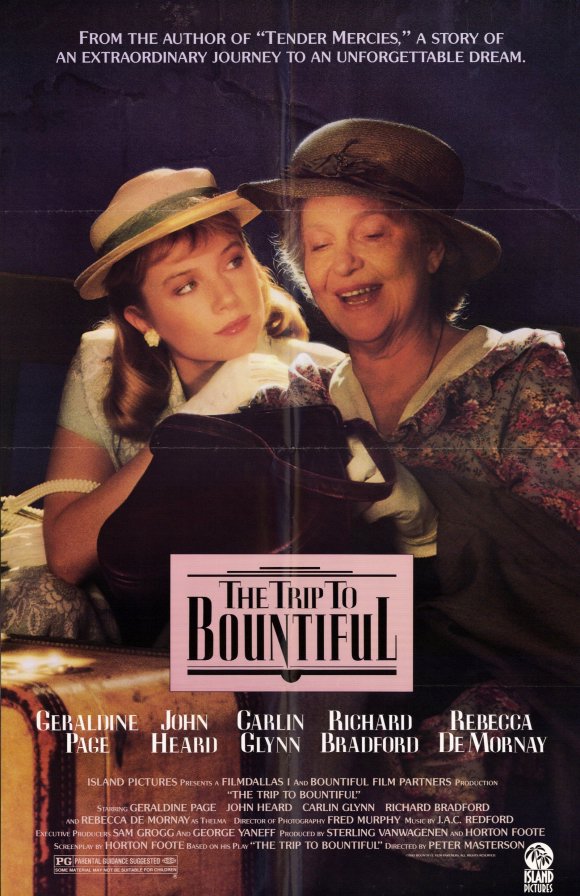
The Trip to Bountiful (1985)

the trip to bountiful 1

By Richard Winters

My Rating: 7 out of 10

4-Word Review: Old lady goes home.

Carrie Watts (Geraldine Page) is an elderly woman living inside a cramped apartment with her grown son Ludie (John Heard) and his wife Jessie Mae (Carline Glynn) in Houston, Texas during the 1940’s. Carrie dreams of one day returning to her childhood home in the small town of Bountiful and ‘escaping’ from Jessie Mae who is overbearing and treats her like a child, but she lacks the transportation or funds. She secretly hides her government checks with the hopes of saving enough to take a train. When she finally makes it to the train station she finds there is no longer any stops to her old town, which is now essentially abandoned, but with the help of the local sheriff (Richard Bradford) he takes her there while Ludie and Jessie follow close behind determined to drag her back with them.

Peter Masterson’s directorial debut shows a great appreciation for Horton Foote’s script as it manages to stay true to the period and tone. I especially liked the part where Carrie describes the quietness of her childhood home while the camera slowly pans the yard and allows the viewer to essentially experience what she is talking about. The recreation of the ‘40s is on-target making you feel like you are living there yourself. Having some tunes of the era playing on a phonograph in the background is a great touch and it’s nice to hear a soundtrack that isn’t from the preverbal classic rock period.

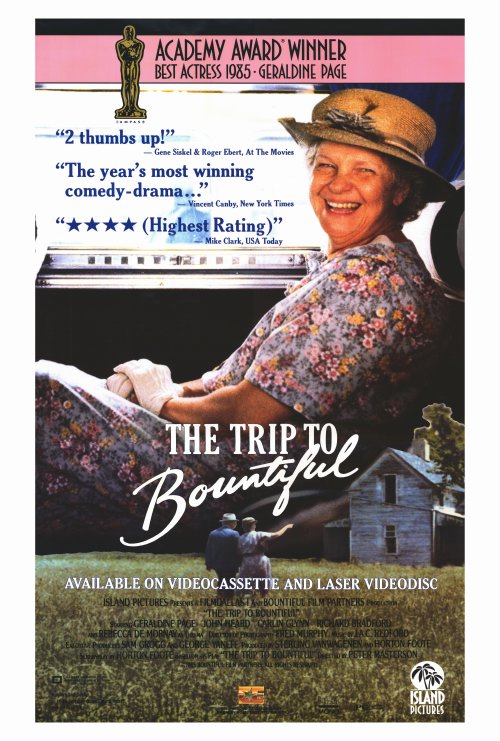
Page shines in her Academy Award winning performance. She has played evil characters with such a relish for most of her career that it is nice seeing her portray a sweet old lady for once and do it so well. Her presence adds to every scene she is in and helps make them more interesting particularly with her conversation on the train with Thelma (Rebecca De Mornay) and the way she holds up everyone in line at the train station specifically two men standing behind her who in real life where her twin sons. She also manages to cry effectively with tears actually coming out of her eyes as opposed to De Mornay whose tearless attempts at it where so pathetic it seemed almost embarrassing.

Carlin is quite good in the snippy adversarial role and I was surprised she didn’t at least get a nomination for her efforts. Heard is solid as a sort of mediator and De Mornay is perfect for the part simply because her fresh youthful face makes a great contrast to Page’s worn one.

The on-location shooting adds a lot of flavor and helps to make this superior over its original stage version. The story itself is slow moving, but a wonderful character study on aging that at times manages to be dryly humorous, honest and sad, but never maudlin.

the trip to bountiful 2

My Rating: 7 out of 10

Released: December 20, 1985

Runtime: 1Hour 48Minutes

Rated PG

Director: Peter Masterson

Studio: Island Pictures

Available: VHS, DVD

Summer and Smoke (1961)

By Richard Winters

My Rating: 7 out of 10

4-Word Review: She is sexually repressed.

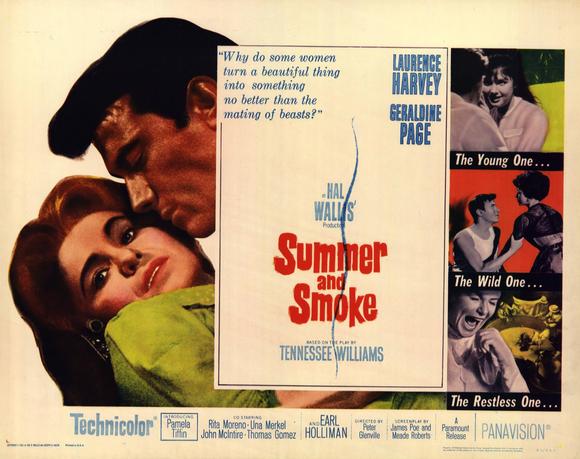
Alma (Geraldine Page) is an adult woman still single and living with her parents. Her father (Malcolm Atterbury) is a minister while her mother (Una Merkel) having suffered a mental breakdown several years’ earlier acts and behaves in a perpetual child-like state. Alma yearns for the affections of John (Laurence Harvey) the dashing doctor who lives next door with his father (John McIntire). However, John’s lifestyle is much too wild for Alma’s repressed tastes, but when she tries to change she finds that it may be too late in this film version of the Tennessee William’s play.

I have been a fan of Geraldine Page for years. She has a terrific ability to play fragile and eccentric characters while doing it with a panache and style. Her characterizations are always vivid and revealing and executed in a seamless fashion. One can become so entranced with her performances that sometimes it becomes more interesting than the story itself. Her appearance here proves to be no exception. She became known for playing a lot of dark, sinister characters, so it was a nice change seeing her play this part. She even does some singing and in fact the scene where she sings to John’s father as he lies on his deathbed for me left the most lasting impression. I always love watching the woman’s body language, gestures, and facial expressions and how she uses them to create a three-dimensional character. Her acting discipline should be studied and emulated by students of the craft everywhere.

Harvey as her co-star was an interesting choice. Despite his reputation as being an over-rated actor and possessing a strange personality off-camera I have found some of his performances to be excellent particularly the one in the original Manchurian Candidate. However, he seems to be better suited playing parts with a cold and aloof presence. The role here demanded more emotion and I didn’t think he could quite hit it. By the end Page was acting circles around him and turning the production into her own vehicle.

The supporting performers aren’t bad. It is fun seeing Rita ‘Hey you guys’ Moreno in an early role playing a young vixen with eyes for John. McIntire is fine in his small role and the part where comes home to find all sorts of drunken people lying about passed out in his living room and hallways is good. Thomas Gomez is memorable simply to glimpse his large almost unbelievable waist size.

I really didn’t like Merkel’s part as the crazy mother. I found it frustrating that there really was never any explanation for why she behaved in such a strange way. Simply saying that she had a ‘breakdown’ wasn’t enough and I wanted more of a scientific or medical reason. It also would have been more interesting to see what she was like before her breakdown, but that is never shown.

Technically the film is well produced. The sets, costumes and performances are all very turn-of-the-century and it helps draw you into the mood and thinking of the era right away. I did not like that the outdoor scenes where done on a soundstage as the foliage and sky look annoyingly artificial.

Most of William’s plays deal with sad, lonely, and pathetic characters and this one proves no exception. However, I was pleasantly surprised that after the expected histrionics this one manages to have a somewhat upbeat ending, which helped distinguish it above some of his others. The characters and situations are all too real and Alma reminded me very much of someone I know and others may know someone like her as well, which on a personal level made this story all the more fascinating.

My Rating: 7 out of 10

Released: November 16, 1961

Runtime: 1Hour 58Minutes

Rated NR (Not Rated)

Director: Peter Glenville

Studio: Paramount

Available: DVD, Amazon Instant Video, Netflix streaming