Tag Archives: Donald Sutherland

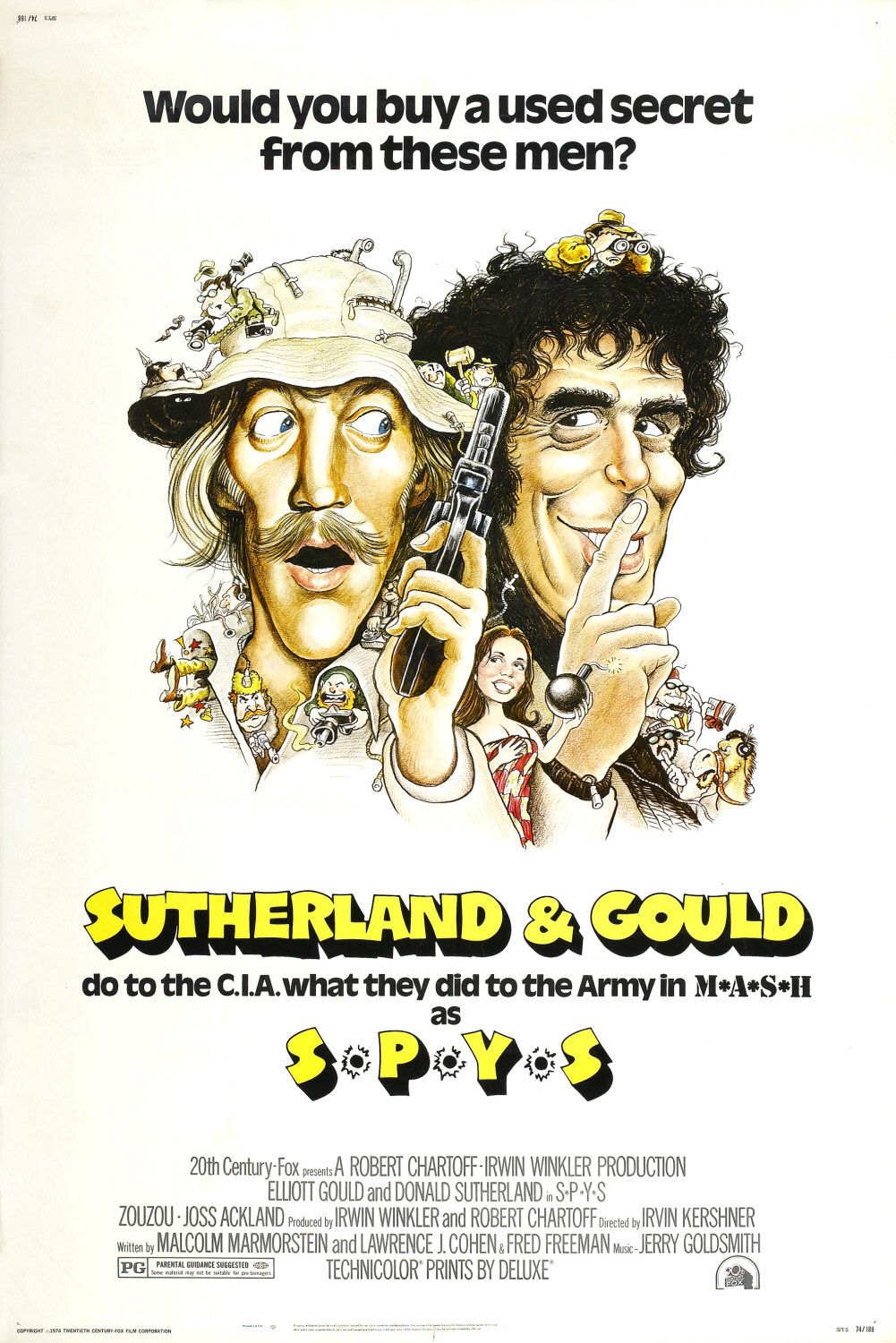
S*P*Y*S (1974)

By Richard Winters

My Rating: 4 out of 10

4-Word Review: Targeted to be killed.

Bruland (Donald Sutherland) and Griff (Elliot Gould) are two CIA agents stationed in France who prove to be inept at every turn. When they accidentally kill a Russian gymnast defector (Michael Petrovitch) the head of the CIA Paris unit, Martinson (Joss Ackland), makes a deal with the soviets to have the two killed. This would then avoid a dangerous retaliation that could lead to a nuclear war. However, neither Bruland or Griff are made aware of this until they start getting attacked by people from all ends including the KGB, the CIA, the Chinese communists, and even a French terrorist group. In their pursuit to survive the two, who initially disliked the other, form an uneasy alliance.

The film’s original title was ‘Wet Stuff’, but the producers wanted a tie-in with M*A*S*H that had been hugely successful and also starred Gould and Sutherland, so they changed it to make it seem similar to that one, but the attempt failed and the movie became a huge bomb with the both audiences and critics alike. Viewers came in expecting the same irreverent humor, which this doesn’t have, so audiences left disappointed and the word of mouth quickly spread causing it to play in the theaters for only a short while. The irony though is that in countries that hadn’t seen M*A*S*H, like the Netherlands and Germany, it fared better because the expectations going in weren’t as high.

On a comic level it’s not bad and even has its share of amusing bits. The way the defector gets killed, shot by a gun disguised as a camera, was clever and there’s also a unique car chase in which Gould takes over the steering wheel from the backseat while someone else puts their foot to the pedal. The initial rendezvous between Sutherland and his on-and-off girlfriend (Zouzou) has its moments too as he finds her in bed with another guy while a second one is in the bathroom forcing him to have to pee in the kitchen sink. Gould then, who thought she was ‘raping him with her eyes’ when they first met, takes over and gets into a threesome while the dejected Sutherland has to sleep on the couch.

On the negative end the characterizations are poor to the point of being nonexistent. Initially it comes-off like Gould and Sutherland are rivals, which could’ve been an interesting dynamic, but this gets smoothed over too quickly. Having the two bicker and compete would’ve been far more fun. There’s also no sense of urgency. While Sutherland does lose his spy job and forced to pretend to feign illness to get out of paying a restaurant bill it’s then later revealed that he did have the money, but this then ruins any possible tension. Had they been in a true desperate situation the viewer might’ve gotten more caught up in their dilemma, but as it is it’s just too playful. The villains are equally clownish and in fact become the center of the comedy by the final act, which takes place at a wedding, while the two leads sit back and watch making them benign observers in their own vehicle.

The film needed somebody that was normal and the viewer could identify with. Buffoons can be entertaining, but ultimately someone needs to anchor it and this movie has no one. I thought for a while that Zouzou would be that person, and she could’ve been good, but she and her terrorist pals end up trying to assassinate the two like everybody else, which adds too much to the already cluttered chaos. The satire also needed to be centered on something. For instance, with Airplane the humor was structured around famous disaster flicks from the 70’s and all the jokes had a knowing tie-in. Here though it’s all over the place. Yes, it pokes fun of spies, but that’s too easy, and having it connected to let’s say James Bond movies would’ve given it a clearer angle and slicker storyline.

Since it did have a modicum of success in certain countries it convinced screenwriter Malcolm Marmorstein to continue to pursue the formula as he was sure it was simply the botched marketing that had ruined this one, so he wrote another parody script, this time poking fun at the army, just a year later, which also starred Gould, and was called Whiffs, which will be reviewed next.

My Rating: 4 out of 10

Released: June 28, 1974

Runtime: 1 Hour 40 Minutes

Rated PG

Director: Irvin Kershner

Studio: 20th Century Fox

Available: DVD-R

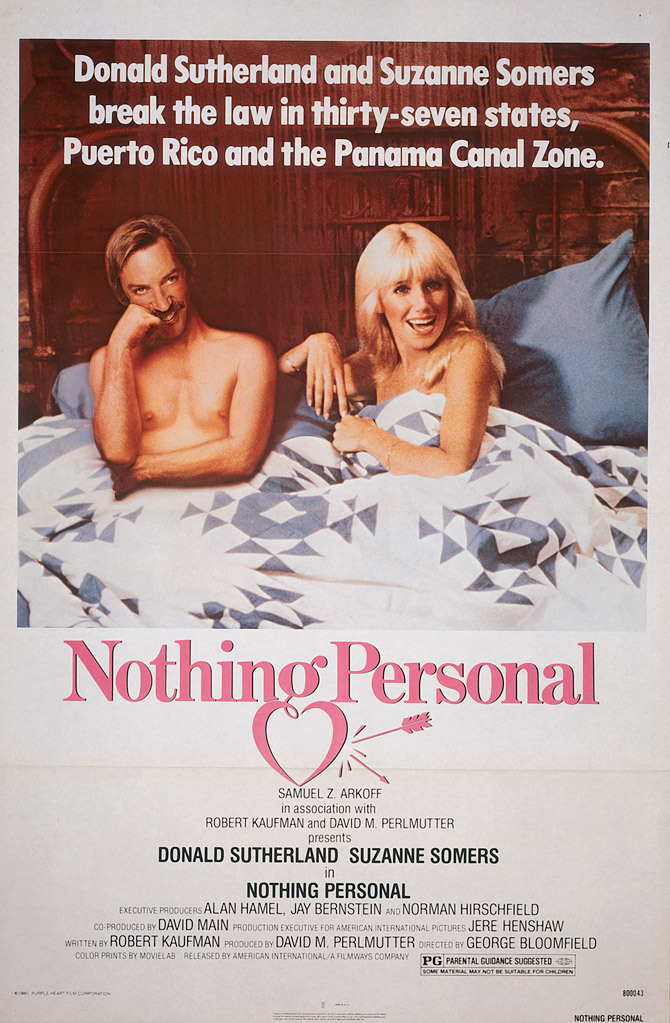
Nothing Personal (1980)

By Richard Winters

My Rating: 2 out of 10

4-Word Review: Saving seals from slaughter.

Roger (Donald Sutherland) is a college professor who becomes aware by one of his students, Peter (Michael Wincott), that seals are being systematically slaughtered by a construction company trying to build homes in an area populated by them. Roger then goes on a crusade to stop this and hires the services of Abigail (Suzanne Somers) a young lawyer bent on proving herself. The two though come up with major roadblocks when they attend the stockholder meetings of the company. While the CEO Ralston (Lawrence Dane) seems to listen to their concerns the company still decides to push through their construction agenda prompting Roger and Abigail to find other ways to prevent the homes from going up, which then causes the heads of the company to resort to nefarious means to stop them.

The screenplay was written by Robert Kaufman and sold in 1972 but then languished in the studio’s slush pile as it couldn’t find any director interested in filming it. Then in 1980 after the success of Love at First Bitewhich had also been penned by Kaufman, director George Bloomfield decided to take a stab at this one, but for tax write-off purposes it was filmed in Canada despite the setting being Washington D.C.

A lot of the issue with the movie, which was not well received by audiences or critics alike, and ended up tanking at the box office, is that it’s just not all that funny. The humor is dry and amounts to a few throwaway lines said by the characters just before the scene cuts away and if you’re not listening carefully enough, you’ll miss it though even if you do catch it it’s nothing that’s going have you rolling-in-the-aisles. Would’ve worked better had it been done as a drama, or even a thriller, as neither the comedy or romantic elements add much and in a lot of ways detracts from the main story.

While Sutherland is traditionally a good actor his presence here hinders things. He comes off initially as completely oblivious to what’s happening and only manages to get informed by Peter who’s very passionate about the cause and even interrupts a class that Sutherland is teaching to inform him about it. Sutherland immediately poo-poo’s the news and only after doing more research does he decide to take on the cause, but I felt that Peter, who gets largely forgotten and not seen again, should’ve been the one to lead the charge since he was already heavily into the issue and being a student would have more time on his hands while Sutherland was working a job and therefore shouldn’t have been able to devote his full attention to it like he does. Having a romantic relationship grow between Peter and Somers would’ve worked better as they seemed more around the same age while Sutherland looks to be more like her father.

Somers’ character is quite problematic. Initially she’s someone that wants to prove herself and be taken seriously but then turns into a complete slut almost overnight as she gets in bed naked when she invites Sutherland into her room and immediately makes overtures that she wants to get-it-on. This though is not a proper way that someone who wants to gain the respect of her peers and clients as she moves up in the business world should be behaving and therefore it’s hard for the viewer to take anything that she says or does seriously.

Too much time also gets spent on them fooling around to the point that it seems they’re more into sex than saving the seals. The movie should’ve waited until the very end to introduce some romantic overtures after they had succeeded with their mission when it would’ve been more appropriate, but the way it gets done here makes them seem like vapid juveniles with hyper hormones and not much else.

The film though really jumps-the-shark when the CEO of the company and his trusted assistant, played by Dabney Coleman, resort to criminal means in an effort to stop Sutherland and Somers from shutting down their project. Even going as far as trying to kill them by trapping them inside a barn and then setting it on fire. There are certainly CEO’s out there that can be corrupt, but they have enough money that they’d pay someone else to do their dirty work and would most certainly not be doing it themselves. Supposedly these are successful businessmen that have worked their way up the corporate ladder, so why throw it all away by so obviously going after their foes, which is something that could easily be handled through bribery.

Spoiler Alert!

The ending, which was described by one IMDb reviewer as being of the ‘surprise’ variety and makes sitting through the rest of the movie ‘worth it’, had me more confused than anything. It has Dane and company planning to build more homes on a different site that would require them to kill off more wildlife. They then get a knock at the door and when they open it, it reveals a smiling Sutherland and Somers, but it’s not clear whether they appear in order to stymie this new project or are somehow in on it. Since Dane and Coleman have annoyed expressions when they see them I think it’s meant to show the former, but the IMDb reviewer thought it meant the later and I really couldn’t blame anyone for not being sure, which makes this yet another problem for a movie that already had a ton of them.

My Rating: 2 out of 10

Released: March 28, 1980

Runtime: 1 Hour 40 Minutes

Rated PG

Director: George Bloomfield

Studio: American International Pictures

Available: DVD-R, Tubi, Amazon Video

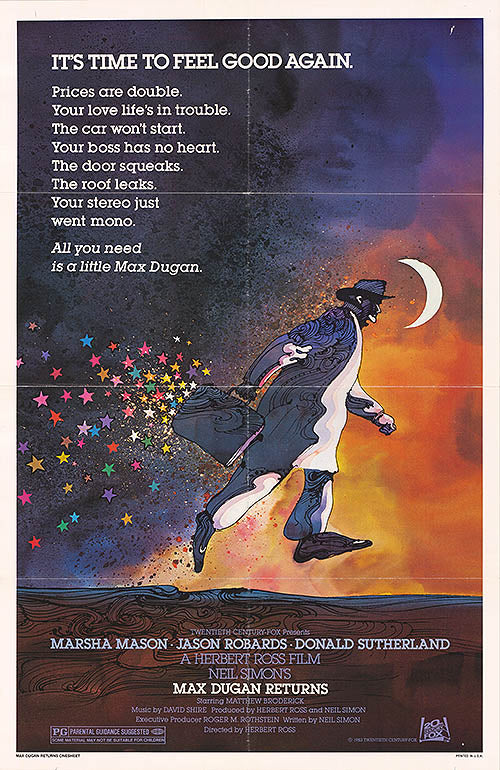
Max Dugan Returns (1983)

max1

By Richard Winters

My Rating: 4 out of 10

4-Word Review: Estranged father comes back.

Nora (Marsha Mason) is a single mother living with her 15-year-old son Michael (Matthew Broderick) who’s struggling to make ends meet as a High School English Teacher. Things become particularly desperate when her beat-up 1964 Volvo car gets stolen and she no longer has any transportation to get to work nor the money to afford buying a new car, or even a used one. Fortunately, the officer working on the case, Brian (Donald Sutherland) takes a liking to her and offers her to use his motorbike even though she needs training on how to drive it. Once she goes through the crash course and begins using it she still has other financial concerns to worry about until one night she receives a mysterious visitor, which turns-out to be her estranged father Max Dugan (Jason Robards) who ran-out on his family 29 years earlier. Now he has returned with a briefcase full of $687,000, which he skimmed from a crooked casino that he used to work at. He tells her he has only 6-months to live and advises her to take the money, so that she and her son can live stress-free, but Nora isn’t so sure she wants to accept it, so Max goes about buying her stuff anyways including a fancy new car.

This has to be one of Neil Simon’s least imaginative efforts and the concept seems so contrived it’s like he thought it up for the 10-minutes that he was sitting on the john. I’ll admit when I was a teen and watched it when it first came out, I enjoyed it. I especially remembered the scenes dealing with Charley Lau, who regrettably died less than a year after the film’s release, where he plays himself the hitting coach for the Chicago White Sox baseball team, who Max hires to help Michael become a better hitter and these teaching scenes I found to be engaging. Unfortunately, the foundational premise has a lot of holes.

The idea that a father would suddenly want to see his daughter after 29 years of being away didn’t seem authentic. If he longed to reconnect then why not reach out earlier? Granted he was in jail for 6 of those years, but what about the other 23? If family was so important to him then why run out on them in the first place? Why doesn’t he at least make some attempts in-between those years to communicate like sending letters of phone calls before just showing up and expecting to be welcomed with open arms? The idea of throwing her and his grandson a lot of money comes-off in bad taste like he’s simply trying to buy their love and if anything seems quite shallow. During those 29 years away you’d think he would’ve met other people he’d become friends with, or other women he dated that he might’ve wanted to give the money to instead, or are we to presume that for 3-decades he lived in a cave and made no contact with anyone else?

I didn’t get why Nora didn’t recognize her father when he called. Yes, it had been awhile since she had last heard or seen him, it’s stated that she was 9 when he left, but he has a distinctive voice, so I’d think it would set something off in the back of her brain that she knows who this is, but can’t quite place it, versus having her immediately call the police in panic after getting a call from some ‘strange man’. He also tells her at one point that he may not actually be Max Dugan, but again she wasn’t a month-old infant when she last saw him, but instead someone entering the fourth grade, which should’ve given her a solid enough memory of what he looked like and thus know if this was her real father, or not.

To help solve all of this Nora should’ve been made a divorcee instead of a widow. The husband/father could’ve been the one who went to jail and then returned a 6 years later with stolen money hoping to use it to win back his wife’s and son’s favor. It would’ve made more sense because less time would’ve passed, and he’d have a more vested emotional interest in bonding with his son since he was directly his versus an elusive grandfather who didn’t even know the kid existed until being ‘tipped off’ that Nora had one by some secondary source.

Matthew Broderick’s character is problematic too. He seems just too obedient and goody-goody to be a believable teen as he promptly makes his bed every morning, even his mother’s, asks to be excused from the dinner table, and even lets his mother kiss him while in full view of his friends. Yes, there’s one brief moment where he tries to sneak a smoke, but otherwise I didn’t detect the typical rebellion to authority that most teens that age have, and it would’ve been improved had the kid been 9 or 10 where still being compliant with their parents’ wishes is a little more understandable.

Sutherland’s character was off as well as he seems way too aggressive about asking out a woman that he had just met while on-duty and actively investigating her case making it ethically questionable whether he should even be doing it. If a guy does come-on to a woman so quickly, simply because she’s attractive and single, as he knew nothing else about her, you’d presume he’s done this to other available women as well and thus should have a throng of casual girlfriends and Nora would just be one of many. The film should’ve just had him already her boyfriend from the start and thus avoided this otherwise awkward and rushed relationship. I also thought it was dumb that Kiefer Sutherland, who appears early on in a brief non-speaking role as one of Broderick’s friends, wasn’t cast as Donald’s son in the climactic baseball sequence at the end and instead the part was given to another young actor.

Spoiler Alert!

The money issue becomes yet another problem as Max spends it on so many lavish gifts that I started to wonder if there would be any left to put into savings. The idea that he could’ve had workers refurbish the house in just one day while Nora and son where in school is ridiculous as something that massive would take weeks if not months. He even ends up driving away with the car he had bought her leaving her again without a vehicle. Yes, he does open-up a bank account in her name and puts in $400,000, but her cop boyfriend was already aware of this and made clear he put his duty to uphold the law over his personal relationships making it very probable that she’d be forced to give it all back. Worse she might be considered an accomplice forcing her to hire an attorney, which would’ve sent her into even more debt making it seem like she’d be better off had the whole thing not even happened to begin with.

My Rating: 4 out of 10

Released: March 25, 1983

Runtime: 1 Hour 38 Minutes

Rated PG

Director: Herbert Ross

Studio: 20th Century Fox

Available: DVD, Amazon Video, YouTube

Bear Island (1979)

bear

By Richard Winters

My Rating: 4 out of 10

4-Word Review: Killer in the artic.

A group of scientists travel to a small island in the artic to study the effects of climate change. They’ve been instructed by Gerran (Richard Widmark), the leader of the expedition, who forbids anyone to go near the U-boat base, which are ships leftover from WWII, but Lansing (Donald Sutherland) whose father was a U-boat captain, decides to sneak off one day with his friend Judith (Barbara Parkins) to check it out. Along the way they get struck by an avalanche that kills Judith, and which Lansing is convinced was started by a mysterious man with a rifle. He goes to the location again the next day and is able to find the cave the ships are in via snorkeling. He comes upon evidence that someone else from the camp had already been there and soon more people from the group begin turning-up dead.

The film is based on the Allistair MacLean novel of the same name, which was published in 1971. Great care was put into the production to make it seem as authentic as possible. Producer Peter Snell wanted it filmed at a cold location because he desired a real looking the snowy landscape and stated that audiences “can tell styrofoam snow”, and since I’m originally from a northerly region I can attest to that myself and one of the things I really hate about movies that take place in cold places, but shot inside a film studio. However, they weren’t able to shoot it at the actual  Bear Island, which is off the Norwegian coast, because they wanted to take advantage of the tax write-off that they would get by filming it in Canada and this in fact became the most expensive movie ever made in Canada up to that time.

While the film didn’t do well with either the critics, or the box office, there are some really cool scenes. I loved the bird’s eye views, especially the opening one of a man skiing all by himself amidst the otherwise barren, white landscape. The sequence between two snow scooters known as ‘The Caterpillar’, which are driven by Sutherland and Vanessa Redgrave, and two hydrocopters, which are maned by the bad guys, makes for a very unique and exciting chase over the frozen tundra. The collapsing of a giant radio tower and Sutherland getting involved in a bare knuckle fist-fight are also quite memorable.

The acting is good especially by Widmark who speaks in a German accent. I also liked Christopher Lee’s performance though for him he gets more captivating after his character gets injured and he lays dying. Vanessa Redgrave though is wasted. She speaks with a Nordic accent, which makes it somewhat interesting, but her character doesn’t have much to do and is just lead around by Sutherland and the forced romance between them is both annoying and ridiculous. You’d think someone who had just won the Academy Award for Best Supporting Actress just a year before would’ve had a better quality of parts to choose from though her outspoken politics may have had something to do with a more limited selection of offers making her feel that she had to take this one simply to stay busy.

The film’s fatal flaw though is that it doesn’t stay faithful to the book and makes many plot changes including having the group be scientists instead of a film crew like it had been done in the novel. This was director Don Sharp’s idea as he felt you couldn’t ‘make films about film units’, which I whole heartedly disagree. People working on movies have a far more eclectic personalities, ‘artsy types’ than scientists who are more matter-of-fact about things and tend to respond in a reserved manner. The characters are quite dull and there’s very little to distinguish them from the others. The viewer has no emotional investment in any of them and thus who gets killed, or even the identity of the killer becomes pointless and outside of the snazzy stunts it has no impact.

Spoiler Alert!

Having the killer turn-out to be Lawrence Dane was another disappointment as he had played villains many times before and his lurking eyes makes him almost a shoe-in for a bad guy and the first person you’d expect.  Some creativity to the killer’s identity was desperately needed possibly even have it turn out to being Redgrave, or even Sutherland might’ve been a big enough surprise to make the rest of it seem worth it, but ultimately this is yet another example where too much attention was put into the effects and not enough in the character development.

My Rating: 4 out of 10

Released: November 1, 1979

Runtime: 1 Hour 58 Minutes

Rated PG

Director: Don Sharp

Studio: Columbia Pictures

Available: VHS, DVD (Region 0), DVD-R

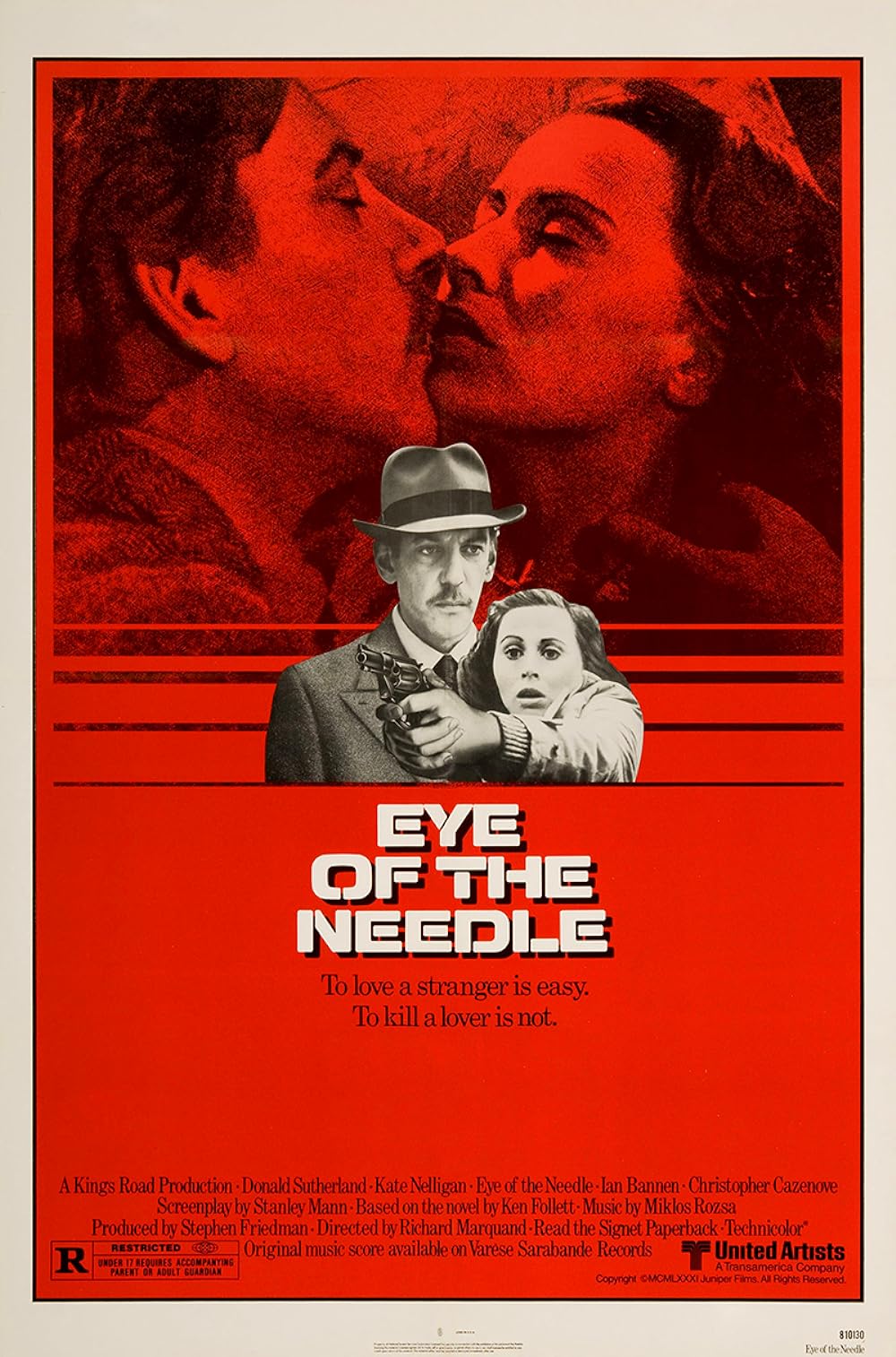
Eye of the Needle (1981)

eye

By Richard Winters

My Rating: 7 out of 10

4-Word Review: Spy infiltrates isolated family.

Henry (Donald Sutherland) is a German spy stationed in England during WWII, who comes upon an airplane site that he thinks is the Allied commandment post for the eventual invasion of Normandy, but upon closer inspection he finds out that the planes are all made of wood and the place is simply a decoy. With this information he tries to charter a U-boat to get back to his homeland, so he can hand his findings directly to Hitler and thus potentially change the course of the war. Instead his boat gets hit by a storm and crashes on the beach of Storm Island. Only four people reside there including Tom (Alex McCrindle), a lighthouse keeper and owner of a 2-way radio, which Henry needs to communicate back to Germany, as well as a young family made up of Lucy (Kate Nelligan), her husband David (Christopher Cazenove) and their 5-year-old son Jo. The family allows Henry to stay in their home while he recovers from his accident.  Lucy is sexually frustrated because on their wedding the couple got into a terrible car accident, which has left David paralyzed and unable to perform in bed. Henry catches onto to Lucy’s despondent situation and soon becomes her lover, but David suspects Henry of being a spy and the two have an ugly confrontation, which sends the situation for all those on the island to go spiraling out-of-control.

The film is based on the 1978 novel ‘Storm Island’ by Ken Follet, with the script staying pretty faithful to its source material. The story though kind of acts like two movies in one. The first half almost fully focuses on Henry’s spy exploits with lots of action and thrills while the second-half settles into being more of a subdued romance. Watching Sutherland playing this cold-blooded killer willing to callously off anyone that even slightly gets in his way without any remorse when for most of his career he played peace-loving hippie types, or at least that’s what he’s best known for, makes for an interesting contrast. It also shows as opposed to James Bond movies how being a spy can be a very lonely and unglamorous endeavor where a person is forced to constantly be on the run and can rely on no one, but themselves.

Spoiler Alert!

The shift during the second act where the tone becomes more of a drama doesn’t work as well. I couldn’t understand why Henry, this spy on-the-run and under extreme stress, would suddenly pick this time to get into a romance with a perfect stranger that he’s known for less than a day. If he wants to try and exploit the situation to feign romance so she will let down her guard and possibly defend him when and if the authorities arrive then fine, or maybe he’s just looking for some cheap sex to unwind him, which I could understand also. However, being in extreme survival mode where the welfare of himself and his top secret film are of the uppermost importance and then suddenly to pick this time to get sidetracked, and put himself in a an evermore and needlessly vulnerable position by trying to start-up and an affair while also simultaneously hiding-out made absolutely no sense.

I couldn’t buy into Lucie openly admitting her painful marriage to a perfect stranger either, which she candidly divulges to Henry less than 24-hours after first meeting him. Most people have pride and ego and thus won’t want to admit the harsh truth about their lives when somebody, in this case Henry, exposes it to them. They instead would want to ‘keep up appearances’ and maybe even become defensive, or resentful of someone they don’t know bursting into their home and openly telling them unflattering things about themselves and yet here Lucie melts completely when Henry confronts her about her flawed union and gushes out all the personal details like he’s her own personal therapist, which happens too quickly to being even remotely believable.

Spoiler Alert!

The affair angle didn’t seem necessary anyways since during the third act when she finds out he’s a spy she goes after him violently without any pause. You’d think if she had been intimate with him she might want to ‘hear his side of things’ or consider escaping with him from her dreary life instead of her immediate response being that he’s the mortal enemy.

With all this said I did like the climactic foot chase where Lucie goes after Henry with a gun alongside this rocky cliff ( in the book she throws a stone at him, but the shooting gun makes it more dramatic). Yet even this and some of the other twists that come about during the third act aren’t as effective as they could’ve been because all of the secrets are given away right from the start and instead having it start out in the cottage, where the relationship between Lucie and Henry could’ve taken more time to be realistic, and where Henry’s true identity wasn’t known upfront would’ve made what happens at the end more riveting, shocking and even profound, which with the way it gets done here doesn’t fully gel.

There’s also some problems on the technical end. The music is way too loud and at times obnoxious to the point it becomes heavy-handed and could’ve easily been left out altogether. The scene showing Henry chasing after Lucie who’s driving away in a car gets badly botched. The faraway shots of him running are okay, but the close-up, showing him from the waist up, looks like he’s jogging on a treadmill. The scene too inside the lighthouse where Lucie unscrews a lightbulb in order to insert a key into the socket and cause the fuse to blow looks phoney because if she were handleling a live bulb bare handed, as she does, she would’ve flinched and even let out a bit of a yelp from the scorching heat, but instead she doesn’t.

My Rating: 7 out of 10

Released: July 24, 1981

Runtime: 1 Hour 52 Minutes

Rated R

Director: Richard Marquand

Studio: United Artists

Available: DVD, Blu-ray, Freevee, Roku, Tubi, Amazon Video

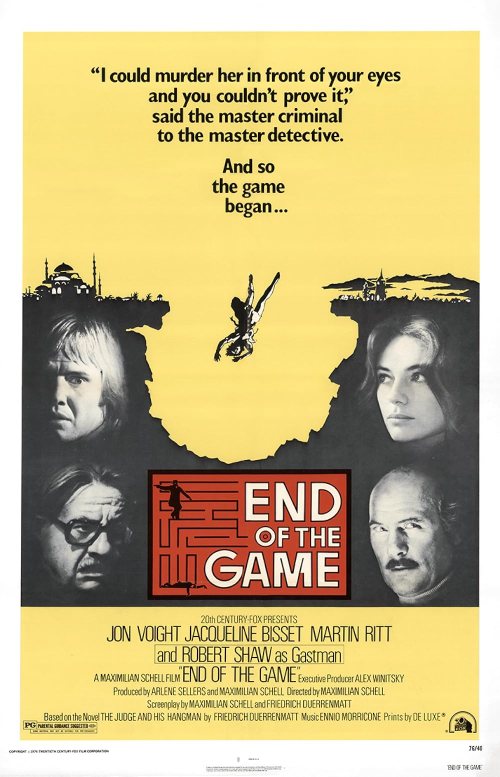
End of the Game (1975)

endofgame

By Richard Winters

My Rating: 7 out of 10

4-Word Review: Unable to prove crime.

Richard Gastman (Robert Shaw) makes a bet with his young friend Hans (Martin Ritt) that he can commit a crime in front of him, but Hans will be unable to prove who did it. Later Hans’ girlfriend (Rita Calderoni) plunges to her death from off of a bridge. Hans is convinced Gastman did it, but just like he predicted he cannot prove it. 30 years pass and Hans is now a police commissioner with only a few months to live due to suffering from stomach cancer. His Lieutenant Schmied (Donald Sutherland) is found shot to death inside his police vehicle. He’d been assigned by Hans to keep tabs on Gastman as Hans was still intent on making him pay for what he did to his girlfriend, but he again can’t prove that Gastman killed Schmied though he’s certain that he did. Walter (Jon Voight) gets assigned to the case, but Hans can’t be completely honest with him about the case, so instead he sets Walter up to witness firsthand the brutality of Gastman for himself.

The story is based on the 1950 novel ‘The Judge and the Hangman’ by Frederich Durrenmatt who also wrote the screenplay and has a very amusing cameo as a man who plays chess against himself and always loses. The novel was first adapted into a broadcast for German television in 1957 and then again in 1961 for British TV, and then it got adapted for a third time for Italian television and then a fourth as a TV-movie for French broadcast before finally making it’s way to the big screen with this version, which so far has been the last adaptation to date.

The film was directed by Academy Award winning actor Maximillian Schell who was unable to get along with either of his leading actors with Shaw accusing him of being a ‘clockwatcher’ and ‘pocket Hitler’ while Voight described him as being humorless and overly demanding. The film is well directed for the most part, but an unusual reliance on humor almost kills it. The story itself is certainly not meant to be funny, but Schell implements comedic moments particularly in the first half when they’re not needed and almost a distraction. This is particularly evident during Schmied’s funeral and earlier when Schmied’s body is found and another cop drives the corpse to the hospital with Donald Sutherland, in an unbilled bit, playing the dead man and his body twisting around in weird ways as the car goes down the curvy road, which is humorous, but unnecessary and doesn’t help propel the plot. Initially too the corpse is spotted by some pedestrians who stare at it through the car window and seem amused by it, which isn’t exactly a normal reaction people have when witnessing someone who has just died. Possibly this was meant to show the public’s distrust, or disdain for the police, but if that were the case it should’ve been explained and elaborated.

The casting is unusual as it features Ritt in the lead who’s better known as a director, but here ultimately shines and becomes the film’s only likable character though the way he behaves throughout still makes him seem sketchy like everyone else. Shaw, who complained that he never got paid the $50,000 that he was owed for doing this, is commanding as usual, but Voight who wears a shaggy bleached blonde look comes-off as creepy right away. Technically the viewer is expected to side with his character, at least upfront and consider him a ‘good guy’, but right away Voigt telegraphs it in a way that makes him seem ‘off’ and hence kind of ruins the stories eventual twists.

For those who like complex whodunits this might fit the bill. The plot certainly does constantly unravel in surprising ways and no one should be bored, but the characters are cold and unlikable. There’s no one to root for and therefore the viewer is not as keyed into the outcome as they would’ve had they been more emotionally invested. The editing is also quite choppy and there seems to be certain key elements that get left out, which most likely due to the fact that the original runtime was 106 minutes, but the DVD version, the only one publicly available at this time, runs a mere 92 minutes.

My Rating: 7 out of 10

Released: September 21, 1975

Runtime: 1 Hour 46 Minutes (Director’s Cut) 1 Hour 33 Minutes (DVD Version)

Rated R

Director: Maximillian Schell

Studio: 20th Century Fox

Available: DVD-R

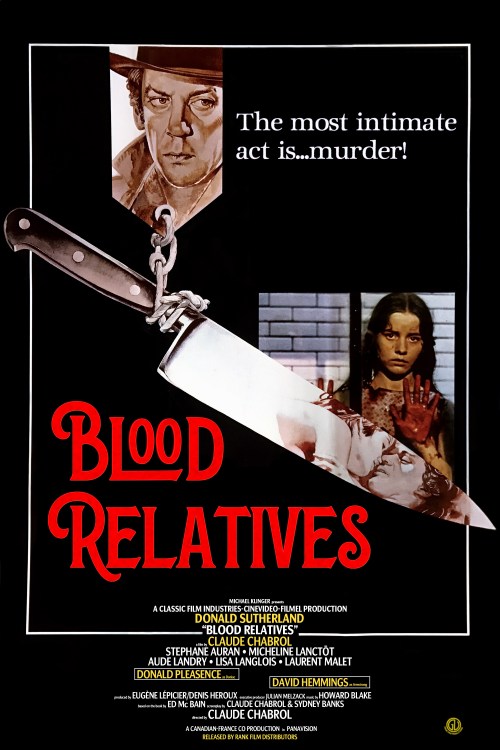
Blood Relatives (1978)

bloodrelatives

By Richard Winters

My Rating: 6 out of 10

4-Word Review: First cousins become intimate.

Based on the Ed McBain novel of the same name, but with the setting changed from New York to Montreal the story centers around police inspector Steve Carella (Donald Sutherland) who takes on the case of a teen girl named Patricia (Aude Landry). She arrives at the police station, in a bloody condition, late one night saying that she and her cousin Muriel (Lisa Langlois) were attacked in an alley by a strange man. When the cops arrive at the scene they find Muriel dead. Initially Patricia can not identify who the man was, but later after the funeral, she comes forward to say that it was her brother Andrew (Laurent Malet) that did it. She details how he and Muriel were having an illicit affair despite being first cousins and when Muriel tried to break-up with him due to having a romance with her boss (David Hemmings) he snapped and killed her and then tried to do the same with Patricia since she was a witness, but she managed to escape. Carella though still has his suspicions and when he finds Muriel’s diary he begins reading it, which confirms the affair, but also something even more sinister that was lurking beneath the surface.

This film received a very limited release and was only shown in the theaters for a few weeks before it was removed and has basically sat in obscurity ever since. Much of it may have to do with the incest theme and a couple of really odd moments. One scene was when Donald Pleasance, who appears briefly as a suspect and speaks in a Canuck accent, admits to having an on-going affair with a 13-year-old named Jean (Tammy Tucker) despite him being 46. Carella then goes to the girl’s home to interview her not so much about her being a minor having sex with an older man, but instead in order to vouch for his alibi that he was with her the night of the crime. She’s told that her answers can help get him ‘off-the-hook’ and ‘prevent him from going to jail’ if she can confirm his whereabouts and the whole sex thing she’s having with him is apparently ‘not a big deal’ (they even end up releasing Pleasance once they determine he wasn’t the killer), which for many viewers today will find quite baffling.

Plot-wise the pacing is poor. It starts out alright and is even riveting as we see this young, blood stained teen girl running through the dark streets that’s littered with trash everywhere. However, the flashback moments, done while Carella reads the diary, don’t have the same compelling impact and tends to slow everything down and even manages to turn it into a soap opera. Even though Sutherland is the main character there’s long stretches where he’s not in it and doesn’t seem to have much else to do, but interrogate the witness, particularly Patricia, again and again. His relationship with his own family isn’t captivating though here too there’s an odd moment where his own teen daughter (Nina Balogh) describes her and her father as potential ‘lovers’ as they’re walking outside in public, which again would be deemed a pretty cringey line if said between father and daughter in virtually any other movie.

The acting by Langlois I found to be terrible and helped drag the whole thing down especially during the second act when Sutherland all but disappears. Granted she’s gone on to have a rather successful career and maybe she just needed more experience in order to find her footing, but she delivers her lines in a flat monotone manner and her pretty face seems unable to show any other expression than a vapid smile. Even when she’s getting stabbed she continues to smile and doesn’t even scream, which came-off as unnatural. Though she did very little else after this I felt it was Landry who was the better actress. She is very convincing and has an angelic looking face, so you really see her as an innocent though equally effective when her character’s dark nature comes out later.

Spoiler Alert!

The twist ending I figured out while there was still an hour to go and most other viewers should start to see it well before the ‘big reveal’ occurs. The main issue with Patricia being the ultimate killer is that it really doesn’t make much sense. Supposedly she was intensely jealous of her cousin’s relationship with her brother, but why? Woman usually get envious of someone if they consider them a rival to a person that they have affections for, so is the film implying that she too was having a sexual relationship with her brother, if so it doesn’t confirm it, but should’ve.

A better way to have ended it, in my view, would’ve had Muriel get pregnant, she actually does think she’s pregnant earlier, but it turns out to be a false alarm. Instead it should’ve been the real thing and Andrew would’ve become upset at this and coerced Patricia to kill her in order to get him off-the-hook. He’d promise her that they’d get into a relationship in return (this version would make clear that she had intimate feelings for him and he knew it), but then after the killing gets done, he reneges, which gets her upset, so she implicates him to the police. This scenario would’ve at least given clear motivations to the characters, which is otherwise murky. Sure it would be pretty tawdry and sleazy, but the story was going in that direction anyways, so it might as well go all the way with it.

My Rating: 6 out of 10

Released: February 1, 1978

Runtime: 1 Hour 40 Minutes

Rated R

Director: Claude Chabrol

Studio: Filmcorp

Available: DVD (Region 2) (Dubbed), DVD-R (dvdlady.com)

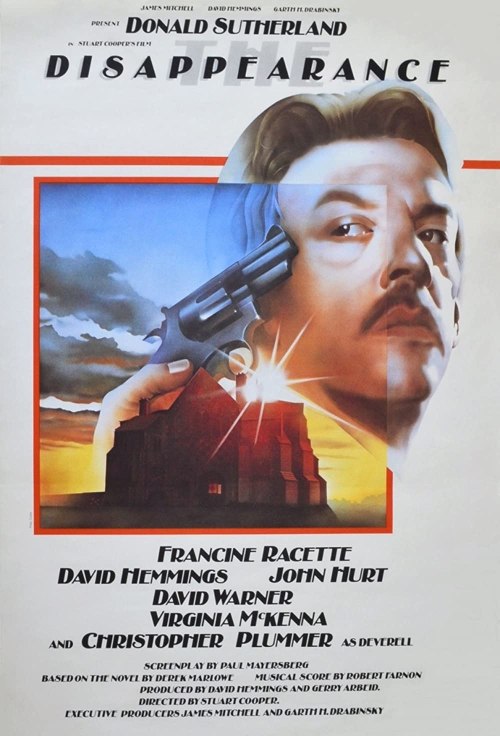
The Disappearance (1977)

disappearance

By Richard Winters

My Rating: 7 out of 10

4-Word Review: Where is his wife?

Jay Mallory (Donald Sutherland) is a professional assassin who works for a secret organization that contracts him out to do hits all over the world. After returning home from his latest assignment he finds that his wife Celandine (Francine Racette) is not there. Since they had a tumultuous relationship he initially presumes she left on her own accord, but then his friend and fellow hit man Burbank (David Warner) informs him that her disappearance may have something to do with his last hit. The organization that employs him now calls with another assignment, but this time they’re reluctant to give any details, which is unusual. Jay is afraid he’s being set-up as Burbank told him that the company is known to ‘retire’ those that are deemed no longer useful or trustworthy. He decides though to go through with the assignment as he’s curious how it will play-out and confident enough in his ability to get out of any jam, but soon finds himself faced with an entangling twist he never expected.

The film is a fascinating portrait of what can be done with creative direction. Stuart Cooper, who’s not exactly a household name and in fact this was his last theatrical film until 2010 when he did Magic Man, lends some interesting directorial touches that makes the story and characters more interesting than they might otherwise. What I especially liked was the non-linear narrative in which the movie cuts back and forth between the past to the present day. These types of storylines are typically frowned upon by Hollywood studios as they’re considered to be ‘too confusing’ for mainstream audiences to follow, but I had no such difficulty and felt it allowed in added nuance that would not have been present had the plot been approached in the conventional way. Nonetheless when the film tanked at the box office upon its initial release the studio insisted that the film be re-cut where the story would be presented in the standard linear format, but this version did even worse, so fortunately for the DVD/Blu-ray release it was brought back to its original way and labeled as being the ‘director’s cut’ though Cooper actually had no input on it, but eventually approved once he viewed it.

It’s also highly atmospheric particularly with the way it captures the cold, wintry climate of Montreal in the dead-of-winter. Having been born and raised in Minnesota I can tell a fake winter scene done on an indoor sound stage using artificial snow within seconds, but here the cold, including the mounds of snow drifts and nasty hollowing wind, is quite vivid and helps to symbolize the cold nature of the characters and the business they’re in.

I was a little more lukewarm with the acting. Sutherland can certainly be an outstanding leading man, but he seems too kind and sensitive for a person making a living killing others for money though I did like the scene where he plays memory games with his wife while at home, which brings out how crucial paying attention to detail is for his line of work. The supporting players are all familiar faces though I felt Warner was a bit wasted and underused. Virginia McKenna, best known for her starring role in the classic Born Free, is seen for only a brief bit though her interaction with Sutherland is quite pivotal while Christopher Plummer doesn’t appear at all until the final 15-minutes, but still manages to come-off with a memorable presence.

Spoiler Alert!

The film’s biggest downfall though is with the ending, which becomes one twist too many. Up until that point the twists had been a logical fit that made sense when you went back and thought about it. Then at the very end Sutherland gets shot and killed while walking home from the grocery store, but it’s never shown who did it, or why. Maybe it was the secret organization that wanted to ‘retire’ him, but this needed to be shown and explained. Just leaving the viewer hanging with a violent, but vague scenario isn’t satisfying and cheapens the rest of it.

My Rating: 7 out of 10

Released: September 17, 1977

Runtime: 1 Hour 31 Minutes

Rated R

Director: Stuart Cooper

Studio: Trofar

Available: DVD (Region 2), Blu-ray

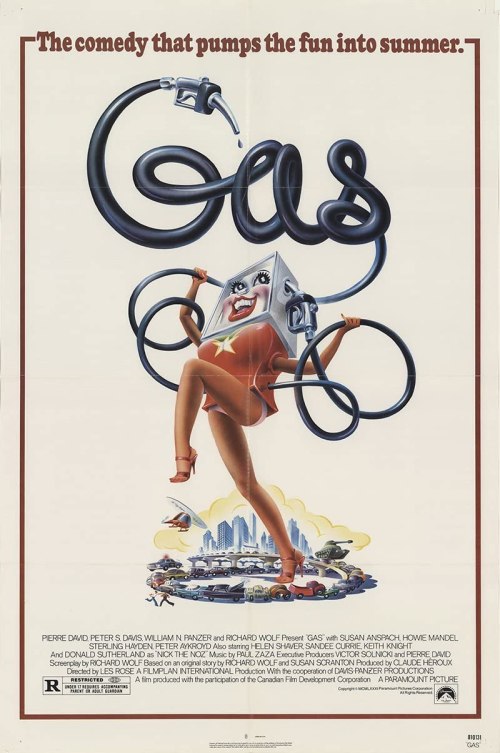
Gas (1981)

By Richard Winters

My Rating: 3 out of 10

4-Word Review: Fuel shortage causes chaos.

It’s 1979 and the energy crisis is in full-swing. Long lines of cars are seen at every gas station as the shortage of oil makes filling up one’s vehicle difficult. Oil tycoon Duke Stuyvesant (Sterling Hayden) decides to up the price of petroleum even more by pretending that he doesn’t have the needed gas that he really does by secretly transporting it to organized crime syndicates through milk trucks. Jane Beardsley (Susan Anspach) is a news reporter who gets a tip about what’s going on and becomes determined to expose it.

It’s unfortunate that no one told screenwriter Dick Wolf, who has had better success as a producer including winning many awards for his work on the long-running TV-show ‘Law and Order’, that less is more, which is the film’s whole failing point. There’s just too much of everything. Too many lame gags, too many characters, and too much of an unfocused point-of-view.

For a gag-a-minute concept to work like in Airplane! it still needs some sort of point that it’s trying to make. For that film the humor revolved around poking fun of old airline disaster flicks, but here any dumb joke gets haphazardly thrown-in no matter how little it has to do with the plot. The result is a mind-numbing experience where the ‘zaniness’ goes recklessly overboard with nothing making much sense.

The story desperately needed some central character that was normal and could help offset the absurdity around them. For awhile it seemed like the Sara character, played by Sandee Currie, would be it, but then she falls off the radar by getting into a relationship with Howie Mandel, who has no charisma at all, and isn’t seen for long periods. Also, Peter Akroyd, who is Dan Aykroyd’s younger brother in real-life, and plays Sara’s overly possessive brother here, is incredibly annoying in what is already an annoying film and it’s a shame that his character, who has many near death mishaps, wasn’t just quickly killed off.

As bad as this Canadian production is it’s amazing how many well known faces there are here. For some it was understandable why they’d do it. Anspach’s career was clearly on the decline, so she was most likely desperate to take anything in order to remain busy. Helen Shaver’s career was just starting out, so she had to accept the crumbs that she was given. Hayden was going through tax evasion charges and needed to make money quick in order to pay his legal costs, but Donald Sutherland’s presence was a real shock as he was , and still is, a top name star. He stated in later interviews that he did this solely for the money, which is fine, but why was he cast in such an insignificant part as a DJ who flies overhead in a helicopter and seen only sporadically instead being given the lead role?

The film ends with a climactic car chase in which all the characters chase each other  through the streets of Montreal that is similar in spirit to the one done in What’s Up Doc?, but just not as funny. However, the stunt work is rather impressive with lots of vivid crashes more so than in other car chase flicks, which is probably the only positive thing one can say about this otherwise bad, bad, bad movie.

My Rating: 3 out of 10

Released: 1 Hour 34 Minutes

Runtime: 1 Hour 34 minutes

Rated R

Director: Les Rose

Studio: Paramount Pictures

Available: VHS

A Dry White Season (1989)

By Richard Winters

My Rating: 6 out of 10

4-Word Review: He fights social injustice.

The story centers on South African schoolteacher Ben (Donald Sutherland) who has led a peaceful law abiding suburban existence and has no idea about the social injustices around him. One day his black gardener (Winston Ntshona) comes to him complaining about how his son was beaten by police simply for attending a peaceful rally. Ben initially dismisses the claims and insists the son must’ve done something wrong, but when he investigates the issue further he finds some startling revelations about how far the authorities are willing to go to stop dissent and when Ben decides to challenge the police on this his life and security get put on the line.

The film is based on the novel of the same name by Andre Brink and directed by Euzhan Palcy who became the first Black woman to direct a film that was produced by a major Hollywood studio. For the most part the film is polished and well made and at the beginning emotionally effective as we see first hand the brutal treatment of the protesters by the police. I also liked how it shows both sides of the issue by having Ben’s wife Susan (Janet Suzman) admit that apartheid is wrong, but too afraid for its abolishment as she fears it might put the whites at too much of a disadvantage.

Unfortunately somewhere along the way it starts to lose steam and ends on a whimper that is nowhere near the emotional level that it began with. Part of the problem is that it suffers from a weak main character. Sutherland plays the part well, but it’s hard to understand how someone could live well into his middle age years and still have such extreme naivety to what was going on in the country that he resided in. He’s also dependent on those around him to do most of the legwork and you have to question what difference does our hero’s actions ultimately make anyways since apartheid continued on for many years after this film’s setting, which is 1976.

All of this could’ve been resolved had Marlon Brando’s character been made the protagonist. Brando came out of retirement to take on the supporting role and agreed to do it at union scale, which was far below his usual salary demands. His presence adds zest to the proceedings as a lawyer who is quite attuned to the corrupt system, but decides to give it a fiery court battle anyways and it’s a shame that he’s only in it for a brief period and then just completely disappears during the second half.

Spoiler Alert!

The ending differs a bit from the book and was added in by director Palcy, which has a black cab driver Zakes Mokae taking the law into his own hands and shooting the Jurgen Prochnow character, who plays a policemen, after he intentionally ran Sutherland over with his car. Palcy did this to show how even decent people can be pushed to violence, which I agree with, but she seems to feel the need to justify this by having a flashback ‘replay’ of all the previous events that drove Mokae to pull the trigger, which comes off as heavy-handed. If we’ve watched the movie then we already know what happened and don’t suddenly need a ‘refresher course’.

End of Spoiler Alert!

As a drama it’s an adequately compelling, but there’s other movies on the same subject and I can’t say this one stands out from those. I was also disappointed to find that the book from which this is based was fictional as I initially thought it was a true story since it takes place in a very specific year. I’m not saying some of what goes on here didn’t happen in a broad sense, but having it centered on verifiable events gives it more relevance and makes it seem more like telling a story as opposed to just making a political statement.

My Rating: 6 out of 10

Released: September 20, 1989

Runtime: 1 Hour 46 Minutes

Rated R

Director: Euzhan Palcy

Studio: MGM

Available: DVD, Blu-ray (Criterion Collection), Amazon Video, YouTube