Tag Archives: Candice Bergen

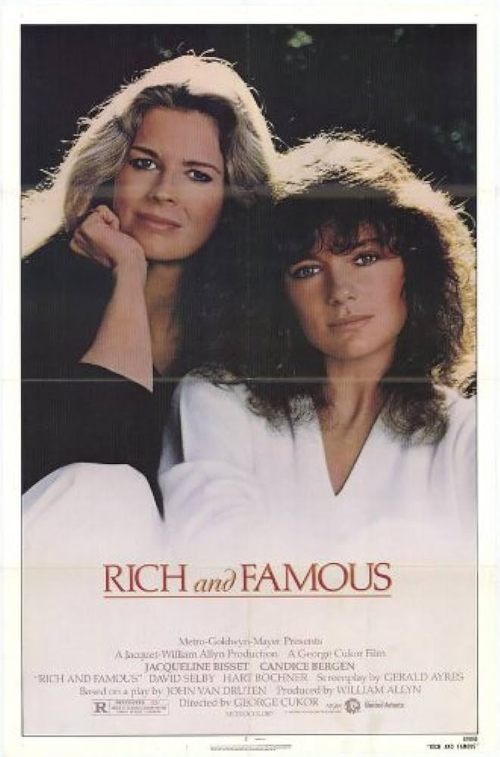
Rich and Famous (1981)

rich2

By Richard Winters

My Rating: 0 out of 10

4-Word Review: College friends become writers.

Liz (Jacqueline Bisset) and Merry (Candice Bergen) meet while attending college and become best friends. After graduation Liz achieves accolades for writing a novel and Merry, despite being married and living in posh Malibu, becomes jealous. She strives to write her own novel based on real-life experiences of her rich southern California acquaintances where only the names are changed. One night while Liz is visiting  Merry digs the first draft of her book out and reads it to her. Liz does not care for it, but promises the pleading Merry she’ll run it by her publisher (Steven Hill) convinced he won’t like it and nothing with come of it. To her surprise it does get published  and becomes a best seller. Now she’s the one seething in jealousy since her writing career has crested from writer’s block. While this is going on Merry’s husband Doug (David Selby) begins to come-on to Liz behind-the-scenes and openly wanting to have an affair with her, which Liz finds tempting since the two had a fling during college.

This is a remake of Old Acquaintances, which came out in 1942 and starred Bette Davis and Miriam Hopkins. Bisset spent 2 years working on the script and getting it funded as she was determined to play a ‘real person’ for once and not just the proverbial beauty. However, the movie, which was the last to be directed by legendary filmmaker George Cukor, bombed badly at the box office and it’s easy to see why. The storyline is out of touch with the decade that it’s in. What gets used as fashionable status symbol like having Merry stay at the Waldorf Astoria hotel might’ve been considered glitzy back in the 40’s, but for the 80’s generation would be looked upon as passe. Nothing is hip or trendy. The characters and their conflicts are of a soap opera variety, which is where this tepid storyline should’ve stayed.

My biggest beef was the whole friendship thing, which didn’t make a lot of sense. The two characters are about as different as you could get with Merry coming-off, particularly with her annoying southern twang, as dim-witted particularly when compared with Liz who’s clearly more sophisticated and articulate. Why these two opposites would bond is a complete mystery. There’s no backstory given, only a brief scene during their college days is shown, but nothing displaying what lead to the friendship blossoming, or what they had in common that they’d enjoy each other’s company. For the relationship to work it needs to be believable and organic, and the viewer able to buy into it, but instead it’s quite shallow and forced. Merry is incredibly annoying painfully insecure, emotionally needy, and grossly self centered. She’s the type of person most people would want to quickly dump as a friend and you wonder why Liz, who could easily find new friends more her intellectual equal, doesn’t do just that.

Merry’s marriage to Doug has the same issue. Why would he marry someone that had such a contrasting personality to his? The film fleetingly intimates that it was Liz he was truly after, he went to their same college, and only married Merry as an attempt to stay close to Liz, though the film relies on the viewer reading into this and should’ve instead fully confirmed it.

Merry’s ascent into the writing world is equally ridiculous. From the opening three paragraphs that she reads out loud to Liz gave more than enough reason that it was poorly written and should never see the light-of-day and yet somehow it becomes an immediate best-seller. In a better movie this might get used as satire showing how bad the American Public’s taste in literature is, but the film here has the audacity to show her winning awards for her writing, which just makes it all the more absurd and laughable. It also makes it seem like writing a book is easy and simply requires someone to sit down and throw some words on a page and walah it gets published when it reality it takes many drafts and polishing before it’s even potentially considered publish ready, but the movie glosses over this part completely.

I enjoyed Bisset who’s clearly the stronger actress, but Bergen makes an utter fool of herself particularly her attempt at a southern accent. Normally she’s good at playing the snarky type, which best reflects her personality. Trying to portray a simpleton isn’t her best suit and the film digresses every time she’s in it to the point her sporadic appearances start to seem almost like unintentional comic relief.

Had the film ended with some bitter, knockout cat fight I might’ve forgiven it and even gave it a few points. Not everyone is meant to get along and in real life these two would be a bad match. It’s one of those friendships that ultimately fizzles because the two just don’t have enough in common to keep it going and in a lot of ways ingrate on each other’s nerves. A nasty bitch session would’ve been just what the doctor ordered, and they do have a little bit of one, but then immediately make-up, which just cements the film’s profound shallowness.

My Rating: 0 out of 10

Released: September 23, 1981

Runtime: 1 Hour 57 Minutes

Rated R

Director: George Cukor

Studio: United Artists

Available: DVD, Amazon Video, YouTube
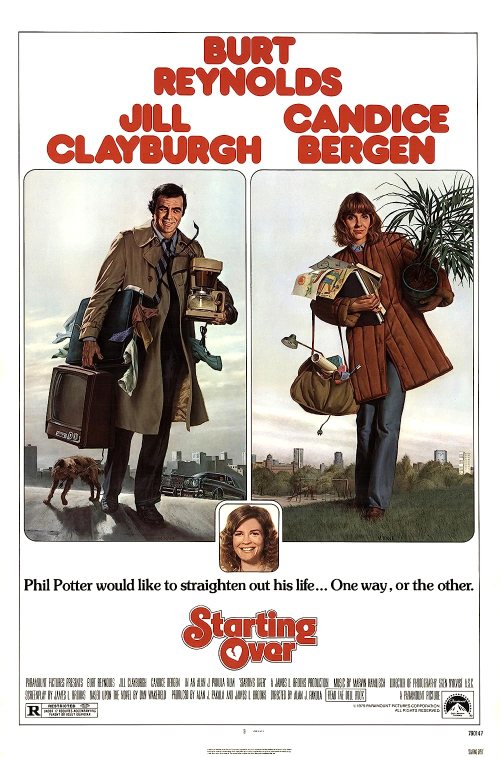
Starting Over (1979)

starting1

By Richard Winters

My Rating: 7 out of 10

4-Word Review: Can’t get over ex.

Phil (Burt Reynolds) gets a divorce from Jessica (Candice Bergen), a successful songwriter, when he finds out she’s been having an affair. He then moves to Boston where his brother Mickey (Charles Durning) and sister-in-law Marva (Frances Sternhagen) set him up with Marilyn (Jill Clayburgh) a nursery school teacher. They don’t initially hit-it-off, so he instead goes out with Marie (Mary Kay Place), but that doesn’t go over well either, so he again calls up Marilyn and this time she relents. Despite the usual ups-and-downs things between them begin to gel and soon they decide to move in together only to have Jessica reappear wanting to get back with Phil and Phil becoming torn as to what he should do.

Based on the novel of the same name by Dan Wakefield with a screenplay by James L. Brooks best known for producing the classic TV-show ‘Mary Tyler Moore Show’. Like with that show the story focuses heavily on the pitfalls of dating life with much of it on-target though it does have a serious out-of-touch quality that’s no longer in-tune with today’s generation. The big one is that they meet on their first date inside the women’s apartments, which because of safety concerns doesn’t happen much now and usually it’s always advised to meet in a public setting and not give out personal addresses until you really get to know the person better. There’s also a scene where Jessica, who wears a highly revealing outfit, meet in Marilyn’s apartment and have what we’re told is a civil three hour conversation though in this day and age it’s hard to believe two women, knowing that the other one is clearly after ‘their man’, could be that composed and most likely a fight would break-out and I’m kind of surprised knowing how emotional Marilyn was and wearing her insecurities on her sleeve, that one didn’t happen here.

On the flip side there’s some terrifically funny moments.  One is when Marilyn and Phil initially get off the bus together, before they’ve officially met, and she thinks he’s a stalker, which has a good true-to-life feel. Another great scene is when Phil and Marilyn briefly break-up and he goes to her school, where they’re having a dunk-a-teacher water party and he manages to hit the bullseye with the ball he’s throwing and she’s goes into the water repeatedly before eventually losing her cool and swearing. Phil’s anxiety attack inside a department store is memorable too as his Jessica’s call to Phil at his apartment while he’s serving Thanksgiving dinner to Marilyn and his guests, which creates quite the awkward moment. Phil’s first date with the aggressive Marie is a terrific bit too.

The acting is top notch especially Clayburgh who creates the perfect composite of single women during the 70’s who desperately wants to get into a relationship, but many times allow her fears and anxieties to get in the way. Reynolds is excellent playing against type. Normally he’s a brash womanizer, but here he’s far more reserved and indecisive.  This is also the last movie where he didn’t have his patented mustache and I felt he looked way better and younger without it. Even Bergen, in a much smaller role, is memorable particularly with her off-key renditions of the songs her character has written.

Overall I consider this one of the best romantic movies made. I will admit a modern remake would give the story a more timely update, but the situations nicely reflect the dating conundrums that affect us all.  My only complaint would be with the Clayburgh character, who seemed too insecure to be able to get into a healthy relationship. Most guys would be scared off with her constant emotional outbursts and accusations and I didn’t see why Phil stuck with it. This is one instance, especially since Phil was pretty much a hunk, that I felt the woman he fell for should’ve been better looking, or at least equal to the Jessica character that he left. I just couldn’t understand exactly why, being that there were a lot of women who could easily get into him, he’d choose, or settle for, Marilyn over all the others. Had they had more in common then maybe, but she came-off like a woman who would eventually become a cat lady and too emotionally needy to be someone you could have a long term relationship with.

My Rating: 7 out of 10

Released: October 5, 1979

Runtime: 1 Hour 45 Minutes

Rated R

Director: Alan J. Pakula

Studio: Paramount Pictures

Available: DVD-R, Amazon Video, YouTube

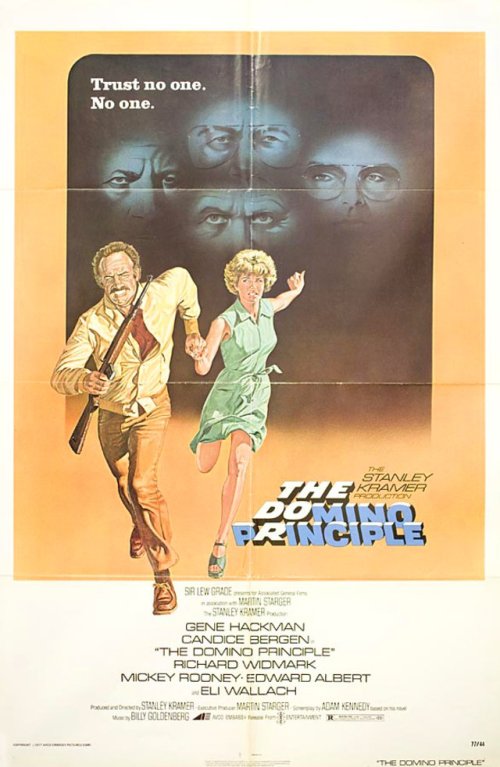
The Domino Principle (1977)

domino

By Richard Winters

My Rating: 6 out of 10

4-Word Review: Hired for secret mission.

Roy Tucker (Gene Hackman) is in prison for the murder of his wife’s first husband, but gets approached by Tagge (Richard Widmark), who works for a secret organization and who offers to get both Roy and his cellmate Spiventa (Mickey Rooney) out of jail where they can have their freedom again, but with one hitch; he must carry out a mysterious mission that they themselves don’t yet know the details to yet. Roy is suspicious of the group’s intent, but longs to see his wife Ellie (Candace Bergen), so he agrees to go along with it. After getting out of prison through an elaborate escape plan that the secret group hatches Roy is then able to travel to Costa Rica using a passport that the group made for him. It is there that he spends a relaxing week with Ellie, but then Tagge and his men (Eli Wallach, Edward Albert) return and remind him of his commitment, which turns out to being the assassination of an important political figure. Once Roy realizes this he tries to back out, but soon realizes that he jeopardizes the life of his wife, who the group insists they will kidnap an kill, if he does.

The film is based on the novel of the same name written by Adam Kennedy, who also wrote the screenplay and at one time was an actor before eventually turning to writing. While the novel got great reviews the movie didn’t with many critics panning it including Leonard Maltin, who described it as a ‘muddled thriller’. Both Hackman and Bergen, in later interviews, have called it ‘terrible’ and even director Stanley Kramer wrote in his memoirs that he’d like to disown it. Much of the problem could be blamed on the different runtimes with a heavily edited 88-minute cut being completely confusing, but this version that I saw, which ran a full 101 minutes, I found to be captivating, at least through the first 90-minutes.

The real problem I had stemmed around Hackman, who gives a one-dimensional performance. There is one moment where he assaults the Edward Albert character after he refuses to let him see his wife, which I felt was justified and entertaining to watch, but he remains surly too much of the time and it would’ve been nice to have seen some other emotions seep through, if even for a few random moments. Bergin is totally miscast as the middle-aged wife and even wears a brunette wig in an effort to make herself seem older. She stated in interviews that she took the part so she could play an ‘ordinary person for once’ instead of a beautiful, glamourous person like she usually did, but I didn’t understand why she was even offered the role as there were plenty of actresses more Hackman’s age that would’ve been a better fit.

Spoiler Alert!

While I did enjoy the movie for the most part especially its scenic location shooting including one scene that takes place directly underneath the Golden Gate Bridge I did find the twist ending to be extremely dumb. This includes having Roy deciding not to shoot the intended victim by intentionally aiming his shots short in order to miss his human target only to find that his former cellmate Spiventa was also hired for the same mission, but without Roy knowing, and he kills the person while shooting at him from a different angle. The problem is that the viewer thinks Spiventa is already dead as we see him get shot by the mysterious group while underneath the bridge. Why Spiventa would fake his own death, or not tell Roy that he was in on the plan since the two had been quite close, is ever explained. It also doesn’t make sense why Roy would decide at the last second to pull back his shots and not kill the person he was assigned to assassinate. Sure, for moral reasons he probably felt bad about it, but he knew that his wife would be killed if he didn’t follow through, so how he was expecting to save the life of his target while also somehow keeping his wife alive after the group finds out Roy didn’t do what he was supposed to?

The final shot shows Roy, with gun in hand, walking along a beach, apparently intent on hunting down whoever was the behind-the-scenes man from the group who was giving out all the orders, which we the viewer never see. Keeping some elements of the organization a mystery is fine, but what annoyed me is that we see a rifle pointed right at Roy as he walks the beach, but then the film ends without us ever knowing if Roy got shot first, or if he survived to kill the head of the group. Some sort of resolution in this area should’ve been shown and leaving it so wide-open is not intriguing and instead quite frustrating.

My Rating: 6 out of 10

Released: March 23, 1977

Runtime: 1 Hour 41 Minutes

Rated R

Director: Stanley Kramer

Studio: AVCO Embassy Pictures

Available: DVD, Amazon Video, Shout Factory TV, Tubi, YouTube

Getting Straight (1970)

getting straight1

By Richard Winters

My Rating: 5 out of 10

4-Word Review: Student unrest plagues campus.

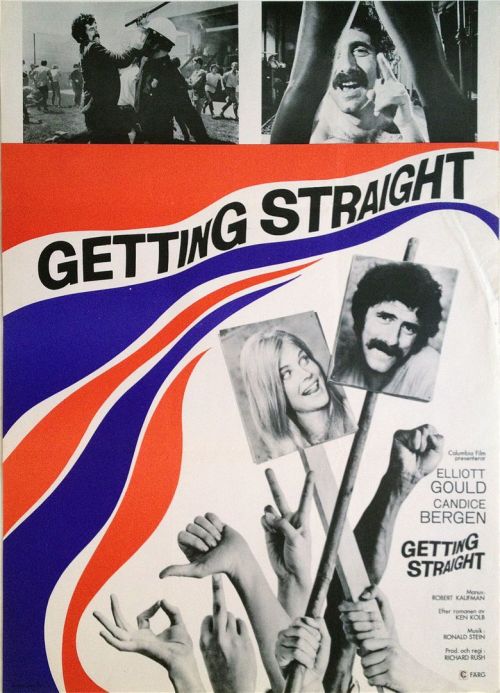
Harry Bailey (Elliot Gould) was at one time a student radical, but after returning to campus from serving time in Vietnam his perspectives have changed. Now he simply aspires to get a teaching degree, but the other students want him to take part in their campus protests, which he resists. His girlfriend Jan (Candice Bergen), who is much younger, starts to get active in the student movement, which creates further pressure for Harry. He sees the absurdity on both sides, but as the protests become more violent and the response from school administrators more inept, Harry comes to the conclusion that he can no longer sit on the sidelines.

If there is one thing that really stands out it’s Gould’s performance in a part he was clearly born to play. In fact the studio refused to go ahead with the project unless Gould made a commitment to star in it. Had he decided not to take the part the studio would’ve shelved the project permanently as they felt there was no other actor that was right for the role and they were correct. Fortunately Gould did accept and his running, raucous, irreverent commentary is the most entertaining thing about it.

Unfortunately his presence is so powerful that he dominates Bergen who comes off as transparent and overwhelmed. She certainly looks quite beautiful and I particularly enjoyed her cowgirl look with two ponytails, but her presence is blah. Maybe the producers wanted a weaker performer to expose how unequal the character’s relationship was with each other, but the result makes the conversations that the two have dull and tepid because Bergen can simply not keep up with Gould’s rapid-fire delivery.

Their fights are a little more entertaining with some of the jabs Gould throws out being downright funny especially when he accuses Bergen of being ‘just a guy with a hole in the middle.’ Yet the fact that the two get back together after flinging out some very nasty insults made no sense. There are certain things that were said here that got personal and couldn’t just get written-off as having been said in a ‘fit of anger’ like they do here. In most real-life relationships it would’ve created a rift that would never have returned things to the way it was before.

The protests come-off looking too staged, which includes one scene where Gould and Bergen stand in the middle of all of the chaos and manage to somehow hold an extended conversation even as everyone around them is getting beat-up.  In the original novel by Ken Kolb there weren’t any student protests and were only added in by director Richard Rush to give the story a more topical feel, but there were too many other films with a similar theme that  were more effective. Even The Strawberry Statement starring Bruce Davison, which had its share of faults, still at least managed to make the student’s confrontations with the police look more authentic and intense.

Some of the arguments that Gould dishes out as he battles with administrators, and sometimes with the students too, are on-target and even funny like when he challenges the new curfew rule by pointing to one of the students (played by John Rubinstein) and stating: “At the start of the school year he just wanted to get laid. Now he wants to kill somebody…you should’ve just let him get laid.”

Gould’s angry confrontation with Jon Lormer who plays one of the school board members has a riveting quality and that’s where this movie should’ve ended. Having it continue to where Gould then later confronts Leonard Stone, who plays another school board member, gets too heavy-handed and ultimately kills the film’s best moments with a lot of talky bits that seem insightful, but really aren’t.

My Rating: 5 out of 10

Released: May 13, 1970

Runtime: 2 Hours 5 Minutes

Rated R

Director: Richard Rush

Studio: Columbia Pictures

Available: DVD, Amazon Video, Youtube

Gandhi (1982)

By Richard Winters

My Rating: 9 out of 10

4-Word Review: Fighting for India independence.

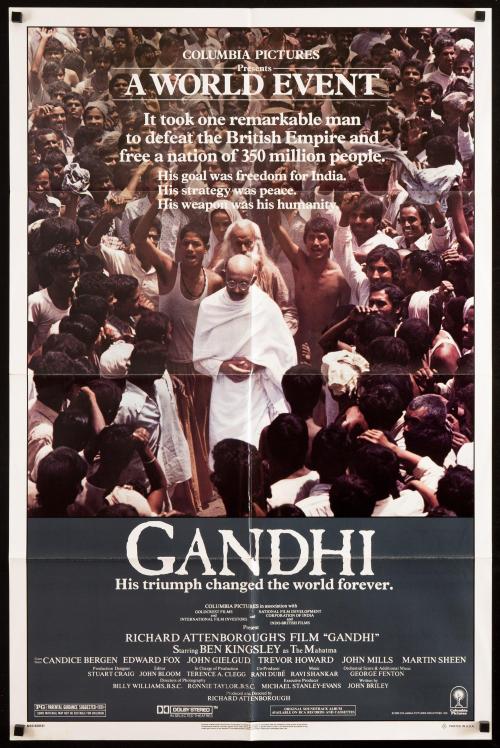
The film follows the life of Mohandas K. Gandhi (Ben Kingsley) starting at the age of 23 when he gets thrown off of a train in South Africa simply for being Indian. After spending many years fighting for Indian rights in that country he then moves back to his homeland of India. It is there that he takes up the challenge of fighting for its independence from Britain by advocating for his followers to practice peaceful civil disobedience.

This film project took director Richard Attenborough 20 years in the making as all the Hollywood studios refused to back it. He also went through many different casting choices in regards to who would play the lead and at one time seriously considered Dustin Hoffman and Anthony Hopkins in the title role. Due to the difficulty of finding backers and other hurdles some of the stars that do appear here were offered their parts many years before the filming actually took place including Candice Bergen, who plays Margaret Bourke-White, who first got approached about it in 1966.

Yet the long wait proved to be worth it as the film comes close to being a masterpiece in just about every conceivable area. I was surprised too that for  such a long runtime it hardly ever seems slow and clips along at a brisk pace. The story is filled with many strong scenes even a few harrowing ones like the recreation of the Amritsar Massacre that is quite disturbing, but thoughtfully handled.

After making his film debut a decade earlier as the bad guy in Fear is the Key and then moving back to the stage Kingsley shines in his Academy Award winning performance . The rest of the cast gets filled with a lot of big names, but many of them have brief appearances that almost amount to walk-on parts. My favorite though was Trevor Howard, who plays a judge and despite have little dialogue and only 2-minutes in front of the camera still manages to make the most of it, which is what great acting is all about.

The film though lacks a complete oversight of Gandhi’s character as we only get introduced to him when he is already 23 even though the crucial formative years are during childhood and it would’ve been revealing and insightful to have seen some scenes of him during that period. His family life also takes a backseat. We see only one scene of him with his children and then they just disappear. He also discusses marrying his wife when he was very young, but a flashback showing it would’ve been stronger.

The film also has its share of dissenters who feel it’s biased as it only shows the positive side to Gandhi’s personality. It even instigated three novels, which paints Gandhi in a much different light by arguing that he fought for Indian rights while in South Africa, but not for the blacks and there’s evidence that he had the same disdain for the blacks in that country as the whites did.

Some also argue that his involvement in the push for India independence was much more minimal than the film portrays and that India most likely would’ve eventually broken off from British rule one way or the other had Gandhi existed or not. All of these counter arguments could have some merit, but I don’t think that was the intended point of the film, but instead the focus was on how peaceful non-violent resistance can make a difference and in that regard the movie succeeds nicely.

My Rating: 9 out of 10

Released: December 6, 1982

Runtime: 3 Hours 11 Minutes

Rated PG

Director: Richard Attenborough

Studio: Columbia Pictures

Available: DVD, Blu-ray, Amazon Video, YouTube

Oliver’s Story (1978)

By Richard Winters

My Rating: 3 out of 10

4-Word Review: Adjusting to wife’s death.

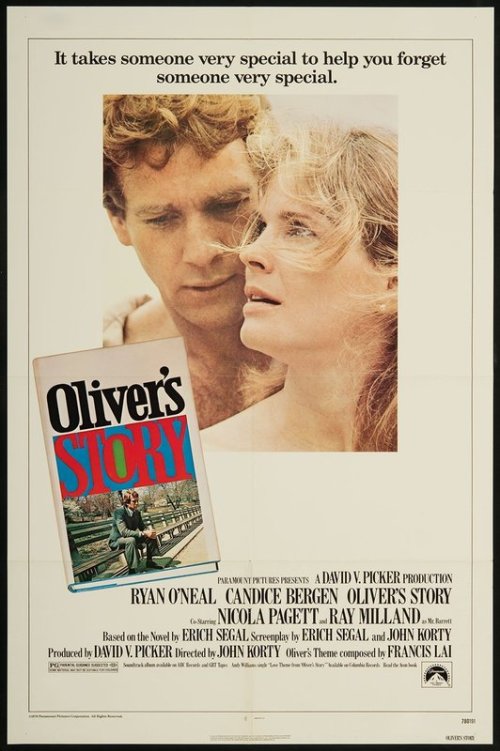
It’s been 6 years since Oliver (Ryan O’Neal) lost his wife to leukemia and he’s still having a hard time learning to move on from it. He hasn’t been in a serious relationship since and his friends including his step father (Edward Binns) are pressuring him to start dating. Finally by chance he meets Marci (Candice Bergen) while she is out jogging. She is secretly an heiress to a massive fortune, which allows the two to connect due to their similar well-to-do upbringings, but when things start to get serious Oliver finds himself  resisting unable to cut the ties from his past and move forward.

This is definitely a sequel that nobody asked for and in fact both O’Neal and Bergen initially had no interest doing it. The original film worked because it centered on the couple and when you take away one of them you have only half a movie. Oliver on his own is boring and watching him learn to adjust to life as a single person is not compelling and no different than the hundreds of other movies dealing with the dating scene.

John Marley, who played Jenny’s father in the first film, refused to appear in this one because he was unhappy with how his name was going to be placed in the credits, so he got replaced by Edward Binns who seems to be playing a completely different character. Here the father-in-law and Oliverhave acquired a chummy friendship and even hang out together despite this never having been established in the first film. Ray Milland reprises his role as Oliver’s father, but gets portrayed in a much more likable way while in the first one he came off more as a heavy.

The film’s only interesting aspect is seeing how much the social norms have changed. Here being single is considered like a disease and his pesky friends are emboldened enough to set Oliver up on dates and openly telling him that he needs to ‘get out more’ even though by today’s standards the single lifestyle is much more prevalent and accepted and doing these same types of actions now by well meaning friends would be considered intrusive and obnoxious.

Having one of the women that he meets at a dinner party invite him back to her place despite barely knowing him is something not likely to occur today either. The way though that Oliver meets Marcie is the most absurd as he quite literally chases her down while she is jogging, which would scare most women into thinking that they had a crazy stalker on their hands.

On the production end the film is competently made with the springtime scenery of New York as well as shots of the couple’s trip to Hong Kong being the only thing that I enjoyed. The story though lacks punch and drones on with too many side dramas. O’Neal’s performance is good, but his chemistry with Bergen is lacking, which ultimately makes this a production that had misfire written all over it before a single frame of it was even shot.

My Rating: 3 out of 10

Released: December 15, 1978

Runtime: 1 Hour 30 Minutes

Rated PG

Director: John Korty

Studio: Paramount

Available: DVD, Amazon Video,  YouTube
Soldier Blue (1970)

soldier blue 1

By Richard Winters

My Rating: 5 out of 10

4-Word Review: They massacre the Indians.

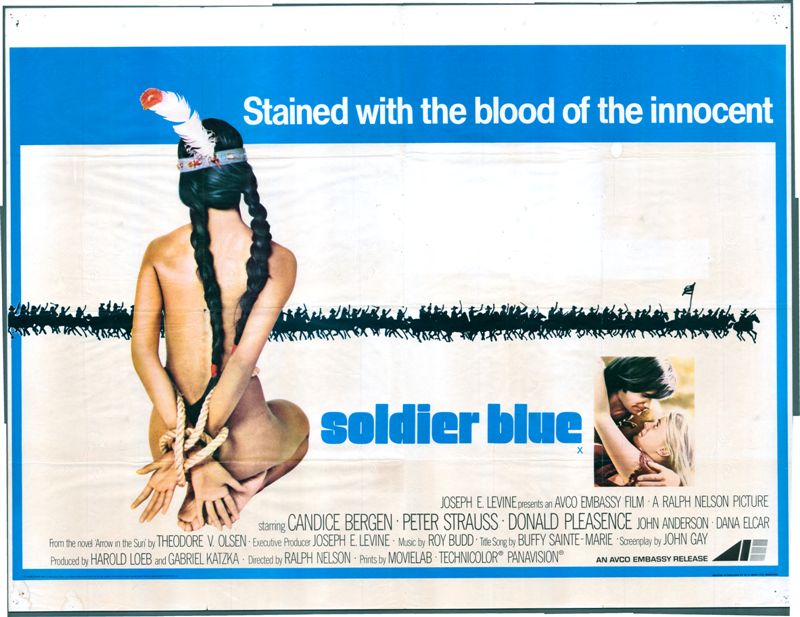
Two survivors of a Cheyenne Indian attack, the young and beautiful Cresta (Candice Bergen) and Honus (Peter Strauss) a private from the Calvary must travel through treacherous western terrain avoiding other attacks while also finding the Calvary’s base camp. Along the way the two start a romance despite wide differences in their temperaments and perspectives. Honus supports the position of his country and government without question while Cresta is more sympathetic to the Indians, but this all comes to a crashing halt when they witness an assault by the U.S. army on a peaceful Indian camp, which shocks Honus and changes his perspective on things forever.

The film is mainly known for its notoriously violent ending, which at the time was unprecedented for its use of explicitly savage imagery and remains controversial to this day, but before we get to that I’d like to go over what I did liked about the movie, which for the most part is still watchable.

Filmed in Mexico in October of 1969 the stunning views of the wide open terrain  is sumptuously captured by cinematographer Robert B. Hauser, which is enough to keep one enthralled with it despite its otherwise flimsy plot. I also enjoyed Buffy Sainte Marie’s rousing opening title tune, but the rest of the music score by Roy Budd seems misplaced. During the attack that starts out the film it is booming and orchestral almost like it wants to replicate the sound and mood of a conventional western even though this is supposedly a revisionist one. At other times it takes away from the potential grittiness by being played when it was not needed and sounding too modern for the time period.

Strauss in only his second film is marvelous and makes his naïve and rigid character believable and likable, but I was perplexed how someone lost in the wild for days and weeks and sometimes without food or even a gun could still remain clean shaven. Bergen as his female counterpart is great as well and beautiful. The fact that she is foul mouthed and very self-sufficient while Honas is more timid makes for a nice reversal of the sexual stereotypes, which helps propel the film during the first half. However, it eventually gets overplayed as Bergen’s character starts to display too many attitudes and behaviors from someone that was ahead-of-her-time until it seemed like she was really a late ‘60’s student radical that somehow got pulled into a western setting instead of a person that had actually lived during that era.

Donald Pleasence, a highly talented character actor who played many varied roles during his career, gets one of his best ones here while wearing false teeth that make him almost unrecognizable. His chase of the two when they destroy his wagon lends some much needed tension in what is otherwise a dull romance.

The Indian massacre that climaxes the film is based on the Sand Creek Massacre that occurred on November 29, 1864. Although the film incorrectly states during its denouncement that is was led by Nelson A. Mills it was actually U.S. Army Colonel John Chivington who ordered a band of 700 men to attack a peaceful Indian village where between 150 and 200 Indians were killed most of whom were women and children.

The film portrays Bergen’s character as being the only white person outraged at the slaughter, which isn’t true as many people from the era where appalled by the news when it was found out and the attack was condemned by the army after it was investigated.  Chivington was then forced to resign where he lived out the rest of his life in almost total ostracism by every community he moved to. There were also two officers in the Calvary who refused Chivington’s orders to attack and told the men under their command to hold their fire, which doesn’t get shown at all.

Although the movie does leave some effective haunting images it would’ve worked better had it been a documentary, or a reenactment that concentrated fully on the attack while also showing its aftermath and what lead up to it. It should’ve also been better researched, accurate and balanced instead of feeling the need to pander to the political fervor of its day with stagy over-the-top dramatics and a clumsily attempt to tie it into the My Lai Massacre that has forever stigmatized this as being nothing more than dated emotionally manipulative propaganda.

soldier blue 2

My Rating: 5 out of 10

Released: August 12, 1970

Runtime: 1Hour 55Minutes

Rated R

Director: Ralph Nelson

Studio: AVCO Embassy Pictures

Available: VHS, DVD, Blu-ray (Region 2), Amazon Instant Video, YouTube