Category Archives: Road Movies

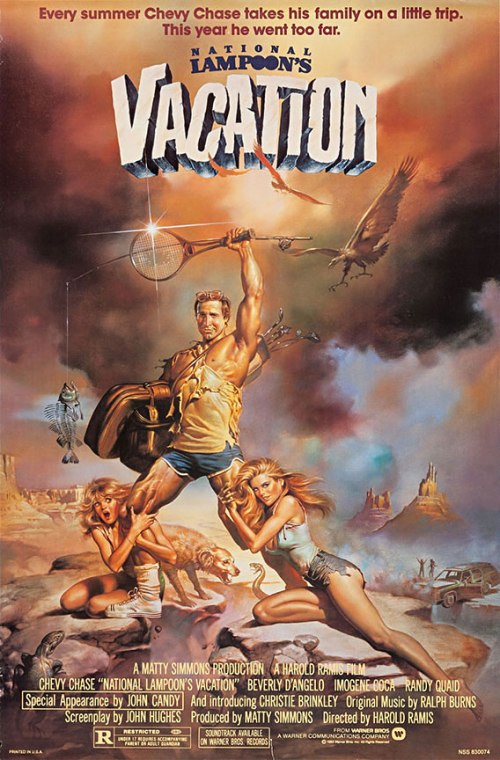
National Lampoon’s Vacation (1983)

vacation

By Richard Winters

My Rating: 7 out of 10

4-Word Review: Going on a trip.

Clark Griswold (Chevy Chase) decides to drive his family of four from Chicago to California in order to visit the world famous amusement park of Wally World. Sure they could’ve flown, but he feels that getting there is ‘half the fun’, so they pack up their station wagon while losing their luggage along the way, running out of money, getting stranded in the desert and forced to take along the crabby Aunt Edna (Imogene Coca) who makes everyone miserable.

The film is loaded with laugh-out-loud gags particularly at the beginning. I enjoyed the snapshots of touristy places that get shown over the opening credits as they look exactly like homemade pics stripped directly from somebody’s family album. Clark’s attempts to recreate their proposed trip on the computer only to have his animated station wagon eaten up by a Pacman-like monster is hilarious and imaginative. The scene showing him trying to get back into his old car after its been crushed, or falling asleep at the wheel and driving haphazardly off the road only to end up miraculously at a hotel are also quite good.

The screenplay was written by John Hughes and based on a story he wrote for the September 1979 issue of National Lampoon’s magazine. The plot nicely tackles all the problems that can occur on a typical family outing. Everything from having to visit boring in-laws to squabbling kids in the backseat get comically examined and most likely will remind everyone of their own family trips that started out fun, but turned into a nightmare.

I enjoyed seeing comic legends Eddie Bracken and Imogene Coca cast in supporting roles as well as other recognizable stars popping up for brief bits. This is also the best casting of Rusty and Audrey and watching the kids being the sensible ones while the Dad is more child-like is fun. However, their lack of appreciation for the song ‘Mockingbird’, which Chase and Beverly D’Angelo do an admirable rendition of, is outrageous even for teens and should’ve been enough to have them thrown into Lake Michigan immediately!

The script though begins to go off its hinges with the running joke involving supermodel Christie Brinkley. She plays a hot babe who seems for some strange reason to be attracted to middle-age schmuck Clark. The script was originally written to have this as Rusty’s sexual fantasy, which might’ve worked better, but as it is here it makes no sense.  The character drives so fast in her sporty red convertible that she should remain miles ahead of them and yet she is constantly repassing them almost like she’s a stalker and the odds that she would’ve coincidently been staying at the same hotel as them, out of the thousands that are out there, are astronomically slim. It all might’ve been saved, at least for the male viewers, had she gone nude, which was the original intent, but she refused. In either case it’s a boring bit that is not funny, or believable, or for that matter even sexy.

Spoiler Alert!

I also found the ending to be a letdown. The original one had Clark purchasing a BB gun and using it to invade the home owned by Wally (Eddie Bracken) after they find that his amusement park has been temporarily shut down and then forcing him and his associates to sing some songs before the SWAT team closes in. However, this ending rated poorly with test audiences so it was changed to where Clark and the family invade the park itself and force a security guard, amusingly played by John Candy, to take them on the rides while threatening him with the same type of BB gun.

Personally I disliked both endings because they are over-the-top and make little sense. There is no way that an amusement park would completely shut down for 2-weeks to make repairs especially in the middle of summer, which it is at the height of tourist season and risks too much of a loss of revenue. Certain individual rides may get shut down from time-to-time, but not the whole place. There is also never any explanation as to who is running the rides from the ground that the Griswolds and the security guard go on. Some may argue that it might be done by the black security guard, which is played by actor Frank McRae, but this is never explicitly shown or implied, so it therefore cannot be automatically assumed.

It also takes away too much from the film’s overall theme, which was making fun of less than ideal situations that occur on a lot of family vacations. Yes they do get exaggerated for comical purposes, but there was still a grain of truth to it while the ending instead borders on the surreal.

A better version would’ve been to have the family go to the park and have it open for business as expected, but then get caught up in a lot of crowds, long lines, overly priced rides and roller coasters that made them physically sick, which it did to the cast in real-life anyways.

End of Spoiler Alert!

Despite some of the script’s weaknesses this is still the funniest installment to the Griswold adventures and far better than its 4 sequels or the 2015 reboot. I also enjoyed the on-location shooting as well as the music by Lindsey Buckingham. His song ‘Holiday Road’, which gets played during the film’s opening, has become the mainstay to the franchise even though I found ‘Dancing Across the U.S.A’ that gets played over the closing credits to be better.

My Rating: 7 out of 10

Released: July 29, 1983

Runtime: 1Hour 38Minutes

Rated R

Director: Harold Ramis

Studio: Warner Brothers

Available: DVD, Blu-ray, Amazon Instant Video, YouTube
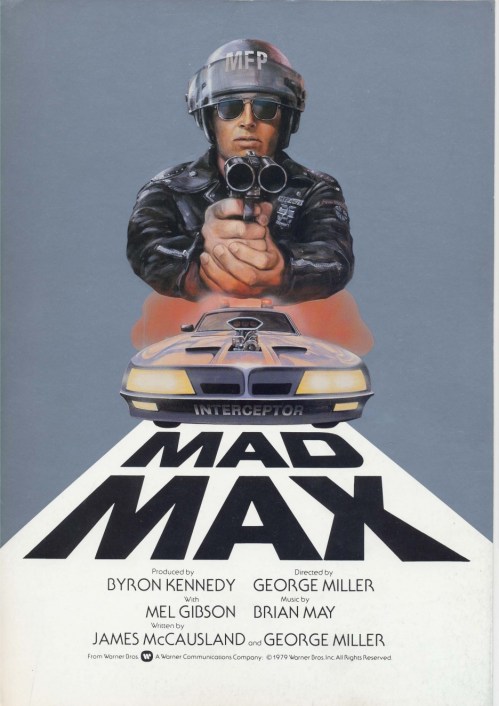
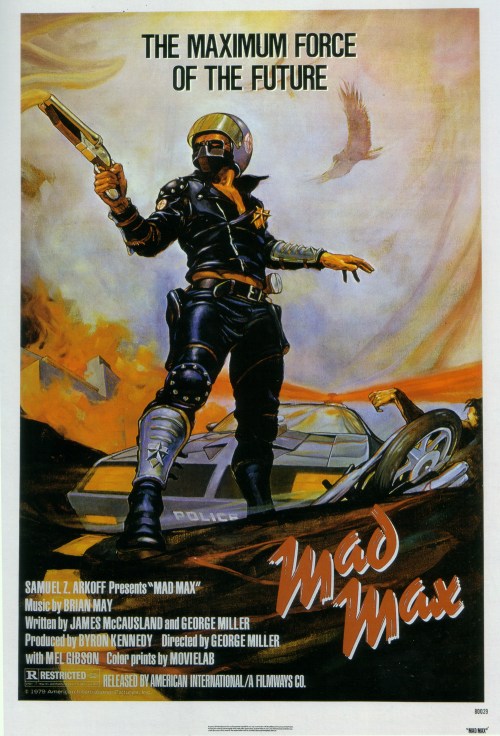
Mad Max (1979)

mad max 1

By Richard Winters

My Rating: 7 out of 10

4-Word Review:  Gang harasses cop’s family.

In the not so distant future where lawlessness is the norm motorbike gangs terrorize the Australian countryside and it’s up to highwayman known as the Main Force Patrol (MFP) to keep them under control. When one of the officers known as Max (Mel Gibson) kills a gang member during a high-speed chase the gang’s leader named Toecutter (Hugh Keyes-Byrne) gets his revenge by having his gang member’s destroy a small town and rape a couple. He also has the youngest member of his gang named Johnny (Tim Burns) kill Max’s partner Goose (Steve Bisley) by having his car set on fire with him still inside. After Max witnesses Goose’s charred remains he quits the force, but Toecutter and his men continue their harassment by this time setting their sights on Max’s wife (Joanne Samuel) and young child.

This film, which was produced by a generally novice crew including its director who at one time worked as a doctor inside a hospital emergency room, became a worldwide cult hit that has spawned many sequels and imitations. The intent was to create a “silent movie with sound” with the emphasis more on imagery and action than dialogue or story. For the most part it succeeds quite well in this area with some excellent car chases particularly the one at the beginning and coupled with the dry barren Australian countryside, which truly does give off a strong, desolate future-type look.

The film though lacks any backstory and one spends the greater part of the first hour asking ‘Who are these people and how exactly did they get there?’ The film can still be enjoyed without it, but comes off as poorly realized and lacking any type of depth. The narrative is also just a little too simple and obvious. When the wife decides to go off to get some ice cream when Max is at the car repair place it doesn’t take a genius to figure out that she’ll bump into the marauding gang when she gets there, which of course she does. Later, she goes for a walk in a forest, but Max doesn’t go with her, or give a gun for protection even though the gang is still on the loose, which seemed like really poor judgement.

There are also times when the film pulls away from the violence a little too soon and would have been more effective had it stayed on it for a while longer. One of these moments occurs during the rape sequence and another time is when Max visits Goose in the hospital, but instead of having the camera capture Goose’s burned face, which would’ve been much more graphic and disturbing, it instead looks at Max’s widening eyes, which is cheesy and cartoonish.

The film’s biggest issue though is the music score by Brian May, which is so loud and obnoxious and borders on being a distraction. The booming orchestral sound doesn’t jive at all with the futuristic setting and seems much better suited for a 1940’s serial instead. The images would be enough to set the tone and having the blasting music added in makes it come off as heavy-handed and amateurish.

Byrne as the gang leader is distinct looking and effectively menacing although his evilness could’ve been played up even more. Sheila Florance though is a lot of fun as the elderly, gun-toting Aunt May who single-handedly tries to take down the gang with only her and her rifle. However, it’s Gibson that steals it with his young, baby-face that makes him look like a choirboy and heightens the intrigue by having such a contrasting look to the gang members and making the viewer wonder if he really can take them down or not.

mad max 2

My Rating: 7 out of 10

Released: April 12, 1979

Runtime: 1Hour 28Minutes

Rated R

Director: George Miller

Studio: Roadshow Film Distributors

Available: DVD, Blu-ray, Amazon Instant Video, YouTube
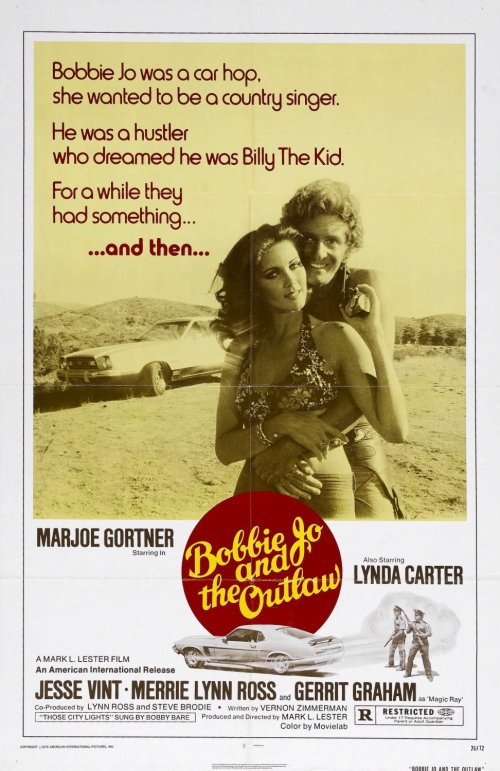
Bobbie Jo and the Outlaw (1976)

bobbi jo and the outlaw

By Richard Winters

My Rating: 3 out of 10

4-Word Review: Looking for some kicks.

Lyle (Marjoe Gortner) is a quick draw with a gun and uses his ability to win many a contest, but when his car breaks down and he has no money to pay for the repair he decides to steal another and uses the vehicle’s souped-up engine to outrun any cop who’s after him. While stopping to eat at a drive-thru he spots attractive carhop Bobbi (Lynda Carter) who’s bored with her life and willing to take on a new adventure with a complete stranger if only to escape the clutches of her alcoholic mother (Peggy Stewart). They travel throughout New Mexico robbing banks while avoiding the relentless pursuit of Sheriff Hicks (Gene Drew) who pledges to bring them to justice dead or alive.

I was expecting something a little bit better than what I got here as it’s directed by the normally reliable Mark L. Lester with a script by Vernon Zimmerman who has helmed a few cult films of his own. Unfortunately it’s just a boring and uninspired rip-off of Bonnie and Clyde and Badlands filled with hooky dialogue and cardboard caricatures. If it weren’t for the action sequences this thing would’ve been a complete dud and comes close to being one anyways.

One of the biggest issues is the really dumb way the Bobbi Jo character decides to get with Lyle who has been stalking her for a while and parks his car outside of her home. She has no idea who he is or his name, but decides one day to hop into his car by calling him ‘loverboy’ and telling him to ‘take her away’ and all simply because she is bored. Now there are many ways to relieve boredom, but hopping into a strange man’s car isn’t one of them. Had she been strung-out on drugs, homeless, a prostitute, or suffering from some mental illness then it might have made more sense, but as it is it comes off as a really stupid way to set-up the plot and off-putting enough that it didn’t allow me to get into the rest of it.

Carter wasn’t a good choice for the part anyways as she does not come off as someone who is reckless or free-spirited. I remember watching her on the ‘Wonder Woman’ series during the late ‘70s and stories swirled that she was a real bitch/prima donna on the set who would slap actors if they messed up on their lines and would routinely make major demands. Her acting always seems rather restrained, formal, and proper like someone who was a privileged beauty queen-type growing up and who looked down on hippies as being ‘freaks’.

Belinda Balaski, who plays her friend Essie and tags along with the two on their crime spree, is far more effective and would’ve been a more believable Bobbi Jo. She also looks just as good as Carter both with her shirt on and off.

Merrie Lynn Ross who plays Bobbi Jo’s sister Pearl was another bad casting choice as she looks nothing like Carter as Ross is a brown-eyed blonde while Carter is blue-eyed and raven-haired. Gortner is expectedly terrible in the lead and much of the reason for this is because he was already in his 30’s at the time and too old for this type of part. Carter was too old as well and the whole thing would’ve worked better and been more believable had the parts been played by actual teens.

The film, which was shot on-location throughout the state of New Mexico, has a few good moments.   The best one comes when they crash their pick-up through a bank’s window and then hook a chain from their truck to the bank’s safe and drag the safe down the street, which is cool to an extent, but weakened by the fact that we are never shown how far the safe gets dragged nor what they use to finally get it open. A gun duel at a lonely, isolated gas station is another highlight as are the car chases particularly the one at the beginning. There is even an amusing take-off to the famous ‘squeal-like-a-pig’ scene in Deliverance, but other than that it’s vapid, pointless and cheesy.

My Rating: 3 out of 10

Released: March 1, 1976

Runtime: 1Hour 28Minutes

Rated R

Director: Mark L. Lester

Studio: American International Pictures

Available: DVD, Blu-ray, Amazon Instant Video

Chastity (1969)

chasity 1

By Richard Winters

My Rating: 6 out of 10

4-Word Review: Hardships of a runaway.

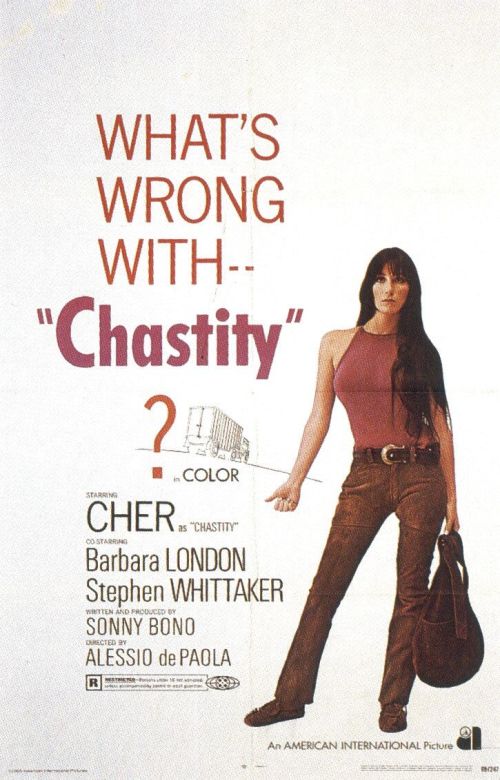
Chastity (Cher), in an attempt to escape her troubled past, runs away from home. She initially hitches a ride with a truck driver (Elmer Valentine) who seems to have only one thing on his mind, so she leaves him and meets up with a younger man named Eddie (Steve Whittaker) who she takes a liking to. He brings her back to his place and she spends the night there, but then worries that things may be moving too fast, so she leaves him. She then treks down to Mexico where she gets a job at a whorehouse. The woman (Barbara London) who runs the place becomes sexually attracted to Chastity and makes an attempt to start a lesbian relationship with her, but Chastity is uncomfortable with this and runs away again. She then meets back up with Eddie hoping to restart their relationship, but her demons from the past catch up with her and make that impossible.

The film was written and directed by Sonny Bono and I got to admit I was surprised at how genuinely riveting this was. The dialogue is sharp with a definite cinema vertite feel. There’s little or no action, but like with a Jim Jarmusch film you still find yourself glued to it and interested in picking up any little nuance that happens. The subject matter is frank and uncompromised and there’s even a little bit of nudity as we see Cher naked from both the top and backside.

The plot is unstructured and works more as a portrait to the tough situations most runaways fall into than in actually telling any type of story with a beginning, middle and end. However, it flows pretty well and has some memorable scenes including Chastity’s attempts to change the oil in a stranger’s car, her visit to a church and most especially her stay at the whorehouse and the way she successfully fleeces money out of a shy and unsuspecting teenage boy customer (Tom Nolan).

Cher is outstanding and the main reason to why this thing is so compelling. Apparently she was unhappy with her performance and refused to do another film until 13 years after this one, which is a shame as she shows definite signs of being a star-in-the-making and she looks so young that she seems almost like a different person than the one we’ve become so accustomed to seeing.

My only quibble is the fact that we get very little insight to the character’s past or why she’s running away. At the very end we do start to hear some voices, which are apparently going on inside her head and that of her parents, but it was too late to bring that up and should’ve been introduced earlier. The ending is vague and leaves the viewer in-the-dark as to what the ultimate fate of the character is, which is frustrating.

My Rating: 6 out of 10

Released: June 24, 1969

Runtime: 1Hour 25Minutes

Director: Alessio de Paola (Sonny Bono)

Rated R

Studio: American International Pictures

Available: DVD

Near Dark (1987)

near dark

By Richard Winters

My Rating: 5 out of 10

4-Word Review: Vampires in a van.

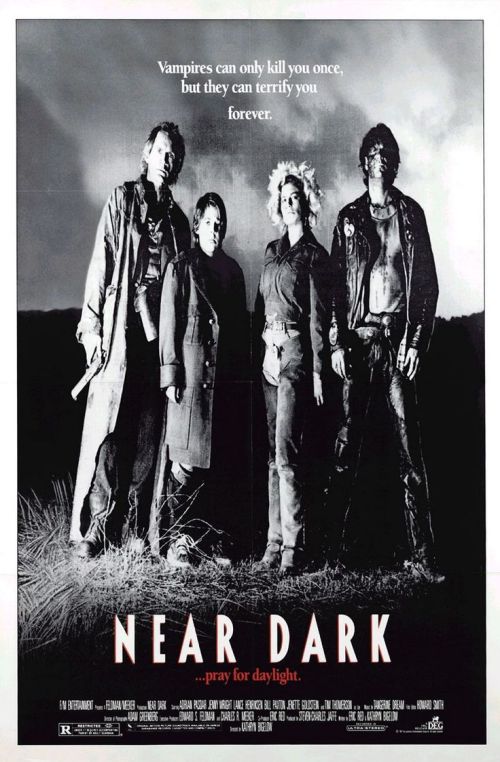
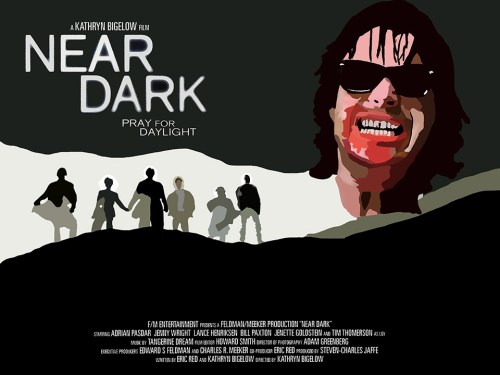
Caleb (Adrian Pasder) is a farm boy who spots the attractive Mae (Jenny Wright) one night while cruising around in his pick-up. He decides to take her for a spin and the two initially get along until they kiss and she bites him on his neck, which makes him very sick. As he is trying to get back to his farm where his father and sister live (Tim Thomerson, Marcie Leeds) he gets hijacked by a van carrying other vampires (Lance Henriksen, Bill Paxton, Jenette Goldstein, Joshua John Miller) who try to teach him how to hunt and kill humans, which is something Caleb isn’t ready to do despite his new found necessity of needing blood in order to survive.

Compared to other ‘80s vampire flicks this one is far and away ahead of the rest. I liked how Caleb’s transformation into a vampire is very emotionally and psychologically jarring, which is how I think it would be, even though other films from that period would gloss over this like it was no big deal. I also liked the way it circumvents the irritating erotic overtones by showing Caleb and others sucking up the blood from a human’s neck like a thirsty man coming from a desert instead of portraying it in some sort of cheesy sexy way. The film also has its share of genuinely horrifying moments including a long, drawn out scene inside a hick bar that is violent and ugly, but also quite effective and makes these vampires the menacing characters that they should be.

The acting is all-around quite good including having three actors from Aliens, which is amusingly displayed as the film being shown at a local theater in the small town that Caleb passes through. I was also impressed with the two child stars. Miller, who is the son of Jason Miller who played Father Karras in The Exorcist, is effectively disturbing as this baby-faced kid with a potential of doing some very nasty things. Leeds is also solid as a young, cute girl with some very down-to-earth sensibilities.

The special effects are great and I was impressed with how the vampire’s skin would burn when exposed to daylight, but I also had a bit of a problem with this as well. For one thing the burn would appear so severe that it looked like nothing short of grafting could repair it and yet we would see them in the next scene with their skin fully healed, or looking like it had been smeared with coal and nothing more.

I was also confused with how these vampires manage to obtain such super-human strength. They possess the same bodies that they had when they were human with no apparent additional muscle mass, so where is this extra strength coming from? Is it ‘magic’ and if so where does that come from? This film tries so hard to keep everything on a gritty and real level, but that unfortunately gets hurt by having this illogical and unexplained phenomenon thrown in.

The astronomical odds that these vampires would meet up with Caleb’s father and sister at some random, isolated hotel is a bit hard to fathom as well, but I was willing to forgive it as the one loophole every story is allowed to have. However, the scene where Miller’s character takes Caleb’s younger sister back to the motel room to watch TV and they find that all the stations have signed off for the night just doesn’t hold true. By the late ‘80s, which was when this movie was made and takes place, most broadcast stations where working 24 hours and most if not all hotels where offering basic cable, which included free HBO and these stations were definitely broadcasting throughout the wee hours making this scene completely false for the period it was in.

The film did poorly at the box office when it was first released, but has managed to attain a strong cult following since. I liked most of it, but didn’t care for the eternally thumping music score that gets played in literally every scene and gives it too much of a music video feel and the climactic finish, which is exciting and has some terrific special effects, became too protracted for my tastes.

near dark 2

My Rating: 5 out of 10

Released: October 2, 1987

Runtime: 1Hour 34Minutes

Rated R

Director: Kathryn Bigelow

Studio: De Laurentiis Entertainment Group

Available: DVD, Blu-ray

The Steagle (1971)

steagle 2

By Richard Winters

My Rating: 5 out of 10

4-Word Review: Living out his fantasies.

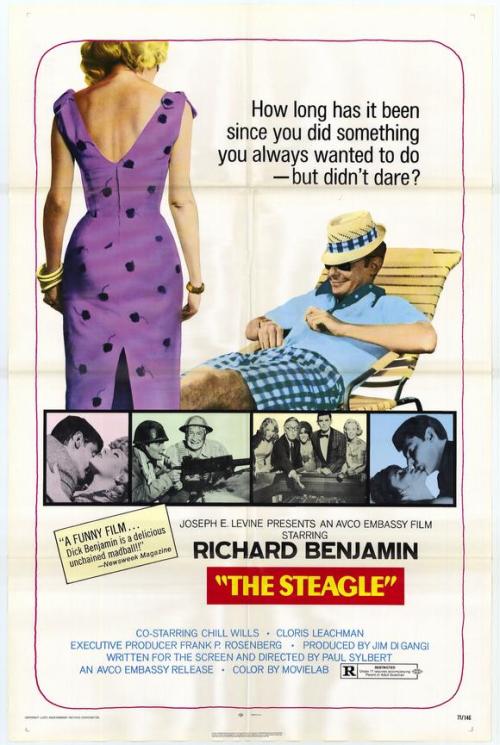
The year is 1962 and the Cuban missile crisis is in full-throttle. The threat of a possible nuclear war has everyone on edge and having to hear about it every night on the news just makes things worse. Harold (Richard Benjamin) decides to use this opportunity to ‘escape’ from his drab existence. Both his marriage to Rita (Cloris Leachman) and his job as a college professor have grown stale. If the end is near then Harold wants to live-it-up to the fullest, so he travels to Vegas, has sex with hot women while also living out other outrageous fantasies.

The film was directed by award-winning set designer Paul Sylbert and for the most part, at least at the beginning, is right on-target. The mood and design looks authentically like the early ‘60s and the story nicely taps into the secret fantasy life that most likely harbor in the back-of-the-minds of just about every middle-age person out there. The viewer effectively feels Harold’s frustration during the first half and then just as effectively feels the rush when he finally decides to break free and go wild.

The story is consistently amusing throughout with the most memorable bit coming when Harold decides to speak in gibberish while giving a lecture to his class. Benjamin is perfect for the part playing a character with a snarky, sarcastic personality that hides just beneath his otherwise formal veneer. Ivor Francis is great in support as a minister who Harold meets on his travels that, like with him, wants to escape from the shackles of his daily existence. Chill Wills is good too playing a loopy ex-actor who thinks he’s Humphrey Bogart and traps a group of men inside a bathroom and won’t let them out until after they hear his rendition of a scene from The Maltese Falcon.

The film’s biggest drawback though comes from the awkward transition between Harold fantasizing about these things and then finally deciding to go through with it. The film never bothers to show how he manages to get away from his wife and kids. Does he sneak out in the middle of the night unannounced, leave a note, or simply tell them that he needs to ‘get away for a while’? Nothing is ever shown even though I felt that this scene was quite crucial and needed to be put in. The ending is equally frustrating as we never find out what happens when Harold finally decides to go back, which makes the film as a whole come off as incomplete and one-dimensional.

My Rating: 5 out of 10

Release: September 15, 1971

Runtime: 1Hour 30Minutes

Rated R

Director: Paul Sylbert

Studio: AVCO Embassy Pictures

Available: VHS, DVD (Mill Creek)

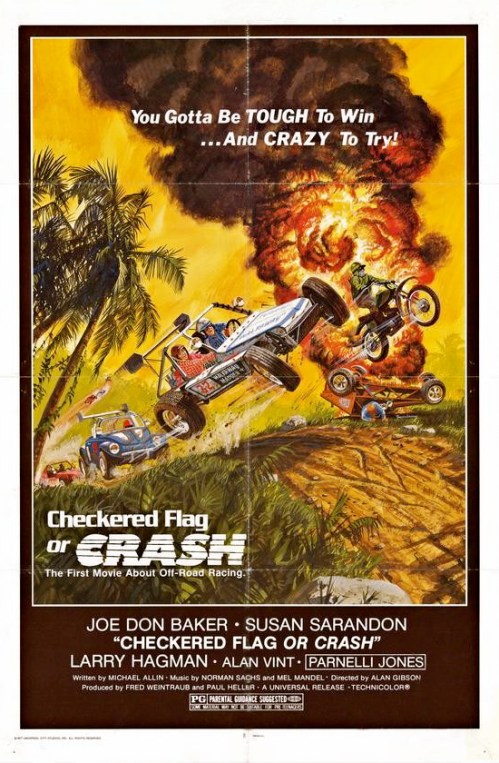
Checkered Flag or Crash (1977)

checkered flag 2

By Richard Winters

My Rating: 2 out of 10

4-Word Review: Drivers race off-road.

Walkaway Madden (Joe Don Baker) is a lifelong racer who has just broken up with his racing partner of many years and is now going solo, or at least he thinks he is until reporter C.C. Wainwright (Susan Sarandon) arrives and tells him that the company who sponsors his car has hired her to cover the race for their newspaper and thus she’ll be riding along with him. Walkaway isn’t too happy about this as he has very old-fashioned, sexist ideas about a ‘woman’s place’, but begrudgingly accepts it as he has no other choice. Together the two take part in a grueling off-road race that is organized by Bo Cochran (Larry Hagman) and takes them through some of the most treacherous terrain of the Philippines.

The movie might’ve been more exciting had the racing footage been better captured. Instead we get treated to choppy shots of random car wipeouts and flashing, poorly focused images of vehicles buzzing through various locales while shown in a grainy film stock. The editing is so quick that it’s hard to follow what is going on and the only time it is ever impressive is when the camera gets tied to the front of the vehicle and we see firsthand just how bumpy and fast a ride like that must be, but this shot unfortunately is only brief.

There is little or no backstory to any of the racers and therefore no emotionally compelling reason to cheer for any of them. There is also too many of them and all are generic, transparent characters, so when you see someone wipeout it’s hard to remember which one it is, or even care. I did kind of like Daina House as a woman with beautiful model-like features who dresses in all black and just as tough as any of the guys, but her character isn’t shown or played-up enough.

The best thing about the film is the presence of Sarandon who lends a necessary grounded anchor to the silliness that surrounds her. Hagman is terrific as the hyper race promoter and every scene he is in is far more entertaining than any of the racing footage. Baker isn’t bad either. He certainly isn’t any A-list actor, but a very competent B one, who seems at ease in both comedy and action parts.

The film shifts clumsily between being silly and gritty and would’ve done better had it stuck to a more consistent tone. It’s also cheap and amateurish with a terrible, country tinged title tune that gets played throughout. The only reason it gets 2 points is simply for the performances of its three leads.

checkered flag 1

My Rating: 2 out of 10

Released: June 3, 1977

Runtime: 1Hour 31Minutes

Rated PG

Director: Alan Gibson

Studio: Universal

Available: None at this time.

O Lucky Man! (1973)

o lucky man

By Richard Winters

My Rating: 9 out of 10

4-Word Review: A young man’s journey.

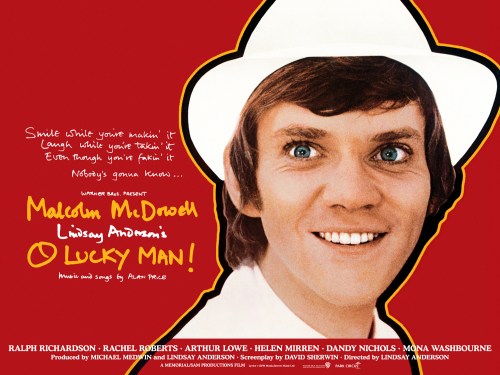
Mick (Malcolm McDowell) is a wide-eyed young man entering into the adult world and full of Horatio Alger-like illusions of working real hard and becoming insanely rich while doing it. His first job is as a coffee salesman where he is told that ‘the-sky’s-the-limit’ in regards to his earning potential, so with the carrot-on-the-string firmly in place he dives into it, but ultimately finds little to show for it. He then meets up with a rich tycoon ( Ralph Richardson) and essentially becomes the man’s lapdog assistant only to learn that this doesn’t work either. After spending time in jail he comes back out into the world as a ‘reformed’ man extoling on the idealistic virtues of humbleness only to again meet with aversion and failure.

The film, which is based on an original idea by McDowell, is essentially a broad look at society’s many socio-economic class levels and how easy it is to fall down it, but hard to move up. Some consider Glengarry Glen Ross to be the bleakest indictment on the sales profession, but having worked in the business when I was like the character here first getting out into the working world I can say that this one is even more searing and accurate.

On a wider scope the film successfully works as a critical statement on capitalism, which due to the purveying political climate of the day most American audiences are just now ready to catch up to. Mick’s journey is more his eventual disillusionment as he slowly realizes that being a ‘go-getter’ and having a ‘good attitude’ isn’t going to be enough as the system is rigged so that the individual is more likely to lose than win and can’t really function otherwise. His efforts then become exploited while helping to make someone else richer as he tolls in the bottom rung doing lateral moves into areas that have potential promise, but only produce the same results.

Although the character’s perpetual delusions of grandeur become a bit annoying McDowell plays the part well. The intent was for him to play against type from the one that he did just previously in A Clockwork Orange by portraying someone who is clean-cut, respectful and obedient, but with all the transitions that the character goes through and at one point even having him strapped to a chair in much the same way that he was in the Kubrick film it eventually comes off more like a continuation of that part than a completely different one.

The fun of watching the film is seeing the supporting cast playing dual roles. Arthur Lowe is great especially in the part where he gets put into heavy black make-up to play the leader of a fictitious foreign nation. Rachel Roberts is good too with the erotic scene where she transfers coffee from her mouth into McDowell’s and then later as a poor woman who commits suicide, which has a foreboding quality to it since Roberts ended up doing the same thing five years later in real-life.

Fans of Helen Mirren will enjoy seeing her when she was much younger and playing the part of a rebellious daughter. I also liked the way Alan Price and his band fits into the film. They do the movie’s soundtrack, which is quite good, but instead of having their music played over the action the movie cuts away and captures them doing their renditions inside a sound studio, which in any other case would be considered distracting, but here helps accentuate the film’s  already cerebral tone. It’s also amusing how the band ends up becoming a part of the story as the McDowell character almost gets hit by their van, which allows the opportunity for Price to say the film’s best line “Are we suing you, or are you suing us?”

The film is full of many surreal and original moments and is so consistently inventive that you hardly notice its three hour runtime. However, to me the best part about it is the way it attacks and criticizes the status quo, which is something that no Hollywood movie ever does.

My Rating: 9 out of 10

Released: March 26, 1973

Runtime: 2Hours 58Minutes

Rated R

Director: Lindsay Anderson

Studio: Warner Brothers

Available: DVD, Amazon Instant Video, YouTube
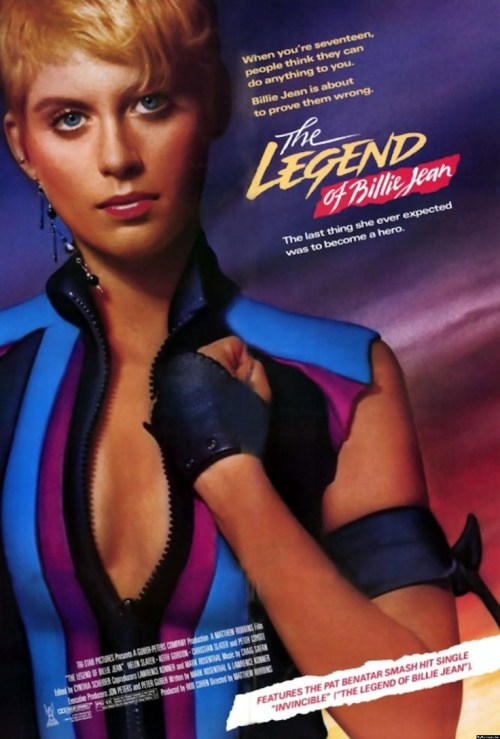
The Legend of Billie Jean (1985)

legend of billie jean 1

By Richard Winters

My Rating: 6 out of 10

4-Word Review: Teen becomes media sensation.

Billie Jean (Helen Slater) is a teen living in a small Texas town who one day decides to take a ride with her brother Binx (Christina Slater) on his motor scooter to a lake for a swim. Along the way they come into contact with some red neck boys who harass the two and damage the scooter. The police do nothing about it, so Billie Jean decides to approach Pyatt (Richard Bradford) who runs a convenience store and is the father to one of the boys. When she asks him for the money that it will cost to repair it he attempts to sexually assault her and Binx ends up shooting the man in the shoulder. This causes the two to go on the run and creates a statewide car chase, which makes Billie Jean a media hero to thousands of teens nationwide.

The movie is a real mixed bag with strong shifts in tone and no clear point-of-view. It starts out as a rather boring, run-of-the-mill teen bullying flick only to turn into a whimsical tale as the teens go out on the road and have one quirky adventure after another. It’s similar to Steven Spielberg’s The Sugarland Express as both lead characters are females and go on the run from the law in Texas while become inadvertent media darlings in the process. Spielberg’s movie is the better film, but this one delves more into the media angle and could’ve made some strong statements, but unfortunately pulls back and keeps things on too much of a lighthearted, innocuous level instead.

Slater is fantastic in the lead and it’s great seeing the boyish Slater in his film debut. I felt though that Martha Gehman and Yeardley Smith as two teen gals who tag along with the other two on their adventure added nothing and should’ve been cut out completely.

Bradford makes for a pretty good heavy, but I had major issues with Peter Coyote as the sheriff. For one thing when Billie Jean reports that her brother’s bike has been stolen he does not immediately pursue the case, but instead decides to ‘wait on it for a few days’, which seemed like he was not doing the job that the tax payers put him into position to do. Then when the chase expands across the rest of the state he somehow gets in charge of tracking her down, which is ridiculous. Once she crosses over the county line, or gets outside of his jurisdiction then it is up to the authorities from that region to handle it, or the state highway patrol and certainly not some two-bit sheriff from a no-name, hick town.

The scene where Billie Jean saves a boy from his abusive father while hundreds of teens look on is great, but everything else is so-so. The film would’ve worked better had it taken a consistent satirical tone from the beginning and not have been so compelled to conform itself to the more simplistic sensibilities of its targeted teen audience.

My Rating: 6 out of 10

Released: July 19, 1985

Runtime: 1Hour 36Minutes

Rated R

Director: Matthew Robbins

Studio: TriStar Pictures

Available: DVD, Blu-ray, Amazon Instant Video, YouTube
Pee Wee’s Big Adventure (1985)

pee wee big adventure

By Richard Winters

My Rating: 6 out of 10

4-Word Review: Searching for his bike.

Due to the release this weekend of Pee Wee’s Big Holiday I thought it would be appropriate to go back and take a look at the ‘80s classic that started it all. Here we have Pee Wee (Paul Reubens) living with his small pet dog Speck inside a home full of colorful contraptions. His prized possession is his bicycle, which he takes great care of and carefully chains up every time he leaves it alone. However, a hateful bully named Francis (Mark Holton), who is from an affluent household and used to getting whatever he wants, decides that he wants Pee Wee’s bike for himself. When his monetary offer gets rejected he then hires a professional thief to steal it for him, which sends Pee Wee on a mad frenzy across the country to try and retrieve it.

The movie is an exercise in high camp that could’ve easily failed, but instead it succeeds mainly because it doesn’t put the eccentric main character into the real world, but instead pulls the viewer into the quirky 10-year-old mindset of the protagonist. Here we don’t deal with people who reject or mock him, but instead much like with all children he becomes the ‘king of his own domain’ where he is liked and accepted by most everyone he meets and in control of all situations while the harsher realities get ignored or overlooked completely.

The film also manages to accentuate Pee Wee’s odd personality with garishly colorful set-pieces and odd contraptions that almost become the film’s main attraction. Reubens plays the role in an engaging manner, but the character’s persona is one-dimensional and could border on getting annoying had it been the film’s sole avenue of humor, but fortunately director Tim Burton manages to give the film a complete vision by instilling a storyline and visual design that match the weirdness of its protagonist and makes the proceedings come off as fresh and inventive.

I also liked that it wasn’t geared completely towards children, but instead made to attract those of all ages with a taste for the offbeat and absurd. Going the kiddie flick route would’ve made it come off as formulaic and infantile, but instead by emphasizing the surreal it becomes intriguing and impossible to predict.

The loosely structured script, which was co-written by Reubens and actor Phil Hartman, manages to go a long way on what amounts to being pretty much just a one-joke premise, but it does eventually start to lose steam by the 60-minute mark only to recover in grand style at the end with a delightful chase through the backlot of the Warner Brothers studio. It is similar to the ending used in Blazing Saddles where the film breaks the fourth wall and becomes a movie-in-a-movie although I felt this one was funnier than the Mel Brooks version.

The film is sprinkled with a lot of cameo appearances as well with my favorite ones being Milton Berle as well as James Brolin playing Pee Wee in the Hollywood movie version and Morgan Fairchild as the Hollywoodized version of his girlfriend. I also got a kick out of Jason Hervey who is best known for playing Fred Savage’s older brother in ‘The Wonder Years’ and who does a very funny caricature of a spoiled child film star here.

The film is also known for making the ‘50s instrumental ‘Tequila’ by the Champs a very recognizable melody. In fact it is almost impossible to think of the Pee Wee character and not have that melody start to play in your head, or if you do hear the melody playing somewhere you can’t help but have the image of Pee Wee pop-up when you do. However, in the actual film the song ends up being played only briefly.

My Rating: 6 out of 10

Released: July 26, 1985

Runtime: 1Hour 31Minutes

Rated PG

Director: Tim Burton

Studio: Warner Brothers