Category Archives: Remakes

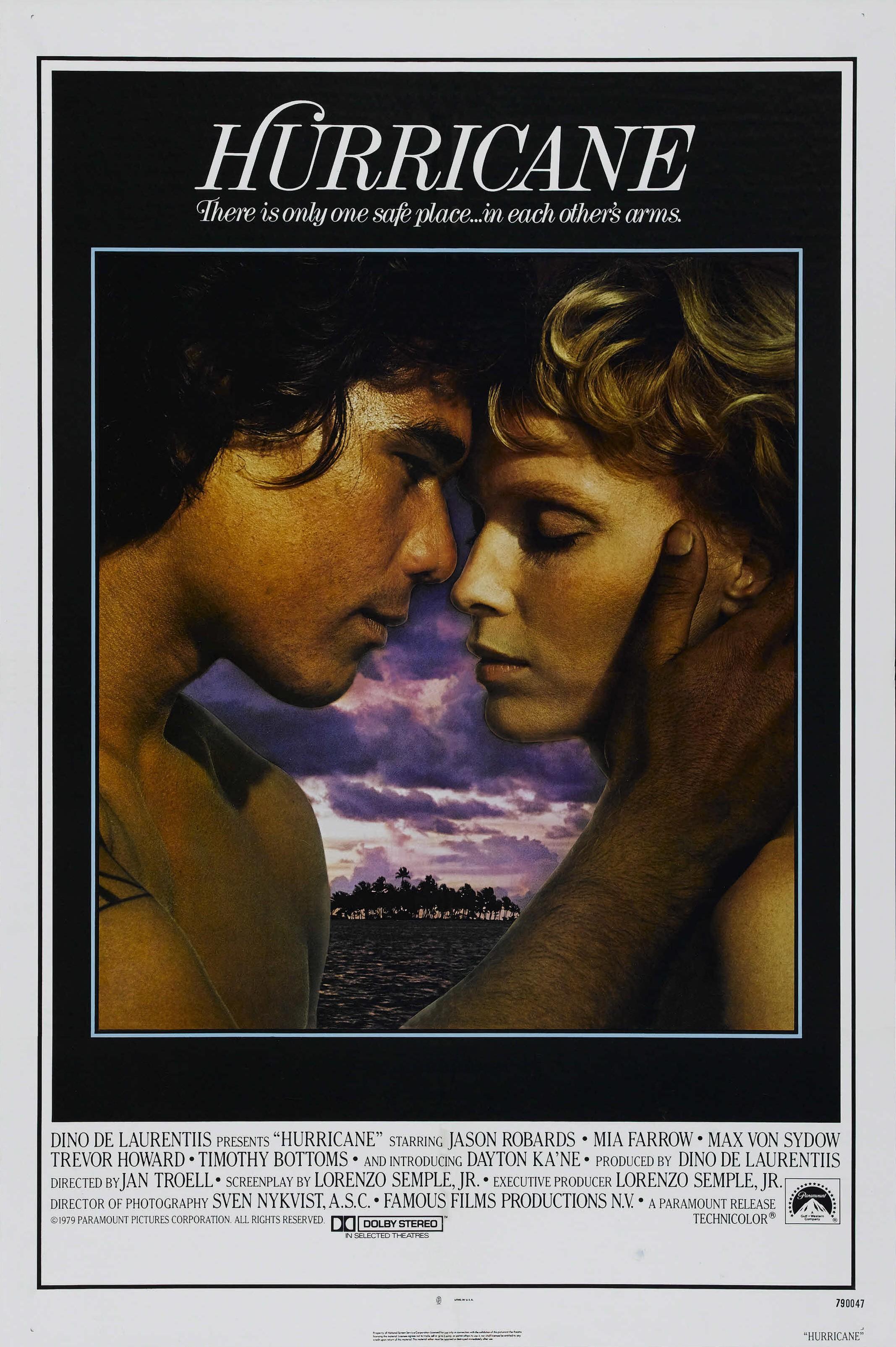
Hurricane (1979)

hurricane

By Richard Winters

My Rating: 3 out of 10

4-Word Review: Tropical cyclone strikes island.

Charlotte (Mia Farrow) is the daughter of Navy Captain Charles (Jason Robards) who was appointed governor of a small island of Alava, which is under U.S. control. She comes to the island for a visit as she hasn’t seen her father in quite a while and immediately becomes attracted to Matangi (Dayton Ka’ne) who works as a houseboy at her father’s estate. A romance blossoms between the two and when her father finds out he puts Matangi in jail on trumped-up charges, but Charlotte is able to find a way for him to escape, but as they go on the run her father sets out to find them and put Matangi back behind bars just as a massive hurricane descends.

The film is a remake of the 1937 movie that was directed by John Ford and in itself an adaptation of the novel of the same name by James Norman Hall and Charles Nordhoff. After completing the runaway hit King Kong, another remake of a 1930’s movie, producer Dino De Laurentiis became inspired to tackle a second classic from the same era. He was most enthused with this one due to the hurricane effects as he was convinced that with modern technology it could be more vivid than the original and even hired the same man, Glen Robinson, who did the special effects for that one to recreate it here, but with modern film capabilities that had been unavailable when the story was first produced. So much focus was admittedly put into the ending that things like character development, which director Jan Troell had come onboard to work-on, were largely ignored causing Troell to consider it an unpleasant experience and he spent the remainder of his career making films in his homeland of Sweden as he felt after this that working on a Hollywood project wasn’t to his liking.

The casting of Farrow is part of the problem as the role called for a woman in her 20’s even though she was already well into her 30’s, but since she had what Dino described as an ‘eternal face of an 18-year-old’ he decided to hand her the part anyways. Her character though is so one dimensional that her time on the screen isn’t captivating. Ka’ne, who was an Hawaiin surfer with no acting experience, does better than expected though he only did one other movie after this before retiring from the business and working the rest of years as a compost truck driver and hotel doorman. Max Von Sydow is good in support playing a doctor who utters the film’s best line, most likely ad-libbed from his well-known atheist roots where he asks why a painting of Adam would require him to have a belly button since if he was created from dust then he’d have no need for an umbilical cord.

The biggest issue is the romantic angle as it occurs too quickly. An interesting relationship is one that has a challenge and this one should’ve had several as Mia’s father was clearly not going to be happy about her seeing Ka’ne and therefore she should’ve been apprehensive about getting involved, or even suspicious as how did she know he wasn’t just using her for leverage to get the old man to soften his stance on policies Ka’ne wanted changed? Instead, they fall into each other’s arms in a seamless few minutes and the whole first hour is spent with them dreamily swimming around in the ocean in a lovesick fashion, which is dull. Having the character of Moana appear, played by Ariirau Tekararere, who was the woman Ka’ne was arranged to marry, offers some potential, but since she barely speaks and when she does it’s in her native tongue without the benefit of subtitles, her presence doesn’t offer much.

Spoiler Alert!

The finale, which is all about the hurricane, is somewhat exciting, but it’s not perfect. The destruction of the homes appear like they’re miniature models and seeing constant shots of blowing rain becomes tiring, but watching the people leave the church while Priest Trevor Howard continues to pray at the pulpit is kind of funny and having the ship burst through the wall was cool too.

However, I wasn’t exactly sure that the couple really got ‘saved’ at the end like the viewer is supposed to believe. Yes, they survived the storm but were now stuck on a tiny sandbar in the middle of the ocean with no source of food, or transportation. Unless some help came along, which wasn’t guaranteed, they weren’t going to survive long. Thus, it’s not a real ‘happy’ ending because although they weren’t killed right away like the others doesn’t mean they won’t die an even more painful death of starvation.

My Rating: 3 out of 10

Released: April 12, 1979

Runtime: 2 Hours

Rated PG

Director: Jan Troell

Studio: Paramount

Available: DVD, Blu-ray (Import Reg. A/B/C)

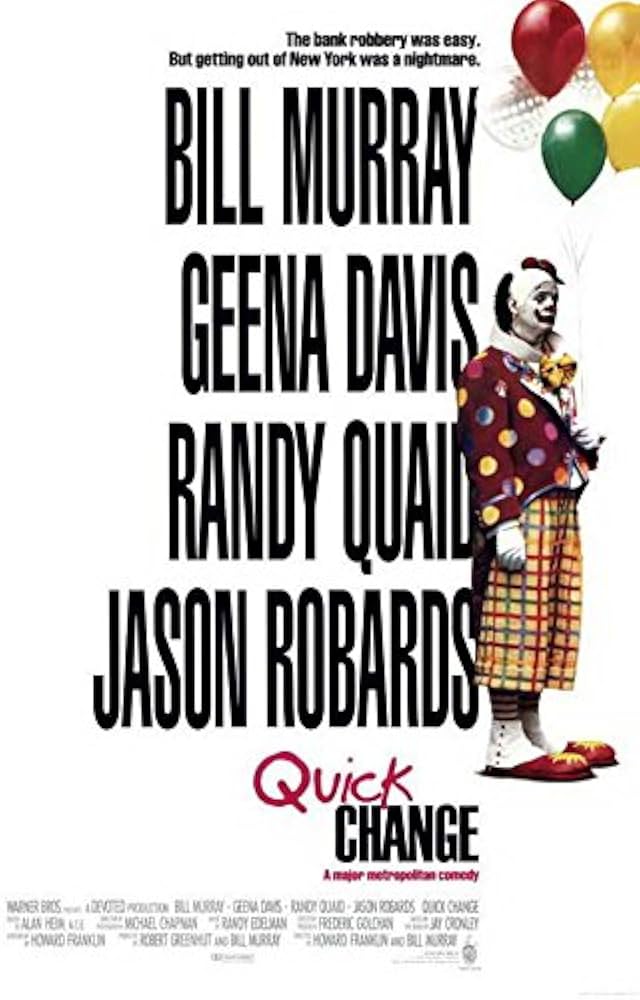
Quick Change (1990)

quick1

By Richard Winters

My Rating: 7 out of 10

4-Word Review: Clown robs a bank.

Grimm (Bill Murray) has had it with New York City. He wants to get out of there and move somewhere tropical as soon as possible and conspires to rob a bank in order to get the money to do it. He dresses as a clown and then has his girlfriend Phyllis (Geena Davis) and friend Loomis (Randy Quaid) pretend to be customers at the bank, so that when he releases the ‘hostages’ they can be two of them. The robbery goes smoothly as they’re able to get $1 million out of the bank, but trying to get out of the city itself proves trying as they get lost on their way to the airport and then their getaway car gets demolished. Police Chief Walt Rotzinger (Jason Robards) is hot-on-their-tale and relentless in his quest to haul them in as he proves to be just one slight step behind them where ever they go and moving in closer with every waking second.

This is the second version of the story that was adapted from a 1981 novel of the same name written by Jay Cronley, a humorist who resided in Tulsa, Oklahoma, who two other novels, Funny Farm and Let It Ride that were also made into movies as well as Hold-Up that was a French film shot in Canada that was the first rendition of this plot. This adaptation proves to be the better one as it takes place, like in the novel, in New York City and takes full advantage of the city’s ambience making it feel almost like it’s a third character.

This is the perfect role for Murray and some critics felt this was his best acting performance of his career he also doubles not only as the producer, but also the co-director as he took over the reins in order to save the project when the originally directing choice Jonathan Demme decided to bow-out at the last minute. The snarky, glib personality of the character is played to the hilt by Bill who has the magical ability to be the world’s biggest smart ass and still have a unique charm about it. Great supporting work by Davis, though the two apparently didn’t get along behind-the-scenes and years later she accused him of sexually harassing her during the production. Good work too by Robards who doesn’t fall into the cliche of a stupid egotistical cop and instead proves to be pretty savvy, which helps accentuate the tension as he’s constantly on their heels and only a beat behind them no matter where they go.

The three acts are better tied together by placing the main nemesis as the city itself and creating a surreal After Hours vibe. Some of the potshots are subtle like watching all the hot dog vendors race over to where the robbery is taking place so that they can take advantage of the situation by selling food to all the onlookers. It also illuminates the ethnic, cultural mix of the Big Apple by featuring a jousting match between two Latinos on bicycles as well as the headaches of trying to find your way around the city and the confusing road signs and constant construction though some of this humor may not resonate with today’s viewers since with the advent of GPS many of these ‘asking for directions’ situations have now become a thing of the past.  The music score by Randy Edelman with its pounding, hard edge quality perfectly matches the city’s gritty, urban attitude.

While the robbery is slick I did find a few loopholes. The first is where does Murray get his other clothes when he changes out of his clown costume and disguises himself as one of the hostages to get away? He is not seen carrying a bag of any kind nor is Davis or Quaid, so not sure where the other suit came from. Some may argue that he was wearing it underneath his clown costume, but this doesn’t work since it was a shirt that came up to his neck that he’s seen coming out of the bank with and when he’s the clown he’s shown with a V-neck T-shirt that exposes the top of his chest. It also doesn’t explain where he gets the glasses, other wig, and shoes that he also has on when he walks out as the fake hostage.

The characterizations are a bit off too as both Davis and Quaid become easily rattled during the second half when they’re trying to get to the airport and become increasingly shaken that they’re going to be caught, but if they have a propensity to being that worried you wonder what gave them the nerve to go through with the robbery in the first place? During that segment they’re very cool and calm and even a bit ballsy, so why the sudden shift to overly panic the moment they get out? A way to have solved this would’ve had the Davis character with a penchant for risks, or enjoy living on the edge and taking chances, so every time they would get into a jam during their escape she’d see it as a certain thrill and not allow it to overtly alarm her.

Spoiler Alert!

The biggest beef though is with the ending in which Robards suddenly realizes, as he’s standing on the ground watching the jet fly overhead that has the three robbers onboard. The film acts like it’s now ‘too late’ and there’s nothing he can do about it, but there really is. All he has to do is go back to the airport and ask where the destination is of the plane that just took off, as I remember it was Paris, France. Since both the U.S. and France are members of Interpol he could easily contact the authorities there asking them to detain the three once the plane had landed. They could then be brought in for interrogation where a simply body search would expose all the money that they had taped to their bodies underneath their clothes, and in Quaid’s case in his duffel bag. This would be more than enough evidence to prove that they were the robbers and thus extradited back to the U.S. for prosecution.

My Rating: 7 out of 10

Released: July 13, 1990

Runtime: 1 Hour 29 Minutes

Rated R

Director: Howard Franklin, Bill Murray

Studio: Warner Brothers

Available: DVD, Blu-ray, Amazon Video, Tubi

Thieves Like Us (1974)

thieves

By Richard Winters

My Rating: 6 out of 10

4-Word Review: Convicts escape from jail.

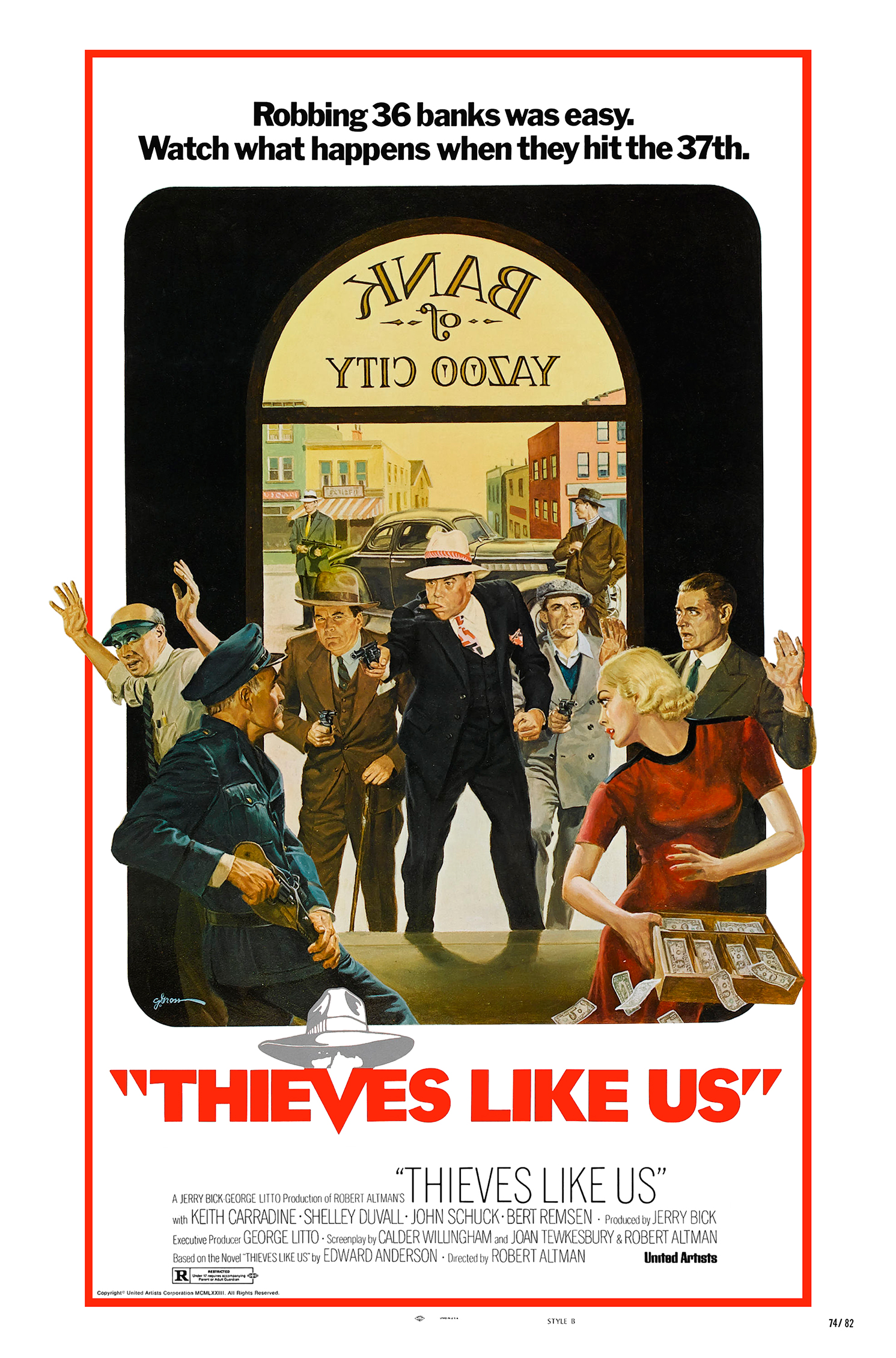
Bowie (Keith Carradine) is a young man stuck in jail due to a murder conviction from when he was a teenager. He teams up with Chicamaw (John Schuck) a middle-aged man to escape from prison and meet-up with T-Dub (Bert Remsen) an older man who has them hide-out at a local auto garage where Bowie meets the owner’s daughter Keechie (Shelley Duvall) and the two start-up a relationship. The three men return to their criminal ways by robbing banks, which goes well for awhile until the quick-triggered Chicamaw shoots and kills a bank clerk, which gets him recaptured and returned to prison. Bowie, who has now gotten Keechie pregnant, feels a loyalty to help get Chicamaw out, but Keechie wants him to settle down and get a conventional job while learning to become a family man. Bowie though resists the urge and after leaving Keechie at a motel cabin owned by Mattie (Louise Fletcher) sets out to help Chicamaw break-out for a second time, but this ultimately leads to tragedy.

The film was based on the novel of the same name written by Edward Anderson and published in 1937. The book had been adapted before in 1949 as They Live By Night, which Robert Altman was not aware of before taking on the project. Joan Tewksbury, his longtime screenwriter, adapted the book in a matter of 4-days, but getting it financied proved challenging and it was only after Altman and two of his other producers offered to mortgage their homes to help bring in needed capital that it eventually got green-lit. Unfortunately once it was completed the studio didn’t know how to promote it and ultimately released it without any advertising budget or fanfare. After a brief 3-week stay in the theaters it fell into obscurity before being resurrected by critical acclaim, which made it do well on cable television and has since gained a small cult following.

The atmosphere is probably the best thing as Altman achieves an authentic 1930’s setting. Other films that try to recreate the era always come-off a bit affected and cliched, but because Altman actually grew up during the period he’s able to give it the needed grittiness and I felt right from the start I was being transported to a different time versus feeling like I’m looking back at a bygone era through a modern day lens. The film has two very memorable moments. One of them is when Bowie goes to the prison to help Chicamaw breakout and meets up with the prison warden who’s residing in this country-style house and feasting on a large dinner. The contrast of this home cooked meal prepared by his wife like they were peacefully living out on a rural farm versus stationed right in the middle of a prison with dangerous criminals is something I really loved. The bank robbery game that the three men play with Mattie’s children where they turn their living room into a make believe bank with the children playing bank clerks and then the men proceed to ‘rob it’ is quite cute as well.

The acting is excellent by Carradine who starts to come into his own during his moments with Duvall, who is also good and does her very first fully nude scene. Lousie Fletcher, who’s first movie this was after she took a 10-year hiatus to help raise her kids, is supreme and helps give the proceedings a very definite, no-nonsense attitude and it’s just a shame she wasn’t in it more though the segments she does have she makes the most of. Tom Skeritt turns out to be a delightful surprise here. Normally I’ve found his work to be rather forgettable and under the radar, but here he stands-out as an alcoholic father who’s a pathetic character with darkly amusing lines.

The film though does suffer from Schmuck’s and Remsen’s characters seeming too much alike and I found the rapport between them to be quite unenlightening. Altman also takes a page out of Hitchcock’s directing book where like with what Hitch did in Frenzy he has the camera pull back away from the action going on inside the building and focusing instead on what’s going on outside. He especially does this during the robberies, which is initially kind of interesting, but he does it too much and then when he finally does show a robbery in progress he does solely from a bird’s-eye view with the camera nailed to the ceiling, which causes the viewer to feel too emotionally detached from what’s happening. He also completely skips over the part where T-Dub gets shot and killed and Chicamaw recaptured, the viewer only learns of this by hearing it reported on the radio, but these are pivotal moments to the story and the film is slow enough the way it is, so this is the type of action that should’ve been played-out.

Spoiler Alert!

The climactic sequence where the cabin that Bowie is in gets surrounded by Rangers and shot-up doesn’t work at all. This is mainly because it’s too reminiscent of the same type of shoot-up done in Bonnie and Clyde that was more famous and riveting. Here it comes-off like a second-rate imitation of that one and does nothing but make you want to go back and see that one while completely forgetting about this one in the process.

My Rating: 6 out of 10

Released: February 11, 1974

Runtime: 2 Hours 3 Minutes

Rated R

Director: Robert Altman

Studio: United Artists

Available: DVD, Blu-ray

Rich and Famous (1981)

rich2

By Richard Winters

My Rating: 0 out of 10

4-Word Review: College friends become writers.

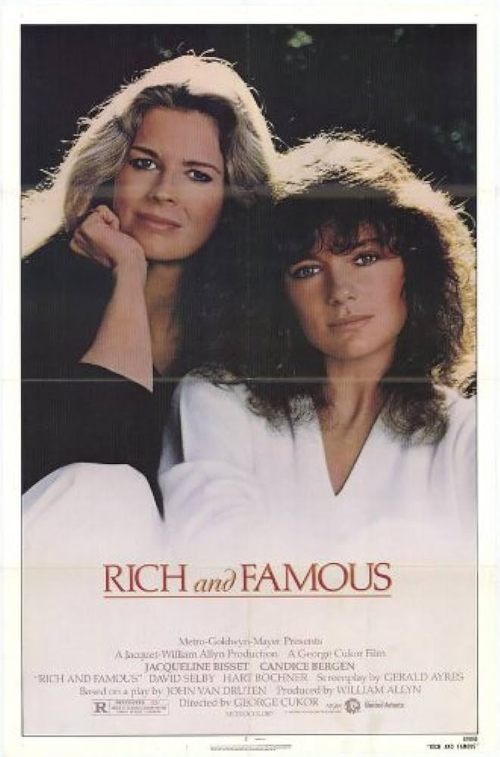
Liz (Jacqueline Bisset) and Merry (Candice Bergen) meet while attending college and become best friends. After graduation Liz achieves accolades for writing a novel and Merry, despite being married and living in posh Malibu, becomes jealous. She strives to write her own novel based on real-life experiences of her rich southern California acquaintances where only the names are changed. One night while Liz is visiting  Merry digs the first draft of her book out and reads it to her. Liz does not care for it, but promises the pleading Merry she’ll run it by her publisher (Steven Hill) convinced he won’t like it and nothing with come of it. To her surprise it does get published  and becomes a best seller. Now she’s the one seething in jealousy since her writing career has crested from writer’s block. While this is going on Merry’s husband Doug (David Selby) begins to come-on to Liz behind-the-scenes and openly wanting to have an affair with her, which Liz finds tempting since the two had a fling during college.

This is a remake of Old Acquaintances, which came out in 1942 and starred Bette Davis and Miriam Hopkins. Bisset spent 2 years working on the script and getting it funded as she was determined to play a ‘real person’ for once and not just the proverbial beauty. However, the movie, which was the last to be directed by legendary filmmaker George Cukor, bombed badly at the box office and it’s easy to see why. The storyline is out of touch with the decade that it’s in. What gets used as fashionable status symbol like having Merry stay at the Waldorf Astoria hotel might’ve been considered glitzy back in the 40’s, but for the 80’s generation would be looked upon as passe. Nothing is hip or trendy. The characters and their conflicts are of a soap opera variety, which is where this tepid storyline should’ve stayed.

My biggest beef was the whole friendship thing, which didn’t make a lot of sense. The two characters are about as different as you could get with Merry coming-off, particularly with her annoying southern twang, as dim-witted particularly when compared with Liz who’s clearly more sophisticated and articulate. Why these two opposites would bond is a complete mystery. There’s no backstory given, only a brief scene during their college days is shown, but nothing displaying what lead to the friendship blossoming, or what they had in common that they’d enjoy each other’s company. For the relationship to work it needs to be believable and organic, and the viewer able to buy into it, but instead it’s quite shallow and forced. Merry is incredibly annoying painfully insecure, emotionally needy, and grossly self centered. She’s the type of person most people would want to quickly dump as a friend and you wonder why Liz, who could easily find new friends more her intellectual equal, doesn’t do just that.

Merry’s marriage to Doug has the same issue. Why would he marry someone that had such a contrasting personality to his? The film fleetingly intimates that it was Liz he was truly after, he went to their same college, and only married Merry as an attempt to stay close to Liz, though the film relies on the viewer reading into this and should’ve instead fully confirmed it.

Merry’s ascent into the writing world is equally ridiculous. From the opening three paragraphs that she reads out loud to Liz gave more than enough reason that it was poorly written and should never see the light-of-day and yet somehow it becomes an immediate best-seller. In a better movie this might get used as satire showing how bad the American Public’s taste in literature is, but the film here has the audacity to show her winning awards for her writing, which just makes it all the more absurd and laughable. It also makes it seem like writing a book is easy and simply requires someone to sit down and throw some words on a page and walah it gets published when it reality it takes many drafts and polishing before it’s even potentially considered publish ready, but the movie glosses over this part completely.

I enjoyed Bisset who’s clearly the stronger actress, but Bergen makes an utter fool of herself particularly her attempt at a southern accent. Normally she’s good at playing the snarky type, which best reflects her personality. Trying to portray a simpleton isn’t her best suit and the film digresses every time she’s in it to the point her sporadic appearances start to seem almost like unintentional comic relief.

Had the film ended with some bitter, knockout cat fight I might’ve forgiven it and even gave it a few points. Not everyone is meant to get along and in real life these two would be a bad match. It’s one of those friendships that ultimately fizzles because the two just don’t have enough in common to keep it going and in a lot of ways ingrate on each other’s nerves. A nasty bitch session would’ve been just what the doctor ordered, and they do have a little bit of one, but then immediately make-up, which just cements the film’s profound shallowness.

My Rating: 0 out of 10

Released: September 23, 1981

Runtime: 1 Hour 57 Minutes

Rated R

Director: George Cukor

Studio: United Artists

Available: DVD, Amazon Video, YouTube
Three Men and a Baby (1987)

threemenbaby

By Richard Winters

My Rating: 7 out of 10

4-Word Review: Infant on their doorstep.

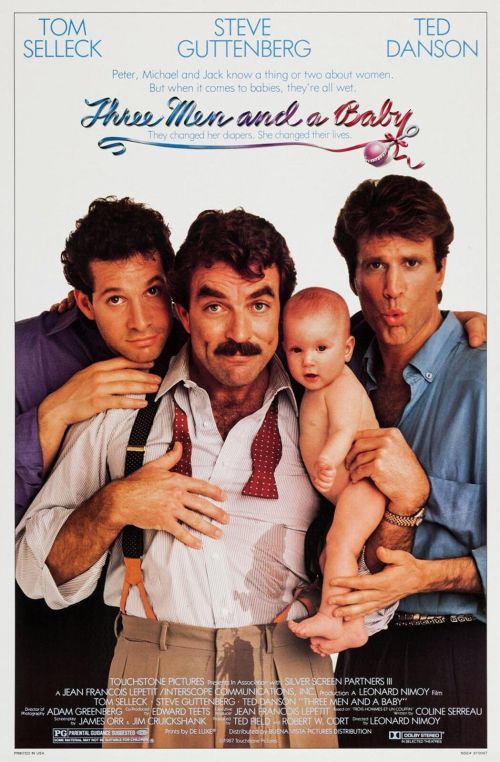
Peter (Tom Selleck) is an architect, Michael (Steve Guttenberg) is an artist, and Jack (Ted Danson) is an actor. All three live in a large apartment in downtown Manhattan. None are married and spend most of their time, when not working, hosting lavish parties and dating beautiful women. One day a baby gets left at their doorstep while Jack is away starring in a movie that’s filming in Turkey. Peter and Michael find the infant and attached note stating that it’s from one of Jack’s previous girlfriends whom had a brief fling with while starring in a play. The two men have no idea how to take care of it, which leads to many amusing mishaps. Once Jack returns they find themselves in even more chaos when drug dealers appear at the apartment looking for a package of heroin that had also been delivered there.

This is the American version of the French hit Three Men and a Cradle and while I’ve been routinely critical of most Hollywood remakes from European films this one, which was directed by Leonard Nimoy, makes many improvements on the story. There’s nothing that’s hugely different, but there’s enough small changes to the plot that helps fill in the caveats from the first one.

One of the things this one does better is it shows the men’s partying side, which the first one didn’t do as well as it started pretty much right away with the baby’s arrival and only elaborated about their wild ways while here, in perfect movie fashion, we see it. Although a bit garish, I enjoyed Michael’s artwork that gets drawn all over the outside walls of the apartment and creates a rather surreal look. There’s also definite strong 80’s vibe that permeates almost every shot at the beginning from the colorful lettering of the opening credits to the theme of ‘Bad Boys’ by Gloria Estefan and the Miami Sound Machine, which was a big band back in the day. There’s even Guttenberg doing a corny imitation of Robin Leach from ‘Lifestyles of the Rich and Famous’ though anyone that didn’t live through the decade will most likely not get that one.

The characters are much better defined with each having a distinct personality. While his movie career never really took-off Selleck shines as the leader of the group due to him being the oldest and at times the most stern. Guttenberg, with his boyish face, is perfect as the immature and clueless one while Danson scores as the eccentric actor. I liked that the men continued to work their jobs even as they looked after the baby, while in the first one they would just call in ‘sick’, which became excessive and unrealistic. In fact probably the funniest moment in the whole movie, at least for me, is when Danson is on stage rehearsing a play with the baby strapped to his back.

Even the drug dealing scenario gets handled better. In the first one the guys return the drugs to the dealers by putting it into one of the babies diapers and then tossing it into a trashcan in a park, but here the men use the opportunity to catch the crooks in the crime by having Guttenberg secretly filming them as they take the drugs back and there’s even some legitimate tension as they try to outrun them when the bad guys catch-on to the scheme. I also liked that the dealers infiltrate the apartment while a babysitter is there as in the French version the infant gets left alone and even though it was supposedly only for a short time was still irresponsible.

There’s a girlfriend character as well, or in this case ex-girlfriend, gets added for Selleck, she gets played by Margaret Colin, and reveals how Selleck just automatically presumes because she’s a woman she’ll know exactly what to do with a baby even when she states she doesn’t. This I felt finely observed how the different sexes can misjudge the other, or project characteristics onto them that they may not actually have.

Spoiler Alert!

Even the ending is a bit better though there’s still the issue of the girlfriend leaving a helpless child at someone else’s doorstep without warning, or making sure there would be someone there to take care of it, which in the real world would be dangerously reckless. At least though there’s more action as the three rush to the airport to try to stop the plane the girlfriend is on with the baby while in the French version the three guys just sit at home moping around, which isn’t as interesting.

It’s still problematic that the girlfriend, played by Nancy Travis who speaks with an accent, moves into the apartment with the bachelors to help take care of the kid. This though goes against the title as it states Three MEN and a baby, so I felt the Travis character should’ve just given up her parental rights and let the guys do all the parenting since they had become better at it anyways.

End of Spoiler Alert!

The only change that I didn’t like is when Danson brings his mother, played by Celeste Holm, to see the baby and tries to get her to agree to take care of it for awhile. In the French version the Jacques character tries the same ploy with his mother only to learn, to his shock, she has no interest in raising another kid and wants to spend her retirement having fun like traveling the world, which I felt was a good statement on ageism and how not all seniors want to be stuck being homebodies. Here Holm’s acts like a strict parent who doesn’t want to be bothered with a kid because Danson needs to ‘grow-up’ and learn to amend for his mistakes though if she was really a proper parent she probably should’ve warned him when he was younger to always wear a condom, so he wouldn’t have gotten himself into this mess in the first place.

This is also the scene that became a bit notorious back around August of 1990 when a rumor started that an image of a little boy, who it was said had killed himself in the place where it was filmed, can be seen in the window that Holm and Danson walk past. Granted it does look a little spooky at first, but upon second glance you can plainly see that it’s actually a cardboard cut-out of Danson wearing a top hat. The whole film was shot on a soundstage in Toronto and not a house where any boy past or present had ever lived.

My Rating: 7 out of 10

Released: November 23, 1987

Runtime: 1 Hour 42 Minutes

Rated PG

Director: Leonard Nimoy

Studio: Touchstone

Available: DVD, Blu-ray, Amazon Video, YouTube

Ten Little Indians (1989)

tenlittle

By Richard Winters

My Rating: 3 out of 10

4-Word Review: Everybody is getting killed.

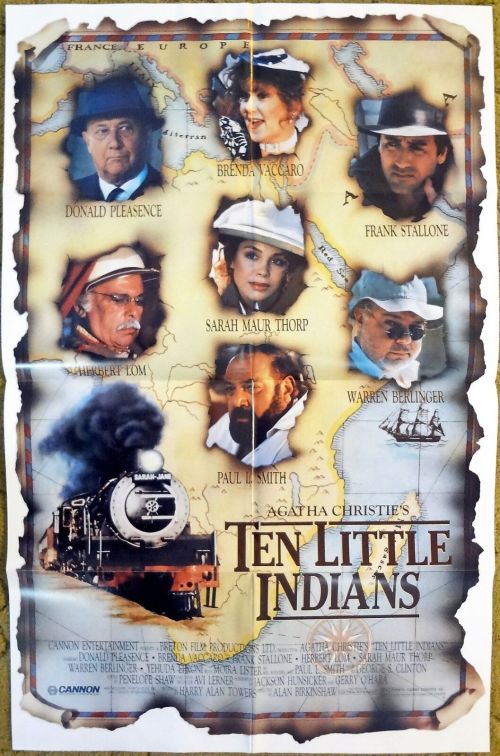
Ten strangers get together on an African safari. The group includes: A doctor (Yehuda Efroni), a judge (Donald Pleasance), a captain (Frank Stallone), an actress (Brenda Vaccaro), a General (Herbert Lom), a nanny (Sarah Maur Thorpe), a detective (Warren Berlinger), along with a man named Marston (Neil McCarthy), and a couple with the surname Rodgers (Paul L. Smith, Moira Lister). They’ve been invited by a man named Mr. Owen, but upon their arrival he’s nowhere to be found. Instead they hear his voice that’s been recorded onto a phonograph where he tells them that they’ve been invited because they’ve been accused of committing a crime years ago and gotten away with it, but he intends to put a stop to that by killing them off one-by-one. As each guest gets murdered one of the heads from the ten little Indians statues that sits in the middle of the dining room table goes missing.

The film has the distinction of being the third movie version of the story done by producer Harry Alan Towers as the first one was produced in the 60’s and the second, which also starred Lom, in the 70’s. The story itself is based on the Agatha Christie novel ‘And Then There Were None’ though the ending was changed to replicate the stage play, which was considered more upbeat. While in the novel and play the setting was an island here it’s the desert of South Africa, which I liked as it gives the proceedings a distinct atmosphere. However, there’s an unusual moment at the beginning where the natives help carry the guests’ luggage to the camp site, but then halfway there for no explicit reason they turn on them by clicking their tongues in unison and ultimately abandoning them, which is creepy, but there’s never an explanation for why they do this.

The landscape looks hot and dry though there’s no sweat glistening off the actor’s faces leading me to believe it was shot in the winter time and thus the complaints about the heat, which are casually mentioned are invalid. I did get a kick out of one of the tents, the main one, having an upright piano. Don’t know who in the world would want to painstakingly haul a piano into the desert sands, or essentially the middle of nowhere, but the appearance of it gave me a chuckle. I was also amused by the elevated lift, held together by a frayed rope, that each guest is forced to sit-in as it takes them many feet in the air of a wide gorge, in order for them to get to the campsite. The contraption looks flimsy and it’s rather unnerving seeing them get into it and ride it all the way down.

The acting is entertaining and made-up of many B-stars whose faces you’ll recognize though not necessarily their names. Vaccaro fares best as a bitchy, spoiled, Hollywood star whose career has gone on the decline. Lom is good as an aging man whose memories plays tricks on him, but Stallone, who’s the younger brother of Sylvester and could almost pass of as his twin, has little to add. Berlinger had gained a lot of weight to the point that he’s rounder than a beach ball, is adequate, but the normally reliable Pleasance appears elderly and lacking energy making his presence almost sad. Smith continues in the mold of the jail guard in Midnight Express, a part that made him famous, but his heavy breathing and lurking ways are not interesting and his acting one-note.

The mystery angle doesn’t get played-up too well as the guests get killed-off with a boring regularity making it at times seem almost like a low-grade slasher. The characters don’t respond to their stressful conundrum realistically. For instance one of the guests dies by drinking alcohol that was linked with cyanide, but the rest of them in the ensuing days go on eating and drinking even though you’d think they’d be nervous about ingesting anything for fear that whatever they put in their mouths could also poisoned. They also go back to their tents each night and peacefully sleep despite seeing the other guests get offed by a unseen killer, which would’ve made me, and most others too fearful to get any shut-eye and instead stay wide awake for fear that the killer would attack the minute anyone closed their eyes.

Spoiler Alert!

The tension is nil and there’s really no interest in finding out who the culprit is. In the book everyone dies and the authorities are only able to figure out what happened from a message that they find written by the judge. Here both Stallone and Thorp make it out alive though Thorp lets go of the rope that had been around her neck just as Stallone comes to her rescue making me believe that she would’ve hung herself before he would’ve been able to get her out of the noose. The rescue plane flies over them instead of landing making it unintentionally seem like they had been left stranded and not saved after all. Having everyone die except for Stallone, which is what I thought was going to happen, and then having him arrested for the murders he really didn’t commit would’ve been a much more ironic twist.

My Rating: 3 out of 10

Released: May 17, 1989

Runtime: 1 Hour 38 Minutes

Rated PG

Director: Alan Birkinshaw

Studio: Cannon Films

Available: Blu-ray, Tubi

Haunted Honeymoon (1986)

haunted

By Richard Winters

My Rating: 1 out of 10

4-Word Review: Boyhood home is haunted.

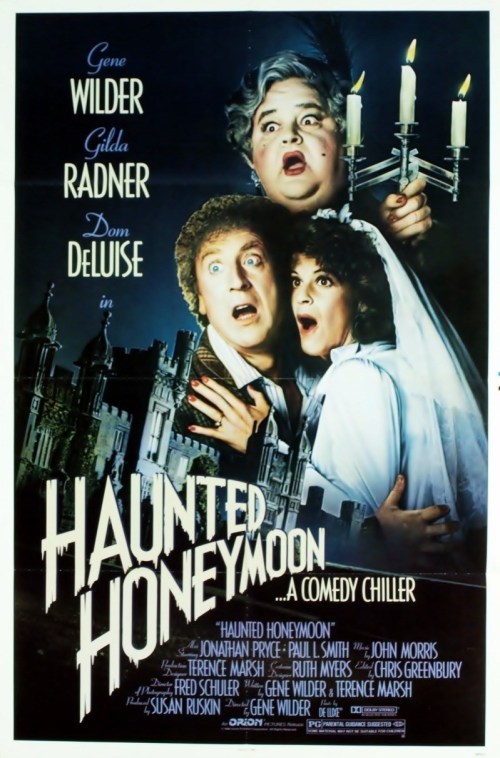
Larry (Gene Wilder) and Vickie (Gilda Radner) are performers on a popular radio show who are also engaged to be married. Ever since the wedding date has been set Larry has been going through a variety of odd behaviors including flubbing his lines and even making incoherent statements during the production that go over the air. Vickie thinks it’s just his nerves about getting married, but Dr. Paul Abbott (Paul L. Smith), who also happens to be Larry’s uncle, thinks it’s much more than that. He feels the only way to cure him will be shock therapy, or in this case to ‘scare him to death’. Since Larry plans on having his wedding at his boyhood home, which is an old rural castle, the doctor feels this will be the perfect spot to engage with the frights. Everyone on the premises is in on the plan, eventually even including Vickie, but as the make believe haunting commences it soon becomes obvious that there’s some real scares too that frightens everyone.

Gene grew up as a child reportedly scared of horror movies and tried to avoid them, but did enjoy what he called ‘comedy chillers’, which were movies that had some scares, but also balanced with laughs and sought out to create one of his own. He started writing the script while he was starring in Silver Streak, but then lost interest and put it away. While he was filming Hanky Pankyin which he met Radner whom he later married, he got interested in continuing with the script especially at her insistence as she felt it would make a great vehicle for the two.

The problem with it is that he created something completely out of touch with the times. Haunted houses, werewolves and other elements from 1930’s movies had all been parodied for decades to the point it had almost become a cliche in itself. This film adds nothing fresh to the mix and feeds off of gags and stunts that had been done hundreds of times making it lame right from the start. Had it been more updated to add in elements from modern day horror movies, or changed the setting so it wasn’t just the predictable rural castle complete with thunder and lightning outside, then maybe it might’ve had a chance, or at least piqued people’s interests, but as it is here the stuff is routine and lacking in originality.

The biggest shock is that you have Dom DeLuise in full drag and yet he isn’t funny at all. Wilder got the idea to use him for the part when he saw him impersonate Ethel Barrymore years earlier at a dinner theater he attended, but the mistake was that Gene wanted him to literally play it straight, but why put a guy in full female get-up if you’re not going to give it any type of payoff? It’s a shame too because I’ve found Dom to sometimes be quite hilarious and even be the scene stealer in some of his other films. Jonathan Pryce, who was also in the movie, stated how the entire cast and crew would sit around and let Dom entertain them between takes, but whatever he said and did off camera was missing onscreen and even the duet that he sings with Gilda fails to elicit even a chuckle.

The story creates this big set-up and then goes nowhere with it. Gene gives himself a few amusing bits and I suppose Bryan Pringle, who plays the aging butler named Pfister, and even Ann Way with her distinctive hawk-like facial features, have a couple of funny moments, but everything else falls flat including Radner who isn’t funny at all and overall given a very thankless part by no less than her own husband.

The film lost money at the box office and despite a month of promotions and ads it only managed to remain in theaters for week before it was pulled. It polled poorly amongst critics and audiences alike, which is probably the only real funny thing is what occurred behind-the-scense as the studio, Orion Pictures, refused to screen it for critics before giving it a general release. Usually when this happens it’s a sign that the studio heads know they have a stinker on their hands, but they denied this saying they were ‘very comfortable’ with the movie and ‘behind it 100 percent’ and only avoided the advance screening because there had been a ‘tendency lately by critics to be quite vicious about films’ in general and they didn’t want to ‘cater’ to that, but you’d think if they really knew they had a great movie their fear of ‘vicious reviews’ wouldn’t have been a factor.

My Rating: 1 out of 10

Released: July 25, 1986

Runtime: 1 Hour 22 Minutes

Rated PG

Director: Gene Wilder

Studio: Orion Pictures

Available: DVD, Blu-ray

The Champ (1978)

champ1

By Richard Winters

My Rating: 7 out of 10

4-Word Review: Idolized by his son.

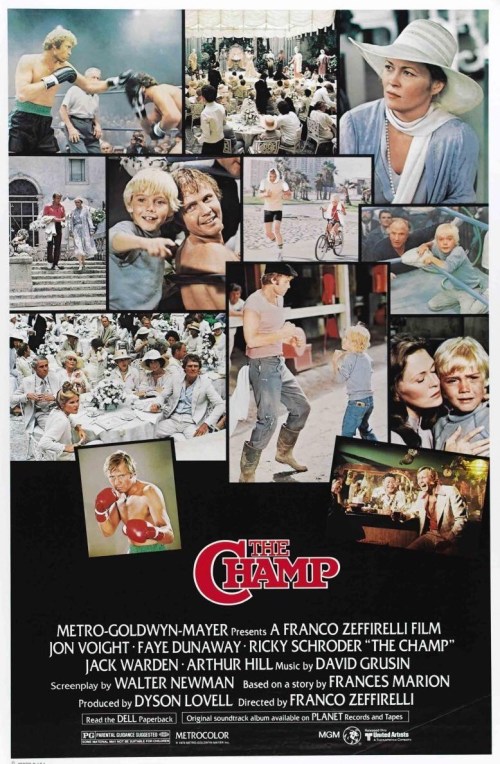
Billy (Jon Voight) is a former boxer whose been out of the ring for 7 years. Now at age 37 he works as a horse trainer. His 8-year-old son T.J. (Ricky Schroder) idolizes him and refers to his as ‘The Champ’ instead of dad. Billy though suffers from many inner demons including his perpetual drinking and gambling as well as not making enough money to sufficiently support either himself, or his son. Nonetheless he continues to go out gambling whenever given the chance and he manages to win enough money to buy his son a horse, which they name She’s a Lady. They enter Lady into a race where T.J. meets Annie (Faye Dunaway). Unbeknownst to T.J. Annie is his mother whom she gave up at birth, but now that she’s married to a wealthy man (Arthur Hill) she wants to have custody. Billy refuses to allow it, but when he loses the horse because of a gambling debt and Annie gives him the money to pay it off he eventually relents and has T.J. go live with her while he’s in jail for assault. Once he’s released the father and son reunite, but Billy realizes he must make more money in order to keep him and thus decides to go back into the ring one last time despite warnings from Jackie (Jack Warden), his former manager, that to do so could be life threatening.

The film is remake of the 1931 classic with Wallace Beery playing the part of the father and Jackie Cooper as the son. Director Franco Zeffirelli remembered watching it as a child and it having a profound effect on him. Then years later while he was in his hotel room while on-location filming another feature he saw it come on television and the film again moved him in such a way that he decided he wanted to do a remake. This though wasn’t the first remake as it had already been done in 1953 as The Clown starring Red Skelton though the story had been revised without the boxing theme and the climactic event at the end doesn’t take place at a sporting event, but instead a dangerous stunt that the lead character must do during a live broadcast of a TV special.

While this one stays more faithful to the original concept it was still panned by many critics as being overly sentimental and soap opera-like. Many who were fans of the original felt this one fell far short and complained about the long running time, this one runs of full 2-hours while the older one was only 83 minutes, with the feeling that it stretched the plot out too much and at spots was too slow. Though I’ve never seen the 30’s version I found myself genuinely wrapped up in the drama and the characters.

Many at the time complained that Voight was going back to the same type of Joe Buck character that he played in Midnight Cowboy, but I disagreed. That character was genuinely stupid, but Billy isn’t he’s just down-on-his-luck and suffering from basic human frailties, which made his situation far more compelling.

Schroder is an absolute jewel. He got the part after beating out over 2,000 others and it’s easy to see why. His ability to cry on demand with real tears streaming down his face is amazing and not something other actors are able to do. He’s cute and engaging without it ever getting forced, or overdone. His presence gives the film its energy and virtually the sole reason for why it works as well as it does.

The main complaint that I did have was with Annie. She’s marvelously played by Dunaway, who’s always been one of my favorite actresses and it’s a good role for her acting style as she’s excellent at playing characters that have a bit of a cold and aloof manner while not easily able to show their soft side, but with that said I still couldn’t understand what made the character tick, or her motivations. For one thing she seemed to have nothing in common with Billy, so what brought them together in the first place was a mystery and then having her abandon the kid while she went off living her life seemed pretty extreme. In most cases it’s the father that shirks the responsibility of raising the child, but here it’s reverse, but with no clear explanation as to why. There’s a vague excuse later on that it was so she could ‘pursue her career’, but then this doesn’t explain why she now wants to get close to her son. If she was selfish back then what made her change to suddenly want to be loving and caring? She went 7 years without ever seeing the kid, and did pretty well without him, so why now must she have him? I felt there needed to be some extra context added like she had been addicted to drugs when she had TJ, which then made her deemed unfit to raise him, but now that she had kicked the habit she wanted him back, or maybe she had suffered a miscarriage with her second husband and this made her feel guilty about the child she had let get away and this motivated her to want to seek out TJ, but without any of this added information the character comes-off as transparent, unrealistic, and unrelatable.

I will agree with Leonard Maltin in his review where he states that it looks like Faye wants to go to bed with her own kid. This occurs during the scene where Ricky is on her yacht and looking off in the distance while Faye comes up behind him and begins sniffing his hair like she’s getting turned-on by him. To call this a cringey, awkward moment is an understatement and it’s unintentionally laughable. Why it was left in, or why Zeffirelli thought it would be a good idea to put in I don’t know. The movie manages to recover, but it’s a segment that is indeed ridiculous.

The boxing element is another problem as it gets introduced way too late. It gets briefly mentioned throughout the first 2 acts and there’s even a quick scene where Billy shows up at a gym, but overall it gets played-out as a side-story only to suddenly, 90-minutes in, becomes the main focus, which gives the film a very disjointed feel. Jack Warden’s character doesn’t appear at all until near the end almost like it’s a tacked-on bit that doesn’t really flow with everything else that came before. The boxing scenes are impressive and helps to effectively expose the brutality of the sport, but I felt Billy’s training and decision to enter the ring should’ve been made sooner and the boxing scenes mixed-in throughout, but either way it’s still an competent tearjerker that shouldn’t leave a dry eye in the house.

champ2

My Rating: 7 out of 10

Release: March 20, 1979

Runtime: 2 Hours 3 Minutes

Rated PG

Director: Franco Zeffirelli

Studio: MGM

Available: DVD, Amazon Video, YouTube
Jimmy the Kid (1982)

jimmy 1

By Richard Winters

My Rating: 1 out of 10

4-Word Review: Inept kidnappers bungle crime.

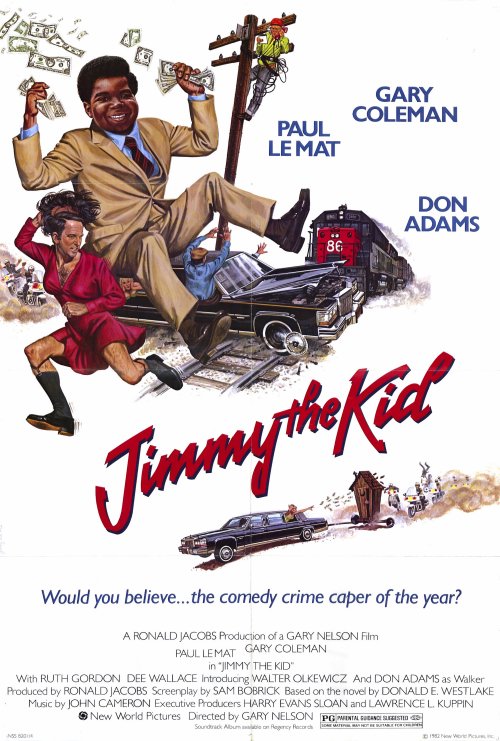
Jimmy (Gary Coleman) is the son of a singing duo (Cleavon Little, Fay Hauser) who feels neglected while his parents are out on the road singing in concerts. Kelp (Walter Olkewicz) is an inept would-be crook who’s finding it a struggle to successfully commit any crime. He then reads a book about kidnapping and convinces his reluctant brother John (Paul Le Mat), John’s girlfriend May (Dee Wallace) and even his own mother Bernice (Ruth Gordon) to get in on it. Their plan is to kidnap Jimmy and hide him out in a secluded cabin in the woods while extorting money from his rich parents for ransom. The problem is that Jimmy is quite intelligent for his age and outsmarts the crooks at every turn, but also forms a bond with them and they to him, so when his father and the private investigator (Don Adams) comes looking for him in order to ‘rescue him’ he resists their attempts.

The film is based on a Donald E. Westlake novel and while many of his books that were turned into movies were quite entertaining this one isn’t. The same story was filmed before in 1976 as Come Ti Rapisco Pupo and although that was no classic either at least was better than this version, which tries too hard to attract the family audience by being about as benign as you can get. Even a kiddie flick, at least the good ones, need some genuine tension and excitement, to keep the interest going. Classic kid’s films like Benji had some stressful moments where it seem like the kids, who had also been kidnapped, where in danger and you worried for their safety, which got the viewer emotionally caught up in it and intrigued enough to keep watching. This film though makes it quite clear from the start that the bad guys are too stupid to pull-it-off and the kid is never in any kind of real trouble, so the interest level is virtually nil. The crooks are also too dumb to be believable making their clueless remarks and pratfalls more eye-rolling than funny.

The supporting cast is filled with ‘zany characters’ that are equally pathetic. I’ll give some credit to Cleavon who goes out on stage with his wife wearing a get-up that looks like he’s apart of a soul duo, but instead sings a country-tinged song that wasn’t half-bad, Pat Morita as the legally blind limo driver though is ridiculous. I think his part was put-in to give the thing some action by showing all sorts of car pile-ups that he causes as he drives, but no sane person would ever get into a car with him and his ability to hold onto a job as a driver and not be arrested for endangering others, would-be non-existent.

Coleman is especially boring and never says or does anything that’s especially funny. Having him be this super smart kid gets played-up too much and is neither fun, nor amusing. He also shows no character arc other than supposedly ‘learning to be a kid’ though we don’t really see this, which in a good movie would be, but instead verbally explained by Coleman. The movie should’ve had a moment where the crooks, despite their dumbness, knew something that the kid, despite his smartness, didn’t because of the fact that they’d been around longer and a little more worldy-wise, which could’ve lent some insightful irony, but the stupid script wasn’t savvy enough to even go there.

The only two good things about the film are Don Adams and Ruth Gordon. For Adams he plays basically just an extension of his more famous Maxwell Smart persona even having him wear the same type of trench coat. While his pratfalls inside the home of Jimmy’s parents where he inadvertently tears-up the place borders on inane, the scenes where he dresses in drag are actually kind of funny. For Gordon you get to see her, at the age of 85, climb-up a telephone pole. While I’d presume they didn’t really make her do it and just filmed it in a way that made it appear like she did, it still ends-up looking authentic and she says some amusing things as she does, but outside of these two brief moments the movie clunks.

My Rating: 1 out of 10

Released: November 12, 1982

Runtime: 1 Hour 25 Minutes

Rated PG

Director: Gary Nelson

Studio: New World Pictures

Available: VHS

Little Miss Marker (1980)

little1

By Richard Winters

My Rating: 3 out of 10

4-Word Review: Kid used for collateral.

Sorrowful Jones (Walter Matthau) is a no-nonsense bookie running a gambling operation during the 30’s. When one of his clients named Carter (Andrew Rubin) cannot pay back his $10 debt he puts up his 6-year-old daughter (Sara Stimson), who is simply known as ‘the Kid’, as collateral. Sorrowful tells his assistant named Regret (Bob Newhart) to look after her, but Regret does not like kids, so he drops the young girl off at Sorrowful’s doorstep one night and then promptly leaves forcing Sorrowful to begrudgingly become her surrogate father figure. Eventually the two grow fond of each other and become inseparable, as does Amanda (Julie Andrews) who’s the girlfriend to a crime boss named Blackie (Tony Curtis). Blackie does not like that Sorrowful is showing an interest in Amanda, or her in him and  proceeds to try and throw a monkey-wrench into their potential affair while also coercing Sorrowful to partner with him in a fixed horse race.

This film was the fourth remake of the story that originally came out in 1934 and starred Adolphe Menjou as Sorrowful and Shirley Temple as the Kid. In 1949 it got remade with Bob Hope playing Sorrowful and Mary Jane Saunders as the child. Then is 1962 a variation of the story was was done called 40 Pounds of Trouble that was shot on-location in Disneyland and starred Tony Curtis in the Sorrowful role, though the character name was changed to Steve, and Claire Wilcox portraying the child, whose name in the film was Penny. While I have not seen any of those versions I still came away feeling this one had to be the weakest. A lot of the problem is that the script relies too heavily on the cuteness factor of the child, who is certainly adorable, but has no discernable personality. It’s also hard to imagine that a child who has just been abandoned by her father, and had also gone through the trauma of the death of her mother, would be so well-behaved and in reality would probably be showing some serious adjustment issues.

I’m not sure why Matthau, who also produced, thought this project would be a good idea, but appearing in it did not bolster his career. Didn’t he ever hear of the old adage never share the screen with animals or cute kids as they’ll just steal away all the attention? It’s not like Stimson, whose only movie role this was and who now works as a pediatrician in Arizona,  didn’t have to do anything special for that to happen as her big blue eyes are enough to capture the heartstrings of just about any viewer. I also had a hard time understanding his character particularly the fact that he was this brash, tough talking bookie yet doesn’t carry a gun nor have any fighting skills as proven by the fistfight he attempts to have with Curtis where even though Curtis was shorter Matthau he’s is still frightened of him and constantly backing away whenever Curtis got in his face. You’d think a streetwise person would have some ability to defend himself if needed and not just slink away the second someone else, particularly one who was smaller, suddenly got aggressive.

Bob Newhart gets completely wasted in a role that’s so small and insignificant I’m surprised why he even took it. I also didn’t think this was the right movie for Julie Andrews either. Sure, she has an engaging quality, but for a woman dating a crime boss she seemed way too pure and innocent almost like she was completely oblivious to his underhanded nature. In reality the people one hangs out with will inevitably rub off on that person and a more realistic portrayal would’ve had her being a bit corrupt, which would’ve actually been more interesting as it would’ve created a two-dimensional character who was cold and conniving most of the time, but then when the kid comes along a softer side gets exposed.

In contrast both Curtis and Brian Dennehy, who plays his henchmen, are a delight and needed more screen time. It’s interesting too seeing Lee Grant appear near the end playing a judge and almost unrecognizable in a gray wig, but the story as a whole flounders chiefly because, outside of the scenes showing a fixed horserace, there’s no action at all, which makes it absurd to call this a ‘family movie’. If I, as an adult, was bored I can only imagine a kid being even more so. In fact I’d say this movie really wasn’t made for kids at all, but instead little old ladies who enjoy cutesy kids the way they like cutesy puppy dogs and want children only shown as being adorable even though kids, like with everyone else, can have their bad side, which conveniently gets left out here.

My Rating: 3 out of 10

Released: March 21, 1980

Runtime: 1 Hour 43 Minutes

Rated PG

Director: Walter Bernstein

Studio: Universal

Available: DVD, Blu-ray