Category Archives: Outdoors

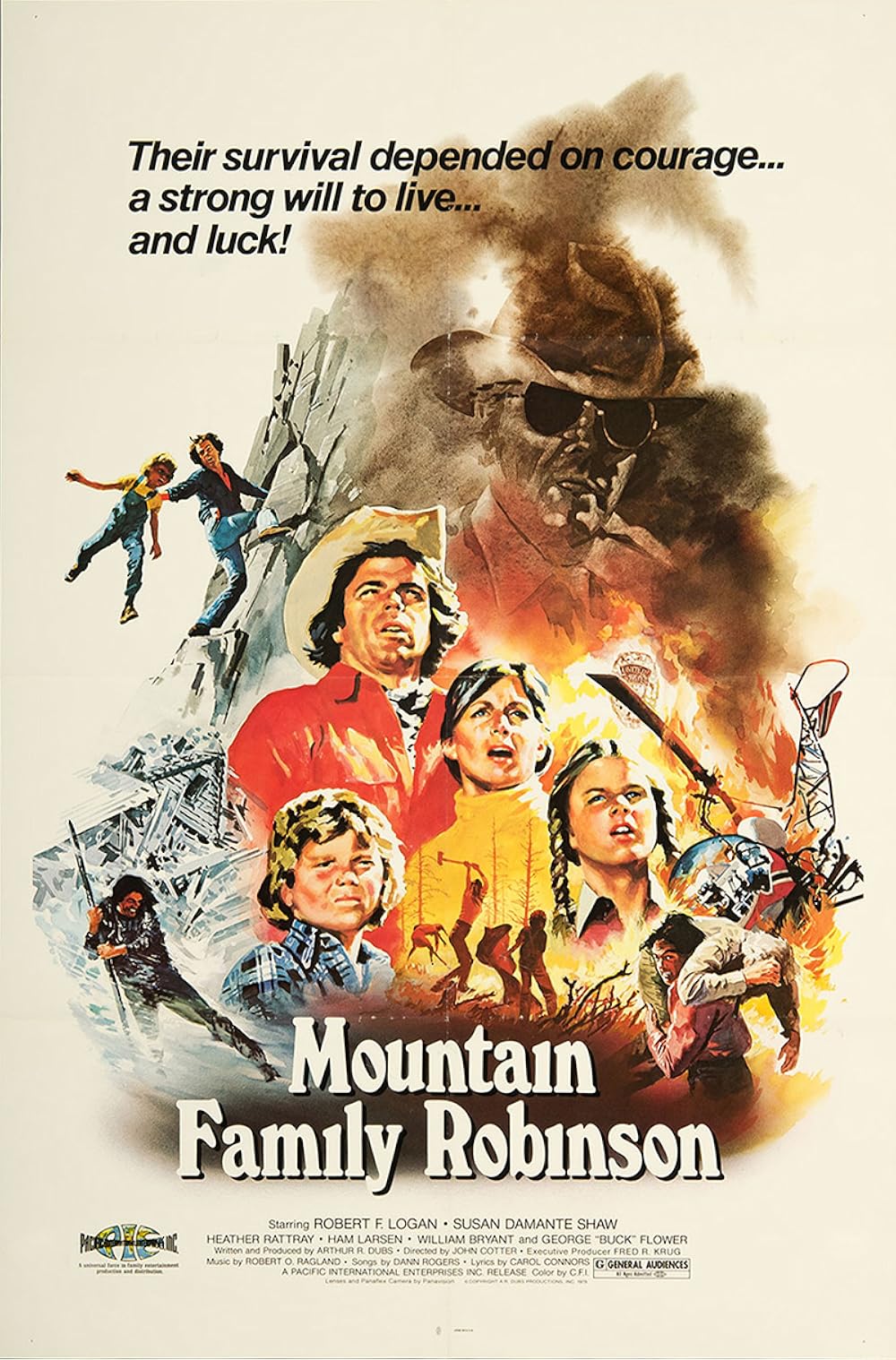
Adventures of the Wilderness Family 3 (1979)

By Richard Winters

My Rating: 1 out of 10

4-Word Review: Government threatens their home.

After surviving their first harsh mountain winter the Robinson family (Robert Logan, Susan Damante Shaw, Heather Rattray, Ham Larsen) are happy to go outdoors and enjoy the warmer weather of Spring, but there’s an unexpected problem. While doing a survey of the area a Forest Ranger (William Bryant) has surmised that the family doesn’t have rights to the property that they’re on. They must prove it’s a legitimate mining claim or move out.

I’ll give this film some credit, at least initially, that they made an attempt, albeit a feeble one, to mix things up. I was fully expecting more animal attacks, the formula had one occurring every 15-minutes in the first two installments, but with the exception of one minor one that happens to the boy when he runs away from home, there really isn’t any, at least to the family members. There is however, a confrontation between some mountain lions and the family’s pet dog, but the dog is able to fight them off, though I started to wonder how many times he could keep doing this. In the first two films the dog was also instrumental in scaring the other wildlife away, but you would think a domesticated pet would be at a disadvantage to one that had been living in the wild all their lives and were bigger in size. The fact that the dog constantly survives these battles and never even gets injured starts to raise the implausibility meter.

The two kids also feud a bit, which I found refreshing. Even the Brady Bunch had some conflicts between the siblings, as most any normal family does, so seeing everyone here be peachy towards each other the majority of the time is not only boring, but unrealistic. However, their disagreement, which amounts to nothing more than the two not talking to each other, which we don’t even see, but have described by the two parents, doesn’t last for more than a few minutes and then it’s all back to ‘happy family’. 

The mom finally does go back to L.A., something she had lightly threatened to do in the first two films but just like with the kids fighting it doesn’t add up to much as she comes back and says she’ll never leave again. Why then even add these elements if by the end it makes no difference to the story?

On a lesser note, are the bear cubs residing in the family’s cabin who never seem to grow and if anything, appear to have gotten smaller than when they were in Part 2. The Boomer character played by George ‘Buck’ Flower is also an issue as he’s a mountain man but never carries a gun making you wonder how he survives without one. For instance, how does he protect himself as animal attacks happen a lot, at least with the family, and what does he use to hunt for food? Maybe he lives completely off of berries and fish, but by the looks of his protruding belly it appears he’s eating something more.

Out of everything it’s the music that’s the worst. Because the story is so thin there are several segments featuring the family frolicking around while this sappy chorus by studio musicians get played that’s so sugary it’ll give you diabetes just by listening to it. It also has a dated sound from the 1940’s. The 70’s though was a period of many interesting music genres like rock, disco, soul, and even southern rock and media aimed at kids was trying to replicate it like ‘Sesame Street’ that had the Pointer Sisters singing a song that teaches children to count, but with a funky beat. Even religious people got into the times by introducing Christian Rock, so why does this movie have a soundtrack that’s so grossly out-of-step?

Spoiler Alert!

The third act in which the family openly refuses to leave their home after the Forest Ranger insists proves to be a letdown too as there’s no tense confrontation. Instead, the Ranger’s helicopter mysteriously crashes for no reason as the weather was sunny and when the family nurses him back to health he agrees to no longer push them out. However, all it would take is another government official to come along and the conflict would start all over making the tidy wrap-up/resolution unconvincing. The only positive thing to say is this was thankfully the final film of the series.

My Rating: 1 out of 10

Released: November 21, 1979

Runtime: 1 Hour 40 Minutes

Rated G

Director: Jack Couffer

Studio: Pacific International Enterprises

Available: DVD, Amazon Video, Roku
The Further Adventures of the Wilderness Family (1978)

By Richard Winters

My Rating: 1 out of 10

4-Word Review: Family battles the winter.

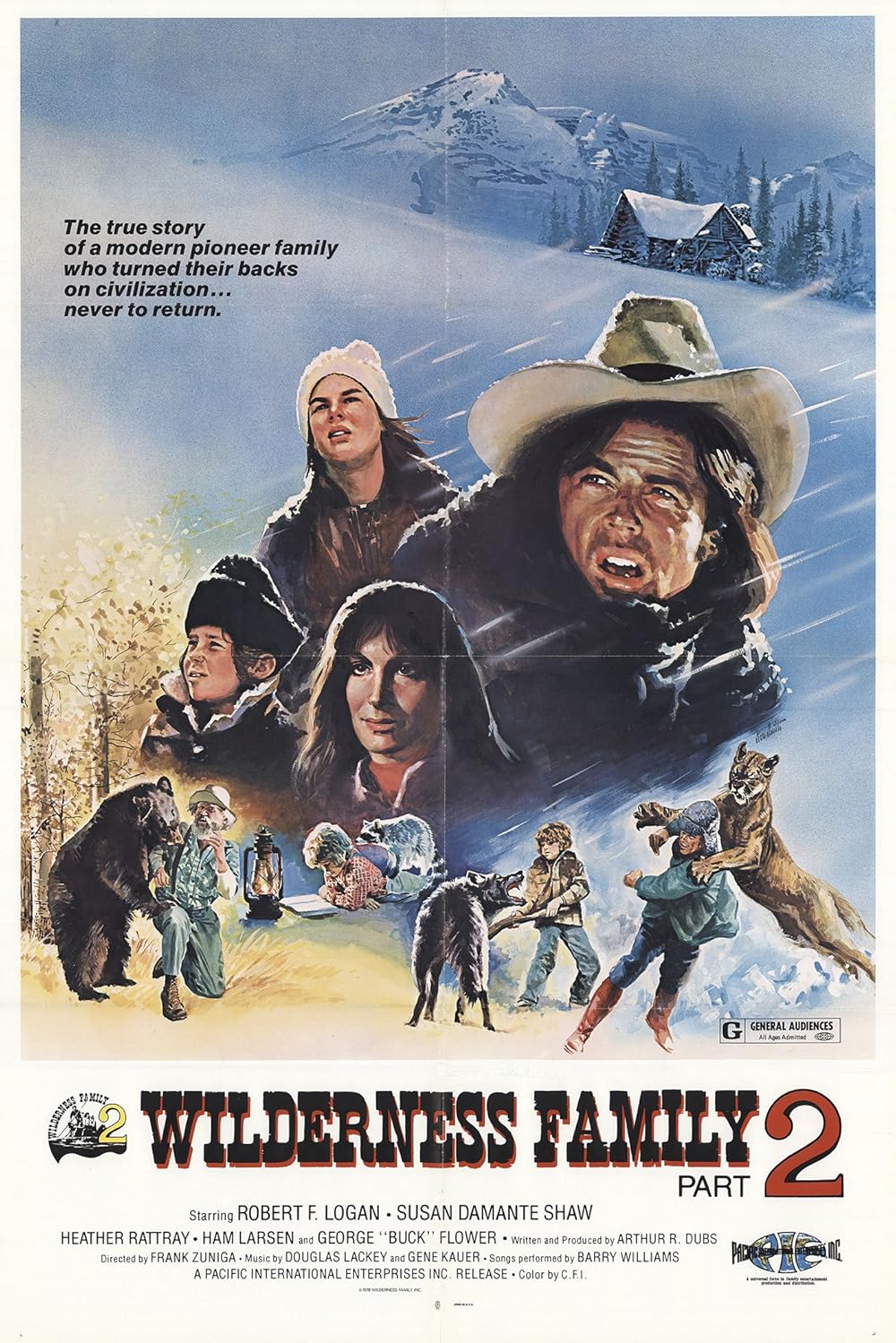
The Robinson family (Robert Logan, Susan Damante Shaw, Heather Rattray, Ham Larsen), who moved from Los Angeles to the wild of Colorado during the summer, now must contend with their initial winter there. The first snowfall they find beautiful and enjoy sledding down the hill, but once the holiday season has passed, they face the coldest month and excessive snow. This brings out a hungry pack of wolves lead by ‘Scarface’, which is a black wolf with a disfigured appearance. The wolves are so desperate for food they try breaking into the cabin while the father is away forcing the young boy of only 8 to try to shoot them with his rifle while his sister and sick mother take cover.

At this point it’s hard to believe that the family ever even lived in a city as they seem so well-adjusted to the wild it’s like they must’ve been born there. In fact they’re more able to rough-it than Boomer (George ‘Buck’ Flower) an old-timer who has been living in the mountains his whole life and yet when he sleeps alone as a guest in their back cabin and he becomes scared at seeing bear cubs and raccoons come in during the middle-of-the-night it’s actually the family that is shocked why that should bother anyone even though you’d think them originally being from an urban area it would be the reverse. The father also displays an uncanny knowledge like knowing that when a wolverine sprays a scent onto some meat that they had stored they can no longer eat it, but how the hell does somebody who had lived in Los Angeles his whole life prior be aware of that fact? It’s like he has a direct line to Wikipedia before cellphones, internet, or wi-fi was even a thing.

Like in the first there are more animal attacks though this time it all comes from roaming pack of wolves. However, since they had been through some hair-raising attacks before you’d think they wouldn’t venture back outside unless everyone was armed with a rifle. Yet they foolishly go out in the snow with no guns and then become frozen in terror when the wolves move in, but how many times does this same thing need to happen before they learn to come prepared? The previous attacks from the first movie had been so traumatic I was surprised they weren’t looking over their shoulders at every second versus frolicking around in the open without a care in the world until of course it’s too late.

The mother continues to be the only one who has any misgivings about the move, but then all the father needs to do is remind her of the traffic jams of the city and she immediately backs-off. However, those aren’t the only choices. They could just move to a small town, which wouldn’t have traffic congestion either, but still have running water, electricity, neighbors, and no wild animals breaking into their home in the middle of the night, so why not consider that option?

Spoiler Alert!

The climactic sequence is quite similar to the first one where the two kids and the mother are left fighting off animals’ intent on getting inside though here the anti is upped a bit by having the mom bedridden with illness and a raccoon accidentally setting fire to the place, which just makes it more contrived and isn’t gripping, or exciting. What’s worse is that a doctor flies in afterwards via a helicopter to take a look at the ailing mom and announces she is suffering from pneumonia, but then instead of taking her to a hospital he just leaves her there in the cabin with a big gaping hole in the roof with snow and cold pouring in, which will only make her condition worse.

End of Spoiler Alert!

I’ll give some credit to the picturesque wintertime scenery, but the corny song segments, sung by Barry Williams better known for having played Greg on the ‘Brady Bunch’ TV-show, act as nothing more than filler, which bogs an already anemic story down even further. Young children may be a little more forgiving, but adults should find it flat and one-dimensional. What’s worse is that they actually went on to make a third installment, which will be reviewed next.

My Rating: 1 out of 10

Released: November 15, 1978

Runtime: 1 Hour 45 Minutes

Rated G

Director: Frank Zuniga

Studio: Pacific International Enterprises

Available: DVD, Amazon Video, Tubi, Freevee, YouTube

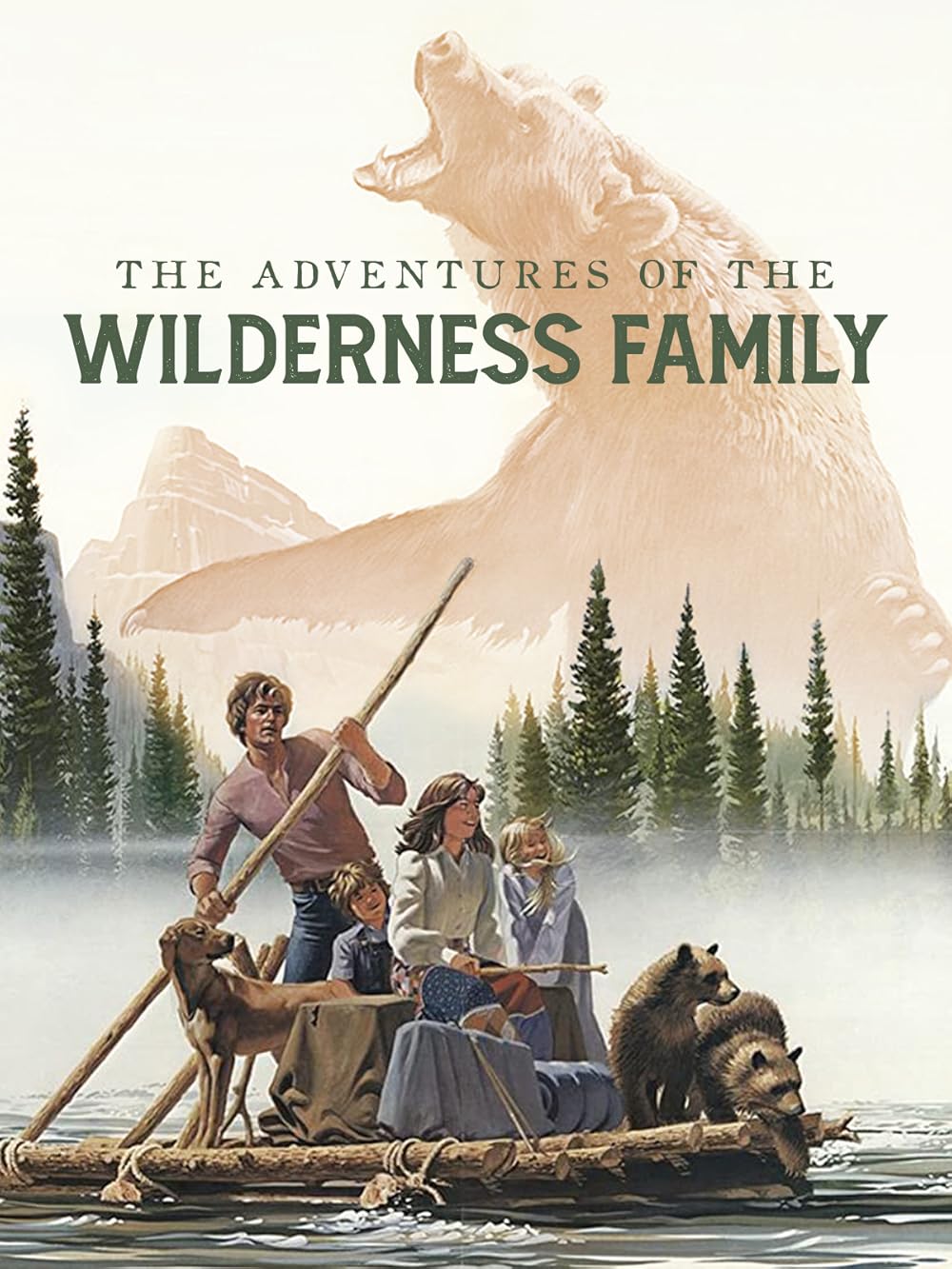
The Adventures of the Wilderness family (1975)

By Richard Winters

My Rating: 3 out of 10

4-Word Review: Living off the land.

Skip (Robert Logan) is a married father of two who finds his job as a construction worker a thankless routine. The smog of Los Angeles, which is where he and his family reside, is affecting his daughter Jenny (Hollye Holmes) who’s having breathing issues and nothing her doctor has prescribed is helping. He’s also tired of the traffic, which is why one day he tells his wife Pat (Susan Damante-Shaw) that he wants to get out of the city and move to the countryside. After some brief thought she agrees. The family then takes residence in an isolated Colorado cabin that’s rundown and filled with rodents. They’re able though to build a new cabin and move in but then must learn to fight the elements including mountain lions, wolves, and even grizzly bears.

Loosely based on the true-life story of a family that moved from Los Angeles to the remote regions of the Pacific Northwest that was written about in a 1974 New York Times article the film takes too much of a glossy approach to what should’ve been a deeper, more complex drama. The family makes their decision to move too quickly, literally on a ride home while in their pick-up. No scenes showing them having to say goodbye to their friends, selling off all of their belongings, or how they come about choosing the piece of open land that they eventually settle on. I felt for satisfactory emotional impact; to be able to fully appreciate the changes this family was going through those scenes should’ve been shown.

There’s also too much agreement amongst them. They’re all cool with leaving the city and don’t show even a fleeting second thought about it. As a kid that would mean giving up all their friends and playmates, TV-shows, and music and all the other conveniences of suburban living that I’m just don’t believe most children would roll with like here. It would’ve been much more of an interesting story had at least one of the kids been opposed to the move or put up a big fuss only to then maybe soften to the idea once they got out there. It could be done in reverse too with a child really excited to only to change their mind once they came face-to-face with the harsh reality of being in a wilderness long term. Going on a vacation to the woods is one thing but permanently leaving the only life you know to relocate to the middle of nowhere would certainly bring I would argue a lot of tears and adjustment and yet absolutely none of that occurs here making it vapid and lacking any type of character arch. 

What had me even more flabbergasted was that these kids get attacked by wolves and even bears and still don’t want to go back to the city. Yes, there would be smog, but I might be willing to begrudgingly accept that if it meant no more wild animal attacks. I was a kid once too, growing up in that time period, and if I got uprooted like that and went through all the hardships they did, I’d be screaming to go back home making the kids here seem unrelatable. The mother does to some extent put up a meek argument about wanting to go back, but it’s done in a light and gentle manner, and she immediately backs down when the others don’t agree, which makes for non-compelling interactions. 

The scenery is pleasant, filmed at the state park near Gunnison, Colorado, but it becomes like a nature propaganda movie where the only accepted opinion is that living in the country is great, even with the challenges, and no other point-of-view is allowed. Having a debate about the pros and cons of both would’ve added more subtext and made it less one-dimensional. The sappy songs done over the action is nothing but a time filler and proves how overall threadbare it is.

Sure there are a few intense moments including the climactic bear attack with the mother and children trapped in a cabin trying valiantly to fight him off, but whole thing works in a loop where every 10-minutes or so there’s some sort of confrontation with a wild animal, the family then considers giving up on the whole wilderness thing, only to agree to stay and then it starts all over again. Eventually by the third act it becomes quite uncompelling.  

My Rating: 3 out of 10

Released: December 19, 1975

Runtime: 1 Hour 39 Minutes

Rated G

Director: Steward Raffill

Studio: Pacific International Enterprises

Available: DVD, Amazon Video, Tubi, Freevee, Plex, Roku, YouTube

Wild Horse Hank (1979)

wildhorse

By Richard Winters

My Rating: 4 out of 10

4-Word Review: Teen girl saves horses.

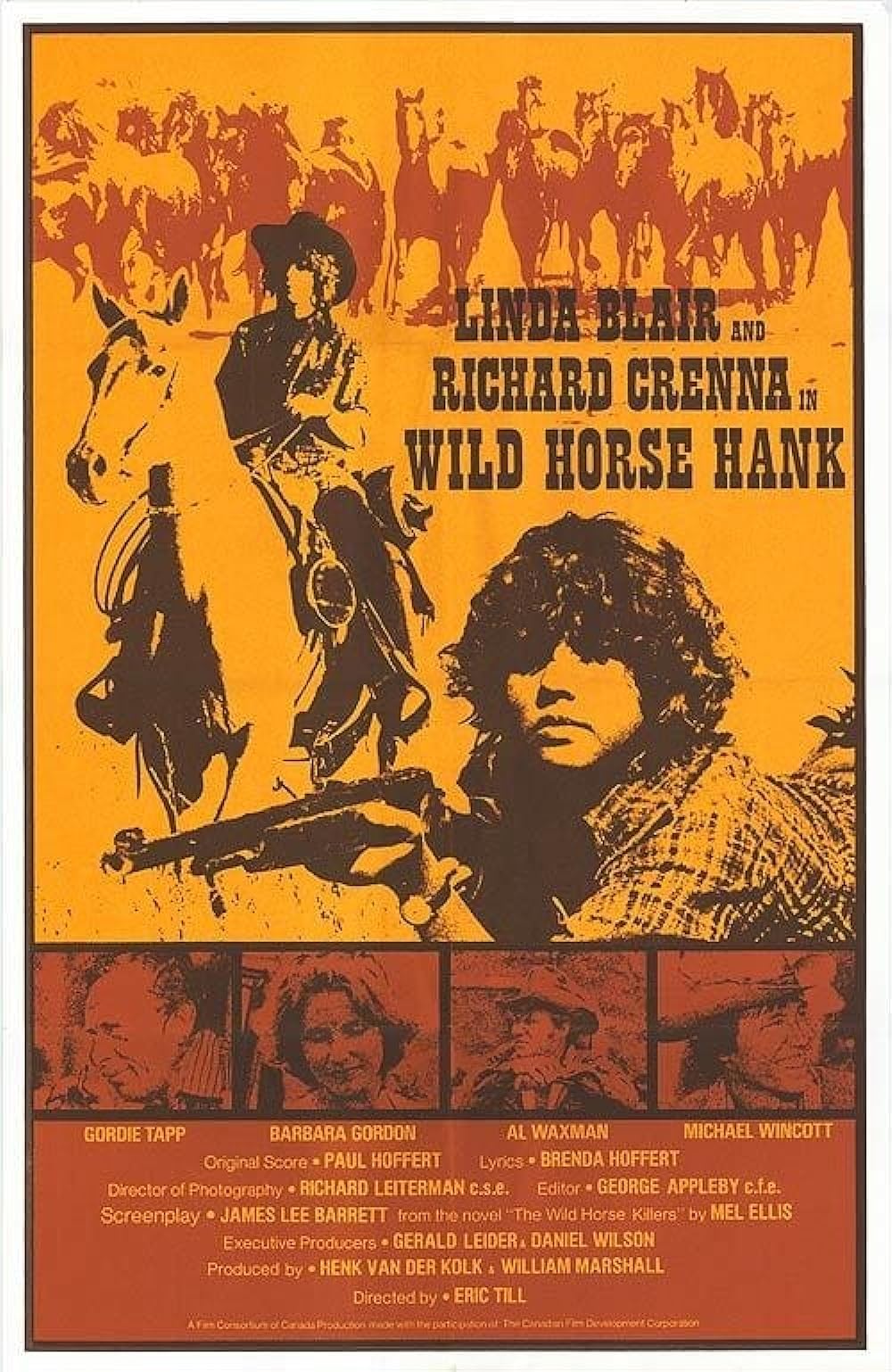
Based on the novel ‘The Wild Horse Killers’ by Mel Ellis the story centers around a teen girl named Hank (Linda Blair) who while tracking down her escaped stallion comes upon a group of men abusing some horses. She later learns that these men plan on destroying them in order to resell their meat for pet food. Hank becomes determined to herd them along treacherous terrain to the safety of a federal park where the horses will be free to roam without danger of being hunted. The problem is that it will be 150-mile trek and her father (Richard Crenna) doesn’t feel she’ll be up to the job, but Hank isn’t use to taking no for an answer and decides, with rifle in hand, to take on the challenge.

What stood out for me was the gorgeous western Canadian setting filmed on-location at both Dinosaur Provincial and Waterton Lakes National Park in the province of Alberta. The vast open view gives one a true sense of the outdoors and the rugged elements. The portrayal of the towns folk particularly the girlfriend of one of the bad guys, played by Barbara Gordon, who refers to her toddler son as her ‘popcorn fart’ and allows him to sip beer while complaining to everyone that he’s ‘a burden’ displays in raw fashion the economic hardship of country living and how fringe some in that region are and what levels they’d be willing to resort to in order to try and get out of it. It also gives a motivation for why the men are as savage as they are and it isn’t so much that they’re just ‘evil’, but more because other opportunities in such isolated areas are sadly few and far between.

The men are portrayed differently than in most other films where bad guys are given menacing looks and threatening presence. Here though they’re more like non-descript jobos you might find at the neighborhood bar, who on their own don’t pose much of a threat and like with the culprits in the classic film Straw Dogs don’t really become scary until they band together showing how otherwise benign people can become dangerous through peer pressure and financial insecurity, which in a way ends up making them even scarier.

Blair can certainly be a great actress if given the right material and knowing how much she loves animals I’m sure she took on this project because the theme was close to her heart, but the character doesn’t offer her much acting range. Normally the protagonist is supposed to grow and change in some way during the course of a movie, but here she’s one-dimensional. She’s super head-strong right from the start and remains that way to the end making her personal journey static. Had she been insecure at the beginning and then learned to overcome those feelings would’ve at least given the character a genuine arch.

I was surprised too that Crenna, who’s only adequate in his role and borders on being miscast, doesn’t go along with his daughter on her trek. He argues with her about how dangerous it is and yet ultimately waves her on her way and stays home. Had he tagged with her there could’ve been more opportunity for conversation and learned more about these people instead of long segments of silence, which makes the viewer more emotionally detached from what the character is going through instead of engaged.

I know I’ve complained about other adventure movies that throw in a hooky romance as a subplot, which I usually find annoying and yet this is a rare case where I wish it had been done. There’s a young good-looking guy named Charlie, played by Michael Wincott, who’s related to the poachers, but teeters the fence on whose side he’s on. He has some interactions with Blair during her trek and seemed like he was a potential love interest, but then he disappears only to come back later. He should’ve stayed all the way through as they made an interesting and cute couple with just enough animosity to keep it spicy.

Spoiler Alert!

There is a scene where Blair’s horse gets injured and she’s forced to shoot it, which I found powerful and the climactic sequence in which her father, who conveniently reappears again, gets all the truckers to create a roadblock, which stops the traffic, so the horses can cross the road. Overall though the film lacks subtext. The formula is too simple and straight forward. It may interest preteens especially those who love horses, but the main characters aren’t multi-dimensional.

My Rating: 4 out of 10

Released: May 15, 1979

Runtime: 1 Hour 35 Minutes

Not Rated

Director: Eric Till

Studio: Canadian Film Development Corporation

Available: DVD-R

The Frisco Kid (1979)

friscokid

By Richard Winters

My Rating: 4 out of 10

4-Word Review: Rabbi travels across America.

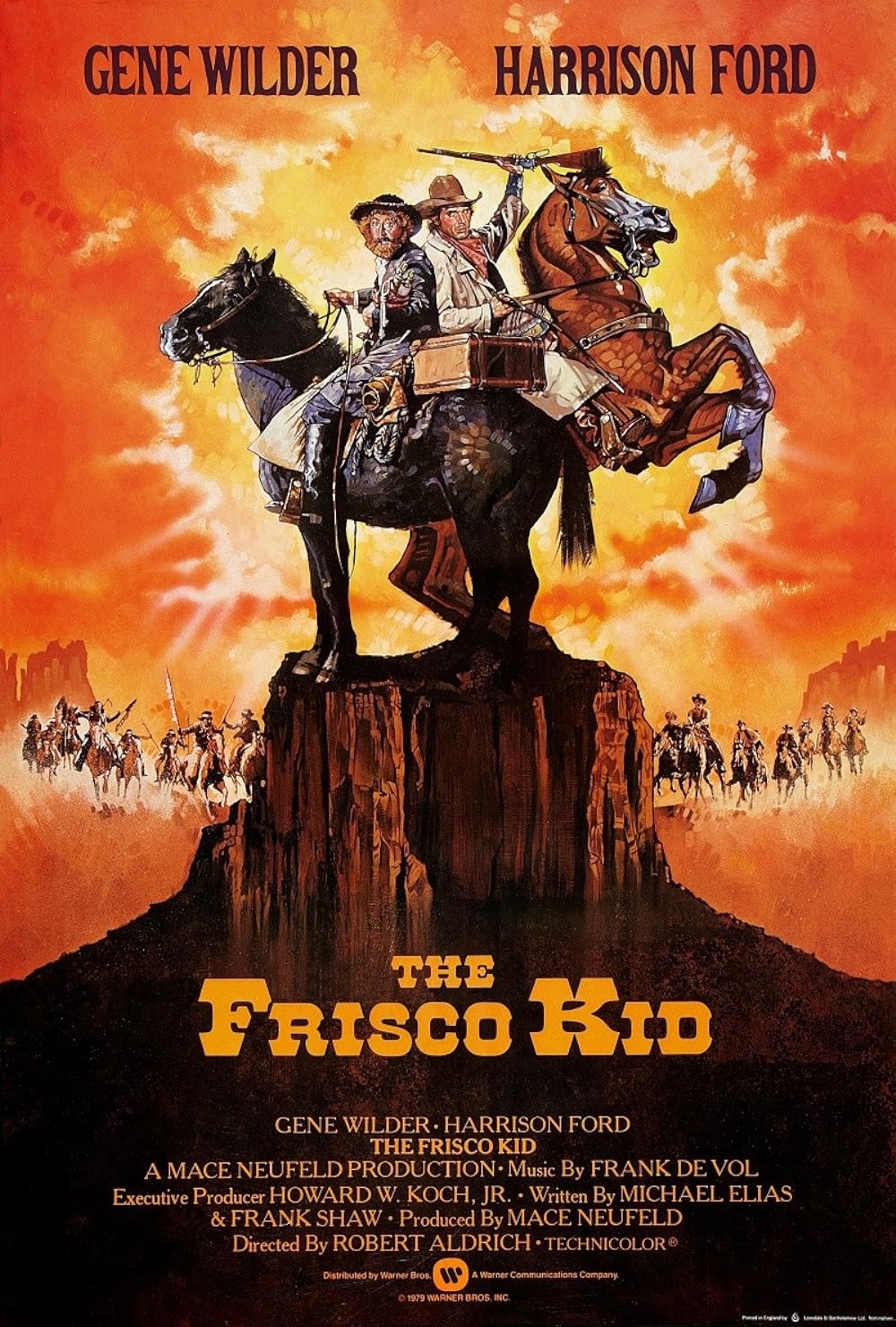
Avram (Gene Wilder) is a Polish rabbi traveling across the U.S. from Philadelphia to the west coast where he plans to head a congregation in San Francisco. He has all of his money taken from him by three unscrupulous men (George Di Cenzo, William Smith, Ramon Bieri) who initially befriend him only to eventually leave him stranded in the middle of nowhere. Avram is then offered some help by a local Amish community and even gets a job for awhile as part of a crew laying down train tracks. He’s eventually earns enough to buy himself a horse, so he can continue his travels. It is then that he meets up with Tommy (Harrison Ford), who unbeknownst to Avram is a robber. When Tommy steals money from one of the banks in a town that they pass through both he and Avram must go on-the-run in an effort to avoid getting caught.

The script was originally written in 1971 under the title ‘No Knife’ in reference to Avram who traveled with no weapon of any kind for protection. Originally John Wayne was considered for the role of Tommy, who was interested, but the studio could not meet his fee requirements so along with his declining health, he bowed-out. Dick Richards, who won praise for helming another western The Culpepper Cattle Companywas originally tabbed to direct this one, but during the pre-production phase he left the project, so it was given to Robert Aldrich, who, as Roger Ebert explained in his review, treated it like a routine assignment and didn’t put in a lot of heart into it.

The  shoddy effects are noticeable and really hurts the production. The interiors have a stage play quality and all of the outdoor scenes look like they were shot on a studio backlot. Certain long shots show steel silos in the background, which wouldn’t have existed during the turn-of-the-century time period that the story takes place while other shots are clearly just a matted photograph edited in. For a western to be fully effective it has to have some grit and atmosphere and this film unfortunately has neither. The first hour works more like darkly humored comical vignettes and while they succeed at being slightly amusing aren’t really all that captivating.

Wilder is excellent and probably the sole reason to see it, but I was more surprised by the presence of Ford who had just came-off starring in the landmark Star Wars, but here accepts second billing and isn’t even seen until 22-minutes in. I was more baffled by the motivations of his character and didn’t understand why he’d take-on the mission of helping Avram, a virtual stranger, through the perilous journey. This was a man who was quite self-sufficient and excellent with a gun and easily getting away with robbing people, so befriending a rabbi was just going to hold him back. A backstory was needed showing why he might seek-out a partner, even an awkward one like Avram. Possible  showing Tommy being a part of a larger gang who kick him out of the group and thus in a desperate need for companionship he befriends Avram, or maybe Avram gets Tommy out of some sort of jam and thus Tommy decides to help the rabbi on his travels in an effort to show his gratitude, but just having Tommy show up out of nowhere and become Avram’s instant buddy doesn’t really work. I would’ve liked to have seen a wider relationship arch too where Tommy would take much longer to warm-up to and understand Avram’s unique personality than he does.

Spoiler Alert!

The scene where Avram befriends an Indian Chief, played by Val Bisoglio, and teaches the Indian tribe how to do a Jewish dance is fun and the climactic duel between Wilder and Smith merits a few point as well. The scene though where Avram shoots a man gets botched. He had never used a gun before, so I would’ve expected him to miss his target especially since he was nervous and his hands shaking. The fact that he’s able to shoot the guy right through his heart the very first time he’s ever pulled a trigger is beating astronomical odds and not the least bit believable.

My Rating: 4 out of 10

Released: July 13, 1979

Runtime: 1 Hour 59 Minutes

Rated PG

Director: Robert Aldrich

Studio: Warner Brothers

Available: DVD, Blu-ray, Amazon Video, YouTube

‘Gator Bait (1973)

gator

By Richard Winters

My Rating: 3 out of 10

4-Word Review: Woman fights off rednecks.

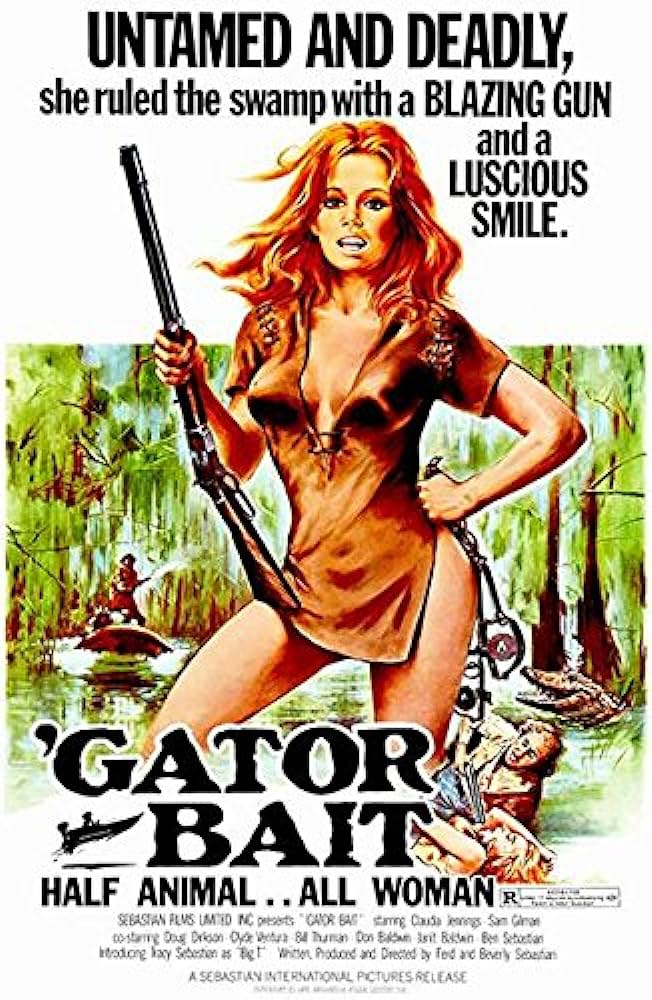
Desiree (Claudia Jennings) is a peasant woman living in the swamplands of southern Louisiana. To help her bring in an income she takes part in poaching of snakes. Deputy Billy Boy (Clyde Ventura) and Ben (Ben Sebastian) are sitting in a boat in the swamp waters when they catch Desiree in the act of poaching and decide to chase her down and arrest her, or try to use it to their advantage by getting some sex out of her in return for not taking her in. Desiree though proves to be more cunning than they expected as she out races them in her boat and then when she is finally cornered she throws the bag of snakes that she has into their boat, which allows her time to escape. The deputy then must fight off the snakes by using his gun to shoot them, but in the process accidentally shoots and kills Ben. He later tells his father, Sheriff Joe Bob Thomas (Bill Thurman) that it was Desiree that shot Ben and not him. The Sheriff then goes to the boy’s father (Sam Gilman) and when given the news the father decides to chase Desiree down himself with the help of his two other sons (Douglas Dirkson, Don Baldwin) and exact a violent revenge.

This was the 7th film written and directed by Ferd Sebastian and the 4th that he did alongside his wife Beverly. It’s most likely their best known effort and came about through their friendship with Claudia Jennings. Jennings, a former Playboy model, acted in one of their other films, another B-exploitationer known as The Single Girls, and struck-up a friendship with the husband and wife filmmakers and asked them to come-up with a script in which she could star. Beverly then wrote this script seemingly overnight, I’m not sure if it was actually written in that short of time, but judging from its creativity, which is very low, it’s not that hard to believe. It was then shot in a matter of 10-days in March of 1973 at Caddo Lake, which is a state park and bayou that borders Texas and Louisiana.

The film does start out with a good speed boat chase and it captures the swamplands in vivid detail and with the exception of one scene that takes place in the town of Thibodaux, Louisiana, everything else gets done in the swamps making it seem like its own little universe. The Sebastains do wisely keep their son Tracy Sebastian, from uttering any lines of dialogue as he plays Desiree’s mute kid brother who had his tongue cut-out, which is good as he later starred-in On the Air Live with Captain Midnight and it’s just a shame he couldn’t have played a mute there as well as he gives what I consider one of the worst performances ever put on screen, but here since he can’t talk his marginal acting ability is not as apparent.

Despite the few good points the movie is otherwise a failure where the tension wanes instead of intensifying as it should. Part of the reason for this is that the story spells everything out right away and offers no surprises, or twists. The boat chases are diverting at first, but soon turn stale as they become too prevalent and almost like a loop reel where we’re just seeing the same thing done over and over again with nothing new getting thrown in. The characters, particularly the male ones, are written as being extreme southern caricatures who are too one-dimensional to being even remotely interesting and I genuinely felt sorry for actors Gilman and Thurman who had already been in the business for many decades at the time and had even been in some better financed studio films, so to have to come down to starring in this brainless dreck had to feel like a low point, but I guess a paycheck is a paycheck.

Jennings’ presence doesn’t add much as she’s seen only sporadically and most of the film time is given to the bickering male yokels. She doesn’t, despite her past of being a Playboy Playmate, appear nude as that gets left to Janit Baldwin, who plays her kid sister Julie, which will disappoint male viewers who will most likely come into this expecting the pretty Jennings to be the one who gets unclothed. When Claudia does speak it’s a trainwreck too as she sounds like someone from Europe instead of a rural southern chick. Her character is also poorly defined and doesn’t really grow, or fleshed out enough to make her seem like a real person, but instead remains more of an enigma.

Spoiler Alert!

Some on IMDb describe this as a early variation of I Spit on Your Grave, but that really isn’t accurate. In the Meir Zarchi flick the rape attack takes up the majority of the film time while here the attack isn’t even on the main character, but instead the younger sister, which is also quite brief. The female character doesn’t kill off the men one-by-one like in the other one as here the men end up killing each other for the most part, with the character’s younger brother taking care of one of them, and the final one is left to live.

Had this been more violent and explicit I might’ve forgiven the rest, but overall it’s quite tepid. It’s basically a tease of a movie that promises way more than it delivers and it’s so entrenched in stereotypes that it makes you feel like you’ve seen it, or something quite similar, a hundred times before. Sure there’s a ‘surprise twist/reveal’, but this one could see coming early on as the father of the boy who is killed and who goes after Desiree with a vengeance keeps commenting on how attractive he found her mother, which doesn’t take a genius to read into that and know most likely what he’s implying. In any case it’s not much of anything even on a B-movie level, but nonetheless got made into a sequel in 1988 though without star Jennings who died in a car accident in 1979.

My Rating: 3 out of 10

Released: October 12, 1973

Runtime: 1 Hour 28 Minutes

Rated R

Director: Ferd and Beverly Sebastian

Studio: Sebastian International Pictures

Available: DVD-R

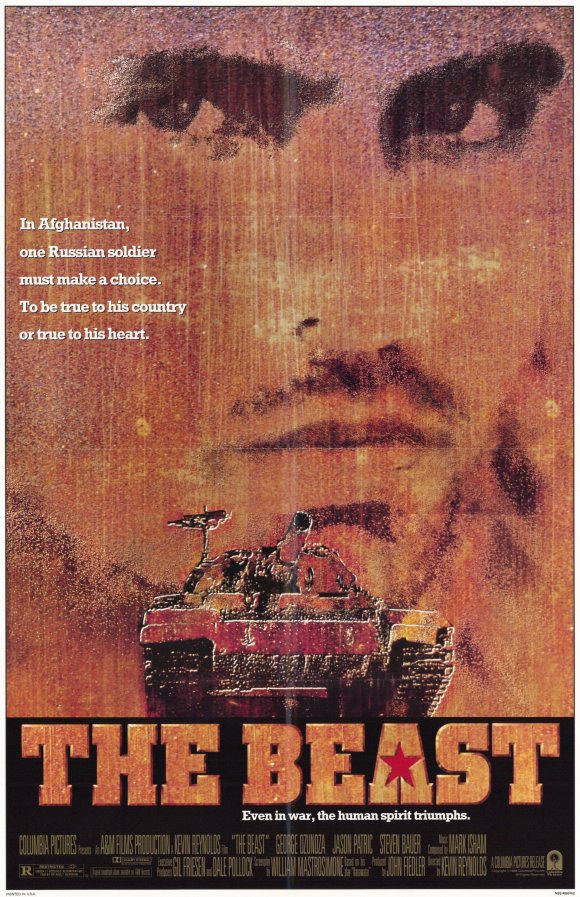
The Beast (1988)

beast1

By Richard Winters

My Rating: 9 out of 10

4-Word Review: Tankers stranded in desert.

During the invasion of Afghanistan in 1981 a group of Soviet tanks roll into a small village and callously bomb every home and building to a cinder. One of the tanks, led by Commander Daskal (George Dzundza), orders his driver Konstantin (Jason Patric) to run over an Afghan man to the shock and horror of everyone else. When Taj (Steven Bauer), who is one of the Afghan fighters, returns to the village and sees all the carnage, including the death of his father and brother, he becomes committed to seek revenge. He assembles a small group of fighters to go out into the desert to search for the tank, which they call the beast, and which has become lost when it takes a wrong turn and thus stranding them in the middle of nowhere with no option but to turn around and go back to where they came from, which they want to avoid. As the gas and rations become scarce the tensions mount particularly between Daskal and Konstantin who share widely different viewpoints as well as with Samad (Erick Avari) an Afghan interpreter who Daskal no longer trusts and now considers to be a traitor.

This film was requested for review by a reader of this blog named Nick (it was requested over a year ago and I do apologize that I got caught up with things and forgot about watching it). What struck me though is how he said it was such a gripping film and one of the best war movies, in his opinion, ever made and yet few people, including myself, had ever heard of it. I figured if the movie was as great as he said it should be better known and feared it might not live up to his billing, but when I watched it I found myself just as caught up in it as he said and impressed with how emotionally compelling it was from beginning to end.

Why this great film fell into obscurity and was dismal at the box office where it managed to only recoup a paltry $161,000 out of an $8 million budget is yet another example of the cruelty of the Hollywood business. It was directed by Kevin Reynolds who had just come-off doing the breezy road comedy hit Fandango and who wanted to follow that up by doing something completely different. He decided to do a filmization to the stageplay ‘Nanawatai’ by William Mastrosimone who was inspired to write the play after witnessing a group of mujahideen fighters capture and execute a Soviet tank crew in 1986. David Puttnam, the then head of Columbia Pictures, loved the script and threw his full support to the project. However, during the course of the filming Puttnam was ousted and Dawn Steel took over. She wasn’t as enthusiastic about the movie and when it was completed it got released to only a few theaters with no promotion. Few people heard or saw it and it went into oblivion only to finally several decades later get the recognition it deserved through the release of the DVD and has now acquired a fairly sizable cult following.

The use of a hand-held camera and graphic violence, including seeing the man get run over by a tank and then afterwards the remains of his mangled body, all help accentuate the harsh realism of war. Having it shot in a desert in Israel helps add to the authenticity as deserts in North America look different and cannot match the distinct topography of a Middle Eastern one. Leonard Maltin in his review, which I didn’t read until after viewing the film, describes the plot as ‘predictable’ and the pace ‘ponderous’ while the characters are in his opinion ‘stereotyped’, which I couldn’t disagree with more. While I haven’t seen every war movie out there I found this one to have many intriguing twists that I wouldn’t have guessed. The characters have distinct personalities and the pace is perfect with each scene and line of dialogue opening up a new story wrinkle.

My only two complaints is that the Afghan townspeople at the beginning are a bit too blissful as after all a war was going around them, which they were aware of, so I’d have thought they’d be more guarded and only cautiously gone outside if completely needed versus behaving as if they’re in a bubble with no worries about the horrors around them until it finally happens. The Russian soldiers are too Americanized. Great effort was put into the Afghans to make them seem authentic including having them speak in their native tongue with subtitles, but actors playing the Russians not only speak in English, but do it with American accents. I’m okay with them talking in English as forcing them all to learn Russian would’ve been too exhausting and requiring the movie to be completely subtitled, so I’m okay with that compromise, which seemed almost necessary. I presume for the project to get financed the studio insisted on American actors to play the parts in order to make it more marketable, so I understand that concession as well, but at least have them sound Russian should’ve been a requirement as many times throughout the movie  I had to keep reminding myself this was a Russian army as outside of George Dzundza’s brilliant performance, the rest hardly seemed foreign in any way.

Alternate Title: The Beast of War

My Rating: 9 out of 10

Released: September 16, 1988

Runtime: 1 Hour 51 Minutes

Rated R

Director: Kevin Reynolds

Studio: Columbia Pictures

Available: DVD, Amazon Video, Tubi

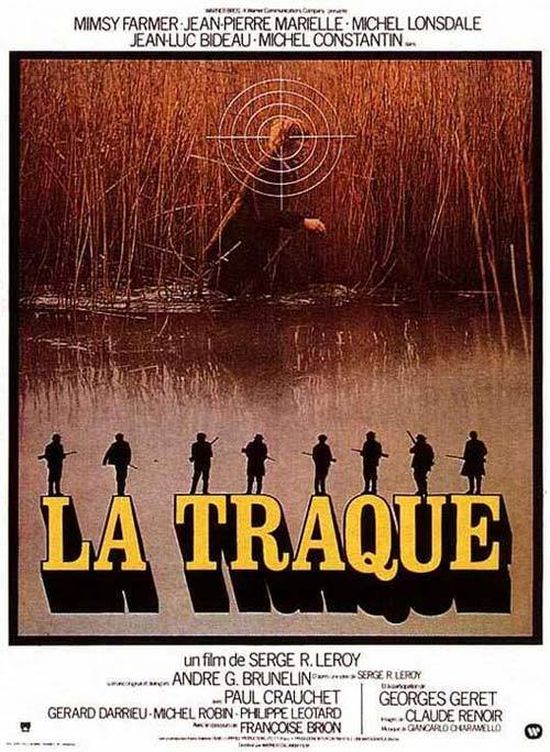
The Track (1975)

track3

By Richard Winters

My Rating: 9 out of 10

4-Word Review: Hunters chase down woman.

Helen (Mimsy Farmer) is an American who has traveled to rural France in order to teach at a local university. At the train station she meets Philippe (Jean-Luc Bideau) who agrees to take her to the isolated cottage where she is to stay. Along the way they come into contact with Philippe’s boisterous friends who drive them off the road. The men are going out for a wild pig hunt and a few of them particularly Paul (Philippe Leotard) shows a sexual interest in her, but Philippe assures her that they’re ‘harmless’. While Helen moves in to her new place the men go off on their hunt, but when she walks outside to check-out a nearby barn she again comes into contact with Paul along with his brother Albert (Jean-Pierre Marielle) and Chamond (Michel Robin). Paul uses the opportunity to rape her while Albert holds her down and Chamond acts as the lookout. As they are about to leave Helen shoots and critically injures Paul with Chamond’s gun, which he had inadvertently set down, before she goes on the run deep inside the forest. The rest of the group tries tracking her down in an attempt to negotiate some sort of deal, so she won’t go to the authorities, or silence her permanently if she still insists that she will.

Some have labeled this the French version of Straw Dogs, but I consider it much more like Deliverance. In that film you had middle-aged suburbanite males wanting to prove their ‘macho manhood’ by roughing it in the wilderness for a weekend only to find that they weren’t quite as prepared for the harsh elements as they thought. This film works in kind of the same way. The men go hunting to get in touch with their rugged side, but when forced to face tough issues, like helping a woman in distress, they succumb to group pressure and prove ultimately to be wimpy.

Unlike other films in the rape/revenge genre the main character here is shown the least. Farmer does well during the rape segment and screams and fights in a way that elicits genuine horror, but otherwise her facial expressions and mannerisms are quite one-dimensional though I was impressed with the way she did her own stunt work and forced to navigate her way through some difficult and inhospitable terrain.

The main focus is on the male characters who are fascinating and multi-faceted. The most interesting aspect is how they start-out seeming benign and domesticated only to slowly unravel into a aggressively threatening group. The segment where they kill a pig and the animal struggles after being shot will make some animal activists uncomfortable, but like with Jean Renoirs’ Rules of the Game, which had a hunting segment even more graphic than here, it does effectively illustrate that if people are willing to kill an animal for sport; how thin is the line for them to cross-over to a person?

The lack of a soundtrack is a plus. Many thrillers will have a pounding score and sometimes it works to accentuate the tension, but here the natural sounds particularly Helen’s heavy breathing as she runs through the underbrush is far more effective. There’s also no forewarning of what’s going to happen nor buildup. Everything occurs out of nowhere. Most victims who survive a crime will say the same thing that things were peaceful and normal one minute and then all hell broke loose the next.

Spoiler Alert!

The only two things I might’ve done differently had I directed was not showing the rape. As rape scenes go this one is rather mild, but my feeling was it would’ve been creepier had the viewer been in the dark about what occurred as were initially the other men. They’re told the story that the gun went off accidentally and the woman ran in a panic only for them to slowly learn the dark details later on. Having the viewer come to this realization along with the other men would’ve added an extra layer to the story versus it being spelled out.

While the ending is effectively unsettling I still wanted a denouement showing how the strains of this experience changed them, which would’ve added insight. Overall though it’s a brilliant especially for the way it reveals how some of the men considered themselves more ethical than the others only to end up being no better. Everyone likes to feel that they, or their friends, would do the right thing when put in a stressful situation and ‘be the hero’, but this movie expertly examines how that might not always be the case.

Alternate Title: La Traque

Released: May 14, 1975

Runtime: 1 Hour 32 Minutes

Not Rated

Director: Serge Leroy

Studio: Warner Brothers

Available: DVD-R (French with English Subtitles) (dvdlady.com, jfhi.com)

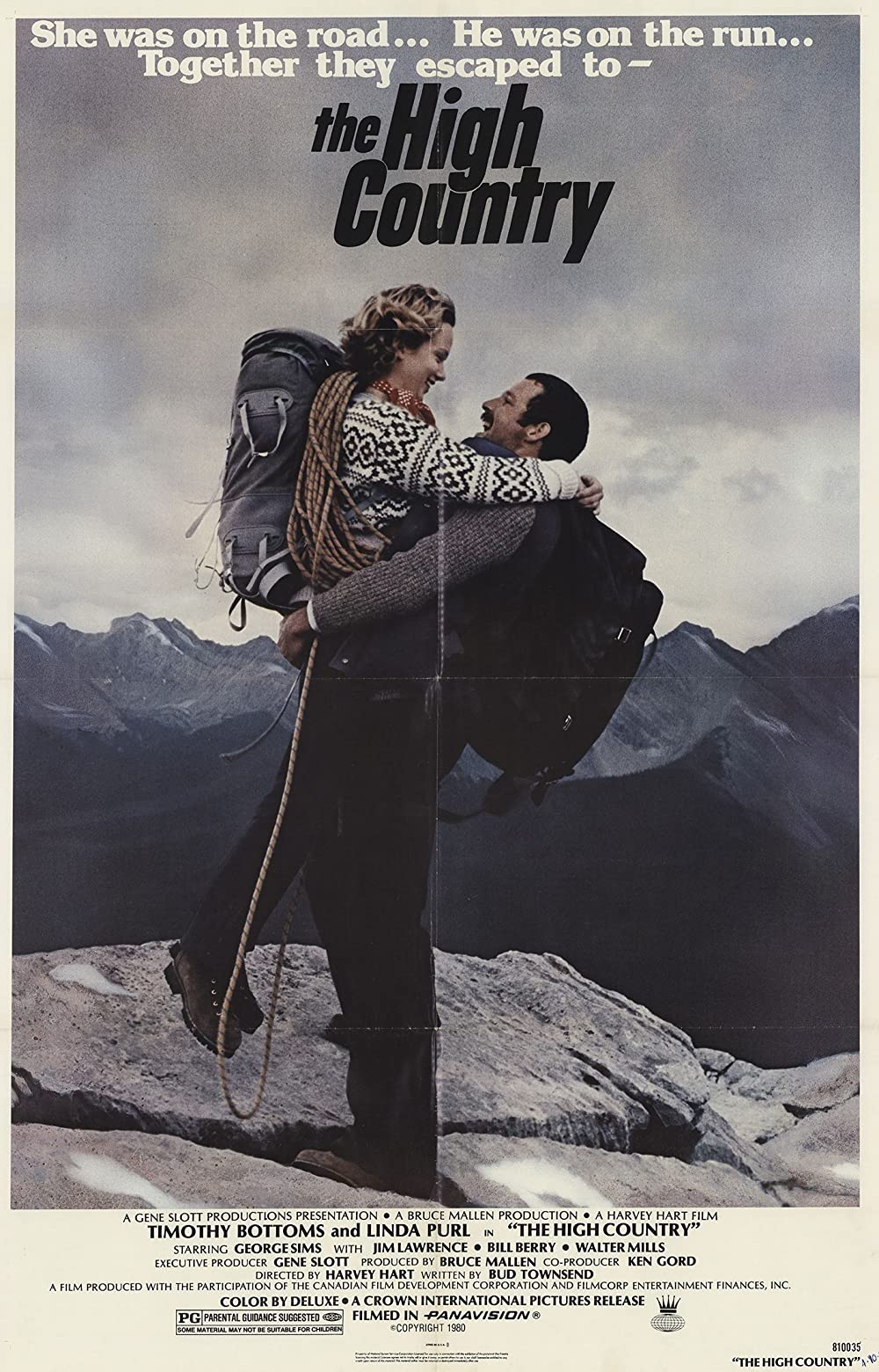
The High Country (1981)

high

By Richard Winters

My Rating: 2 out of 10

4-Word Review: Escaping into the mountains.

Jim (Timothy Bottoms) is arrested for dealing marijuana and taken by police car to jail when the brakes in the vehicle go out and the car overturns, which allows him to escape, but not before being shot in the arm by one of the officers. Kathy (Linda Purl) is an adult woman, who can’t read while also suffering from other learning disabilities. She leaves the family that she’s been staying with and goes hitch-hiking when she comes upon the injured Jim. Initially the two have nothing in common, but she’s able to help him with his injury and guide him over a rugged mountainous terrain, which will be out of reach to the authorities who are after him and in the process the two begin to form an unlikely bond.

While the film doesn’t have much to cheer about I did at least like the mountain scenery, filmed on-location at the Banff National Park in Alberta, Canada. There’s also a few marginally tense moments where the two scale the side of the mountain, where like in the movie Deliverance, it’s the actors doing the actual climbing and not stunt people. I also enjoyed the offbeat humor of having Jim attend a bar where a sign hangs that read’s ‘absolutely no profanity allowed’ (what sort-of self-respecting bar would have this rule. I guess only in ‘nice’ Canada) and a brawl breaks-out when one of the patrons decides to swear.

The performances are engaging especially Purl’s whose blue-eyes exude the perfect look of innocence. I was though frustrated that we never get to see these ‘cigarette trees’ that she mentions and says is somewhere in the mountain country as I was expecting the movie to have an answer since the script brings it up. The film also initially shows Kathy reading a story to some children making it look like she can read, but we’re told later that she was only ‘telling’ the story, but a good director would clue the viewer in right away that something isn’t right with her reading and those around her can sense it.

Bottoms is strong too though it’s surprising how far his career had tumbled where in the early 70’s he was getting starring roles in acclaimed Hollywood movies, but by the 80’s was relegated to low budget indie projects and foreign films. His character here is a bit snarky and he’s hard to warm-up to though the scene where he saves Kathy helps remedy this. The fact though that he has a bullet lodged in his body and is initially in great pain with a bad infection and yet this all magically gets healed without ever receiving proper medical care seemed dubious.

Spoiler Alert!

I was not so happy with the father character who arrives pretty much out of nowhere in the third act and is somehow able to track the two down when no one else can. It’s never clear whether this guy is meant to be a nemesis, or not and he should’ve been introduced earlier and made a stronger impression upfront. He also looks way too young to be Kathy’s father, who’s clearly in her 20’s and yet he doesn’t have any gray hair and with his big bushy mustache and muscular physique looked better suited for a 70’s gay porno.

The dumbest thing though is how at the end it implies that Jim and Kathy get into a romantic relationship, which defies all credibility. There’s too much of an extreme mental disparity between the two. It will always be a parent-child scenario versus that of two people on equal footing. In fact that’s one of the reasons I got bored with it as there’s clearly limits to how far this quasi friendship, with Kathy being stuck with the mind of a 10-year-old, can go and the fact that the film creates this idea of a wondrous romance is just too absurd to swallow. The start of a nice little friendship where they become pen-pals would be cute enough, but anything more than that; no!

My Rating: 2 out of 10

Released: March 20, 1981

Runtime: 1 Hour 38 Minutes

Rated PG

Director: Harvey Hart

Studio: Crown International Pictures

Available: None

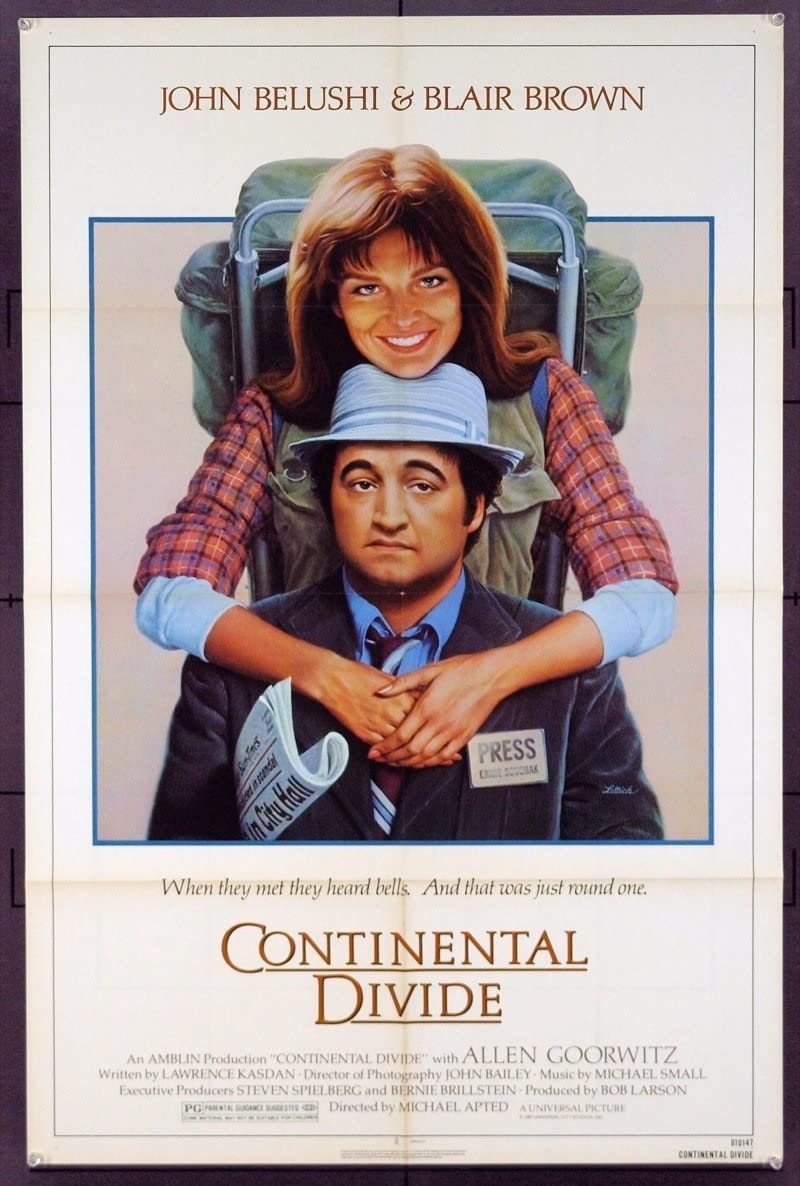
Continental Divide (1981)

continental1

By Richard Winters

My Rating: 2 out of 10

4-Word Review: Reporter falls for naturalist.

Ernie Souchack (John Belushi) is a newspaper reporter for the Chicago Sun-Times who routinely covers the criminal activity of the local mob, but when his reporting gets a little too close to the action the mob boss (Val Avery) has Ernie beaten-up by a couple of corrupt cops. Howard (Allen Garfield), Ernie’s editor, decides to send him to Colorado for his own protection where he’s assigned to do an interview with the eccentric outdoor enthusiast Nell (Blair Brown). Nell, who spends her days researching eagles, lives alone in a tiny cabin high-up in the Rockies and normally does not take a liking to any reporters. Ernie though moves into her place for 2-weeks and while their initial reactions to one another is frosty they eventually end-up in a romantic relationship.

Hard to imagine that Lawrence Kasdan, who has written and directed so many great movies in his career (Body Heat, The Big Chill), was the screenwriter for this one, but this clearly isn’t his best work. The story is obvious and the set-up too forced. Nothing is worse than watching a movie where you know exactly how it’s going to end right from the start. Part of the problem is that Brown’s character is not played-up enough and she’s nowhere near as feisty as she billed as being. I found it unnerving too that she’d let a strange man burst into her cabin out of nowhere and sleep inside her place in the same room with her without any real protection to stop him from getting frisky if he wanted to. That wooden stick she used wasn’t going to help her especially if he attacked her while she was asleep. For all she knew this guy could’ve been an escaped killer, so what was going to prevent him from assaulting her in the middle of the night?

The main issue though is that these two had absolutely nothing in common, so the odds that a relationship could ever actually form between them is virtually nil. I know that there’s that age-old adage ‘opposites attract’, but there still needs to be a few things that the two have in common, despite the other differences, for that to work. The story’s logic is that spending 2-weeks with someone will be enough to create that romantic feeling, but if that were the case then every teen would automatically fall for their fellow campers each year during summer camp.

I could understand from Belshi’s perspective how Brown would attract him sexually, but what this tubby, out-shape, smoker offered her to make her go so ga-ga over him, I didn’t see. A far more believable romantic partner for her was Max Birnbaum (Tony Ganios) who is a muscular former NFL player who dropped out of society and lived as a hermit in the wilderness. The two share a couple of trysts, but then he conveniently disappears even though he gave the story some potential dramatic conflict and should’ve stayed.

Some people like this movie because it gives you a chance to see Belushi in a wider acting range, but he’s not very funny and doesn’t have anything to say that is either witty or clever. Having the second half of the film shift back to Chicago where Brown comes to visit might’ve been interesting had her character been better defined and we could see her difficulties in adjusting, but since her eccentricities never gets played-up enough these scenes add little.

Spoiler Alert!

I’ll agree with Leonard Maltin in his review where he stated that Kasdan clearly couldn’t come up with a finish and that’s the truth. Having the two go through a quickie, makeshift wedding only to then return to their separate ways and continue to live far apart made no sense and didn’t really ‘resolve’ anything. What’s the use of getting married if you’re never going to see the other person? The script needed more fleshing-out and seems like a broad outline in desperate need of character development and a more creative scenario.

My Rating: 2 out of 10

Release: September 18, 1981

Runtime: 1 Hour 43 Minutes

Rated PG

Director: Michael Apted

Studio: Universal Pictures

Available: DVD, Blu-ray, Amazon Video, YouTube