Category Archives: Movies that take place in the Big Apple

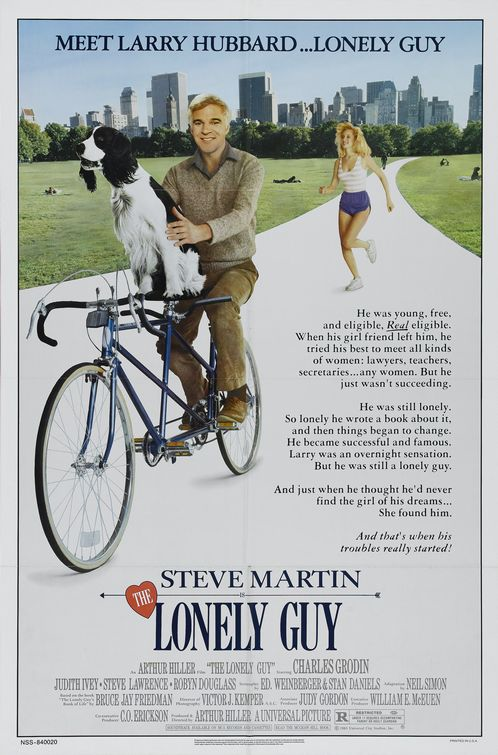
The Lonely Guy (1984)

the lonely guy

By Richard Winters

My Rating: 6 out of 10

4-Word Review: He needs a girlfriend.

This film almost seems like an extension of Steve Martin’s character in The Jerk and could probably be retitled ‘The Jerk Goes to the Big Apple’. Here we find the same incredibly vapid, highly benign character looking for love and adjusting to the pitfalls of being single.

Like with The Jerk the film taps into the same absurd type of humor some of which is quite funny, but other parts become stretched and even stupid. The best stuff comes at the beginning and then starts to get strained by the end. There is no real story and the whole thing is just loosely structured hit-or-miss comical bits casually tied around the theme of loneliness.

Based on the novel by Bruce Jay Friedman the script was written by Neil Simon, Ed Weinberger and Stan Daniels three titans of comedy who have written some smart stuff in the past and yet I found their script here to be a bit annoying. It takes on the serious issue of social alienation with kid gloves. The points that it makes are superficial with no effort to dig deeper or make any type of real statement. The single male characters are too hopeless and needy and too much emphasis is placed on relationships and the misconception that people who are in them are always happier than those who are not. It also acts like being in relationships will somehow solve everything.

Judith Ivey makes a nice addition as Martin’s eventual girlfriend. She is not glamorously beautiful and therefore the two make a nice and realistic looking pairing. Her scenes and interactions with Martin make the film much stronger.

Unfortunately with Charles Grodin, who is dynamic at dry deadpan humor, is not used to his full potential. Merv Griffin has an unfunny cameo and the recently departed Joyce Brothers also appears with her nerdette persona that was beginning to wear thin.  Singer Steve Lawrence is completely miscast as a ‘chick-magnet’.

The bit involving lonely men jumping off the Brooklyn Bridge every two minutes borders on being tasteless and the running gag involving Ivey having an orgasm every time a man sneezes is just plain dumb. However, the part where Martin argues with a policeman over whether the poop on the sidewalk is from his dog is a gem. There is also a hilarious bit involving Groodin throwing a party with cardboard cutouts of famous movie stars as his ‘guests’ although don’t look for one of Gene Hackman because his have to be reserved one-week in advance!

My Rating: 6 out of 10

Released: January 27, 1984

Runtime: 1Hour 30Minutes

Rated R

Director: Arthur Hiller

Studio: Universal

Available: VHS, DVD, Amazon Instant Video
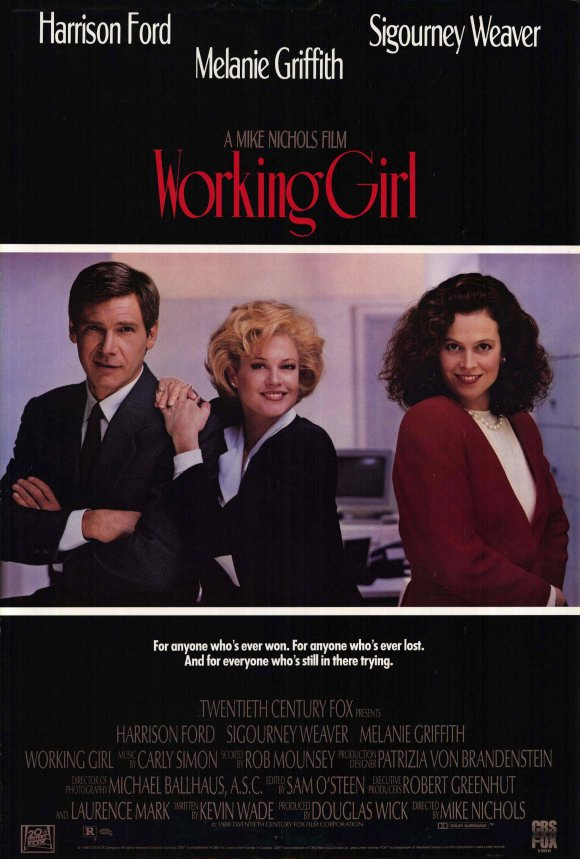
Working Girl (1988)

working girl

By Richard Winters

My Rating: 6 out of 10

4-Word Review: She’s moving on up.

Tess (Melanie Griffith) is a 30-year-old secretary working at an acquisition and investment firm on Wall Street and looking to move her way up. She comes up with an investment strategy for one of the company’s clients and passes the idea off to her boss Katherine (Sigourney Weaver) who says she’ll run the idea by some of her superiors. A few days later Katherine tells Tess that her idea was not well received and then Katherine goes on a skiing trip and breaks her leg. In her absence Tess looks after Katherine’s house and finds a memo on Katherine’s home computer were she tries to make Tess’s investment idea seem like her own. Tess decides to get her revenge by pretending to have more authority than she does and going directly to the client with her idea. In the process she meets fellow executive Jack (Harrison Ford) who helps her with her ploy while also starting up a romance with her.

The movie starts out well creating a believable office atmosphere that nicely balances the humor that keeps everything on a realistic believable level. Too many times office comedies have characterizations that are too broad, which thankfully is not the case here. The romance between Jack and Tess is not forced and the sparkle they share seems real and does not bog down the story like in certain films, but instead helps compel it.

Unfortunately the second half falls too much into the same old formula. The climatic showdown is protracted and contrived. Certain twists are thrown in that instead of making the story more interesting helps only to make it less believable. The wrap-up is too neat and tidy as well as having a Frank Capraesque quality that get poured on too strong ultimately making this film despite its good start fluffy and superficial.

Griffith does well in the lead. She plays a character that is relatable and likable although I did feel that she becomes discouraged a little too easily. I also didn’t like the way that she goes back to her boyfriend Mick (Alec Baldwin) even after she caught him cheating on her, which to me seemed to make her weak. Although the film features a plethora of women with the puffy 80’s hairstyle (for some reason you will probably see more of that hairstyle here than in just about any other 80’s movie) I felt it looked great on her. The scene where she is walking down the street after she has it cut short and wave put in it makes her look almost exactly like her mother Tippi Hedren in The Birds.

Ford is again impressive while he takes a role that tests his acting range and on-screen persona. Instead of being the dominating self-assured character that he usually is he instead is more pensive and subdued while letting the women around dominate the proceedings. He is also quite amusing. The scene where he warns Tess about his potentially messy apartment is funny as is the part where he puts on a new dress shirt while still in his office. However, his best moment comes with the amusing way he gets himself out of a jam when he is caught going to the bathroom while inside the stall of a ladies restroom.

Baldwin is perfect as the no-good boyfriend. He looks downright boyish here almost like he is barely out of puberty. He also gets the film’s best line, which occurs when Tess walks in on him in bed with a naked woman on top of him and he states “This is not what it looks like.”

The only performance that I did have a problem with was Joan Cusack as Tess’s friend Cyn. Her Brooklyn accent is much too heavy and her puffy hairstyle looks larger than her entire head. Her eye shadow gives her almost a clown-like appearance and whether she was intended for comic-relief or not nothing she says is funny.

Carly Simon scores with her rousing theme ‘Let the River Run’, which won the Academy Award. The aerial shot of the Statue of Liberty that is shown at the beginning as well as the Manhatten skyline captured during the closing credits ties in nicely with Carly’s vocals.

Spoiler Alert!

The twist which comes during the second half where it is found that Jack is secretly seeing Katherine as his girlfriend was too much of a coincidence that did not make the story more interesting. There is clearly no chemistry between Katherine and Jack in their scene together and it is the one spot in the film where things get overblown. It also makes Weaver’s character needlessly campy and deluded. Having Tess accidently drop her day planner literally at Katherine’s feet, which is where she finds out about Tess’s involvement with Jack is way, way, waaaaaaaaaaaaaaay too convenient and a serious sign of weak and uninspired writing on behalf of screenwriter Kevin Wade.

My Rating: 6 out of 10

Released: December 21, 1988

Runtime: 1Hour 53Minutes

Rated R

Director: Mike Nichols

Studio: 20th Century Fox

Available: VHS, DVD, Amazon Instant Video
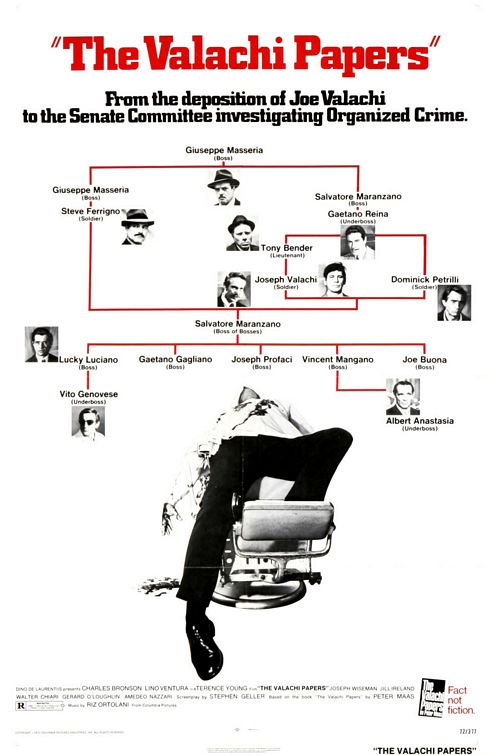
The Valachi Papers (1972)

the valachi papers 1

By Richard Winters

My Rating: 7 out of 10

4-Word Review: Testifying against the mob.

Based on the bestselling novel by Peter Maas this film chronicles the life of Joseph Valachi (Charles Bronson) who became the very first informant for the Mafia in their history. The story chronicles his life from a young man getting involved in the mafia culture to his eventual imprisonment and testifying in front of congress.

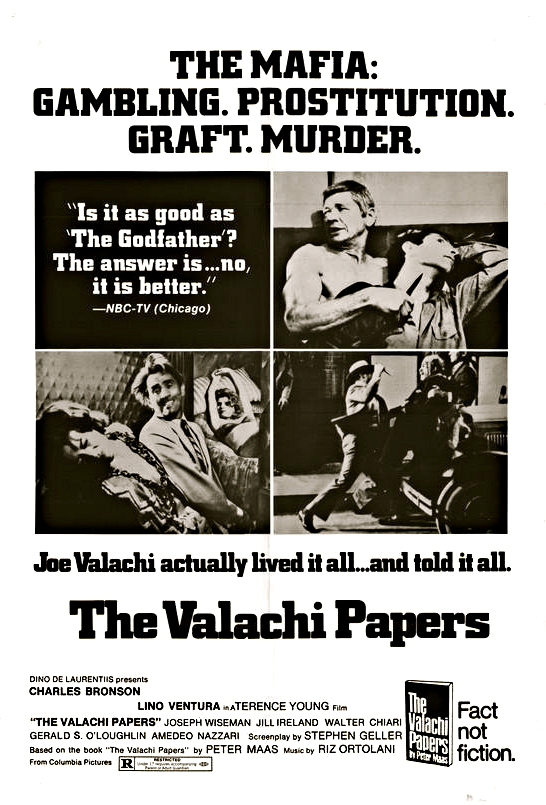
At the time of release this was compared closely to The Godfather with some critics outrageously saying it was better, but clearly it doesn’t come close. This film lacks the in-depth characterizations, lyrical quality, and an overall slick design. This film is also rather sloppily produced including one scene involving an exciting car chase taking place in the 1930’s. When the two cars go crashing through the wall of a warehouse and into the East river one can clearly see the Twin Towers of the World Trade Center, which weren’t built until 1970. There is also the Lucky Luciano character played by actor Angelo Infanti who wears a type of glasses that did not come into style until well into the 1970’s. However, as a whole the film is still amazingly compelling flick that ends up being both entertaining and somewhat informative. The music score has a terrific ominous tone to it and the prison scenes have a nice starkness.

The film was known at the time for its violence, which by today’s standards may not seem quite as startling or as excessive although the blood and bullets do come at regular intervals. My favorite was the shooting of an old crime boss inside a barbershop although the castration of a victim on top of a table inside a restaurant is pretty wild. However, for all of its violence the film does manage to have a sense of humor as well including a very amusing scene where one of Joe’s mob bosses sits in the living room of the mother of Joe’s girlfriend and asks the mother for her permission to allow Joe to marry her daughter while Joe sits nervously behind and tries to look proper.

Lino Ventura has the perfect face of a mob boss and was ideally cast. The scene of him inside the prison where he has stays in a well-furnished cell and even seems to have his own barber is funny. Joseph Wiseman displays great zest as the opposing crime boss Salvatore Maranzano and his agonizing yells of pain as he lies dying are effective.

Bronson seems perfectly cast as an uneducated simple man who is a follower and has his own quiky code of morality, which makes him strangely endearing. His wife Jill Ireland does not fare as well. She ports a brunette wig and her Italian accent borders on being horrendous to non-existent. Fortunately she is not given very many speaking lines as her British accent is constantly seeping through.

In many ways this film could best be described as an ugly cousin to Goodfellas. While this film lacks that film’s fluid directorial flair it still manages to be an engrossing true-life gangster soap opera like that one.

the valachi papers 2

My Rating: 7 out of 10

Runtime: 2Hours 5Minutes

Released: November 3, 1972

Rated R

Director: Terence Young

Studio: Columbia Pictures

Available: VHS, DVD

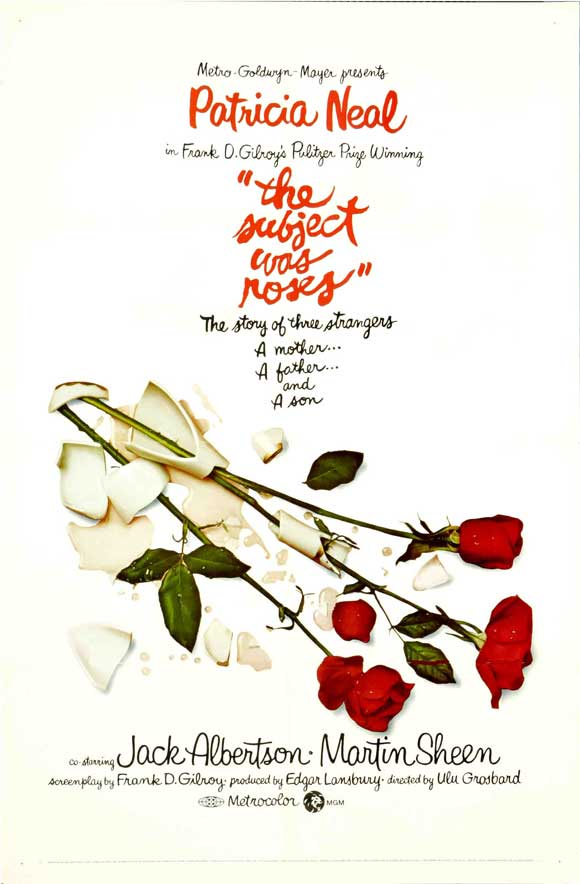
The Subject Was Roses (1968)

subject was roses

By Richard Winters

My Rating: 7 out of 10

4-Word Review: This homecoming isn’t happy.

Tim (Martin Sheen) arrives home from the war to find that things aren’t going well with his parents John and Nettie (Jack Albertson, Patricia Neal). Their aloofness towards each other slowly becomes more apparent and seems to come to a head when Tim decides to buy his mother a bouquet of roses and his dad pretends it was his idea. When Nettie realizes it wasn’t John who bought them she leaves the house and doesn’t return, which causes John to panic and try to find her.

This movie has a compelling quality to it and is the old-fashioned type of drama that they don’t seem to make anymore. The characters are real and believable and will probably remind one of their own parents, or even themselves and their marriages. The dialogue has a great conversational style and the viewer feels like they are eavesdropping onto an actual household. The action happens slowly, but deliberately and is devoid of any neat and tidy wrap-ups.

However, the film is also a bit frustrating. We are never explicitly shown what it is that is troubling Nettie so terribly. We are given some definite hints of things bubbling just underneath the surface, but there is nothing that completely comes out into the open. The viewer becomes primed for some great revelation, but when it doesn’t come and the characters end up remaining in the same situation as when it began it makes the whole thing seem pointless.

Neal is outstanding and the main catalyst for why this works. This was her first film after she had suffered several near fatal strokes in 1965. Although she does very well one can still see some subtle effects of it like the way she walks and her speech being just a little bit slower, but in context with the role it makes her seem older than she really is and therefore better for her role. I was surprised at how physically demanding the part was including having her dance rigorously around the living room with Sheen as well as having to aggressively fight off Albertson’s unwanted advances. Her sad and pained facial expressions leave the most lasting impressions.

Although it was Neal who I felt should’ve won the Oscar it was actually Albertson who did. His performance, which he recreated from the Broadway play that also netted him the Tony, is solid especially for doing a character that at times is off-putting. He does get the film’s best line “The humping that I am getting isn’t worth the humping that I am getting.”

The story takes place in the 1940’s and is basically a loose autobiographical story of Frank D. Gilroy who wrote both the award winning play and screen version. For the most part it succeeds with its retro look, but the music by Judy Collins doesn’t fit. Personally, I love Collins as a vocalist, but her raw, moody folk music sound seems out of place for a 40’s setting and takes the viewer out of the story in the process.

Transferring a story done for the stage to the big screen is never easy, but director Ulu Grosbard manages to make it cinematic. None of it was done on a soundstage, but instead the apartment was built inside a warehouse in the same Bronx neighborhood where Gilroy grew up and painstaking detail was done to give it an authentic lived-in look. The scenes done at their lakeside cabin is also effective as it captures the blossoming spring time landscape and gives a nice soothing feeling. You also get to witness Sheen skipping stones across the lake several times something that I could never get the hang of myself.

My Rating: 7 out of 10

Released: October 13, 1968

Runtime: 1Hour 47Minutes

Not Rated

Director: Ulu Grosbard

Studio: MGM

Available: VHS, DVD (Warner Archive)

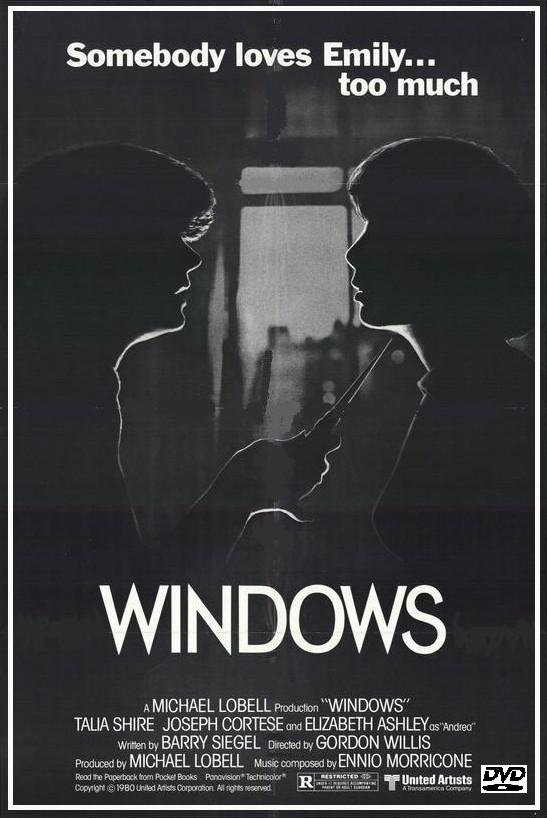
Windows (1980)

windows 3

By Richard Winters

My Rating: 1 out of 10

4-Word Review: She’s obsessed with her.

Emily (Talia Shire) is attacked in her apartment by a rapist (Rick Petrucelli) and when the police come to investigate the crime she starts to fall in love with Bob (Joe Cortese) the handsome police captain. Little does Emily know that her friend Andrea (Elizabeth Ashley) was behind the attack. She is a closet lesbian with a secret psychotic obsession for Emily who hired the man to rape her and record it, so Andrea could get-off on listening to the sounds of Emily moaning during the struggle. Now that Emily is going out with Bob it makes Andrea angry and her behavior becomes more dangerous and erratic.

For a thriller this film is extraordinarily low-key to the point that it also comes off like a drama, but fails on both ends. There is no mounting tension and little if any scares. The only one that they do have is when Andrea sticks Emily’s cat into a freezer and later it drops out of it like it was a Popsicle, which is actually unintentionally funny. There is also hardly any music. Ennio Morricone was hired to be the composer, but they don’t use him as much as they should. An amazing amount of the movie deals with the natural street sounds and ambience from life in New York, which is interesting for a while, but does nothing to elevate the tension, or create any excitement. Famed cinematographer Gordon Willis in his directorial debut seems more interested in capturing the New York skyline and creating shadowy interiors than actually making a movie with an original story, or interesting characters.

Shire is so quiet and awkward that she seems to be in a mental stupor. Her screen presence here is transparent and lifeless and it is easy to see why her leading lady status was brief. Cortese is no better as the male lead and the romantic side-story has no energy or chemistry and only helps to bog down an already boring story. Intercutting this with Andrea’s visits to her psychiatrist (Michael Lipton) successfully creates the first thriller to have no suspense whatsoever.

Ashley seems like the perfect choice for a homicidal lesbian, but the part is written in a way that doesn’t allow her to go over-the-top with it, which she should have although you do get to see her wearing quite possibly the biggest pair of sunglasses that I have ever seen. It might have worked better had the viewer not been aware from the start about Andrea’s psychosis and instead only revealed it at the end as a twist.

The climatic sequence between Emily and Andrea would be laughable if it weren’t so mind numbingly stilted and prolonged. The scene goes on for almost twenty minutes and features the two women standing in front of a window with Emily weeping incessantly while Andrea rambles incoherently. How anyone who was involved in the making of this movie would think anyone would flock to see this dull and contrived thing should have their brains checked. Has an air of pretense to it like it is trying to be a ‘sophisticated’ thriller, but it is pointless. If ‘Mystery Science Theater’ were still around this would be a great candidate for it.

My Rating: 1 out of 10

Released: January 18, 1980

Runtime: 1Hour 36Minutes

Rated R

Director: Gordon Willis

Studio: United Artists

Available: DVD, Amazon Instant Video

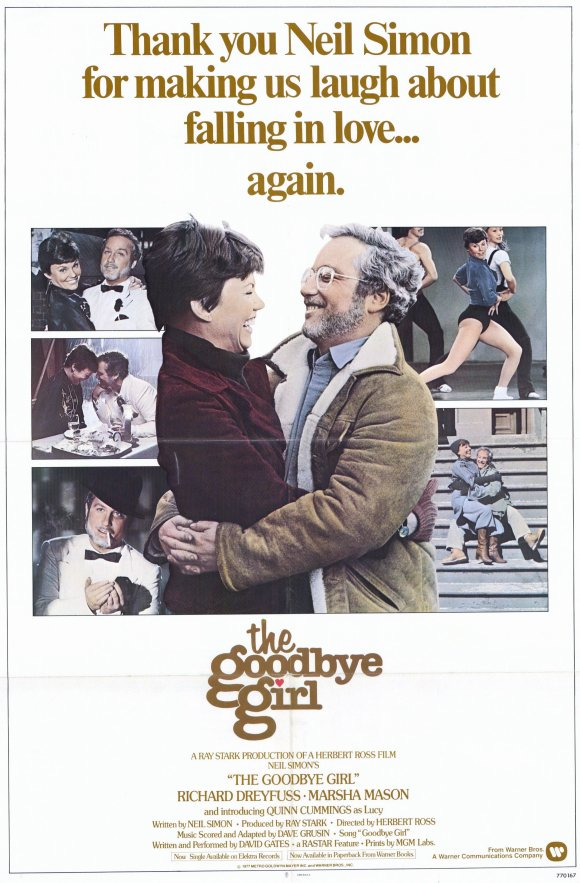
The Goodbye Girl (1977)

the goodbye girl 2

By Richard Winters

My Rating: 7 out of 10

4-Word Review: Goodbye doesn’t mean forever.

Paula (Marsha Mason) is a ‘dumped on’ single parent, whose live-in boyfriend has just left her, and now must contend with Elliot (Richard Dreyfuss) a rather obnoxious man who is subletting the apartment. Despite long odds the two end up ‘falling in love’ in this rather obvious, mechanical love story that is finely tuned to the female, especially those from that era. (The macho guy viewer will have run out of the room long before David Gates even has a chance to sing his soft rock title tune).

This was made when writer Neil Simon was still considered in vogue, although his patented one-liners are sparse and when they do come they are more cute than funny. This in some ways seems a retooling of his earlier ‘lovers in a New York apartment’ film Barefoot in the Park. Only here it’s a little rougher around the edges so it can appeal to a ‘hip’ audience. No clean-cut, cutesy newlyweds instead these people are more jaded to modern sensibilities and will routinely live with their partner even when they are not quite yet divorced.

If you can get past a rather strong late 70’s feel (gotta love that Fonzi poster hanging in the bedroom) then the characters remain solid and believable. No beautiful models living lavish and exciting lifestyles. These are average people just trying to make ends meet and find a little happiness along the way. It also doesn’t just show them when they are together, but also when they are out and alone in the ‘real world’, which allows us a rounded and sympathetic view of them.

Dreyfuss basically plays his usual opinionated, abrasive self. Whether the viewer sees the intended charm underneath is completely up to their own personal tolerance. His performance is good, but not exactly screaming for an Academy Award, which he won anyway, but then poked fun of it when he later hosted ‘Saturday Night Live’ on May 13, 1978.

Mason, who at the time was married to Simon, is the one who should have won it. Her performance is both believable and fluid. You truly see a lot of everyday people in her characterization and she clearly carries the film.

Quinn Cummings, as Paula’s daughter, is cute without being too precocious. Her sensibilities help compensate for the sometimes emotional immaturity of her adult counterparts. Though it really looks and seems dumb to have a ten year old still smearing food on the edges of her mouth and wearing a big napkin around her neck while eating.

Although I don’t always have a great eye for continuity errors this one has a doozy. When Dreyfuss comes home one night drunk he knocks over a table with a lot of stuff on it. He sticks his head out the window to shout something into the night air and then two seconds later comes back to where the table is standing and everything on it is neatly set.

My Rating: 7 out of 10

Released: November 30, 1977

Runtime: 1Hour 51Minutes

Rated PG

Director: Herbert Ross

Studio: Warner Brothers

Available: VHS, DVD, Amazon Instant Video
Welcome to Woop Woop (1997)

welcome to woop woop 2

By Richard Winters

My Rating: 6 out of 10

4-Word Review: Oh those crazy Aussies.

Teddy (Johnathon Schaech) is a rather clumsy con man from New York who tries to escape a murder rap by going to the most remote place possible, the Australian outback. However, after coming into close contact with the eccentric people and lifestyles, he decides what he really needs is an escape from there!

This is the type of offbeat comedy that should give all other offbeat comedies a bad name. It takes all the same ingredients from all those other films, meshes them together, and then spits them out in a mechanical fashion. Unlike director Stephan Elliot’s earlier feature Priscilla Queen of the Desert there is nothing deep here to help balance the quirkiness. The film is just made to be silly and at times goes overboard with it. The pace is also too fast. The viewer is never allowed to soak anything in or even take a breath.

Schaech is not good in the leading role. He gives too much of a breezy performance, acting as if the whole thing is a joke. He never once even for a second displays the angst, anxiety, and basic overall exhaustion that anyone else stuck in the same situation would feel.

The portrayal of the Australian people is terrible. They take all the stereotypes of the down under folks and then play it up to the extreme. Here they are not just slightly eccentric people of a rugged and hearty nature. Instead they are complete Neanderthals who live like animals and have no level of sophistication. Yes, it does try to be somewhat fair by showing that Americans may have some primitive defects as well. Specifically in an opening sequence in New York City where every pedestrian is seen shooting at some birds flying by. Still the Australian segments are needlessly overdone and a bit insulting.

The one pleasant surprise is the appearance of Rod Taylor. He plays completely against type here. He’s Daddy-O a self-imposed, self-styled dictator of the town. His performance is gruff, campy, energetic, over-the-top, and hilarious all at the same time. His appearance here may actually be his career pinnacle.
Overall the film is similar in tone to all those formulaic bid budgeted Hollywood actioners, except here it’s aimed at the offbeat crowd. Everything is perfectly packaged to its core audience and overblown all at the same. It’s so forced at points that it almost becomes ridiculous. Yet some of the humor is funny, it has a feel good attitude, and it is without question LIVELY.

Watch for a real fun cameo by Tina Louise at the beginning.

My Rating: 6 out of 10

Released: May 13, 1997

Runtime: 1Hour 37Minutes

Rated R

Director: Stephan Elliot

Studio: Goldwyn Entertainment Company

Available: VHS, DVD

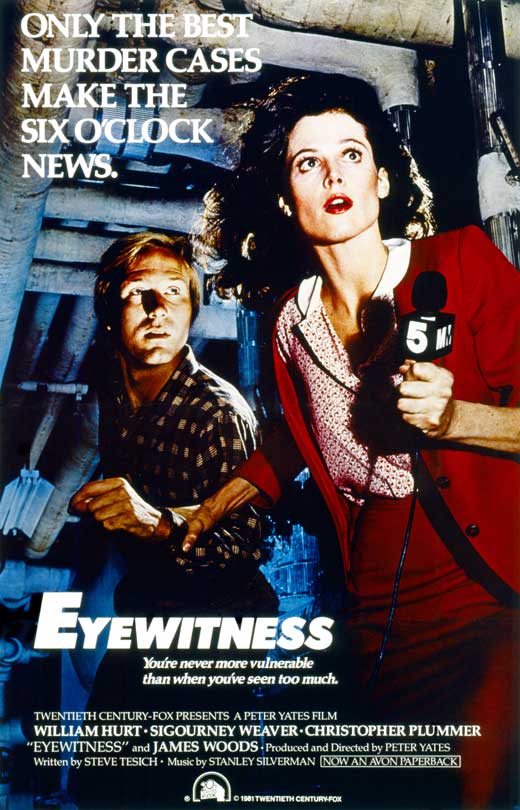
Eyewitness (1981)

eyewitness

By Richard Winters

My Rating: 4 out of 10

4-Word Review: Janitor loves news reporter.

Daryl (William Hurt) is a nighttime janitor at a large Manhattan office building. He spends his otherwise lonely existence obsessing over a local news reporter Tony Sokolow (Sigourney Weaver) and records every news broadcast she is in and watches them each night when he gets home. Then a murder occurs in his office building and Tony covers it for her program. Daryl tries to use his inside knowledge to get closer to Tony, but is reluctant to tell her all the information he knows since he fears that it was his friend Aldo (James Woods) who committed the crime.

Hurt, who usually plays the intellectual type, does well here in the low-key role. Weaver is also excellent doing what she does best which is playing a tenacious no-nonsense woman who can take care of herself. My favorite part with her is when she is accosted by a couple of men with guns, but doesn’t scream, keeps her composure, and manages to get away.

The romantic angle is the film’s strong point. Tony’s on-camera interview with Daryl when she tries to get more information out of him, but he instead gushes about his undying love for her is funny. It is refreshing that when Daryl tells Tony about how he obsesses over her she doesn’t freak out and consider him a stalker, but instead is charmed by it. The two use each other for their own purposes, but the viewer is giving the impression that these are genuinely nice people who just have very contrasting personalities and approaches, which is what makes the budding relationship interesting. However, having them go to bed together and confirm their affections for each other seemed anti-climactic as it was more intriguing wondering if Tony really was starting to have feelings for Daryl, or just using him to get information and the film should have stayed at this level until the very end.

The mystery portion gets lost in the shuffle. The film is slow with very little tension. There are a few good action moments, but there needed to be more. The scene where Daryl almost gets crushed in a trash compactor had definite potential, but needed to be played-out longer. The part where he and Tony are attacked by a dog is very intense, but the climatic sequence where Daryl is chased by the killer through some horse stalls is certainly slick and well-shot, but it comes too late and I had already become bored and detached with it. The identity of the killer was a definite surprise, but it is also a bit preposterous and a little too convenient in the way it somehow manages to tie all the characters into it especially Tony.

Director Peter Yates does some excellent on-location shooting of New York City especially with the crowded streets and neighborhoods as well as Central Park, but the musical score is sparse and lacking. There is a pleasing jazzy score near the beginning that has a nice easy going beat to it, but then outside of a few tense moments there is nothing. This creates a film that is too quiet. Adding an urgent score could’ve helped make it more compelling, or at the very least given it more energy and personality.

There are a lot of familiar faces in supporting roles, but the majority of them are wasted. Morgan Freeman and Steven Hill as the police investigators who banter endlessly
with each other are dull and useless. Kenneth McMillan as Daryl’s handicapped father is dynamic, but pointless to the story as a whole. Christopher Plummer is always reliable, but he has done better. James Woods is good because he is a master at playing unhinged characters and I liked the casting of Irene Worth as Tony’s mother simply because she looked almost exactly like what Sigourney would end up looking when she reaches that age. This is also a great chance to see Pamela Reed in an early role as Daryl’s fiancée.

The film ends up biting off more than it can chew and the idea of mixing a cutesy romance with a murder mystery doesn’t gel and leaves a sterile effect in both areas.

My Rating: 4 out of 10

Released: February 13, 1981

Runtime: 1Hour 43Minutes

Rated R

Director: Peter Yates

Studio: 20th Century Fox

Available: VHS, DVD, Netflix streaming

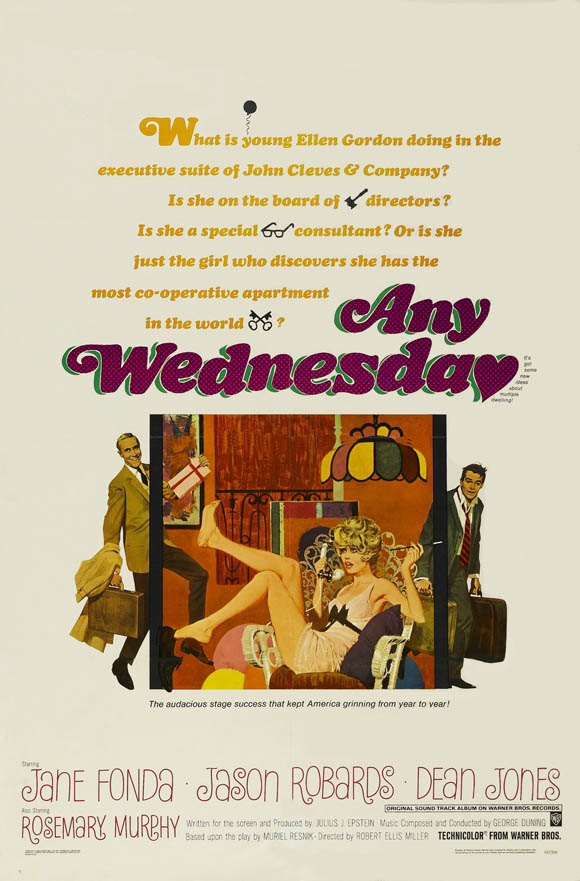
Any Wednesday (1966)

any wednesday 2

By Richard Winters

My Rating: 6 out of 10

4-Word Review: Wednesday is hump day.

Ellen (Jane Fonda) is a single lady of thirty living in an apartment building in New York City that is about to be bought out. Ellen wants to remain there and the only way she can is if she allows the place to be purchased by millionaire John Cleves (Jason Robards) who will allow her to stay rent free just as long as Wednesdays remain available so he can use the place to bring in his lady friends for sexual trysts. John has been cheating on his wife Dorothy (Rosemary Murphy) for years and uses the excuse of ‘business trips’ to fool around with other women. John also has his eyes on Ellen and after he buys her place he succeeds in getting her where he wants her, but then young Cass Henderson (Dean Jones) drops in and much to John’s consternation starts to have an interest in Ellen and her to him. Things get really crazy when Dorothy also shows up and turns the thing into a madcap bed-hopping farce.

Although this is not one of her better known roles Jane is terrific. The character to me is believable. A young attractive woman living alone who is racked with insecurities and indecision is almost a given. In many ways she is like how the Cass character described her as a ’30-year old child’ and Fonda plays the part humorously with a very goofy whine and cry. Some may find the character offensive due to the fact that her only ambition is to get married and feels like she is ‘not a complete woman’ unless she does. She even asks Cass to marry her after only knowing him for a day, which may be extreme, but I felt in that era women were under that type of pressure and thinking process, which is why I bought into it.

The Cleves character borders on being highly obnoxious. He seems to feel that because he has a lot of money he can act arrogant and get anything he wants, which could easily rub most viewers the wrong way. Fortunately Robards manages to craftily infuse his charm into the performance, which therefore makes it tolerable.

Jones lends some nice stability and Murphy is surprisingly alluring. She was already 40 at the time, but is seen provocatively bathing in a tub, which was unusual since older women especially in that time period were never shown that way and she pulls it off in an interesting way.

Director Robert Ellis Miller tries to keep what was originally a stage play from getting too stagy yet the story really can’t hide its roots. I did like the bright vivid colors of the set and the way New York was captured in the spring time. However, the scene where Ellen and Cass go to a sunny park is initially nice, but I didn’t understand when they sat down on some swings that it had to cut away to them in front of a blue screen inside a studio. The blue screen technique, which is rarely done anymore, was always tacky looking. Here it was even worse because the actors were at a real park, so he should have just left them there.

The story itself is trite, but for the first half I found it enjoyable. An older man having an affair with a younger woman that at times acts like an adolescent was rather edgy for the period as was their open discussions about sex. The conflicts create some interesting tensions and character development, but falls apart in the second act.

Spoiler Alert!

The problem really comes when Dorothy finds out about the affair and instead of being upset by it treats Ellen like a friend and even lets her move into John’s mansion while Dorothy takes up residence in Ellen’s old apartment. However, nothing is ever shown in Dorothy’s personality to forewarn us that she would respond in such an unusual way and thus making this comic twist not as clever as intended. Yes, there is an amusing irony at having Ellen come back to her old place and feeling ‘betrayed’ at finding John and Dorothy in bed together, but having John rekindle his passion with his wife is forced and contrived ultimately making this as silly and forgettable as all the other fluffy romances from that period. Fonda’s terrific performance is the only thing that makes if slightly above average.

My Rating: 6 out of 10

Released: October 13, 1966

Runtime: 1Hour 49Minutes

Not Rated

Director: Robert Ellis Miller

Studio: Warner Brothers

Available: VHS, DVD (Warner Archive), Amazon Instant Video

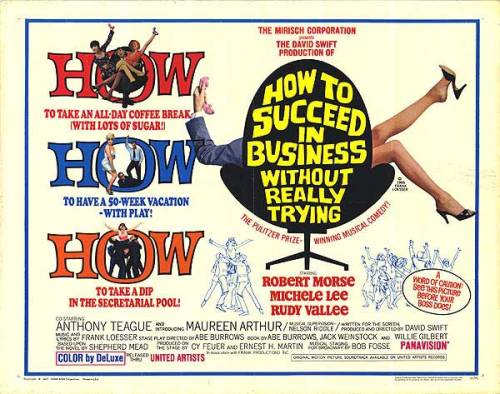
How to Succeed in Business Without Really Trying (1967)

how to succeed in business without really trying

By Richard Winters

My Rating: 8 out of 10

4-Word Review: Up the corporate ladder.

J. Pierpont Finch (Robert Morse) is a window washer looking to get ahead in the business world. By pure chance he finds a book entitled ‘How to Get Ahead in Business without Really Trying’. He reads it and follows the advice. He quickly gets a job at a large company and within days he moves all the way up from the mailroom to the head of advertising and eventually chairman of the board all without doing much work in this adaptation of the hit Broadway play, which in turn was an adaptation of the Abe Burrows novel.

This delightful film is lively and fresh even after all these years. The humor of course exaggerates life in the business world, but remains on target nonetheless. It accurately pinpoints all the universal problems and politics one goes through when working at a large company and dealing with the inside politics of getting ahead. Nothing is dated because it sticks with exposing the human foibles that come about in any generation when in a competitive and uncompromising environment, which is why I found it funny and interesting.

David Swift’s direction is top-notch. The pace is fast and furious balancing the humor and songs nicely. The sets are colorful and garish enough to accentuate the story’s farcical nature, but still bring out an office atmosphere feeling as well as the bigness of the company with large and imposing doorways including the amusing cathedral-like one that opens up to Finch’s office at the very end. At no times does the film suffer from the static staginess like most stage plays do when adapted to the screen.

The songs by Frank Loesser are upbeat and melodic and sound distinctive. My favorite one was the toe-tapping ‘A Secretary is Not a Toy’, but the showstopper ‘Brotherhood of Man’ had the best dance routines and was rousing enough to almost get me out of my seat. Rudy Vallee and Morse are also great in their rendition of ‘The Old Ivy’ fight song.

Morse recreates his role from the Broadway production. His voice isn’t necessarily the best and some of his singing seems a bit off-key, but his very boyish looks, gap-toothed grin, and bowl haircut is perfect for the part. A fun moment involving him is the scene where he prances down a busy New York sidewalk that was done with hidden cameras and the reactions from the other people on the street are genuine and real.

Michele Lee is terrific in her film debut. Her energy and perky smile are perfect as is her voice in the rendition of ‘I Believe in You’. She is probably best known to most for her starring role in the long running TV-series ‘Knots Landing’. What I can’t get over is how she continues to look like she hasn’t ever aged. A video on YouTube from her appearance at a 2011 AARP event has her looking almost the same as she does in this film. The interviewer tells her she is looking good and Lee replies ‘I always do’, which may seem conceited to some, but when one continues to look as great as she does then I suppose it is deserved.

Vallee best known as a crooner from the 1920’s is fun as Jasper Biggley the pompous head of the corporation. Anthony Teague with his devilish grin is great as the nefarious Bud Frump. I also liked the cute Kay Reynolds as Smitty and found it a shame that neither of these two talented young performers went on to do much else film-wise after this.

The only one I really didn’t like was Maureen Arthur as the ditzy and dumb Hedy Larue. Her high pitched voice and body gyrations were clichéd, over-the-top, and more annoying than funny. However, the incompetent way she takes down a dictated letter as well her reluctance to put her hand on a giant Bible during the film’s hilarious treasure hunt scene did manage to elicit some chuckles.

In 2011 the play was brought back to Broadway with Harry Potter’s Daniel Radcliffe in the lead. I wouldn’t be surprised if a remake of the film version comes out at some near point although nothing has been announced. Either way this film stands fine on its own and although never mentioned amongst the classic musicals I think it should be.

My Rating: 8 out of 10

Released: March 9, 1967

Runtime: 2Hours 1Minute

Rated NR (Not Rated)

Director: David Swift

Studio: United Artists

Available: VHS, DVD, Amazon Instant Video, Netflix streaming