Category Archives: Movies that take place in the Big Apple

Desperate Characters (1971)

desperate characters

By Richard Winters

My Rating: 6 out of 10

4-Word Review: A marriage without love.

Sophie and Otto (Shirley MacLaine, Kenneth Mars) are stuck in a marriage that has fallen into a real rut. They no longer are able to communicate. Sure they ‘speak’ to each other, but neither one listens or seems to even care. Sophie has had a past affair, which Otto became aware of, but forgiven. The two now try to march on like nothing has happened, but the cracks clearly show even when they both deny it. Sophie looks for some answers from her friends, but finds that their marriages aren’t any better and that there may not be any solution other than just sticking with it.

The film to a degree has a provocative flair and seems almost cutting edge for its day. There is no music and the background sound is made up of the ambience of everyday, big city life. The opening shot consists of the camera slowly zooming into the couple’s New York loft with only the distant sound of children playing, which not only helps the viewer feel very integrated to the city that the characters live, but their quiet isolation as well.

The film also has very little action. The only real moment where things happen is when Otto chases a stray cat through their apartment in order to box it up and take to a vet to test for rabies after its bitten Sophie, which for what it is worth is quite interesting. The rest of the film deals with dialogue, but handled in a more sophisticated way than most as it has a consistent conversational tone that not only makes it more genuine, but something that the viewer must ‘read into’ in order to understand. Frank D. Gilroy’s script, which is based on a novel by Paula Fox, never once ‘tells’ the viewer what to think or feel. Instead we are shown regular people with everyday issues discussing the same things that real people do and it’s all left up to the viewer to interpret what it means, which in many ways I found highly refreshing.

Mars gives an outstanding performance in what was apparently his personal favorite and quite atypical from his other body or work, which mainly consisted of over-the-top comic characterizations. Even more surprisingly is that he gets featured in a nude scene from the back. MacLaine is also exceptional in what many fans consider her best work. She is usually effective with strong characters, but here she’s quietly vulnerable while being featured in a rare nude scene for her as well and her case from the front.

The film’s greatest weakness is that it comes off as rather cold and distant. It would’ve been more revealing had it shown even in flashback when the couple was happy and when or what seemed to happen to turn things for the worse. The film also has the philosophy that there is no alternative to their situation and that being in a ‘bad’ or unhappy marriage is better than being alone as it doesn’t even bother to ever touch upon the benefits of single life or an alternative lifestyle, which in the end makes this film seem old fashioned and dated despite its otherwise Avant-garde approach.

My Rating: 6 out of 10

Released: September 22, 1971

Runtime: 1Hour 27Minutes

Rated R

Director: Frank D. Gilroy

Studio: Paramount

Available: VHS, DVD, Amazon Instant Video, YouTube

Me, Natalie (1969)

me natalie 1

By Richard Winters

My Rating: 6 out of 10

4-Word Review: Homely girl finds independence.

Natalie (Patty Duke) has been plagued all her life as being unattractive and overlooked time and again by other men. Her parents (Nancy Marchand, Phillip Sterling) promise her that way day she will grow up to be beautiful, but it never happens. When she finds out that they secretly promise one of her potential suitors (Bob Balaban) that they will pay for his education to become an eye doctor if he agrees to marry her she becomes deeply hurt and decides to move out. Things are not easy at first, but she manages to find a job and a decent apartment in Greenwich Village. It is there that she meets David (James Farentino) an older man who she falls deeply in love with only to find out that he is married.

Duke does well in the lead role although this was at the height of her bipolar disorder, which was untreated at the time and it caused many problems on the set between her and director Fred Coe that was later chronicled her autobiographic book ‘Call Me Anna’ and subsequent 1990 TV-Movie of the same name. On the looks department the character really isn’t that bad and her ‘ugliness’ consists mainly of some bad buck teeth that could probably have been immediately resolved with a good orthodontist and some braces.

It’s the character’s personality that is really unattractive. She is extremely whiny as well as being bag of insecurities that falls completely apart the second she is faced with anything unpleasant or unexpected. She is constantly judging other women on their looks even though she expects everyone else to look past her own physical flaws and resents them when they don’t. There is even a scene where she coldly rejects an overweight man who asks her to dance by calling him a ‘loser’. While I applaud the film for showing us a candid portrait of an individual that goes well beyond the manufactured politically correct persona of a protagonist that we are so used to seeing it still may be tough going for most viewers to have much empathy for her.

What I liked about the movie is that it starts out as an old fashioned kitchen sink drama of this lonely girl stuck in a drab existence and simply looking to get married and then blossoms into something completely different as she gets out into the world and experiences the big city and late ’60s attitudes. The film has a few memorable scenes including her job at a topless and bottomless bar in which the waitresses are required to wear all black that covers even their faces and then they are fitted with prosthetic breasts and butts that they wear around the outside of their outfits and glow-in-the-dark. They then walk around the darkened restaurant taking customer orders while looking like a collage of floating female body parts.

The one thing that really hurts the film as a whole is the musical score by Henry Mancini. Normally I’m a big fan of his, but here his melodic stuff sounds out-of-date and not in touch with the late ’60s or the young people living in it. Simply because one may be a great composer doesn’t mean he’s a perfect fit for every project and this was clearly one of them as the music has a 1940’s quality to it that made the picture seem highly dated even at the time.

The movie though does successfully make a great point, which is that one can only find true happiness from inner peace and not by being dependent on the reactions of others. It also marks the film debut of Al Pacino who is seen briefly as a young man who asks Natalie for a dance at a high school social and then immediately asks her if she ‘puts out’.

My Rating: 6 out of 10

Released: July 13, 1969

Runtime: 1Hour 51Minutes

Rated M

Director: Fred Coe

Studio: National General Pictures

Available: None at this time.

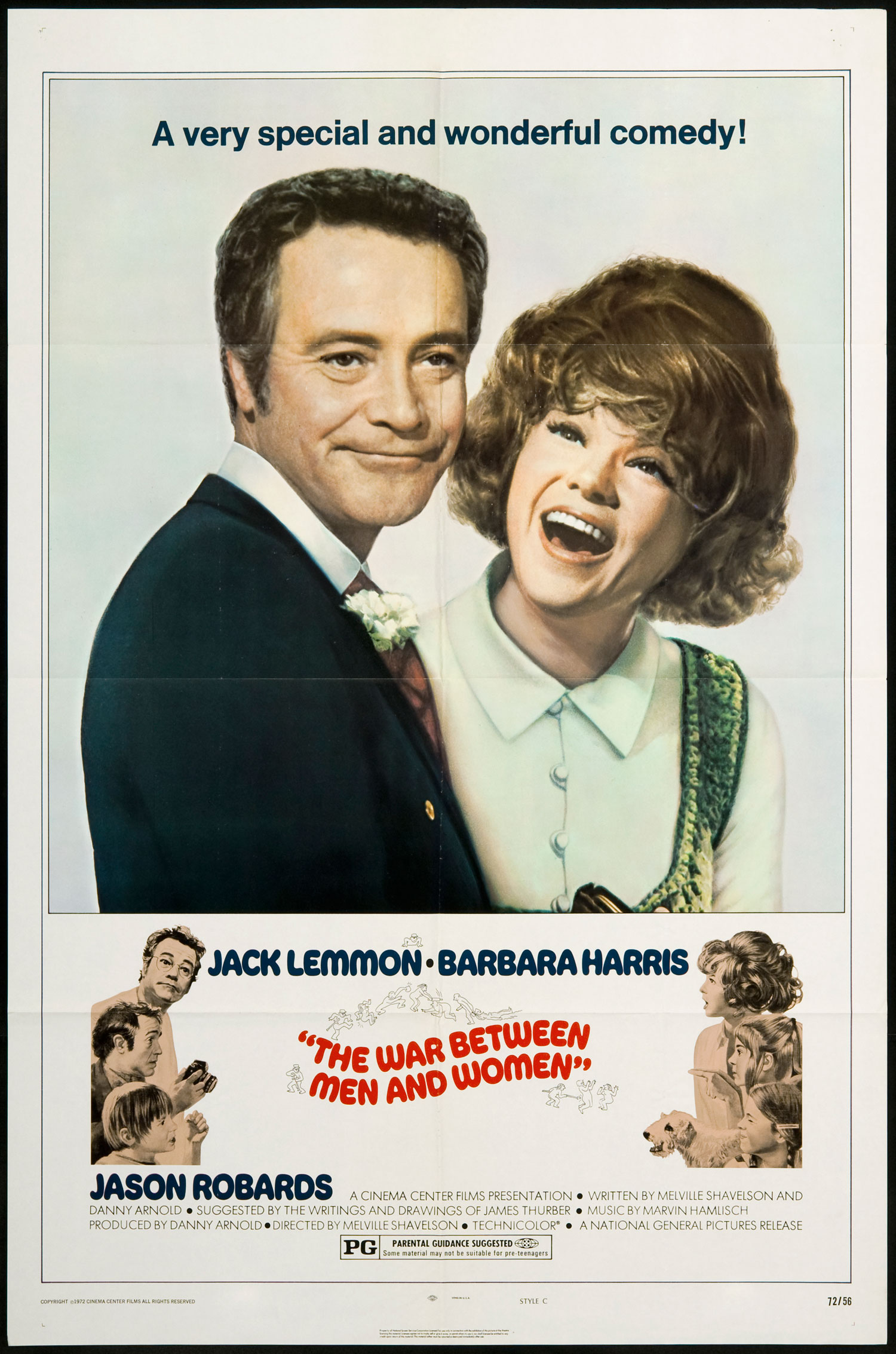
The War Between Men and Women (1972)

war between men and women 2

By Richard Winters

My Rating: 2 out of 10

4-Word Review: Misogynist cartoonist goes blind.

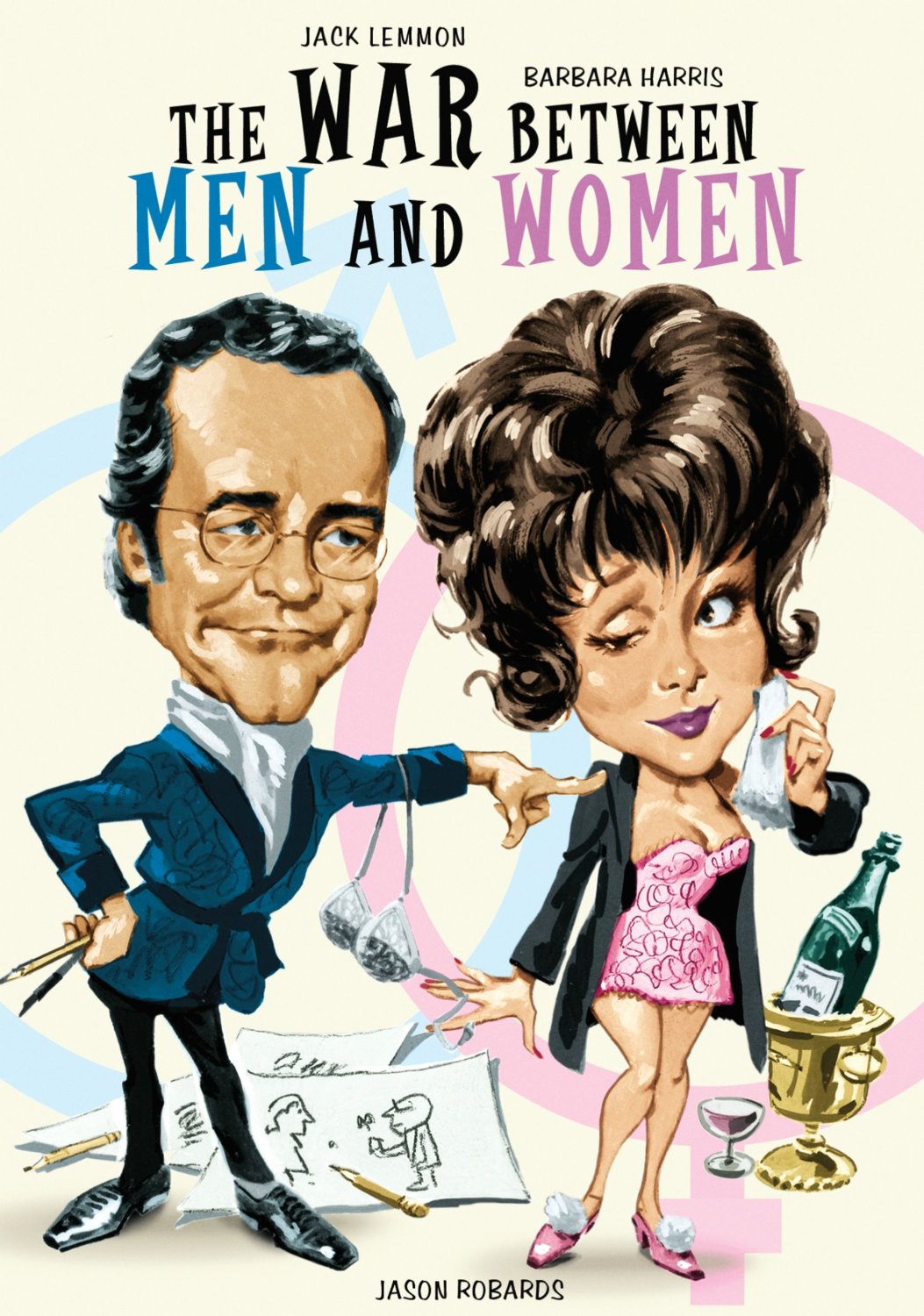
Peter Wilson (Jack Lemmon) is a popular cartoonist whose drawings depict women in disparaging ways. He enjoys his job and single lifestyle where he can live on his terms and keeps his apartment as messy as possible, which he usually does. However, his already poor eyesight gets worse and upon a recent visit to his optometrist (Severn Darden) he finds that he must get an operation to help save it and even then there is a fifty percent chance that he could still go blind. Despondent and depressed he meets Theresa (Barbara Harris) a single mother with issues of her own. The two enter into a whirlwind romance that quickly leads to marriage only to have Theresa’s ex-husband Stephen (Jason Robards) show up at the wedding and wanting to rekindle their relationship.

Peter’s character is loosely based on James Thurber and the film itself is a distant cousin to the TV-series ‘My World and Welcome to it’ that aired for one year on NBC during the 1969-70 season. The film though doesn’t have enough of Thurber’s whimsical humor to make it worth watching. It starts off with some potential as it opens with a weird animated segment and drawings that closely resembled Thurber’s, but then quickly devolves into a contrived comedy/romance with maudlin drama thrown in that makes it seem like two movies in one. Had it stuck with the animation it would’ve done better, but even that gets kind of stupid including one segment where Peter’s drawings start to attack him, which forces the humans to stage an all-out war between them and the cartoon characters.

Peter’s acerbic, woman hating personality is initially diverting, but then for no reason he does a 180-degree turn by falling in-love with Theresa almost immediately and becoming a conventional husband and father while turning the film into a silly version of ‘The Brady Bunch’. I also couldn’t understand why Theresa would fall so head-over-heels for Peter as the two are trading barbs one second and then in bed together the next making their character’s motivations quite confusing.

Robards, who has his hair dyed dark brown and is almost unrecognizable, gets stuck with a thankless supporting role and is seen only briefly. Initially his presence had some potential as he starts to become buddies with Peter and plot against Theresa, but then his character dies unexpectedly making it confusing why he had been written-in in the first place. Lisa Gerritsen, who is best known for playing Cloris Leachman’s daughter in the ‘Mary Tyler Moore Show’ TV-show and the subsequent spin-off ‘Phyllis’ has some appealing moments, but her constant stammering becomes annoying.

Thurber’s wit was unique and legendary, but this film is too timid to dive completely into it. I suppose the idea of having an openly misogynistic protagonist was considered ‘too edgy’ for early 70’s cinema, so attempts were made to make the character more mainstream, but in the process creates a film that is disjointed and bland.

war between men and women 3

My Rating: 2 out of 10

Released: June 1, 1972

Runtime: 1Hour 38Minutes

Rated PG

Director: Melville Shavelson

Studio: National General Pictures

Available: VHS

Grace Quigley (1984)

grace quigley1

By Richard Winters

My Rating: 4 out of 10

4-Word Review: Granny hires hit man.

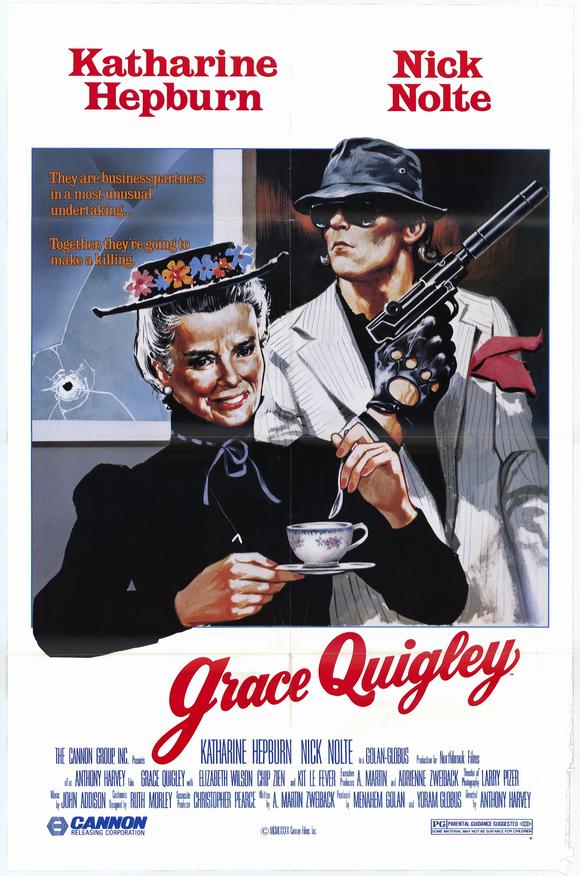
Grace Quigley (Katharine Hepburn) is an elderly lady living alone on a limited budget who’s being forced out of her apartment due to having a pet bird, which her slumlord (Harris Laskawy) does not allow. She has nowhere to go and feels like ending her life, but has tried suicide before with unsuccessful results including swallowing a bottle of pills and having her stomach pumped, which she promised herself she would never go through again. Then she meets hired hit man Seymour Flint (Nick Nolte) and feels he’s the solution. He can not only bump her off, but her other elderly friends who no longer wish to go on as well. The problem is that Seymour doesn’t want to do it as he has grown attached to Grace and even starts calling her ‘mom’.

The first 60 minutes aren’t bad and even a bit humorous, but the final 30 brings in a weird story thread involving a cantankerous taxi driver (Christophe Murney) that seems thrown in simply to pad the running time. The ending, which was changed from the one in the original cut, is flat and helps to make this potentially tart black comedy a misfire.

Hepburn herself is awesome. She plays against type as she is usually a forceful and independent minded character, but here is much more vulnerable and sympathetic. Her shaking/wobbling head, which became an issue and even a distraction during her later years, is strangely not as apparent. Nolte is okay, but his character is wracked with psychosomatic quirks that are too silly and it would’ve been more fun had the character been played straight as a typically cold, soulless hit man who only softens after his friendship with Grace.

There are a few funny moments with my favorite being the striptease that Seymour’s hooker girlfriend (Kit Le Fever) does in front of Grace’s elderly and shocked friends. The running gag of people getting bloody noses every time they feel guilty does not work and the bloody nose that Hepburn’s character gets almost looks like a giant bug coming out of her nostril. The climatic chase involving five hearses careening down the city’s streets is forced although the slow motion shot of one of them driving into the New York harbor merits a few points.

The idea that people would want to die simply because they are old just doesn’t ring true especially since these folks still had their health and friends (at least with each) and were not bound to a wheelchair. There are many seniors who enjoy their golden years and still excited about life and yet the film doesn’t balance itself by portraying any of those. The attempt at showing the more serious side of aging by having Grace take Seymour on a tour of a rest home exposes little and ultimately helps makes the film’s potential social statement weak and simplistic.

My Rating: 4 out of 10

Alternate Title: The Ultimate Solution of Grace Quigley

Released: October 2, 1984

Runtime: 1Hour 28Minutes (VHS Version)

Rated PG

Director: Anthony Harvey

Studio: Cannon Film Distributors

Available: VHS

Paternity (1981)

paternity

By Richard Winters

My Rating: 1 out of 10

4-Word Review: Bachelor wants a son.

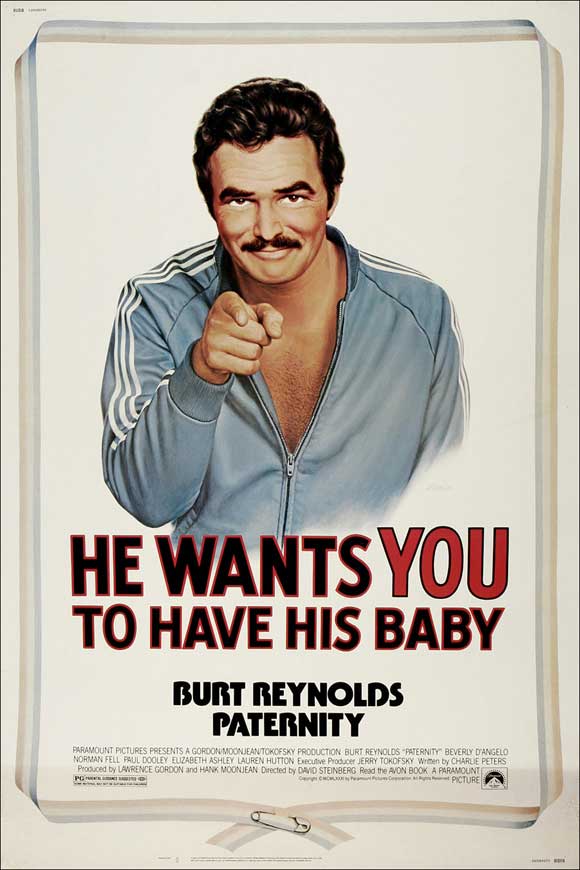
Despite managing Madison Square Garden, having lots of money and good looks Buddy Evans (Burt Reynolds) is still single at 44. He is happy with his bachelorhood, but still longs for a having a son. He comes up with the idea of paying a woman to have his child while treating it solely as a business proposition without any romance or relationship attached to it, after interviewing several ‘candidates’ he finally settles on Maggie (Beverly D’Angelo) a waitress who can use the money to further her education. Things are expectedly awkward at first, but as the process continues Maggie finds herself falling in love with him and trying to turn it into a relationship despite his reluctance.

Reynolds is a dynamic star with an engaging onscreen presence particularly in comedies, but his appearance here hurts the picture more than it helps it. For one thing it doesn’t make sense why this great looking guy with tons of cash can’t find a woman. And just why is he so reluctant to get into a committed relationship? What about this character’s background makes him the way he is? It never gets explained, but would’ve helped give the film more depth had it been. A better concept would’ve been portraying the character as being a rich guy who is also short, fat, bald and lacking in the romantic graces, but woman still tolerate because of his money, which would’ve ultimately made this more realistic, edgier and funnier.

I really liked D’Angelo and considered this her best performance, but having her fall in love with the guy and turning this into just another formulaic, sterile romantic comedy was a ridiculous stupid idea and makes it almost excruciating to watch. The guy spends the whole time acting like he owns her by telling her what to eat and do while being outrageously ambivalent to her feelings or needs. Any woman that would fall in love with a guy that her treats that way should see a psychiatrist and get some self-respect.

Comedian David Steinberg makes his directorial debut here and I liked the way he begins the film by having pictures of baby’s faces lining the screen during the credits all to the sound of them cooing and crying. He also pays loving tribute to his adopted city of New York by having some fabulous shots of the skyline and some scenic moments in Central Park that accentuate the fall foliage. In fact it is for these two reasons only that I generously give this thing a measly 1-point.

My Rating: 1 out of 10

Released: October 2, 1981

Runtime: 1Hour 34Minutes

Rated PG

Director: David Steinberg

Studio: Paramount

Available: VHS

Some of My Best Friends Are… (1971)

some of my best friends are 2

By Richard Winters

My Rating: 3 out of 10

4-Word Review: Patronizing a gay bar.

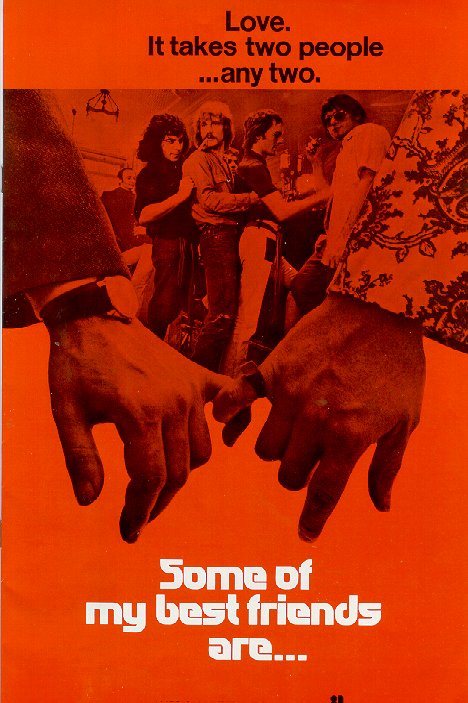
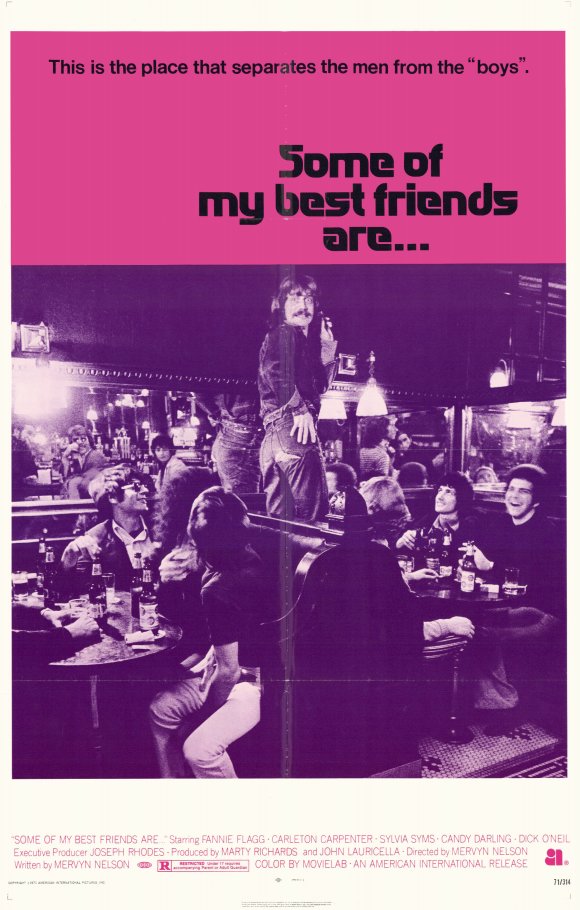
It’s Christmas Eve 1970 and a year and a half after the Stonewall Riots that first brought gay rights issues into the national spotlight. However, the patrons of the local Blue Jay Bar are still feeling like second class citizens where dancing between two men is prohibited and those who have come out about their homosexuality are being rejected by their family and friends.

The film certainly does bring up some great issues, but unfortunately pales badly when compared to The Boys in the Band that came out just a year earlier. The direction lacks style and the dialogue is too generic to be riveting. The film also has no momentum as the camera simply cuts from one group of conversing people to another. The on-location shooting done at the Zodiac Bar gives the production a static, claustrophobic feeling since almost the entire thing takes place in one building. The lighting is also dark and shadowy and at certain points even out-of-focus making it all seem quite amateurish.

The action is minimal in what is otherwise a very talky 110 minute runtime. The best moment is when Gary Sandy, who’s excellent in his film debut, and playing a man in denial about his homosexuality becomes enraged when he finds that the woman he has been dancing with (played by Candy Darling who is also excellent) is actually a man, which causes him to drag her into the bathroom and beat her that in turn creates a huge riot that is genuinely tense and startling. The scene where a mother enters the bar and openly disavows her son after finding out that he is gay is also quite good, but should’ve been extended.

Fannie Flagg gets kudos for her highly engaging performance as a snarky lady who never seems at a loss for words or verbal comeback. The way she dances by giggling her large breasts up and done like they are rubber balls is a crazy sight. Rue McClanahan is also good as a bitchy, aging blonde and so is Dick O’Neill as a conservative old-timer who shows great disdain for the ‘pansy pad’ once he finds out that it is a gay bar, but then strangely is still reluctant to leave it. This also marks the film debut of Gil Gerard who appears briefly in a small role.

The film’s few good moments and overall impactful message are badly outweighed by Mervyn Nelson’s dull direction as well as its rambling narrative that lacks a central character and makes for a flat and tedious viewing experience.

some of my best friends are 1

My Rating: 3 out of 10

Released: October 27, 1971

Runtime: 1Hour 50Minutes

Rated R

Director: Mervyn Nelson

Studio: American International Pictures

Available: Amazon Instant Video

The Lord’s of Flatbush (1974)

lords of flatbush 2

By Richard Winters

My Rating: 6 out of 10

4-Word Review: Sly and the Fonz.

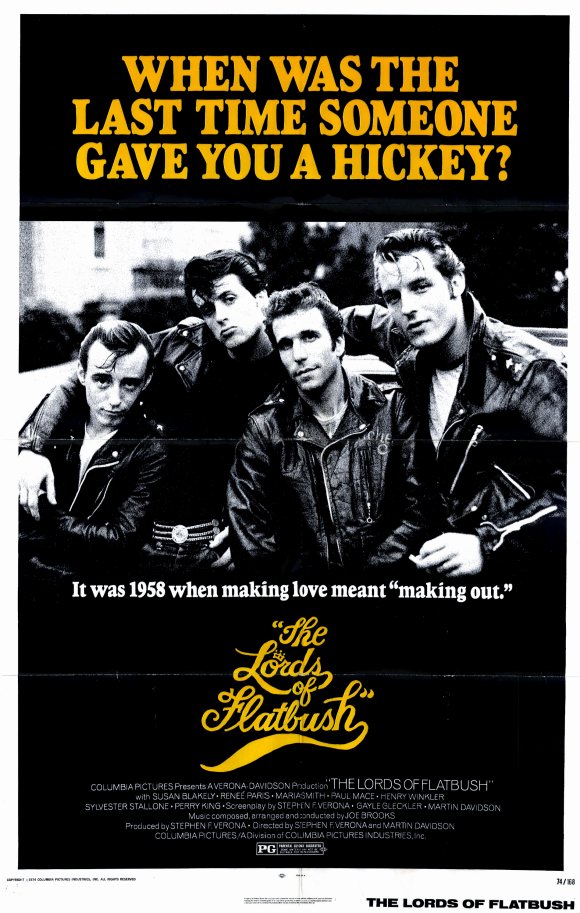
Butchey (Henry Winkler) forms a leather jacket gang with his friends at a Brooklyn city high school during the 1950’s. The group is made up of Stanley (Sylvester Stallone) who is forced to marry his girlfriend when he gets her pregnant and Chico (Perry King) who romances the pretty new girl in school named Jane (Susan Blakely). As they grow into adulthood they find themselves drifting apart as new interests and demands begin to appear.

This film can best be described as a B-version of American Graffiti that came out just a year earlier. The production values are shoddy with a grainy picture that looks like it was filmed on somebody’s home camera. The story works in fragmented style that comes off more like a series of vignettes than an actual plot. Chico’s romance with Jane happens too quickly and seems artificial from the start especially since they are from ‘opposite sides of the tracks’. The actors themselves are clearly well over 18 and in Stallone’s case almost pushing 30 making their presence and the overall 50’s feel seem unauthentic.

The one thing that saves it is that there are some funny scenes as well as moments of decent drama and character development. The part where Stallone barters with a jeweler over the price of the wedding ring is quite good. I also liked the scene where the boys get together to intimidate a guy who is dating Chico’s girl only to run in fright when the other guy brings in a team of football players to defend him. However, the opening bit dealing with the teens misbehaving in class is not funny at all and I ended up feeling sorry for the teacher who was only trying to do her job.

Although given top billing Winkler is underused and almost forgettable. King is the real star and does quite well while also creating a multi-dimensional character. Stallone steals every scene he is in and proves to be much more adept at comedy than you might think. You can also glimpse Ray Sharkey, Armand Assante and Brooke Adams as wedding guests.

The film also features model-turned-actress Susan Blakely in only her third feature who does well playing the ‘good girl’, but the scene where Chico pressures her into having sex and she resists while asking him what color her eyes are in an attempt to see if he really ‘knows’ her and not just using her makes no sense. For one thing her big, blue eyes are the most prominent part of her face. Anyone, even a stranger, who glances at her face for even a second would know the color of her eyes, and thus having her ask someone what color they are is ridiculous already and then having them unable to tell her makes it the dumbest part of the whole movie.

susan blakely

My Rating: 6 out of 10

Released: May 1, 1974

Runtime: 1Hour 26Minutes

Rated PG

Director: Martin Davidson and Stephan Verona

Studio: Columbia Pictures

Available: VHS, DVD, Amazon Instant Video

David Holzman’s Diary (1967)

david holzman 1

By Richard Winters

My Rating: 8 out of 10

4-Word Review: He records his life.

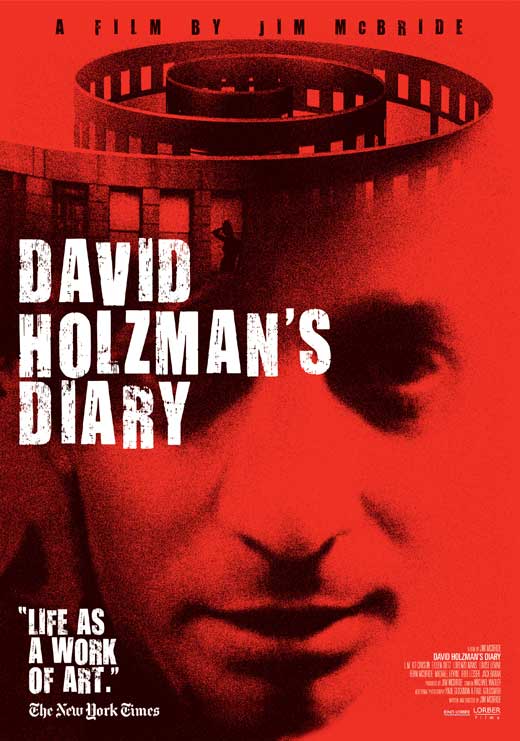
David (L.M. Kit Carson) is a young college-aged movie fan who wants to use the camera to not only record his life, but help him better understand and interpret reality. Unfortunately he finds that instead of clarifying things the camera instead brings out even more of reality’s complexities making his life and the world he is in even more confusing. It also inadvertently exposes a darker side to his personality that he wasn’t aware of which his voyeurism to both an attractive woman across the street as well as his live-in girlfriend Penny (Eileen Dietz) who eventually gets fed up with his film and him and moves out.

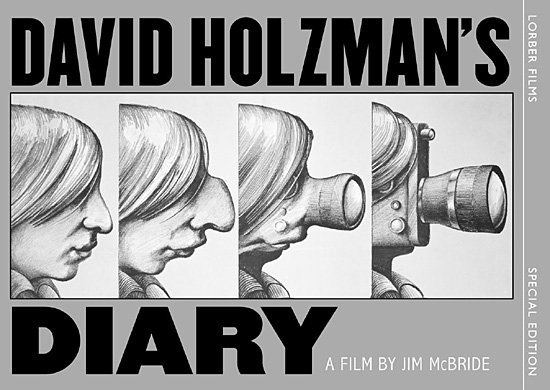
I realize the saying ‘ahead of its time’ can get a bit overused, but this is one case where that term really fits. This movie is cool on many different levels and features scenes and segments that you will never see done anywhere else. The Cinema verite style is perfect and I loved how the camera gets turned on itself as we are given a good background and visual to the type of camera that was used and why for its time was considered a cutting edge piece of machinery. The scene where he takes a shot of every image that he saw during a night of television viewing and then plays it back creating a mosaic of flashing images from shows and commercials is equally cool. The segment where he interviews a woman, which was apparently a man dressed in drag, but quite hard to tell, who stops her car in the middle of the street to tell him of her candid sexual desires while holding up traffic is quite amusing as is the part where he stalks a nervous lady from a subway car out onto the city streets.

The film also successfully transcends its time period. I have always said it is very easy to tell the time period or decade a movie was made usually after viewing it for only a few minutes, but this was one case where it is actually quite hard to tell. The detached, hip nature of the protagonist is still trendy and the film’s existential philosophical approach dealing with an artist’s need to recreate reality, but ultimately failing is as relevant today as ever. The loosely structured ad-libbed dialogue gives it a legitimate documentary feeling and was so believable that when audiences first viewed it during the 60’s they booed when they saw the closing credits and realized it had all been made-up. This was also the first American film to use the f-word and one of the first to feature full nudity, which is done by the attractive Dietz who later went on to play the face of the demon in the movie The Exorcist.

Although I saw this movie many years earlier and was already a big fan I watched it again during a special showing at the The Marchesa Theatre in Austin as a tribute to the film’s star who passed away in October of 2014. Afterwards many people got on stage to talk about how Carson had inspired them with their lives and careers and it included his son Hunter Carson as well as film director Guillermo del Toro who was probably the most entertaining.

If the film has any drawbacks it’s in the use of black frames that are shown in between shots where for several seconds the viewer will see no image at all and at times only a voice over. This might’ve been done for effect, but ends up giving it too much of an amateurish feel. There are also times when the camera stays too fixated on its subject making it look too much like talking heads with not enough cutaways or interesting camera angles. Overall though it’s still one-of-a-kind and worth checking out for a glimpse at experimental and original filmmaking at its purest.

david holzman 2

My Rating: 8 out of 10

Released: October 3, 1967

Runtime 1Hour 14Minutes

Not Rated

Director: Jim McBride

Studio: Direct Cinema Limited

Available: DVD, Blu-ray, Amazon Instant Video

Modern Problems (1981)

modern problems

By Richard Winters

My Rating: 2 out of 10

4-Word Review: Chevy acquires telekinetic powers.

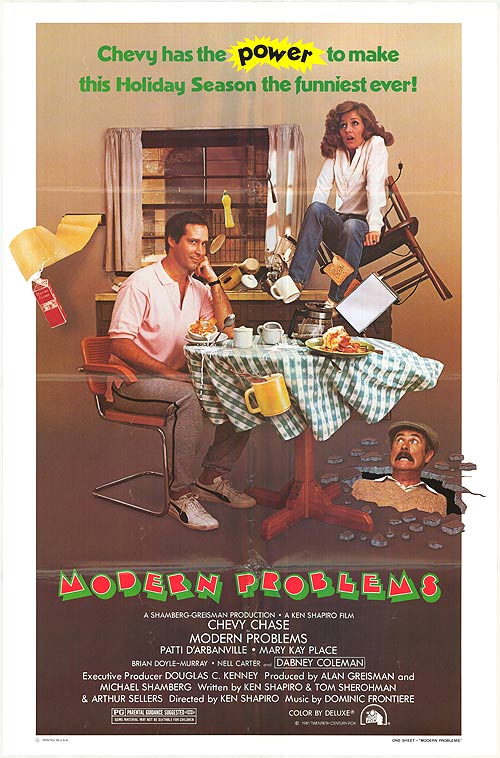
Being dumped by his girlfriend (Patti D’Arbanville) and working a stressful job as an air traffic controller Max (Chevy Chase) finds himself falling into a deep depression. Then one night while following a truck home that is carrying nuclear waste he and his car get sloshed with a greenish liquid that spews out the back end of the truck’s tank. Soon afterwards he realizes that he can make objects move and uses this new found ability to try and win his girlfriend back while getting revenge on her new boyfriend (Mitch Kreindel).

The film is written and directed by Ken Shapiro who earlier teamed up with Chase to do The Grove Tube and like with that one the story is widely unfocused throwing in gags that have nothing to do with the central theme. It takes too long for Max to acquire his special powers and when he does it doesn’t go far enough with it wasting a potentially creative idea on what turns out to be just another comedy dealing with modern day relationships. The movie is horribly dated with a bit having Chase sniff up some white ‘demon dust’ in a not so subtle take on cocaine that at a time when free basing was still considered trendy might’ve been considered ‘cool’ and ‘hilarious’ by its intended audience. The opening segment is insulting to actual air traffic controllers as it makes them all look like they’re lazy and incompetent and the silly cartoon-like sounds added to the special effects gives the whole thing a very kiddie-like feel.

The logic of this thing is crazy as well. I realize being exposed to nuclear waste can bring cancer, birth defects and a wide assortment of other ailments, but nowhere have I read that it can cause telekinesis making the whole premise dumb and dubious from the start. The idea of having all these amazing powers, but only using them sparingly while moping around hoping somehow to get back into his girlfriend’s favor seems quite limiting as most people with his abilities would have much broader ambitions like saving the world or even conquering it for that matter. Although politically incorrect there could’ve been a wide array of things that he could’ve done to ‘win his girlfriend back’ like suspending her in mid-air until she agrees to see him exclusively. Also, when he notices that he is glowing green and has spots all over his face when looking into a mirror you would think he would immediately run to the nearest doctor, but doesn’t and when he finally does expose his powers to everybody else by levitating the Dabney Coleman character the other people in the room respond with a ho-hum attitude instead of screaming and running away like a normal person would.

Chase’s deadpan talents get wasted here and during the second half he becomes almost comatose during a lame parody of The Exorcist. Dabney Coleman gets equally wasted as he speaks in a weird accent while playing his trademark egotistical character that for some reason isn’t as engaging as it usually is. You also get to see a shot of his bare ass, which to me wasn’t a good thing, but there is a thread on IMDB with people stating in all seriousness that it is one of the ‘best looking asses ever’, ‘pure perfection’ and ‘the greatest moment in cinema history’, so I guess to each his own.

My Rating: 2 out of 10

Released: December 25, 1981

Runtime: 1Hour 29Minutes

Rated PG

Director: Ken Shapiro

Studio: 20th Century Fox

Available: VHS, DVD, Amazon Instant Video

Such Good Friends (1971)

such good friends 1

By Richard Winters

My Rating: 8 out of 10

4-Word Review: Her husband fools around.

Julie (Dyan Cannon) is a well-off New York Housewife living in a swanky Manhattan apartment with her husband Richard (Laurence Luckinbill) who is the successful editor of a New York fashion magazine. Her life seems fulfilled and happy until Richard goes into the hospital for routine surgery, which has unexpected complications that sends him into a coma. While going through some of his personal belongings she comes upon his little black book that lists all sorts of sexual conquests he has had with her friends, which first leads the devastated Julie into considering suicide, but then ultimately into revenge.

This film can be considered Otto Preminger’s swan song as the two movies he made after this weren’t worth watching. This movie also proves to be a giant improvement from the awful Skidoo that he did just three years before where he tried unsuccessfully to get with the ‘hip generation’, but failed miserably. It has the same irreverence and satire as that one, but it is much more disciplined and sophisticated and makes its point without going overboard. It also shows that despite his renowned cantankerous nature behind-the-scenes he was still a gifted director who managed to span five decades with movies that had vastly different styles and themes and he deserves to be labeled a filmmaking legend.

I loved the way the camera spins around in a circle during a scene inside a New York art museum as well as some breathtaking shots of the New York skyline while on top of Jennifer’s and Richard’s condominium. The fractured narrative that deals heavily with flashback sequences is also nicely handled though the scenes showing a middle-aged Cannon trying to look like she is an adolescent while wearing pigtails looks tacky and should’ve been scrapped.

The film is based on the Lois Gould novel of the same name and while that book had a much more serious tone the movie gives the material more of a satirical spin much like Diary of a Mad Housewife, which Preminger had scriptwriter Elaine May (who gets credited as Ester Dale) watch before writing this one. The result is endlessly witty dialogue and some near brilliant conversational exchanges between the characters. Some of the best bits are Jennifer’s discussions with Richard’s doctors who seem reluctant to take responsibility for their medical blundering as well as Jennifer’s awkward sexual encounter with her friend Cal (Ken Howard) when he is unable to ‘rise to the occasion’.

Although she has a face that can show pain and sadness well Cannon may not have been the best choice and some other actresses would’ve been more interesting in the part. Apparently Preminger had her in tears already on the first day and she has in subsequent interviews called him a ‘horrible man’. The scene showing her naked in a snapshot is actually that of another nude model with Cannon’s face cropped on it.

James Coco is great in support and I was genuinely shocked that it didn’t get him nominated for best supporting actor. The scene where Cannon is undressing him for some sex and he tries desperately to distract her while he takes off a corset that he is wearing underneath is frickin’ hilarious. Burgess Meredith has an outrageous moment where he is seen nude while attending a posh party and only his genitals are covered by a book hung from a belt that he is wearing.

The only real negative is the ending that is too serious and somber and deflates the energy from the film’s otherwise snarky tone. Some of the music used doesn’t work with the scenes either including the O.C. Smith song played over the closing credits. Otherwise it’s as fresh, original and timely as it was when it first came out and ripe to be rediscovered by the right audience. The title sequence created by Saul Bass that is used to open the film is diverting and I wished it had been extended.

My Rating: 8 out of 10

Released: December 16, 1971

Runtime: 1Hour 42Minutes

Rated R

Director: Otto Preminger

Studio: Paramount

Available: DVD, Blu-ray, Amazon Instant Video