Category Archives: Movies from Australia

Heatwave (1982)

heatwave 1

By Richard Winters

My Rating: 8 out of 10

4-Word Review: Fighting to save homes.

Stephen (Richard Moir) is an English architect employed by Robert (Bill Hunter) to construct a massive high-rise building in downtown Sydney that will be financed by Peter (Chris Haywood). However, the construction will require the demolition of several row houses and the eviction of those living in them. Kate (Judy Davis) takes up the cause by protesting the development and along with Mary Ford (Carole Skinner) are able to get a temporary block on the building project by getting the local builder’s union to instill a green ban. Stephen tries to fight this by attending the group’s meetings and airing out his side of the issue, but in the process finds himself more and more sympathetic to the residence especially when he finds out that Peter isn’t a completely honorable businessman and has no plans to use Stephen’s building design at all. When Mary mysteriously disappears he joins forces with Kate to try and find her only to unearth even more troubling and dark revelations along the way.

This film is based on a true-life incident and one of two movies made about it with the other one being The Killing of Angel Street, which will be reviewed here next month. The real-life event centers on Juanita Nielsen (1937-1975) who took up the anti-development cause when it was found that her home was pegged to be demolished in order to make way for three high-rise buildings in the Victoria Street neighborhood of Sydney. Her efforts managed to delay the project for three years, but the developer eventually became impatient and hired men to harass the residents who were trying to stop it and in the process kidnapped Nielsen even though her body has never been found and no one has ever been convicted of her murder.

The film here depicts Nielsen through the fictional character of Mary Ford, but what surprised me was that Ford is not the central person. Instead we only see her briefly at the beginning before she disappears and is generally forgotten while writer/director Phillip Noyce adds other fictional characters and story lines around her, which wasn’t as interesting as the actual case and I’m not sure why they didn’t just stick with the facts.

However, this still a highly intriguing thoroughly riveting plot that keeps you on the edge of your seat from the beginning. Part of what I liked about it is the way it shows things from the different perspective of the various characters while bringing out the myriad of complexities where nothing is black-and-white and no one is completely right or completely wrong. The viewer gets torn about whose side to be on, but fascinated with each new rapid-fire twist that comes about.

There are definite shades of L’Avventura here where a main character disappears and is essentially forgotten until it seems almost like she had never existed in the first place. The script offers no easy answers and instead shows in vivid and almost brutal detail how taxing and frustrating fighting for social change can be and the hopelessness one feels when they realize that all of their efforts may have made little or no difference.

My Rating: 8 out of 10

Released: March 8, 1982

Runtime: 1Hour 32Minutes

Rated R

Director: Phillip Noyce

Studio: Roadshow Film Distributors

Available: VHS, DVD (PAL, Region 0)
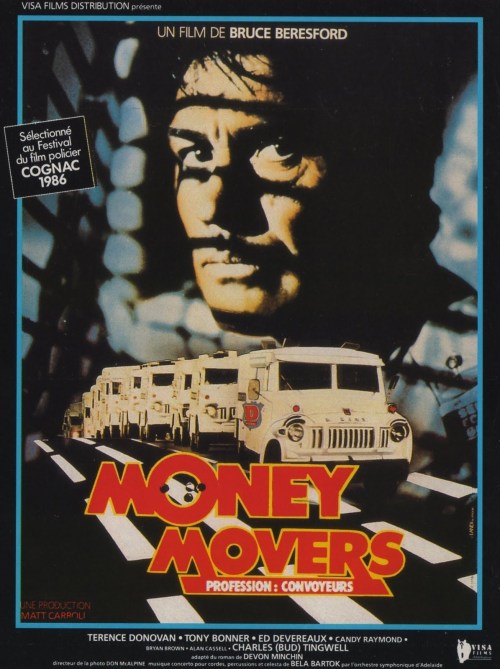
Money Movers (1979)

money movers 2

By Richard Winters

My Rating: 8 out of 10

4-Word Review: Employees become the thieves.

Lionel Darcy (Frank Wilson) runs an Australian armored truck business that transports payroll funds from one location to the other. After there is a robbery to one of his trucks he tries to increase security measures in order to prevent another one from occurring unaware that his own employees, with help of a local crime boss (Charles ‘Bud’ Tingwell) are planning an even bigger attack and everyone, even the police detective hired in to investigate the first crime, are in on it in one or the other.

The film is based on a novel by Devon Minchin, who worked as head of security for The Beatles when they were on tour in Australia and also owned at one time Australia’s largest armored car security company. The story itself is based on two real-life robberies that occurred in Sydney during the summer of 1970.

To me what stands out most about this film is how everyone, with the sole exception of Darcy, is thoroughly corrupt. There is no ‘good-guy’ in this movie, but instead of that being a turn-off it becomes almost like a running-joke where the viewer waits to find out what dark vice each new character will reveal to have. Fortunately they and their vices remain strangely engaging and this is mainly because none of them are portrayed as being inertly ‘evil’, but instead people sucked into an already screwed-up system and simply trying to make a living and doing it in the only way they know how.

Ed Devereaux , who plays a retired cop named Dick Martin, becomes the film’s reluctant protagonist although his presence gets refreshingly underplayed while having him look worn, aged and genuinely overwhelmed yet still remaining dedicated to his cause and ultimately managing to put a monkey wrench into the proceedings. Darcy, the only other non-corrupt character, is equally engaging albeit in an unconventional way as his utter cluelessness as just how criminally overrun his own company is, is a perfect comical testament to how many business owners and CEOs are thoroughly detached from the companies they run and the people they supposedly control.

The violence is graphic and impactful and one of the most memorable elements of the movie particularly during the final shootout that occurs inside the garage of the armor car company. There is none of this staged nonsense where the men have ‘manly’ fistfights that always get coupled with that annoying smacking sound-effect. Instead it gets captured in quick, ugly ways where the men desperately do whatever ugly tactic they can to stop the other one. The action is stark and unglamorous while given a bestial quality like starving animals fighting over a last piece of meat that leaves the viewer feeling like they’ve just witnessed an actual crime as it happened.

The film’s beginning is admittedly confusing and there should’ve been some backstory given before it jumps right away into the crime that features a dizzying array of shootings and double-crossings before the viewer is even able to figure out who is who. Yet after this awkward first part it manages to settle down while becoming a rapid-paced, in-your-face crime thriller that has proven to be highly influential and years-ahead-of-its-time.

money movers 1

My Rating: 8 out of 10

Released: February 1, 1979

Runtime: 1Hour 32Minutes

Rated R

Director: Bruce Beresford

Studio: Roadshow Film Distributors

Available: VHS, Amazon Instant Video 

The Last Wave (1977)

last wave 2

By Richard Winters

My Rating: 6 out of 10

4-Word Review: Suffering from strange premonitions.

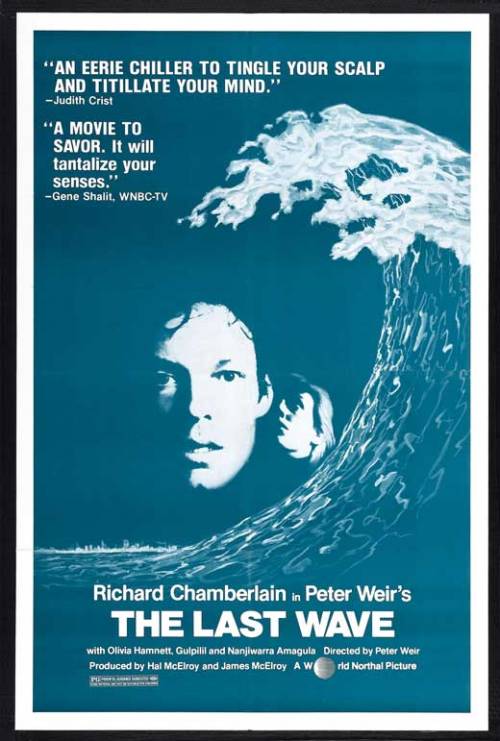
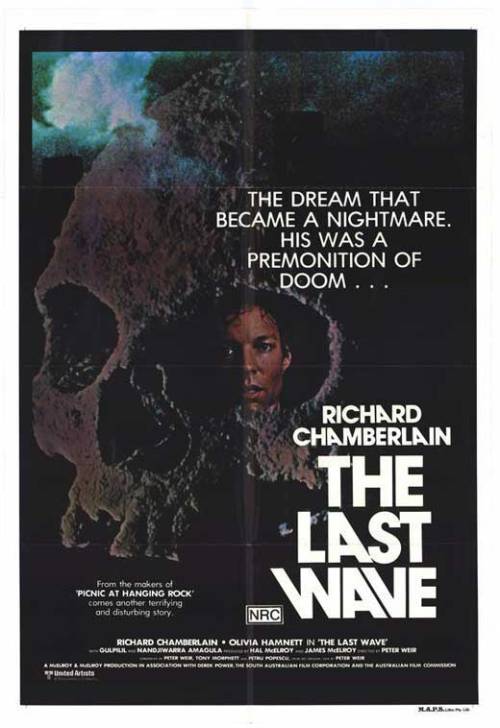
David Burton (Richard Chamberlain) is a lawyer working in Sydney, Australia who is hired to defend some aborigines that have been accused of murder. David’s specialty is taxation law and he feels overwhelmed in this new role, but still takes it on with an earnest dedication, but in the process begins to experience strange dreams and even sees one of his clients, Chris (David Gulpilil), in them. This coincides with weird weather events that begin occurring all over the continent including the phenomena of black rain. David can’t help but feel that somehow this is all connected and after doing extensive research finds that tribal aborigines have a belief system involving what they call dreamtime in which spirits from another world communicate with us through our dreams and David has been the chosen recipient due to his lifelong ability to dream of events in his sleep that eventually occur later in real-life.

The film, which is directed by the gifted Peter Weir, has terrific imagery that almost makes-up for its other shortcomings. There have been a lot of movies that have tried to create creepy nightmare segments, but the ones here work much better than most and gave this viewer an effectively spooking feeling. The silhouette of the aborigines in the pouring rain, the shots of a large seismic wave and use of tribal music all get used to ultimate effect. Even the rain storms become fascinating to watch. None of them were actual ones, but instead large firehoses were employed along with giant fans to create a sort-of surreal stormy effect that actually looked better than the real thing.

The story though borders on being convoluted and would’ve worked better had the movie been given a longer runtime. The first hour is spent with the viewer seeing a lot of strange events that make no sense and are given no explanation. It is only after about an hour in that some expert, who’s given no formal distinction to what their line of study is or degree, explains to David the importance that dreams have to the aborigine culture, which helps tie things together, but this should’ve occurred earlier as some viewers will probably find it too confusing and off-putting otherwise.

Chamberlain is his usual bland self, but okay in this type of role as it doesn’t demand anyone who is colorful. The character though is supposed to be this very pragmatic individual, but he seemed to buy into the mystical qualities of the aborigine belief system much too quickly. A person with a practical approach to life would most likely be quite cynical to the events as they first occurred and even reluctant to base any value on his own nightmares, at least initially.

The ending is a major letdown. For one thing we have the main character inside an ancient sacred site beneath a sewer system where he suddenly has to start ‘thinking out loud’ by explaining what he is seeing on the drawings along the wall even though the viewer could’ve figured this out for themselves without the ‘narration’. The ambiguous conclusion is frustrating and makes sitting through the rest of it feel like a big waste of time.

last wave 1

My Rating: 6 out of 10

Released: November 13, 1977

Runtime: 1Hour 45Minutes

Rated PG

Director: Peter Weir

Studio: Cinema International Corporation

Available: DVD (Criterion), Blu-ray (Reg. B), Amazon Instant Video

Fever (1989)

fever 1

By Richard Winters

My Rating: 6 out of 10

4-Word Review:  Suspense in the desert.

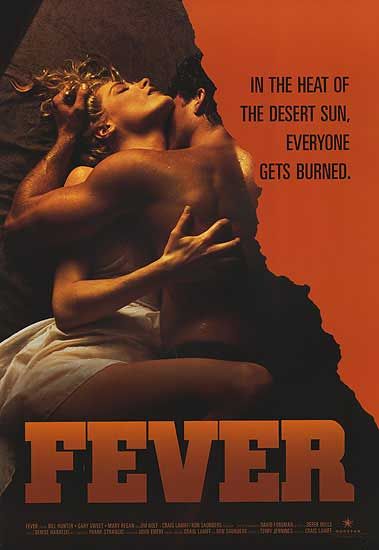
This review will be a first in a series in which we celebrate Australian cinema by reviewing one film each week from Down Under. Today’s movie centers on Jack Welles (Bill Hunter) who comes upon a suitcase full of money after a shootout with a drug dealer. He decides to keep the loot and take it home to his lovely wife Leanne (Mary Regan) unfortunately when he gets there he finds that she is in bed with another man named Jeff (Gary Sweet). The enraged Jack attacks Jeff, but Jeff and Leanne manage to fight him off while knocking him out in the process. Thinking that they’ve killed him they take his body out to the desert and dump it into a vat. The problem is that Jack isn’t dead and he proceeds to relentlessly chase the two while also being followed by a busy-body deputy named Morris (Jim Holt) who thinks that Jack is hiding something and who in-turn is also being followed by criminal kingpin Mr. Tan (Lawrence Mah) who is out to retrieve his drug money.

For the most part this film works pretty well and has a story that is compact and original and will keep the viewer guessing all the way through to the end. It also has some particularly novel camera angles including seeing the inside of a car, with the driver still at the wheel, as it flips over.

The film manages to avoid most of the expected loopholes that you usually see in these types of stories, but there are still a few discrepancies. The biggest one is that Jack recovers from the blow to his head a bit too quickly and magically. There is no dried blood, or bandages needed despite the fact that he does initially bleed when he is first hit. In fact there is no sign of even a cut and no after effects like headaches, swelling or dizziness that most assuredly would affect anyone else after being hit over the head with a vase and knocked unconscious. There is also a scene near the end where, in an effort to find his wife, Jack barges into a lady’s washroom and kicks open all the stall doors before finding a woman sitting on the toilet, but for some reason she doesn’t scream or react at all when he does this, which is weird.

The casting is another issue. Hunter is way older than the actress who plays his wife and it doesn’t look right or make sense. Why would such a young beauty settle for some tubby middle-ager? It clearly wasn’t for love or money and the actor playing her lover has too much of the chiseled male model features of a soap opera star. The solution would’ve been to cast performers to play the wife and lover that were of the same age and looks range as Hunter.  Average looking, middle-aged people have sex and affairs in real-life, so why can’t characters on the big screen ever reflect this?

The story also suffers by having characters that are not likable and nobody to root for. Any screenwriting coach will tell you that no matter how clever, or creative the plot may be if it does not have three dimensional characters then it won’t work.

However, with all that said there are still enough unexpected twists to keep it interesting particularly the ones that occur during the final ten minutes. The last one is especially good and one I would never have guessed, nor seen done in any other film, so the movie gets kudos for that.

My Rating: 6 out of 10

Released: February 1, 1989

Runtime: 1Hour 23Minutes

Rated R

Director: Craig Lahiff

Studio: Genesis Films

Available: VHS

The Picture Show Man (1977)

picture show man

By Richard Winters

My Rating: 4 out of 10

4-Word Review: They show silent movies.

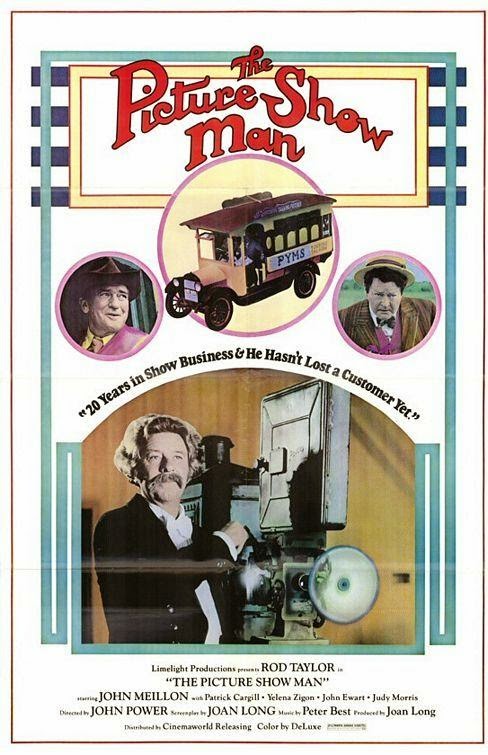
During the 1910’s Pym (John Meillon) travels the Australian countryside with his son and piano player (John Ewert) while renting out the local theaters in the small towns that they come upon and showing silent movies to the townsfolk. He makes just enough to survive and keeps all of his money in his pocket as he doesn’t trust the banks. His biggest problem is the advent of talking pictures as well as competition from Palmer (Rod Taylor) a man who Pym personally trained in the business, but now seems to be making more of a splash.

What should’ve been a nice slice-of-life period piece turns out to be meandering and pointless instead with a script that lacks a plot and everything broken up into vignettes that are just barely passable. The film would’ve done better with a more centralized character and point-of-view as well as adding in some conflict and drama. It also should’ve stayed more focused on the silent movie theme instead of veering into other directions including romance and even horse racing, which are just not as interesting.

Upon his death last year at the age of 85 many obituaries listed this film as being Rod Taylor’s last major role, but it really isn’t. He appears only sporadically and seems to have almost a mystical presence about him. His confrontations with Pym are contrived and his character adds very little.

The only mildly interesting aspect of the movie is the addition of Major Lockhart and his wife (Don Crosby, Judy Morris) who come onboard with Pym to do fake psychic readings during the intermission of his movies. The couples constant bickering is amusing and the scene where the husband catches his wife making out with Pym in the projection room and proceeds to attack them with an ax and sets fire to the film while the customers sit on the other side of the wall singing a song and completely oblivious to what is going on behind them is pretty funny.

I also got a kick out of the shot showing the faces of the people who are completely mesmerized to the screen as they take in hearing dialogue for the first time in a movie. The dialogue itself is banal and even corny, but the fact that the people remain so compelled to it makes it without a doubt the best moment in the movie.

I also found Leonard Maltin’s review of this movie to be pretty amusing as well. In the 1991 edition of his Movie Guide he gives this film three-and-a-half-stars while calling it “Funny and moving” and “A must for buffs”. Then in his 2013 edition he gives this same movie only two stars and describes it as meandering and lacking in energy.

My Rating: 4 out of 10

Released: May 5, 1977

Runtime: 1Hour 39Minutes

Rated PG

Director: John Power

Studio: Roadshow Distributors

Available: DVD

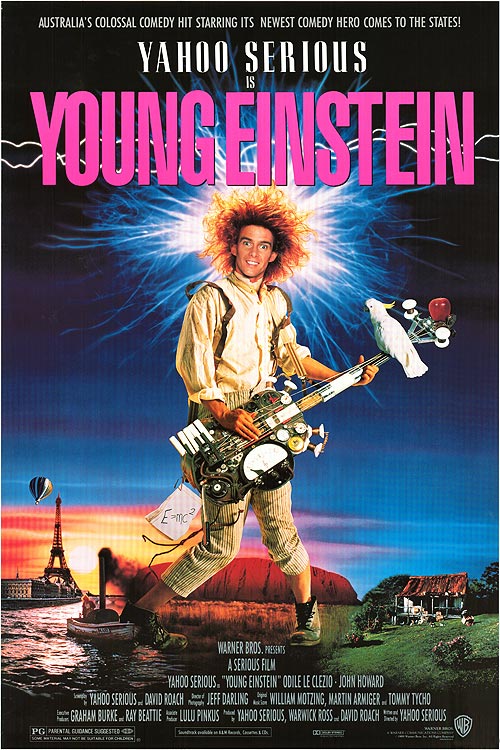
Young Einstein (1988)

young einstein

By Richard Winters

My Rating: 4 out of 10

4-Word Review: The first rock star.

Forget all those things that you’ve read in the history books because they’re all wrong. Albert Einstein was never born in Germany instead he was the son of an apple farmer in Tasmania who grew up to not only invent the theory of relativity, but also rock ‘n’ roll, the electric guitar, bubbles in beer and even surfing. He also had a bad haircut that looked just like Carrot Top’s.

The term one-hit-wonder gets used a lot in the music business to describe a band or singer that comes out of nowhere, gets a chart topping hit and then proceeds back to obscurity. Normally it’s never used in movie jargon, but if it was this would be a perfect example. Writer/director/star/composer Yahoo Serious, whose birth name was Greg Pead until he had it legally changed in 1980, seemed to be the next creative prodigy when he concocted this thing after spending years making educational documentaries. It was a huge success in Australia, which was enough to get Warner Brothers to pick it up as they thought they had another Crocodile Dundee on their hands and spent $8 million promoting it only for it to fail dismally at the box office and in effect so did Serious’ career as he has not made a movie, or even been in one since 2000.

To some extent I was initially surprised at how well directed it was and how Serious showed an astute eye for detail. I loved how he captured the majestic Australian landscape and the music score is quite distinctive and cool. The humor is funny, but mostly when it involves a visual device that has nothing to do with the action. For instance there is a homeless man in one scene carrying a sign stating ‘The end is near’, but instead of spelling ‘near’ in the conventional way it gets spelled as ‘nigh’ to replicate his Aussie accent.

Unfortunately the comedy stays too much at an innocuous level, which is why I believe it didn’t catch on here, or become a cult hit despite its potential. Everything is geared exclusively to a preteen audience, who may love it, but for it to appeal to adults or a more discriminating viewer it needed to have a darker edge, or some attempts at satire instead of just complete, non-stop silliness.

Serious is only so-so as the lead. He certainly does have the chiseled, boyish good looks that could make the young teen girls swoon, but he had too much of a laid-back, mellow persona and seemingly unable to convey any other type of emotion. His radical, punk-like hairstyle starts to become a distraction to the point where you find yourself looking at it even when you don’t want to.

Originally the script was called ‘The Great Galute’ and was a story about some ordinary fella who invented the electric guitar and the Einstein angle was only added in after Serious took a boat ride down the Amazon and noticed a kid wearing an Albert Einstein T-shirt. In a lot ways the film would’ve been better had it stayed with its initial concept as it’s a bit disrespectful to the actual person and it’s never even remotely funny that this guy with a perpetual surfer dude mentality could’ve really been a super genius.

The ridiculous plot proceeds to get dumber as it goes along until it becomes just downright embarrassing by the end. The romantic side-story and the film’s villain (John Howard) are pointless, boring additions that add nothing and should’ve been scrapped. The film would’ve been more successful had it done away with a conventional narrative completely and instead taken the Jacques Tati approach where all emphasis was placed on visual non-sequiturs as this was the only time that I found the film to be even slightly engaging.

My Rating: 4 out of 10

Released: December 15, 1988

Runtime: 1Hour 31Minutes

Rated PG

Director: Yahoo Serious

Studio: Warner Brothers

Available: DVD, Amazon Instant Video, YouTube

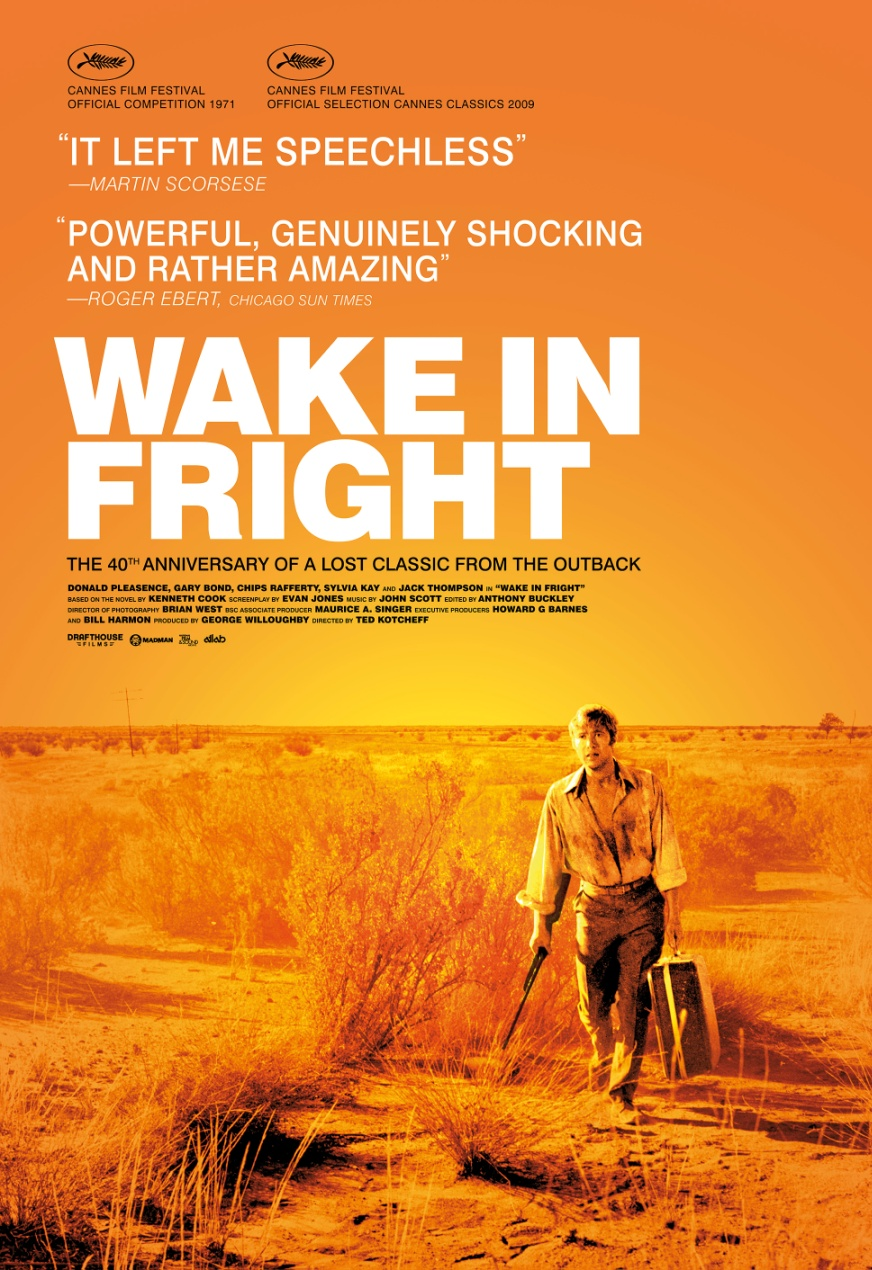
Wake in Fright (1971)

wake in fright 3

By Richard Winters

My Rating: 8 out of 10

4-Word Review: The middle of nowhere.

To an extent this is a one of kind film that is handled in such a raw and unpretentious way that it is like no other film you have ever seen before. The opening shot alone is amazing. You see a birdseye view of an isolated schoolhouse in the outback where our main character teaches. The camera then turns at a full circle and you see that there is absolutely nothing for miles in any direction. The desolation is mind boggling and it’s isolation at its purest.

Not only does this very inspired shot get its point across, but it also becomes the essence of what the film is about by trying to get you to understand the ruggedness of its characters by immersing you into their environment. It’s an uncompromising film full of startling images.

The story deals with a British schoolteacher John Grant (Gary Bond) who, through a loss in gambling, becomes trapped in the isolated outback town of Bundanyabba. He is cultured and educated and his sensibilities can’t mesh with the raw simplistic elements of the people in it.

It’s a highly intriguing viewpoint that not only captures man’s ever daunting task at dealing with nature, but also the overall reality of his existence and even himself. It makes you feel you are right there experiencing the same onslaught with him. There are also some interesting low key scenes proving that one of the biggest hurdles one must fight when in these places is actually just the boredom.

I do have to warn readers that the film has a very prolonged brutally explicit kangaroo hunting scene that features the actual killing of the animals. It even shows the men physically beating up on some wounded kangaroo’s and then viciously slashing their throats in a mocking fashion. Although I do feel that these scenes leave the viewer with the intended strong, raw impact and I like the lighting during the nighttime hunt that allows for a surreal element I still admit this may be a very difficult watch for some and may turn them off from viewing the film altogether. Apparently there were quite a few people that walked out of the film during this scene when it was shown at the Cannes, so be prepared.

Star Bond is excellent. You can relate to his anger and defiance at being somewhere he doesn’t want to be as well as feeling his desperation, exhaustion, and eventual surrender.

For many years this film sat in almost virtual obscurity, but after an exhaustive worldwide search a print of the film was finally found in the back of a Pittsburgh warehouse in a canister with a ‘to be destroyed’ label on it. Fortunately the print was saved and the restoration process is fantastic with colors that are bright and vivid. Director Ted Kotcheff captures the region in all of its rustic, desolate glory including the incredible crystal blue sky.

Reportedly many Aussies dislike the film as they feel it creates a negative stereotype. However, I don’t see it that way. I love the county and people and consider this more of a portrait of what happens when people are stuck in an isolated environment, which technically could be anywhere.

wake in fright 2

My Rating: 8 out of 10

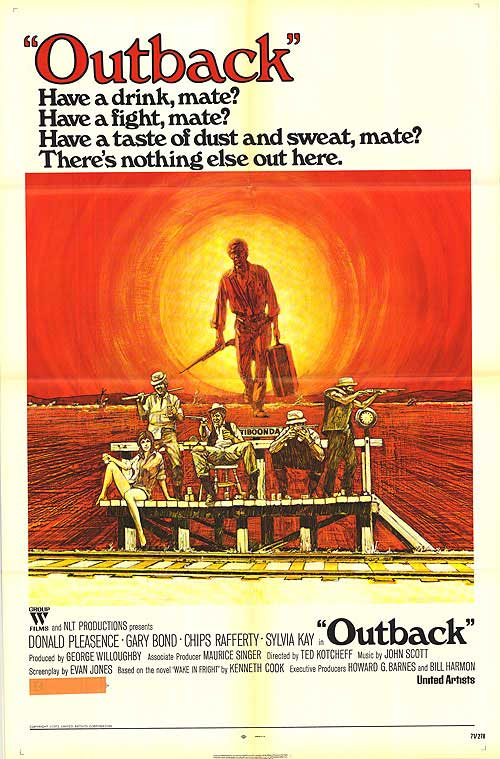
Alternate Title: Outback

Released: October 13, 1971

Runtime: 1Hour 49Minutes

Rated R

Director: Ted Kotcheff

Studio: United Artists

Available: DVD (Region 1 & 2) Blu-ray, Amazon Instant Video

Welcome to Woop Woop (1997)

welcome to woop woop 2

By Richard Winters

My Rating: 6 out of 10

4-Word Review: Oh those crazy Aussies.

Teddy (Johnathon Schaech) is a rather clumsy con man from New York who tries to escape a murder rap by going to the most remote place possible, the Australian outback. However, after coming into close contact with the eccentric people and lifestyles, he decides what he really needs is an escape from there!

This is the type of offbeat comedy that should give all other offbeat comedies a bad name. It takes all the same ingredients from all those other films, meshes them together, and then spits them out in a mechanical fashion. Unlike director Stephan Elliot’s earlier feature Priscilla Queen of the Desert there is nothing deep here to help balance the quirkiness. The film is just made to be silly and at times goes overboard with it. The pace is also too fast. The viewer is never allowed to soak anything in or even take a breath.

Schaech is not good in the leading role. He gives too much of a breezy performance, acting as if the whole thing is a joke. He never once even for a second displays the angst, anxiety, and basic overall exhaustion that anyone else stuck in the same situation would feel.

The portrayal of the Australian people is terrible. They take all the stereotypes of the down under folks and then play it up to the extreme. Here they are not just slightly eccentric people of a rugged and hearty nature. Instead they are complete Neanderthals who live like animals and have no level of sophistication. Yes, it does try to be somewhat fair by showing that Americans may have some primitive defects as well. Specifically in an opening sequence in New York City where every pedestrian is seen shooting at some birds flying by. Still the Australian segments are needlessly overdone and a bit insulting.

The one pleasant surprise is the appearance of Rod Taylor. He plays completely against type here. He’s Daddy-O a self-imposed, self-styled dictator of the town. His performance is gruff, campy, energetic, over-the-top, and hilarious all at the same time. His appearance here may actually be his career pinnacle.
Overall the film is similar in tone to all those formulaic bid budgeted Hollywood actioners, except here it’s aimed at the offbeat crowd. Everything is perfectly packaged to its core audience and overblown all at the same. It’s so forced at points that it almost becomes ridiculous. Yet some of the humor is funny, it has a feel good attitude, and it is without question LIVELY.

Watch for a real fun cameo by Tina Louise at the beginning.

My Rating: 6 out of 10

Released: May 13, 1997

Runtime: 1Hour 37Minutes

Rated R

Director: Stephan Elliot

Studio: Goldwyn Entertainment Company

Available: VHS, DVD

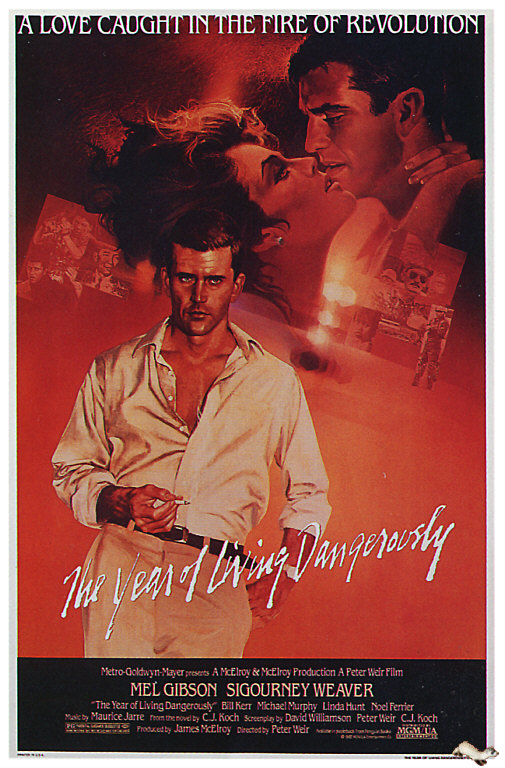
The Year of Living Dangerously (1982)

By Richard Winters

My Rating: 5 out of 10

4-Word Review: Experiencing life in Indonesia.

      Guy Hamilton (Mel Gibson) is a reporter who travels to Indonesia in 1965 just as the government is ready to be toppled. He experiences all the chaos as well as the poverty of the people and apathy from his fellow newsmen. He falls in love with a beautiful diplomat Jill Bryant (Sigourney Weaver) who works with a dwarf photographer named Billy Squires (Linda Hunt in her Academy Award winning performance), and eventually finds himself reluctantly thrust into the middle of the turmoil.

     The film is great at recreating the environment and atmosphere of that period. One gets a very good understanding and feeling at just how poverty stricken and desperate the Indonesian people where. Linda Hunt is unique and memorable as the male dwarf. She also has a great line when a fellow photographer asks her opinion of a picture that he took of a naked woman. He wants to know if she thinks it is art or pornography. Her reply, “If it is out of focus it’s art, if it is in focus it is pornography.” It is also fun to see journeymen supporting actor Michael Murphy playing against type. Usually he is saddled with rather transparent types of roles, but here his character is quite obnoxious.

      It would have been better had the film given the viewers a little bit more of a historical background before it just plopped the characters into a very chaotic and confusing situation. Most people probably have no clue as to the history of Indonesia let alone finding it on a map. It would have also been more interesting had the film been based on real people who really lived through the situation instead of predictable prototypes. A very young Gibson seems a bit overwhelmed with his role. His character seesaws from being boring to exasperating. He gets a huge crush on the Weaver character and chases after her like she is the only thing on his mind and then when she gives him an important piece of information he pounces on it even if it means losing her and their relationship. The pace is hurt by having the film spend too much of its middle section focusing on the romance, which really isn’t all that interesting or diverting. The ending is much too pat for a story that takes place in such a dangerous and complex environment.

      This is a grand idea that becomes too muddled and doesn’t place enough emphasis on the historical background and context. The lead character is boring and the pace is not compelling enough.

My Rating: 5 out of 10

Released: December 17, 1982

Runtime: 1Hour 55Minutes

Rated PG

Director: Peter Weir

Studio: MGM/UA

Available: VHS, DVD, Amazon Instant Video

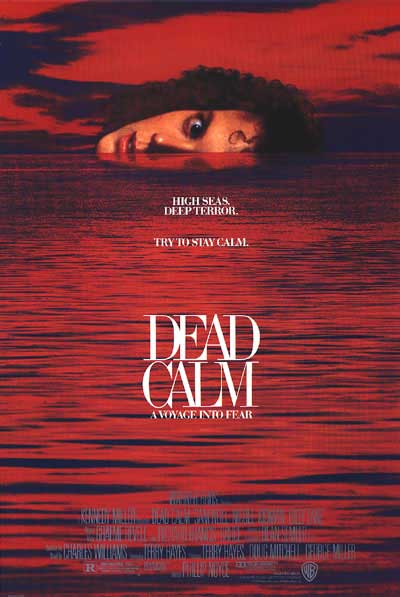
Dead Calm (1989)

By Richard Winters

My Rating: 8 out of 10

4-Word Review: Psycho on a boat.

Rae and John (Nicole Kidman, Sam Neill) are a young couple who in an attempt to get over the death of their child go on a cruise along the coral reef in their own private yacht. After many days at sea they come upon a boat with only one survivor. The man (Billy Zane) comes aboard their ship and almost immediately begins to behave strangely. Tensions slowly rise until it becomes obvious that this man is a full blown psychotic who has killed everyone on the first boat and plans to do the same to them.

In many ways this is a foundation to a perfect thriller. The two main characters are sensible and intelligent people who just happen to be at the wrong place at the wrong time. Like with every thriller there are a few minor loopholes, but overall the situations are done in a believable fashion with no extreme jumps in logic. The script is tight and the suspense consistent. The action comes naturally through the scenarios and is not forced or played out too long. Having it take place at sea gives it a distinct flavor and the setting limitations makes the story more creative. It also hits on one of the main ingredients of fear which is isolation.

The only minor liability is the Zane character. At certain points he seems very human and a fascinating psychotic who is definitely no machine-like slasher. There are times when he is calm and complacent and his disturbed traits only surface sporadically thus giving him a much more multi-faceted personality. Unfortunately he is also careless and amazingly dumb, which hurts the tension because it seems to be telegraphing his own demise. Either way Zane is convincing in the role.

The Neill character makes a good counterpoint. He is savvy and no-nonsense. He takes action into his own hands and doesn’t fall into the helpless victim mode like in other thrillers. The Kidman character is another refreshing change of pace. She is not the standard ‘screaming lady in a bikini’, but instead shows equal resourcefulness.

The film does resort to the modern day slasher trend of having a ‘double’ ending. Yet everything else is so slickly handled that you can almost forgive it. For thriller fans this should be a real treat.

My Rating: 8 out of 10

Released: April 7, 1989

Runtime: 1Hour 36Minutes

Rated R

Director: Phillip Noyce

Studio: Warner Brothers

Available: VHS, DVD, Blu-ray, Amazon Instant Video