Category Archives: Movies Based on Stageplays

Don’s Party (1976)

dons party 1

By Richard Winters

My Rating: 8 out of 10        

4-Word Review: This party gets wild.

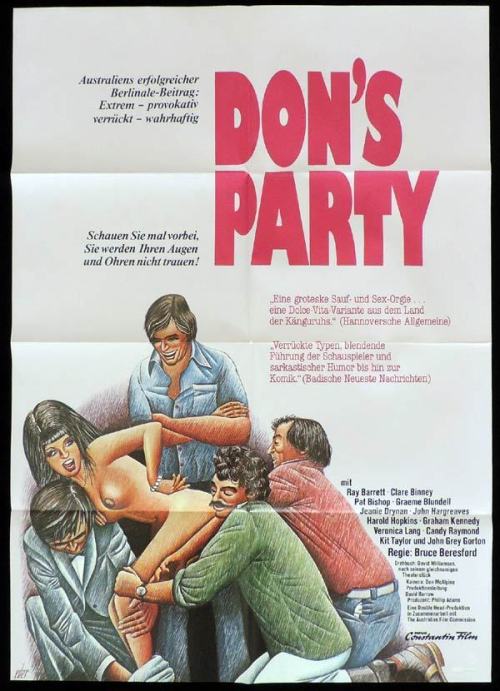
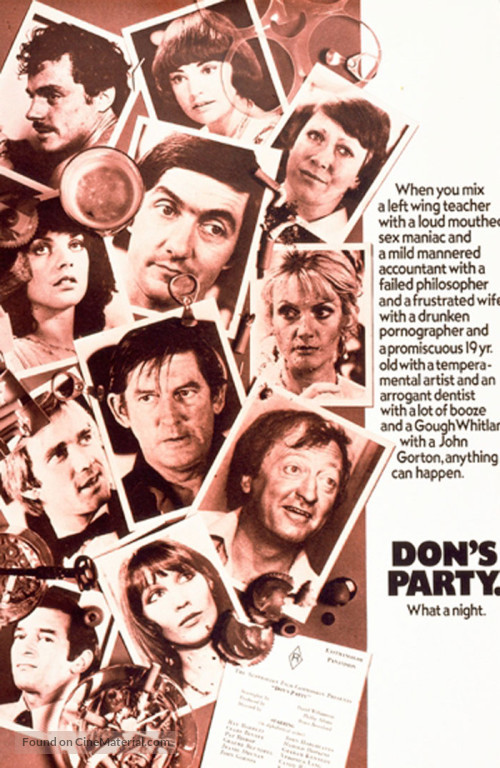
It’s October 25, 1969 and the election for Australian Prime Minister is being broadcast all over the nation. Don Henderson (John Hargreaves) is a Sydney suburbanite hoping that the Labor Party will unseat the incumbent Liberal one and invites his friends over to his home to watch the results. Things start out cordial at first, but as the night wears on and the alcohol takes its toll it heats up. Sexual escapades, arguments and fistfights breakout as the veil of civility comes off and their true selves come out.

This is playwright David Williamson’s most famous work and one that was not only a giant hit in his homeland, but has achieved worldwide acclaim. What I loved about the movie and what makes it so funny is that it cuts out the pretense and shows people as they really are while becoming a scathing indictment on suburbia. Most movies tend to pullback and sanitize things, but this one takes the opposite approach with a crude, in-your-face style that pokes holes at every level of suburban lifestyle that is refreshingly honest and totally accurate. The characters are excessively crass and there’s an abundance of sex and nudity, but sprinkled with a definite grain of truth that makes it more revealing about human nature than shocking.

An actual house was used for the setting, which helps avoid the static feeling and director Bruce Beresford does a good job of taking advantage of all the different rooms in the place and uses a variety of camera angles and shots to give it a nice visual flow. The performances are unilaterally superb and the actors appear genuinely intoxicated making the viewer feel drunk with them as they watch them down one beer after another.

The film’s drawback is that the characters lose their inhibitions too quickly and behave in an unnaturally aggressive way right from the start. It would’ve been more fun had they been overtly civil at the beginning only to watch it slowly deteriorate as the film progresses. There are also a few scenes where the background music is too loud and it’s impossible to hear what the characters are saying, which makes this otherwise slick production come off as a bit amateurish.

I first saw this movie back when I was in college and at the time I just didn’t get it. It seemed excessively profane without any redeeming qualities and filled with characters who were hateful and crude, but then I saw it years later after I’d lived in suburbia and become middle-aged it all suddenly made sense. In fact it made a little too much sense as the message it conveys and portrait it creates is not a pleasant one, but I admire the filmmakers for having the tenacity to bring it to light without compromise or hesitation.
dons party 3

My Rating: 8 out of 10

Released: November 10, 1976

Runtime: 1Hour 30Minutes

Not Rated

Director: Bruce Beresford

Studio: 20th Century Fox

Available: DVD
The Removalists (1975)

removalists 1

By Richard Winters

My Rating: 6 out of 10

4-Word Review: Cops abuse their authority.

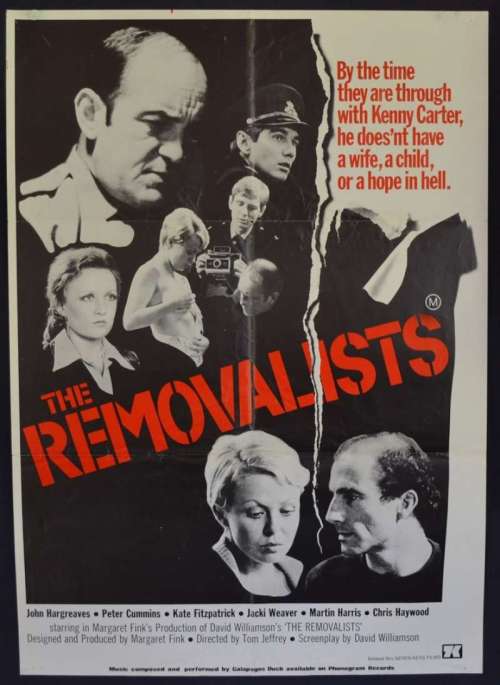
Having just graduated from police training Neville (John Hargreaves) is both excited and nervous about joining the force. His first day on the job working at a small police station with the conservative and boisterous Sargent Dan Simmonds (Pete Cummins) as his new boss gets off to a rocky start and then gets even worse when two sisters arrive to report an incident. Kate (Kate Fitzpatrick) is the older of the two who says that her shy younger sibling Marilyn (Jacki Weaver) has been abused by her husband Kenny (Martin Harris) and will require the services of the two policemen to help move her things out of her apartment and keep Kenny under control while they do it. The two cops oblige, but to everyone’s shock the Sargent immediately becomes physically abusive to the husband when he enters the place and while he has him handcuffed. The beatings escalate throughout the day until Kenny looks to be on the brink of death forcing the two officers into a heated argument over what type of alibi they should use should the victim eventually die.

The film was written by the talented David Williamson and based on one of his stage plays. Williamson is noted, especially in Australia, for his darkly humored subject matter and scathing wit with this one being no exception. It starts out with a caustic tone that just proceeds to get stronger as it progresses. The actions by the Sargent are disturbing and reprehensible, but the fact that the character doesn’t see it that way and expounds on the importance of ‘self-control’ and having a rigid morality shows just how out-of-touch he is with his own contradictions, which makes him quite human and strangely engaging while also making a great commentary on the abuse of police power.

This also marks the film debut of legendary Australian actor John Hargreaves who went on to have a remarkable film career with a wide array of interesting roles before unfortunately dying at age of 50 from AIDS. His portrayal of a nervous and hesitant new recruit is humorously on-target, but the way his character becomes more emboldened as the day wears on is even more interesting.

The film’s downfall is the fact that the sets are visually dull. To some extent this works particularly in the rundown apartment that the majority of the action takes place in because it helps to symbolize how trapped the characters are with their own deteriorating and misguided value system, but it still ultimately gives the film too much of a low budget and unimaginative look. The story itself is predictable and although laced with darkly amusing moments could’ve been funnier and played-up more.

My Rating: 6 out of 10

Released: October 16, 1975

Runtime: 1Hour 33Minutes

Not Rated

Director: Tom Jeffrey

Studio: Seven Keys

Available: DVD (Region 0)

The Only Game in Town (1970)

only game in town 1

By Richard Winters

My Rating: 7 out of 10

4-Word Review: A Vegas love story.

Fran (Elizabeth Taylor) is an aging Las Vegas showgirl living alone in a two-bit hotel room while awaiting the return of her lover (Charles Braswell) who has disappeared yet again while he goes off to his wife that he consistently promises he will eventually divorce. In her loneliness she decides to go out to a piano bar and order a pizza. It is there that she meets Joe (Warren Beatty) and the two quickly hit-it-off while also spending the night together. Joe has a gambling problem, but promises that the minute he saves up $5,000 he’ll be out of Vegas for good. He moves into her hotel room where she helps him save up the necessary dough to achieve his dreams even though with his gambling addiction he will fritter it all away the moment he gets his hands on it. Then Fran’s long lost lover returns and ready for marriage. Will she go back with him, or stay with the self-destructive Joe that she has despite her better judgement fallen in love with?

The script by Frank D. Gilroy is based on his stage play and it’s not particularly rich in character development or plot. In fact the play itself fared poorly when it ran on Broadway and had only 16 performances before being shut down. However, despite its lack of originality I still found myself enjoying it and a major reason for this is the casting.

Taylor shines in a role that didn’t seem to be a particularly good fit for her. She spent the latter part of her career playing bitchy old dames that always seemed one step away from the sanitarium or a nervous breakdown. Here her character merits some sympathy and her usual overacting is actually entertaining and helps propel the flimsy plot along. The pairing of her with Beatty is an odd one, but then again the relationship is supposed to be awkward, so it ends up working to the script’s advantage.

Beatty’s performance is equally impressive. Normally he specializes at playing characters that are cool, calm and in control, but here he portrays one that is quietly crumbling and manages to pull it off to complete perfection. The scenes of him at the craps table and compulsively blowing all of his hard-earned money away is genuinely difficult to watch, especially since real cash gets used, and one of the most effective looks at the gambling addiction that I’ve seen.

This also marks the last film to be directed by the legendary George Stevens. He was known for helming some epic Hollywood productions, so it is a bit surprising that he choose to do this one since the storyline and setting were far more constrained from what he was used to working with. In fact the majority of it was shot in Paris, France and not Las Vegas, which many critics at the time felt was a detriment, but to me it made it even more fascinating to watch because of it. For one thing the crew did spend 10 days in Vegas shooting some of the outdoor shots, so you still get some legitimate Sin City scenery regardless. What I enjoyed though was the way Stevens was able to camouflage the rest of the scenes including having the bright daytime light seeping through the hotel room windows, which convincingly looked like the natural sunlight reflecting off of the sandy desert landscape. The recreation of the giant Las Vegas grocery store was impressive as well and strangely one of my favorite moments from the movie.

If you enjoy quirky love stories particularly between characters who are painfully human and less than glamorous you may enjoy this film better than most. It’s also a terrific chance to see two very fine actors playing against type and doing so in splendid fashion.

My Rating: 7 out of 10

Released: January 21, 1970

Runtime: 1Hour 53Minutes

Rated M

Director: George Stevens

Studio: 20th Century Fox

Available: Blu-ray

California Suite (1978)

california suite

By Richard Winters

My Rating: 7 out of 10

4-Word Review: Visitors at a hotel.

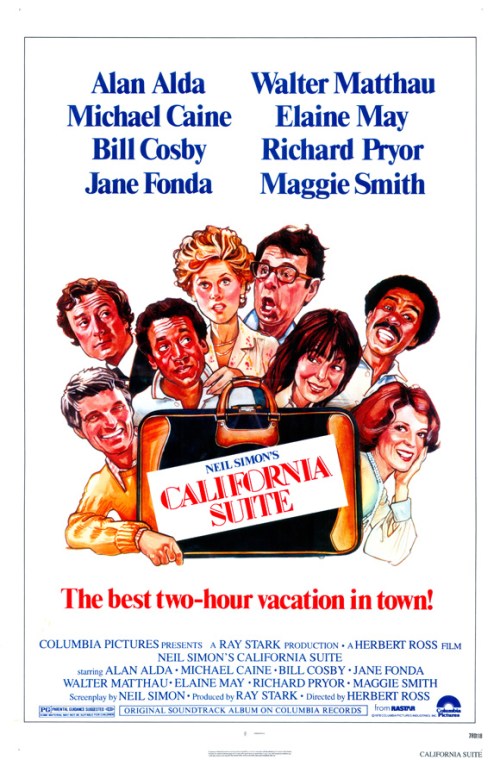
Based on the hit Neil Simon play, who also wrote the screenplay, the film follows five couples all staying at the same posh Beverly Hills hotel. Hannah and Bill (Jane Fonda, Alan Alda) are a divorced couple fighting over the custody of their teenage daughter (Dana Plato). Diana (Maggie Smith) is a famous British actress set to attend the Academy Awards ceremony and being escorted by Sidney (Michael Caine) a man she wants all for herself, but can’t because he is bisexual. Marvin (Walter Matthau) is in town to attend his nephew’s Bar Mitzvah and shocked to find that his brother (Herb Edelman) has sent a prostitute (Denise Galik) to his room to entertain him for the night only for her to promptly pass out drunk the next morning just as his wife (Elaine May) is about to arrive. The final segment deals with two bickering Dr’s (Bill Cosby, Richard Pryor) who can’t get along and seem to get themselves into one over-the-top calamity after another.

Many viewers have commented that they disliked the Fonda character as she came off as too cold and bitchy, but I’ve known many people who are like her who put up a very steely front in order to protect themselves emotionally, so for me her sarcasm worked and the way she delivered her acerbic lines is fun especially as she chews up the already transparent Alda character until it seems like he isn’t even there.

Smith and Caine’s segment seemed a bit trite and generic. The first part of it deals with her nervousness about attending the awards ceremony, which isn’t all that original. The second half examines her frustrations at the fact that Sidney can’t solely commit to her, but I couldn’t completely buy into this because she was playing a rich and famous, globe-trotting actress whom I’m sure could easily find another man if she wanted and didn’t have to cling to someone who didn’t fully want her like she were some lonely, small town housewife with no options.

The third segment dealing with Matthau and the unconscious prostitute is quite funny and had me laughing-out-loud while the scenes involving Cosby and Pryor’s constant arguing is incredibly dumb and even jarring as it features a lot of silly, slapstick humor that does not fit in with the more sophisticated tone of the rest of the film.

I was also not so crazy about the film’s pacing. The first hour deals almost exclusively with the dramatic segments while the second half focuses mainly on the comical ones, which came off as imbalanced. It would’ve worked better had the stories been evenly spread out in a rotating type fashion with a few minutes spent on each one before cutting to the next one. It would also have been cool had it taken a Slacker-like approach where the characters, who never once cross paths in this movie, would have instead passed by each other at certain points and the scene would then shift to the new characters that the other ones just passed.

I was also disappointed that we never get to see much of exterior of the hotel. We do see a bird’s eye view of it during the closing credits, but I thought shots of it should’ve been shown during the beginning. I have nothing against David Hockney’s artwork that does get used, but the hotel is a part of the film’s title and therefore should have taken precedence.

Overall though I felt it was a decent dramedy worth the price of admission. It also features a terrific and distinctive jazz score by Claude Bolling that I wish had been used even more throughout.

My Rating: 7 out of 10

Released: December 15, 1978

Runtime: 1Hour 42Minutes

Rated PG

Director: Herbert Ross

Studio: Columbia Pictures

Available: DVD, Amazon Instant Video, YouTube

Enter Laughing (1967)

enter laughing

By Richard Winters

My Rating: 2 out of 10

4-Word Review: Acting is his dream.

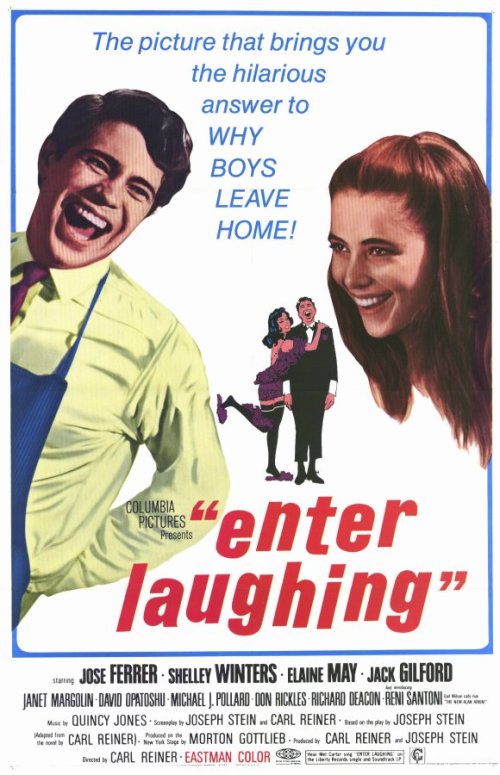
Loosely based on writer/director Carl Reiner’s experiences as a fledgling actor trying to work his way up into the business circa 1938. The story centers on David Kolowitz (Reni Santoni) who works as an apprentice at a machine repair shop, but dreams of one day making a living as a stage actor. He gets his break when he auditions for a part in a low budget stage production run by an aging, alcoholic actor named Harrison Marlowe (Jose Ferrer). Marlowe is not impressed with David’s acting ability, which is marginal at best, but at the insistence of his daughter Angela (Elaine May), who thinks David is ‘cute’, he decides to give him a try under the condition that David must pay them to perform in it and also must come up with his own costume.

Although this was a big success on Broadway as a film is has not aged well and is quite bland. The story is better suited as an episode for a sitcom and stretching out such a thin one-dimensional plot to an almost two-hour runtime becomes quite boring particularly with its plodding pace and direction. The only time it ever gets even mildly funny is during David’s audition scene, but even this ultimately falls flat particularly with the idea that David would be dumb enough to think that words in a script that are in parenthesis would be part of the dialogue and not a stage direction. You would think someone who has spent his entire life dreaming of being ‘the next Ronald Coleman’, who was a big movie star during the ‘30s, would know how a basic script is constructed and therefore this attempt at humor fails.

Santoni, in his first major film role, is terrific and despite being of Hispanic heritage, which Reiner is not, still manages to resemble Carl quite well during Reiner’s younger years. However, the character is too painfully naïve and dumb as he clumsily walks himself into messy situations long after the viewer, or anyone else with some common sense, would clearly see the obvious red flags.

Janet Margolin is beautiful playing David’s girlfriend Wanda and her presence gets an ‘A’ simply for her attractive face alone, but the romantic scenes do nothing but bog this already slow moving film down even further. Also, having David be so oblivious to her insecurities about him working with an attractive leading lady onstage makes him seem insensitive and not funny as intended.

Elaine May is good and so is Jack Gilford as David’s boss at the repair shop. It’s also fun seeing Carl’s real-life son, Rob Reiner, who later became famous for playing Mike Stivic on ‘All in the Family, making his film debut as a nerdy, would-be actor, but overall the film is dated and contrived.

My Rating: 2 out of 10

Released: February 25, 1967

Runtime: 1Hour 52Minutes

Not Rated

Director: Carl Reiner

Studio: Columbia Pictures

Available: VHS

Steaming (1985)

steaming

By Richard Winters

My Rating: 2 out of 10

4-Word Review: Saving a steam room.

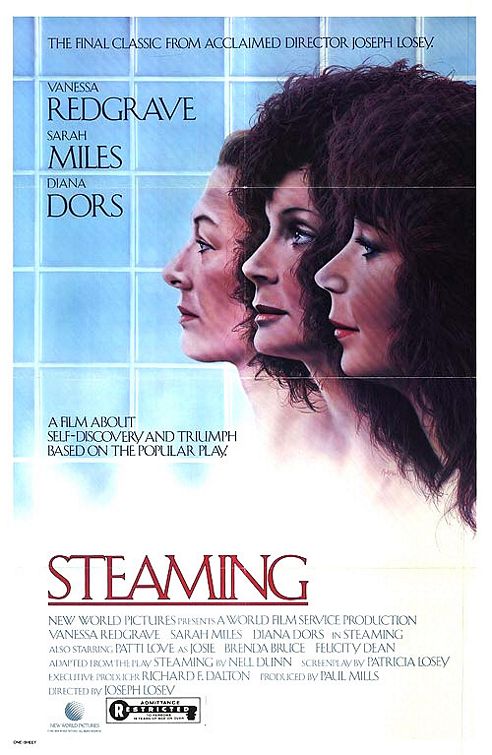
Three women (Vanessa Redgrave, Sarah Miles, Patti Love) congregate at a London steam room designed like a Turkish bathhouse. Despite their lifestyle differences they become good friends as they divulge their problems to one another and learn to lean on each other to help them cope with life’s difficulties. Then one day Violet (Diana Dors), who is the bath house owner, informs them that the place is set for demolition, which causes everyone to go on a mission to try and save it.

The film is based on the Nell Dunn play, which was highly regarded at the time, but makes for a very poor transfer to film. It starts out flat and never recovers. The dialogue has too much of a conversational quality that is not interesting and the problems that they discuss are not compelling, or original. The humor from the play is missing and the dry, somber tone only makes things even more boring. The only time it gains any traction is when it’s announced that the place is closing, but everything gets resolved in such a sitcom-styled way that it hardly seems worth the effort to watch.

The entire cast is made up of women and there is an abundance of nudity particularly from Miles, which doesn’t seem like a big deal these days. The biggest issue though is the fact that everything takes place from inside the bath house, which is gray, grimy, and rundown. The film should’ve had some segments shot from different locales if to only allow for some visual variety and to help the viewer understand the characters better by seeing how they react in different social settings.

Miles and Redgrave are wasted in drab roles and this goes likewise for Dors whose last film role this was. Love is the only one that shows any liveliness and although her character is a bit annoying she at least has an emotional breakdown near the middle, which adds some mild dramatic tension.

Joseph Losey was a competent director who made many interesting films, so it’s a shame that his career had to end with such a dud. He was already sick with cancer while he filmed this and like with Dors died a year before it was released. The disease may have sapped his creative energy and explain why this production is so ponderously sterile. It’s certainly a far cry from his other works as well as the Bruce Jay Friedman play Steambath, which had a similar setting, but a much more imaginative plotline.

My Rating: 2 out of 10

Released: September 28, 1985

Runtime: 1Hour 31Minutes

Rated R

Director: Joseph Losey

Studio: New World Pictures

Available: DVD (Region 2)

One Way Pendulum (1965)

one way pendulum 1

By Richard Winters

My Rating: 4 out of 10

4-Word Review: An absurd little movie.

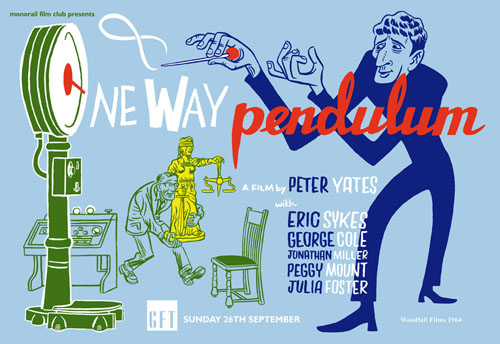
The Groomkirby family is one really absurd bunch. The father (Eric Sykes) wants to build a replica of the Old Baily courtroom in his living room and then have a trial, involving his son Kirby (Jonathan Miller) as the accused, reenacted. His daughter Sylvia (Julia Foster) wishes that she were an ape so that her arms would be longer and discusses this at length with her mother (Alison Leggatt). Kirby steals weight machines, which voices the person’s body weight, off the city streets and brings them back to the family’s attic were he then converts them into machines that sing. There’s also Aunt Mildred (Mona Washbourne) who thinks she’s waiting for a train that never comes as well as Mrs. Gantry (Peggy Mount) who’s paid to come over and eat the family’s unwanted leftovers.

The film is based on the stage play of the same name written by N.F. Simpson and was labeled as being ‘A farce in a new dimension’. John Cleese is purportedly a big fan of the movie and credits it as inspiring many of the absurd ideas that they used in their later Monty Python sketches. It was also directed by Peter Yates who went on to direct such quintessential hits as Bullitt, Breaking Away, and Year of the Comet.

The film certainly does have its share of funny and highly original moments. One of my favorite scenes is where the father carts the props that he needs to build his courtroom down a busy street of London using nothing but a wheel barrow and holding up traffic while he does it. Kirby’s ability to make the weight machines sing and sound like a genuine chorus is fun also as well as the climactic courtroom segment in which a myriad of comically absurd arguments, testimony, motions and reasoning is used until it becomes almost mind bending.

Unfortunately it all gets just a little too weird. Normally I’m a fan of the offbeat, but there still needs to be something to anchor it down and this film lacks it. The dialogue, characters and storyline are so progressively strange that it becomes downright nonsensical. The court case loses its edge as well because the father is somehow able to recreate it and the people in it in some magical way using a machine where kidnapping a magistrate and lawyers and forcing them perform in their makeshift court of law would’ve been funnier.

The movie will certainly satisfy those with inkling for the offbeat and the film seems intent to push the absurdity as far as it possibly can with a cast primed to pull it off, but it ends up being too weird for its own good and parts of it are confusing and hard to get into.

My Rating: 4 out of 10

Released: March 2, 1965

Runtime: 1Hour 20Minutes

Not Rated

Director: Peter Yates

Studio: United Artists

Available: None at this time

Boom! (1968)

boom

By Richard Winters

My Rating: 4 out of 10

4-Word Review: Bitchy lady rules island.

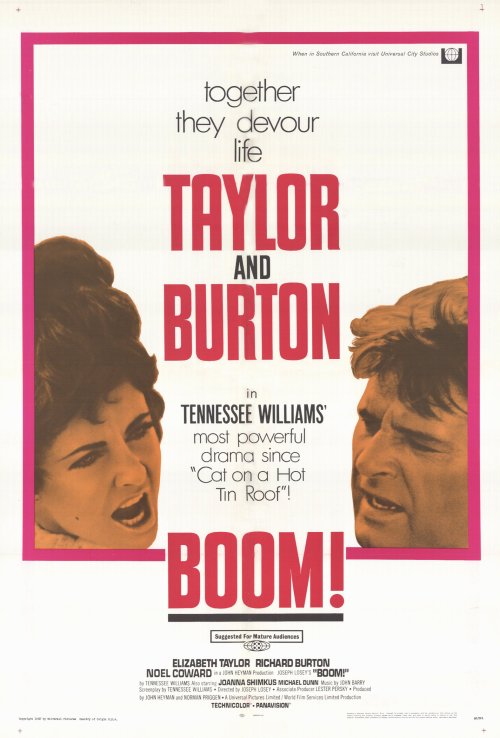
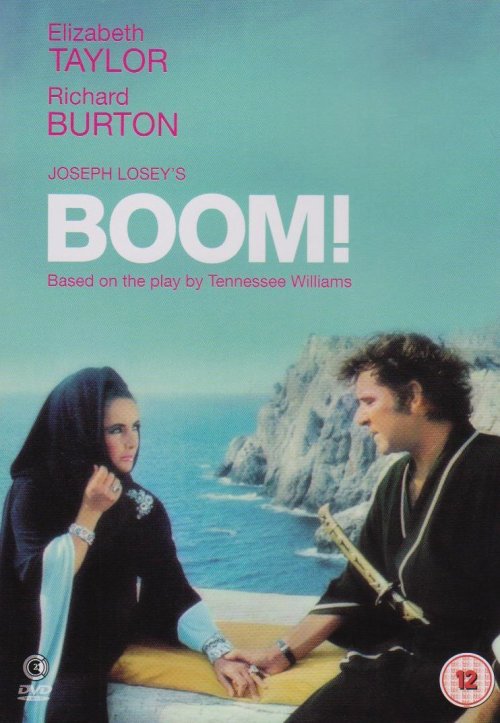
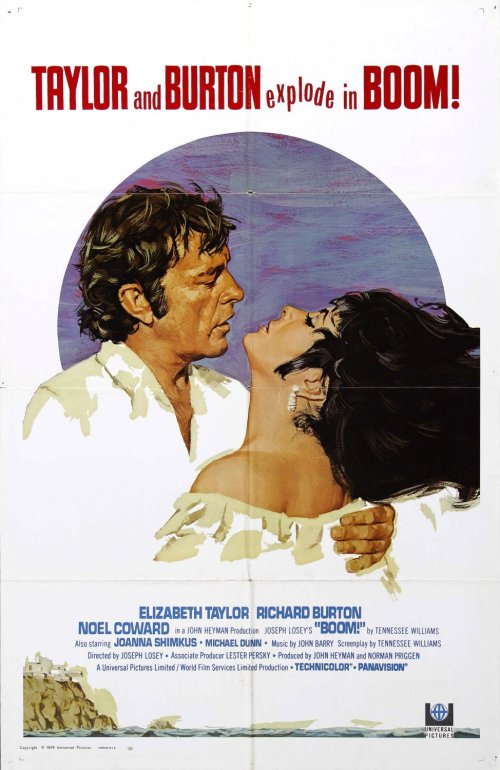
Flora ‘Sissy’ Goforth (Elizabeth Taylor) lives on a secluded island in a large mansion and surrounded by servants who cater to her every whim. She has alienated most everyone she has come into contact with and relies on her secretary Miss Black (Joanna Shimkus) to write down her autobiography that she dictates to her indiscriminately throughout the day. In comes Chris Flanders (Richard Burton) a nomadic poet living on the skids who infiltrates her palace and her oppressed sexual desires with his ruggedness and mystery. Will Sissy fall under his seductive spell, or does this mysterious stranger have even darker intentions?

The film was directed by Joseph Losey who is one of the more inventive and groundbreaking directors who ever lived and sadly doesn’t get enough recognition. Unfortunately he was going through a bout of depression when he made this film, which caused him to abuse alcohol and seriously affected the film’s final result although it still manages to be a fascinating visual excursion nonetheless. The location shooting, which was done almost entirely on the island of Sardinia, is dazzling. The shots of the steep cliffs and crystal blue water, which are literally a part of Sissy’s backyard, are breathtaking. The modernistic mansion that she lives in is equally sumptuous particularly with its myriad collection of art paintings and wet bars that seem to pop-up every few feet in whatever room or patio the characters are in.

The acting is also outstanding as Taylor eats up the scenery with her over-the-top bitchiness and unexplained anxiety attacks, which she takes to an unprecedented campy level. The outrageous hat that she wears to her dinner date is quite possibly one of the most bizarre things ever to be put on top of a human head.

boom4

The normally commanding Burton unfortunately comes off as weak in comparison and overall looks uncomfortable in his role. The script originally called for a young man in his 20’s for the part and thus casting Burton, who was already 42 at the time, seemed misguided.

Dwarf actor Michael Dunn is excellent in support. His character utters only three words, but still makes his presence known with the way he shows complete control over his attack dogs while playing of all things Sissy’s bodyguard. Playwright Noel Coward appears in a fun bit as one of Sissy’s friends who she invites over for dinner. The friends secretly disdain each other in private, but put on a superficial friendship when together and apparently this is also how the two performers behaved with each other behind-the-scenes as well.

Unfortunately the script, which was written by Tennessee Williams and based on his play ‘The Milk Train Doesn’t Stop Here Anymore’ leaves much to be desired. The plot meanders on to an unsatisfying conclusion while rehashing old themes that had already been used in his earlier and better known works.

boom2

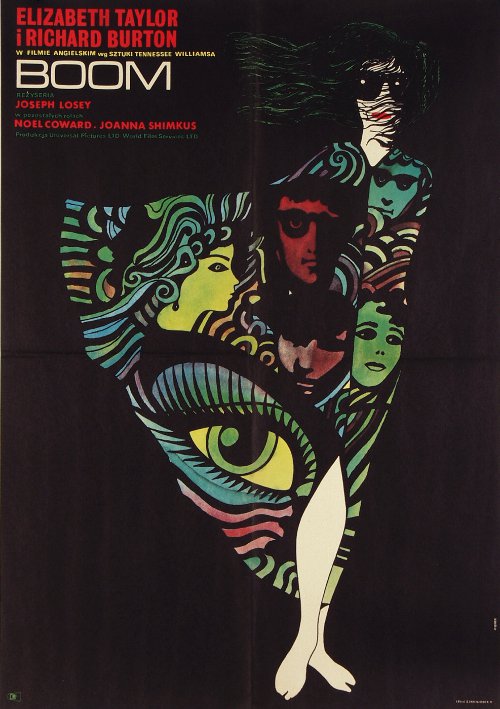
Polish Poster

My Rating: 4 out of 10

Released: May 26, 1968

Runtime: 1Hour 52Minutes

Rated PG

Director: Joseph Losey

Studio: Universal

Available: DVD (Region 2)

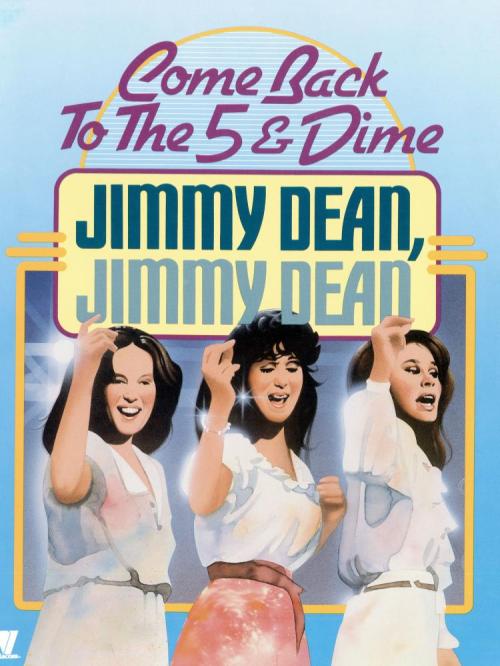
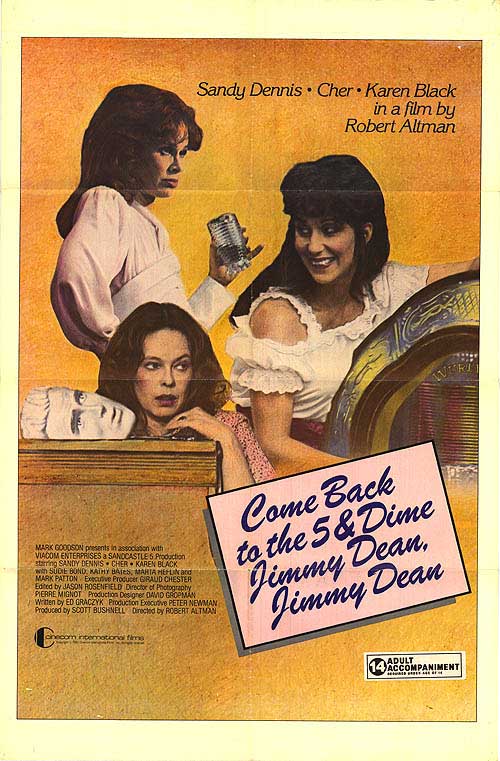
Come Back to the 5 & Dime Jimmy Dean, Jimmy Dean (1982)

COME BACK TO THE FIVE & DIME, JIMMY DEAN, JIMMY DEAN, Sandy Dennis, Cher, Karen Black, 1982, (c) Cinecom Pictures

COME BACK TO THE FIVE & DIME, JIMMY DEAN, JIMMY DEAN, Sandy Dennis, Cher, Karen Black, 1982, (c) Cinecom Pictures

By Richard Winters

My Rating: 3 out of 10

4-Word Review: Disciples of James Dean.

Twenty years after his untimely death five women (Cher, Sandy Dennis, Karen Black, Kathy Bates, Marta Heflin), who were big fans of James Dean and called themselves his disciples, decide to hold a reunion at a thrift shop in a small town not far from Marfa, Texas where the film Giant was made. However, the reunion is not a happy one as old wounds and secrets come to light that forces the women to analyze themselves and their lives in uncomfortable and unpleasant ways.

One of the things that really annoyed me about this movie and at times just downright confused me is that the characters show no signs of aging at all as it shifts between 1955 and the present day of 1975. Twenty years is a significant period of time and most everyone will show some signs of age, or at least changes to their hairstyle and outfits and yet with the exception of the Joe character there is no distinguishable differences between the others from one period to the next. The Cher character was particularly perplexing as her hair remains jet black for two decades and even the same exact style. One could argue that maybe she dyed it, okay, but she also manages to somehow retain her same girlish figure, which is even less likely.

I also found it hard to believe that she could afford to make a living by working at little thrift store for 20 years, or that she would even be needed as the place was small enough for one person to run and through the course of the entire movie never once does a single customer even enter the place. Her character was attractive enough to find a man, get married and run off to another town or place that had more potential. We learn through the course of the movie that she was married at one point, but then dumped, however I would think she would’ve been able to find someone else in a 20 year time span especially since she was still quite good looking.

Keeping all of the action inside the thrift store makes the film seem almost claustrophobic. I realize this was based on a stage play, but most plays that get transferred to film will have certain scenes, or cutaways added in to avoid this feeling. Even having some outdoor shots done over the opening credits would’ve given it a little more of a visual variety.

The performances are the best thing about the movie and probably the only reason to see it. All three leads recreate their parts from the stage version. Cher is sensational and in my opinion gives the best performance. Dennis is solid doing her patented fragile caricature and who displays some interesting emotional eruptions at completely unexpected times. Black is excellent as well. Usually she plays flaky types, but here is more reserved and steely. Bates is good as a loud and abrasive woman and Sudie Bond lends fine support as the shop’s overtly religious owner.

The script is passable, but the revelations that come out are stuff you’d find on a second-rate soap opera. I also found it hard to believe that these women would get together after 20 years and not have other things to talk about. Usually when people meet after not seeing each other for an extended period of time there’s always a lot of ‘catching up’ to do where they talk about all the things that have happened to them since, but here there’s none of that. Instead they come off like people frozen in time clinging to bygone issues that just about anyone else would’ve moved on from long ago.

The film ends with several shots of the store shown in an abandoned and rundown state, but with no explanation of what time period it was taken in. At first I thought this meant that maybe the reunion had never occurred. That maybe it had just been imagined, which is a concept that I liked and would also have filled in some of the gaping plot holes that I’ve described above, but then I saw the reunion banner still hanging in a tattered state from the ceiling. Others on IMDb have debated that it may represent the reunion that they had planned for 1995 that never came about, which is a good guess, but with business being as slow as it  was at that place I think it would’ve been abandoned long before 1975 let alone 1995.

come back 1

My Rating: 3 out of 10

Released: November 12, 1982

Runtime: 1Hour 50Minutes

Rated PG

Director: Robert Altman

Studio: Cinecom Pictures

Available: DVD

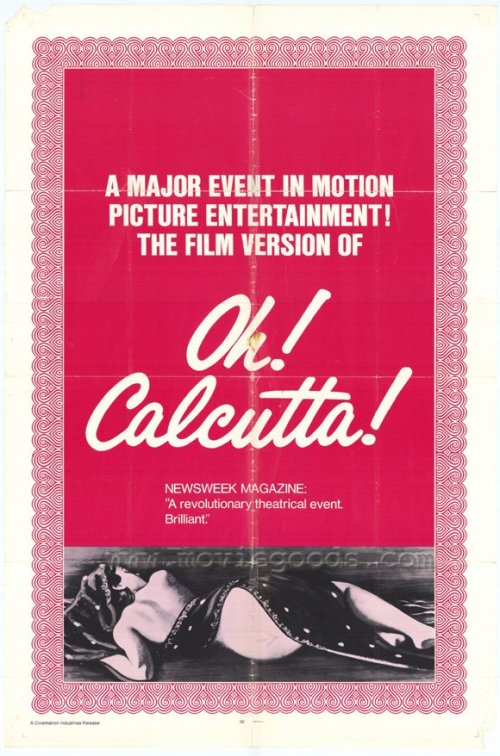
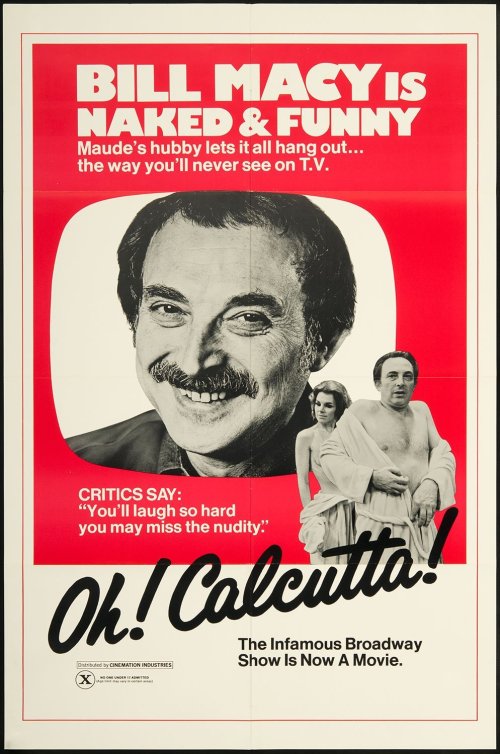
Oh! Calcutta! (1972)

oh calcutta 1

By Richard Winters

My Rating: 1 out of 10

4-Word Review: No clothes no problem.

This film is based on the long running stage play that ran from June 17, 1969 to August 12, 1972 and later revived in the ‘80s to become one of the longest running shows in Broadway history. This version was taped in front of a live audience on a closed sound stage and then broadcast on pay-per-view, which eventually was transferred to theaters in ’72. It has a mainly nude cast performing in skits with a sex related theme and later became popular for featuring Bill Macy who went on to star as Walter in the hit TV-show ‘Maude’.

The film starts out interestingly enough as it shows the audience members filing in and examines the nervous looks on their faces as this was when nudity on stage was all still quite new and controversial. The film then cuts back and forth between the audience and the backstage cast who are in-the-buff and getting ready to perform.  They then come out on stage in bathrobes and do an Avant-garde-like dance sequence in which their names get matted over the screen while they flash the audience.

It then goes into the skit portion and everything goes rapidly downhill from there. The first segment isn’t funny at all and actually quite disturbing. It deals with two adults pretending to be teens who are starting to become aware of their sexual awakenings. The boy, who is named Jack, takes out a ruler in order to put it up Jill’s ‘thing’ to make sure it will be deep enough to fit in his ‘thing’. She becomes reluctant, so he tackles her and forcibly rapes her while killing her in the process. Unable to grasp what he has done he props her up and has a ‘conversation’ with the corpse before walking away and allowing the camera to zoom in on a close-up of her vacant, empty eyes.

The second segment deals with the cast reading letters of sexual fantasies written by anonymous authors that isn’t as titillating as it sounds. The third segment deals with a man who has become bored with his sex life and wants his reluctant girlfriend to try out some new fetishes. This segment is particularly boring because during the time the couple is having sex the viewer is treated to watching three minutes of a matted picture of a city skyscraper instead.

After this there is a skit dealing with a conservative couple inviting over some swingers as well as a segment dealing with an examination done at a doctor’s office, which is has a vaudeville theme and comes complete with cheesy cartoon sound effects.

There was a time when the mention of sex or nudity shown of any kind would be deemed ‘controversial’, but that period is long gone and this insipid thing hasn’t aged well at all. In fact there are old episodes of the ‘Love Boat’ that are more provocative and funnier than anything you’ll see here.

oh calcutta 2

My Rating: 1 out of 10

Released: June 16, 1972

Runtime: 1Hour 40Minutes

Not Rated

Director: Jacques Levy

Studio: Cinemation Industries

Available: DVD (out-of-print)