Category Archives: Movies Based on Novels

Goldengirl (1979)

goldengirl

By Richard Winters

My Rating: 2 out of 10

4-Word Review: Runner injected with hormones.

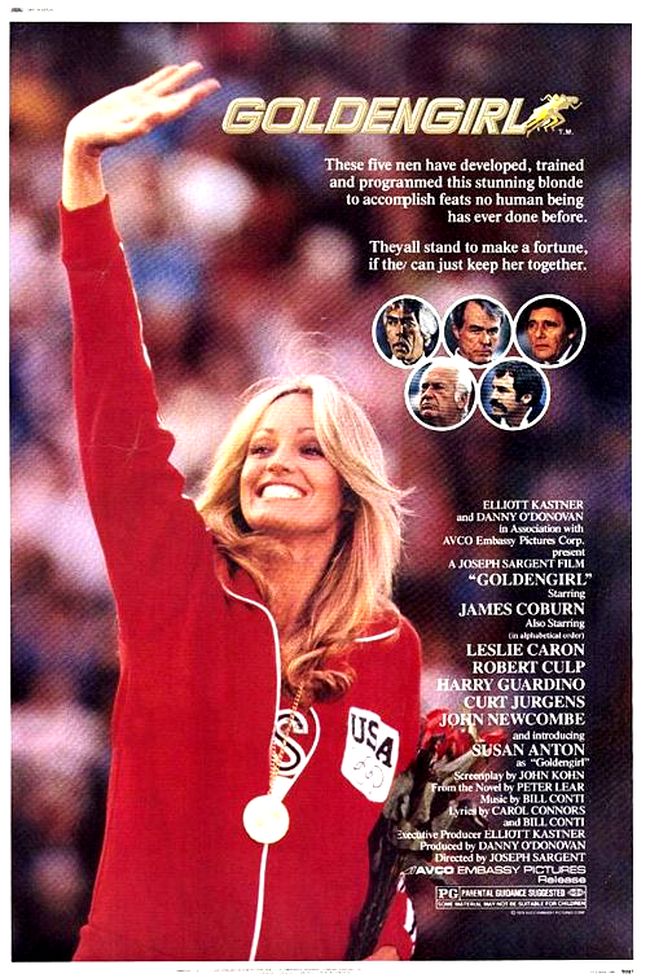
Goldine (Susan Anton) is a tall, 6-foot-2, athlete, who’s also quite beautiful, who shows a lot of talent as a runner and ends-up qualifying for the 1980 Summer Olympics in Moscow. However, behind-the-scenes there’s a sinister plot. Her father Serafin (Curt Jurgens) is a neo-Nazi who has injected her with hormonal drugs and vitamins from an early age in order to get her to be taller and stronger than the other athletes. This regimen has had a adverse effect on her system causing her to get diabetes of which she’s required to take two pills before every race in order to prevent her from going into shock. Dryden (James Coburn), who’s been hired by her father to help market her and make money off of her name and potential celebrity, recognizes these problems and tries to get her to drop-out, but the lust for fame and recognition are too much and Goldine decides to stay-in even as the warning signs mount.

Based on the 1977 novel of the same name by Peter Lovesey and originally intended for a miniseries on NBC-TV, who initially funded the production, but then scraped the telecast when the US pulled out of the Olympics due to the Soviet invasion of Afghanistan. The film was then re-edited from its initial 4-hour cut and paired down to less than 2-hours before being released to theaters where it managed to recoup only $3million from its $7million budget. Alot of the problem is that not enough happens to make sitting through it seem worth it. The sinister neo-Nazi story angle doesn’t get played-up to make it suspenseful, or even mildly diverting. In many ways this could’ve been just an average film about athletes training for the Olympics because for the most part that’s pretty much what it focuses on and even then, the interest level is only marginal.

Coburn is a great actor, but I didn’t know what he was doing in this type of movie as he seemed too old for the part. While he was only 50 when it was shot, he looks much more like 60, or even 70. Having him ultimately get into a sexual relationship with Goldine seemed absurd. I got nothing against May-December romances, but it just didn’t make sense why this beautiful, young woman would have to settle for some old guy, or would even want to, to satisfy her sexual needs. A woman looking like she did should’ve been able to attract a man her age, let alone many, possibly even a fellow runner and the story would’ve been stronger had she been in a relationship with someone else her age who was at odds with the father and fought for her right from the start versus some old guy waltzing-in who only takes a casual concern to her problems and could easily bow-out at any moment, which is what he ultimately kind of does.

The biggest detriment is with Anton. As an actress I thought she did quite well. She was known at the time for being crowned Miss California in 1969, but her work here did lead to a Golden Globe nomination and her own TV-series and given the fact that she didn’t go through the conventional acting training I felt she earned it and was effective. Her character though is bland, and she should’ve been the one uncovering her father’s dastardly plan instead of Coburn. She spends a lot of time reacting to things versus driving the action like a protagonist should. Her personality traits aren’t clear and seem almost robotic most of the way and it prevents the viewer from having any emotional connection to her, or her quandary. Having her start to ‘flip-out’ near the end, supposedly because of her ‘condition’, makes her even more of an enigma and might’ve had a more profound effect had she been better defined and three-dimensional from the beginning.

Spoiler Alert!

Curt Jurgens meltdown while being interviewed live on-the-air by reporter Robert Culp, and then his subsequent running-out onto the racetrack, while in full view of millions of spectators, in an effort to win his daughter’s affections back, is the best moment in the movie. It’s a bit campy and over-the-top for sure, but when a film is as boring as this one even a silly moment can help it and quite frankly there should’ve been more of them.

The warp-up though is terrible. Having her decide at the last second not to take her diabetic pills as directed and then proceed to go into the race anyways is the movie’s one and only suspenseful minute, but then director Joseph Sargent botches it by fading out and not showing her collapsing on the track. We’re told about it later, but it would’ve been more dramatic for the audience to have witnessed it first-hand. To then have her fully recover and not learn from the event and go on afterwards like it was ‘no big deal’ defeats the purpose of the movie. What’s the point of sitting through an almost 2-hour flick where the character doesn’t change, or grow in any way and the events that happen throughout it don’t really lead to anything?

My Rating: 2 out of 10

Released: June 15, 1979

Runtime: 1 Hour 45 Minutes

Rated PG

Director: Joseph Sargent

Studio: AVCO Embassy Pictures

Available: DVD, Blu-ray, Amazon Video, YouTube

The Devils (1971)

devils1

By Richard Winters

My Rating: 9 out of 10

4-Word Review: Burned at the stake.

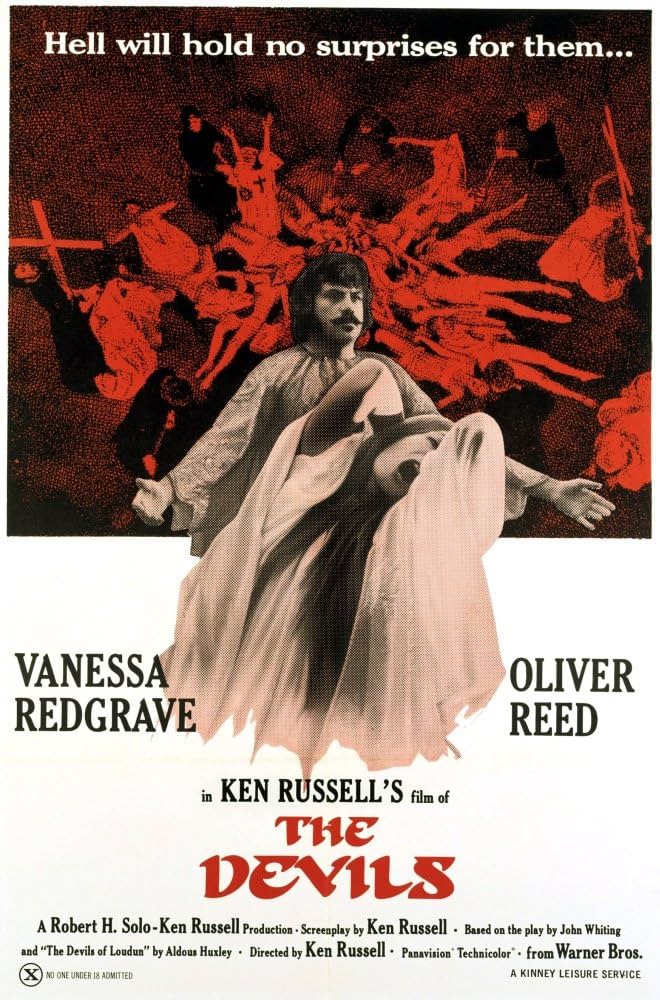
In the year 1634 the governor of Loudon, a small fortified city, dies, making Urbain Grandier (Oliver Reed), a priest with a secretly decadent lifestyle, the one in control. He’s idolized by the townspeople and the head nun at the local convent, Sister Jeanne des Anges (Vanessa Redgrave), secretly has sexual fantasies about him though because she suffers from having a hunch on her back is rarely ever seen outside and Urbain himself doesn’t know she exists. When Urbain secretly marries Madeleine (Gemma Jones) Jeanne becomes jealous causing her to confide to Father Mignon (Murray Melvin) that she’s been possessed by Urbain as well as accusing him of dabbling in witchcraft. This then leads to an inquisition headed by Father Pierre Barre (Michael Gothard) and a public exorcism, which has the nuns in the church strip and perform perverse acts before Urbain and his new wife are arrested and put on trial.

The story is based on the actual event, which was written about in the book ‘The Devils of Loudun’ by Aldous Huxley that was later turned into a stageplay. After the play’s success United Artists became interested in turning it into a movie and signed-on Ken Russell to direct due to his recent success in helming Woman in Love. Russell read the source material and became in his words ‘knocked-out by it’ and ‘wanted others to be knocked-out by it too’. This then compelled him to write an extraordinarily over-the-top script full of sex, violence, and graphic torture that so shocked the studio execs when they read it that they immediately withdrew their initial investment and refused to fund the picture threatening the project from being made even though many of the sets, constructed by set designer Derek Jarman, has already been painstakingly completed, but fortunately for them Warner Brothers swooped-in at the eleventh hour, which allowed the production to proceed.

The film’s release was met with major controversy with many critics of the day, including Roger Ebert who gave the film a very rare 0 star rating, condemning it. Numerous cuts were done in order to edit it down to a version that would allow it to get shown with the original British print running 111 minutes while the American one ran 108. Both were issued with an ‘X’ rating though even these cut out the most controversial scene, known as ‘The Rape of Christ’ segment, in which a group of naked nuns tears down and then performs perverse acts on a giant-sized statue of Jesus. This footage was deemed lost for many years before it was finally restored in a director’s cut version, that runs 117 minutes, that was shown in London in 2002. Yet even today this full version is hard-to-find with Warner Brothers refusing to release it on either DVD, or Blu-ray. They’ve even turned down offers from The Criterion Collection who wanted to buy it. While there was a print Warner released onto VHS back in the 80’s, this same version, got broadcast on Pay-TV, it’s edited in a way that makes the story incomprehensible, and only the director’s cut is fluid enough for the storyline to fully work.

It’s hard to know what genre to put this one into as this isn’t your typical movie and watching it is more like a one-of-a-kind experience that very much lives up to its legend and just as shocking today as it was back then. Yet, outside of all of its outrageousness it is quite effective. Each and every shot is marvelously provocative and the garishly colorful set pieces have a mesmerizing quality. The chief color scheme of white that lines the walls of the inside of the convent seemed to interpret to me the interior of a mental hospital, which helps accentuate the insanity of the frenzied climate. While things are quite over-the-top its ability to capture the mood of the times, the cruel way people treated each other and how they’re all steeped in superstition as well as the dead bodies from the plague that get stacked about, are all on-target and amazingly vivid.

The acting is surreal with both Reed and Redgrave stating in later interviews that they consider their performances here to be the best of their careers. Reed’s work comes-off as especially exhausting as he gets his head shaved and then is ridiculed in a large room full of hundreds of people before burned to death with make-up effects that are so realistic it’s scary. Redgrave, who walks around with her head twisted at a creepy angle, is quite memorable during the scene where she physically punches herself for having sexual fantasies, even puts a crucifix in her mouth at one point and masturbates with a human bone. Dudley Sutton and Murray Melvin with their very unique facial features and Michael Gothard, who initially comes-off with his long wavy hair as an anachronistic hippie flower child, but who becomes aggressively evil as the makeshift exorcism proceeds, all help round-out a most incredible supporting cast.

While the cult following for this remains strong and getting stronger and demand for a proper, director’s cut studio released DVD/Blu-ray is high Warner continues to rebuff the requests. There are though ways to find versions through Bing searches. Streaming services Shudder and Criterion Channel have shown the most complete prints to date, running roughly 111 minutes with most of the controversial scenes, including the Rape of Christ moments though these scenes are of a poorer, grainy and faded color quality since they never went through a professional digital transfer, but overall it’s still one of those movies you should seek-out because not only is it fascinatingly brilliant, but it’s something that could never be  made today and a true testament to the wild, unfiltered cinema of the 70’s that will forever make it the groundbreaking, unforgettable decade that it was.

My Rating: 9 out of 10

Released: July 16, 1971

Runtime: 1 Hour 57 Minutes (Director’s Cut)

Rated R (Originally X)

Director: Ken Russell

Studio: Warner Brothers

Available: DVD-R

The Warriors (1979)

Version 1.0.0

Version 1.0.0

By Richard Winters

My Rating: 7 out of 10

4-Word Review: Back to Coney Island.

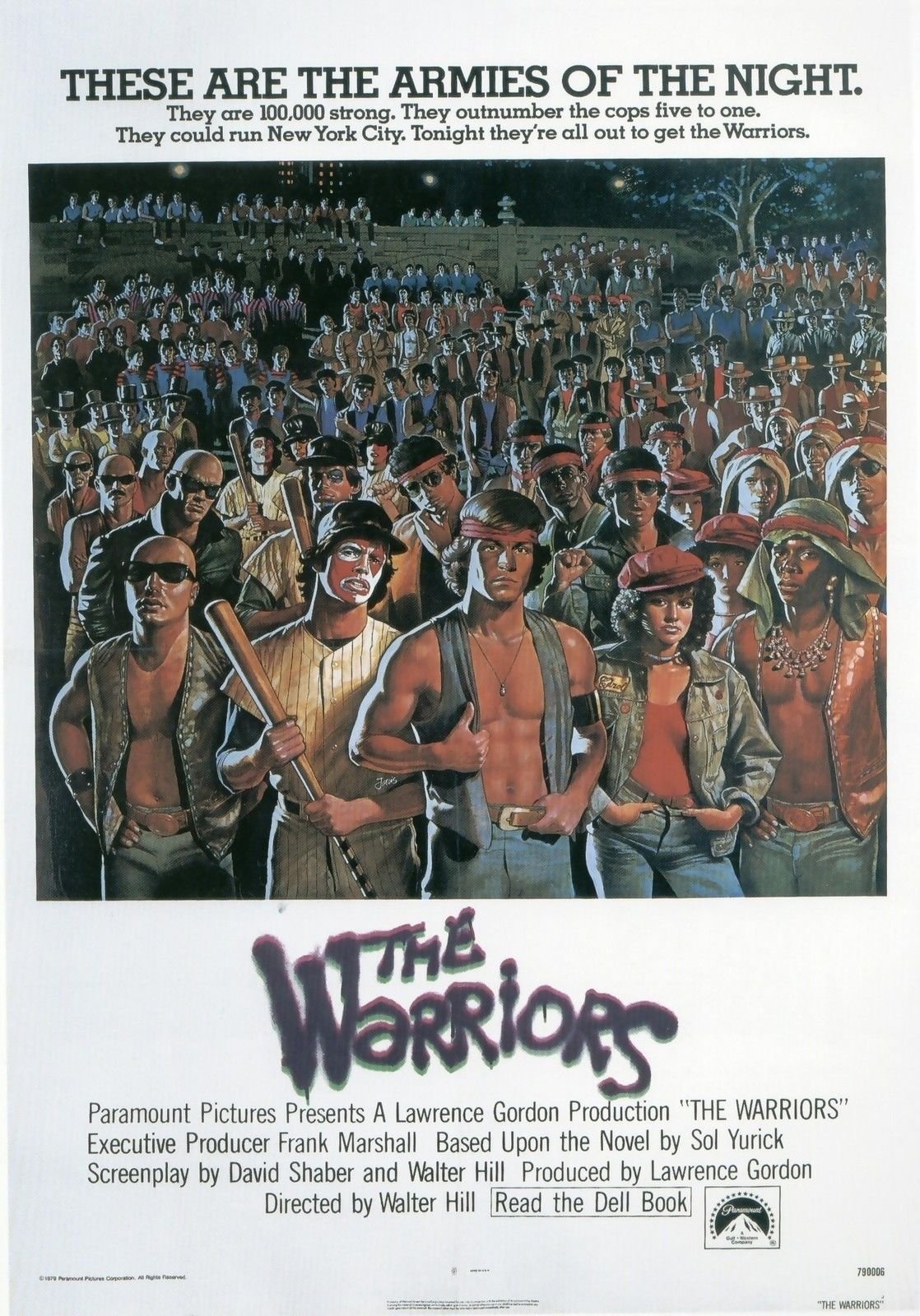
The Warriors lead by Cleon (Dorsey Wright) make their way to from Coney Island to Van Cortland Park in order to attend an outdoor rally lead by Cyrus (Roger Hill) who heads the gang called The Riffs. It’s Cyrus’ idea to bring all the gangs in New York City together as one because if they do so they’ll be able to outnumber the police. However, Luther (David Patrick Kelly), who’s a member of the Rogues gang is not privy to this idea and thus shoots and kills Cyrus, which gets witnessed by Fox (Thomas G. Waites) a member of the Warriors. Once Luther realizes he’s been spotted he quickly accuses the entire Warriors gang of carrying-out the murder, which sends the mob into violent chaos and in-turn causing the death of Cleon. Swan (Michael Beck) becomes the group’s new de-facto leader though it receives a frosty reception from Ajax (James Remar), but since they’re in such an urgent situation he has no time to fight him for it as the gang now must make their way back to the safety of their territory while having to trek through the turfs of other gangs who are all out to kill them.

For a film about gang life this one is quite different. Most of the movies before then that dealt with this topic would typically place the protagonist as being someone outside of the gang culture, but here that outside world doesn’t even exist. Everything is fully from inside the gang world, which is what makes it so fascinating as the viewer gets immersed into a universe that most likely they really wouldn’t experience or understand otherwise. However, as big as their turfs wars are one of the most memorable moments in the film doesn’t deal with the action at all, but instead it’s the scene inside the subway car where some suburbanites come-on after a night at the club and sit across from The Warriors, who are quietly judged, through their glances, at the disheveled nature of the gang members, which they’re distinctly aware of, revealing how even though in the gang’s mind their the ‘top dog’ of their universe, they’re still perceived from the mainstream world as being people to look down upon.

I also really dug the gang attire. Some may argue this gets ‘campy’ and hurts the realism with proposed remakes offering to play down some of it, but for me it’s what makes it more fun. Personally, I found the Baseball Furies and roller-skating gang known as The Punks to be generally frightening. Even if the gang carrying baseball bats wears facial make-up resembling the rock band KISS I still in no way would want to meet them in a dark alley and in a lot of ways The Warriors constantly coming into these weird gang types as they cross through their territories creates a surreal nightmare atmosphere.

I did though find some of the action to be problematic. It starts with The Warriors trying to outrun another car driven by a rival gang, which I found unrealistic. Possibly if it was a short distance then maybe, but to go several blocks wouldn’t be fathomable. I would think at least a couple of the gang members would tire-out and slow down and ultimately be hit by the vehicle. Having The Warriors totally annihilate the Baseball Furies even though it was the Furies with the baseball bats while the Warriors had only their fists didn’t make sense either. Maybe you could argue that The Warriors had such good fighting skills they were able to use that to overpower the other side, but logically I think one or two of them should’ve at least gotten hit by a bat, which the Furies were swinging wildly, and the fact that they’re all able to get out of the fight unscathed is a bit of an eye roll. Having a few of them later trapped in a room with a female gang that shoots directly at them with a gun and none of them get hit by even a stray bullet is equally unrealistic. Also, since they all get involved in punching their opponents, you’d think there would be numerous scratches, abrasions, and dried blood on the broken skin of their knuckles, at the very least, but on the subway ride after the fights there’s a quick close-up of Micheal Beck’s hands, who was involved in the majority of battles, and they’re completely unblemished.

The 1965 novel version, the author, Sol Yurick, was not happy with the film, has many differences including the gang rape of the female, played in the movie by Deborah Van Valkenburg, by the protagonist gang members, that doesn’t occur here. The book also delves more deeply into the gang leaders sad home life, which the movie doesn’t tackle at all, but it would’ve helped create a better understanding of the main character’s motivations. If a remake does get made, and it’s been talked about, I think it would be more interesting if it followed the book’s plotline, which ultimately is grittier.

My Rating: 7 out of 10

Released: February 9, 1979

Runtime: 1 Hour 33 Minutes

Rated R

Director: Walter Hill

Studio: Paramount

Available: DVD, Blu-ray, Amazon Video, YouTube

Monkey Shines (1988)

monkey

By Richard Winters

My Rating: 2 out of 10

4-Word Review: Chimp terrorizes paralyzed man.

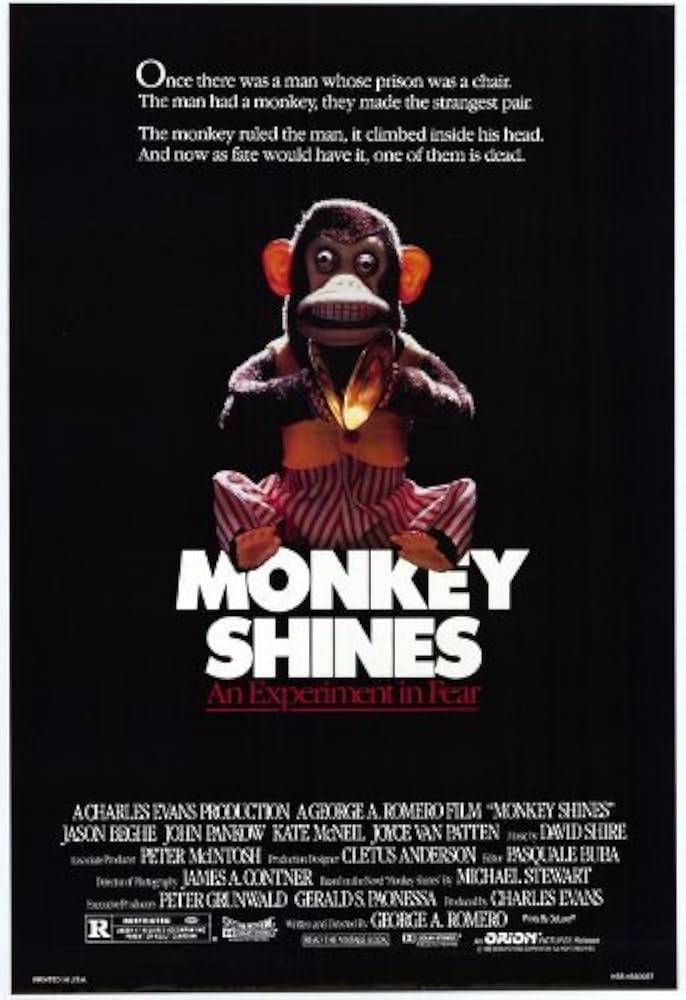
Allan (Jason Beghe) becomes paralyzed after getting hit by a truck one morning while jogging. Since he’s unable to get along with his live-in nurse, Maryanne (Christine Forrest), or his meddling mother (Joyce Van Patten), his friend Geoffrey (John Pankow) suggests he use a monkey specifically trained to help handicapped patients. Initially Allan likes the monkey, whom he names Ella, as he’s able to do a lot of tasks that helps Allan with the situation that he’s in. However, Geoffrey fails to mention that Ella is no ordinary monkey as she’s been injected with human brain serum in an effort to boost her intelligence. He’s hoping that having the chimp interact with a human will prove that his research studies are a success and allow his department to receive some desperately needed funding. Things though start to take a terrifying turn as the monkey falls-in-love with Allan and fights-off anyone she considers a potential rival including Melanie (Kate McNeil), a beautiful young lady who had helped train Ella for this project. Ella also begins carrying-out Allan’s vengeful fantasies and shows an ability to read Allan’s mind and vice-versa.

The film is based on the 1983 novel of the same name written by Michael Stewart. The script follows the story relatively closely with the biggest difference being the setting where in the book it takes place in England and in the movie it’s in Pittsburgh. While the concept is intriguing, I kept watching just waiting to see how it would turn-out, it doesn’t fully work as a horror movie. Having to watch Allan’s difficulty in adjusting to being fully paralyzed, and even his attempted suicide, was horrifying enough and bringing the monkey in, actually alleviated the tension instead of heightening it.

Had the monkey started to rebel on his own without the scientific experiment angle would’ve been more frightening because we wouldn’t know what was causing it. Showing this super sleazy scientist injecting the chimp with a mysterious serum telegraphs to the viewer right away that something terrible is going to happen, so there’s no element of surprise as the viewer is already braced for trouble from the get-go versus having them come-in less guarded. The ability for the monkey to supposedly read Allan’s mind, or for him to visualize things from the chimp’s point-of-view, made no sense. The injections were supposed to make the animal smarter, not acquire ESP, and since Allan doesn’t receive the same injections how then are the emotions and visions between the two transferable?

The whole thing becomes too preposterous to be able to take seriously and thus the interest level ultimately wanes. I might’ve actually gone with the monkey being possessed from something and that caused him to become so aggressive, but only when he’s alone with Allan, but with other people he remains well behaved and thus Allan’s protesting that he’s become a ‘bad monkey’ would initially fall on deaf ears. Since Allan is so helpless due to his physical state having a chimp run amok and nobody believe him could be genuinely scary without any of the extra nonsense that the movie throws-in.

The Melanie character doesn’t really gel either. For one thing she’s super, super hot; a cover girl quality, so why doesn’t this babe have every eligible suitor in the area chasing after her? Since she could, based on her looks, get any guy she wanted why then would she settle for one that couldn’t move? I was willing to overlook this though as some people can have unusual tastes in who they fall for, but the sex scene between the two seemed way over-the-top. I’ve read where certain paraplegics can still have an active sex life, but someone who is fully paralyzed like this one it didn’t seem it would possible. I’m not a medical expert, so I don’t want to say for sure it couldn’t happen, but it’s gotta be quite a stretch especially with the stylized way it gets captured looking like something straight out of a music video, which makes the movie come-off as even more ridiculous than it already is.

Spoiler Alert!

It was director George A. Romero’s intention to have Allan remain paralyzed, just like in the book, but Orion Pictures was desperate for a hit, so they insisted on a more positive conclusion. The alternate ending, which can be seen as part of the bonus feature in the 2014 Blu-ray release, has Geoffrey’s superior, Dean Burbage, played by Stephen Root, inject the rest of the monkeys in Geoffrey’s lab with the serum and then eventually having those monkeys take-over the Dean’s mind.

My Rating: 2 out of 10

Released: July 29, 1988

Runtime: 1 Hour 53 Minutes

Rated R

Director: George A. Romero

Studio: Orion Pictures

Available: DVD, Blu-ray, Amazon Video, Pluto TV, Roku, 

Psycho (1960)

psycho

By Richard Winters

My Rating: 9 out of 10

4-Word Review: Don’t take a shower.

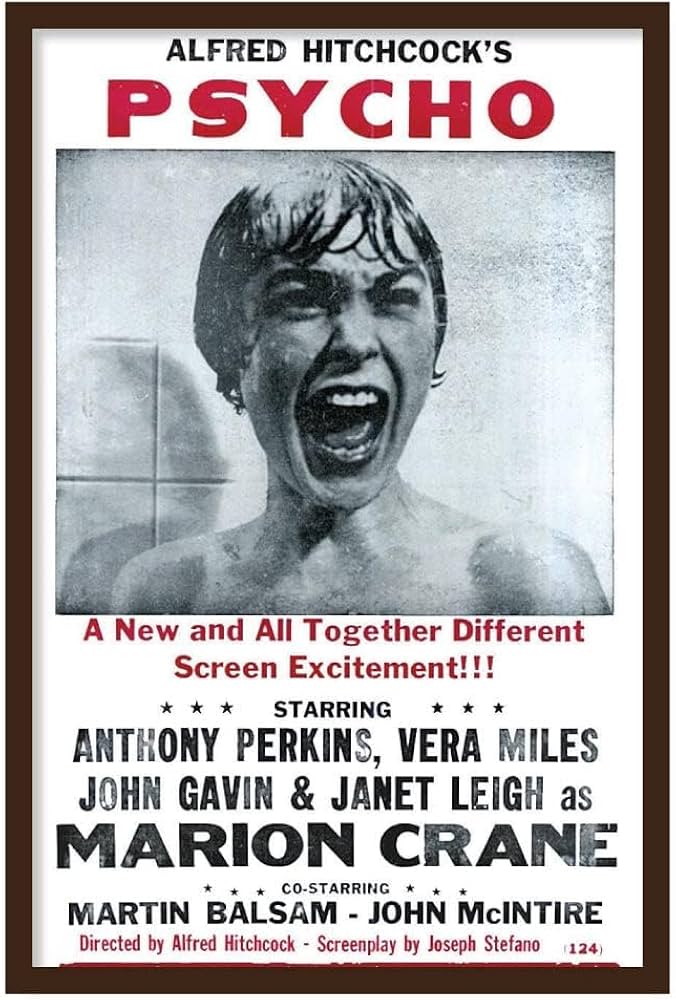
Marion Crane (Janet Leigh), who works as a secretary at a real estate firm, steals $40,000 in cash from her boss (Vaughn Taylor), who trusted her to take the money to the bank, in order to help her boyfriend Sam (John Gavin) pay off his debts. As she’s traveling to where he lives she encounters a rainstorm causing her to take the nearest exit. There she drives into the lot of a isolated lodge called Bates Motel, run by a young man named Norman (Anthony Perkins) who’s still living with his mother in an old rundown house that sits ominously on a hill behind the hotel rooms.  Norman becomes immediately smitten to the woman, who signs the hotel ledger under an assumed name, and invites her to have dinner with him in the hotel office. Marion, who sees him as a awkward, but otherwise harmless guy who’s still dominated by his mother, agrees. After they eat she departs back to her room and takes a shower when what appears to be his mother, who considers all women to be ‘whores’, stabs and kills her. Norman then cleans-up the evidence by submerging the dead body and her car in a nearby swamp. Soon a private detective named Arbogast (Martin Balsam) begins investigating the case and what he finds out leads Marion’s boyfriend Sam and her sister Lila (Vera Miles) to the property where they’ll unravel a shocking secret.

The film, which at the time was considered ‘too tawdry and salacious’ to be made into a movie and thus the studio refused to give director Alfred Hitchcock the required funding and forcing him to use his own funds and crew to produce it, was based on the novel of the same name by Robert Bloch. Bloch began writing it in 1957 when coincidentally in the neighboring town not more than 35 miles from his came to the light the criminal activities of Ed Gein who killed two people while also digging up dead bodies and then skinning them in an effort to create a ‘woman suit’ he could wear so he’d ‘become his dead mother’ who had dominated him for the majority of his life. Rumors were that Gein’s crimes had inspired the book, but Bloch insisted that he had almost finished with the manuscript before he became aware of the real-life case and then became shocked with how closely it resided with his story.

While the film follows the book pretty closely there are a few differences. In the book the Marion character dies from decapitation while in the movie it’s from stab wounds. The Norman character is described as an overweight man in his 40’s while in the movie he’s thin and in his 20’s, which I felt was an improvement as it made more sense why Marion would feel less guarded around him and put herself in a more vulnerable position than she might otherwise as she still viewed him as a ‘wet-behind-the-ears’ kid. It also helps explain why Norman blunders his interview with the detective and virtually incriminates himself because he was too sheltered and not worldly-wise enough to handle pressure situations.

The film is full of a lot of firsts. It was the first to show a toilet or use the word transvestite, but what I really liked though is that it takes a different spin on the character of the victim. Typically, even today, victims are portrayed as being virginal and angelic beings particularly women, but here it works against that. Right away with the opening scene in the hotel room we see she’s definitely no virgin and what’s more she’s having sex outside of wedlock in an era where ‘good girls saved themselves for marriage’. Having her then be susceptible to corruption by stealing from her employer, or not feel frightened initially by Norman and even superior to him further works against the grain of the ‘sweet, fragile damsel in distress’ cliche and makes her seem more human since she’s not perfect and vulnerable to the same vices as everyone else, which in-turn gives the more an added darker dimension.

The film’s hallmark though is its memorable camera work from a close-up of the victim’s unblinking eye, still not sure how Leigh could’ve kept her eyes open for as long as she does, to the interesting way the house gets captured from the ground looking upward on a hill towards the sky with the creepy night clouds floating behind it.  My favorite one though is the tracking shot showing Norman walking into his mother’s room and then having the camera stop right at the top of the door frame and then spin around towards the hallway as he then leaves the room and carries his mother down the stairs. The only shot that I didn’t care for is when the Martin Balsam character gets stabbed at the top of the stairs, but instead of immediately falling over backwards and then rolling down the stairs, which is what would happen 99% of the time, he instead somehow ‘glides’ down an entire flight of stairs backwards while remaining upright and only finally falling to the floor once he hits the bottom, which goes against the basic laws of physics and to me looks fake and goofy, but other than that it’s a classic and still holds-up amongst the best horror movies made.

My Rating: 9 out of 10

Released: June 16, 1960

Runtime: 1 Hour 49 Minutes

Director: Alfred Hitchcock

Studio: Paramount

Available: DVD, Blu-ray, Amazon Video, YouTube

White Mischief (1987)

whitemischief

By Richard Winters

My Rating: 7 out of 10

My Rating: Unsolved murder in Kenya.

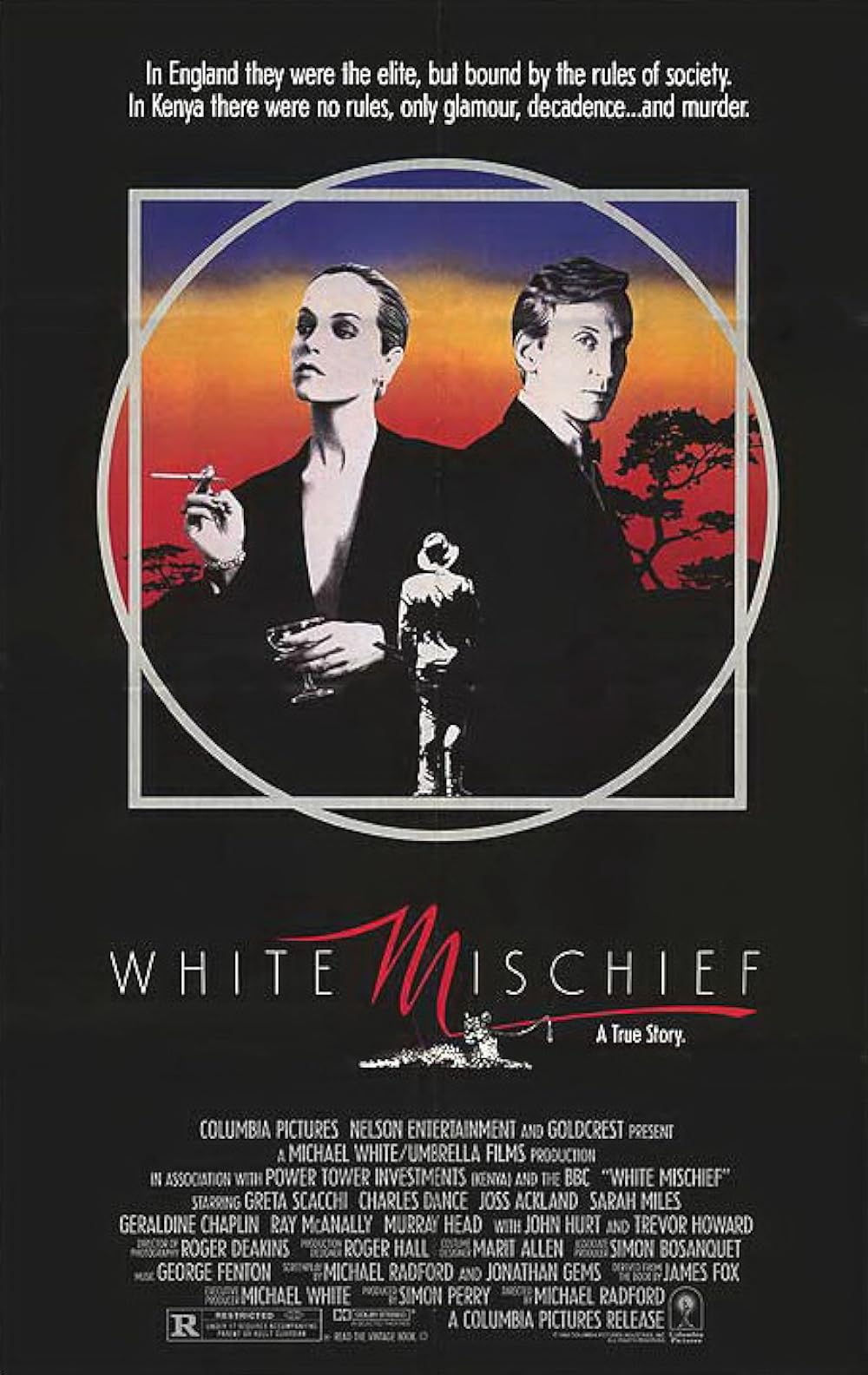
During the Second World War many British aristocrats with money escaped the tensions and horror in Europe by relocating at a settlement in Kenya that became known as Happy Valley. Here without the typical societal restraints of back-home they were able to indulge in all their provocative desires including rampant drug use and promiscuous sex. One such philanderer, possibly the most notorious of the bunch, was Josslyn Hay the Earl of Erroll (Charles Dance). He had already had various trysts with many of the women there including Alice (Sarah Miles) before dumping her due to her drug addiction. He then sets his sights on Diana (Greta Scacchi). She is married to Jock (Joss Ackland) who is older than her by several decades, and the two share a marriage of convenience with a pre-nuptial agreement that if either falls in love with someone else the other person will not impede it. Earl goes after Diana aggressively and despite some initial reluctance the two eventually become an open couple. Jock puts up a stoic front and allows her to go with him without any resistance, but internally he seethes with rage. Then one night Earl gets shot dead while driving his car in an isolate area. Did Jock pull the trigger?

The film is based on the book of the same name written by James Fox that was published in 1982 and in-turn based on the real-life incident that occurred on January 24, 1941 where the Earl of Erroll, like in the movie, is was found dead in his car and Jock, being the prime suspect, was put on trial, but then found not guilty due to a lack of evidence. For decades it sat as an unsolved case with no answers to what really happened until 1969 when Fox, along with fellow writer Cyril Connelly, became fascinated with the subject and began researching it vigorously. The book contains many interviews with people who lived through the ordeal and give first person accounts of the trial proceedings. Fox even traveled to the Kenya region to get a better understanding of the area and people and came to the conclusion that Jock had been the culprit with new evidence he unearthed, which makes up the book’s entire second-half though officially the case remains open.

The movie’s best quality is its visual element especially its ability to capture the expansive beauty of Africa as the film’s director Michael Radford proudly proclaimed before production even started that “films of Africa should be made by Africans” and you really get that sense here. The screenplay by noted playwright Jonathan Gems is also superb with it’s use of minimalistic dialogue where the conversations and characters never say too much, many times just brief sentences, and the emphasis is much more into what is implied.

On the negative end the attempts at eroticism are pathetic and overdone. The most absurd moment comes when the Sarah Miles character, during the open casket viewing portion of Earl’s funeral, reaches under her skirt and masturbates in full view of everyone before eventually putting her ‘love juices’ on the deceased, which came off as ridiculous and simply put in for a cheap laugh, or misguided ‘shock value’ and hard to imagine it occurred in reality. Both Scacchi’s and Dance’s characters are quite boring and their love scenes lack spark making the whole affair angle seem quite predictable.

The film’s saving grace though is with Ackland’s character where you really get inside his head and see things from his perspective. Normally in most films the jilted spouse is portrayed as someone to fear and a one-dimensional jealous machine who serves no purpose other than to get revenge. Here though we feel his quandary and sympathize with his internal struggle of trying to take the high road while also wracked with hurt and betrayal. Instead of being the culprit we ultimately see him as a sad victim even as his personality completely unravels by the end and because of this aspect I felt the movie works and is worth seeking out. Director Radford probably said it best when he stated that the film was about “people who have everything and yet have nothing. It’s about people who want to possess what they can’t possess” and with the excellently crafted Josh character you can really see that.

This is also a great chance to see acting legend Trevor Howard in one of his last performances. He was suffering severely at the time from his alcoholism and cirrhosis that he comes-off appearing like a wrinkled corpse put upright and there’s several scenes where he’s seen just standing there, but says nothing due to the filmmakers fear that he wouldn’t remember his lines, or if he did wouldn’t be able to articulate them. However, he does come through during a pivotal moment inside the prison when he visits Ackland and what he says and does there is great. John Hurt’s performance is the same way as initially he’s seen little and says no more than a couple of one word responses to the point I thought he was wasted, but then at the end he reappears and comes-on strong in an unique way.

My Rating: 7 out of 10

Released: November 10, 1987

Runtime: 1 Hour 47 Minutes

Rated R

Director: Michael Radford

Studio: Columbia Pictures

Available: VHS, DVD (Import Reg. 2), Amazon Video, Roku 

Once is Not Enough (1975)

once

By Richard Winters

My Rating: 0 out of 10

4-Word Review: Having a father fixation.

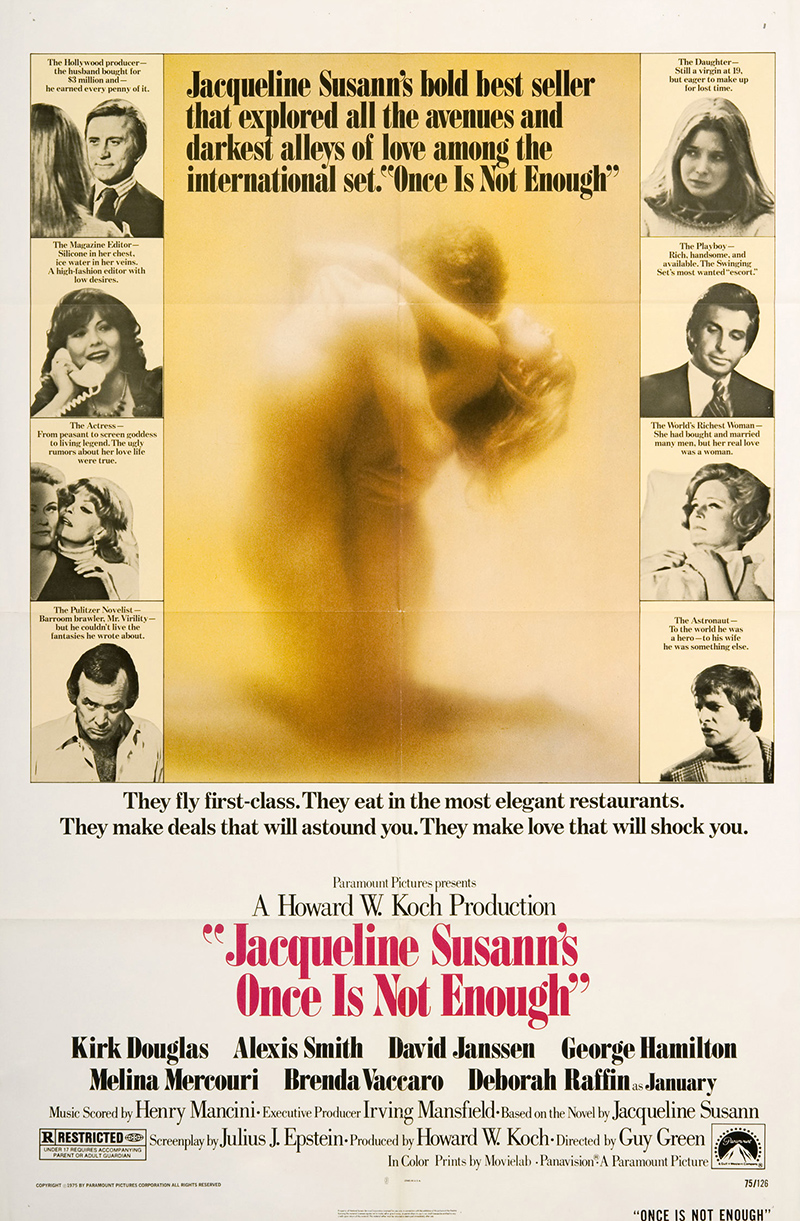
January (Deborah Raffin) is the college-aged daughter of wealthy Hollywood producer Mike (Kirk Douglas) who spent time recovering from a motorcycle accident in Europe and now returns to the states excited to see her father of which she adores immensely. Unfortunately things have changed since she’s been gone. Mike no longer has the clout, or capital that he once did and now can’t get any of his projects off-the-ground. He’s married rich socialite Deidre (Alexis Smith) simply as a way to get his hands on some money as he no longer has any of his own, but she’s more into her lesbian affair that she’s having with Karla (Melina Mercouri). Feeling dejected at how things have turned-out January falls into the arms of Tom (David Janssen) an alcoholic semi-successful novelist who suffers from impotency. When Mike learns of this relationship he becomes enraged as Tom has long been one of his biggest adversaries and so he goes to the apartment where the two are staying determined to have it out with the both of them.

The film is based off of the final novel written by Jacqueline Susann who became famous for having penned the popular Valley of the Dolls 7 years earlier. This book, like her two other ones, shot-up immediately to the top of the Best Seller’s list and she became the first author to ever have her first three novels achieve this, but her ability to savor her success was short-lived as she was diagnosed with cancer shortly after the book went to press and she never lived to see it made into a movie.

The book, like her other ones, was widely panned by the critics, but this movie here does it no justice. When compared to Valley of the Dolls this thing has absolutely no zing and nothing that’s truly salacious or tawdry, which were the main elements that gravitated folks to read Susann’s books in the first place. The only ‘shocking’ moment comes during the lesbian segment, which was considered ‘pushing-the-envelope’ at the time, which shows two older actresses kissing each other on the lips, which by today’s standards will be seen as quite trite and forgettable. The other potentially spicy moments never come to play and it ends flatly making you wonder what were they thinking when they made it.

Raffin, a former model, is quite beautiful and the best thing in it, but her character is too innocent to be believed. She’s a virgin despite being raised in the fast lane of Hollywood, which seemed hard to believe. Supposedly this is because she’s so infatuated with her father she’s subconsciously ‘saving herself’ for him, but a person could have sex outside of a romantic context and I’d think since most of her other friends would’ve have likely done it she’d be at least curious enough to try it out. The same goes for her inexperience with drugs, alcohol, or even dealing with womanizing men such as George Hamilton’s character who fills her glass to the brim with brandy and when she asks why he says so he can ‘get her drunk, so she’ll lose her inhibitions’ and she’s shocked to hear this, but any young women living in L.A. during the swinging 70’s should conditioned and prepared to this age-old ploy and having her so taken aback by it makes her too painfully naive to be believable. Instead of being a producer’s daughter she seems more like some nun snatched from a  convent she’s been living in her whole life and completely out of whack with her surroundings.

Douglas is a complete bore and I can only imagine he took the role simply because he was on a career decline and needed the work, but despite being center stage during the first half, his character slowly fades out and is completely forgotten by the end. Alexis Smith, whose acting work had also been in a downward spiral, this was her first movie role in 16 years, and was only given the part because Lana Turner, who was the producer’s first choice, turned it down as she objected to having to do the lesbian kissing scene, is sufficiently bitchy, but overall wasted.

Brenda Vaccaro won accolades for her performance and was even nominated for the Supporting Oscar for her work, but I was a bit surprised. I’ve always found her an impressive actress, but playing some jaded California gal that likes to openly sleep around isn’t that interesting and her character lacked depth. The part where she tries to quickly clean-up her cluttered bedroom before letting a new man into it was kind of amusing, but otherwise her presence, like all the others, was quite tepid. I did though enjoy Hamilton, this marked his last serious role before he then began to venture into comedy, not so much for his acting, but more because I felt this role most closely resembled his true personality. Janssen has some potential as this brash, abrasive guy, but then having his lifelong impotency suddenly and magically ‘cured’ after seeing Raffin nude in the shower is just downright laughable.

Spoiler Alert!

The biggest letdown is the unexciting ending. In the book January gets into acid and then partakes in a sex orgy only to eventually walk into the ocean and drown after seeing a vision of her dead father. The movie though, in an attempt to be ‘hopeful’, doesn’t show any of this. It just has her walking around the city in a daze and that’s it. A movie like this needs, especially with this type of soap opera material, some sort of salacious pay-off and seeing a once innocent, naive girl in an acid driven orgy would’ve been just the ticket, so for the filmmakers not to give the viewer even that much makes this whole vapid thing pathetic beyond belief.

My Rating: 0 out of 10

Released: June 20, 1975

Runtime: 2 Hours 1 Minute

Rated R

Director: Guy Green

Studio: Paramount

Available: DVD, Blu-ray, Amazon Video, YouTube

Mandingo (1975)

mandingo1

By Richard Winters

My Rating: 7 out of 10

4-Word Review: Slave turned into fighter.

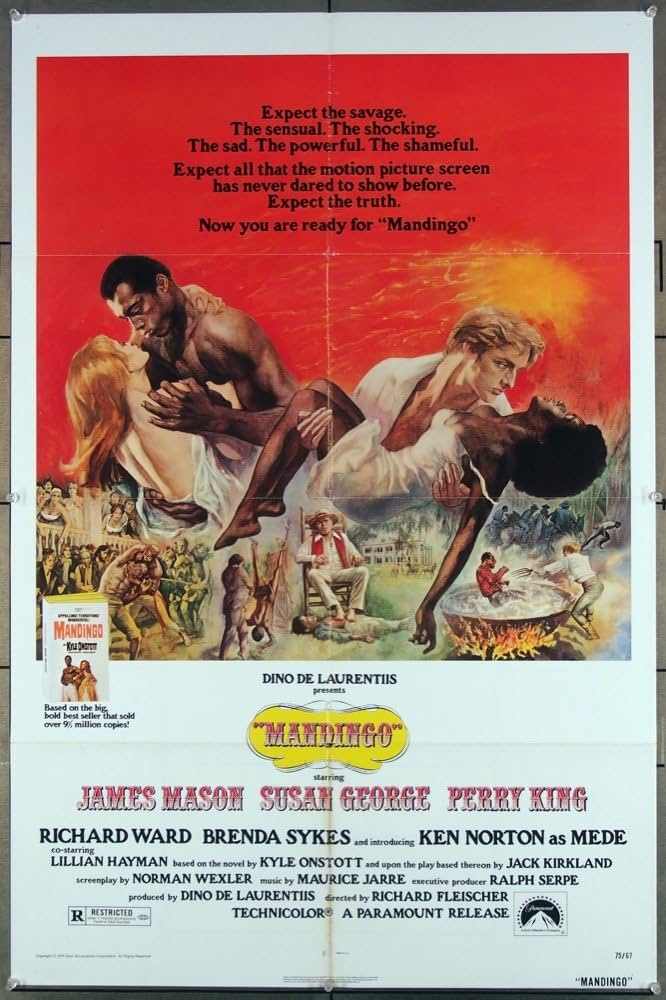
Hammond (Perry King) is the son of aging plantation owner Warren (James Mason) who purchases a Mandingo slave named Mede (Ken Norton). Mede proves himself as having superior fighting skills, so Hammond turns him into a prize fighter and makes money off of him. Meanwhile Hammond is also having an ongoing sexual affair with a slave named Ellen (Brenda Sykes), but his father orders him to find a white woman in order to supply him with an offspring, so Hammond marries his cousin Blanche (Susan George), but on their wedding night he rejects her when he realizes she is not a virgin. Blanche becomes jealous of Ellen, whom is secretly carrying Hammond’s child, and causes her to miscarry. She then forces Mede to have sex with her, so she’ll become impregnated with a black baby and bring humiliation to Hammond. After the birth, when Hammond realizes what has happened, he then goes on a violent revenge not only against Blanche, but also Mede whom he once considered his prize possession, but will Mede just accept his punishment, or use his strength to finally turn on his master?

The story is based on the 1957 novel of the same name written by Kyle Onstott. Onstott had written a book about dog breeding with his adopted son, but that didn’t do too well, so at the age of 65 he became motivated to write a book that he hoped would be a bestseller and make him a lot of money. He decided a sensationalistic material was the way to get attention and thus choose to write a story based on many ‘bizarre legends’ he had heard growing up. It was printed by a small publisher and it soon got him the national attention that he craved and sold 5 million copies that not only lead to a series of books on the same theme, but also a 1961 stage play that starred Dennis Hopper. The film rights was purchased by noted producer Dino De Laurentiis and became a very rare exploitation film that was given a big budget and a major studio release.

Critics at the time gave it almost unanimously negative reviews including both Roger Ebert and Leonard Maltin, but today it’s seen in a slightly more favorable light. Personally, if you’re going to do a movie on slavery, a notoriously dark moment in human history, and you’re want to do it honestly, then a graphic portrayal of it such as this should be in store. It may make the viewers cringe throughout, but that’s kind of the purpose. On a purely shock value scale this thing delivers in an almost mechanical sense. It’s just one scene after another that should leave even the most seasoned audiences with their mouths agape. While it’s hard to pick just one moment that’s the most shocking as there are an incredible amount of them I felt the fight sequence where both men literally bite the flesh off the other until blood spurts out of the one’s neck is for the me the infamously top moment though having Mason using a black child as his own personal foot stool, or hanging a 60-year-old black man, played by Richard Ward, naked and upside down to be paddled not only by Hammond, but also by Charles (Ben Masters) who stops by to visit and immediately takes part while another black child looks on amused by it, comes in as a close second.

On the technical end I liked the way it was shot by cinematographer Richard H. Kline. Initially I found the decrepit look of the mansion, which was filmed at the Ashland-Belle Helene Plantation in Geismer, Louisiana, to be problematic as everything looked old and rundown, but you’d think if it had really been done in the time period it was lived-in then it should look new and just built. The overgrown lawn was an added issue as it made it seem like it was an abandoned place, but back then maybe they didn’t all use manually powered lawn cutters, or care to, so I was willing to overlook that portion. I did though love the use of natural lighting, electricity wasn’t a thing, so sunlight coming in from the windows was about it and the use of shadows nicely illustrated the dark personalities of the characters.

The acting is excellent and I was especially impressed with Mason who can seem to go from playing nice guys to villain with an amazing ease as most actors are usually just good at doing one or the other. Some complained about his attempt at a southern accent, but for a guy born and raised in Britain I thought he disguised it pretty well. Susan George, most noted for playing frightened damsel-in-distress types, does a terrific turn as an evil bitch who’ll stop at nothing to get her revenge. King is also impressive as he shows at times to have a certain conscious and appalled at what he sees, but ultimately is unable to get over the hump and becomes just as evil as the rest despite convincing himself and his slave girlfriend that he’s somehow ‘more reformed’.

My Rating: 7 out of 10

Released: July 25, 1975

Runtime: 2 Hours 7 Minutes

Rated R

Director: Richard Fleischer

Studio: Paramount

Available: DVD, Blu-ray, Amazon Video, YouTube

Cockfighter (1974)

cockfighter

By Richard Winters

My Rating: 6 out of 10

4-Word Review: He refuses to talk.

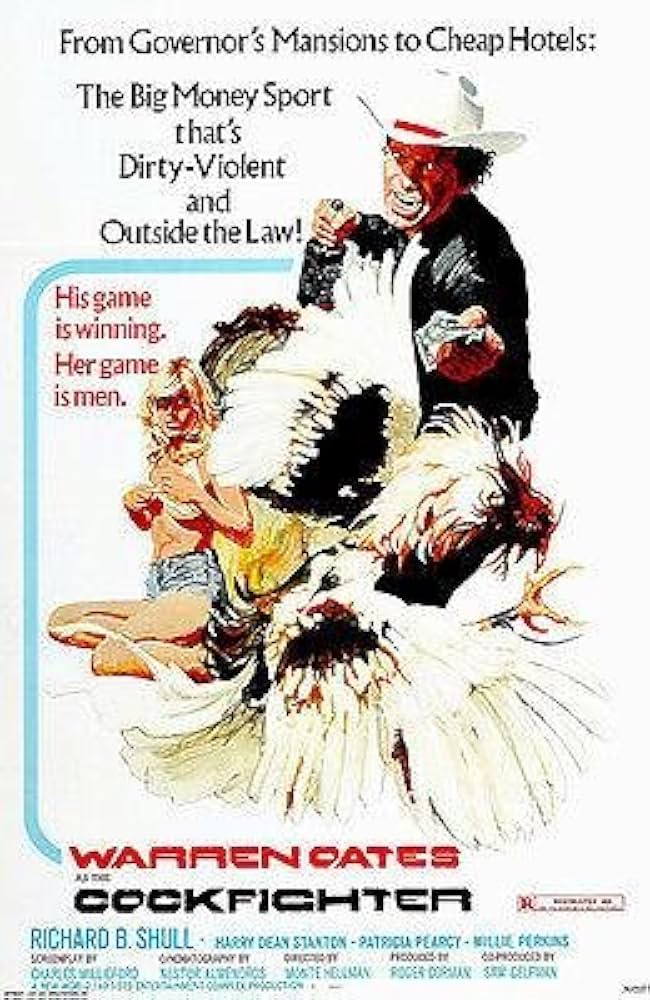
Frank (Warren Oates) has a passion for cockfighting. While he’s had other endeavors in his life he’s always come back to this because of the unpredictability. He can predict the way the chicken is built how it will fare in a fight, but it’s actual fighting spirit is unknown until it’s put to the test and because of that factor it keeps him intrigued with the sport. However, his bragging gets him into trouble when one of his chickens losses a battle during a makeshift fight inside a hotel room with a chicken from fellow cocker Jack (Harry Dean Stanton). After he’s forced to pay up the bet Jack tells him that he ‘talks too much’ convincing Frank to take a vow of silence and become effectively mute until he’s able to win a cockfighting championship.

The story is definitely a relic of a bygone era as cockfighting is no longer legal in the U.S. with Louisiana being the last state to ban it in 2008. Today only a few countries in the world allow it as the sport is considered by many to be animal abuse. The film pulls-no-punches and will be deemed brutal for certain viewers who’ll probably turn it off by the halfway mark if not sooner. The fights between the chickens are actual and up close. You see the beaks of one cock jamming into the eyes of another and their dead carcasses of which there ends up being many thrown into a heap onto others into a trash bin, or in one segment where the fights take place in a hotel room, into a bathtub with what seems like hundreds them. There’s even a scene where Oates hacks-off a live chicken’s head with an ax and another moment where he lays a chicken onto the pavement and then steps on its head and yanks it off from the rest of its body by sheer force, so if any of these details upset you then it’s best to stay away from the movie altogether.

For those who are game the story ends up having a darkly humorous tone. The armed robbery that takes place inside a hotel room and Richard B. Shull’s character hiding his earnings amidst the pile of dead chickens where he presumes no one would dare think to even check is amusing. The best moment though comes when Ed Begley Jr. becomes incensed when Oates’ chicken kills his during a fight and being so distraught at losing his prized possession comes after Oates with an ax.

The acting is marvelous particularly by the legendary Oates though he doesn’t say much until the very end, but he makes up for it by being the film’s voice-over narrator. What impressed me most though was his comfort level in handling the chicken’s and at one point casually dealing with one that tried attacking him, which made me believe that this must go back to upbringing in rural Kentucky where he lived amongst them as a kid so he was used to their behavior and not scared away as I’d think another actor without that type of background wouldn’t be able to pull-it-off.

The script was written by Charles Williford, who appears in the movie as a judge/ref during the cockfights and based off his novel of the same name. While the film does move along at a brisk pace and is never boring I did feel it lacked a certain context. It works more like a preview than a full story. You get a general feeling about the people and atmosphere, but not a deep understanding. My main curiosity was with the folks who come to see these fights and what motivated them to want to watch such a bloody sport. Analyzing this mentality would’ve been interesting, but never happens making the film feel incomplete and like it’s only barely tapping into the surface of the subject.

My Rating: 6 out of 10

Released: July 30, 1974

Runtime: 1 Hour 23 Minutes

Rated R

Director: Monte Hellmen

Studio: New World Pictures

Available: DVD, Blu-ray, Amazon Video, Fandor, Pluto, Tubi, Plex, Shout TV

I Am the Cheese (1983)

iam

By Richard Winters

My Rating: 6 out of 10

4-Word Review: Dealing with past memories.

Adam (Robert MacNaughton) is an adolescent boy taking a bike trip through Vermont in order to deliver a present to his father (Don Murray). During his ride memories from the past that had been stuck in his subconscious come to the surface including his on-and-off relationship with Amy (Cynthia Nixon) as well as the sometimes odd behavior of his father. Helping sort through these things including him finding in his father’s desk drawer two different birth certificates with his name on it, is Dr. Brint (Robert Wagner) a therapist at a mental hospital that Adam is currently residing in.

The film is based on the book of the same name written by Robert Cormier, who appears briefly as Amy’s father, who wrote many young adult novels with his best known one being The Chocolate War. The screenplay was written by David Lange, who was also the producer, and the brother of Hope Lange who gets cast as Adam’s mother and is a reunion of sorts for her with Don Murray, who plays Adam’s father, and whom she’d been married two from 1956-62. She had also co-starred with Robert Wagner in The Young Lions in 1957 though here they don’t share any scenes together.

The film, which was the one and only directorial foray of Robert Jiras who worked as a Hollywood make-up artist for many years, is decidedly low budget though since most of the action takes place with Adam on his bike it really doesn’t hurt the effect of the story and the lush summertime New England scenery becomes an added benefit. MacNaughton, who’s better known for playing the older brother in E.T. before leaving the acting business after the 80’s and becoming a mail sorter, is quite good as he effectively channels his character’s inner anxiety and confusion. Nixon is also a stand-out playing against the cliche of a typical teenage girl, who are usually portrayed as being giggly, insecure, and into the latest fads, but instead she is cultured, poised, confident, and smart and she adds a wonderful addition to the movie and it’s just a shame she wasn’t in it more.

The plot follows the book pretty closely including the constant shifting between the present and the past and also the therapy sessions. While I usually like non-linear narratives I initially found this structure off-putting. The publishers in fact felt, when the they read the initial manuscript, that it would too confusing for young readers and pressured Cormier to simplify the structure, which he refused. Despite this it does become genuinely riveting by the second act.

Spoiler Alert!

The twists are good and makes sitting through it worth it though the moment when the bad guys catch-up with Adam and his parents should’ve been played-out more since it’s such a traumatic moment. It’s possible that because this was aimed at teen viewers the producers felt this violent element required being toned down, but crucial scenes like these have to stand-out and the way it gets done here it just doesn’t.

In the film, like in the book, the psychiatric sessions are ultimately revealed to be a sham where Robert Wagner’s character isn’t a doctor at all, but instead part of the government conspiracy to make sure Adam doesn’t know more than he should about his parent’s past as otherwise he would be deemed a ‘risk’ and ‘terminated’. However, in the movie they have Adam escaping from the place and riding off on his bike like he’s now ‘free’, but he really isn’t. He has no job skills, no family, no money, and no place to live. He’s be better off just staying at the clinic even if it was a fake one, as he at least had a roof over his head and food to eat. Being on his own at 16 was unlikely to end well and such a sophisticated government operation such as this one was at some point going to track him down, dead or alive, so the tacked-on ‘happy ending’ doesn’t jive.

My Rating: 6 out of 10

Released: November 11, 1983

Runtime: 1 Hour 36 Minutes

Rated PG

Director: Robert Jiras

Studio: Almi Pictures

Available: VHS, DVD-R