Category Archives: Moody/Stylish

El Topo (1970)

By Richard Winters

My Rating: 7 out of 10

4-Word Review: Lust is not good.

This is an experimental film that has received a large and loyal following. Although considered highly controversial at the time it is pretty tame by today’s standards. The story deals with a mysterious gunman named El Topo (Alejandro Jodorowsky) who comes out of nowhere to avenge a town that has been massacred. Once finished with this he takes the perpetrator’s women and goes off into the desert. Here he must prove himself against four different masters whom all appear to be invincible. Yet it is the women and his lustful desires that turn him into a victim. Defeated and demoralized he turns to spirituality and ends up fighting to save some deformed people from a town that has barricaded them into an underground cavern.
The blood, violence, and sexuality are no big deal. The special effects are weak and the editing is choppy. In many ways it comes off looking like an amateurish artifact from a bygone era. Yet content wise it is fascinating and Director Jodorowsky shows a unique and definite talent. It bites off more than it can chew especially with its low budget, but it is far from a failure as certain scenes are guaranteed to leave a strong impression.
It has a reputation of being convoluted, but I found it to be quite lyrical. Once one adjusts to its mesmerizing use of symbolism it becomes almost riveting. The heavy allegorical nature is both intriguing and provocative and the unique vision helps raise it well above the fray.

If nothing else it will keep you engaged. It is fun and interesting to see one man go through such different stages and it effectively gives you a complete understanding of him by showing all the different sides to his personality. Besides having a lot of religious correlations and an overall negative view of women there is also, surprisingly, a lot of comedy and lightheartedness.

It does fail to leave an overall strong impact and the tone is cold and alienating with characters that are unpleasant. I also felt it gets too bogged down with its use of symbolism and need to build everything up to epic proportions is overdone. Still for those that like movies that are weird and different they won’t be disappointed. The castration of a pompous colonel is amazing. The showdowns with the masters are memorable and the game of Russian roulette amongst a group of churchgoers isn’t bad either.

The film promotes a rather curious statement made by its director and used as a tagline on most of its posters and box covers. It states “If you are great ‘El Topo’ is a great picture. If you are limited than ‘El Topo’ is limited.” This statement has always struck me as funny because it allows no room for anyone to criticize the film otherwise they will be labeled as ‘limited’. In any case I give this film 7 out of 10 points, which I guess only makes me 30 percent limited.

My Rating: 7 out of 10

Released: December 18, 1970

Runtime: 2Hours 5Minutes

Rated: NR (Not Rated)

Director: Alejandro Jodorowsky

Studio: Douglas Films

Available: VHS, DVD, Blu-ray
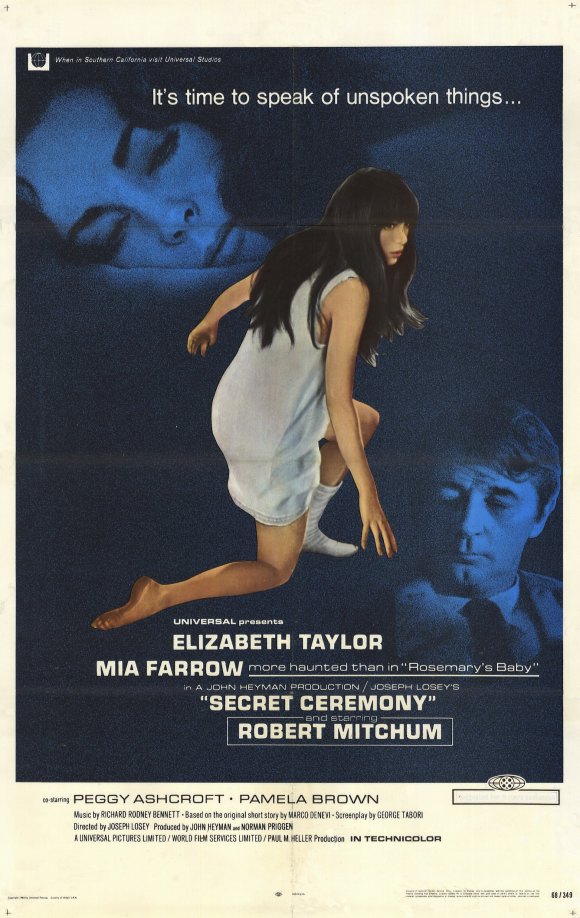
Secret Ceremony (1968)

By Richard Winters

My Rating: 5 out of 10

4-Word Review: Women in weird relationship.

Lenora (Elizabeth Taylor) is a lonely woman who lost her young daughter tragically years before and now finds herself strangely attracted to Cenci (Mia Farrow) a young woman who resembles her. The two move into a large mansion only to have things begin to unravel upon the arrival of Cenci’s weird and menacing father (Robert Mitchum).

The story is bizarre and perverse enough to keep you watching all the way through although it will certainly test the tolerance to those who do not have an affinity for the offbeat. The cinematography is excellent as is the mansion setting. The use of Peggy Ashcroft and Pamela Brown as sneering elderly sisters gives the film some added flavor.

Farrow is genuinely convincing as a grown woman stuck in a childlike trance, but Taylor doesn’t seem completely right for her part. A different actress, especially a character actress would have been much better.

Although the film does manage to come together in the end it does take a long time to get there. There are a lot of slow spots and the patience of some viewers may be tested. There are also many intriguing elements simmering underneath the surface that the film fails to follow through on, but should have.

Fans of Joseph Loosey should find this satisfying while others may be put off by the odd characters and style of narrative.

My Rating: 5 out of 10

Released: October 23, 1968

Runtime: 1Hour 45Minutes

Rated NR (Not Rated)

Director: Joseph Loosey

Studio: Universal

Available: VHS

Batman (1989)

By Richard Winters

My Rating: 6 out of 10

4-Word Review: Where is Adam West?

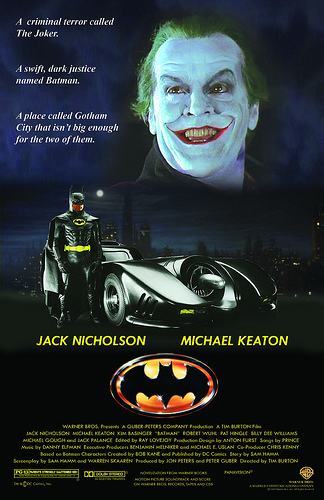
The attempt at moving the Batman theme from the campiness of the TV series to a darker edge proves successful. Director Tim Burton’s vision of Gotham is terrific. It has a sort of weird mixture of the 1940’s and the modern day and the look is original. It is so gray and dark it seems almost like purgatory and having the citizens celebrate its 200th anniversary may be the best joke of the film.

The story nicely starts out showing how Bruce Wayne (Michael Keaton) became acclimated with this Batman character and how initially he wasn’t perceived as being a good guy. It also explains how as a little boy he witnessed his parent’s murder. Yet it doesn’t go far enough and questions still abound. Like who built the Batmobile and that very immense bat cave? Are we to believe that Bruce Wayne and his kindly butler Alfred (Michael Gough) did it all by themselves?! It would have also have been nice if they had shown what specifically inspired him to take the identity of the bat. Still it’s good that some actual bats are shown and in a brief frame even come flying right at you!

The story is slick, but nothing spectacular. Such a big budgeted and much hyped movie almost cries for a more expansive storyline. Something along the lines of a James Bond plot with some megalomaniac aspiring for world domination or destruction. Having the Joker (Jack Nicholson) simply kill people with his toxic make up seems both silly and tacky. The climatic finale in the bell tower borrows too many elements from other showdowns and is too rehearsed.

Keaton looks uncomfortable in the lead. He shows no energy or charisma and is absolutely stiff in his Batman costume. Nicholson has a little more spunk and in a way seems to be a perfect fit. Yet Cesar Romero from the TV series had a much better laugh and Nicholson’s laugh seems forced. Kim Basinger makes a nice addition as the love/sex interest. She creates a nice balance between the two adversaries. It is interesting to note though that while everyone else refuses to wear make-up (including the newscasters) because of the Jokers toxins she is still seen with plenty of it on.

Overall this is a nice attempt at keeping the theme more true to its comic book origins. It doesn’t come together completely though and is in desperate need of a more singular voice. The second feature in this series Batman Returns is far better.

Watch for Lee Wallace as the mayor of Gotham as he looks like an absolute shoe-in for former New York Mayor Ed Koch especially from a distance. Also William Hootkins has absolutely the best voice for any big city policeman character.

My Rating: 6 out of 10

Released: June 23, 1989

Runtime: 2Hours 6Minutes

Director: Tim Burton

Studio: Warner Brothers

Available: VHS, DVD, Blu-ray, Amazon Instant Video

Two for the Road (1967)

By Richard Winters

My Rating: 6 out of 10

4-Word Review: Couple examines their marriage.

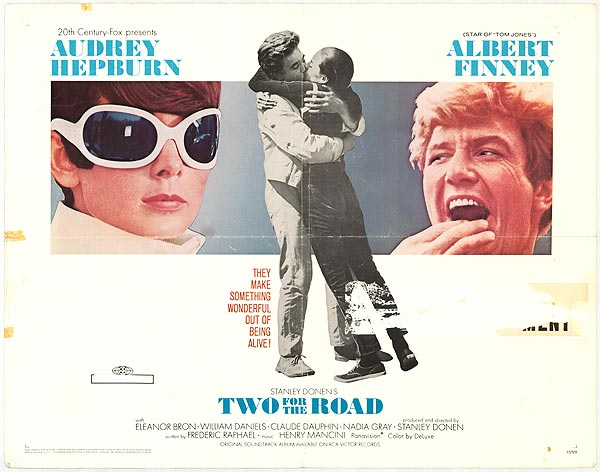
This is a unique and diverting look at a couple (Albert Finney, Audrey Hepburn) traveling the French countryside while dissecting their turbulent marriage. The road of course represents their long and winding relationship. It cleverly cuts between when they first met, which seems to have been on the same road, to twelve years later. The edits between the two stages are creative as is the majority of this fluid and entertaining movie. It wants to be silly, fluffy, serious, complex, exotic, avant-garde, and romantic all at once and most of the time it succeeds proving what an over looked, unsung genius director Stanley Donen is.

It’s a movie made for couples, but probably those who have been married for quite a while and can relate to the characters here who have been through the rough spots and have learned to accept their partner and the flaws that come with them. This film tries to dig a little bit deeper, which helps it stand out. It also has a more relaxed European attitude, especially in regards to ‘indiscretions’.

On the negative side the film contains a lot of old fashioned sexist attitudes. For instance the man is expected to be mechanically inclined and in control of every situation, which becomes very apparent in the scene where he has to get underneath the car to fix it while she sits on top of the vehicle without any care or inclination to what he is going through. The man is also expected to be the sole provider of the family while the woman does the majority of the child rearing.

Audrey, who wears an amazingly high number of stylish, chic outfits, looks more like a runway model sporting the latest fashions than an average housewife on a country drive. I realize that they wanted to accentuate her beauty, but it ends up being a distraction at the same time. If the intention of the story is about an average couple going through average marital problems then at least have them look the part.

The Henry Mancini score is pleasant as usual, but eventually gets overplayed. It’s also not as introspective as it wants you to believe, but on a slickness level it gets an “A”. Also, watch for Little Ruthie who is the world’s most obnoxious child.

My Rating: 6 out of 10

Released: April 27, 1967

Runtime: 1Hour 51Minutes

Rated NR (Not Rated)

Director: Stanley Donen

Studio: 20th Century Fox

Available: VHS, DVD

The Offence (1972)

By Richard Winters

My Rating: 8 out of 10

4-Word Review: Interrogate the child molestor.

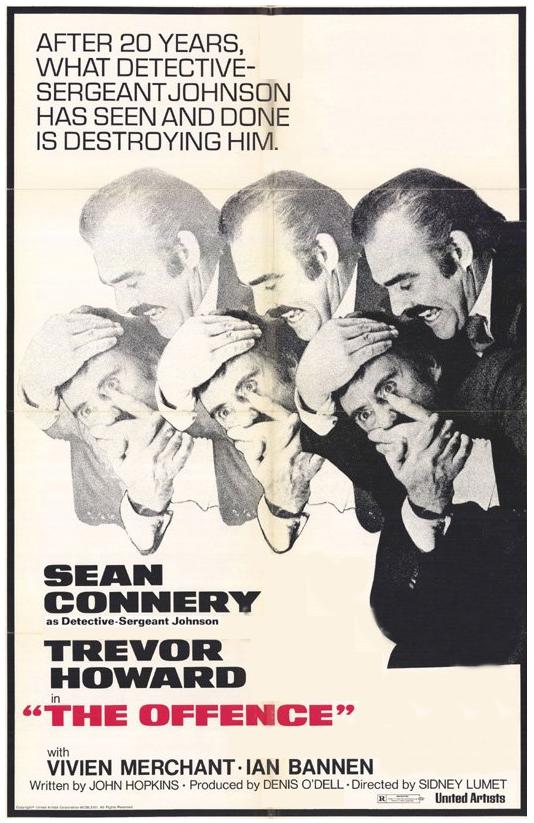
Well respected, longtime police detective Johnson (Sean Connery) becomes so burned-out by all the sickening crimes that he has seen through his career that he snaps during the interrogation of a suspected child molester (Ian Bannen) and ends up beating the man to death.

Based on the stage play by John Hopkins this film has lots and lots of talking and some may say there is too much of it. The script is split into three drawn out conversations between two people. One is between Johnson and the suspect, the second is between Johnson and his wife (Vivien Merchant), and the third is between Johnson and the man brought in to investigate the incident, which is played by Trevor Howard. By the end even the most patient viewer may feel a bit talked out and it gets especially trying when you realize that the same issues are being discussed over and over again.

Yet that is not to say that this is a poor film as the visual element is excellent. In many ways you can appreciate the production for its visual style alone. Director Sidney Lumet displays a good handle on the material and it’s technically sharp on all levels. The lighting is well composed with the center that is bright, but the corners that are shadowy much like the human psyche and society. The overall grayness helps bring out the depression and isolation of the main character. The pacing is slow, but deliberate. Each scene builds to an intense crescendo. The music soundtrack resembles that of a one tone alarm that keeps building to a higher pitch much like the alarm ready to go off in Johnson’s head. The character’s inner tension is made even more vivid by Lumet’s use of interposing the bright light of the interrogation room over the screen. It is hard to imagine this film being any better crafted and it is a terrific training tool for the inspiring filmmaker.

Despite being talky the script in itself isn’t bad as it makes you aware of the ugly side of police work. It focuses not on the system or corruption, like a lot of other police films, but more on the actual work itself. It questions whether someone who is bombarded with the daily gore and societal sickness can remain sane and whether ‘leaving it all at the office’ is even possible. Every officer may eventually suffer scars from his job experience.

In a way this may be Connery’s best role. He shows his usual tough exterior, but also has moments where he unravels into a helpless, scared man. Bannen does an equally good job as the suspect. You are never really sure if he is guilty or not. The fact that he gives off a leering grin even after being beaten gives this film an added edge.

This is an oppressive and unrelenting movie filled with stark and unpleasant imagery that may stay with you long after it is over. Yet it is also expertly crafted and brings up some serious and important issues that are as timely today as they were back then.

My Rating: 8 out of 10

Released: January 11, 1972

Runtime: 1Hour 52Minutes

Rated R (Mature Theme)

Director: Sidney Lumet

Studio: MGM

Available: VHS, DVD (Region 1 and 2), Amazon Instant Video

The Terminal Man (1974)

By Richard Winters

My Rating: 7 out of 10

4-Word Review: Can’t control his impulses.

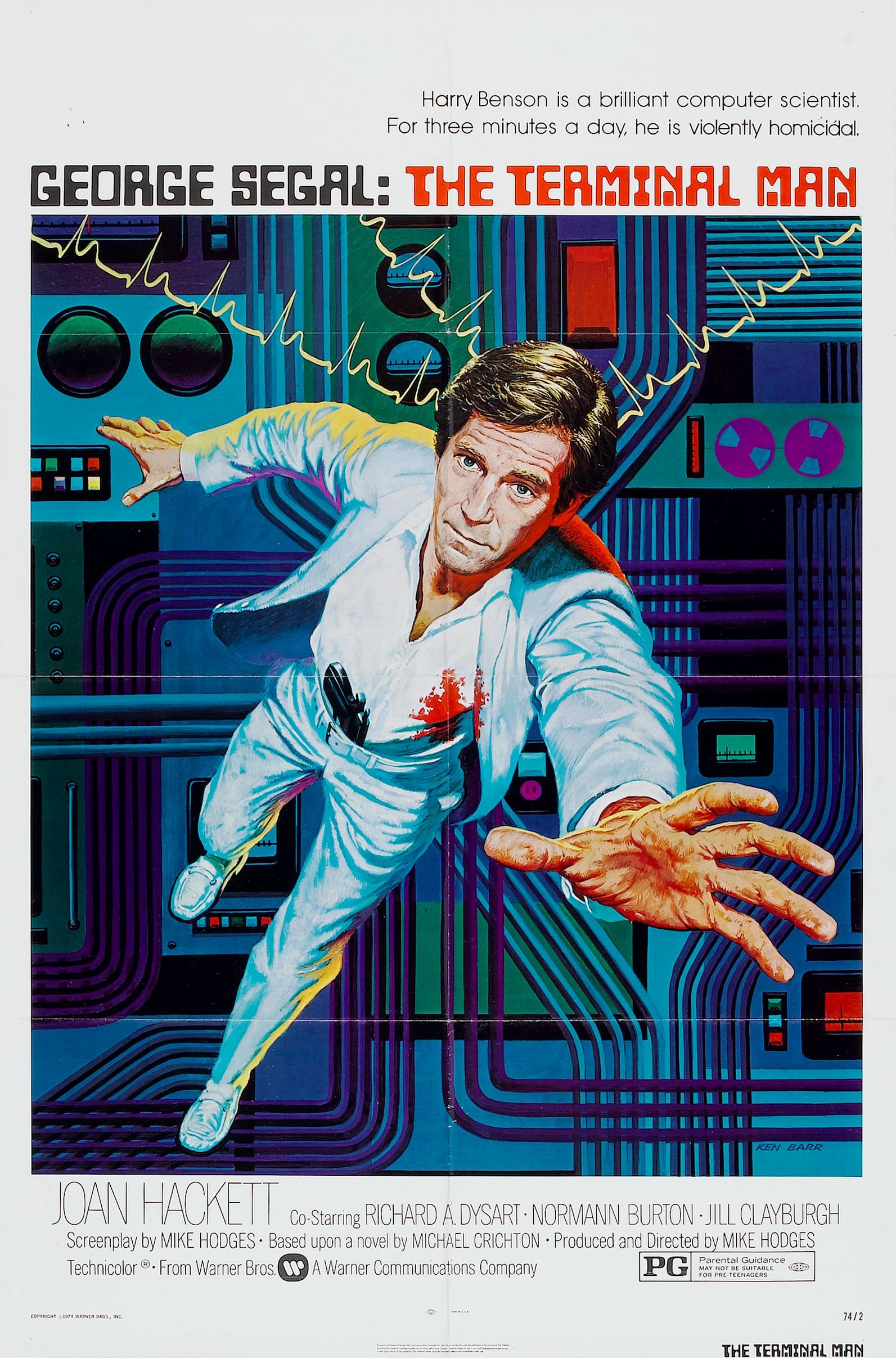
            Harry Benson (George Segal) is a brilliant computer scientist who begins to suffer from blackouts after receiving a head injury in a car accident.  During these blackouts he goes on terrifying violent sprees, which includes the abuse of his own wife and children. To help control the condition a group of doctors come up with an experimental procedure of implanting a computer chip inside his brain that will set off a signal that will alleviate these compulsions when they begin.  Unfortunately things do not go as planned and Harry’s condition becomes frighteningly worse in this cinematic realization of the Michael Crichton novel.

Director Mike Hodges visualization is the stand-out here. Every scene and camera shot fits together into a seamless whole. The first hour is filled with sets and backdrops showing a square, gray, futuristic –like surroundings while the second half features more white interiors while still maintaining the modernistic look.  Hodges shows a terrific awareness of every little sight and sound making each one an integral part of the story. From a visual perspective it is brilliantly handled and a masterpiece in need of more attention.  His use of classical music by Johann Sebastian Bach is equally effective. One particularly unique scene has Harry violently stabbing someone to death during one of his seizures, but instead of hearing the expected pounding music we instead hear the soft strains of Bach while the victim’s blood creates a red pattern on the white tiles of the floor.

The operating sequence and build-up to it is especially captivating and takes up most of the runtime.  I appreciated how a great deal of care was taken to make everything follow a very believable logic. The intricate procedure itself becomes fascinating and riveting to watch as they drill small holes into the patients head and use tiny metal tubes to literally shoot the mechanical pellets into strategic spots in the brain.

Segal, mostly know for light comedies, takes a nice break into drama here. He does a terrific job at getting the viewer to see him as a human being and feel empathy for his situation and when he has his head shaved he looks exactly like Howie Mandel . The part where he screams “Make it stop! Make it stop!” as he goes through another of his violent outbursts is especially moving and disturbing.

The supporting cast is strong as well although I didn’t particularly care for Donald Moffat and his put-on Irish accent, which was too strong and distracting and completely unnecessary.  Richard Dysart is memorable as the surgeon conducting the operation. He has two of the film’s best lines. One is when he is putting the computer chips into the brain and he states “This is the one job that can be both boring and nerve-wracking at the same time.”  Another great line of his occurs when a reporter asks him he if considers this procedure to be a type of mind control and he responds “What do you call compulsory education through high school?”

Joan Hackett gives her usual solid performance as Janet Ross the one doctor who is more concerned with the welfare of the patient then the implications of the experimental procedure. Jill Clayburgh, in an early role, plays against type here as Harry’s ditzy blonde girlfriend and the change of pace is interesting.

The film certainly makes a strong statement at the potential dangers of medical science and how the medical staff can be highly intelligent in one area, but very dense, immature and selfish in others.  The dehumanization element is pounded home to the viewer and in that respect it succeeds magnificently, but I couldn’t help but feel that it was being a bit unfair. In the years since this film was released the advancements in the medical field have improved the life and health of the patients and society as a whole. The film’s negative slant seems to conform too much to the pessimistic sentiments of its era and its unrelentingly doomful outlook is unnecessary.

My Rating: 7 out of 10

Released: June 19, 1974

Runtime: 1Hour 47Minutes

Rated PG

Director: Mike Hodges

Studio: Warner Brothers

Available: VHS, DVD (Warner Archive), Amazon Instant Video

Carrie (1976)

By Richard Winters

My Rating: 4 out of 10

4-Word Review: Prom was a disaster.

A shy, awkward teen (Sissy Spacek) who is a virtual outcast at her school and has a religious zealot for a mother (Piper Laurie), learns that she has telekinetic powers and uses them in terrifying and deadly ways after falling victim to a cruel prank at her high school prom.

Nothing really seems to mesh here and the pacing is poor. For a great deal of time you feel like you are not watching a horror movie, but instead an annoying, clichéd 70’s drama. The majority of the scares occur at the end while the rest of the film has no tension at all.  It’s visually flamboyant, but empty and unable to hide its low budget roots. Like with director Brian De Palma’s other thrillers his style and heavy-handed Hitchcock-like touches become overpowering and you lose touch with the story. Too much is orchestrated and the movie is never allowed to gel and have its own natural flow. The opening, which takes place in a girl’s shower, looks like a soft core porn flick especially with the choice of music.

The teen-age girls are certainly cruel and their snotty attitudes seem valid, but the actresses are all wrong. Yes, Nancy Allen and Amy Irving are hot to look at, but they were too old for their parts. All of them were in their 20’s and look far more like college girls instead of students in high school. The P. J. Soles character is irritating. In an effort to give the role some distinction they have her constantly wearing a pink baseball cap. She even wears it to the prom with her prom dress and looks ridiculous and yet still has the audacity to laugh at Carrie when she shows up when in reality they would most likely be laughing at her instead.

Miss Collins, the physical Ed. Teacher, which is played by actress Betty Buckley is another problem. She goes beyond the call of duty to give Carrie the individualized and sensitive attention that she needs. It sounds nice, but I couldn’t buy into it because in most cases shy students that don’t otherwise cause problems usually get overlooked even by the best of teachers simply because the school systems are too large with too many students to handle.

William Katt was not very convincing in his part as a dumb jock. John Travolta is good, but only because he is playing an extension of his Vinnie Barberino character from ‘Welcome Back Kotter’. In fact I found his portrayal here to be even funnier than his TV counterpart.

Spacek is the best thing about the movie as she brings the Carrie character to life with a vengeance. The part where she tears up the gymnasium with her powers is genuinely creepy and the way she opens her eyes and moves them around is freaky. The use of the split screen during this segment help to make it a uniquely scary moment in cinema history and saves what is otherwise a forgettable production. The famous ‘surprise’ ending isn’t bad either and even managed to startle me a little and I don’t startle easy.

Unfortunately it’s lacking the necessary ingredients overall to make it a classic. It’s based on the Stephen King novel and yet leaves certain crucial elements from the book out, which only creates more questions and confusion. De Palma takes the most simplistic parts of the story and then glossies over the rest leaving the viewer feeling unsatisfied when it is over.

My Rating: 4 out of 10

Released: November 3, 1976

Runtime: 1Hour 38Minutes

Rated PG

Director: Brian De Palma

Studio: United Artists

Available: VHS, DVD, Blu-ray, Amazon Instant Video 

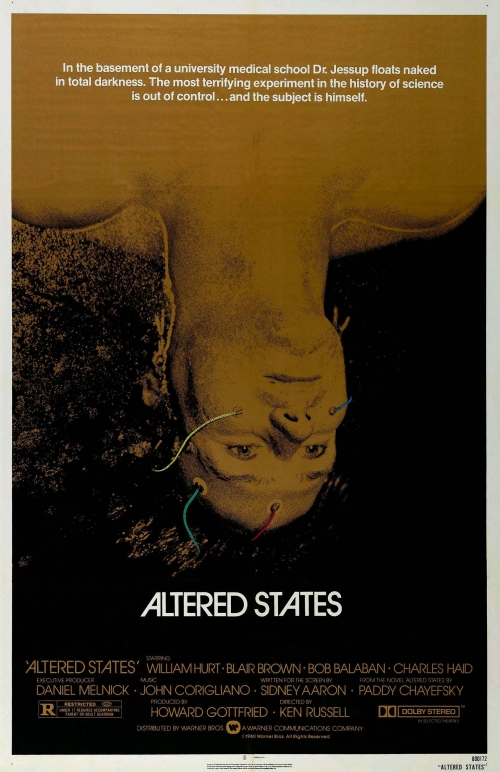
Altered States (1980)

By Richard Winters

My Rating: 5 out of 10

4-Word Review: Blair Brown’s hairy armpits.

            This film, which is loosely based on the experiences of dolphin researcher John Lily the inventor of the isolation tank, and from the Paddy Chayefsky novel comes this bizarre concoction that is half sci-fi and half surreal fantasy.  The story pertains to Eddie Jessup (William Hurt in his film debut) who spends time in his isolation tank at his Harvard research lab while taking hallucinatory drugs that send him into different states of consciousness that become increasingly more frightening and vivid until they begin to externalize in his everyday life.

It was directed by Ken Russell and if you are familiar with his work you realize that means the presence of lots and lots and lots of strange visuals that come at you in quick and unannounced ways. They are confusing, cluttered, and often times make no sense. However, since the story is pretty wide-open these trippy segments work to the film’s benefit, unlike other Russell productions where I felt they became off-putting.  They also give the movie distinction and momentum. I’ve never done LSD, acid, or meth, but these segments probably come as close to the experience of a drug trip as you will find.  It is best not to demand any logic and instead sit back and allow it to become an assault on the senses, which on that level works to excellent effect. I came away wishing these scenes had been more extended and frequent as they are the best part of the movie. Of course the state-of-art special effects are no longer as impressive and look like images put on a mat screen, but some of the other stuff is cool. My favorite part is where a naked Blair Brown and Hurt are lying on the ground and a strong wind completely covers their bodies with sand and then they slowly evaporate into the air.

Hurt does a competent job and the character isn’t the clichéd kind of sensitive modern man like most Hollywood protagonists. He is emotionally ambivalent and self-centered.  His unromantic marriage proposal to Emily (Blair Brown) is one for the books, but I liked it. Most research scientists probably aren’t a socially skilled, people person to begin with otherwise they wouldn’t be shutting themselves inside a lonely, dingy research lab all day, so in that regards I felt the script hit the target and gave the film a little more of an edge.

Blair does fine in her role as the long suffering wife and it is nice seeing her looking so young and even briefly smoking a joint. She looks great naked, but her armpits where much too hairy during the love-making scene and she should have shaved them. I also found it amusing that during the time the two were separated Eddie started to have relations with a younger student of his who continued to refer to him as ‘Dr. Jessup’ even when they were in bed together.

Charles Haid plays Mason Parrish a friend of Eddie’s who helps him out with his experiments despite strong misgivings. His rants and tirades are well-played and give the film energy when it is not in fantasy mode.

To me the movie became boring and contrived when Eddie started to mutate into that of an ape man and runs around the campus and city terrorizing everyone. It seemed too reminiscent to An American Werewolf in London, which came out around the same time as well as countless other wolf man movies. The part is also not played by Hurt, but instead Miguel Godreau, who was an excellent dancer. I was impressed with his limber body and the way he could climb things, which gave him an animalistic quality, but felt that if it represented the Hurt character then Hurt should have been performing it even if it meant allowing for certain concessions.

The opening sequence showing Hurt locked in a thin, rusty tank in an empty room is terrific. There is a certain starkness and foreboding quality, especially with the eerie music, that makes this one of the better openings to a horror movie. The use of the credit titles is creative and reminded me a bit of The Shining. However, the film’s ending is horrid and one of the worst I have seen. It reeks of being a forced ‘happy’ Hollywood ending that practically ruins the entire picture as a whole. Because of this and the fact that the script seems to only skim the surface of this potentially fascinating subject matter forced me to give it only a 5 rating.

My Rating: 5 out of 10

Released: December 25, 1980

Runtime: 1Hour 42Minutes

Rated R (Language, Brief Nudity, Adult Theme, Intense Visuals)

Director: Ken Russell

Studio: Warner Brothers

Available: VHS, DVD, Blu-ray, Amazon Instant Video 

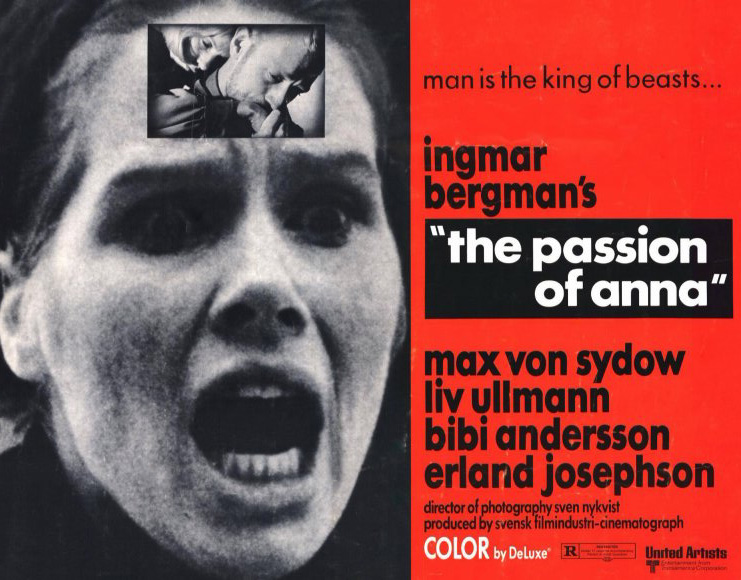
The Passion of Anna (1969)

By Richard Winters

My Rating: 8 out of 10

4-Word Review: Lonely little island retreat.

This is an intriguing film that seems quite similar to Roman Polanski’s Cul-De-Sac. Both films have a unique atmosphere and take place in a remote island setting and deal with a turbulent undercurrent that brews just underneath its deceivingly placid exterior.

Here we have Andreas (Max Von Sydow) living a lonely existence on an island retreat. He meets, by chance, Anna (Liv Ullmann) who is still grieving from the death of her first husband. The two form a tenuous relationship that slowly unravels as the dark corners of their personalities are eventually exposed.

In many ways this film has all the right ingredients. It wraps you up in its surreal nature and adds interesting effects. There are some creepy elements including a mad killer running around the island killing and torturing all the animals. Things work at a deliberate pace and leave no clue as to where it is headed. The characters are unpretentious and introspective. They are open about their faults and failures and give good reason as to why they have them. There are also fascinating cutaways to the actors themselves who help explain and interpret their characters motivations, which is a novel idea that gives the viewer a deeper understanding of the characters and adds an extra dimension.

Unfortunately it doesn’t come together and leaves no real emotional impact. There are a few good twists, but you can’t help but feel that it should have gone farther. There a certain scenarios that get touched on, but are never explored. For instance there is Andreas’s relationship with Elis (Erland Josephson).  Andreas has taken a loan out from him, but has also had an affair with his wife. This of course has some potential for fireworks and there is a moment where it begins to sizzle, but it never goes back to it. The same thing can be said for many of the other segments including the identity and reason for the animal killer.

Overall this is an outstanding experimental-like movie. It is not one of director Ingmar Bergman’s best, but it is still richer and more deeply textured than eighty percent of the other movies that are out there. The crisp and revealing dialogue alone makes it worth it and Bergman displays the most realistic perspective on the union of marriage.

My Rating: 8 out of 10

Released: November 10, 1969

Released: 1Hour 41Minutes

Rated R

Director: Ingmar Bergman

Studio: United Artists

Available: VHS, DVD

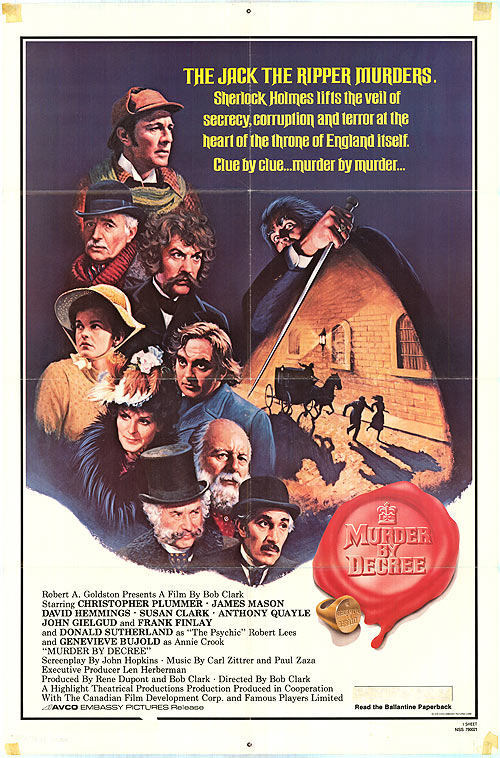
Murder By Decree (1979)

By Richard Winters

My Rating: 6 out of 10

4-Word Review: Jack the Ripper exposed.

Sherlock Holmes (Christopher Plummer) is asked to investigate the killings of prostitutes by Jack the Ripper and the clues lead to a massive conspiracy that goes all the way up to the British Royalty.

This rendition of the Holmes versus Ripper theme is fun and handsomely produced. My favorite element was the recreation of the dark, dingy, atmospheric streets of old London. The fog, lighting, and sounds of carriages going over the cobblestone streets is perfect and I wanted to see even more of it. The killings are surprisingly graphic, the strangulation of a woman near the beginning looks  quite realistic as does the stabbing of another man in which you can see, from the side, a sword going right through him.

The supporting cast is a treat and includes an almost unrecognizable Anthony Quayle in a beard and a wig, as well as John Gielgud, David Hemmings, Genvieve Bujold, Donald Sutherland, Frank Finley, and Susan Clark. Clark gives the strongest performance in the crucial role of Mary Kelly. She speaks with a believable British accent despite the fact that she was not a native. Sutherland is the only one that is wasted as his character is dull and his screen-time limited.

Both Plummer and James Mason in the role of Dr. Watson are terrific actors, but I don’t know if I was completely sold with them in these parts. Plummer is too polished, handsome, and always displaying a sneering type of grin that I never pictured Holmes having. I would have wanted the character to be just a bit more aloof, awkward, and detached.  Mason is fine, but the chemistry between the two doesn’t seem genuine. I expected more comic interplay. There is some, but not enough. The best moment is the pea scene, which is a howl and written by Mason.

The case is elaborate and well thought out. Normally I find with these types of stories that if you aren’t paying careful attention, or miss one line of dialogue that you become lost and confused, which fortunately did not happen here.  It stays intriguing and the logic is sound for the most part. The wrap-up at the end in which Holmes explains the case and solves the mystery while discussing it in front of the Prime Minister (Gielgud) is satisfying and complete. However, I got a real kick out of the fact that when Holmes starts his dissertation he has a cut on the side of his face from an altercation that he had with Ripper the day before, but in the fifteen minutes it takes him to delivery his speech it turns into a scar before your very eyes.

SPOILER WARNING!

The few misgivings that I had here was that it does not stand out from the myriad of other films that have been done on the same subject.  The mystery and conspiracy angle is interesting, but speculative with no bearing on the actual case. The fact that they turn the Ripper character into being just a couple of idiots who didn’t know what they were doing is clever in one way, but disappointing in a other because it destroys the mystique that has become the Ripper legend and becomes anti-climactic in the process.

My Rating: 6 out of 10

Released: February 9, 1979

Runtime: 2Hours 4Minutes

Rated PG

Director: Bob Clark

Studio: AVCO Embassy Pictures

Available: VHS, DVD