Category Archives: Dry Humor

And Hope to Die (1972)

and hope to die

By Richard Winters

My Rating: 7 out of 10

4-Word Review: Kidnapping a dead girl.

Tony (Jean-Louis Trintignant) is on the run from a gypsy group out for revenge and as he is being chased by them he encounters another group of criminals headed by Charley (Robert Ryan) who after some conflict take him into their fold and gives him the nickname of Froggy. Their plan is to kidnap a teen girl who is set to be the star witness at a trial of a major head of a criminal organization. Unfortunately she commits suicide before they can get to her, so they pretend that she is still alive and go through the motions of the kidnapping so as to be able to collect the payout by the organization that hired them.

This is the second of director Rene Clement’s trilogy dealing with the theme of kidnapping. The first was The Deadly Trap and the third being Scar Tissue. Of the three this one is the best mainly because of its many offbeat touches. The wry sense of humor, which is deftly interwoven into an already intricate plot, is terrific and helps make the entire thing engaging from beginning to end. My favorite parts include a contest that Froggy plays with Charley where he can stand three cigarettes on end straight into the air, which he can do with ease while Charley can’t despite his repeated efforts. The eulogy that Charley gives during a makeshift burial of one of their cohorts is priceless and the action isn’t bad either including an exciting sequence in which the group walks across a thin ladder hundreds of feet in the air that connects one skyscraper to another.

The characterizations are well done and played to the hilt. Trintignant plays another one of his outsider-looking-in roles and the way he manages to mesh himself into the group that is initially reluctant to have him is quite amusing. Aldo Ray is a scene stealer playing the gang’s resident bonehead and Tisa Farrow, who is Mia’s younger sister and looks almost like she could be her twin, is appealing in her role as a volatile young lady who knows how to use a gun and not afraid to shoot it whenever she gets the least bit riled.

The actual kidnapping, which is based on the novel ‘Black Friday’ by David Goodis, doesn’t occur until the final thirty minutes with the first hour dealing exclusively with Froggy’s assimilation into the group, which may sound boring, but really isn’t. In fact there is very little about this movie that I didn’t like and my only complaint would be the lackluster ending that doesn’t offer much of a payoff. Otherwise I feel this is a great example of how to mix humor with action, but still managing to keep things believable, fresh and inventive.

My Rating: 7 out of 10

Released: September 15, 1972

Runtime: 1Hour 39Minutes

Rated PG

Director: Rene Clement

Studio: 20th Century Fox

Available: DVD (Region 2)
Ishtar (1987)

ishtar

By Richard Winters

My Rating: 2 out of 10

4-Word Review: Songwriters travel to Morocco.

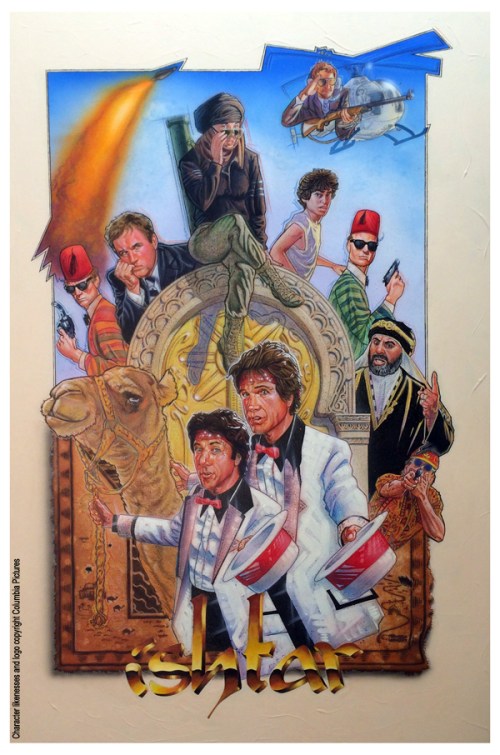
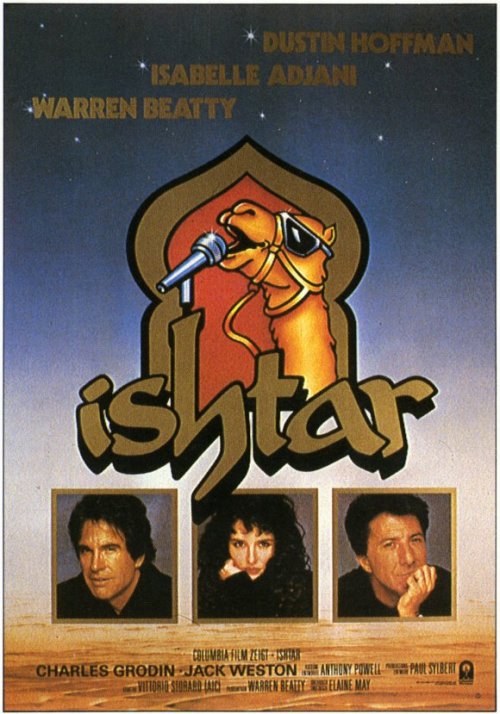
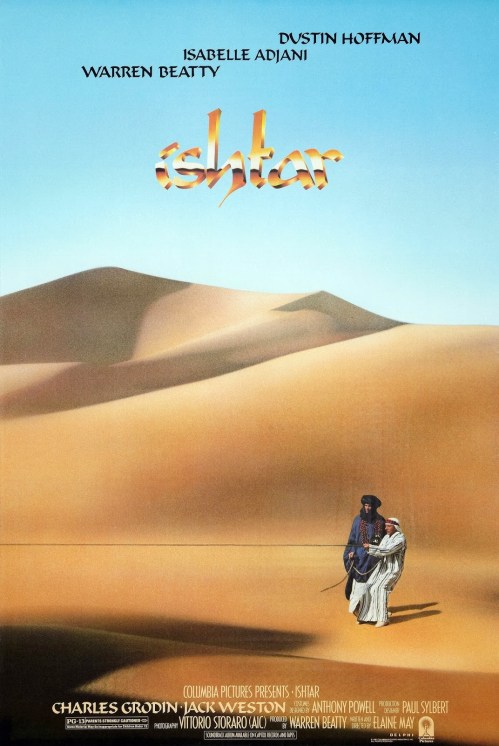
Clarke (Dustin Hoffman) and Lyle (Warren Beatty) are losers-at-life that now in their middle-age years are convinced that they have talent as songwriters even though this opinion is shared by no one else. They manage to get themselves a talent agent (Jack Weston) who tells them that the only place he can get their act booked is at a club in Morocco. The two, desperate for any attention they can get, decide to take him up on the offer, but once they arrive they become swept up in international intrigue with the Emir of Ishtar and the CIA.

This film was a notorious flop in its day not only with its cost overruns, production delays and box office receipts, but with its behind-the-scenes discord between star Beatty and writer/director Elaine May. It seemed that critics and film goers alike considered it a bomb, but I came into this thing with an open mind. May has written some great scripts in the past and is known for her impeccably dry humor. I was convinced that in this day-and-age of broad comedy and over-the-top farces American audiences were simply not geared to pick up on the subtleties of the humor.

Unfortunately five minutes in it becomes painfully clear this thing is every bit as bad as its reputation states. The humor relies too heavily on the two main characters spending what seems like hours on end sitting around trying to come up with bad lyrics for their already dumb sounding songs and then singing them in an off-key, tone deaf kind of way. This may elicit a mild grin for a minute or so, but after spending the first twenty minutes on it, it gets really annoying. Even at the end as the two crawl on the desert floor they continue to work on these same lyrics, which by that time has become as dried up as the desert itself.

The insane, almost incoherent plotline is another issue. It’s like two diametrically different stories clashed precariously into one with only the thinnest of threads holding it together. What starts out as a sardonically amusing look at two middle-aged men chasing an elusive dream suddenly becomes the second reel of Raiders of the Lost Ark without warning. The wild array of loosely structured coincidences that the two go through as they reluctantly find themselves more and more inadvertently involved with the intrigue around them is so flimsily plotted and poorly thought out that it’s not even worth the effort to describe other than to say it makes little sense, is unexciting and most of all not funny.

The main characters are a turn off as well and not comically engaging as intended. The idea that two men hitting 50 would suddenly decide to chuck their relationships and jobs to chase after a songwriter career despite not getting any positive feedback from anyone else to convince them that they even possessed the ability to do it and which usually doesn’t pay well anyways seems weird and bordering on mental illness. Having the characters in their early 20’s and just starting out and willing to take any remote venue they could in order to get their first ‘big break’ would’ve worked better, or portrayed these middle-aged men as once being famous and now desperate for a comeback, or even has-been CIA agents caught up in one last case of intrigue. Just about any other scenario would’ve made more sense than the one that ultimately gets used.

Hoffman is a great actor, but his efforts here are wasted on the weak material. Beatty does well playing a dimwit and the scene where he ‘beats up’ on Adjani who he thinks is a boy is probably the only funny moment in the film. Isabelle Adjani though, who was dating Beatty at the time, is miscast in a role that doesn’t convey her talents and seems almost degrading especially the scene where she lifts up her dress at a crowded terminal and exposes her breasts in effort to prove to Hoffman that she is really a female.

This movie is in some way so amazingly bad that I was almost convinced that it was intentional and if that was the case then at least in that area it can be considered a success.

ishtar 2

ishtar 3

My Rating: 2 out of 10

Released: May 15, 1987

Runtime: 1Hour 47Minutes

Rated PG-13

Director: Elaine May

Studio: Columbia Pictures

Available: DVD, Blu-ray, Amazon Instant Video

Slacker (1991)

slacker

By Richard Winters

My Rating: 8 out of 10

4-Word Review: A movie about nothing.

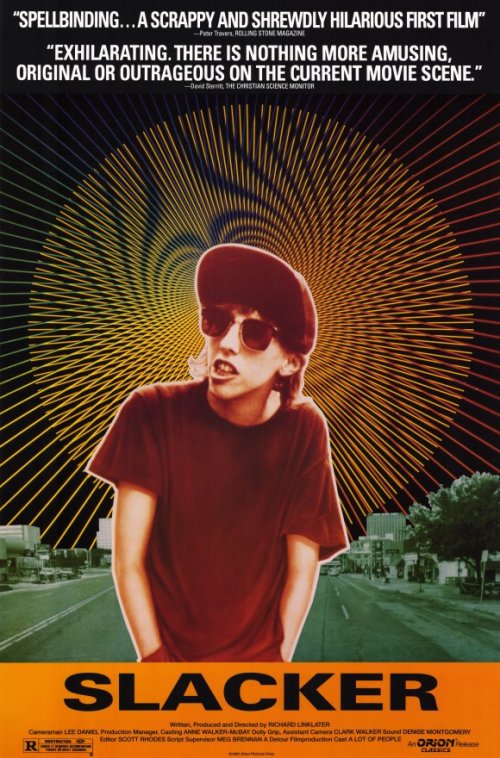
A look at a day-in-the-life of society’s left behinds that filter the streets, bars and coffee shops of Austin, Texas. The viewer hears a wide variety of weird topics, theories and extreme political points-of-view from the detached 20-something crowd as the camera winds its way from one conversation to the next and never stopping on any one person for longer than a few minutes.

This was considered at the time of its release to be a major breakthrough for the independent film movement and one that remains an inspiration for many indie filmmakers today. It succeeds because it proves you don’t need a big budget, state-of-the-art effects or even a compelling story to work. It washes all those things away and gets down to the very essence of why we watch movies, which is because we are all secretly voyeurs intrigued with seeing how the ‘other half’ lives without having to get our own feet wet in the process. The characters, as offbeat as they and their conversations may be, have a definite element truth to them and this film manages to convey reality far better than 95 percent of the other movies out there.

Some of my favorite conversations, which seem mostly ad-libbed, involved the one with the guy who was obsessed with the JFK assassination and his ‘shocking’ new revelations involving Jack Ruby’s dog. There are also the two young men inside a bar who talk about the ‘subliminal messages’ of the Smurf cartoons and the film’s director Richard Linklater who opens the film with a discussion on how every choice that we don’t make continues off and has a reality of its own. I also liked the anarchist (Louis Mackey) who talks about the man who assassinated President McKinley simply because all you ever hear about are the Kennedy and Lincoln assassinations and never anything about anything about the other two.

I also liked Teresa Taylor, who was the former drummer for the Butthole Surfers, playing a woman trying to sell a vial containing singer Madonna’s Pap smear and the guy who locks himself inside a room with what seems like hundreds of TV’s that run all day and night. However, I was a bit disappointed that during this scene we get shown a video of a man who supposedly shots the camera with his rifle and although he does indeed aim his gun at the lens he never fires it, which I found to be a letdown.

Some may consider these characters, in our very job oriented culture, to be ‘losers’ simply because they ‘aren’t working’ and being ‘productive members of society’, but director Linklater takes a different perspective by stating in an interview that he feels slackers are instead a ‘step ahead’ and ‘rejecting the social hierarchy before it rejects them’.

To some extent I agree as I was pretty much the same way at that age, but I also couldn’t help but think what these same characters were doing now 20 years later. It’s easy to be detached when you’re younger, but when a person reaches middle-age and the financial responsibilities become stronger, it’s not, so I kept wondering if these same people may have now ‘sold-out’ or even ‘grown up’. I also wondered how they may have evolved in other ways for instance the guy who was so into the conspiracies of the JFK assassination may now have crossed over to ones involving 9/11 and the young man that was really into TV’s may now be a Blu-ray player nut instead. If anything this is a movie crying out for a sequel and one that could easily be just as fascinating as the first one especially if it involved the same people.

My Rating: 8 out of 10

Released: March 22, 1991

Runtime: 1Hour 37Minutes

Rated R

Director: Richard Linklater

Studio: Orion Classics

Available: VHS, DVD, Blu-ray (Criterion Collection), Amazon Instant Video


Compromising Positions (1985)

compromising positions

By Richard Winters

My Rating: 5 out of 10

4-Word Review: Who murdered the dentist?

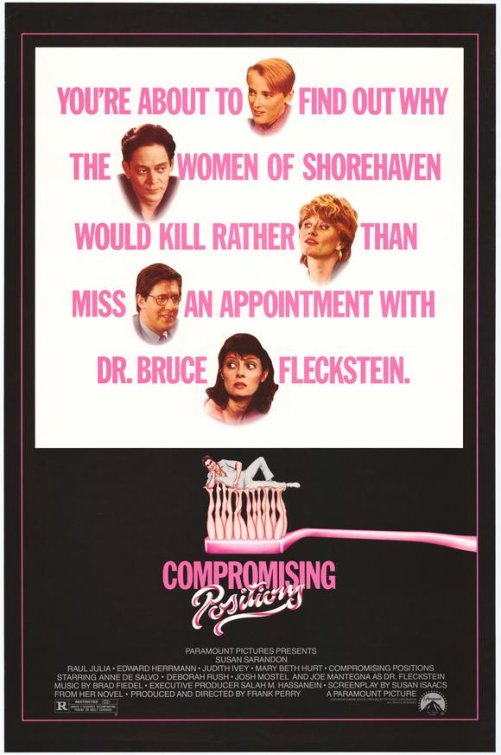
Bruce Fleckstein (Joe Mantegna) is a successful dentist who puts new meaning to the term ‘bedside manner’ as he flirts with all of his female patients and has affairs with many of them. When he turns up murdered it becomes a question of which of the many suspects did it, which intrigues housewife Judith (Susan Sarandon) and propels her to start her own independent investigation much to the consternation of her husband Bob (Edward Herrmann) who thinks it’s too dangerous. As the clues accumulate so do the advances of police detective David (Raul Julia) that she is working with, which quickly puts her marriage into jeopardy.

The film was produced and directed by Frank Perry who made many influential films during the 60’s and 70’s with his screenwriter wife Eleanor, but after their divorce the quality of his films diminished considerably. The last two that he made were in collaboration with Susan Isaacs with this one based on her novel of the same name. To an extent it works as the mystery angle is realistic enough to be interesting and the dark humor keeps it mildly entertaining.

Sarandon’s presence helps a lot and without her it wouldn’t have worked. Julia plays against type and it’s fun seeing him in more of a subdued type of role. The real scene stealer though is Judith Ivey who has some funny sarcastic lines and should’ve been seen more.

I also really liked how Sarandon’s character remains faithful to her husband despite her conflicts with him and the many advances that she gets from the police detective. Too many Hollywood pictures give the impression that marriage should be one long blissful union and the minute one partner isn’t completely receptive to the needs of the other then that entitles the other to cheat on them. Herrmann’s character is a borderline jerk, but he has legitimate reasons for why he feels the way he does and the movie refreshingly even gives him a moment to vent and explain them. I also thought that Julia’s character comes onto Sarandon much too quickly and the way he barrages into her bedroom while making aggressive advances seemed almost creepy.

The story does have a dated quality. Fleckstein is found to be distributing and printing porn, the kind with consenting adults and not kids, which the film portrays as being a ‘shocking revelation’ even though these days with the proliferation of it all over the net it is nothing but an afterthought to most. I also thought the idea that this guy would have BDSM sex with a lot of married women and even take explicit pictures of them, but still turn around and throw them some lines that he ‘loved’ them and they would all fall for it was ridiculous and unfairly portrayed women as being too easily manipulated and unsophisticated.

The resolution is limp and the film lacks anything that would help make it distinctive or memorable. The humor gets lost by the second half and the Ivey character should’ve been given more screen time and possibly even used as Sarandon’s investigative partner as her caustic take on things are the best thing about it.

My Rating: 5 out of 10

Released: August 30, 1985

Runtime: 1Hour 39Minutes

Rated R

Director: Frank Perry

Studio: Paramount

Available: VHS

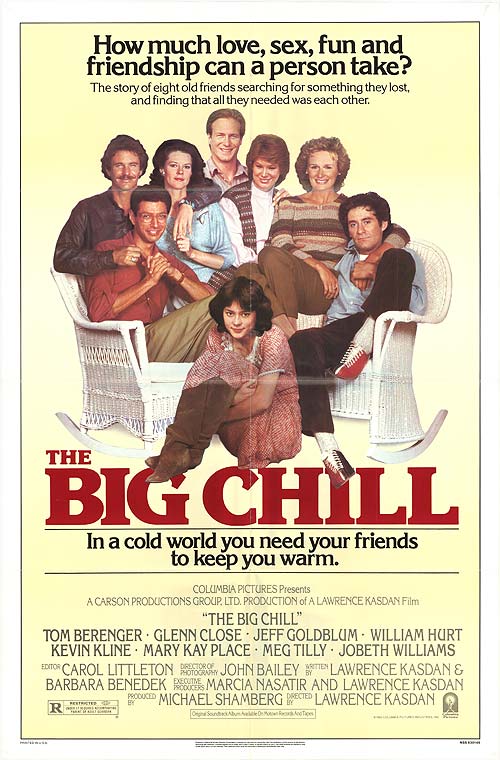
The Big Chill (1983)

big chill

By Richard Winters

My Rating: 6 out of 10

4-Word Review: Friends from college reunite.

When one of their friends from their college days commits suicide the other seven get together for his funeral. Alex was living the unconventional, hippie lifestyle and with his much younger girlfriend Chloe (Meg Tilly) still connected to the ideals of his college days while his other friends had ‘sold out’ and taken on the more materialistic values of the ‘80’s. Alex’s death then represents the ultimate demise of their carefree, idealistic ‘60’s existence and how much they have changed since then, which they now must all learn to come to terms with.

This film has been closely compared with Return of the Secaucus Seven, which was reviewed last week. According to writer/director Lawrence Kasdan he never saw that film or even heard of it when he did this one. I actually preferred this over the John Sayles movie. For one thing it made a little more sense. Having old friends reunite for a funeral seemed more realistic than having them come together each year like in that one as most people once they enter into adult life have a tendency to move on making new relationships and not always have time for their old ones. There’s also no magical ‘cosmic bond’ holding this group together either. Many of them have evolved more than some of the others including William Hurt’s character who is still a recreational drug user while Kevin Kline’s has taken on more of the responsible adult role and this contrast comes to an interesting head at one point.

Tilly’s performance as a young flower child personified is great because it forces the others to see how they once were, but now can no longer relate to. Don Galloway plays the older husband of Karen (JoBeth Williams) while representing the ‘50’s generation and their contempt for the counter-culture. He has an interesting scene in which he expounds on what he feels was Alex’s ‘lack of focus and responsibility’ that clearly gets on the nerves of the others and I had wished the character had remained for the duration as it his presence was brimming for a great ultimate confrontation.

The entire thing was filmed on-location in Beaufort, South Carolina apparently because of Kasdan’s love for the film The Great Santini, which had also been done there. The deep south certainly seems like an odd setting as it doesn’t reflect the ‘60’s values or lifestyle at all, but it’s scenic nonetheless especially the scene where Hurt and Kline go jogging down a deserted main street of town that has an almost surreal quality.

Scenes where shot with Kevin Costner playing Alex, but then cut, which was a mistake as the character starts to attain too much of a mythical and elusive quality and seeing some moments with him even in flashback would’ve helped create an image of an actual person for the viewer. Some of the more existential conversations that the characters having during their group discussions are superb and right on-target and help to demystify the ‘60’s experience and those that lived it, which I found refreshing since other media forums for nostalgic reasons seemed to want to perpetuate it instead. In some ways it’s a shame that the characters and story has to be so closely tied to the Baby Boom generation as it stigmatizes it as a period piece when by-and-large the experiences they have going from the college stage to the adult one are quite universal.

My Rating: 6 out of 10

Released: September 30, 1983

Runtime: 1Hour 45Minutes

Rated R

Director: Lawrence Kasdan

Studio: Columbia Pictures

Available: VHS, DVD, Blu-ray, Amazon Instant Video

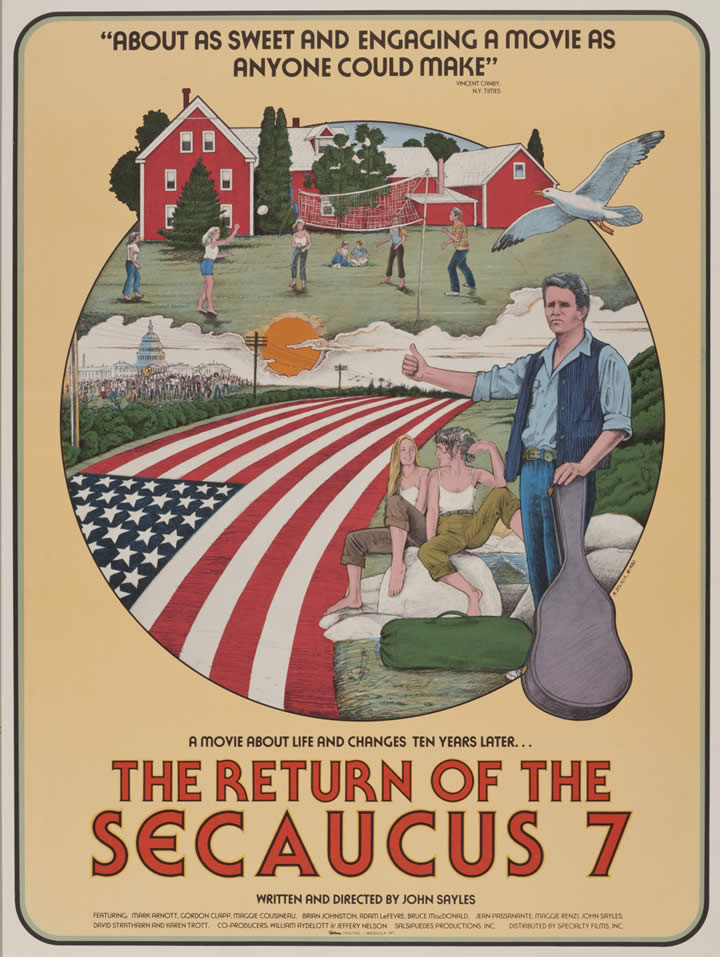
Return of the Secaucus Seven (1980)

return of the secaucus 7

By Richard Winters

My Rating: 3 out of 10

4-Word Review: They like to talk.

Seven people who were friends during college reunite ten years after having been arrested while on their way to a demonstration of the Vietnam War. Mike and Katie (Bruce MacDonald, Maggie Renzi) are the hosts and live together while also both being school teachers. J.T. (Adam LeFevre) is a struggling musician looking to finally take a stab at the big time by moving to L.A. Irene (Jean Passanante) is a speech writer for a conservative politician who brings along her new boyfriend Chip (Gordon Clapp) while Maura (Karen Trott) has just broken up with her boyfriend Jeff (Mark Arnott) and starts a fling with J.T. only to have Jeff reappear and wanting to start the old relationship back up.

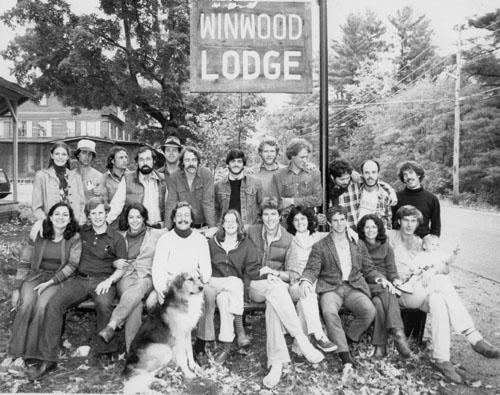
This film is noted as being the forerunner of the independent film movement. It was made on a budget of less than $60,000, but first time director John Sayles manages to camouflage it well. The variety of shots and camera angles never allow you to realize that the whole thing was done in one location, a ski lodge that he managed to rent out for the summer at a low rate. The dialogue has a great conversational quality and the characters are nicely textured and multi-dimensional making it seem like the camera is capturing an actual reunion. The acting, which was mainly done by performers who had never appeared in a film before is equally good with my favorite being Sayles himself who appears as the character Howie who has one really good scene where he warns his friend Mike to think ‘long and hard’ about getting married while his wife stands behind him looking none too happy hearing him say it.

The biggest problem is that not enough happens. There’s a lot of talking, but story wise it is almost plotless. The few action segments deals with the men playing a rough game of basketball and also a trip to a river bed where they go skinny dipping to the background music of yodeling, but these scenes tend to meander while adding little to the character development.

It’s nice seeing a movie that attacks gender stereotypes by having the woman being the one to change a flat tire as well as having all the nudity shown being that of the men and not the ladies. There are also a few touching moments where Irene is willing to give J.T. a significant amount of money to help him in his struggling career without expecting any payment back, but in the end it all goes nowhere. The characters are just too genteel, which fails to create any type of interesting drama. I was more intrigued with exploring what these people were like in college and how they had changed after entering the adult world, but the film barely touches on that, which to me made it boring and empty.

return of the secaucus 7 2

My Rating: 3 out of 10

Released: April 11, 1980

Runtime: 1Hour 43Minutes

Rated R

Director: John Sayles

Studio: Salsipuedes Productions

Available: VHS, DVD, Hulu

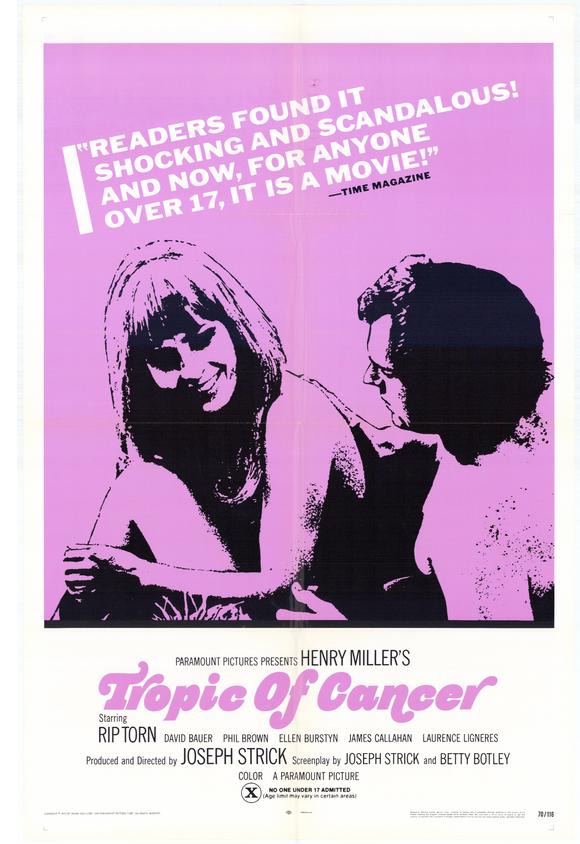
Tropic of Cancer (1970)

tropic of cancer

By Richard Winters

My Rating: 4 out of 10

4-Word Review: Writer living in Paris.

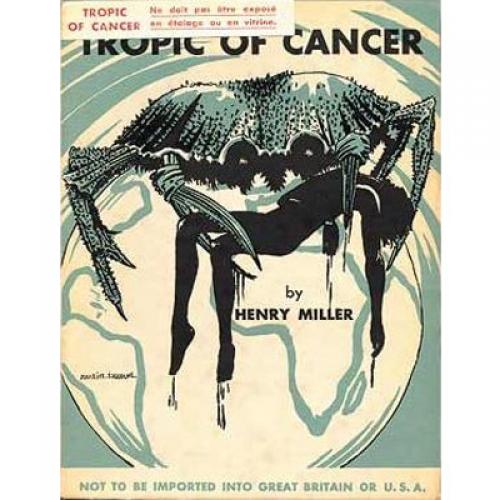
Rip Torn plays author Henry Miller living in Paris during the 1930’s and struggling to find work, shelter and money. He spends his time shoplifting items from food stands while also having sexual conquests with prostitutes and even the wives of his friends.

The film is based on Miller’s landmark novel that was published in France in 1934, but banned in the US until 1961 and even then went through several obscenity  lawsuits, which were finally all dropped in 1964 when the US Supreme Court deemed the book to have artistic merit. The novel, which is considered highly influential and won wide critical acclaim, has an odd mixture of stream-of-consciousness elements as well as autobiographical ones that works well in book form due to Miller’s first person narrative, but fails on the big screen. It was never meant to be made into a movie and director Joseph Strick’s ambitious attempt to make it into one, who just three years earlier tried to do the same thing with James Joyce’s equally unfilmable novel Ulysses seems futile and ridiculous.

The production looks cheap and lacks any type of atmosphere or visual flair. The setting is supposed to be the late 20’s, but it hardly seems like it. The acting is weak particularly by the supporting actresses playing the prostitutes who almost come off like people pulled off the street with no acting training of any kind.

The film’s most notorious claim to fame like with the book was its explicit sexual content that by today’s standards seems quite tepid. There are some nude scenes here and there including seeing actress Ellen Burstyn fully naked from the front, but it adds little. The best stuff is Torn’s voice over-narration describing his character’s sexual fantasies much of which was lifted directly from the novel. This was the first film to ever use the word ‘cunt’ and it gets said frequently. In fact it’s the character’s sexual conversations and the caustic way women get described in them that are the most amusing thing about the movie.

A few other funny moments include Miller having sex with a prostitute while she is also taking care of her sick mother and who would sometimes leave the bed to look in on her and although Miller initially pays the woman for her ‘services’ he eventually steals it back when she is away during one of her trips to her mother’s room. Miller’s roommate Carl (David Baur) has a great scene where he writes love letters to a woman he wants to have sex with and the two finally meet only to have the actual encounter not live up to the fantasy.

This was filmed at the same time as Quiet Days in Clichy, which was also based on the same novel. Both films were made in Paris and Henry Miller would routinely sit-in on the productions, which were done not far from the other. However, despite an admiral attempt the movie comes off as flat and boring and the viewer would be far better off skipping this and reading the source material instead as the only time it ever gels is when it uses text taken directly from the book.

tropic of cancer 2

My Rating: 4 out of 10

Released: February 27, 1970

Runtime: 1Hour 27Minutes

Rated X (Reissued as NC-17)

Director: Joseph Strick

Studio: Paramount

Available: DVD, Amazon Instant Video, YouTube

The Jewel of the Nile (1985)

jewel of the nile

By Richard Winters

My Rating: 5 out of 10

4-Word Review: Searching for a jewel.

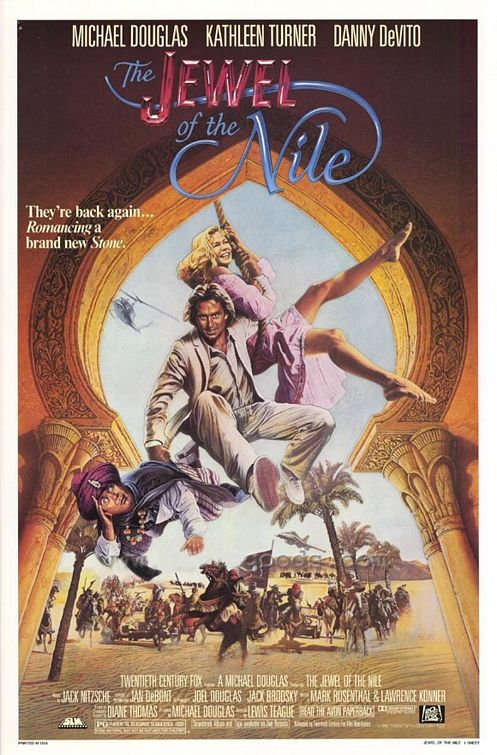
In this sequel to Romancing the Stone Jack (Michael Douglas) and Joan (Kathleen Turner) are living the easy life on a yacht, but are bored and looking for some adventure. Joan is given the opportunity to write a book about a visiting sheik named Omar (Spiros Focas) and travels to the Middle East to learn more about him. There she finds that he has sinister intentions and simply using her to be a part of his scheme, which compells her to try and expose him, but first she must escape from his clutches. Jack and Ralph (Danny DeVito) team up to help her along with a prince named Jewel (Avner Eisenberg) and together the four find themselves in one wild predicament after another.

Although this film did not do as well in the box office as its predecessor I still ended up enjoying it and felt in a lot of ways it was better. It has a bigger budget and slickly handled direction. The humor is more consistent and edgy and Jack and Joan share a love/hate relationship that is more entertaining than the Harlequin romance novel that the first one became while the on-location shooting that was done mainly in Morocco has some genuinely breathtaking scenery.

The scene in which the three get into a fighter jet plane and use it to tear up a village while still remaining on the ground is the film’s highlight. Their escape from Omar while climbing on a very steep rocky cliff is exciting and watching DeVito get sat on by a donkey is quite funny.

DeVito’s character is used much more here and his on-screen moments are one of the best things about the movie. Focas as the evil sheik is okay and at the very least is a more dynamic bad guy than the ones that were used in the first film. Holland Taylor as Joan’s snarky agent is the only one whose presence gets wasted and she ends having what amounts to only a few minutes of screen time making me wonder why she even bothered to appear at all.

The biggest drawback, like with the first film, is with the plot itself. The concept is too broad and the set-up rather convoluted making me both confused and ambivalent at the same time. It improves by the middle to be mildly interesting and has enough comedy and action to keep afloat, but the 105 minute runtime is too long for the bubblegum material and stretches the climactic sequence past its peak until it becomes derivative and overdone.

My Rating: 5 out of 10

Released: December 11, 1985

Runtime: 1Hour 45Minutes

Rated PG

Director: Lewis Teague

Studio: 20th Century Fox

Available: VHS, DVD, Blu-ray, Amazon Instant Video, Netflix streaming, YouTube

The Gauntlet (1977)

the gauntlet

By Richard Winters

My Rating: 7 out of 10

4-Word Review: Alcoholic cop escorts hooker.

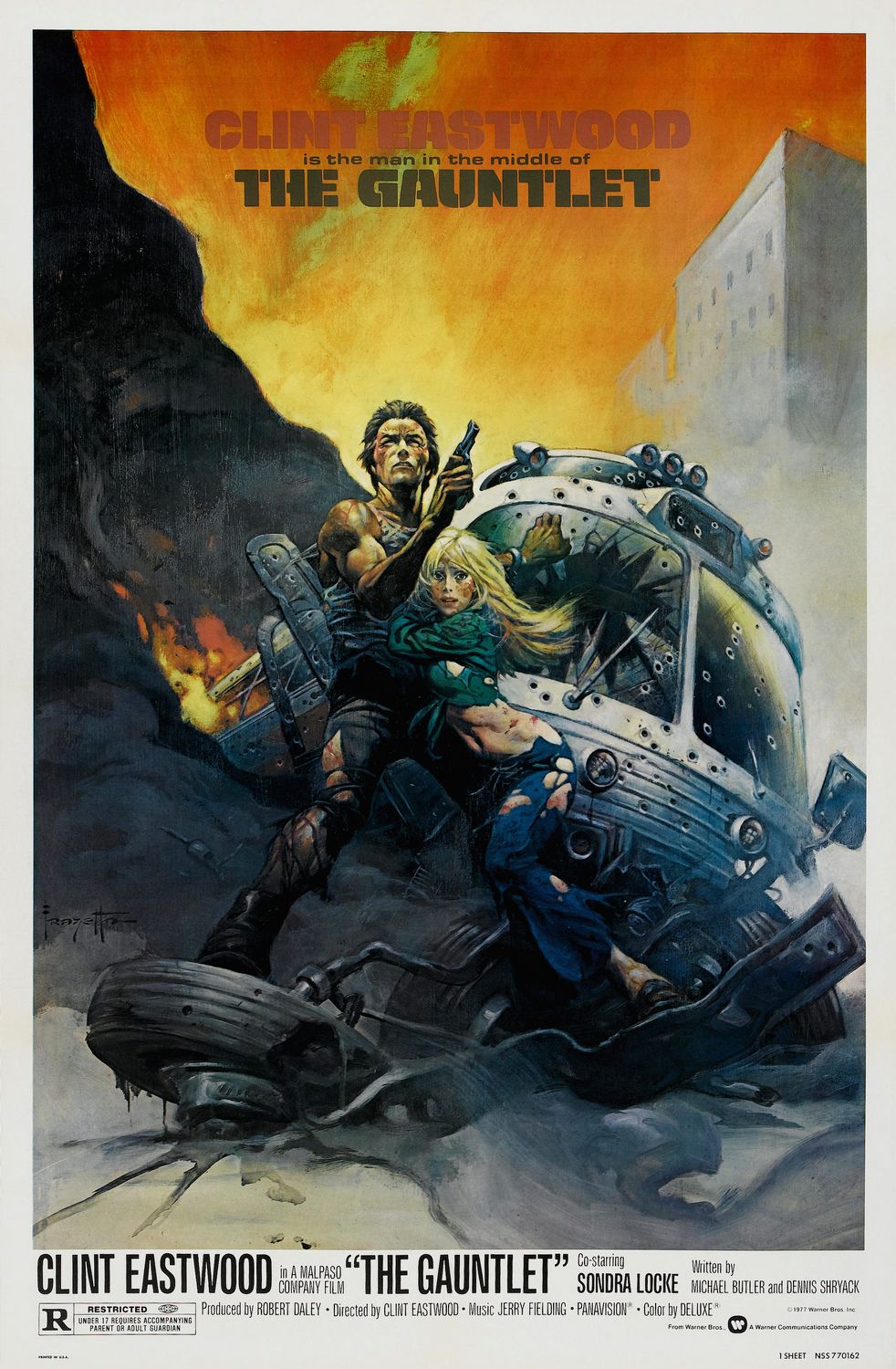
Ben Shockley (Clint Eastwood) is a down-and-out cop and borderline alcoholic who’s given the assignment of escorting a hooker named Gus Mally (Sandra Locke) from a prison in Phoenix to a trial in Las Vegas where she will be a key witness. Ben is initially told that it’s a ‘nothing witness to a nothing trial’, but finds that to be anything but the truth as the two are shot at and chased by both the mob and his fellow policeman convincing him that he’s been set-up and making him determined to ‘even the score’.

This film overall is great fun and has enough well-choreographed action sequences to be entertaining for just about anyone who watches it. The story also manages to have some intrigue and a certain symbolic message. The on-location shooting done in and around Phoenix gives it an added flair particularly the long shots of the dessert landscape.

The film is best known for its climatic sequence involving Eastwood and Locke riding in a bus that travels slowly down the main streets of Phoenix while being shot at by hundreds of cops lining the sidewalk that ultimately puts thousands of holes into the vehicle. As a visual this is exciting and memorable, but I still kept wondering why the cops didn’t simply aim at the bus’s tires, which would’ve disabled the vehicle instantly and they would not have had to bother shooting up the rest of it.

Another action segment in which Eastwood and Locke are riding on a motorcycle while being chased and shot at by men in a helicopter brought up some similar issues. Again the segment itself is exciting and surprisingly prolonged although it would’ve done better without the bouncy jazz score being played over it. Either way the helicopter begins to attack Eastwood while he is standing at an outdoor phone booth. He then runs inside to an indoor food market where the Locke character already is, but instead of staying there where they are shielded he instead leads her out of the building and onto the motorbike where it would be more dangerous because it makes them an open and vulnerable target.

I also wasn’t too crazy about Locke’s performance or her character. For one thing Locke approaches the part in too much of a one-dimensional way. A hardened, snarky prostitute may be realistic, but hardly interesting or appealing and the character would’ve been more fun had their being some sort of unique or funny trait about her instead of leaning so heavily towards the stereotype.

The other supporting characters though are great. Pat Hingle is excellent as Ben’s nervous, hyper friend who finds himself unwittingly in the middle of the fracas. I also enjoyed William Prince playing an extension of the corrupt, jaded corporate-like character that he did in Network. Bill McKinney is also good as a hick cop who has an interesting ‘conversation’ with Locke about her ‘profession’.

If you’re looking for a bubblegum, action-packed escapism then this film should do the trick and still holds up well today even when compared to modern-day action flicks.

My Rating: 7 out of 10

Released: December 21, 1977

Runtime: 1Hour 49Minutes

Rated R

Director: Clint Eastwood

Studio: Warner Brothers

Available: VHS, DVD, Blu-ray, Amazon Instant Video

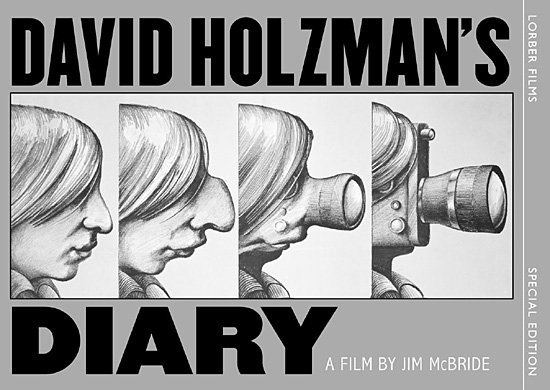
David Holzman’s Diary (1967)

david holzman 1

By Richard Winters

My Rating: 8 out of 10

4-Word Review: He records his life.

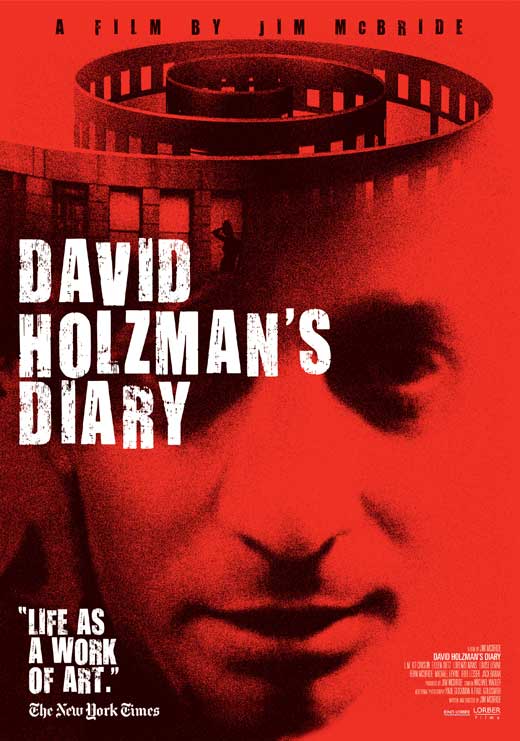
David (L.M. Kit Carson) is a young college-aged movie fan who wants to use the camera to not only record his life, but help him better understand and interpret reality. Unfortunately he finds that instead of clarifying things the camera instead brings out even more of reality’s complexities making his life and the world he is in even more confusing. It also inadvertently exposes a darker side to his personality that he wasn’t aware of which his voyeurism to both an attractive woman across the street as well as his live-in girlfriend Penny (Eileen Dietz) who eventually gets fed up with his film and him and moves out.

I realize the saying ‘ahead of its time’ can get a bit overused, but this is one case where that term really fits. This movie is cool on many different levels and features scenes and segments that you will never see done anywhere else. The Cinema verite style is perfect and I loved how the camera gets turned on itself as we are given a good background and visual to the type of camera that was used and why for its time was considered a cutting edge piece of machinery. The scene where he takes a shot of every image that he saw during a night of television viewing and then plays it back creating a mosaic of flashing images from shows and commercials is equally cool. The segment where he interviews a woman, which was apparently a man dressed in drag, but quite hard to tell, who stops her car in the middle of the street to tell him of her candid sexual desires while holding up traffic is quite amusing as is the part where he stalks a nervous lady from a subway car out onto the city streets.

The film also successfully transcends its time period. I have always said it is very easy to tell the time period or decade a movie was made usually after viewing it for only a few minutes, but this was one case where it is actually quite hard to tell. The detached, hip nature of the protagonist is still trendy and the film’s existential philosophical approach dealing with an artist’s need to recreate reality, but ultimately failing is as relevant today as ever. The loosely structured ad-libbed dialogue gives it a legitimate documentary feeling and was so believable that when audiences first viewed it during the 60’s they booed when they saw the closing credits and realized it had all been made-up. This was also the first American film to use the f-word and one of the first to feature full nudity, which is done by the attractive Dietz who later went on to play the face of the demon in the movie The Exorcist.

Although I saw this movie many years earlier and was already a big fan I watched it again during a special showing at the The Marchesa Theatre in Austin as a tribute to the film’s star who passed away in October of 2014. Afterwards many people got on stage to talk about how Carson had inspired them with their lives and careers and it included his son Hunter Carson as well as film director Guillermo del Toro who was probably the most entertaining.

If the film has any drawbacks it’s in the use of black frames that are shown in between shots where for several seconds the viewer will see no image at all and at times only a voice over. This might’ve been done for effect, but ends up giving it too much of an amateurish feel. There are also times when the camera stays too fixated on its subject making it look too much like talking heads with not enough cutaways or interesting camera angles. Overall though it’s still one-of-a-kind and worth checking out for a glimpse at experimental and original filmmaking at its purest.

david holzman 2

My Rating: 8 out of 10

Released: October 3, 1967

Runtime 1Hour 14Minutes

Not Rated

Director: Jim McBride

Studio: Direct Cinema Limited

Available: DVD, Blu-ray, Amazon Instant Video