Category Archives: 80’s Movies

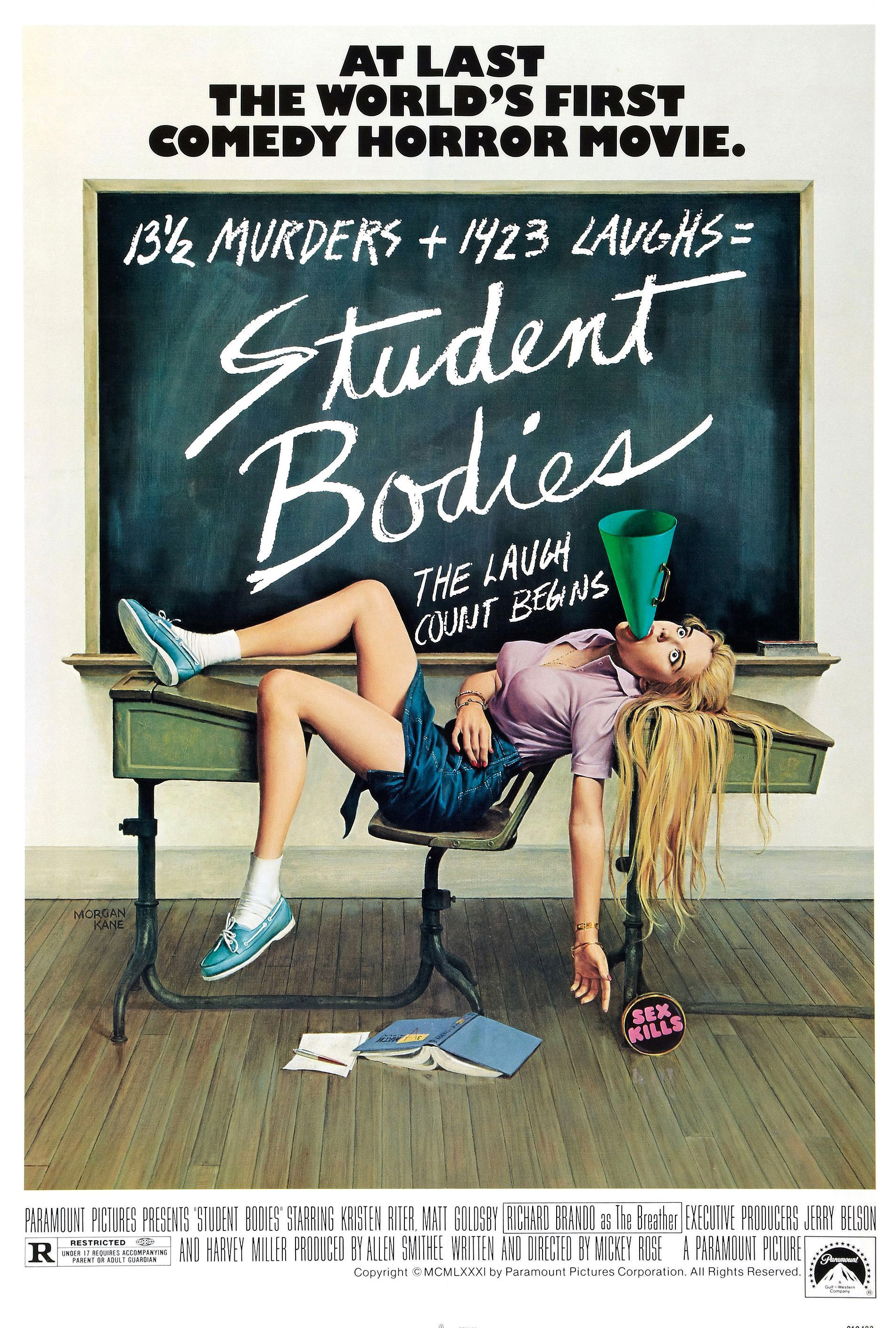
Student Bodies (1981)

By Richard Winters

My Rating: 6 out of 10

4-Word Review: Who is ‘the breather’?

A killer, simply known as ‘the breather’, is stalking students of Lamab High School. His first victims are Julie (Angela Bressler) and her boyfriend Charlie (Keith Singleton). He then proceeds to hack away more students with the police seemingly unable to do anything about it. Fellow student Toby (Kristen Riter) decides to take matters into her own hands by investigating things on her own only to end up getting incriminated as the killer, which forces her to try and convince others that she’s not the one.

This film, like Jekyll and Hyde…Together Again, is the product of the 1980 writer’s strike where Paramount was looking for scripts that could be produced on a modest budget with a nonunion crew in an effort to have some movies released to the theaters while the strike wore on. This was deemed at the time to be a perfect fit as studio heads were impressed with the box office smash Airplane that had come out a year earlier and been a parody of disaster flicks and they were hoping this film would not only cash in on audiences that had liked that one, but also for those who were into slasher films, which at the time were proving to be quite popular. The end result was a modest success with the movie making a $5.2 million profit off of a $510,000 budget. Though it really didn’t obtain its cult following until it began airing on late night cable TV during the 90’s.

While there had been horror movie parodies before those made fun of the standard haunted house theme while this was the first to satirize slasher movies, which up to that point had only been around for a few years. I was though leery as this was written and directed by Mickey Rose, best known as a script collaborator on many of Woody Allen’s movies, but who had ventured on his own to write and direct I Wonder Who’s Killer Her Now? 5 years earlier, which I considered incredibly lame and feared more of the same here. However, to my surprise, this one wasn’t bad, with probably the best moments coming right at the start, which is a perfect send-up of When a Stranger Calls. What makes this one work is that those behind the scenes, including the talented writer Jerry Belson and producer Michael Ritchie, is that they had clearly watched a lot of horror movies and therefore the humor, at least at the beginning, is laser sharp, versus other horror parodies, including Pandemonium, which came out a year later, that seemed to be made by people who really hadn’t watch horror and were just throwing in any dumb gag that they could.  The film also has an engaging protagonist, played by Riter who gives a splendid performance and it’s a shame this was her only movie.

Of course there are some detractions. The onscreen titles that flash on every once in a while, get annoying. I didn’t mind it alerting us to the body count, including when Riter kills a fly, which gets considered as a ‘1/2’ a death, but flashing on every time someone leaves a door unlocked, became a bit overdone and heavy-handed. There’s also a few ‘ program interruptions’ like when a spokesman comes on to advise that he must say the work ‘fuck’ in order to get an R-rating as those movies tend to make more money, which while somewhat funny, gives the film too much of a skit-like feel.

The film also lacks any gore or violence even though that was the whole mainstay of slasher movies to begin with. There could’ve been several reasons for this, but I think the main one was that the cultural elites at the time, and I know because I was around then, considered slasher films to be ‘lowbrow’ and onscreen blood effects as ‘tasteless’. The chic argument was that horror movies shouldn’t need gore to be scary and slasher flicks were simply a ‘passing fad’ that would eventually die off into obscurity though 40 years later the exact opposite has happened. Horror movies are now the fastest growing genre and the ‘distasteful’ slasher films of the 80’s are now considered classics. Films like Shaun of the Dead have proven that you can have a lot of blood and guts and still be funny, so this movie misses out and leads to a very boring middle half in which the humor starts to become strained mainly because they run out of ideas, which some funny gore could’ve helped fill-in. It also makes it seem like only half a parody when the main modern horror ingredient, the violence, gets completely glossed over. 

Spoiler Alert!

I did though really like the wrap-up, despite Leonard Maltin, who called the ending ‘really bad’. I considered it one of the best aspects especially the dream sequence where Riter goes down the school’s hallway and victims seemingly come back to life and pop-out of the classroom doors. The Wizard of Oz spin in which the characters from the dream, which is basically the entire movie, are shown to have the exact opposite personalities in ‘real-life’ when Riter wakes-up, I found to be quite creative. I got kick out of the Carrie take-off too, which I knew had to be coming at some point, that had Riter’s hand bursts out of the ground after she’s dead. My only quibble here is that, since it was her boyfriend who killed her and he’s the one bending over her grave, there should’ve been a knife in her hand when it comes out of the ground and thus stabbing him in revenge. 

My Rating: 6 out of 10

Released: August 7, 1981

Runtime: 1 Hour 25 Minutes

Rated R

Director: Mickey Rose

Studio: Paramount

Available: DVD, Blu-ray, Amazon Video, YouTube

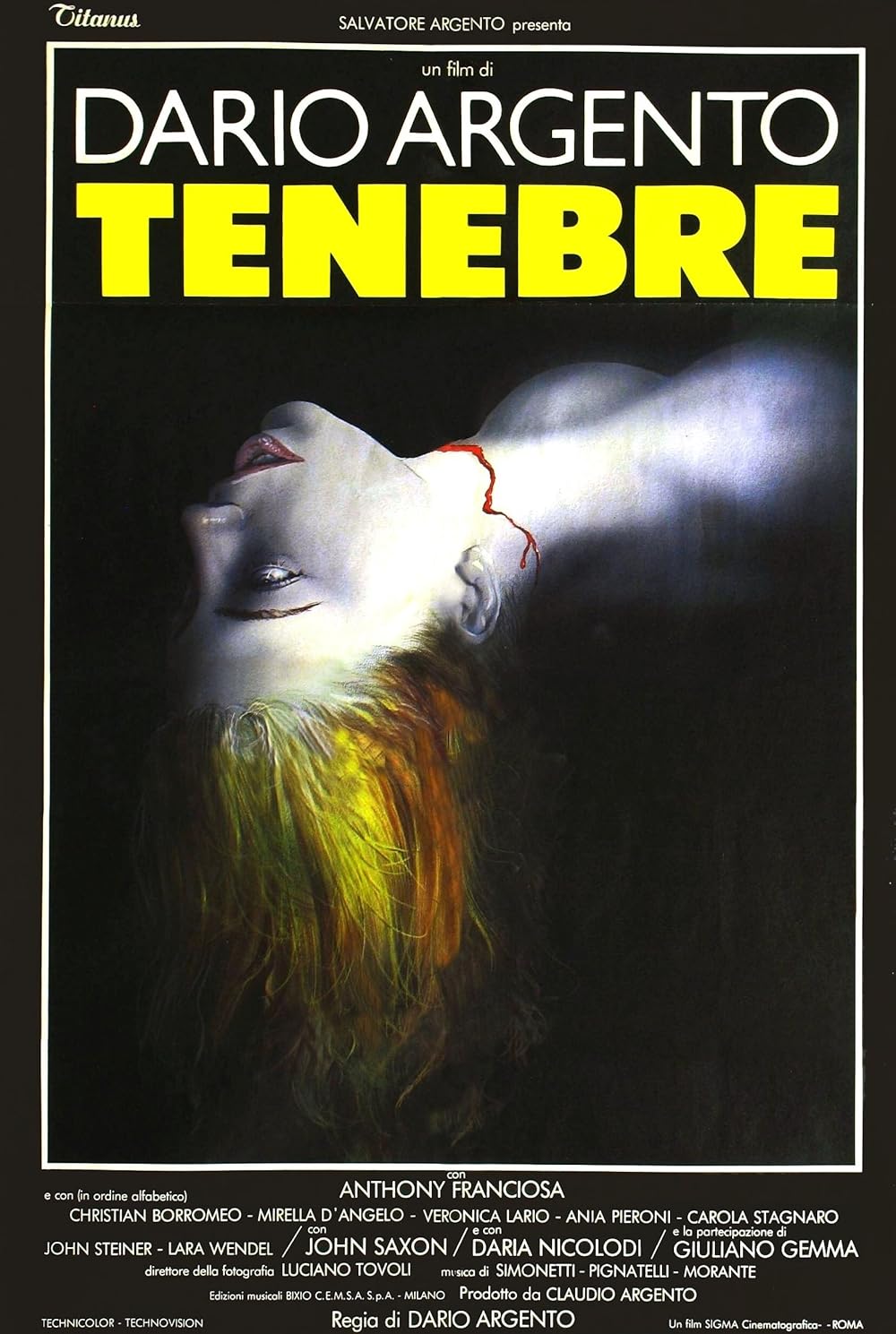
Tenebrae (1982)

By Richard Winters

My Rating: 5 out of 10

4-Word Review: Novelist hounded by stalker.

Peter Neal (Anthony Franciosa) is a successful novelist who travels to Rome, Italy to promote his latest work titled ‘Tenebrae’. Once he arrives, he is soon met by detective Germani (Giuliano Gemma) who advises him that a murder has recently been committed that was done in the style of one that occurred in his book. Neal scoffs that anything he’s written could’ve motivated someone to kill, but soon after he receives an anonymous letter from the murderer detailing how he’s going to commit more killings using methods that Neal described in his book. This then sets Neal off on doing his own investigation convinced that the police have a ‘tunnel vision’ and only he can find the true culprit using his own detective skills that he acquired while doing research on his book.

The film was inspired by writer/director Dario Argento’s own experiences that he had while meeting a fan via the telephone who initially introduced himself as being a great admirer of his work. The calls were friendly in nature at the beginning but became increasingly more menacing as time wore on. Argento eventually was threatened by the fan who claimed that his film Suspiria had affected him mentally and he wanted to harm Argento in the same way his movie had ‘harmed’ him causing Dario to leave the U.S. and return to Italy for his own safety, which is where he began writing the screenplay for this movie.

The sets are atypical for an Argento movie as they lack the garish colors and shadowy interiors most noted in his other films and this was intentional as he wanted to give the film a more ‘futuristic’ look and a one-note color scheme that more closely resembled cop TV-shows, which he felt the story reflected. Visual change is refreshing and helps the action seem more reality based versus in his other movies where everything seemed like it was set in someone’s dark fantasy in some parallel universe though I wasn’t as crazy about the camerawork, which was highly praised by others. Some may find the three-minute tracking shot that goes from one apartment window and across the complex to be captivating, but I found it more dizzying and unnecessary.

The story holds enough adequate suspense to remain moderately riveting and the pounding soundtrack by the rock group Goblin holds the tension. American actor Franciosa is nicely cast though Argento apparently had many behind-the-scenes conflicts with him, but the guy, despite his career decline, looks almost ageless and I was impressed with the opening bit where; despite nearing 60, he’s seen biking down a busy highway amongst tons of traffic with seemingly no worry or sweat. John Saxon though, the only other American in the movie, is badly wasted in a part that doesn’t give him much to do other than make a big deal about his hat that he seems quite fond of. Thankfully though, despite other performers having their voice dubbed, the film was shot in English in order to broaden its American appeal and so both of these actors speak with their actual voices while it’s quite evident with the others that they’re not.

The biggest disappointment for me were the special effects that look cheap and done with no imagination. The blood is bright colored and looks like dye mixed with water. The victims show no actual cuts, or abrasions and the blood appears painted on, or gently poured on via a cup and didn’t look authentic. There are also some ill-advised reaction shots where the film will quickly cutaway and show the victim looking scared with their mouth agape that came off as unintentionally funny. The only real frightening moment comes when a young lady gets chased down a dark street by a large dog who ultimately traps her inside the house of the killer, but other than that I was wanting way more than this film seemed able to give. I did though like one murder scene, which is purportedly one of Quentin Tarrantino’s all-time favorites, that features a woman getting her arm cut off and then proceeding to turn around and paint the walls of her apartment with its spurting blood though even this gets compromised because you can plainly tell it’s a mannequin arm when the ax goes through it.

The story gets a bit convoluted too as it adds in a flashback scene, without telling us it’s a flashback, involving a prostitute, played by Eva Robin’s, who really does spell her name with an apostrophe, and some teen boys that she meets on a beach. Only at the very end does it come into focus what this scene, which gets interspread throughout, means to the story, but until then it’s rather confusing why we’re seeing it and even a bit off-putting. It also features the prostitute as having a perfectly chiseled super model’s body, which I didn’t feel was realistic, and even though it’s supposed to be set decades earlier from the present day no effort was made to make it seem like it was shot in a bygone era.

Spoiler Alert!

The twist ending may be a surprise to some as ultimately, we learn that there wasn’t just one killer, but two of them. One being a TV interviewer named Christiano, played by John Steiner, who kills the first several due to his feelings that the victims were ‘immoral’ and then the last few committed by the protagonist himself. However, I started to suspect Franciosa when he’s found conveniently hit over the head by a rock, which supposedly ‘incapacitated’ him though I thought it was simply a ploy to divert attention away from him, so for me the final reveal was very predictable. Logically it doesn’t completely hold up either as his friend Gianni, played by Christian Borromeo, witness Christiano getting killed by Franciosa, though in disguise, and then runs back to the backyard bushes where Franciosa is supposedly hiding, but it didn’t seem like Franciosa would’ve had enough time to leave the murder scene and get back to the bushes before Gianni got there.

My Rating: 5 out of 10

Released: October 27, 1982

Runtime: 1 Hour 41 Minutes

Rated R

Director: Dario Argento

Studio: Titanus

Available: DVD, Blu-ray, Amazon Video, Plex, Tubi

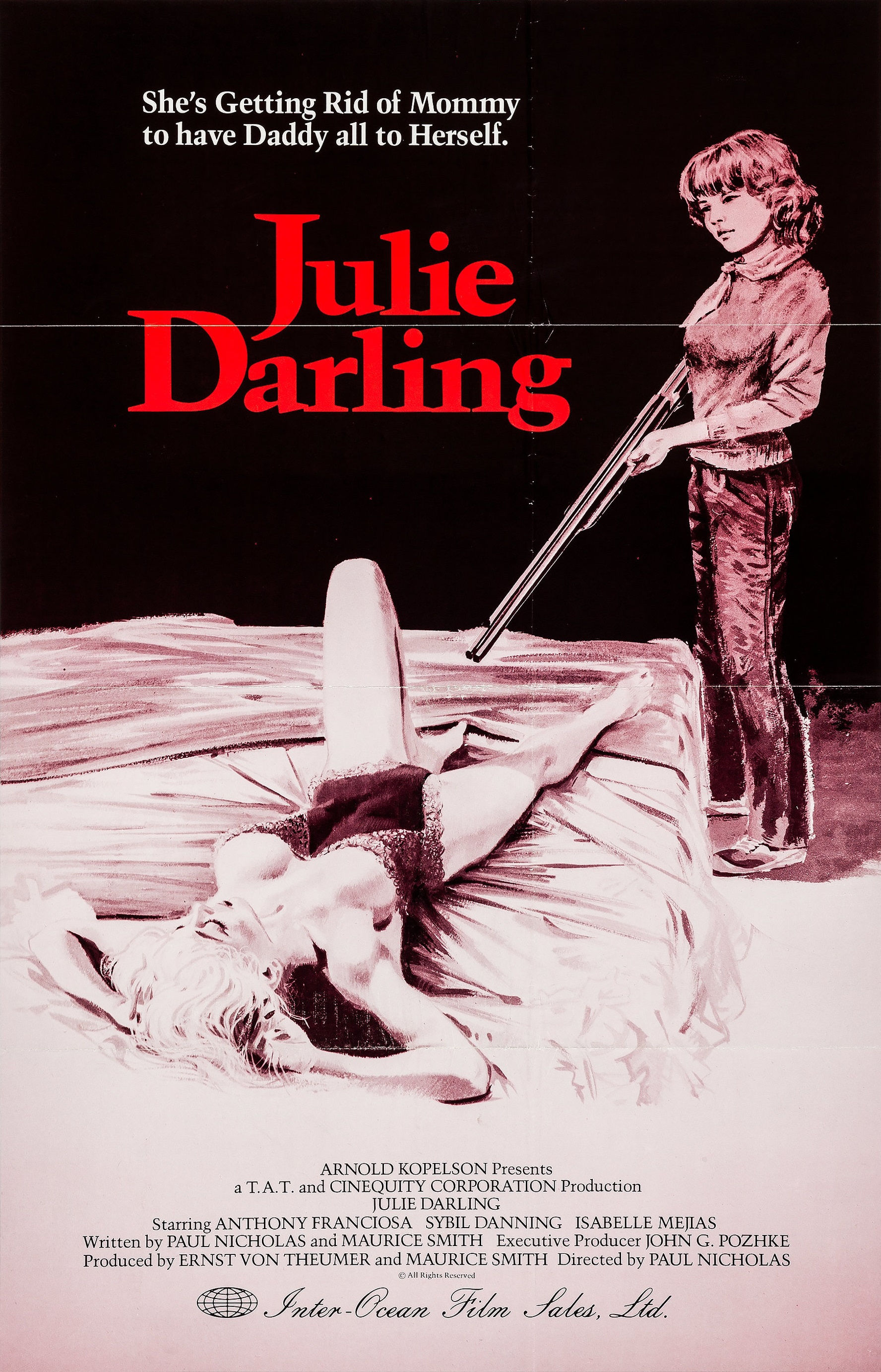
Julie Darling (1982)

By Richard Winters

My Rating: 7 out of 10

4-Word Review: Wanting father to herself.

Julie (Isabelle Mejias) is a possessive daughter with weird interests like having a pet snake in which she enthusiastically feeds it live mice much to the shock of her best friend (Natascha Raybakowski). She also shows an unhealthy affection for her father (Anthony Franciosa) even going as far as fantasizing about making love to him. Because of this she hates her mother (Cindy Girling), so when her mom is attacked one day by the delivery boy (Paul Hubburd) she does not make any attempt to stop it despite having a rifle in her hand. Instead, she watches him crush her mother’s head onto the cement floor, which instantly kills her and then later when he is a part of a line-up at a police station she does not identify him and allows him to go free, but she does this for ulterior reasons. As her father has remarried to Susan (Sybil Danning) causing her jealousy to start all over again and motivating her to ‘hire’ the delivery boy to do what he did to her mother to Susan.

This is a surprisingly inventive story that works for the most part despite the majority of the action taking place in one setting, namely the house, which creates a boring visual. I was a bit taken back why this isn’t better known, or at the very least acquired a small cult following, though the fact that it has very little gore, with the exception of the groin stabbing via a glass bottle, it may have been enough to turn off the horror diehards though if you’re a patient viewer the climax should be rewarding.

Unfortunately, there are some eye-rolling moments as well. The mother’s inability to pick-up on the fact that the delivery guy was coming on to her even after making remarks about her ‘nice figure’, until it was too late didn’t jive with me. I’ve found females are very alert to guys making a pass to them, or ‘flirting’ as it were, so having this woman be completely oblivious, especially when the guy was at the age where you’d expect him to make some moves, proved unrealistic. The father’s relationship with Danning needed better fleshing out. Apparently he was already having a hot-and-heavy- relationship with her without the mother or daughter being aware, which is kind of hard to do, but most of the time the other woman doesn’t want to stay in that position forever and usually pushes the guy to get a divorce, so at the beginning of the movie he shouldn’t have been so conciliatory to the wife’s demands like he is, knowing of course that he already had a ‘spare tire’, and instead used that as an opportunity to request a break-up.

Having Danning move in with the father, and even get married to him, so soon after the wife’s murder should’ve created suspicion with the police chief. Normally the husband is always the initial suspect in these types of investigations especially since the daughter states that she didn’t get a good look at the assailant and could not describe any defining features, which means it could very well have been the husband who did it, or hired someone to do it, in order to get her out of the way and bring his new lover in and the fact that the cops never ever consider this makes them quite inept.

Mejias is badly miscast in the lead. Her moody facial expressions signal right from the start that she’s a psycho nutcase and there’s no character arc, or transition making all of her scenes one-dimensional. What’s worse is that she’s supposedly playing someone who’s 10-to-12, but even with being dressed in clothes for a pre-adolescent she still looks to be at least 16 and in fact was actually 20 at the time of filming. Having an actual age-appropriate child actor in the role with a more angelic face would’ve been far more interesting particularly if she were portrayed as being a ‘good girl’ at first and then had her dark side slowly emerge later. 

Despite all this I still found the twists that occur during the final 30-minutes makes up for the most part the other issues. While it’s remained obscure, I feel it has cult potential. Horror fans tired of the same old formula may enjoy its offbeat nature. 

Alternate Title: Daughter of Death

My Rating: 7 out of 10

Released: May 21, 1982

Runtime: 1 Hour 30 Minutes

Rated R

Director: Paul Nicholas

Studio: Twin Continental

Available: DVD, Blu-ray, Amazon Video, Roku Channel

The Dead Pool (1988)

By Richard Winters

My Rating: 4 out of 10

4-Word Review: Harry marked for murder.

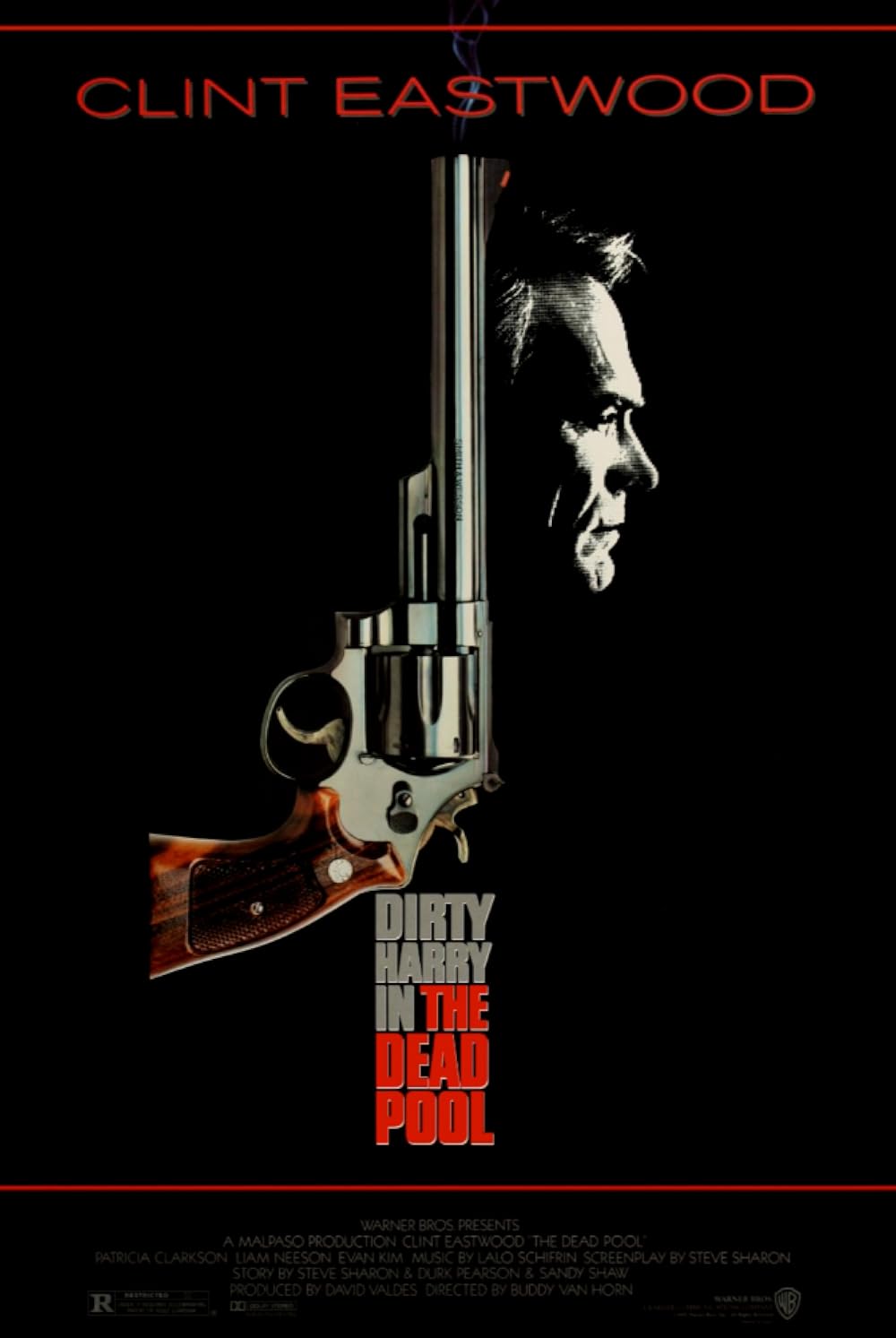
Inspector Harry Callahan (Clint Eastwood) is still getting ambushed by assassins hired by the criminals he puts away. The department decides to assign him with a new partner, Al Quan, (Evan C. Kim) who’s judo skills will come in handy. The two begin working on a case involving a dead pool, which is a list of San Francisco area celebrities that are expected to die soon either by natural causes, or by murder. The list was created by B-horror director Peter Swan (Liam Neeson) who immediately comes under suspicion when one of the stars of his own movie, Johnny Squares (Jim Carrey) turns up dead from what initially seemed like a drug overdose but later deemed murder. Harry is not happy to find his name is also on the list and this leads to an interview by local TV-reporter Samantha Walker (Patricia Clarkson) who wants to do a bio on him, but Harry resists convinced that she’s only trying to exploit the situation for ratings. 

This marked the fifth and last entry in the Dirty Harry series, which was a film Eastwood had not wanted to do, but was a part of the bargain he made with Warner studio in an effort to get his pet project Bird, which was a bio of jazz musician Charlie Parker, financed. Eastwood along with the studio were aware that that film most likely wouldn’t be a box office hit, so he agreed to do this one, which was sure to be a definite money maker. Yet this one ended up being the least successful of all the films from the series and ultimately helped hasten an end to ever producing another one. 

The formula had clearly run its course by this point, and the action is too predictable to be fun anymore. Things start out absurdly right away when the car Harry is driving gets hit with a hundred different bullets and yet our hero comes out completely unscathed, but there’s no way that could’ve realistically happened. Since the film’s theme is a movie-within-a-movie this part should’ve been done as a cameo appearance that Harry did for one of Swan’s movies, which might’ve offered a cute twist, or an even better idea would’ve had Harry getting injured by one of the bullets and no longer able to, at least for a while, use his hand to pull a trigger and thus forced to come up with creative ways to put away the bad guys, which would’ve added a needed wrinkle that would’ve kept this sequel fresh and different from the others versus the stale way that it quickly becomes.

Teaming him up with an Asian American isn’t interesting either. The other entries all dealt with him partnering with a minority, so by this time the concept lacked any edge. It also wastes Kim’s talents as it’s kind of cool seeing him take down bad guys using his karate talents, but unfortunately, it’s only shown once briefly when it should’ve been spread out all the way through. Having Kim and Harry not see eye-to-eye on things or even challenging his approach would’ve offered some dramatic energy, but overall, the scenes between them, where Kim is compliant and easy going just like all of Harry’s previous partners, makes their moments generic and dull. 

Spoiler Alert!

Harry’s relationship with the reporter is equally unengaging. At first the two sparred and I felt that’s where it should’ve remained but having them eventually ‘connect’ saps away all of the potential spice. Even the mystery angle gets botched. Granted we really don’t know who the killer is as his identity during the killings isn’t shown though we’re led to believe it’s Neeson then it turns out it’s somebody completely different, but it’s a character that isn’t shown upfront, so the viewer can’t try to figure out who it is on their own and the ultimate explanation for what motivates the killer is too pseudo psychological. The final confrontation that he has with the villain, played by David Hunt, who again is a weaker actor and not completely right for the part (Neeson would’ve been far better) is so achingly cliched that it’s almost laughable. 

It does feature a unique car chase, which was one of the few elements from Steven Sharon’s original script that the producers decided to leave in, that has Harry driving a regular sized car as he desperately attempts to outrun a miniature toy car that’s packed with explosives. Everything else though is quite formulaic and uninspired. It’s a good thing that this was the last one as any more would’ve just tarnished the brand further though it would’ve been good to have some finality to it. Instead of just having Harry walk-off after killing what seems to be his 500th bad guy he should’ve been shown handing in his badge and retiring as he was at that age anyways and after having gone through all the violent ambushes he had most would’ve done it much sooner.

My Rating: 4 out of 10

Released: July 13, 1988

Runtime: 1 Hour 31 Minutes

Rated R

Director: Buddy Van Horn

Studio: Warner Brothers

Available: DVD, Blu-ray, Amazon Video, YouTube

Sudden Impact (1983)

By Richard Winters

My Rating: 6 out of 10

4-Word Review: Harry investigates revenge killings.

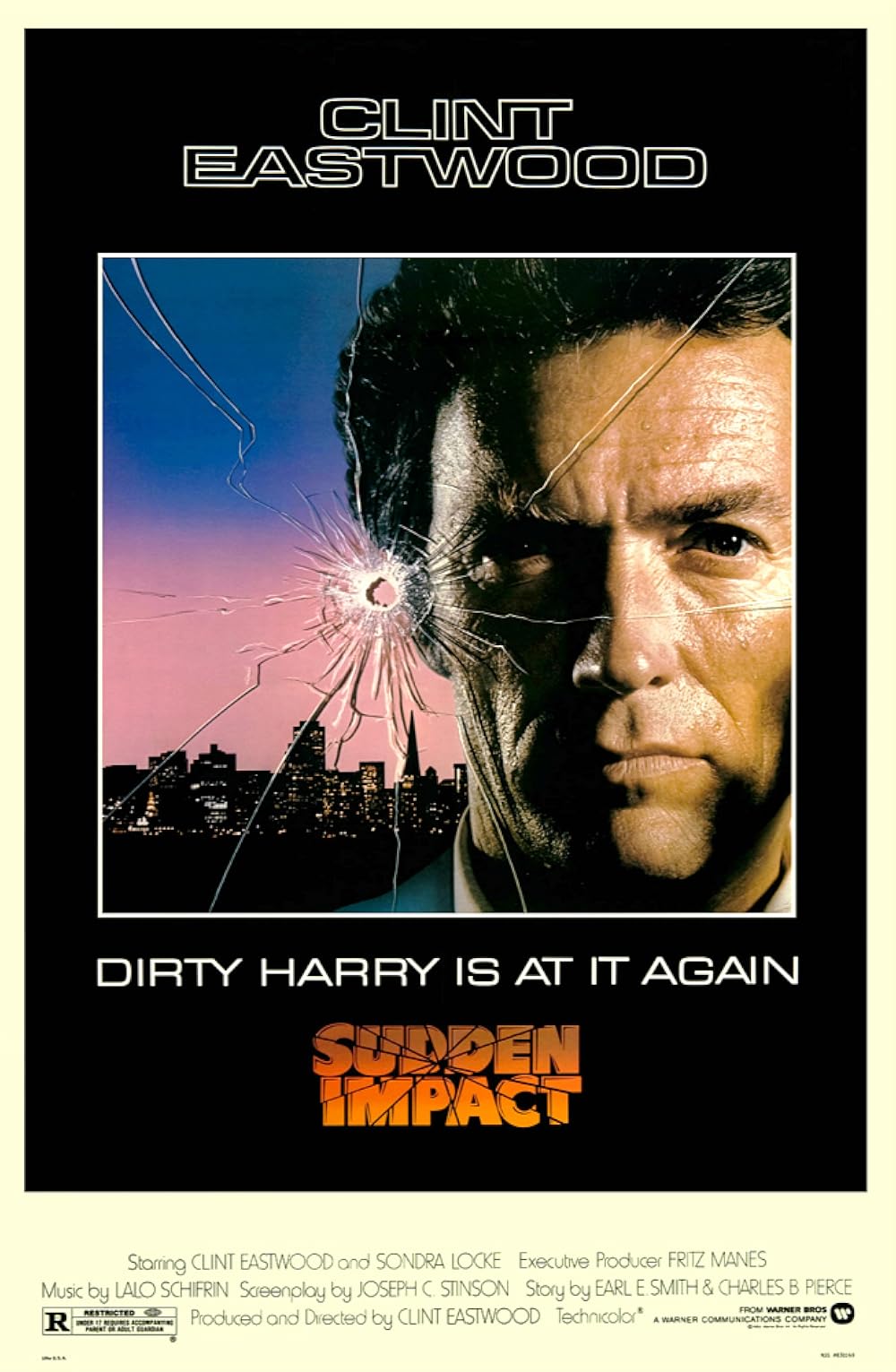
Inspector Harry Callahan (Clint Eastwood) continues working in the San Francisco police department despite his perpetual disregard of proper police procedures, which gets many of the crooks that he has arrested freed due to legal technicalities. His superiors are frustrated with him, but since he does get results keeps him on the force though reassigned to the small town of San Paulo where he works with a sheriff Jennings (Pat Hingle) in hopes he’ll be less problematic. It’s there that he comes upon a case of various men being found shot to death in similar ways. This is being done by Jennifer (Sondra Locke) an artist in residence who 10 years earlier was raped along with her younger sister by a group of men and now she’s out to get her revenge by killing them off one-by-one. Harry is starting to piece together the clues but is surprised that Jennings is reluctant to follow-up on them giving him the impression that the sheriff may have something to hide.

The story is based on a script written by Charles B. Pierce better known for his rural horror movies from the 70’s that were shot in Arkansas and loosely based off of real events like The Town that Dreaded Sundown. This was meant to be a starring vehicle for Locke, but when Eastwood decided to renew the franchise after several years of dormancy, he felt the plotline here would be a good fit for the next Dirty Harry movie and thus hired Joseph Stinson to revise it.

The result is a mish-mash that’s never quite as compelling as it should. For the majority of the runtime Eastwood’s heroics and Locke’s crimes are working in a parallel universe and not connected making it seem like two different movies. Harry’s non-stop shootouts with crooks becomes redundant and cartoonish while Locke’s killings and flashbacks make it too reminiscent of other better-known films like I Spit on Your Grave and Death Wish. The bad guys are caricatures to the extreme making their moments boring and predictable. If the violence wasn’t so over-the-top you’d be convinced, like critic Pauline Kael mentioned in her review, that this thing was meant to be a parody.

Locke and Eastwood are both good and this is the last film that they did together as a couple before their break-up. In Locke’s case I liked how her cynical and brash persona mixes with Eastwood’s brooding and quiet one. Eastwood speaks more here than in the previous entries, but the character doesn’t seem to be evolving. The opening scene inside a courtroom where Harry is shocked to learn that the criminals he apprehended will be set free because he didn’t get a search warrant seemed ridiculous as after being on the force for so many years, and going through the exact same predicaments in the earlier films, that you’d think by now he’d learn his lesson and do things that conform within the legal framework, or at the very least not be so surprised when a judge sees it differently. The number of near-death shootouts he goes through is exhausting making me wonder how he maintained his mental state and didn’t take the vacation time when he’s asked even if he’s ‘not up for it’.

My biggest grievance though is with the structure. I really felt it would’ve worked better had it been approached as a mystery. We could’ve still seen the killings being done, but the identity of the killer would’ve been masked. Instead of Locke being an artist she could’ve been on the police force working on investigating the case and Harry could’ve started up a friendship/quasi relationship with her and at the start been impressed with her work only to slowly become aware that she was intentionally mudding the evidence. Sheriff Jennings too could’ve initially been portrayed as a ‘good guy’ with down to earth sensibilities that Harry liked and then as it progressed would his intentions become more dubious. The flashback sequences, which get interspersed throughout, could’ve instead been saved until the very end.

Spoiler Alert!

The film also continues to reveal Harry’s zig-zagging moral logic. In the first film he was all for playing outside the rules, then in the second installment he came to determine that vigilantism wasn’t the answer. Now here, by letting Locke off-the-hook and not arresting here, he’s acting like street justice is okay. It makes you wonder; is he really growing as a person and seeing things differently or simply floating along with whatever way the plotline wants?

My Rating: 6 out of 10

Released: December 9, 1983

Runtime: 1 Hour 57 Minutes

Rated R

Director: Clint Eastwood

Studio: Warner Brothers

Available: DVD, Blu-ray, Amazon Video, YouTube

The Boss’ Wife (1986)

By Richard Winters

My Rating: 3 out of 10

4-Word Review: She comes on strong.

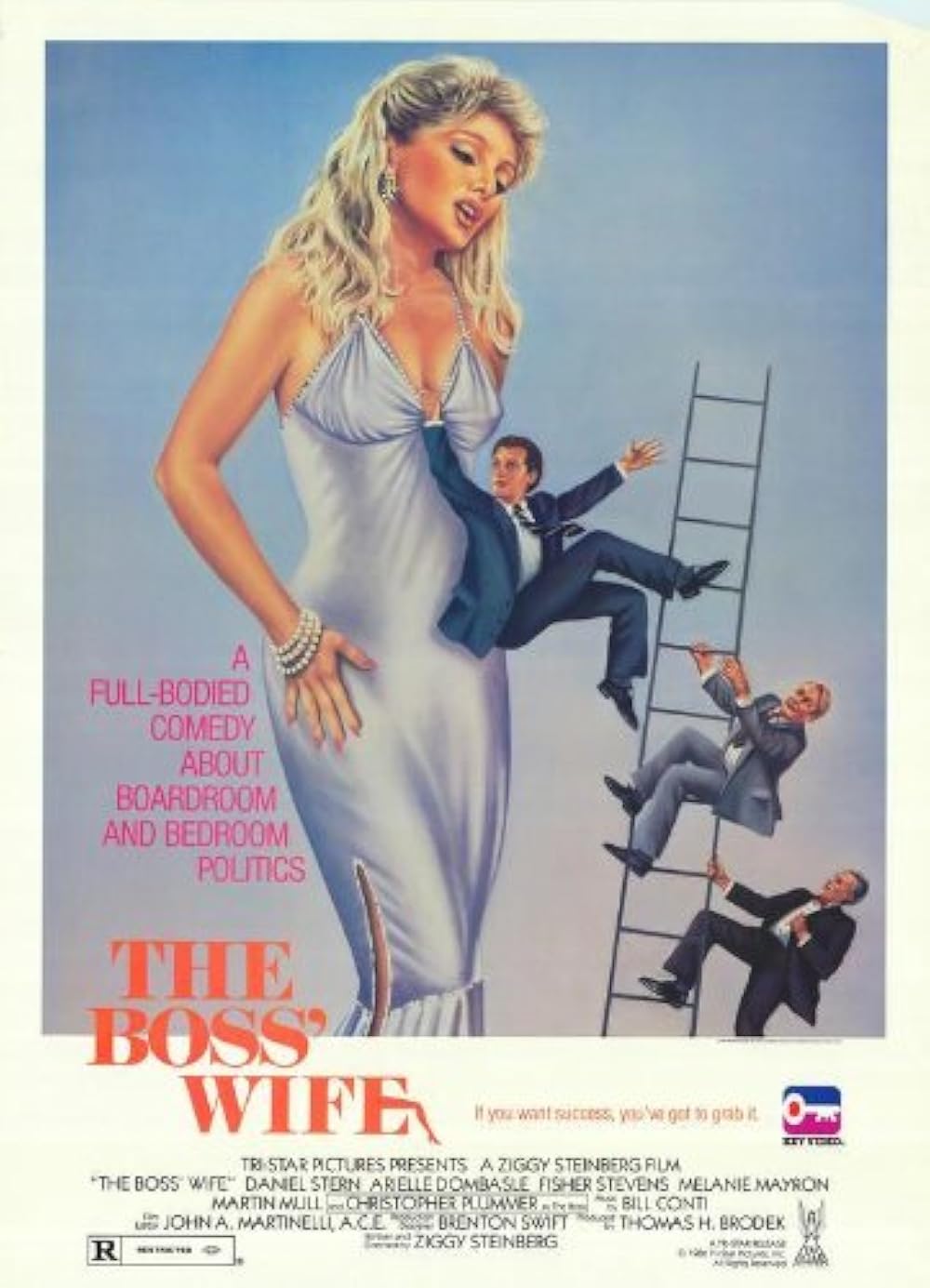
Joel (Daniel Stern) works at a stock firm and wants to impress his boss (Christopher Plummer) with some stock analytics and competes with fellow employee Tony (Martin Mull), who’s a major corporate brown noser. The boss though is not the smartest and misreads everything including thinking that Joel is a smoker, which he isn’t, and giving him the nickname of ‘smoky’. He also thinks that Joel is gay and having a fling with Carlos (Fisher Stevens), which neither is true, but this allows the boss’ wife Louise (Arielle Dombasle) to openly come-on to Joel while the boss, so worried that Joel may come on to him, feigns naivety at what his own wife is doing. Joel tries to avoid the woman because he fears that if he doesn’t, he’ll get caught, which will not only hurt his job advancement, but also his shaky marriage to Janet (Melanie Mayron). 

The film is the product of Ziggy Steinberg who started his careers in the 70’s writing for episodes of TV-shows and then graduating to feature films like Porky’s Revenge and then ultimately Another You, which to date has been the last writing gig he’s done. This film marked his debut as both a writer and director, but the results are so-so. The concept is predictable and better suited for an episode of ‘Three’s a Company’, which he also wrote for, than the big screen. While the attempt is for screwball the pacing is slow and not a lot of gags going on and as satire/parody its target is so obvious and been done so many times before that it hardly seems worth the effort as one could simply watch How to Succeed at Business Without Really Trying and get a lot more laughs. In fact, the only amusing moment comes when Plummer has a toy choo-choo train ride onto his desk carrying drinks and hamburgers and then Stern fumbling around to get ketchup on his burger, which causes a red mess on the boss’ desk.

The acting from the two male leads is adequate. Stern’s character is benign, but he plays it in a likable way making you connect to him and his quandaries. Plummer is quite good particularly with the way he roles his blue eyes every time he comes to a mistaken conclusion to something. Stevens has some good crude moments who initially starts out as Mayron’s employer only to create a haphazard buddyship with Stern while on the train. 

Dombasle though is quite possibly the film’s weakest link. She enters in almost like a fantasy figure and has little dialogue. Why this voluptuous woman would get so focused on Stern for no apparent reason doesn’t make a lot of sense. He does not stand out in any way and therefore a woman like her would overlook and even ignore him. She comes onto him in such a shameless and extreme manner even while in public you could argue she was mentally ill. Even if she’s desperate for sex cause she’s not getting enough from her older husband she could still, with her money, find ways to get it, through like male escorts, than groveling in such a ridiculous level towards a chump like Stern. Later it does come out that she is ‘attracted to men who resist’, which helps explain her motivations a little, but it would’ve been more entertaining had the Mull character paid her, or worked out some deal with her, to come onto Stern in  order to get him into trouble with Plummer, which would’ve offered a nice unexpected twist, which unfortunately the script doesn’t have. 

Spoiler Alert!

The final 10-minutes in which Plummer corners Stern in his rental home with both his wife and Stern’s and the myriad excuses Stern comes up with to try and get out of the jam is sort of funny, but it takes too long to get there. That frantic, hyper-pace should’ve been present from the very beginning and it just isn’t. Stern’s character arc where he finally concludes that the company culture is too conform-ridden for his liking is strained as well. If anything, he should’ve figured that out long before he goes to a company party and asked to where a silly hat like everyone else, which was one of the least problematic things at that place and yet this is where he suddenly decides to ‘draw-the-line’. 

My Rating: 3 out of 10

Released: November 7, 1986

Runtime: 1 Hour 23 Minutes

Rated R

Director: Ziggy Steinberg

Studio: Tri-Star Pictures

Available: DVD-R, Amazon Video, YouTube

Jekyll and Hyde…Together Again (1982)

By Richard Winters

My Rating: 5 out of 10

4-Word Review: Drug changes surgeon’s personality.

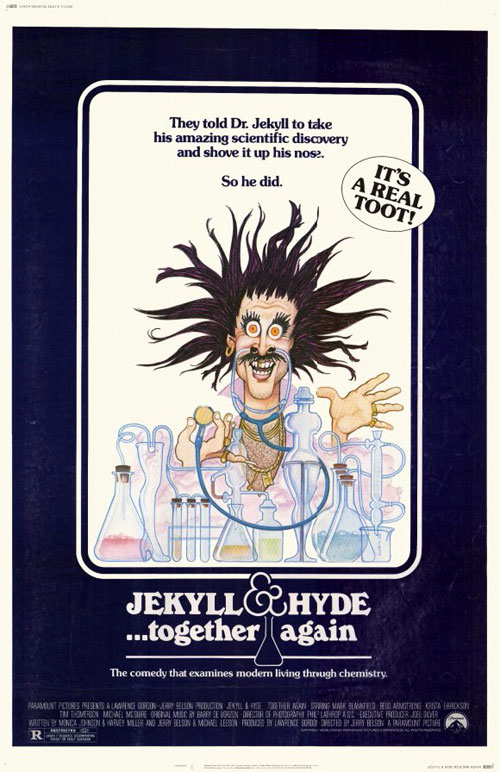
Dr. Daniel Jekyll (Mark Blankfield) is a respected surgeon who’s become tired of the pressures of his job and working for Dr. Carew (Michael McGuire) a hospital administrator whose only concern is the monetary bottom line and who wants Jekyll to perform experimental surgery on ‘the world’s richest man’ (Peter Brocco), which Jekyll resists. In private during his off-hours, he begins experimenting with a white substance while inside his lab, but the demands from his personal and private life cause him to fall asleep where he accidentally inhales the drug, which causes him to have a secondary personality. His new persona is a party animal that is more confident and outgoing to the point of being obnoxious. This split personality causes issues with the two women in his life Mary (Bess Armstrong), a snobby socialite and Ivy (Krista Errickson), a loose living sex worker. 

This marked the directorial debut of Jerry Belson, a very talented comedy writer who wrote for such classic sitcoms as the ‘Dick Van Dyke Show’ before graduating onto movies where he penned scripts for the brilliant satire Smile as well as the dark comedy classic The EndWhile those other films were consistently funny and observational this film panders more on the crude side with a lot of drug references that may have seemed hip at the time but will most likely come off as dated and in bad taste to today’s viewers. It does have a certain Airplane-like element to it where there’s a lot of visually humorous non-sequiturs going on in the background as well as amusing ‘announcements’ that gets said over the hospital’s intercom, which I found to be some of the funniest stuff in the movie. However, there’s just not enough of it to keep it afloat and there’s also a lot of juvenile silly stuff that also gets thrown in, which does nothing but tank the whole thing making it seem like its intent was to be a party movie to be enjoyed by those who are either half-drunk, or high when they viewed it.

The script almost didn’t even see the light of day and stayed stuck in turnaround for several years as most producers and studio execs were not thrilled with it, but in the Spring of 1981 with a director’s strike pending Michael Eisner, the then head of Paramount, choose this script as something that could be shot on the cheap and quickly produced, so that the studio would have something to release should the strike occur. Unfortunately, four different writers were hired on to help doctor it, which only further diluted things making it a comic mishmash that never really gels.

Blankfied, who at the time was best known for his work on the ‘Fridays’ TV-show, which was ABC’s irreverent late-night answer to NBC’s ‘Saturday Night Live’ does not play the main role, at least during his scenes as the strait-laced doctor, all that well, which further hampers things. For one thing he looks creepy when he’s supposed to be normal. As the crazy Hyde character, he’s quite funny, but as a regular guy he’s dull. Tim Thomerson, who plays the narcist plastic surgeon, has the dashing good looks of what you’d expect for a leading man while also being engaging, which is why he should’ve played the Jekyll part and then Blankfield brought in to play Hyde and the whole thing would’ve worked much better. It still could’ve on paper revolved around the split personality of the same person, but just having a different actor play each part. 

Brocco, who’s almost unrecognizable as he sports a long white beard, is good as the elderly, but arrogant rich man and McGuire has one really good scene where he goes on one long, uncontrolled laugh attack. Errickson is cute, which helps things, though it would’ve been great had there been a little nudity on her end, which with the film being so utterly sophomoric and drive-in worthy anyways, you would’ve expected some, but there actually isn’t any. Armstong though plays her part too much like a caricature and thus her moments aren’t interesting and even a bit annoying. 

The scene where Hyde steals a car with the middle-aged lady driver in it and then lodges her head inside the car’s rooftop window, which causes her screams to sound like a siren to others as the vehicle tears down the road, is a gem of a moment. Hyde’s singing performance at an awards ceremony, where he does a striptease to show that he’s got nothing to ‘hyde’, is really inspired too. There’s even a quick scene involving George Wendt as a man with a severed hand who decides he’d rather have his wife ‘sew it back on’ than the doctor. I might even give an extra point to the segment where Blankfield accidentally sniffs up the white stuff in his sleep, but some of the other jokes dealing with the late 70’s drug culture I didn’t particularly care for and hence the movie doesn’t succeed as well, which also most likely helps to explain why it fared poorly at the box office.  

My Rating: 5 out of 10

Released: October 1, 1982

Runtime: 1 Hour 27 Minutes

Rated R

Director: Jerry Belson

Studio: Paramount

Available: DVD, Blu-ray, Amazon Video, YouTube

Dead Ringers (1988)

By Richard Winters

My Rating: 7 out of 10

4-Word Review: Twin brother’s relationship erodes.

Twins Elliot and Beverly (Jeremy Irons) work at a clinic as gynecologists with Elliot being the more outgoing of the two. Elliot routinely dates women many of them patients at their clinic but will then ‘hand them off’ to Beverly who is the shyer of the two and unable to get women without Elliot’s help. Since Elliot likes variety in his relationships, he’s okay with Beverly getting the women once he’s lost interest in them and the women can never tell the difference. Things though begin to change when Claire (Genevieve Bujold) enters into the picture. She, like the ones before her, was a patient whom Elliot is quickly able to hook-up with and then after a brief fling is given to Beverly, but this time Beverly falls for her in a deep way and not so eager to drop her. Claire also becomes aware that she’s been tricked by the two and has a confrontation with Elliot about it while she continues to see Beverly on the side. Beverly though becomes conflicted with his dual loyalties unable to handle how fractured his relationship with his brother, who he used to be quite close to, has become spiraling him into a depression that ultimately leads to a dangerous drug addiction. 

In 1981 David Cronenberg became interested in doing a movie about twins and producer Carol Baum sent him articles about Steward and Cyril Marcus. These were identical twins who were gynecologists working and living together in New York City. On the morning of July 17, 1975 both were found dead inside Cyril’s cluttered apartment in what had initially been perceived as being a suicide pact, which was later ruled out, but both did die within a few days of the other. While their deaths generated may articles and even a novel the cause to what circumstances lead to them dying together has remained open and thus Cronenberg decided to ‘answer’ that question with this story though he had to go through many years of different producers, screenwriters, and various different drafts before this version was finally given the green light.

If you’re a fan of Cronenberg, particularly his gore, which he’s best known for, then you may be disappointed with this as there really isn’t much. There are still some disturbing moments including the garish genealogical instruments that Beverly pays an artist, played by Stephan Lack, to create which he then plans on using on one of his patients, to the shock of his medical staff, which is a creepy moment. There’s also a dream sequence where Claire bites off a membrane connecting the two brothers, which is cool, but brief. There was also a scene shot that had the head of one of the twins coming out of the stomach of the other one, but this didn’t go over well with the test audiences, so it got cut, but I really wished had been left in. 

It’s really Irons and his incredible performance as the twins that makes this such an engaging movie to watch. Having one actor playing dual roles has certainly been done before, but never quite this effectively. Even though they look exactly alike I really got the sense these were two different people and Irons ability to craft such diverse personalities and postures, this was achieved by putting his weight on the balls of his feet while playing one of them and having his weight put on his heels while playing the other helps to, in a very subtle way, create a strong distinction and a hypnotic presence that sucks you into the story and never lets you go. 

My only quibble is that rarely have I seen twins that you couldn’t tell apart in some way. I noticed that Irons did have some minor moles on his right cheek and then another on the left side of his head near his eye. In the movie both of the brothers have these lesions in the exact same place, but I think in reality they wouldn’t, so they could’ve masked the moles on one of the characters through make-up, so it would only show on one of them and that could’ve been a way to tell them apart physically. There’s also the issue with one of them given a women’s name, which Claire does question at one point. Beverly gets quite defensive when it’s brought up insisting that his name is spelled in the ‘masculine’ way, but on the credits it’s spelled out just like it would had the name been given to a female, so I felt there should’ve been more explanation of why he’d been given an unusual name as it was something that would certainly come off as odd to many and I don’t think I’ve ever heard of a man with that name. 

I also had some problems with Bujold’s character as she seems to be plopped in solely to get the story going and start the process of having the brother’s strong bond dissolve, but for a character to generate such a pivotal thing I think she should’ve stood out more. What was it about this woman that created a division between the boys that the other women hadn’t? I would’ve liked seeing her more involved in the conflict possibly confronting Elliot in an angry way, not the conciliatory one we see here, and forbidding Beverly to see him, which would’ve helped make her more prominent versus just being a story device. 

My Rating: 7 out of 10

Released: September 23, 1988

Runtime: 1 Hour 53 Minutes

Rated R

Director: Michael Cronenberg

Studio: 20th Century Fox

Available: DVD, Blu-ray, Peacock, PlutoTV, Roku,Tubi, Amazon Video, YouTube

Mommie Dearest (1981)

By Richard Winters

My Rating: 6 out of 10

4-Word Review: Treating her children cruelly.

Joan Crawford (Faye Dunaway) is a famous actress who longs to have children, but unable to have any of her own. The adoption agencies reject her attempts to get a child because she’s divorced and a career woman, so she gets her boyfriend Gregg (Steve Forrest), who’s rich and influential, to pull-some-strings, which ultimately gets her a baby girl named Christina (Mara Hobel). Joan though proves to be a very strict parent and enforces harsh rules, which Christina rebels from and this leads to even harsher consequences. As Christina grows older, (Diana Scarwid) she begins a life on her own away from her mother including a fledgling acting career where she stars in the soap opera ‘Summer Storm’, but when she gets ill her mother, desperate to recharge her failing career, takes over Christina’s role while she’s recovering in the hospital that further erodes their already tenuous relationship. When Joan ultimately dies and Christina finds that both her and her brother have been written out of the will she decides at that point to write a tell-all book that will scratch away the glossy image of her famous mother and instead paint a ‘true’ portrait of who she really was.

The film is based on the autobiography of the same name written by Christina Crawford that was published in 1978 to much controversy as both family and friends denounced it as sensationalized and not an accurate portrait of Joan. Nonetheless it was a best seller, which quickly lead to a movie deal. Dunaway was excited to take the role convinced it would lead to her second Oscar, but instead, despite being directed by the talented Frank Perry, it was perceived as camp by both the critics and the public alike forcing Paramount to retool its marketing campaign selling it more as a dark comedy much to the dismay of the film’s producer Frank Yablans, who insisted it should be perceived as a serious drama.

On the one hand I think some of it is true. I have no doubt that Joan was a very strong-willed woman who had very particular ideas on child-rearing. Anyone who’s scratched-and-clawed their way to the stardom and able to maintain it over several decades would certainly have to be a driven person and I’m sure some of that would have to rub off in their home life. The scenes where she pushes Christina to be a better swimmer, so that she learns to understand the competitive world out there, made sense and parents pushing their children can happen a lot. Having her being controlling and a clean freak wasn’t all that surprising either and these scenes felt honest and revealing.

The problem is that the film makes no attempt to humanize Joan and instead becomes obsessed with portraying her as being a monstrous kook that scares everyone who’s around her including her dedicated servants who act in petrified fear every time they come near her.  The film fails to show any nuance and becomes a big trash feast intent at making her look as awful as possible and leaving no room to even consider the other side, which because she had already died by the time this movie was released, she wasn’t able to give. The most ridiculous moment, which wasn’t in the book, is when she goes into Christina’s room late at night while wearing white face cream that makes her appear almost demonic and then flies into a rage when she notices a wire hanger in her closet that is so over-the-top I’m surprised the cast and crew didn’t break out laughing while it was being shot.

There are issues with Christina too as she’s a little too good to be true. There are several scenes that had it been tweaked just a bit could’ve made her the difficult one instead of the mother. Case in point is when she refuses to do things that her mother asks that could easily be seen by some as Christina being a mouthy brat unwilling to do as she’s told and Joan simply stepping to create some discipline, which is why some attempt at balance would’ve helped and made it seem less like a cheap soap opera.

Spoiler Alert!

Another dumb scene comes near the end when Joan jumps on Christina and begins to strangle her and needs to be pulled off by two other women in the room (Rutanya Alda, Joycelyn Brando). It makes it look like she was close to dying had the two ladies not intervened, but Christina was at the time a grown woman and much younger than Joan, so she should’ve been able to defend herself and fight back. Having her essentially just lay down and take it seemed unrealistic and turning it into an all-out physical cat fight between the two would’ve far more entertaining and believable. Yet despite all this the production values are still top notch and in a tabloid sort of way it’s entertaining.

My Rating: 6 out of 10

Released: September 16, 1981

Runtime: 2 Hours 9 Minutes

Rated PG

Director: Frank Perry

Studio: Paramount

Available: DVD, Blu-ray, PlutoTV, Amazon Video, YouTube

Nothing Personal (1980)

By Richard Winters

My Rating: 2 out of 10

4-Word Review: Saving seals from slaughter.

Roger (Donald Sutherland) is a college professor who becomes aware by one of his students, Peter (Michael Wincott), that seals are being systematically slaughtered by a construction company trying to build homes in an area populated by them. Roger then goes on a crusade to stop this and hires the services of Abigail (Suzanne Somers) a young lawyer bent on proving herself. The two though come up with major roadblocks when they attend the stockholder meetings of the company. While the CEO Ralston (Lawrence Dane) seems to listen to their concerns the company still decides to push through their construction agenda prompting Roger and Abigail to find other ways to prevent the homes from going up, which then causes the heads of the company to resort to nefarious means to stop them.

The screenplay was written by Robert Kaufman and sold in 1972 but then languished in the studio’s slush pile as it couldn’t find any director interested in filming it. Then in 1980 after the success of Love at First Bitewhich had also been penned by Kaufman, director George Bloomfield decided to take a stab at this one, but for tax write-off purposes it was filmed in Canada despite the setting being Washington D.C.

A lot of the issue with the movie, which was not well received by audiences or critics alike, and ended up tanking at the box office, is that it’s just not all that funny. The humor is dry and amounts to a few throwaway lines said by the characters just before the scene cuts away and if you’re not listening carefully enough, you’ll miss it though even if you do catch it it’s nothing that’s going have you rolling-in-the-aisles. Would’ve worked better had it been done as a drama, or even a thriller, as neither the comedy or romantic elements add much and in a lot of ways detracts from the main story.

While Sutherland is traditionally a good actor his presence here hinders things. He comes off initially as completely oblivious to what’s happening and only manages to get informed by Peter who’s very passionate about the cause and even interrupts a class that Sutherland is teaching to inform him about it. Sutherland immediately poo-poo’s the news and only after doing more research does he decide to take on the cause, but I felt that Peter, who gets largely forgotten and not seen again, should’ve been the one to lead the charge since he was already heavily into the issue and being a student would have more time on his hands while Sutherland was working a job and therefore shouldn’t have been able to devote his full attention to it like he does. Having a romantic relationship grow between Peter and Somers would’ve worked better as they seemed more around the same age while Sutherland looks to be more like her father.

Somers’ character is quite problematic. Initially she’s someone that wants to prove herself and be taken seriously but then turns into a complete slut almost overnight as she gets in bed naked when she invites Sutherland into her room and immediately makes overtures that she wants to get-it-on. This though is not a proper way that someone who wants to gain the respect of her peers and clients as she moves up in the business world should be behaving and therefore it’s hard for the viewer to take anything that she says or does seriously.

Too much time also gets spent on them fooling around to the point that it seems they’re more into sex than saving the seals. The movie should’ve waited until the very end to introduce some romantic overtures after they had succeeded with their mission when it would’ve been more appropriate, but the way it gets done here makes them seem like vapid juveniles with hyper hormones and not much else.

The film though really jumps-the-shark when the CEO of the company and his trusted assistant, played by Dabney Coleman, resort to criminal means in an effort to stop Sutherland and Somers from shutting down their project. Even going as far as trying to kill them by trapping them inside a barn and then setting it on fire. There are certainly CEO’s out there that can be corrupt, but they have enough money that they’d pay someone else to do their dirty work and would most certainly not be doing it themselves. Supposedly these are successful businessmen that have worked their way up the corporate ladder, so why throw it all away by so obviously going after their foes, which is something that could easily be handled through bribery.

Spoiler Alert!

The ending, which was described by one IMDb reviewer as being of the ‘surprise’ variety and makes sitting through the rest of the movie ‘worth it’, had me more confused than anything. It has Dane and company planning to build more homes on a different site that would require them to kill off more wildlife. They then get a knock at the door and when they open it, it reveals a smiling Sutherland and Somers, but it’s not clear whether they appear in order to stymie this new project or are somehow in on it. Since Dane and Coleman have annoyed expressions when they see them I think it’s meant to show the former, but the IMDb reviewer thought it meant the later and I really couldn’t blame anyone for not being sure, which makes this yet another problem for a movie that already had a ton of them.

My Rating: 2 out of 10

Released: March 28, 1980

Runtime: 1 Hour 40 Minutes

Rated PG

Director: George Bloomfield

Studio: American International Pictures

Available: DVD-R, Tubi, Amazon Video