Category Archives: 80’s Movies

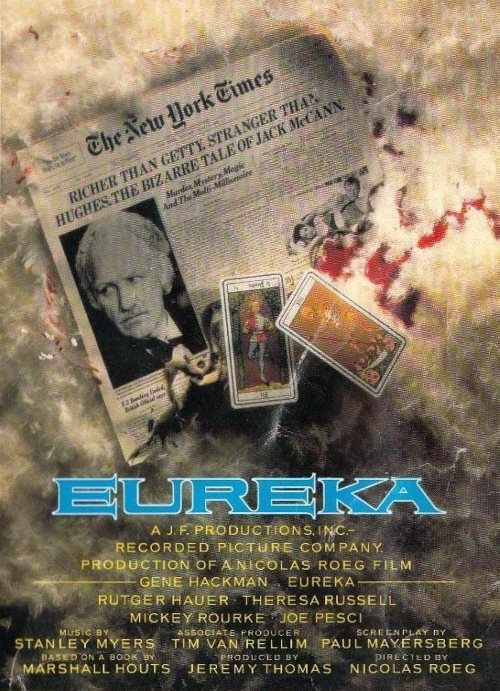
Eureka (1982)

eureka1

By Richard Winters

My Rating: 6 out of 10

4-Word Review: He discovers some gold.

Jack (Gene Hackman) has been searching the Yukon for over 15 years in the hopes of one day coming upon some gold. Then one day he finds it and becomes super rich. 20 years later he’s living on his own island, married, and with a grown daughter named Tracy (Theresa Russell). Jack though has grown ornery through the years and has managed to alienate most of his family including Tracy’s husband Claude (Rutger Hauer) whom Jack can’t get along with and the two regularly argue to the point that it also affects his relationship with his daughter. Jack is also at odds with the local mobsters headed by Mayakofsky (Joe Pesci) who wanted to open a casino on the island and are willing to resort to any violent means necessary in order to get that done.

The film is based loosely on the life of Sir Harry Oakes who, like with the main character here, scoured many countries looking for gold for 15 years before finally laying claim to a fortune. He then retired to the Bahamas and ultimately was found murdered in 1943 in a crime that has remained unsolved. The studio though did not know what type of audience to aim the film to and thus shelved it for a year only to release it to limited theaters where it managed to recoup a paltry $123,572 out of its initial $11 million budget making it one of the biggest box office bombs in history.

As a visual exercise, given its director, its a spellbinding ride. Director Nicholas Roeg approaches it as a fable-like tale and creates the artic in a surreal type of way giving it an almost outer-worldly look and feel. To an extent this works and there’s a few memorable scenes including a barefoot man lying in the cold who blows his head-off, via a loaded gun, in one very unexpected, shocking moment that’s very realistically grisly. The death by blowtorch, which happens a bit later is effectively vivid as well. However, there’s other metaphysical elements like a mysterious stone that gets handed to Jack that alludes a bit too much to a magical quality and takes away that this is actually based on a true story and instead makes it seem like it’s all just a made-up metaphorical fable, which starts to have a pretentious quality.

The plot is too thin and the second act labors badly. Joe Pesci is a dynamic actor, but here his part is boring and he doesn’t come-off as threatening enough to give his scenes the proper tension. There’s also no insight given to why the gangsters choose to pick-on Jack, as this is a man who is quite rich and could hire his own protection and enforcers and not someone you’d think could be easily intimidated. So why bother with him at all and just find another island to build a casino on? In the real-life incident Harry Oakes went out of way to try to ban casinos from the entire island nation as he did not approve of gambling and thus caused the ire of the criminal underworld, but the movie doesn’t bother to explain this and thus makes the motivations of the bad guys confusing.

Acting-wise its a joy to watch especially Hackman. He has played so many heroes in his film career that it’s fun seeing him be a jerk and he does it well particularly when he gets on his alcoholic wife about ‘laying off the sauce’. Ed Lauter, who’s usually a heavy, is entertaining with this constant nervous look on his face as he ends up being the reluctant middle-man who gets played by both sides. Rutger Hauer is brilliant as usual giving each of his moments a creepy finesse as only he can do. Two of his more memorable bits are when he swallows a small piece of gold while in Jack’s presence and when he has a meltdown at a formal dinner party and angerly, even frighteningly, demands they all must go home.

Of course being that she’s the director’s wife you get ample visuals of Theresa Russell with and without clothes on. The two became a couple while filming Bad Timing a few years earlier and despite a nearly 30-year age difference got married. I’ve often think it’s odd though when a husband directs a movie in which she’s in bed naked with another man, in this case Hauer, who’s also sans clothes. Don’t know if many other husbands would like that idea as the erotic scenes weren’t necessarily needed though I kind of wonder if it’s not another case of the trophy wife syndrome where the old guy wants to brag to the world: look at this hot little number I get to go home to and you don’t and thus the nude scenes are just there to make all the other guys jealous.

Spoiler Alert!

The climactic court room scenes, in which Hauer is placed inside a cage during the proceedings, aren’t effective. Mainly because he acts as his own lawyer and questions Russell on the stand who goes on a long, teary-eyed, rant about her father and his perceived psychological motives, that ceases to be the proper question/answer decorum that would be expected in a regular court setting. It’s unlikely that any judge would let this go on the way it does, or that the jury, or other attorneys would be so captivated as they are and not begin rolling their eyes after awhile, or objecting to the histrionics. Having Hackman killed off doesn’t help things as he was the guy the viewer most connected with while Hauer was a creepy guy who behaved erratically and expecting the audience to suddenly emotionally side with him at the end was an overreach.

Released: May 20, 1983

Runtime: 2 Hours 10 Minutes

Rated R

Director: Nicholas Roeg

Studio: United Artists

Available: DVD-R, Blu-ray

My Bodyguard (1980)

my1

By Richard Winters

My Rating: 7 out of 10

4-Word Review: Hiring protection from bullies.

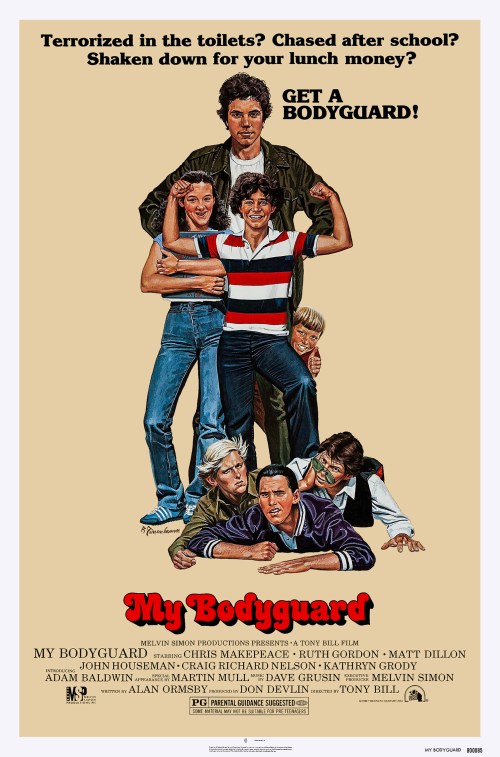
Clifford (Chris Makepeace) is a new student at a tough Chicago high school who finds himself at odds with the bullies who are headed by Melvin (Matt Dillion), who goes by the nickname ‘Big M’. He and his cronies want Clifford to pay them ‘protection money’ in order to defend him from Linderman (Adam Baldwin) who is a big, loner kid that supposedly killed his own brother. Clifford refuses and thus gets constantly hounded by them, so he decides to go to Linderman and offers him a deal where he’ll pay him some money each week and even agree to do his homework if he’ll become his bodyguard. At first Linderman declines, but eventually comes on board, which is enough to get Big M and his gang to leave them alone. Then a few days later Big M returns with his own ‘bodyguard’ named Mike (Hank Salas), a big muscular guy, who challenges Linderman to a fight, which he at first resists.

This teen movie is unusual in that it was not based off of a novel as its source material, even though you’d be convinced it was, and although a novel version of the story was eventually written after the film was released, it’s ultimately an original idea by screenwriter Alan Ormsby. Ormsby was at that point better known for writing low budget horror movies, with a couple of them he even starred in, and seemed the least likely to have penned something as good natured as this. It also stands out from other teen movies in that its music isn’t some pounding rock score, but instead soft classical that helps give it distinction and let it stand-out from just about all the other high school flicks out there particularly those from the 80’s.

Kids today may not relate to a school where every student doesn’t have an I-phone, a laptop, or piercings, but if you were a teen back then this movie captures that experience to a T. Everything from the bland school lunches where you had to drink milk out of a small carton to the creaky old school buildings (this one was filmed on-location at Lake Forest High) gets recreated. The teens are all realistically geeky and awkward, even Joan Cusack, in her film debut, looks nerdish especially as she smiles exposing a mouth full of metal. Many who see this, or see it again, it will bring back a fondness to their own school days to the point it may even make you feel you’re right back there.

Chris Makepeace is perfectly cast as a sensitive youth who must learn to ‘make connections’ or ‘network’ his way around the new environment and use what social skills he has to maneuver through the teen jungle. Dillon, in only his third movie, makes for a believable bully and Baldwin, in his film debut, is also excellent and while his character doesn’t say much he gives off a very effective almost creepy stare that proves memorable. In support I really got a kick out of Paul Quandt, who’s only film appearance this was, as a scrawny tyke who befriends Makepeace and always supplies funny side comments and reactions. You also get to see Joan and Jon Cusacks’ dad, Dick Cusack, as the school’s much put upon principal.

The only segments and characters that really don’t work are the scenes involving Makepeace’s home-life that are a bit unusual since he resides in a hotel that his father, Martin Mull, manages. He has no mother since she died in a car accident years earlier and Mull behaves more like a big brother, who is into looking at naked women with his son through their telescope, than any type of disciplinarian. Ruth Gordon plays Mull’s goofy mother and while Gordon is quite amusing her scenes go on too long and don’t have much if anything to do with the main plot. Mull’s moments don’t help either though one could argue that his scenes do have some outside connection to the theme as it shows adults have to deal with their own type of bullies in this case his crabby and demanding boss, played by Craig Richard Nelson, who is always threatening to terminate his employment.

Spoiler Alert!

The ending is different too in that it essentially says fighting may sometimes be necessary though many administrators of today try to persuade against the idea that violence is the answer and there are other more constructive ways to tackle conflicts. Of course watching Makepeace clobber Dillon while Baldwin handles Salas is quite satisfying especially since the whole rest of the movie is watching the kids, including even Baldwin, getting humiliate by the bullies, so the bad kids do ultimately get a much deserved come-uppance. However, just because one person ‘kicks some other person’s ass’ means only that they were the more skillful fighter, or just bigger physically, and not necessarily the moral superior.

Still it’s a very pleasant movie that has a rites of passage/ fleeting moment in time quality. The situation is portrayed as a growing pains issue and not a dire one. This is well before mass shootings and all of the ugliness you see happening in schools today where everything spews out into the adult world. Here it was still done at a time where these problems were contained within the school walls, which is the best thing about it.

My Rating: 7 out of 10

Released: July 11, 1980

Runtime: 1 Hour 36 Minutes

Rated PG

Director: Tony Bill

Studio: 20th Century Fox

Available: DVD, Blu-ray, Amazon Video, YouTube

Crimes and Misdemeanors (1989)

crimes1

By Richard Winters

My Rating: 7 out of 10

4-Word Review: Threatening to tell wife.

Judah (Martin Landau) is an eye doctor whose mistress of several years, Dolores (Anjelica Huston), is threatening to tell his wife (Claire Bloom) about their affair. Judah tries to persuade her not to, but she insists on going through with it unless he gets a divorce, which he refuses to do. Feeling he has no other option he hires his brother (Jerry Orbach) to do a hit on her in order to get her off of his hands. Once the job is done Judah then becomes wracked with guilt and though he had been a non-believer for many years begins to rekindle the fear of the wrath of God for what he’s done. Meanwhile Cliff (Woody Allen) is a struggling documentary filmmaker who gets a job filming a movie of a obnoxious comedian (Alan Alda) who’s highly narcissistic and difficult to deal with.

The film is unusual in that it has two correlating stories that go on at the same time with very little that links them. The only connecting thread is a Rabbi, played by Sam Waterston, who is friends with both Alda and Landau, as well as Cliff and Judah getting together briefly at a party to have a discussion near the end. Otherwise it’s like two separate movies with one being semi-funny while the other is made to be more like a searing drama and character study. While it’s engaging most of the way I felt the segment dealing with the egotistical celebrity wasn’t interesting or comical enough to be worth having especially since Alda didn’t seem able to convey an obnoxious jerk in a way that was amusing. The film also goes off on several tangents including Cliff counseling his sister about a date she had where a man tied her up and defecated on her that didn’t have anything to do with the main story and just taking up runtime for no reason. There’s also segments that I did find intriguing like the mysterious phone calls Judah gets late at night where the caller immediately hangs up when Judah answers that I felt should’ve been explored more.

A good way to have solved this and would also have tied-in Allen’s character better would’ve had him filming a documentary on Judah who could’ve been portrayed as this heroic eye doctor who saved the vision of underprivileged kids, or even gone to Africa for awhile to help heal the vision of the kids there and thus his efforts were considered a suitable material for a film. Alda’s character could’ve been cut out totally and not missed. Judah could’ve still be conniving behind-the-scenes about how to get rid of the other woman and thus the irony of him being lionized in front of the camera, but a complete jerk behind it would’ve been even more accentuated and interesting.

As it is the moments with Landau are still quite strong. His career during the 80’s had nearly tanked with him having to accept co-starring roles in low budget horrors just to keep busy only to finally get his name revitalized with his role in Tucker: A Man and His Dreams in 1987 that lead to an Academy Award nomination for best supporting actor and helped him get better quality work including this one. Here his expressive blue eyes come into play particularly after the dirty deed gets done and he begins having reoccurring visions of himself as a boy going to synagogue and quarreling with his moral depravity, which is effective.

This is also the rare movie where Allen plays someone who is actually likable. Normally his incessant whining and misguided belief that he’s more sexually attractive than he is and can bed any hot women I’ve found annoying, but here he’s more of a ignored chump who’s still struggling to make a name for himself and this makes him endearing. Instead of aggressively coming onto women in tacky ways he instead shyly courts Mia Farrow who plays a sort-of nerdette here and their scenes together are cute.

Spoiler Alert!

The ending in which Allen and Landau meet briefly and he tells Allen about this ‘great’ movie idea in which a husband finds away to kill off his mistress, which is essentially what he’s really done, and feels no guilt afterwards doesn’t really work. For one thing it’s hard to believe that he’d wake-up one day, as he describes, and no longer feel any remorse and could just go on normally as he had felt so guilty about it earlier that you’d think it would’ve left some sort of lasting affect. The viewer should’ve also seen this realization play-out visually through the story versus having him just describe it.

I realize Allen’s whole point was to show that the universe doesn’t dispense justice and sometimes people really can get away with murder and can go on living happy lives unlike in the movies where it’s expected that the bad guy should suffer some consequence. Yet realistically I actually think Landau would’ve been caught, or at least been more of a suspect than he is. He was already questioned by the police earlier due to all the phone calls he had with the victim and I don’t think his flimsy excuse would’ve sufficed. Since he had been to her apartment many times including even on the night of the murder that most likely one of the other tenants would’ve spotted him coming and going and all the police would’ve had to do was show his picture around for him to be easily fingered by someone else living in the building. Thus watching Landau confidently leave his discussion with Allen thinking he could go on happily with his life only to have a detective there with handcuffs would’ve been funnier and in a lot ways ultimately more believable.

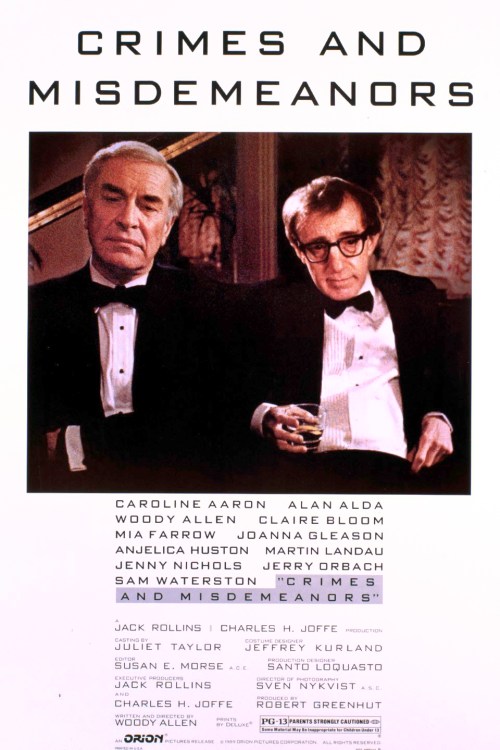
The film’s promotional poster, as seen above, doesn’t get the mood of the scene right. If you look at the poster it seems like Landau is the despondent one who’s suffering from inner turmoil while Woody is nonchalant, but if you watch the movie it’s Landau that is at complete ease while Woody is in turmoil over Mia getting married to Alda, so the poster is essentially misleading.

My Rating: 7 out of 10

Released: October 12, 1989

Runtime: 1 Hour 44 Minutes

Rated PG-13

Director: Woody Allen

Studio: Orion Pictures

Available: DVD, Blu-ray

The Wild Life (1984)

wild

By Richard Winters

My Rating: 5 out of 10

4-Word Review: One week before school.

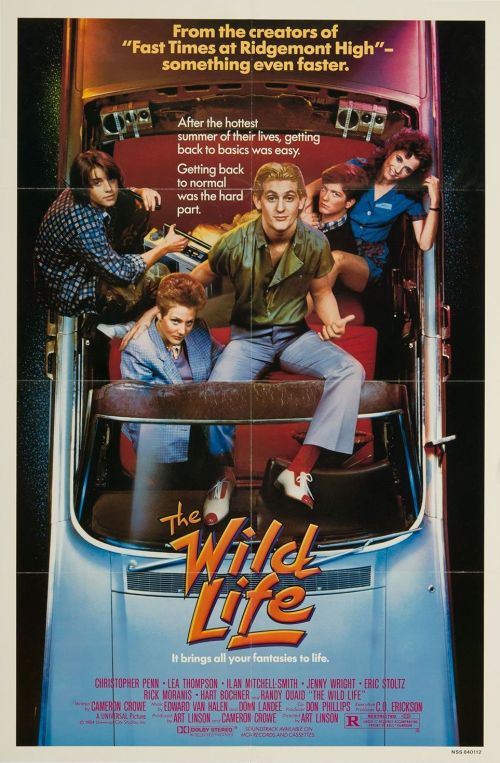
The summer is winding down and the teens in suburban Los Angeles get ready to head back to school. Conrad (Eric Stoltz) has just graduated the previous year and is now planning to move into his own apartment, but finds it to be expensive and his salary working at a bowling alley doesn’t pay enough, so his buddy Tom (Chris Penn) volunteers to move in with him as his roommate and thus share the costs. The two though don’t see eye-to-eye on things particularly Tom’s penchant for wild parties, which Conrad fears will get them kicked-out. Conrad’s younger brother Jim (Ilan Mitchell-Smith) is fascinated with the Vietnam War and getting into trouble by smoking and underage drinking, which Conrad doesn’t like. Anita (Lea Thompson) is Conrad’s ex-girlfriend who’s having problems of her own as she’s still a teen, but having an affair with a cop (Hart Bochner) who is much older and also married.

The script was written by Cameron Crowe, who had great success with Fast Times at Ridgemont High, and took about trying to emulate that one. Instead of being all about crude jokes and pranks like with most teen flicks of that decade Crowe centered it more on studying the individual teen characters, but unfortunately they’re all rather banal and not that interesting to follow. The first half suffers from a lot of segments that go on too long and doesn’t help the pace. It moves along so leisurely that 20-minutes in I started to wonder when it was going to get on with the story and if there might not even be one though there eventually is. The humor, while amusing at times, is too soft and subtle and could’ve been played-up more to give the thing a much needed jolt. The word ‘wild’ is in the film’s title, but what we end up getting is just the typical teen stuff that hardly lives up to its name. I also could’ve done without the cigarette swallowing, which happens a few times with different people. To me it looked dangerous and enough to make somebody sick and was surprised the characters didn’t puke it out.

Mitchell-Smith has the face of a teen heartthrob, but his squeaky voice is a distraction and I would’ve considered dubbing it though I suppose funny sounding voices at that age as they go through the ‘big change’ may just reflect the reality. His character  is a bit over-the-top with his bravado and at one point challenges a guy who’s much bigger than him to punch him and in another segment he lies down on the street in front of a moving car. This type of behavior seems too reckless and brazen and isn’t normal. Teens are known to take some unwise risks, but it usually catches up with them, but never does here, which I found annoying. Also, when someone shows extreme bravery in one instance they can, as human nature goes, be amazingly scared about something else, but we never are shown that balance and thus making the character come-off as unrealistic.

Eric Stoltz has the same issue in reverse as he’s too clean-cut and responsible. Would’ve been nice and created a more three dimensional person had he been deviant at some point. Lea Thompson, who was already 23 at the time, looked too old to be playing a teen, and in fact just a year later got cast as the mother of a teen in Back to the Futureso I felt her appearance here didn’t work, I did however enjoy Chris Penn he’s definitely a doofus, but a lovable one and all his scenes elicit a chuckle. Robert Ridgely as the slick apartment manager, Hart Bochner as the corrupt cop with a mustache, and Rick Moranis as a preppy clothing store salesmen, with a puffy hairdo, are all funny too and help to give the proceedings a needed zing.

The third act does bring in a party, which gets out-of-hand, but not as much as it could’ve. Having all these people crammed into a tiny apartment should’ve created some fist fights when a boyfriend would catch another guy touching his girlfriend by accident due to having such little space between them. Spraying beer and food fights should’ve also followed, but never do, which makes these party goers too docile and well behaved. Having the guys break down the wall and evade the apartment next door and shock the neighboring couple (Ed Berke, Jessica Rains) was inspired, but we should’ve been shown these neighbors reactions the next day when the apartment manager surveys the damage. Overall though there’s just not enough here that stands-out especially from all the other teen flicks from that era and thus it’s easily and quickly forgotten.

My Rating: 5 out of 10

Released: September 28, 1984

Runtime: 1 Hour 36 Minutes

Rated R

Director: Art Linson

Studio: Universal

Available: DVD-R (Universal Vault Series)

O’Hara’s Wife (1982)

ohara2

By Richard Winters

My Rating: 0 out of 10

4-Word Review: Wife turns into ghost.

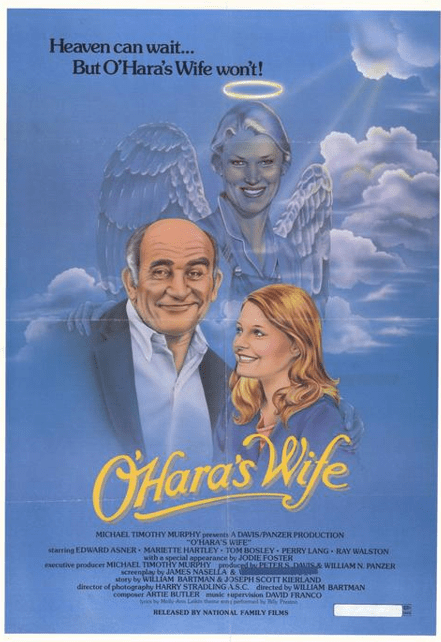
Bob (Ed Asner) and Harriet (Mariette Hartley), whom he affectionately calls ‘Harry’, share a special bond and have been in a marriage for over 20 years that has produced two children, Rob (Perry Lang) and Barbara (Jodie Foster). They plan for a second honeymoon, but just before they’re ready to leave Harry suddenly dies. The grief-stricken Bob feels he can’t go on, but manages to stay focused due to the love and support of his children. Then one day, about a month after he death, she suddenly reappears in the form of a ghost. At first Bob runs away from her thinking he’s gone crazy, but then eventually settles to the idea that she’s going to be around wherever she goes and in return she helps him to understand that life is about more than just working hard and if he doesn’t learn to relax he too will soon be dying as well.

Feeble attempt at a ghost comedy, which has been done many times before in a far better way in such classics as A Ghost and Mrs. Muir and Topper just to name a couple. Right off the bat though this thing falls flat with a long drawn out song segment sung by Billy Preston, Billy’s a good singer, but just not here, that happens not once, but twice. A movie should not slow-up the pace with a droony song especially when that’s just ‘telling us’ through its lyrics what we already know is happening to the characters visually.

The second thing where this movie really gets dumb is when the wife just falls over dead for no apparent reason. One second she’s perfectly healthy and joking around with her hubby and then in the next instant she just literally falls over dead in the corniest way possible. The doctors diagnose it as a brain hemorrhage of some sort, but normally healthy, middle-aged people don’t just ‘fall over dead’. A better, more gripping and believable way would be to have her die in a car accident, or have her diagnosed with something early on, or at least complain about certain symptoms that will eventually lead to her demise, but to just croak instantaneously without any warning or set-up is about as stupid as it gets.

The ghost angle is just as poorly thought-out. I realize having ghosts appear and disappear and go through walls may seem cliched, but at least that had a logic to it and this thing doesn’t. Here we have her opening and closing doors to get through them as if she’s a regular person. Her husband can also feel and touch her and she can even use her body to stop his movement, but if she’s just a spirit then shouldn’t she be a vision only and not able to do those other things? She also panics when she sees her husband’s medical chart and realizes he has a serious heart condition and may die, but since her ghostly existence proves there’s essentially ‘life after death’ then why should she care? She acts like death is some sort of ‘end’ even though her appearance literally proves the opposite, so why not celebrate his impending doom as that will mean they’ll be in a ghostly existence forever and thus death will be a happy ending and not a sad one like her character seems to believe.

Hartley is certainly perky, she always seems perky no matter what she’s in, but her character is one-dimensionally nice, and not fleshed-out enough to be interesting in any way. Asner has some funny bits particularly when he must deal with this ghost wife when someone else is around who can’t see her and thus making his behavior look pretty weird, but overall he’s a bit too old for her, almost like he could’ve been her father, and a younger actor more age appropriate to Hartley would’ve been better. Mary Jo Catlett, as Asner’s much put upon secretary as some endearing moments, but ultimately it’s Foster, who gets billed as having a ‘special appearance’ though she’s in a good chunk of it, that comes off best though I didn’t initially recognize her as she has darker hair here and on a bit of the chubby side  and I could only tell who she was at first by the sound of her voice.

I did like how it attempts to tackle family drama and how as children age and become adults may not see things eye-to-eye not only with their parents, but siblings as well. This becomes especially apparent with Rob who doesn’t agree with his father quitting his job and the two share a couple of raw moments, which is good because these things do occur in real-life families, but then the film glosses over this issue by having the two magically reconcile a little bit later, which like with everything else in the movie is too shallow.

My Rating: 0 out of 10

Released: December 3, 1982

Runtime: 1 Hour 27 Minutes

Rated PG

Director: William Bartman

Studio: O’Hara Cinema Group

Available: DVD-R

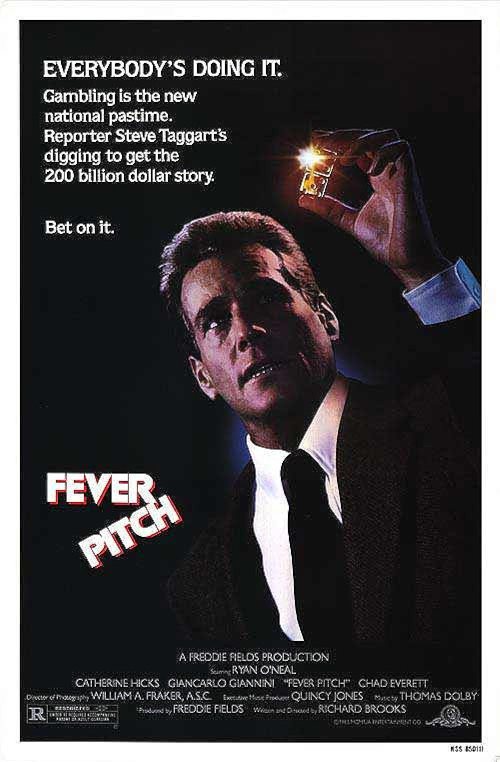
Fever Pitch (1985)

fever1

By Richard Winters

My Rating: 3 out of 10

4-Word Review: Sportswriter addicted to gambling.

To commemorate the sad passing of Ryan O’Neal just last week we here at Scopophilia decided to review one of his more infamous outings in a film that helped to ultimately bring in his career downfall, which was already fading at the time anyways, but this one was the nail in the coffin. He plays Steve Taggart a popular sports journalist who wishes to do an expose on the gambling epidemic. His editor (John Saxon) gives the okay and so he proceeds to write articles dealing with a ‘Mr. Green’ whose addiction is ruining his life and career. Unbeknownst to his editors Mr. Green is actually Steve whose gambling habit is so out of control that he owes $31,000 to a bookmaker named The Dutchman (Chad Everett) who has a henchman named The Hat (William Smith) that follows Steve around and threatens him with violence if he doesn’t pay up. Steve’s recourse is to simply gamble more hoping somehow to get on a lucky streak and be able to pay it all back when instead he just continues to drown in an even more widening debt.

Writer/director Richard Brooks became fascinated with the topic of gambling while recovering from a heart attack and spent years writing the script, where he intended to have Sam Shephard play the lead. Unfortunately despite his great success with other films this one ended up becoming a giant flop that cost the studio over $7 million to produce, but only recouped a paltry $244,000 at the box office. Derided by both critics and viewers its become a ‘so bad it’s good’ type movie that in the ‘Official Razzie Movie Guide’ gets listed as the 100 Most Enjoyable Bad Movies Ever Made.

The movie would’ve been better had they got Shephard in the lead role as intended instead of the wooden O’Neal who doesn’t show enough emotion, or nuance to make his part interesting. The character would’ve had a better arch had we known him before he got into gambling and could see his downfall right from the beginning versus coming into it when he’s already starting to hit rock bottom. Having the viewer fooled into thinking Mr. Green was a real person might’ve made an interesting twist versus giving it all a way at the start that it’s Steve.

The dialogue is badly overwritten with the character’s regurgitating out gambling statistics like they’re a computer and there’s no conversational quality in anything that gets said. Despite being supposedly this ‘hard-hitting’ look at what goes on in Las Vegas it instead comes-off more surreal as it shows only people who are ‘captivated by the madness of gambling’ like these are the only type of people who exist without countering it with others who are not into it and thus giving it a better balance and perspective.

The story also suffers from too many coincidences and extreme dramatic arcs. The most notable is when Steve finds a soldier (Patrick Cassidy) inside a bathroom stall ready to shoot himself with a gun as he’s so depressed about losing all his money, but Steve stops him from doing it. Then gives the soldier money for airfare and a little bit extra for spending cash. The soldier uses it to continue his gambling where he wins it all back at the craps table making it seem like a ‘happy’ ending and going against the film’s own narrative that wants to show the ‘evils’ of the addiction only to laugh it all away when somebody gets on a magical win streak that somehow makes it all better. Going from potential suicide victim to happiest guy on earth in the matter of only a couple of hours is a bit of a stretch.

Having Steve get physically attacked by The Hat inside a gambling lounge as he has both his shins kicked-in and then miraculously having Flo (Catherin Hicks), a cocktail waitress whom he had a fling with, walk by at the exact same instant when The Hat leaves, so she’s able to help back to her room seemed way to coincidental and convenient. The fact that he doesn’t go to a doctor and able to still walk using only some pain pills to get by was even more absurd. What gets even dumber though is that during the melee Steve injures The Hat, using non other than salt and pepper shakers, causing him to wear a over-the-top neck brace as he goes around town trying to ‘even the score’ with Steve by attempting to kill him, but unable to do so at every turn like he’s morphed into the live action version of Wiley E. Coyote.

Spoiler Alert!

The biggest laugh, or most nauseating moment depending on your perspective, comes at the end when Steve is supposedly ‘cured’ of his addiction by having attended a Gambling Anonymous meeting only to, at the airport waiting to go home, decide to put one last quarter into a slot machine called ‘Bet a Buck for God’ in which he amazingly wins a massive payout and having his winnings immediately handed to him by a woman dressed like a nun. I thought for sure this was some sort of dream, but to my shock it’s not and we’re all supposed to take it seriously.

It then gets even worse as Steve goes on one last hot streak and able to win back all the money he’s owed and thus get out of his predicament, which does a complete injustice to the subject. Many other victims of gambling aren’t able to do this as the movie even says itself the odds are the house will ultimately win making the wrap-up completely false and thus the film’s notorious cornball status is highly deserved.

My Rating: 3 out of 10

Released: November 22, 1985

Runtime: 1 Hour 36 Minutes

Rated R

Director: Richard Brooks

Studio: MGM/UA

Available: VHS, DVD-R (dvdlady.com)

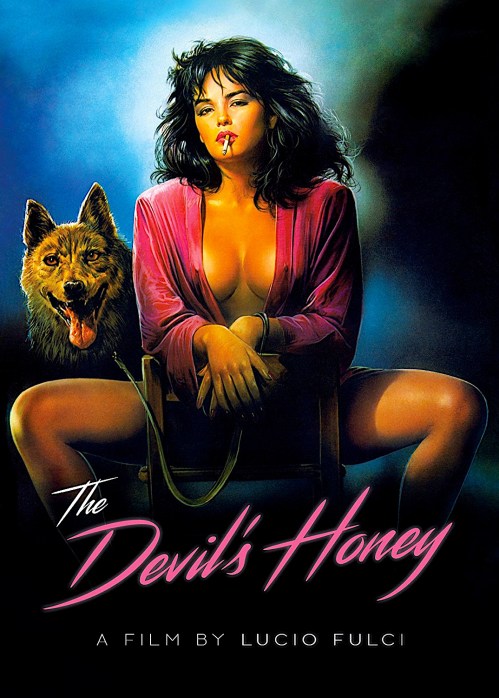
The Devil’s Honey (1986)

devilshoney

By Richard Winters

My Rating: 4 out of 10

4-Word Review: Revenge on a doctor.

Jessica (Blanca Marsillach) is madly in-love with Johnny (Stefano Madia) who’s a famous saxophonist. The two share many kinky moments and have sex in the wildest of places. Wendell (Brett Halsey) is a surgeon who no longer has sex with his wife Carol (Corinne Clery) and instead seeks out prostitutes though even here the arousal is brief as he can’t achieve an erection for any extended period of time. Carol finds out about his philandering and asks for a divorce, which sets Wendell into a panic as he still enjoys having his wife around as a support system even if it isn’t for intercourse. As this is happening Johnny falls unconscious during one of his recording sessions due to a bump he got on his head while falling off his motorcycle earlier. He gets rushed to the hospital where Wendell is on-call, but he’s unable to concentrate on the surgery due to the stress of his marriage and Johnny ends up passing away. Jessica is outraged by this and sets a vendetta on Wendell to punish him for killing her boyfriend. It begins by her calling him constantly, but eventually she kidnaps him by taking him to her place and tying him up. She tortures him sexually, which strangely both of them begins to enjoy.

This was cult director Lucio Fulci’s return to a sex themed film, which he had started his career out as and away from the gory giallos he had become most known for. The attempt is not without merit as the sex is explicit and almost like a porn film with brief interludes of dialogue before it goes right back to the sexual imagery. Unfortunately on the erotic end it’s not all that titillating. The scene where Johnny blows his saxophone up Jessica’s vagina looked more laughable than kinky. The segment where he tries to get her to fondle his penis while they’re riding on a motorcycle, which almost gets them into a bad accident, I found genuinely cringey and not sexy at all. The fact that she’d be so into a guy that’s rather controlling and degrading to her seemed a mystery though it might’ve been meant as a quirk to her personality, but never explained sufficiently.

Outside of the sex the drama is weak. The moment inside the studio where he complains about having a headache, but the producer tells him to keep on playing anyways, so he blows out a few weak notes before tumbling to the floor came-off as unintentionally funny and had me laughing. Jessica’s distraught reaction where she bangs on the glass that separates the control room from the studio was ridiculous as she should’ve run into the studio to try to physically come to his aid, which had a better chance of actually helping him than just pounding on a window. I also got sick of hearing Johnny play the same piece over and over until it became nauseating.

Things improve with the presence of Halsey an American actor who appeared in many B-pictures during the 60’s and 70’s, but eventually went abroad by the 80’s when the film offers here began to dry up. While his face is chiseled and good-looking the hollow look in his eyes perfectly fits the character and thus becomes  a memorable image. Watching Jessica harass the hell out of him is kind of fun though no explanation for what the substance was that she used to knock him out, nor where she managed to attain it.

Spoiler Alert!

The third act has some tension though it gets ruined by all the flashbacks. Wendell’s wife also disappears completely and no scenes showing her reaction to the news that her husband’s been kidnapped. She had figured prominently in the first two acts and therefore we should’ve seen some sort of response from her in the third. Whether she was happy to have him gone, or had a change-of-heart and became upset is something we should’ve seen. There’s also no answer to what ultimately becomes of the new couple who end up liking the abuse that they give to each other. Do they go on cohabitating and if so does Wendell go back to being a surgeon and if not how do they survive financially? There needed to be more of a conclusion and just leaving it all hanging is not satisfying.

My Rating: 4 out of 10

Released: August 21, 1986

Runtime: 1 Hour 23 Minutes

Rated R

Director: Lucio Fulci

Studio: Selvaggia Film

Available: DVD-R, Blu-ray

Tribute (1980)

tribute

By Richard Winters

My Rating: 3 out of 10

4-Word Review: Father reconciling with son.

Scottie (Jack Lemmon) has been working in show business for decades and has built up many friends and fans, but finds it all come crashing down when, at the mere of age of 55, he gets diagnosed with leukemia. His greatest regret is not having a close relationship with his now grown son Jud (Robby Benson). He wants to reconcile, but not make it obvious that’s it’s because he’s about to die. When Jud comes over for a surprise visit with his mother (Lee Remick), whom Scottie has long since divorced, he tries to mend things and become the father he never had, but the hurt runs deep and Jud proves to be resistant to everything Scottie tries making him feel even more hopeless and forcing him to come to terms with his personal faults and inadequacies.

The film is based on the stageplay of the same name, which also starred Lemmon, and got sold into a $1 million movie deal before the stage version ever hit Broadway. On the surface it’s deemed a drama, but the script by Bernard Slade, who also penned the play, comes off more like a desperate comedy akin in tone to Same Time Next Year, which is Slade’s most famous work that had a strong dramedy vibe to it. This works on that same level as it attempts to lighten the poignant moments with comical bits, but it fails miserable.

Had some of it managed to actually been funny I might not have complained, but it amounts to cringe instead. The most eye-popping moment is watching Lemmon in a chicken costume run around his place going ‘balk-balk’ and even lay a giant egg on the sofa, which I felt was a career low point. What’s even dumber is his wooing of a young woman, played by Kim Cattrall, who’s also a patient at the hospital. He gets into her room by pretending to be a doctor and then gropes her breasts in a feeble attempt to check her heart rate. A normal woman of today, and even one back then, should respond with outrage for him copping-a-feel by disguising himself into being someone he isn’t, but in this stupid movie she’s instead ‘charmed’ by his antics and it’s enough to get her to go to bed with him later.

What’s worse and even more outlandish is that Scottie then sets her up with his son to have them conveniently ‘bump into each other’ in public and then begin going out. Yet how many sons are going to be cool with Dad sleeping with their girl first? Of course Scottie never tells him that he’s already ‘tested her out’, but it does end up showing inadvertently what a conniving jerk the old guy is and what the film considers to be nothing more than an amusing comic side-story really hurts the likability of the character if you think about it.

The acting is good. Lemmon is expectedly strong and so is Remick as his wife though her part is limited. I liked seeing Benson, who usually got stuck with immature parts due to his young, geeky features, play the mature and sensible, level-headed adult of which he does perfectly. Colleen Dewhurst has some strong moments as the caring nurse and Cattrall, despite the annoying nature of her dippy character, is pleasing enough. Yet the ultimate scene-stealer goes to Gale Garnett famous for the mid-60’s folk song ‘We’ll Sing in the Sunshine’, who plays a hooker and in one segment goes topless (looks great), but it’s a bit jarring when you realize it’s the same person who sang such a sweet-natured tune, tough in some ways you could say it’s also a testament that her creative talents are quite broad.

The third act, where they have this major tribute for Scotty has a touching potential, but gets overdone by filling-up an entire auditorium with all of his ‘close friends’, which even for a social butterfly seemed a bit exaggerated. The scene where the hooker gets a restaurant packed with all of her male clients who have ever slept with her has an amusing quality though again equally hard to believe that all of these men would be cool with everybody knowing that they’ve bedded a prostitute. I’ll give props though to the segment showing Scotty getting treatment in the hospital, which gets shown exclusively through still photos, which I found visually innovative.

Unfortunately everything else falls into second-rate melodramatics. It doesn’t even have the decency to tells us whether Scotty dies or not. When an entire movie deals with a character’s ultimate demise I think it should eventually get answered instead of leaving it open. It makes the whole terminal illness thing seem like a tease done to emotionally manipulate the viewer than an actual reality that it supposedly is.

My Rating: 3 out of 10

Released: December 19, 1980

Runtime: 2 Hours 1 Minute

Rated PG

Director: Bob Clark

Studio: 20th Century Fox

Available: DVD-R

Broadway Danny Rose (1984)

broadway2

By Richard Winters

My Rating: 5 out of 10

4-Word Review: Talent agent becomes beard.

Danny Rose (Woody Allen) is a hapless talent agent who represents clients who are down-and-out, but seeking a comeback. Lou (Nick Apollo Forte) is a singer who uses Danny as his agent. Since he has some potential and might even get hired by a big star, in this case Milton Berle who plans on tabbing him as his opening act, Danny will do anything to keep Lou happy especially since Danny’s other clients tend to drop him once they become famous, which Danny doesn’t want to happen again. In order to appease him Lou has Danny acting as a ‘beard’, or a person who pretends to being a boyfriend to someone he really isn’t. In this case it’s to Tina (Mia Farrow) a woman whose been dating a gangster. Danny acts as her boyfriend to draw attention away from Lou, but her ex-gangster lover becomes jealous and thinking Danny to be the real boyfriend sends out a hit on him forcing both he and Tina to go on-the-run.

While this film did well with the critics I felt it was pretty much a letdown. What annoyed me most was the washed-up, aging comedians sitting around a cafe table and essentially telling the story, which gets done in flashback. I felt these comedians, who say nothing that is funny, or even slightly amusing, served no real purpose except for maybe padding the runtime, which was short already, and the scenario could’ve easily played-out without constantly cutting-back to these guys to add in their useless side commentary. This also cements Allen’s transition from being hip and edgy. which he was considered as during the 70’s, to out-of-touch with day’s youth and young adults by the 80’s as no one in this movie appears to be under 40.

It’s confusing too what time period this is all supposed to be taking place in. Supposedly the cutaways to the comedians is present day though with it being shot in black-and-white it hardly seems like it, and then the scenes with Danny are apparently things that happened in the 60’s. This though gets completely botched not only because of the cars they drive, which are of an 80’s variety, but there’s also a scene where Lou and Danny are walking on a sidewalk and go past a theater marque advertising Halloween III, which was  a film that was released in 1982.

On the plus side I enjoyed Mia’s performance of a hot-headed, highly oppionated Italian especially with the dark glasses and bouffant hair-do, which could’ve been done up even more. She’s known as being such a serious actress, who’s marvelous in drama, but to see her able to handle the comedy and even become the centerpiece is a real treat. Woody and her make for a quirky couple, she’s actually taller than him when they stand side-by-side, and she really gets in some good digs on him. Though with that said I actually wished that Nick had played the role of Danny as his amateurish acting made his doopy character funnier and the scenes between him and yappy Mia could’ve been a real riot.

There are a few laugh-out-loud moments, though it certainly takes it sweet time getting there. Watching Woody and Mia attempt to escape the killer by running through a field of tall grass I liked as too the scene where they are chased into a warehouse filled with parade floats and the hydrogen that escapes from them, due to the shooting bullets, causing their voices to become extremely high-pitched. The rest of the humor though relied heavily on Italian-American stereotypes that have been done hundreds of times before and isn’t original. I was also surprised that it has walk-on cameos by Howard Cossell and Milton Berle, who even appears in drag during the Thanksgiving Day parade, but are given no lines of dialogue.

My Rating: 5 out of 10

Released: January 27, 1984

Runtime: 1 Hour 25 Minutes

Rated PG

Director: Woody Allen

Studio: Orion Pictures

Available: DVD, Blu-ray, Amazon Video, Freevee, Tubi, YouTube

First Monday in October (1981)

firstoctober

By Richard Winters

My Rating: 3 out of 10

4-Word Review: The first lady justice.

While Daniel Snow (Walter Matthau), an associate justice on the Supreme Court who leans heavily left on most issues, is on vacation in Alaska, he gets word that the staunch conservative judge has passed away. The President then decides to nominate a woman to the court by the name of Ruth Loomis (Jill Clayburgh). Unfortunately Daniel is not happy about this as she’s as conservative as the man she replaced. Once the nomination is confirmed the two are immediately at odds over such things as pornographic movies and corporations that pollute the environment. While they bicker and debate constantly they do end up becoming friends, which comes in handy when Ruth realizes that her late husband was involved in some unscrupulous matters and she considers resigning from her position though Daniel tries desperately to talk her out of it.

The film is based on the 1978 play of the same name written by Jerome Lawrence and Robert Edwin Lee, who also wrote the screenplay. Initially the play, which first starred Jean Arthur and Melvyn Douglas received such terrible reviews that it soon closed and was revamped with Henry Fonda and Jane Alexander, was considered a novelty as up to that time no woman had ever served on the nation’s highest court. That all changed when Ronald Reagan nominated Sandra Day O’ Connor in July of 1981 forcing this film, in an effort to appear timely, to move up its release date to August, but the timing didn’t work and the movie was overall panned by both the critics and public.

The only interesting aspect is watching it from today’s perspective where the Supreme Court has now become a toxic and divisive issue when back in the early 80’s that was not the case. When the Girl Scouts of America posted on Twitter commemorating Amy Coney Barret getting nominated and approaching it as an achievement for women it got a lot of pushback from those unhappy with her due to her conservative leanings. Yet in this movie the fact that the character is staunchly conservative is not considered a problem and feminists and other women are seen during the senate hearings proudly cheer her on and considering her nomination a landmark.

In some ways having the political drama that the modern day court holds today might’ve made the story more interesting as the thing is so genteel that it’s enough to put most people to sleep. The script would’ve had more intrigue had their been a bad guy, maybe like the producer of the porn movies who gets talked about, but never seen, or even the elusive head of a mysterious corporation whose case the court is set to hear, that should’ve been added in to create genuine conflict, which is otherwise sorely missing.

I did like the scene where the judges get together inside a viewing room to watch the porno flick ‘The Naked Nymphomaniac’, but Matthau’s character should’ve been present during this and it’s less funny without him. Their subsequent arguments about whether X-rated movies should be allowed under the First Amendment seems quite dated as this issue had already been considered settled law and by the 80’s most video stores were offering adult films for rental and cable movie channels were showing porn late at night making the plot here woefully out of touch with the times.

Matthau and Clayburgh are great actors, but their performances here prove to be dull and lifeless. Having some sort of romance enter into the picture, it gets briefly alluded to when Matthau admits to having a certain attraction to Jill, but immediately dropped, might’ve given it a spicy angle, but just portraying them as friends with different viewpoints isn’t enough to keep it captivating. There’s  not too much that’s funny either. There’s a couple of semi-humorous lines here and there, but nothing that will make anyone break out into uproarious laughter. Matthau’s inability to eat his lunch using chopsticks while in a Chinese restaurant might amuse some slightly, but overall it’s a dull, empty ride. Very surprising that this thing received an R-rating. The only objectionable part is when they watch a porn flick, but nothing much in the way of nudity or sex is shown.

My Rating: 3 out of 10

Released: August 21, 1981

Runtime: 1 Hour 39 Minutes

Rated R

Director: Ronald Neame

Studio: Paramount Pictures

Available: DVD, Amazon Video, YouTube