Monthly Archives: October 2024

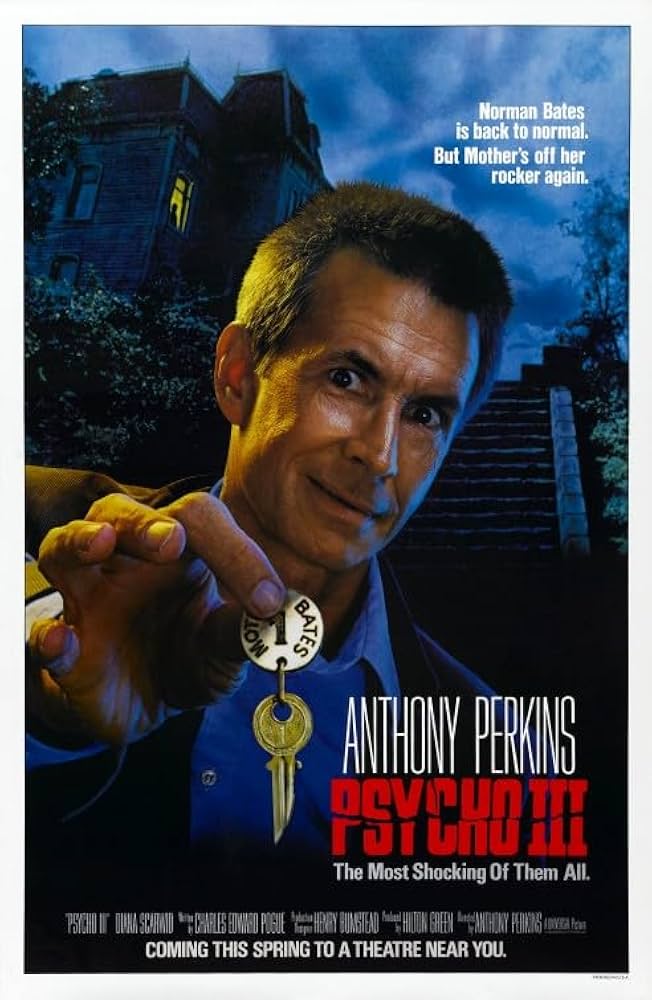
Psycho III (1986)

psycho3

By Richard Winters

My Rating: 3 out of 10

4-Word Review: Norman gets a girlfriend.

The story begins a month after the one in the second installment ended with police searching for the whereabouts of Emma Spool (Claudia Bryar) whom Norman (Anthony Perkins) killed and now keeps her preserved body in his home and yet curiously the police don’t suspect him. Meanwhile a roving journalist named Tracy Venable (Roberta Maxell) does and she keeps trying to get interviews with Norman in an effort to weed-out the truth while also snooping around his property any chance she gets. Maureen (Diana Scarwid) is a nun who’s lost her faith and thus left the convent and rents a room at the Bates Hotel. She closely resembles Marion Crane, one of Norman’s earlier victims, which sets off his desire to kill again, but when he goes into her room in an attempt to stab her he finds that she’s already slit her wrists and bleeding profusely, which sets off his emotional senses to help her and thus he takes her to the nearest hospital, which in-turn gets her to fall for him and the two begin a romantic relationship once she gets out. Norman also hires a wanna-be music artist named Duane (Jeff Fahey) to help out around the hotel as an assistant manager, but Duane becomes aware of Norman’s mother fixation and tries to use it against him just as an assortment of strange murders reoccur on the premises.

The third installment of the franchise is by far the weakest and it’s no surprise that it didn’t do as well at the box office and pretty much nixed anymore sequels getting released with the Part IV one, which came out 4 years later, being made as a TV-movie instead of a theatrical one. Perkins, who made his directorial debut here, starts things off with some intriguing segues and a good death scene of showing a nun falling off of a high ledge, but the storyline itself is getting quite old. Watching the ‘mother’ committing murders is no longer scary, interesting, or even remotely shocking. The script offers no new intriguing angles and things become quite predictable and boring very quickly.

Perkins gives another fun performance, which is pretty much the only entertaining element of the film, and Scarwid is compelling as a young emotionally fragile woman trying to find her way in a cold, cruel world. Maxwell though as the snooping reporter is unlikable and thus if she is meant to be the protagonist it doesn’t work. Fahey’s character is also a turn-off as his sleazebag persona is too much of a caricature and having him predictable do sleazy things as you’d expect from the start is not interesting at all.

The whole mystery angle has very little teeth and the way the reporter figures out her the clues comes way too easily. For instance she goes to Spool’s old apartment and sees a phone number scrawled out several times on a magazine cover sitting on the coffee table, so she calls it and finds out it’s for the Bates Motel and thus connects that Norman most likely had something to do with her disappearance, but wouldn’t you think the police would’ve searched the apartment before and seen that same number and made the same connection much earlier? Also, what kind of landlord would leave a place intact months later after the former tenant fails to ever come back? Most landlords are in the business to make money and would’ve had the place cleaned-out long ago and rented it to someone new.

The fact that the police don’t ever suspect Norman particularly the town’s sheriff, played by Hugh Gillin, is equally absurd. Cops by their very nature suspect everybody sometimes even when the person is innocent. It’s just part of their job to be suspicious and constantly prepare for the worst, so having a sheriff not even get an inkling that these disappearances could have something to do with Norman, a man with a very hefty and well known homicidal past, is too goofy to make any sense and starts to turn the whole thing especially the scene where a dead corpse sits right in front of him in a ice machine, but he doesn’t spot it, into a misguided campiness that doesn’t work at all.

I didn’t like the whole ‘party scene’ that takes place at the hotel, which occurs when a bunch of drunken football fans decide to stay there. I get that in an effort to be realistic there needed to be some other customers that would stay there for the place to remain open, though you’d think with the hotel’s well-known history most people would be too afraid to. Either way the constant noise, running around and racket that these people put-on takes away from the creepiness and starts to make the thing resemble more of a wild frat party than a horror movie.

Spoiler Alert!

The death by drowning scene is pretty cool, but everything else falls unfortunately flat. The final twist where it’s explained that Spool really wasn’t his mother after all sets the whole narrative back and makes the storyline look like it’s just going in circles and not moving forward with any revealing new information making this third installment feel pointless and like it shouldn’t have even been made. Screenwriter’s Charles Edward Pogue’s original script had Duane being the real killer while the Maureen character would be a psychologist who would come to visit Norman and who would be played by Janet Leigh, who had played Marion Crane in the first film. Her uncanny resemblance to one his earlier victims would then set Norman’s shaky mental state to go spiraling out-of-control, which all seemed like a really cool concept, certainly far better than what we eventually got here, but of course the studio execs considered this idea to be ‘too far out’ and insisted he should reel it back in with a more conventional storyline, which is a real shame.

My Rating: 3 out of 10

Released: July 2, 1986

Runtime: 1 Hour 33 Minutes

Rated R

Director: Anthony Perkins

Studio: Universal

Available: DVD, Blu-ray, Amazon Video, YouTube
Psycho II (1983)

psycho2

By Richard Winters

My Rating: 7 out of 10

4-Word Review: Norman Bates comes home.

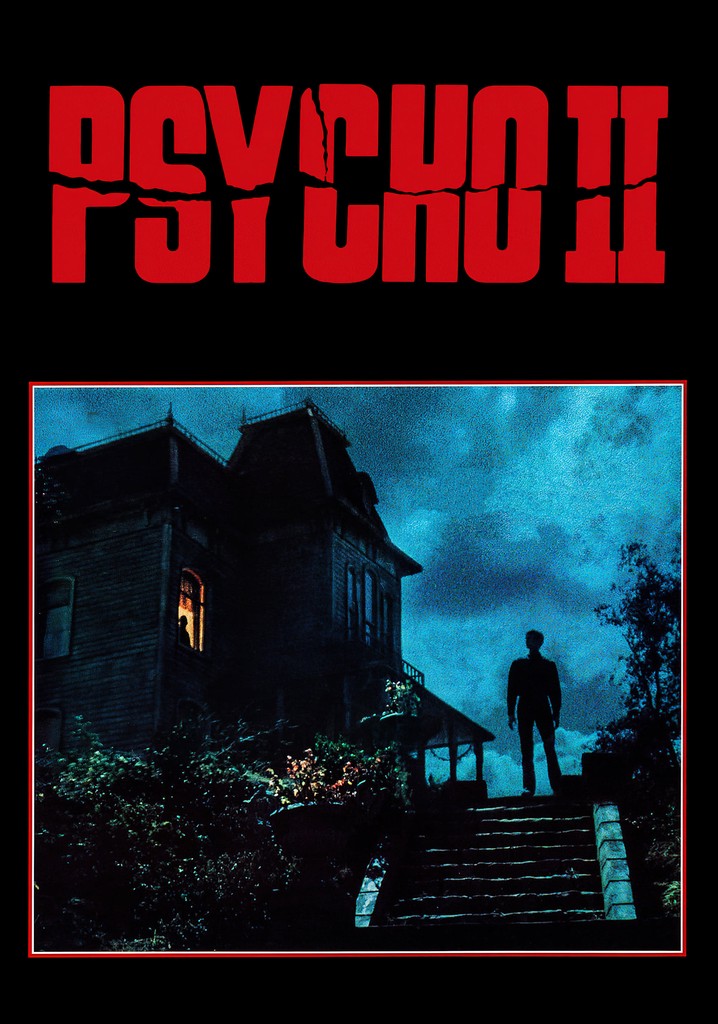
After 22 years of being confined to a mental institution over the murders of 5 people Norman Bates (Anthony Perkins) is now deemed to be no longer a menace to society much to the protest of Lila Crane (Vera Miles) whose sister Marion was one of his victims. With nowhere else to go Norman returns to the old house that he shared with his mother and tries to restart his hotel business that had been run while he was incarcerated by Warren (Dennis Franz) who had allowed the place to be turned into a flophouse for drug users and is immediately fired. To help bring in an income he gets a job at a nearby cafe as a cook where he meets Mary (Meg Tilly) who works there as a waitress. The two quickly start-up a friendship and when Norman learns that she’s broken-up with her boyfriend and no place to stay he offers a bedroom in his house for her to sleepover, but soon Norman starts receiving notes and even phone calls from someone perpetuating to be his mother and then murders begin occurring by someone dressed as an old lady. Has Norman gone back to his old homicidal ways, or is it someone else trying to make it look like it’s him, so that he’ll be rearrested and sent back to prison?

The attempt to make a sequel to the Hitchcock classic had been discussed for years and apparently even the master himself had considered it, but the studios generally nixed the idea figuring there was just no way to upstage the first one. Then Robert Bloch, who written the novel that the first one was based on, came out with a second installment also called ‘Psycho II’ that was published in 1982 that helped spark new interest in the franchise. However, the book’s plot was far different than this one. In the novel version Norman escapes from the mental institution while dressed in a nun’s outfit and then hitches a ride with another nun whom he kills and then rapes. After absconding with her van he then picks up a males hitch-hiker whom he plans to kill and then use his body to fake his own death. Police later find the burning van and charred remains, but are unable to identify who it is. Meanwhile across town a movie is being made about Norman’s life and Norman’s psychiatrist fears that Norman is going to go there to kill everyone in the production, so he decides to become a ‘technical advisor’ to the film to help watch out for the crew, but while there he starts to become more worried about the film’s director who’s a spitting image of Norman from 20 years earlier and he reveals an unhealthy infatuation with the actress playing Marion Crane.

While I found the book to be highly creative the studio execs disliked its satirical elements regarding the movie business and discarded it while hiring Tom Holland, who had some success with the 1978 horror TV-Movie ‘The Initiation of Sarah’ and also the screen adaptation of The Beast Within to write a script with a more conventional storyline. While this story isn’t bad, I personally liked the Bloch version better, this one does have some logic holes mainly around releasing someone who’s killed several people from well published crimes and clearly suffering from a severe mentally ill state and yet somehow convincing the parole board and public at-large that he’s now ‘cured’, which really pushes the plausibility meter. The film also portrays Norman as being a likable guy just trying to find his way, which is awkward since the viewer is technically supposed to be fearing him, but half the time ends up sympathizing with him instead and this dueling dichotomy doesn’t work.

The acting though is terrific especially Perkins who makes his portrayal of Norman into an almost art form and the most enjoyable element of the movie though he initially was reluctant to recreate the role complaining that it hurt his career playing the part in the first one and it had caused him to become typecast, but when he found out that they were planning to cast Christopher Walken in the part if he rejected it he then decided to come-on board. Dennis Franz is also a delight as nobody can play a brash, blue-collar out-of-shape ‘tough guy’ quite like him and his taunting, loud-mouth ways help bring an element of dark humor to the proceedings.

Spoiler Alert!

My favorite though was Meg Tilly who helps tie all the of the craziness around her together by being the one normal person of the whole bunch. Reportedly she and Perkins did not get along and she refused to attend the film’s premiere though the frostiness of their relationship doesn’t show on the screen and the two end-up working well together. The only thing that I didn’t like was the misguided twist of her turning out to being the daughter of the Vera Miles character and in cahoots with her in her attempt to drive Norman crazy. For one thing if this were true then it should’ve been Meg instigating the idea of her moving into the house with him versus Norman coming up with the idea and her seeming reluctant.

The film has some good creepy camera angles of the home, which seems even more frightening here especially with the way it’s isolated desert setting gets played-up. There’s also a couple of gory killings, which I liked, but the second-half does drag and the movie could’ve been shortened by a good 20-minutes. However, the film’s conclusion where Norman learns the his mother’s sister, played by Claudia Bryar, is actually his real mother and she was behind the recent murders was a perfect ironic angle that took me by surprise and I loved it. Why he would then proceed to kill her with a shovel I didn’t really get as it seemed they could’ve started-up some weird bond and became a homicidal couple, which would’ve been more frightening, but still it’s a cool twist either way and helps make this a decent sequel.

My Rating: 7 out of 10

Released: June 3, 1983

Runtime: 1 Hour 53 Minutes

Rated R

Director: Richard Franklin

Studio: Universal

Available: DVD, Blu-ray, Amazon Video, YouTube
Psycho (1960)

psycho

By Richard Winters

My Rating: 9 out of 10

4-Word Review: Don’t take a shower.

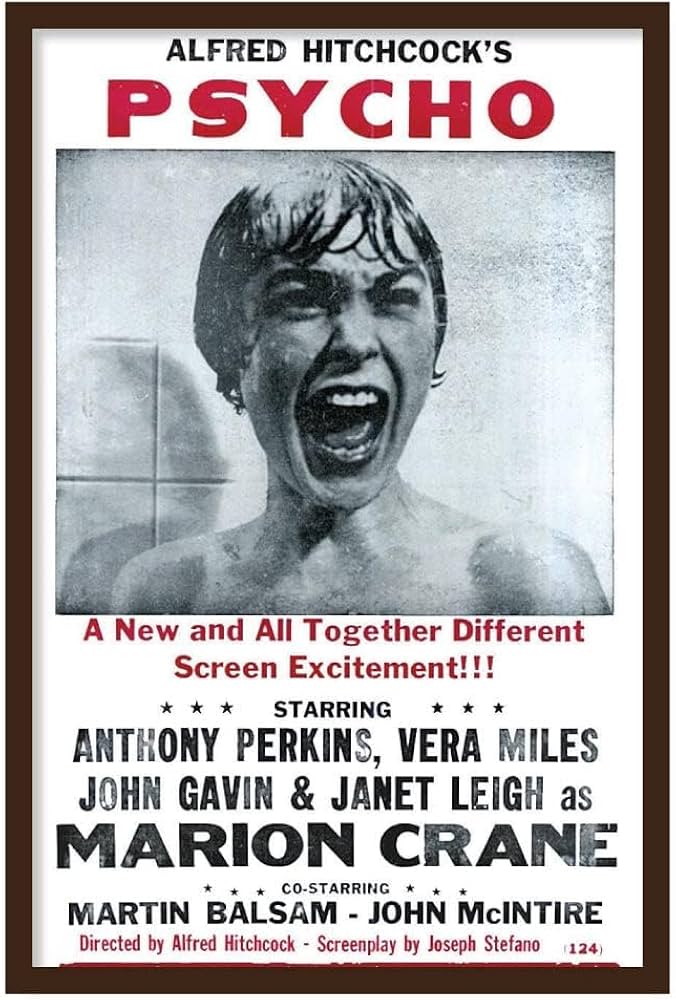
Marion Crane (Janet Leigh), who works as a secretary at a real estate firm, steals $40,000 in cash from her boss (Vaughn Taylor), who trusted her to take the money to the bank, in order to help her boyfriend Sam (John Gavin) pay off his debts. As she’s traveling to where he lives she encounters a rainstorm causing her to take the nearest exit. There she drives into the lot of a isolated lodge called Bates Motel, run by a young man named Norman (Anthony Perkins) who’s still living with his mother in an old rundown house that sits ominously on a hill behind the hotel rooms.  Norman becomes immediately smitten to the woman, who signs the hotel ledger under an assumed name, and invites her to have dinner with him in the hotel office. Marion, who sees him as a awkward, but otherwise harmless guy who’s still dominated by his mother, agrees. After they eat she departs back to her room and takes a shower when what appears to be his mother, who considers all women to be ‘whores’, stabs and kills her. Norman then cleans-up the evidence by submerging the dead body and her car in a nearby swamp. Soon a private detective named Arbogast (Martin Balsam) begins investigating the case and what he finds out leads Marion’s boyfriend Sam and her sister Lila (Vera Miles) to the property where they’ll unravel a shocking secret.

The film, which at the time was considered ‘too tawdry and salacious’ to be made into a movie and thus the studio refused to give director Alfred Hitchcock the required funding and forcing him to use his own funds and crew to produce it, was based on the novel of the same name by Robert Bloch. Bloch began writing it in 1957 when coincidentally in the neighboring town not more than 35 miles from his came to the light the criminal activities of Ed Gein who killed two people while also digging up dead bodies and then skinning them in an effort to create a ‘woman suit’ he could wear so he’d ‘become his dead mother’ who had dominated him for the majority of his life. Rumors were that Gein’s crimes had inspired the book, but Bloch insisted that he had almost finished with the manuscript before he became aware of the real-life case and then became shocked with how closely it resided with his story.

While the film follows the book pretty closely there are a few differences. In the book the Marion character dies from decapitation while in the movie it’s from stab wounds. The Norman character is described as an overweight man in his 40’s while in the movie he’s thin and in his 20’s, which I felt was an improvement as it made more sense why Marion would feel less guarded around him and put herself in a more vulnerable position than she might otherwise as she still viewed him as a ‘wet-behind-the-ears’ kid. It also helps explain why Norman blunders his interview with the detective and virtually incriminates himself because he was too sheltered and not worldly-wise enough to handle pressure situations.

The film is full of a lot of firsts. It was the first to show a toilet or use the word transvestite, but what I really liked though is that it takes a different spin on the character of the victim. Typically, even today, victims are portrayed as being virginal and angelic beings particularly women, but here it works against that. Right away with the opening scene in the hotel room we see she’s definitely no virgin and what’s more she’s having sex outside of wedlock in an era where ‘good girls saved themselves for marriage’. Having her then be susceptible to corruption by stealing from her employer, or not feel frightened initially by Norman and even superior to him further works against the grain of the ‘sweet, fragile damsel in distress’ cliche and makes her seem more human since she’s not perfect and vulnerable to the same vices as everyone else, which in-turn gives the more an added darker dimension.

The film’s hallmark though is its memorable camera work from a close-up of the victim’s unblinking eye, still not sure how Leigh could’ve kept her eyes open for as long as she does, to the interesting way the house gets captured from the ground looking upward on a hill towards the sky with the creepy night clouds floating behind it.  My favorite one though is the tracking shot showing Norman walking into his mother’s room and then having the camera stop right at the top of the door frame and then spin around towards the hallway as he then leaves the room and carries his mother down the stairs. The only shot that I didn’t care for is when the Martin Balsam character gets stabbed at the top of the stairs, but instead of immediately falling over backwards and then rolling down the stairs, which is what would happen 99% of the time, he instead somehow ‘glides’ down an entire flight of stairs backwards while remaining upright and only finally falling to the floor once he hits the bottom, which goes against the basic laws of physics and to me looks fake and goofy, but other than that it’s a classic and still holds-up amongst the best horror movies made.

My Rating: 9 out of 10

Released: June 16, 1960

Runtime: 1 Hour 49 Minutes

Director: Alfred Hitchcock

Studio: Paramount

Available: DVD, Blu-ray, Amazon Video, YouTube
What Have You Done to Solange? (1972)

solange

By Richard Winters

My Rating: 7 out of 10

4-Word Review: Bearded priest murders schoolgirls.

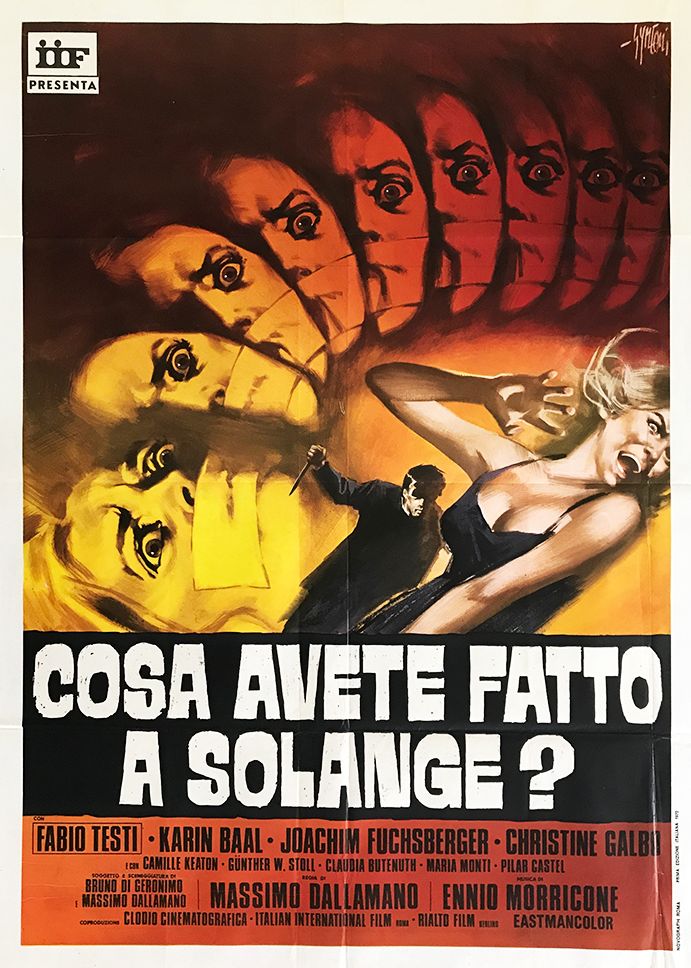
Enrico (Fabio Testi) is a high school teacher who’s having an affair with Elizabeth (Cristina Galbo) who’s one of his students. While making-out with her on a boat at a park Elizabeth spots a shadowy figure murdering a young girl in a nearby wooded area. The girl turns-out to be one of her classmates, but Enrico convinces her not to tell anyone for fear that it could jeopardize his job. Once the murder gets discovered and reported on the news Enrico goes back to the scene to check for clues only to be photographed by the police who are there doing the investigation. Inspector Barth (Joachim Fuchsberger) spots Enrico in the photo and brings him in for questioning. Enrico denies any knowledge of the killing, but comes under suspicion especially after Elizabeth is later found murdered in her bath tub. Enrico then reconciles with his frigid wife Herta (Karin Baal) in order to have her help him do their own investigation, so they can unmask who the real killer is before the police are able to close in on him.

The film is a unique partnership between a West German production company and an Italian one that was filmed on-location in London. While there are many German actors in the cast the film as a whole is modeled after an Italian giallo and has many of the mystery, gore, and sleaze elements that you’d expect from those. The direction, by Massimo Dallamano, who was a cinematographer of Spaghetti westerns during the 60’s, approaches the material with a visual elegance. The photography is crisp and detailed with some evocative camera work and angles as well as a few graphic shots including the murderers modus operandi, which is shoving a large knife up his victim’s vaginas, which not only gets revealed on the corpses, but also in x-ray version, but also a drowning death in a bath tub that gets played-out moderately well. In most slasher flicks the victim goes down easily when they’re attacked by surprise by their killer, but here this one struggles quite a bit making the killing more drawn-out and thus more realistic.

The plot though, particularly the second act, gets stretched too thin. We have an intriguing set-up and a zesty conclusion, but in-between it meanders. The biggest reason for this is that the protagonist and his quandary becomes neutered and thus all the potential drama from his situation evaporates. Having the inspector tell him upfront that he doesn’t think he did it hurts the tension and would’ve been intriguing if they thought he did, or he even became their prime suspect. Having Enrico make amends with his wife, at the beginning they’re at extreme odds and even close to fully hating each other, further moderates things as the wife could’ve been an interesting possible suspect too, killing the school girls and trying to make the hubby look like he did it in order to get back at him for cheating on her, but then having the two team-up just fizzles away a potentially dark undercurrent to their relationship. Showing Enrico working with the inspector ultimately makes him seem more like a side character in his own movie and by the end like he’s not really the star at all as the inspector completely takes over.

The one performer that does stand-out is Camille Keaton. She’s better known for her starring role in the cult hit I Spit On Your Grave, but here in one of her first performances in the front of the camera she’s quite impressive and she does so without uttering a single line of dialogue. She comes-in real late too to the extent I was starting to think she’d have some minor part and be spotted for only a few seconds, but her character comes-on strong despite not saying anything and is an integral component to the whole mystery. What I liked most about her was her trance-like demeanor and glazed over look in her eyes that’s both effective, creepy, and disturbing at the same time.

Spoiler Alert!

The film’s wrap-up could’ve been better done as it elaborates about the motives of the killer and the elements of the case too much saying things that the viewer should’ve been able to pick-up on during the course of the movie. For instance it describes the sex parties that these teen girls attended, but snippets of these orgies should’ve been shown and not just discussed. The film had no qualms with the violence, so why not have a little explicit sex as well. Also, Keaton’s character going in to have an abortion like it’s going to be some ‘fun activity’ didn’t seem believable. The attempt was to show that she was naive about how rough the procedure would be and thus became ‘traumatized’ by it afterwards, but she still should’ve shown some trepidation upfront as just about anybody else would.

My Rating: 7 out of 10

Released: March 9, 1972

Runtime: 1 Hour 47 Minutes

Rated R

Director: Massimo Dallamano

Studio: Italian International Films

Available: DVD, Blu-ray, Amazon Video, CONtv